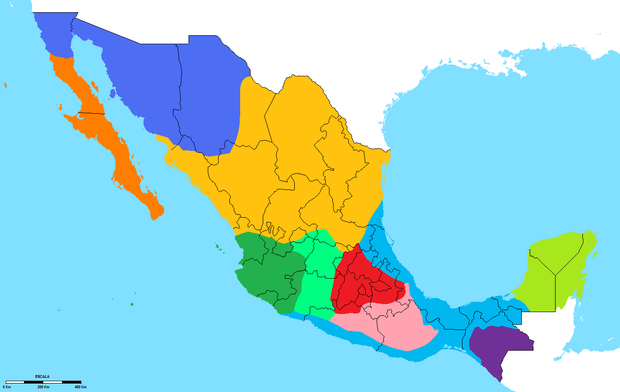
One surprise for many Spanish learners is that there isn’t just one Spanish accent. Just like English, Spanish sounds different depending on where you are. Mexico alone has multiple regional accents, and that’s before you even get to Spain, the Caribbean, or South America.
If you’ve ever felt confident in class but then struggled to understand a native speaker from another country, that’s completely normal. It doesn’t mean you learned the “wrong” Spanish. It just means Spanish, like any global language, comes in many flavors, with different rhythms, pronunciations, and everyday words.
Instead of letting that throw you off, treat it as part of the learning process. Getting familiar with a range of accents makes real conversations much less intimidating over time. Mixing listening practice with tools like digital flashcard apps such as Quizlet or Brainscape can help reinforce new vocabulary and pronunciation as you encounter them.
Spanish is wonderfully diverse. The more versions you hear, the more comfortable you’ll become.
¡Vamos!
How Can You Learn the Many Different Spanish Accents?
You're probably familiar with how multi-faceted English is: it takes on many different accents when spoken by Americans, Australians, the British, and the Irish, just to name a few. Native English speakers often struggle to understand each other!
Although the pronunciation varies, the meaning and the intention of what is spoken is the same. The trick here is to have an idea of how each of these cultures tends to pronounce and articulate certain words.
For instance, if you have heard a British accent before with enough frequency, odds are you will be able to understand one simply by knowing that the speaker is British. A similar scenario exists in the Spanish language where there are also many ways to pronounce and articulate words.
Below we'll briefly explain some of these accents. Click the links to hear each accent for yourself!
Castilian Accent
As Infoplease explains: The Spanish of Madrid and of northern Spain, called Castilian, developed characteristics that never reached the New World. These include the pronunciation of "ci" and "ce" as "th". In Madrid, gracias ("thank you") becomes "gratheas" (as opposed to "gras-see-as" in Latin America).
Another difference is the use of the word vosotros (you all, or you guys) as the informal form of ustedes in Spain. Castilian sounds to Latin Americans much like British English sounds to U.S. residents.
Listen to the Castilian accent.
Colombian Accent
This is a very diverse country with many different accents, but in general, and especially in the Colombian highlands in cities such as Bogotá, their accent is relatively neutral and clear, although there is a slightly marked “s” that sounds like “shh”. This is very different from the “s” pronunciation in Spain or Argentina, where it has a much softer, almost imperceptible sound.
Also, letters like “b,” “d,” and “g” are occlusive in Colombia, meaning that their sounds are approximated to similar letters, because their sound is pronounced more softly.
Listen to the Colombian accent.
Peruvian Accent
The Peruvian accent doesn’t have a strong intonation, but its tone does exhibit an influence from indigenous languages like Quechua and Aymara.
Listen to the Peruvian accent.
Mexican Accent
Think Speedy Gonzalez, but not as exaggerated. There is marked tone in the last word of every phrase, and they also reduce the accentuation of some vowels. For example, a phrase like Que te pasa sounds more like “Que t pasaaaaa”. Mexican Spanish is pretty understandable and clear, and probably the easiest regional variety to identify.
Listen to the Mexican accent.
Chilean Accent
In my opinion, Chileans speak quickly, mumble, and chew the last syllables of certain words. There is a certain similarity with the Peruvian accent, though the latter is much slower and clearer.
Listen to the Chilean accent.
Argentinian Accent
According to Infoplease, Generally in the Spanish word "tú" is the singular way of saying "you". In Buenos Aires, however, "vos" is used instead. It is accompanied by a modified old Spanish verb form. It is as if part of the English-speaking world still used "thee" and "thou" in everyday speech.
Argentines also pronounce the "ll" as an English "zh", while most other Spanish speakers pronounce "ll" as an English "y".
Listen to the Argentinian accent.
Caribbean Accent
Infoplease also has a great description of the Caribbean accent. Spanish is spoken in the Caribbean, coastal areas of Latin America, and in some cases in southern Spain.
In the seventeenth and eighteenth centuries, the accent in Seville, Cádiz, and other cities in Andalusia, in Southern Spain, began to change. Speakers began to drop the final "s" on words. The settlers and traders of southern Spain took this dialect with them to the Caribbean and other coastal areas.
Today Caribbean or "Lowland" Spanish is characterized by its relative informality, its rapid pace, and the dropping of "s" sounds, allowing people to talk more quickly.
Listen to the Caribbean accent.
Why Is Pronunciation Key in Any Language?
This list is a simplification, and it doesn’t cover every Spanish-speaking region. Think of it as a starting point to help you notice some of the more distinctive accents, not a complete map of the Spanish-speaking world.
Accents are a huge part of identity and culture, and Spanish has a lot of them. The good news is that you don’t need to master a specific accent to speak Spanish well. What matters most is being clear and easy to understand. Focus on pronunciation, rhythm, and consistency, and the rest will come with time.
One helpful way to practice this is by combining listening with active study. By using digital flashcard apps such as Anki or Brainscape with audio-enabled flashcards, you can review vocabulary and pronunciation, saying words out loud instead of just recognizing them on a screen. Hearing native pronunciation and repeating it regularly helps train both your ear and your voice.
If you’re curious to keep exploring, we've made a bunch of FREE resources to help you on your Spanish learning journey!
Additional Reading
- How to learn Spanish more efficiently
- The Best Apps to Learn Spanish in 2026
- Which Spanish dialects should you learn?
References
Clayton, D. (2018). Introduction. In Attitudes to language (pp. 1–18). essay, Cambridge University Press.
Hinton, M. (2012). An aptitude for speech: The importance of mimicry ability in foreign language pronunciation. Second Language Learning and Teaching, 103–111. https://doi.org/10.1007/978-3-642-24019-5_8
Why Spanish accents can be so different. (n.d.). https://www.infoplease.com/why-spanish-accents-can-be-so-different