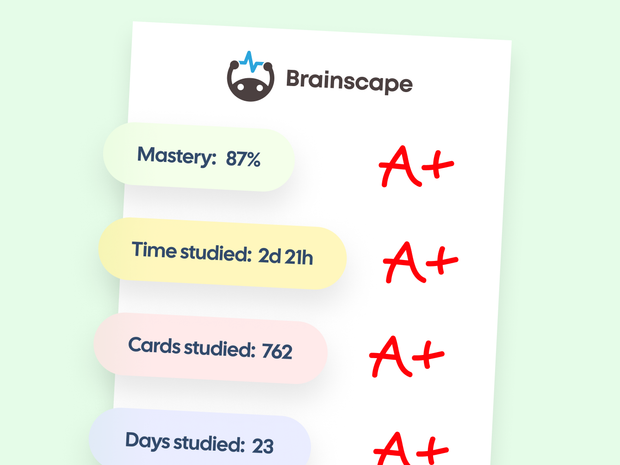
Many educators assume they do not need to grade students on how they study. After all, exam scores should already reflect how well students learned the material, right?
If students study effectively, their grades improve. If they do not, their grades drop. In theory, that should be enough motivation.
In practice, however, it isn't!
One of the most reliable findings in behavioral economics is hyperbolic discounting: people tend to choose immediate comfort over delayed rewards. A test score arriving weeks from now is often not enough to motivate a student to study today.
That is why many teachers choose to add a small study participation grade to their syllabus. When done thoughtfully, grading study habits rather than performance can improve consistency, retention, and long-term learning habits.
This article will show you how to turn studying in a flashcard platform like Brainscape into a simple, formal participation grade.
The goal?
To reward consistent study habits in a way that is fair, easy to monitor, and aligned with better long-term learning!
Why You Should Grade Participation, Not Flashcard Mastery Scores
If you are using Brainscape, it can be tempting to grade students based on their progress, which is reflected as a percentage mastery score within the app.
But that usually creates the wrong incentive.
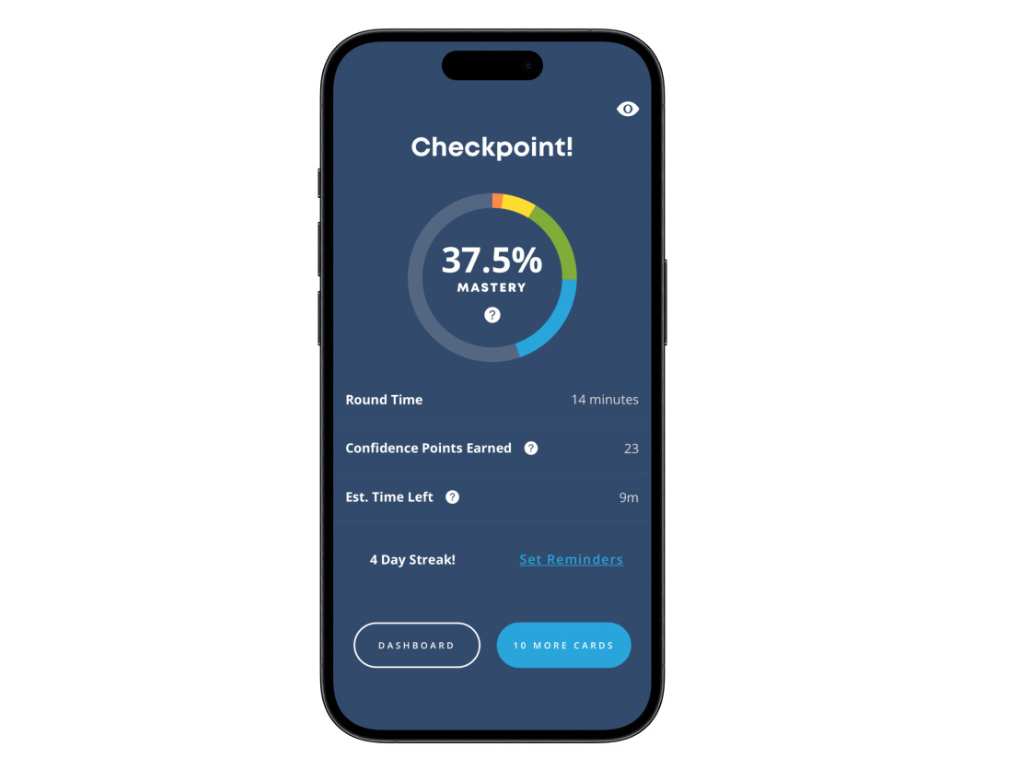
If students think their grade depends on how well they appear to perform in the system, some will start rating every flashcard as 4s and 5s just to make their progress look stronger.
That is exactly why confidence ratings and mastery scores should not be treated as teacher-facing proof of learning on their own. They are most useful for the learner, while teachers are better off grading visible study consistency over time.
(If this is a concern in your classroom, see our guide on what confidence ratings do and do not tell you.)
This doesn't mean that mastery is NOT important. For your students, mastery can be extremely motivating. It gives them a visible sense of progress and gives them an estimate of how much more studying they need to do before they're ready to take a test or exam.
But that is mainly a learner-facing metric. For teachers, the more useful thing to grade is consistency: whether students are actually showing up, studying regularly, and building the habits that lead to real learning over time.
A simple system might look like this:
- X% Of the course grade is allocated to study participation
- Students must spend at least Y total hours studying flashcards
- The study must occur across Z unique days
For example:
- 5% Of the course grade
- 6 Hours of total flashcard study
- Across at least 20 separate days
This kind of structure encourages students to space their studying out over the course of many days or weeks ahead of their assessments, rather than cramming, which is one of the most important principles in cognitive science.
(Read: How to Get Your Students to Study Regularly & Stop Cramming)
How Teachers Can Verify Flashcard Study
Brainscape participation grading relatively easy.
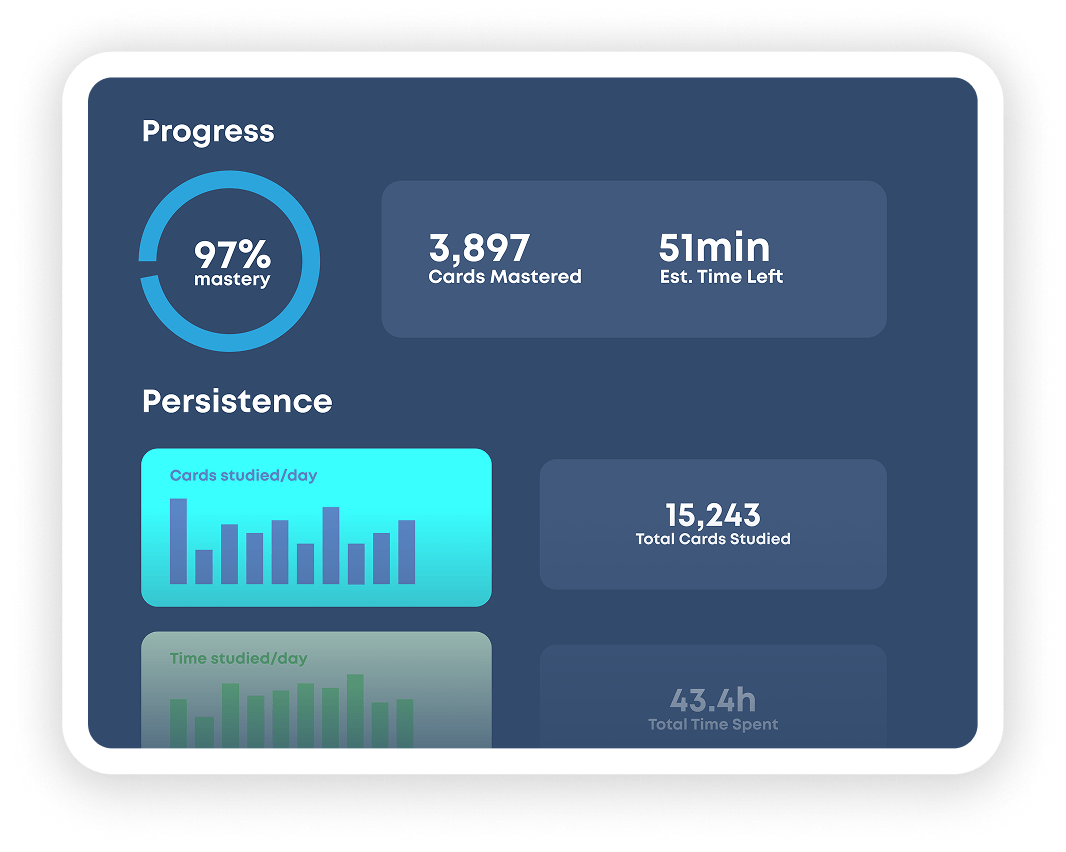
Within your Learners tab (or Partner Reports if your school has a license), you can see for every student:
- Total mastery
- Number of unique days studied
- Amount of time studied
- Number of unique and total cards studied
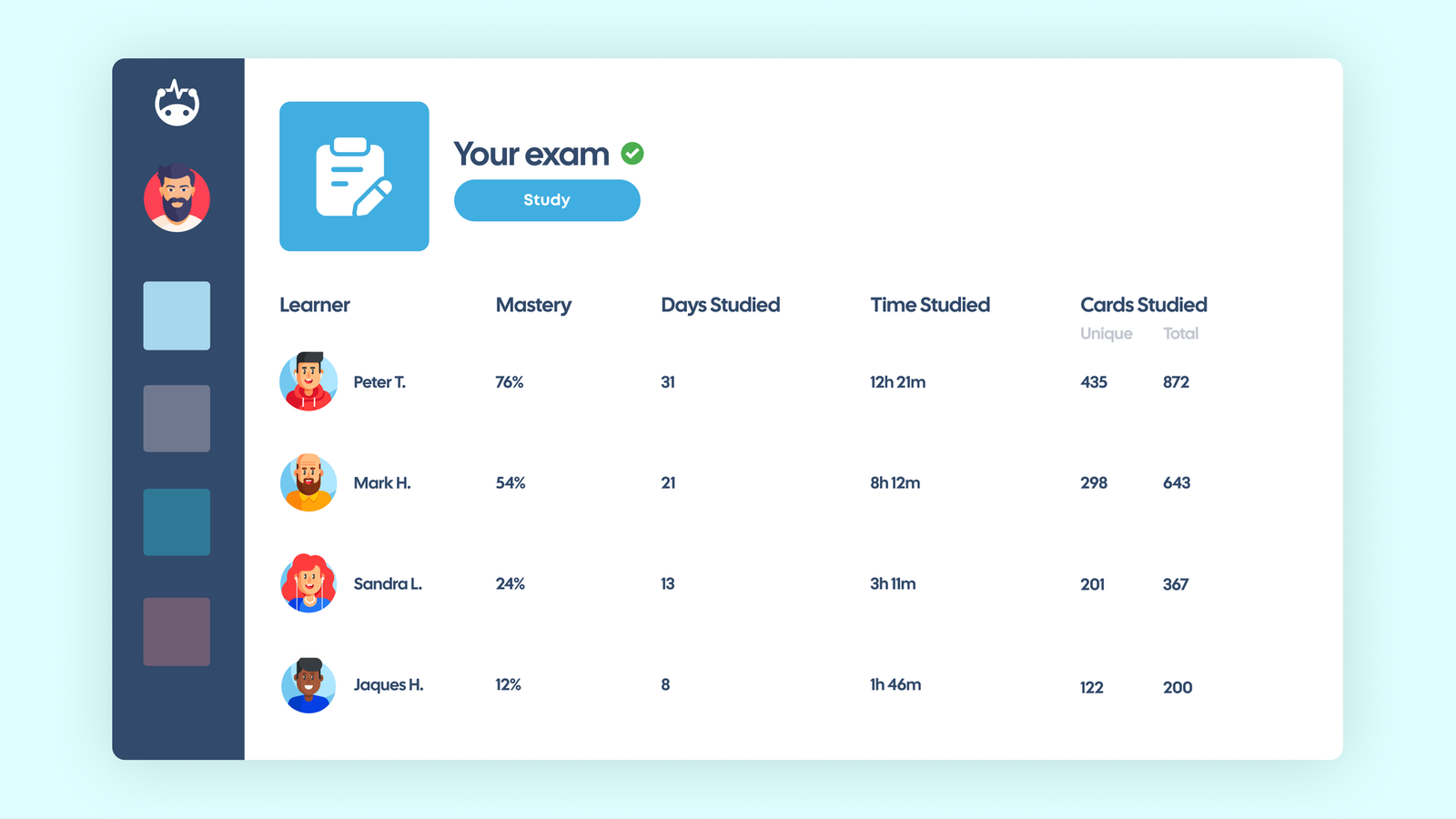
Of these metrics, the number of unique study days is often the most important, because it shows whether students are spreading their studying over time rather than cramming it into one or two long sessions.
Because Brainscape tracks actual flashcard interactions, students cannot simply leave the app open and rack up study time. The platform can detect irregular patterns and stop counting time until normal studying resumes.
That means study time is a much more useful reflection of real engagement with the material.
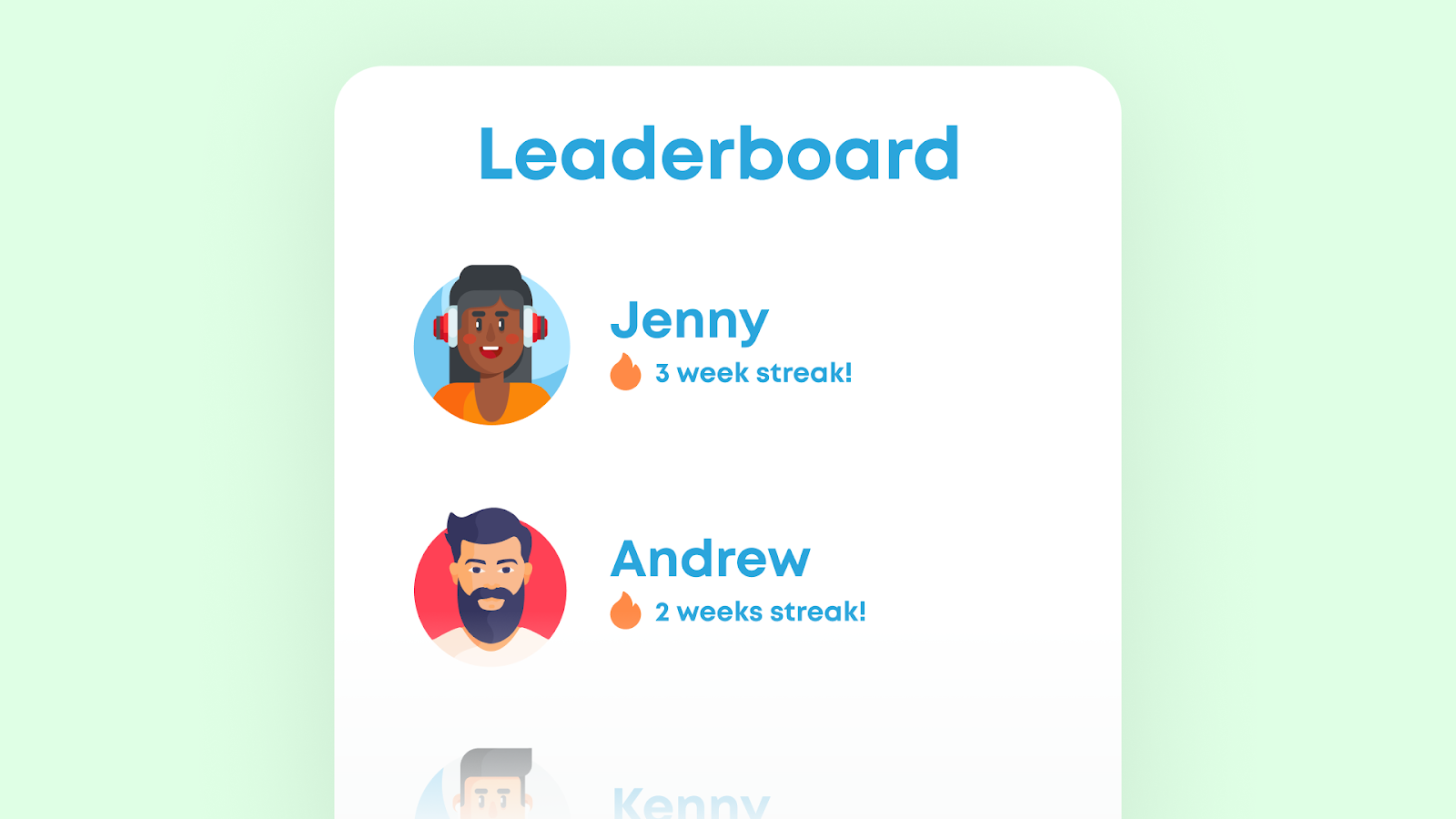
Some teachers also use the class leaderboard as a quick way to spot patterns in study behavior. It should not be the only thing you use for grading, but it can help you see who is studying consistently and who may need a nudge.
(Read: 'How To Prove Learning Outcomes With Brainscape' )
Connecting Study Participation With Learning Outcomes
Participation grades work best when they are paired with occasional knowledge checks.
If students are studying flashcards consistently, you should start to see the effects in their quiz results, classroom recall, concept discussions, and unit assessments. In fact, your class time will become far more efficient if you assign flashcards for study before the lesson.
Students who put real time into retrieval practice (which is what flashcard practice naturally does) will develop stronger recall and a more secure grasp of the material. By the same token, those who lot very little study time will likely show weak scores or grades, in which case you can directly remediate.
These metrics give you more than a just a vague sense of who's doing well and who isn't: it gives you a real starting point for coaching.
Once you can see what consistent flashcard studying looks like in practice, the next step is to formalize it in your grading system by turning those study expectations into a simple syllabus policy that is fair, easy to monitor, and clear to students from the start.
Remember, even a small incentive can create a noticeable shift in behavior. When regular studying becomes part of the grading structure, students are much more likely to build the habit.
(Read: 'How to Make Flashcards Students Will Actually Want to Study')
The Bigger Goal: Building Lifelong Study Habits
At first, a study participation grade may feel artificial.
But over time, it does something much more valuable than boosting exam scores: it teaches students how to learn consistently.
Once students experience the benefits of spaced retrieval, studying a little each day instead of cramming the night before a test, many of them keep the habit even after the incentive is gone.
So the real goal is not simply to grade study behavior. It is to help students build a learning habit that will benefit them for the rest of their lives!
Get Brainscape's Educator User Guide
Curious to learn more about how to introduce Brainscape into your physical or virtual classroom? Our Educator User Guide provides a detailed walkthrough of how to get set up. It'll also give you all the material you need to motivate for its adoption amongst your students, their parents, and/or the faculty of your school or college:
Other Educator Resources For You:
- Brainscape Teacher’s Academy: Practical guides for implementing the cognitive science of learning and memory into your classroom, at scale
- “Tips for Teachers” YouTube Channel: Short, research-backed advice and classroom strategies
- The Educator Community: Join the conversation, ask questions about Brainscape, read other educators’ insights, and log your feature requests here!