CMA® Flashcards | Certified Management Accountant

All the top concepts on the official CMA® exam.
A laptop and mobile displaying CMA Flashcards
Class Icon

The fastest way to study for the CMA® exam.

Watch intro video

Brainscape’s Certified Management Accountant (CMA®) flashcards give accounting and finance professionals the ultimate study weapon to prepare for this globally recognized credential. Designed for candidates working toward their CMA certification, these flashcards distill every major exam topic into concise, exam-focused prompts that are simple to review on the go.

Created in collaboration with HOCK International, a global leader in CMA education, these flashcards combine expert-vetted content with Brainscape’s adaptive learning system to ensure you’re studying what matters most. From complex formulas to decision analysis and internal controls, these flashcards help you stay efficient, consistent, and confident as you move closer to exam day.

What You Get with Brainscape’s CMA Flashcards:

  • Hundreds of flashcards that cover the highest-yield concepts in the official CMA test plan, with all the fluff left out.
  • Accurate, reliable, and expert-developed material created in collaboration with HOCK International, the world’s premier educators for accounting exam prep.
  • A fast, effective spaced repetition study system that will help you learn everything you need to know TWICE as fast, and remember it for longer.
  • Ongoing feedback, statistics, and visualization tools to help you track your progress, which motivates you to study even more (to keep your streak alive!).
  • A carefully tailored and scaffolded curriculum based on the official CMA test plan.
  • Ultimate freedom, accessibility, and convenience with in-sync studying across Brainscape’s website and all your iOS and Android devices.

Why Flashcards Are An Effective Tool For CMA Exam Preparation

Brainscape’s web and mobile flashcards are built on a bedrock of cognitive science, which makes them one of the best study tools for the CMA exam. Three techniques in particular drive their effectiveness: active recall, spaced repetition, and metacognition.

Active recall is the process of pulling information out of your brain rather than passively rereading it. For example, when you’re faced with a flashcard asking for the formula for return on equity, your brain has to work to bring the answer forward. You’re not just glancing over the item on a page or recognizing it from a multiple-choice list. That mental workout strengthens the memory so you can recall it faster when under exam pressure.

Spaced repetition is the process of seeing the same information repeatedly so that you remember it. Your brain dumps out 50% of the information you see once, but by returning to information, it learns to retain it. Brainscape’s personalized spaced repetition algorithm makes sue that you don’t waste time reviewing what you already know well. Instead, the material you struggle with will come up more often, while the easier cards will reappear less frequently. This rhythm helps transfer knowledge from short-term memory into long-term storage.

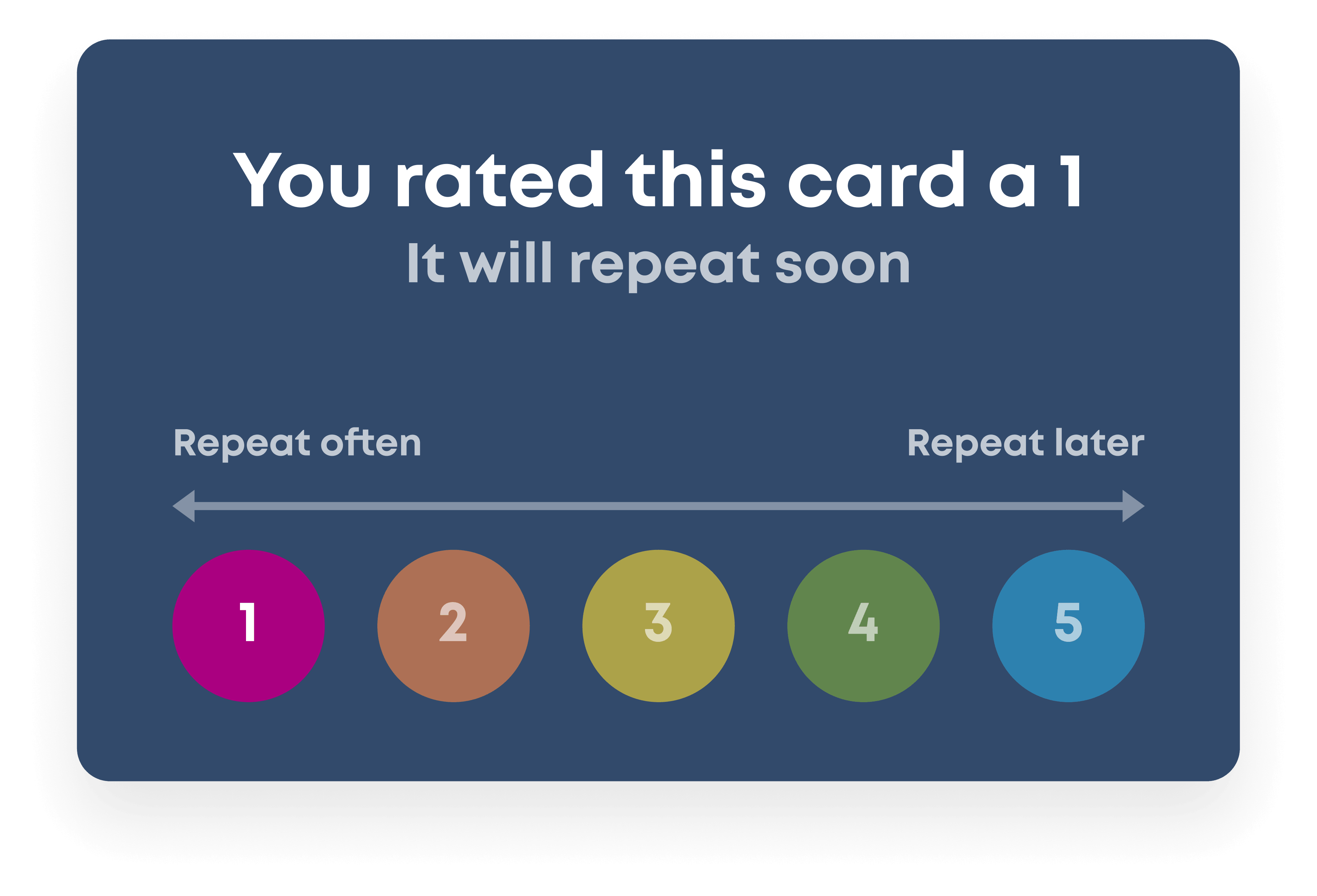
Metacognition is about reflecting on your own learning. Brainscape prompts you to rate your confidence after each card, which forces you to think critically about what you truly know and what still needs work. That self-awareness not only sharpens your focus but also guides the algorithm to schedule cards in the most efficient way.

Compared to slogging through textbooks or endless rereading of course notes, Brainscape’s CMA exam flashcards cut directly to the testable content, making it easier to digest formulas, financial terms, and analytical processes in short study bursts. They aren’t meant to replace practice exams or review courses, but when used alongside them, they provide a balanced, highly efficient study system that ensures the details stick when it counts.

Proven Strategies To Prepare For The CMA Exam

Preparing for the CMA exam is a marathon, not a sprint. With its wide-ranging content, your success depends on organization, consistency, and smart study habits. Here’s a roadmap to keep your prep on track:

  • Build a study timeline. Break the content into manageable chunks across several weeks or months, depending on your schedule. For example, dedicate one week to internal controls and the next to cost management. A written plan helps you balance review across all domains without cramming at the last minute.
  • Blend study tools strategically. Flashcards are ideal for memorizing formulas, ratios, and key terms, and they work best alongside practice exams. Practice tests simulate the CMA’s pacing and question style, while flashcards lock information into long-term memory.
  • Know the time commitment. Most candidates spend between 150 and 170 study hours per exam part, spread over two to three months. Tracking your progress and sticking to a consistent daily routine is more effective than occasional long study sessions.
  • Simulate test-day conditions. Complete practice exams uninterrupted, in silence, with a timer, so you’re used to the four-hour window and can pace yourself between multiple-choice and essay sections. This reduces anxiety and helps you walk into the exam with confidence.
  • Manage stress and energy. Good preparation requires good health. Prioritize sleep, exercise, and short breaks throughout your study plan. On exam day, plan ahead for meals, check-in times, and logistics so nothing distracts you from focusing on the test.

The most reliable CMA exam strategies combine structure, consistent daily practice, and the right balance of tools. With a smart plan and the right resources, you’ll be ready to demonstrate your knowledge and earn your certification.

Key Topics You Need To Master For The CMA Exam

The CMA exam is divided into two major parts, each designed to test a wide range of skills and knowledge areas that management accountants need on the job. Here’s what to expect:

  • Part 1: Financial Planning, Performance, and Analytics. You’ll cover topics like cost management, internal controls, technology and analytics, external financial reporting, and planning and budgeting. Many of these areas involve formulas, frameworks, and detailed processes that are perfect for reinforcement with flashcards.
  • Part 2: (Coming soon!) Strategic Financial Management. This section focuses on financial statement analysis, corporate finance, decision analysis, risk management, and professional ethics. These subjects require both conceptual understanding and quick recall of definitions, ratios, and decision models.

Because the CMA exam content covers such a broad set of domains, candidates often feel overwhelmed by the sheer volume of material. That’s where CMA flashcards shine. By breaking what is on the CMA exam into bite-sized, testable chunks, flashcards give you a clear, step-by-step pathway to mastering the key concepts you need to know to pass the exam.

What Is The Certified Management Accountant (CMA) Exam?

The certified management accountant exam is administered by the Institute of Management Accountants (IMA) and is recognized globally. It has two parts: Part 1: Financial Planning, Performance, and Analytics, and Part 2: Strategic Financial Management. Passing both parts earns you the CMA certification, a credential valued worldwide for advancing careers in finance and accounting.

How Long Is The CMA Exam?

The CMA exam is divided into two parts, each lasting 4 hours. Every session includes 100 multiple-choice questions followed by two essay scenarios. You must complete both parts to earn your CMA certification.

How Many Questions Are On The CMA Exam?

Each exam part has 100 multiple-choice questions plus two essay prompts. To reach the essay section, you must correctly answer at least 50% of the multiple-choice questions.

How Is The CMA Exam Administered?

The CMA exam is computer-based and offered at testing centers around the world. It is available in three testing windows each year: January to February, May to June, and September to October.

What Score Do You Need To Pass The CMA Exam?

Scores range from 0 to 500, and you’ll need at least 360 to pass each part. If you don’t pass on the first attempt, you can retake the exam during the next available testing window.

Master The CMA Exam With Confidence

Brainscape’s CMA flashcards give you the tools to cut through the overwhelming exam content and focus on what truly matters. This collection distills complex formulas, financial terms, and analytical frameworks into clear, testable knowledge that sticks. By harnessing active recall, spaced repetition, and metacognition, you’ll study more efficiently, remember more, and stay motivated. With Brainscape’s web and mobile apps keeping your progress synced, you can review anytime, anywhere, and step into the exam prepared to succeed.

Additional Resources for CMA Test Learners

  • For deeper learning and structured guidance, add HOCK International’s CMA exam review course. The flashcards give you the practice, HOCK provides the foundation, and together, they’re designed to help you pass the CMA exam.
  • Watch: HOCK International’s CMA Certification Guide, which covers essentials like exam structure, grading, study timeline, costs, materials, and more.
  • Explore: Brainscape’s Academy for science-backed advice on how to hack your brain, body, and environment to learn as efficiently as possible, while overcoming common pain points like procrastination and a lack of motivation.
  • Get: Brainscape’s free study planners and exam countdown sheets to help you plan out and stay on top of your studies.

Browse these flashcards.

CMA® Part 1
All the top concepts on the official CMA® exam.
A.1. Financial Statements and Reporting Basics
Understand the balance sheet, income statement, comprehensive income, equity, notes, and the statement of cash flows including both direct and indirect methods.
84  cards
A.1. Integrated and External Reporting
Explore integrated reporting frameworks and the role of disclosures in financial reporting.
20  cards
A.2. Receivables and Inventory
Learn to account for accounts receivable, credit losses, sales returns, and inventory cost tracking under various systems.
83  cards
A.2. Investments and Consolidations
Understand the accounting treatment for debt and equity investments, business combinations, and consolidations.
45  cards
A.2. Fixed and Intangible Assets
Master asset capitalization, depreciation methods, impairment, goodwill, and crypto asset accounting.
34  cards
A.2. Liabilities and Equity Transactions
Explore reclassification of liabilities, warranties, income taxes, leases, and equity transactions including dividends and treasury stock.
78  cards
A.2. Revenue Recognition and Long-Term Contracts
Understand the 5-step model for revenue recognition and accounting for consignment, returns, and long-term contracts.
38  cards
A.2. GAAP vs IFRS and Income Measurement
Compare key GAAP/IFRS differences and learn methods of expense and gain/loss recognition.
14  cards
B.1. Strategic Planning
Understand the strategic planning process, including mission, vision, SWOT, and strategy implementation.
76  cards
B.2. Budgeting Concepts and Standard Setting
Learn core budgeting principles, the development process, and how to establish cost standards.
49  cards
B.3. Forecasting and Probability
Explore regression analysis, learning curves, and probability concepts in forecasting.
45  cards
B.4. Budget Methodologies
Evaluate budgeting methods such as static, flexible, ABB, ZBB, and rolling budgets.
26  cards
B.5. Profit Planning and Budget Schedules
Understand the master budget process, operating/financial budgets, and preparation of supporting schedules.
35  cards
B.5. Cost Estimation and Budget Reporting
Learn high-low method, regression, and reporting methods for ongoing budgetary control.
16  cards
B.5. Top-Level Planning
Apply budgeting formulas and develop top-level pro forma financial statements.
8  cards
C.1. Cost and Variance Measures
Understand cost behavior and perform variance analysis for materials, labor, overhead, and sales, including mix and yield variances.
129  cards
C.2. Responsibility Centers and Transfer Pricing
Evaluate business performance through responsibility accounting, contribution margin reporting, and transfer pricing methods.
37  cards
C.3. Performance Metrics
Use ROI, residual income, and nonfinancial metrics like balanced scorecards to assess performance.
42  cards
D.1. Cost Classifications and Costing Methods
Understand cost classifications (product vs period, fixed vs variable) and identify different cost measurement and accumulation methods.
56  cards
D.1. Joint and Byproduct Costing
Learn the principles of joint cost allocation and accounting for byproducts in manufacturing.
28  cards
D.2. Costing Systems: Process, Job-Order, and Life-Cycle
Analyze costing systems including process costing, job-order costing, and life-cycle approaches.
23  cards
D.3. Overhead and Cost Allocation
Understand allocation of overhead using traditional and activity-based costing, including cost allocation across departments.
89  cards
D.4. Supply Chain and Lean Management
Explore supply chain strategy, lean resource management, JIT, ERP, and capacity planning.
39  cards
D.5. Business Process Improvement and Quality
Learn methods for improving operations through value chain analysis, process reengineering, benchmarking, and quality initiatives.
45  cards
E.1. Corporate Governance and Internal Control Framework
Understand corporate governance structures, board roles, audit committees, and internal control components.
72  cards
E.1. Transaction and Safeguarding Controls
Learn transaction-level controls, safeguarding procedures, and compliance with Sarbanes-Oxley and FCPA.
37  cards
E.1. External Audit and Reporting
Understand external audit processes, responsibilities, and types of audit opinions.
25  cards
E.2. System and Application Controls
Explore general and application-level IT controls, control classifications, and flowcharting methods.
63  cards
E.2. Cybersecurity and Continuity Planning
Learn about cyber threats, defenses, and planning for business continuity.
36  cards
F.1. Information Systems and Transaction Cycles
Understand the role of AIS, the value/supply chain, and various transaction cycles in financial systems.
40  cards
F.1. Databases and ERP Systems
Learn core concepts around databases, data warehouses, and enterprise resource planning.
27  cards
F.2. Data Governance and Management
Explore principles of data governance, IT control frameworks, and records/data lifecycle management.
14  cards
F.2. Cybersecurity: Threats and Defenses
Understand the nature of cyberattacks and appropriate defense mechanisms.
19  cards
F.3. Tech-Enabled Finance Transformation
Learn how automation, RPA, and system development life cycles support finance transformation.
10  cards
F.3. Emerging Tech: AI, Cloud, Blockchain
Explore applications of AI, cloud computing, blockchain, and smart contracts in accounting and finance.
56  cards
F.4. Data Analytics and Business Intelligence
Understand how organizations leverage business intelligence, big data, and data mining techniques.
35  cards
F.4. Analytical Models and Simulation
Learn tools such as regression, time series analysis, sensitivity testing, and Monte Carlo simulation.
45  cards
F.4. Data Visualization
Master principles of visual discovery and how to interpret and design data visualizations.
26  cards
CMA® Part 2
All the top concepts on the official CMA® exam.
A.1. Comparative Financial Statement Analysis
Interpret financial statements using vertical and horizontal analysis to evaluate performance across periods and firms.
11  cards
A.2. Financial Ratio Analysis
Analyze liquidity, leverage, activity, and profitability using key financial ratios, including EPS and ROE.
150  cards
A.3. Profitability Analysis
Evaluate ROA, ROE, revenue quality, and classification of financial items in profitability analysis.
37  cards
A.4. Advanced Financial Topics
Understand the impact of foreign currency, inflation, accounting changes, market value, and earnings quality on financial analysis.
60  cards
B.1. Risk and Return Fundamentals
Understand financial risk types, CAPM, portfolio theory, and the relationship between risk and return.
57  cards
B.2. Long-Term Financial Management
Explore capital structure, cost of capital, debt/equity financing, term structures, bond valuation, and derivative instruments.
124  cards
B.3. Raising Capital and Financial Markets
Understand capital raising in private/public companies, market operations, and market efficiency.
38  cards
B.4. Working Capital Management
Learn methods for managing cash, receivables, inventory, short-term loans, and trade credit.
105  cards
B.5. Corporate Restructuring and Valuation
Understand restructuring strategies including mergers, divestitures, and discounted cash flow valuation.
39  cards
B.6. International Finance
Explore foreign exchange, cross-border financing, and managing international currency risk.
68  cards
C.1. Cost-Volume-Profit (CVP) Analysis
Use CVP and breakeven analysis for decision-making under conditions of risk, constraints, and multiple products.
52  cards
C.2. Marginal Analysis and Decision Making
Apply marginal and differential analysis for decisions like make-or-buy, special orders, and disinvestment.
57  cards
C.3. Pricing Decisions
Understand demand, supply, and pricing strategies based on market structures and product life cycles.
86  cards
D.1. Enterprise Risk Management (ERM)
Explore enterprise risk types, the COSO framework, risk appetite, and capital adequacy.
80  cards
E.1. Capital Investment Analysis and Cash Flows
Understand the capital investment process and identify relevant cash flows for investment analysis.
34  cards
E.2. Capital Investment Methods and Risk
Apply payback, NPV, IRR, and risk analysis techniques for capital budgeting decisions, including real options and constraints.
97  cards
F.1. Business Ethics and Fraud
Understand core principles of business ethics, ethical decision-making, and common types of business fraud.
30  cards
F.2. IMA Code of Ethics and Fraud Triangle
Explore the IMA Code of Ethics, the fraud triangle, and ethical obligations of professionals.
14  cards
F.3. Organizational Ethics and Culture
Learn about organizational ethics, government influence, sustainability, and data ethics.
64  cards

Higher CMA scores, guaranteed.

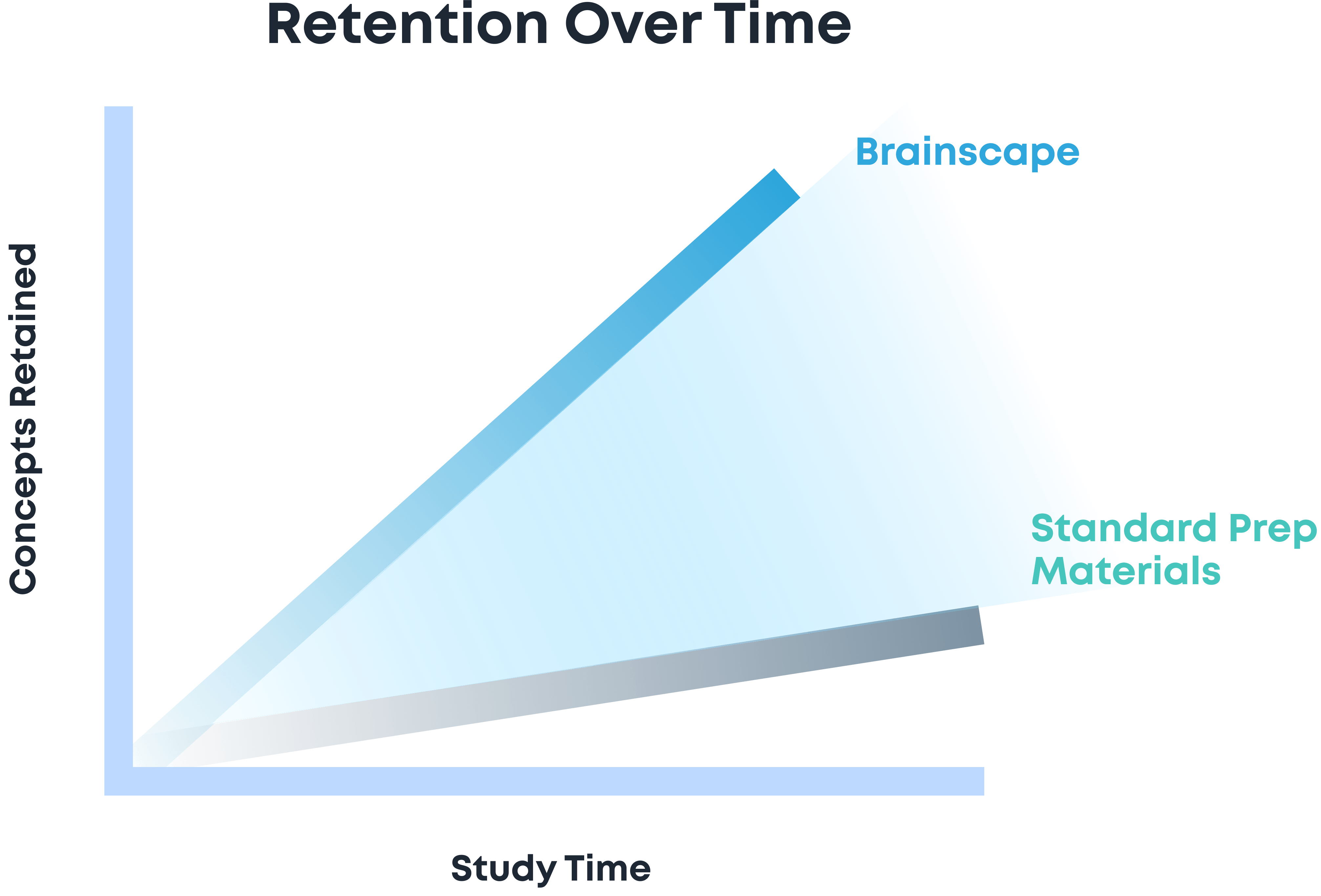
Brainscape’s CMA flashcards are scientifically proven to help you learn faster and retain knowledge for longer than traditional studying.
Happy customer leaving a positive review

The smartest study system.

Brainscape's adaptive, web & mobile flashcards system will drill you on your weaknesses, using a pattern guaranteed to help you learn more in less time.

Easy to add your own flashcards.

Easily collaborate with friends and sync your flashcards to the Brainscape mobile app.

Free to start or $8/mo for full access.

Looking for something else?