MCAT® Flashcards | MCAT Exam Prep
All the top science concepts tested by the official MCAT curriculum.

decks
flashcards
learners
"The PERFECT app to make every second of studying count for the MCAT exam! "

The most efficient way to study for the MCAT®.
Browse these flashcards.
Respiratory System and Tissues
Not only does the MCAT require a basic knowledge of respiratory function, but it also constantly relates it to other systems through concepts like the bicarbonate buffer, hemoglobin’s affinity for oxygen, and the immune role of the respiratory tract. Use these cards to master the respiratory system, as well as skin and other epithelial tissue types.
53
cards
Muscle and Skeletal System
From the neuromuscular junction to the role of calcium in smooth muscle contraction, use these cards to master the muscular and skeletal systems as they appear on the MCAT.
67
cards
Digestive System
From pepsin and trypsin to the role of lacteals, use these cards to master the digestive system as tested on the Biological & Biochemical Foundations section of the MCAT.
71
cards
Kidney and Excretory System
Always a favorite of MCAT test-makers, the excretory system can also be a major source of confusion. Use these cards to master filtration, reabsorption, and secretion, as well as hormone involvement and the complexity of the loop of Henle.
59
cards
Circulatory System
With the new MCAT’s increased focus on biology, understanding the circulatory system has become especially important. Use these cards to master MCAT favorites like the blood buffer and the Bohr effect, as they appear on the Biological & Biochemical Foundations section.
82
cards
Evolution
Having trouble remembering the difference between directional and disruptive natural selection? Can’t quite recall the definition of genetic drift? Use these cards to master evolution as tested on the Biological & Biochemical Foundations section of the MCAT.
63
cards
DNA and Protein Synthesis
DNA, RNA, and protein synthesis is a major topic in both biology and biochemistry. With these cards, you can master the content knowledge required to attack a complicated question or understand a dense experiment-based passage.
65
cards
Eukaryotic Cell
With the biological focus of the new MCAT, an understanding of eukaryotic cells is especially vital. Use these cards to familiarize yourself with microtubules and microfilaments, the phases of mitosis, and the various types of membrane transport. For enhanced practice, think about how these concepts relate to real-life topics like cancer and human aging.
88
cards
Microbiology
What’s the difference between conjugation, transformation, and transduction? What does it mean when we say that prokaryotes are polycistronic? Master these topics and much more, and gain that confidence you need for the Biological & Biochemical Foundations section of the MCAT.
53
cards
Nervous System
Topics like action potentials and the difference between sympathetic and parasympathetic activity are constant favorites of the MCAT test-makers. Use these cards to master these concepts as they are tested on the Biological & Biochemical Foundations section.
61
cards
Endocrine System
The MCAT requires an in-depth understanding of hormones, from the difference between peptides and steroids to their effects on other organ systems. Use these cards to master endocrine organs, specific hormones, and the complex interactions involved.
58
cards
Lymphatic and Immune Systems
Antibodies, antigens, macrophages, monocytes, neutrophils…the immune system is complicated, but understanding its components is essential for many MCAT questions and passages. This deck covers all of these topics, as well complex concepts like clonal selection and blood transfusions. Use these cards to master the lymphatic and immune systems as tested on the MCAT.
57
cards
Development
What’s the difference between pluripotent, totipotent, and multipotent? How can you relate a spermatogonium, a primary spermatocyte, and a spermatid? Use these cards to see how all of these topics connect, and you can master reproduction and development as tested on the MCAT.
66
cards
Genetics
Feeling a bit rusty with the Hardy-Weinberg equation? Having trouble remembering the difference between incomplete dominance and codominance? Use these cards to master Mendelian genetics as it appears on the Biological & Biochemical Foundations section.
68
cards
Sensation and Perception
From the parts of the eye and ear to top-down versus bottom-up processing, sensation and perception can be daunting. Use these cards to get those topics and more down.
88
cards
Attention and Cognition
These cards will help you master attention, cognition, and language, from Piaget's stages to heuristics.
69
cards
Consciousness
The stages of sleep and consciousness-altering drugs are relatively "memorization-based" MCAT concepts. These cards should make that memorization a breeze.
56
cards
Memory
Memory (from its types to its dysfunctions) is tested a LOT on the MCAT. We've developed these cards to cover it thoroughly.
62
cards
Emotion and Stress
You might think you have James-Lange versus Cannon-Bard down, but do you really? Use these cards to practice that and much more.
68
cards
Biological Basis of Behavior
These cards cover neurotransmitters, parts of the brain, reflexes, and the wide array of other biological concepts that form the basis for MCAT psychology.
80
cards
Personality
This deck takes a very deep dive into the perspectives of personality, from trait theory to Freud and psychoanalytics. Use these cards to master this material inside and out.
34
cards
Psychological Disorders
The memorization-heavy content of MCAT-relevant psych disorders is well-suited for flashcards. Use these cards to get this content down!
47
cards
Group Psychology
From groupthink to group polarization and from deviance to socialization, this deck will help you master group-related psychology.
43
cards
Motivation and Attitude
Whether you're feeling motivated to study or would rather stare blankly at the wall, this deck will cover the full scope of MCAT content regarding motivation and attitude.
40
cards
Learning
Does learning about learning feel almost too meta for you, too? Anyway, this deck covers absolutely critical concepts, such as classical and operant conditioning.
59
cards
Self-Identity
"I study for the MCAT, therefore I am." Wait, that's not right. Anyway, use this deck to study aspects of identity from key concepts to developmental stages.
48
cards
Experimental Design
Experimental design is perhaps the single most important topic in MCAT P/S. Use this deck to master types of variables, reliability and validity, relevant statistical concepts, and more.
102
cards
Amino Acid Abbreviations
While we all know that the MCAT involves much more than just memorization, remembering the amino acid abbreviations is crucial. Review them here until you have them down!
36
cards
Amino Acid Properties
Take any practice exam and you'll notice the same trend: amino acid questions appear constantly. (In fact, they make up a huge fraction of BOTH the C/P and B/B sections.) From their structures and chemical behavior to titration curves and isoelectric focusing, these cards will help you thoroughly master amino acids.
100
cards
Proteins and Nucleic Acids
Are side chains directly involved in secondary structure? Does complete denaturation of tertiary structure require the reduction or the oxidation of disulfide bonds? Use this deck to cover these topics and so much more.
76
cards
Enzymes and Bioenergetics
Having trouble interpreting a Lineweaver-Burk plot, or understanding how uncompetitive and noncompetitive inhibition are different? Use these cards to master these concepts as well as many of biochem's most high-yield topics.
88
cards
Non-Enzymatic Protein Function
We often focus so heavily on enzymes that we forget that the MCAT tests non-enzymatic proteins, too. This deck covers binding proteins, motors, immune proteins, cytoskeletal fibers, and other proteins and related structures.
45
cards
Lipids
Lipid structure and metabolism (and particularly beta-oxidation) are often daunting because it's difficult to know which details are crucial and which would never be tested. Use this deck, created by a long-time MCAT expert, to guide you on that front.
63
cards
Metabolism
Without exaggeration, you could spend your entire life studying metabolism. We know you'd prefer not to do that, so we've created these 120 cards to dig deep into topics like glycolysis and the Krebs cycle when necessary while not obsessing over irrelevant details.
120
cards
Analytic Techniques
If you thought organic chemistry lab techniques were tough, wait until you see biochemical analytic techniques (which are also vastly more frequently tested). This deck was carefully designed to make learning those techniques as painless as possible.
80
cards
Atomic Structure
Bohr’s model, quantum numbers, stability…these concepts form the basis of general chemistry. This deck covers all of these topics, as well as the complexities of electron configuration and emission spectra. Use these cards to master the topic of electronic structure as tested on the MCAT.
38
cards
Periodic Table Trends
You’d be surprised how many MCAT questions simply require an understanding of the periodic table. But this can be tougher than it looks, and closely related topics like electron affinity, electronegativity, and ionization energy are easy to confuse. Use these cards to master periodic trends and ace these questions whenever you see them.
41
cards
Chemical Bonding
From sigma bonds and Lewis structure to lattice energy and molecular geometry, use these cards to master the topic of chemical bonding as tested on the MCAT.
64
cards
Phases
How does a dissolved solute affect the vapor pressure of water? When does a gas most closely mimic ideal behavior? Master these topics and much more, and gain that confidence you need for the Chemical & Physical Foundations section of the MCAT.
71
cards
Stoichiometry
Empirical formulas, percent composition by mass, limiting reagents…these topics appear often on the MCAT, and many students haven’t seen them in years! Use these cards to master stoichiometry as it appears on the Chemical & Physical Foundations section.
43
cards
Thermodynamics
What’s the difference between an endergonic and an endothermic reaction? How can you relate Gibbs free energy, reaction quotient, and equilibrium constant? Use these cards to see how all of these topics connect, and you can master thermodynamics as tested on the MCAT.
70
cards
Rates, Kinetics, Equilibrium
From reaction order to the effect of temperature change on an endothermic reaction, use these cards to master the topics of kinetics and equilibrium as they appear on the MCAT.
53
cards
Solutions
Having trouble remembering the difference between molarity and molality, or whether PbBr is soluble? Use these cards to master solution chemistry as tested on the Chemical & Physical Foundations section of the MCAT.
42
cards
Acids and Bases
Always a favorite of MCAT test-makers, acid/base chemistry can also be one of the toughest topics on the exam. Use these cards to master the Henderson-Hasselbalch equation, pH and pOH, and polyprotic titrations. For enhanced practice, think about how these concepts relate to biological systems, such as the bicarbonate buffer system.
63
cards
Electrochemistry
With the biological focus of the new exam, topics like electrochemistry have become trickier than ever. From the charges of the anode and cathode during isoelectric focusing, to the relationship between E and K for a metabolic reaction, these concepts can seem overwhelming. Use these cards to master the topic of electrochemistry as tested on the Chemical & Physical Foundations section of the MCAT.
49
cards
Nuclear & Atomic Phenomena
Atomic models, protons and neutrons, isotopes…these concepts form the basis of general chemistry. This deck covers all of these topics, as well as the complexities of radioactive decay, binding energy, and emission spectra. Use these cards to master the topic of atomic and nuclear phenomena as tested on the MCAT.
44
cards
Force & Motion
Confused by free-body diagrams, pulleys, and inclined planes? Use these cards to see how all of these topics connect, and you can master force, motion, and gravity as tested on the MCAT.
42
cards
Work & Energy
Topics like work, power, and conservation of energy are constant favorites of the MCAT test-makers. Use these cards to master these concepts as they are tested on the Chemical & Physical Foundations section.
42
cards
Translational Motion
Dimensional analysis can be an incredibly helpful tool for the Chemical & Physical Foundations section of the MCAT. Use these cards to master the topics of units, vector addition, kinematics, and more.
33
cards
Equilibrium & Momentum
From the basics of rotational equilibrium to the complexities of torque, use these cards to master the topic of equilibrium and momentum as tested on the MCAT.
47
cards
Fluids
The biological focus of the new MCAT makes fluid dynamics one of the most valuable topics to master. Use these cards to familiarize yourself with Bernoulli’s equation, surface tension, and the properties of ideal fluids. For enhanced practice, think about how these concepts relate to biological systems, such as blood vessels and human circulation.
56
cards
Periodic Motion & Waves
Waves and periodic motion have countless applications to both the Chemical & Physical Foundations section of the MCAT and to real life. Use these cards to master frequency, simple harmonic motion, standing waves, and more, exactly as they appear on the exam.
61
cards
Sound
With the biological focus of the new exam, topics like decibels and the Doppler Effect have become especially important to understand. Use these cards to master the topic of sound as tested on the Chemical & Physical Foundations section of the MCAT.
40
cards
Electrostatics & Magnetism
Having trouble remembering the difference between electric force, electric fields, and electric potential? Use these cards to master the topic of electrostatics and magnetism as tested on the Chemical & Physical Foundations section of the MCAT.
35
cards
Circuits
From the basics of voltage and current to in-depth circuit calculations, use these cards to master the topic of circuits as it appears on the MCAT.
69
cards
Light & Optics
Always a favorite of MCAT test-makers, optical systems have become especially high-yield due to their applications to biological systems. Use these cards to master Snell’s law, diverging and converging mirrors, and combinations of lenses. For enhanced practice, think about how these concepts relate to biological systems, such as the human eye.
61
cards
Bonding
Having trouble remembering the difference between E and Z isomers? Finding it tough to identify meso compounds? Use these cards to master these topics, as well as resonance and hybridization, as they are tested on the MCAT.
69
cards
Analysis and Spectra
Molecular spectra, whether NMR, IR, or mass spec, can be intimidating when they appear on the MCAT. Use these cards to master equivalent protons, memorize important shifts, and learn how these complex methods relate.
42
cards
Separation and Purification
Separation and purification techniques are constant favorites of the MCAT test-makers. From extraction to distillation to chromatography, use these cards to master these concepts as they are tested on the exam.
45
cards
Alcohols
From oxidizing agents to Sn2 reactions, use these cards to master alcohols in the way they are tested in MCAT organic chemistry.
57
cards
Aldehydes and Ketones
Feeling a bit rusty with keto-enol tautomerization? Having trouble remembering the difference between acetals and hemiacetals? Use these cards to master aldehydes, ketones, and their reactions as they appear on the MCAT.
56
cards
Carboxylic Acids
With its relationship to amino acids, carboxylic acid function is a major topic in both organic chemistry and biochemistry. With these cards, you can master the content knowledge required to attack a tricky question or understand a reaction mechanism.
47
cards
Acid Derivatives and Esters
From acid anhydrides to saponification, use these cards to master the carboxylic acid derivatives as tested on the MCAT.
37
cards
Amines
Is an amide more reactive than a carboxylic acid? Do additional alkyl substituents make an amine more or less acidic? Master these topics and much more, and gain that confidence you need to ace any amine-related question on the MCAT.
30
cards
Biological Molecules
With the biological focus of the new MCAT, having an understanding of carbohydrates, lipids, and amino acids has become especially important. Use these cards to familiarize yourself with the difference between alpha and beta anomers, reducing sugars, and much more.
44
cards
Functional Groups and IUPAC
What’s the difference between amides, imides, amines, and enamines? How do you name an organic compound with multiple functional groups? Use these cards to master functional groups and IUPAC conventions, and you’ll gain a solid foundation for your further review of MCAT organic chemistry.
48
cards
Bias and Prejudice
If you're having trouble distinguishing actor-observer bias from the fundamental attribution error, or if the nuances of stereotyping versus prejudice seem confusing, this deck is for you!
45
cards
Social Interactions
Statuses, roles, groups, and organizations....oh my! Plus a LOT more, from game theory to aggression. And, as always, it all corresponds directly to the official MCAT outline.
69
cards
Social Structures
Clara (the author of these cards) wants to make sure you never mix up the functional approaches to sociology again. In addition, this deck also covers the rest of content category 9A.
89
cards
Demographics
From push and pull factors to the demographic transition model, from the life course approach to globalization, dominate content category 9B using this deck.
64
cards
Inequality in Society
This deck covers the entirety of MCAT foundational concept 10 ("social stratification and access to resources"), which is a heavily-tested part of MCAT psychology.
49
cards
Experimental Methods
Experimental methods make up a staggering fraction of a typical MCAT P/S section. This deck covers these methods from a sociological perspective, from cross-sectional versus longitudinal studies to biases implicit in survey methods.
51
cards
Higher MCAT scores, guaranteed
Brainscape’s MCAT flashcards are scientifically proven to help you learn faster and retain knowledge for longer than traditional studying.
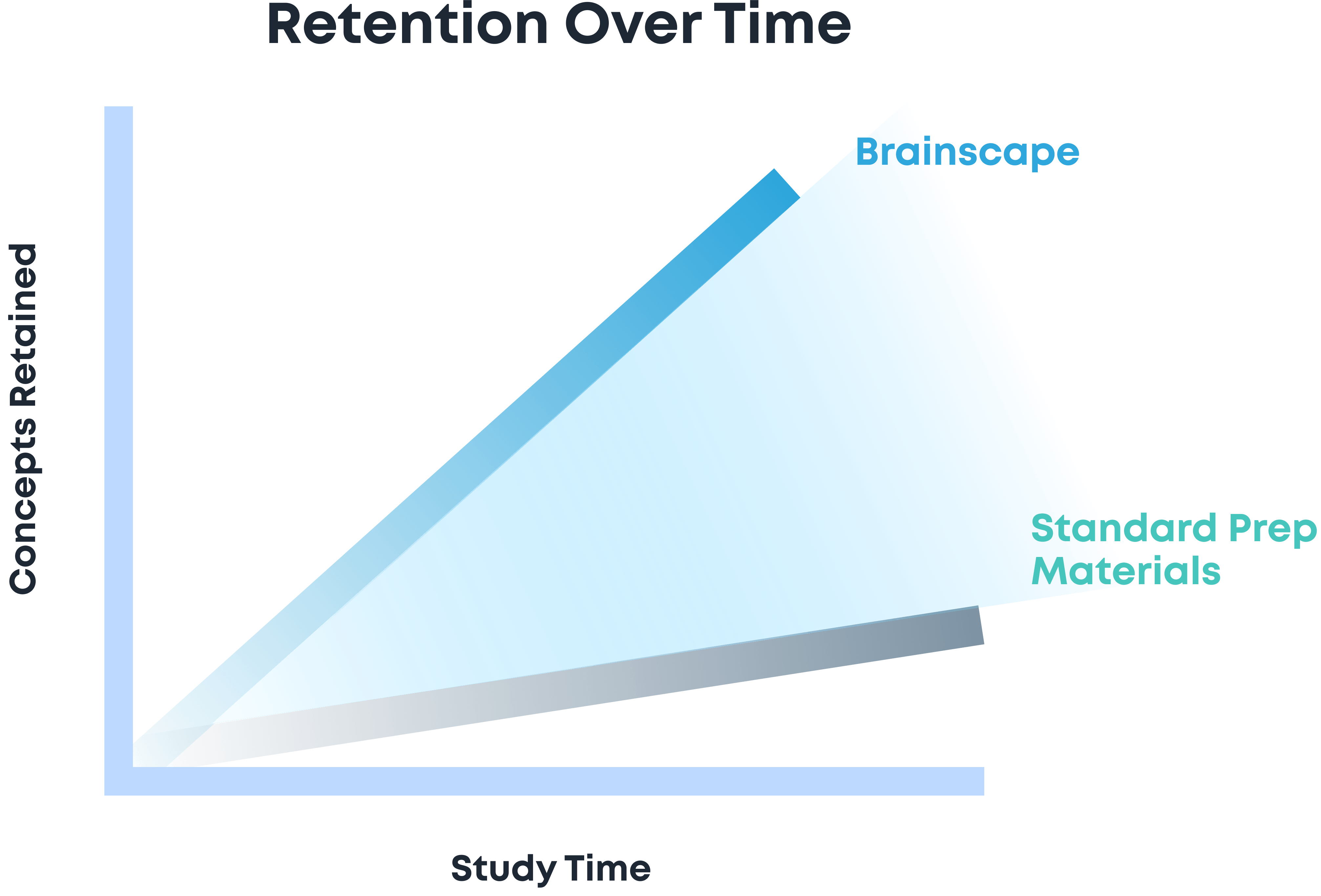
The smartest study method.
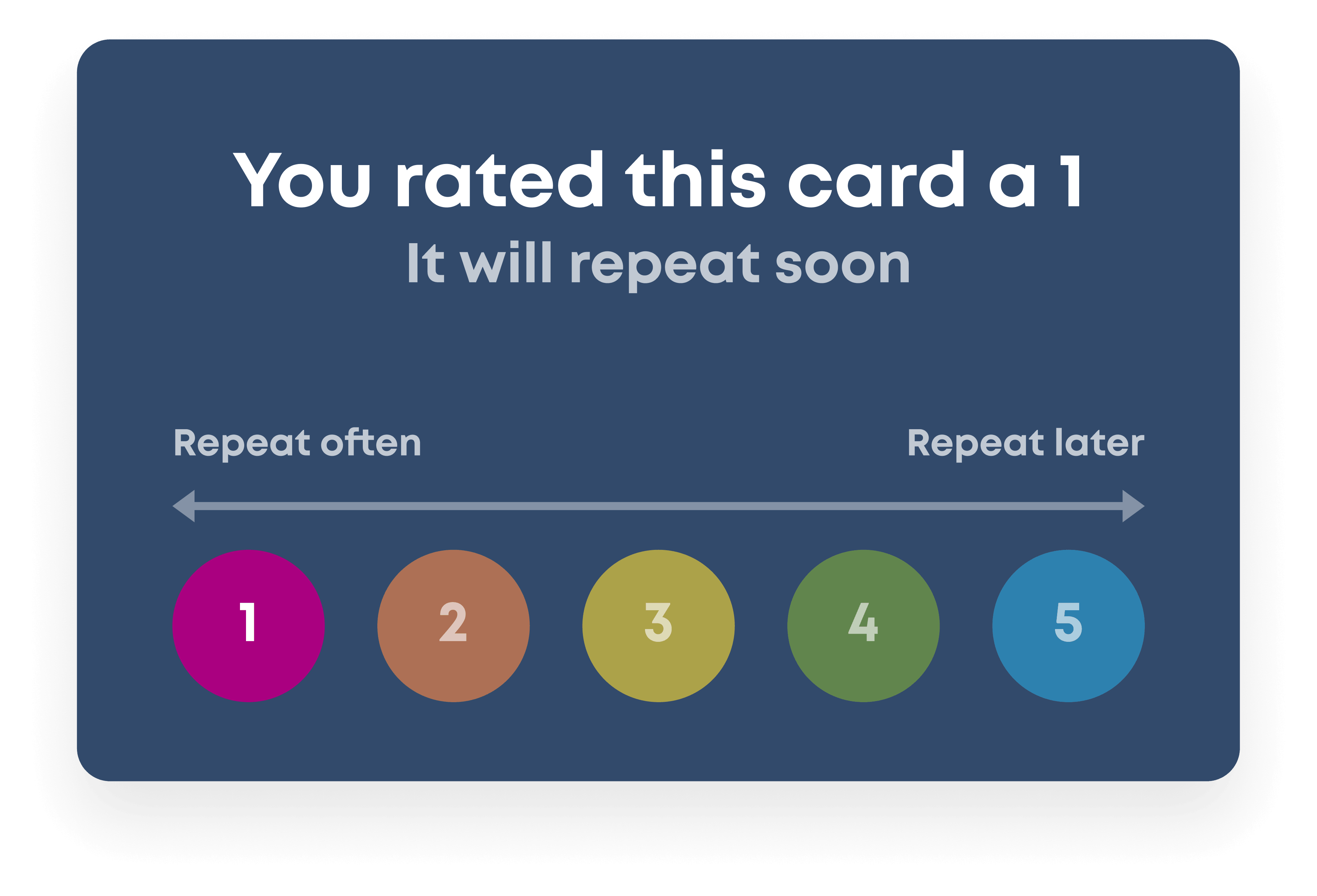
Brainscape's spaced repetition system is scientifically proven to help you learn faster and develop better study habits.
Easy to add your own flashcards.
Collaborate with others, add media, and keep all your flashcards in sync between the Brainscape website and mobile app.