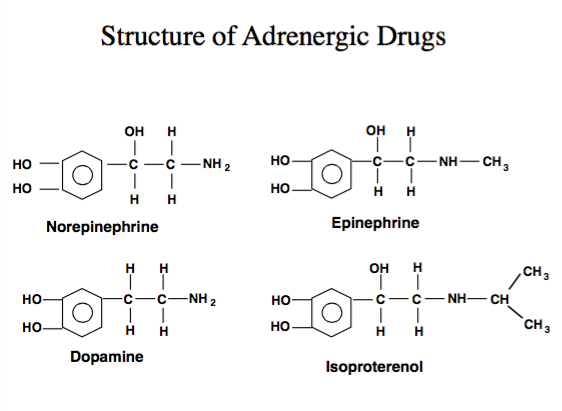
Structure of E, NE, DA and Isoproterenol
- Know the structures
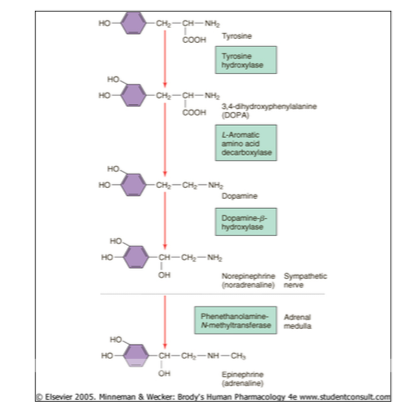
- Know the biosynthetic pathway for Nor, Epi and DA
Biosynthesis of Norepi, Epi
- The most important naturally occurring adrenergic transmitters are norepinephrine, epinephrine, and dopamine, which are related biosynthetically.
- Norepinephrine is the transmitter for most post–ganglionic sympathetic neurons, with the exception of sweat glands. NE is a neurotransmitter in certain regions of the CNS.
- Epinephrine is the major hormone of the adrenal medulla, and can be released into the circulation under conditions of sympathetic stimulation.
- Dopamine is used as a transmitter in the CNS, carotid body, and superior cervical ganglion.
- During chronic stress the continued elevation of catecholamines can have several deleterious effects including damage to the blood vessels because of over-stimulation, memory impairment, and weight loss.
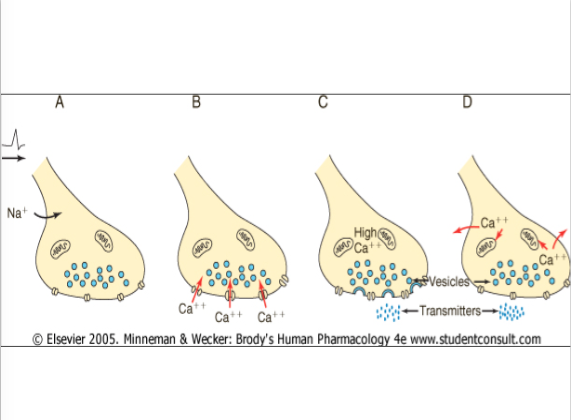
There are many of similarities in synaptic transmission at the end organ when comparing the sympathetic and parasympathetic systems.
- For example, NE is in vesicles that are contained in axon varicosities, which fuse and are released onto the target organs.
- NE is released into the synaptic cleft by Ca2+-dependent exocytosis. NE interacts with receptors on the postsynaptic membrane to cause either hyperpolarizations (IPSP) or depolarizations (EPSP) of the membrane of the effector organs. The signal is terminated by re-uptake of the transmitter into the nerve terminal.
- There does not appear to be localization of adrenergic receptors to the sub-synaptic membrane under the nerve terminal. In at least some organs, a phenomenon analogous to de-innervation supersensitivity due to increased numbers of receptors is seen. At least some (and perhaps all) of the effects of activation of beta– adrenergic receptors are mediated by the coupling of the receptor to adenylate cyclase and the use of cyclic AMP as a second messenger.
Innervation of VSM by adrenergic neuron
- Since we will be talking about the effects of the adrenergic system on vascular smooth muscle, I want to take a moment to talk about the innervation of vascular smooth muscle.
- The vascular smooth muscle cells are in this medial layer of the blood vessel.
- When the adrenergic nerves come in to innervate the smooth muscle, they ramify at the adventitia-medial junction. The adventitia contains a lot of connective tissue. They form the terminal effector plexus in the outermost muscle layer. These varicosities are the sites where NE is released on the outer layer of the vascular smooth muscle.
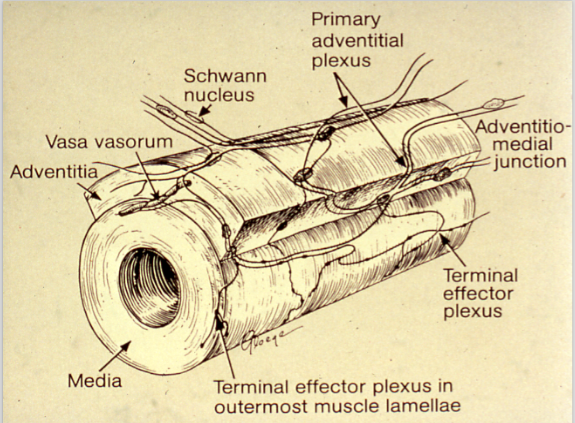
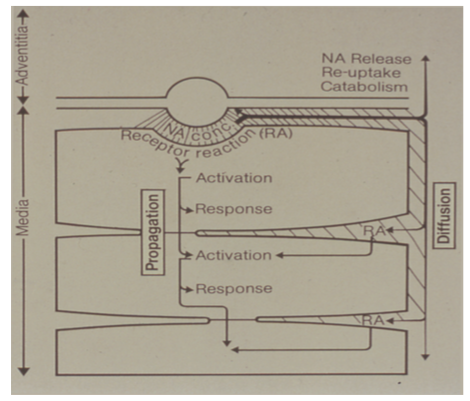
Propagation of signal from one SM cell to another
- NE is released only on the outer surface of the media and the only way smooth muscle cells in deeper layers are activated is by diffusion of NE down to those cells, or because the smooth muscle cells in the inner layers are all electrically coupled.
- There is electric current going from one cell to the next to propagate the signal to underlying layers. So this is just a slightly different neuro-effector junction then we have been talking about. There is not localization of adrenergic receptors within the sub-synaptic membrane under the nerve terminal.
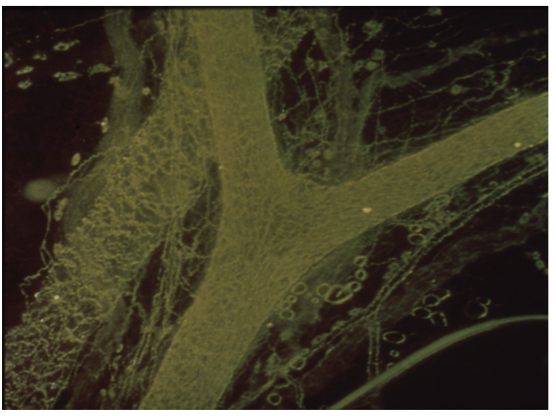
Adrenergic neurons on vascular smooth muscle
- You can visualize adrenergic nerves with an immunohistochemical technique. Here the tissue was reacted with formaldehyde, forms a colored adduct that appears as fluorescent staining.
- In this picture you can see the adrenergic nerves innervating vascular smooth muscle. Illustrates how extensive and diffuse adrenergic innervation is.
- There is no specific localization of adrenergic receptors on the sub-synaptic membrane under the nerve terminal.
- Like the NM junction and parasympathetic nervous system, the adrenergic system also shows de- innervation super-sensitivity… i.e. when you lose sympathetic neurons there are large increases in adrenergic receptors in the target tissue.
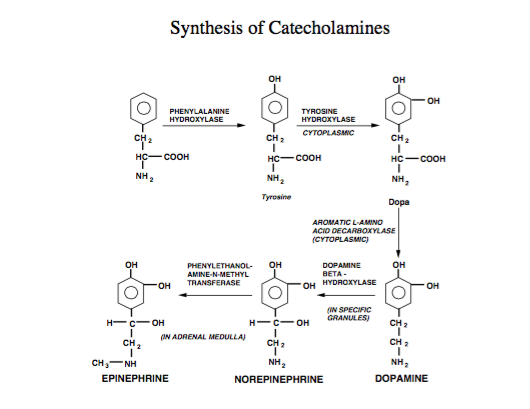
Catecholamine synthesis
****Know the structures, don’t need to know the enzymes****
What happens in the adrenergic nerve terminal? How do you make catecholamines and how do you interfere with things that happen in the nerve terminal?
The immediate precursor for the biosynthesis of catecholamines is the amino acid, tyrosine.
Tyrosine is made from phenylalanine by the enzyme phenylalanine hydroxylase.
1. Tyrosine is converted in the cytoplasm to DOPA by tyrosine hydroxylase.
- DOPA is converted to dopamine in the cytoplasm by dopa-decarboxylse. The enzyme is also known as aromatic-L-amino acid decarboxylase. All of this happens in the cytoplasm of the nerve terminal.
- Dopamine is transported into the vesicles by a specific transport system.
- Inside the vesicles dopamine is converted to NE by dopamine-beta-hydroxylase. This is what happens in sympathetic nerves.
In the adrenal medulla:
- NE is methylated by phenylethanolamine-N-methy transferase in the cytoplasm to produce epinephrine.
- The E is then transported back into vesicles.
- In humans the adrenal medulla contains about 80% E and 20% NE. It is important to know that the rate- limiting step for the synthesis of E and NE is tyrosine hydroxylase, a step early in the synthetic pathway.
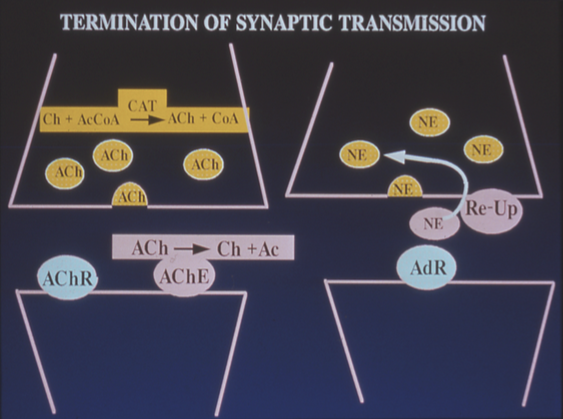
- Epinephrine and norepinephrine are released by Ca2+-dependent exocytosis, but adrenergic and cholinergic synapses differ significantly in the pathways for termination of synaptic transmission.
Termination comparison
- At cholinergic synapses the main pathway for termination is hydrolysis of acetylcholine by acetylcholine esterase. The choline is then transported back into the presynaptic terminal by a specific transport system. Acetylcholine, itself is not transported back into the terminal. Therefore, drugs which inhibit acetylcholine esterase can be used to increase synaptic acetylcholine.
- The main pathway for termination of NE action is not by destruction of NE, but by reuptake back into the cytoplasm and ultimately into the granules or vesicle.
- There are, however, secondary mechanisms by which NE is metabolized:
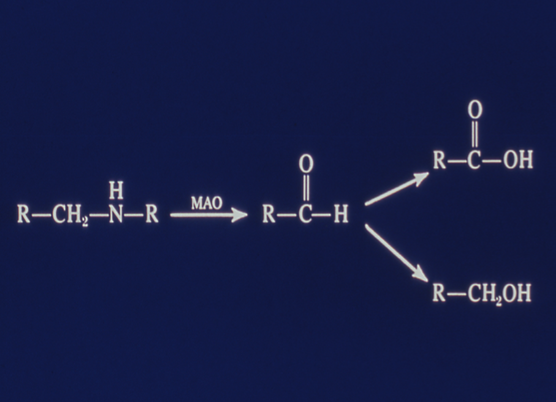
- Monoamine oxidase (MAO) in the mitochondria. The nerve terminal has a lot of mitochondria and MAO.
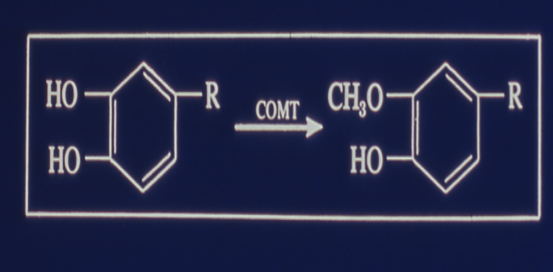
- NE can also be metabolized by catecholamine-O- methyl transferase (COMT), which is extra-neuronal, e.g. found in liver and kidney.
MAO reaction
Monoamine oxidase oxidizes NE to an aldehyde which can be subsequently converted to the alcohol or carboxylic acid. It oxidizes E to a ketone which can be further metabolized.
COMT reaction
- Catecholamine-O-methyl transferase, transfers a methyl group onto one of the hydroxyls of the aromatic ring.
- The metabolism of catecholamines can be quite complex and the products of monoamine oxidase can be acted on by Catecholamine-O-methyl transferase. The products of Catecholamine-O-methyl transferase can be acted on by monoamine oxidase.
- For this course I want you to know that the end products of catecholamine metabolism are secreted into the urine and there are some diagnostic tests for their detection.
Drugs affecting adrenergic transmission
- There are a large number of drugs acting at adrenergic synapses. I will briefly describe some of them. Most of these will be considered in greater detail in subsequent lectures….this is an overview.
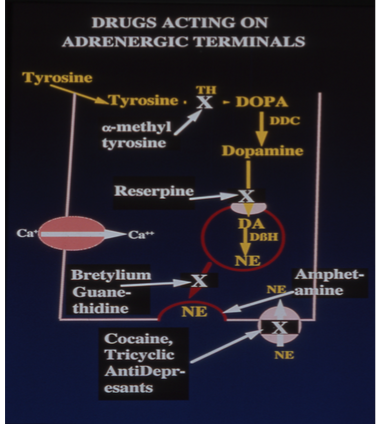
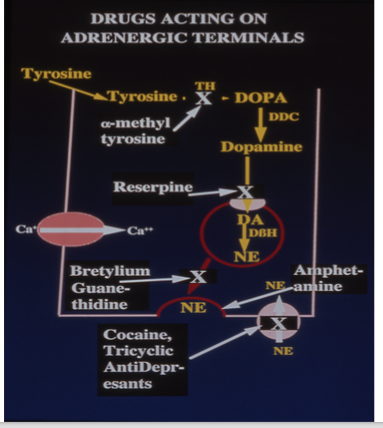
- The rate-limiting step in the synthesis of catecholamines is tyrosine hydroxylase. This is inhibited by alpha-methyl tyrosine. You decrease the levels of NE in the nerve terminal with alpha-methyl tyrosine. This inhibits the sympathetic pathway.
- The action potential-stimulated release of NE is blocked by bretylium and guanethidine.
- There are also drugs, e.g. cocaine and tricyclic antidepressants that block the transporter on the nerve terminal.
- Since this transporter is the main mechanism for the termination of the actions of the catecholamines, you would expect that blocking this transporter would increase the actions of endogenously released NE. These types of drugs augment adrenergic transmission.
- The two transporters, the one which transports catecholamines into the nerve terminal and the one that transports them into the vesicle are completely different proteins. They are preferentially acted on by different types of drugs.
- The adrenal medulla does not have the uptake system that transports catecholamines in the synapse back into the nerve terminal…. so cocaine and tricyclic antidepressants do not affect the adrenal medulla.
Drugs affecting adrenergic transmission…part 2…
- There are drugs, eg reserpine, which block the transport of catecholamines into the vesicles.
- You need to get DA back into the vesicle to make NE. Drugs such as reserpine which inhibit the transport into the vesicle cause depletion of catecholamines and interfere with adrenergic transmission.
- One class of drugs promotes the release of catecholamines from the nerve terminal, leading to a sympathomimetic effects. This includes amphetamine and tyramine will cause release of catecholamines from the terminal.
- Guanethidine displaces catecholamines from storage sites and blocks adrenergic transmission.
- Inhibition of MAO by the drug pargyline (Eutonyl) can cause accumulation of NE.
Treatment of Parkinson’s disease
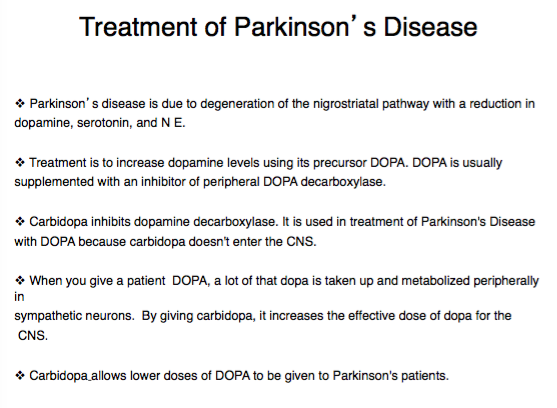
- Parkinson’s disease is due to degeneration of the nigrostriatal pathway with a reduction in dopamine, serotonin, and N E. Treatment is to increase dopamine levels using its precursor DOPA. DOPA is usually supplemented with an inhibitor of peripheral DOPA decarboxylase.
- For example, Carbidopa inhibits dopamine decarboxylase. It is used in treatment of Parkinson’s Disease with DOPA because carbidopa doesn’t enter the CNS. When you give a patient DOPA, a lot of that DOPA is taken up and metabolized peripherally in sympathetic neurons. By giving carbidopa, it increases the effective dose of DOPA for the CNS. Carbidopa allows lower doses of DOPA to be given to Parkinson’s patients.
- COMT can be inhibited by tolcapone (tol-capone) , a drug which is given with carbidopa to Parkinson’s patients.
Presynaptic Receptors:
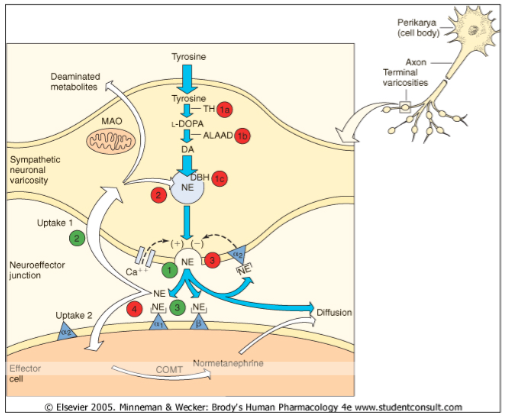
Another important point about adrenergic terminals is that some adrenergic terminals contain presynaptic receptors (e.g. muscarinic or alpha-adrenergic receptors) that modulate adrenergic transmitter release. Normally these presynaptic receptors are coupled to inhibition of NE release. They function as a feedback inhibitory system. These presynaptic receptors have a different set of pharmacologies than most post- synaptic receptors. Presynaptic receptors are often coupled to Gi and inhibition of adenylyl cyclase. Presynaptic cAMP normally enhances NT release.
Classification of Adrenergic Receptors
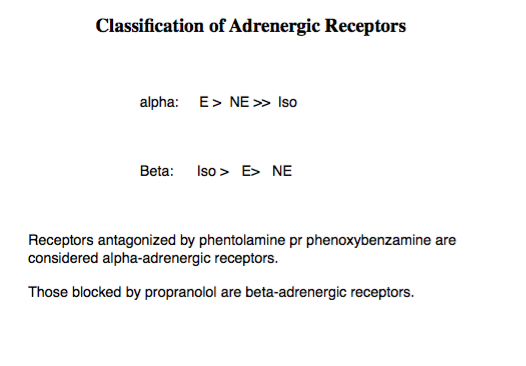
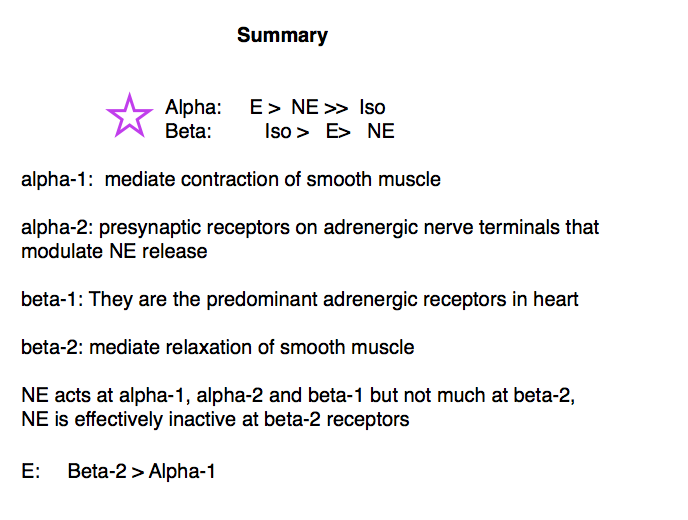
- The adrenergic receptors were originally divided into two categories on the basis that certain agonists or antagonists would cause specific effects on one target organ whereas others did not. Alpha- adrenergic responses were defined as those in which the relative effectiveness are:
- alpha: E > NE >> Iso
- Beta: Iso>E> NE
- Receptors antagonized by phentolamine or phenoxybenzamine are considered alpha-adrenergic receptors. Those blocked by propranolol are beta-adrenergic receptors.
- The division of adrenergic receptors into these two categories wasn’t based upon molecular knowledge of receptor systems, but was defined pharmacologically. A working definition. But it held up pretty well.
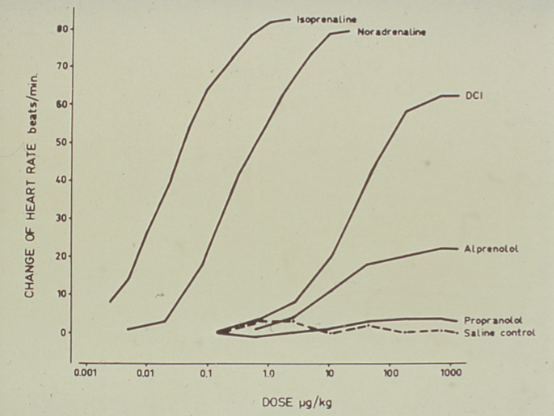
Iso vs. NE in stimulation of heart:
As an example, this slide illustrates that isoproterenol (isoprenaline) is more potent than NE in stimulation of the heart beating rate. Pharmacologically this indicates that the effect on heart rate is mediated primarily through beta-adrenergic receptors.
****Subclasses of Adrenergic Receptors****
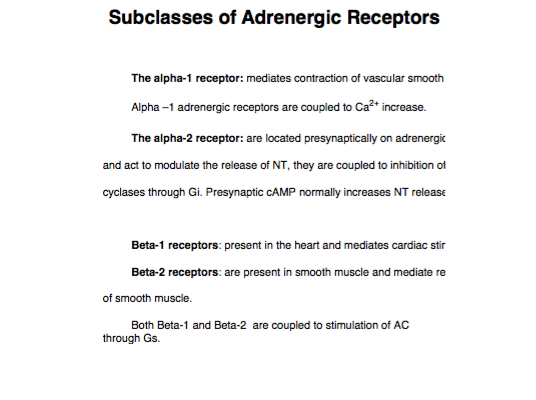
- However, we know that adrenergic receptor classification of alpha vs. beta is more complicated because there are subcategories of alpha and beta-receptors:
- The alpha-1 receptor: mediates contraction of vascular smooth muscle. Alpha –1 adrenergic receptors are coupled to Ca2+ increases.
- The alpha-2 receptor: are located presynaptically on adrenergic terminal and act to modulate the release of NT, they are coupled to inhibition of adenylyl cyclases through Gi. Presynaptic cAMP normally increases NT release.
- Beta-1 receptors: present in the heart and mediates cardiac stimulation.
- Beta-2 receptors: are present in smooth muscle and mediate relaxation of smooth muscle. Both Beta-1 and Beta-2 are coupled to stimulation of adenylyl cyclase through Gs.
Skeletal Muscle Vasculature responds atypically to sympathetic stimulation:
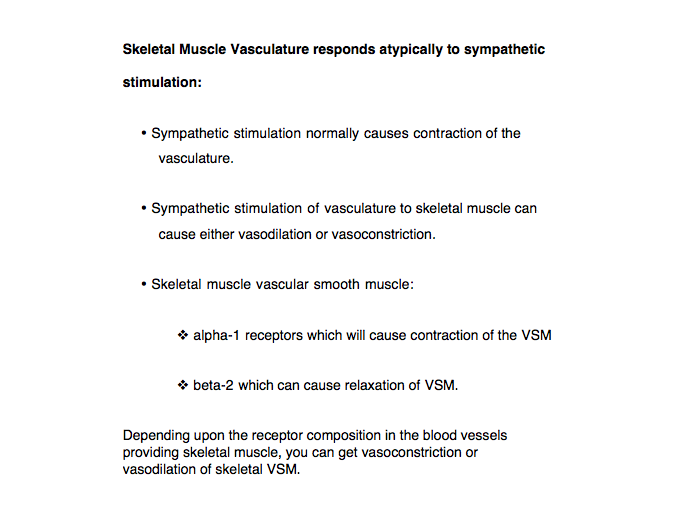
You may recall that sympathetic stimulation normally causes contraction of the vasculature. However in the vasculature to skeletal muscle you can get either vasodilation or vasoconstriction. This is because in skeletal muscle vascular smooth muscle there are both alpha-1 receptors which will cause contraction of the VSM and also beta-2 which can cause relaxation of VSM. Depending upon the receptor composition in the blood vessels providing skeletal muscle, you can see vasoconstriction or vasodilation of skeletal VSM.
Beta-3 Adrenergic Receptors
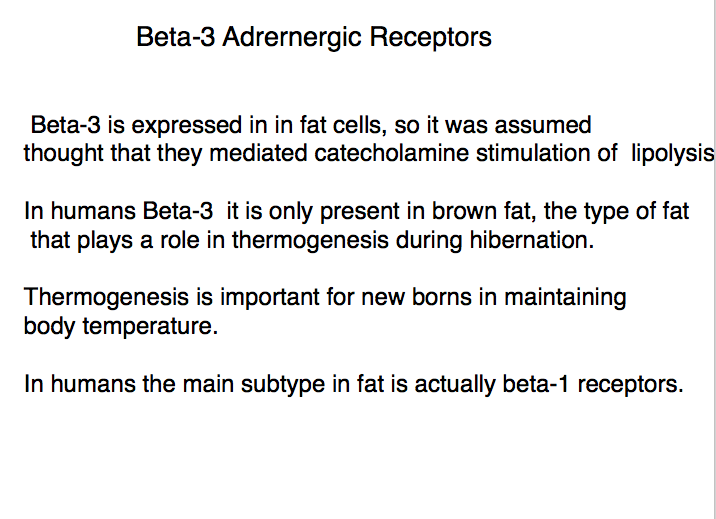
- The function of Beta-3 adrenergic receptors in humans is really not known. Beta-3 is expressed in high levels in fat cells, so people thought that the beta-3 receptor was probably the beta-receptor that mediated lipolysis. In rodents beta-3 present in white and brown fat. In humans it is only present in brown fat. Brown fat is the type of fat that plays a role in thermogenesis and for rodents, during hibernating, which we don’t do. Thermogenesis is important for new borns in maintaining body temperature. So there are really low levels of beta-3 receptors involved in lipolysis in humans. Beta3-Receptors are also found in the gallbladder and urinary bladder. Their role in gallbladder physiology is unknown. In the urinary bladder it is thought to cause relaxation of the bladder and prevention of urination
- In humans the main subtype in white fat is actually beta-1 receptors.
- Any given tissue can express alpha, beta, or a combination of alpha and beta.
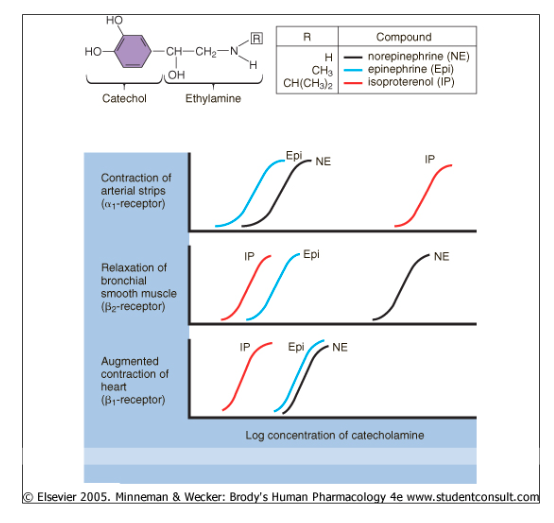
comparison of alpha-1, beta-1 and beta-2 on contraction of arterial strips, relaxation of bronchial smooth muscle and heart muscle contraction.
- This compares the effects of Iso, E and NE on contraction of arterial strips, relaxation of bronchial smooth muscle and heart muscle contraction.
- Adrenergic stimulation of VSM is mediated primarily through alpha-1 receptors. Thus, E > NE >> Iso.
- Adrenergic relaxation of bronchial smooth muscle (airway smooth muscle) is primarily through beta-2 receptors. Thus you see the order of potency as I > E >> NE. NE is not very effective with beta-two receptors. For practical purposes we can assume that NE, while active at alpha-1 and beta-1 receptors is ineffective at beta-2 receptors.
- Adrenergic stimulation of heart muscle contraction is mediated by beta-1 adrenergic receptors and the order of potency is I > E/NE. The comparison of NE effects allows one to distinguish between beta-1 and beta 2 receptors.
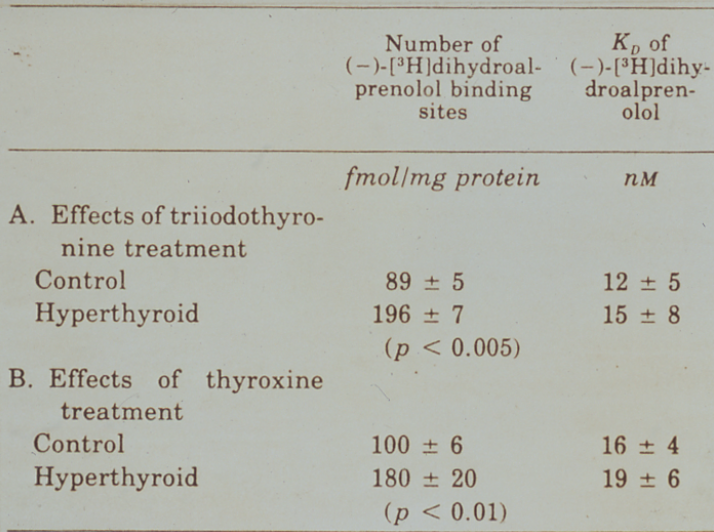
treatment of rats with triiodothyronine or thyroxine leads to increase in the number of beta- receptors in heart.
- There are a lot of things that can regulate the expression of various adrenergic receptors and this can have important clinical and therapeutic implications.
- Patients who are hyperthyroid usual experience some cardiovascular changes, including tachycardia, which are speculated to be due to effects of thyroid hormone on components of the adrenergic system in heart.
- In rats that were treated with thyroid hormones for several weeks, when you measure the number of adrenergic receptors in their hearts using a radioactive ligand that binds relatively specific to beta-receptors (dihydroalprenolol), you get very significant increase in the number of beta-receptors. This increases sensitivity of the heart to catecholamines and lead to tachycardia.
****Adrenergic Pharmacology Summary ****
A great deal of our time is going to be spent on sympathomimetic drugs, i.e. adrenergic drugs. This will include direct-acting drugs that act directly on receptors and indirect-acting drugs.
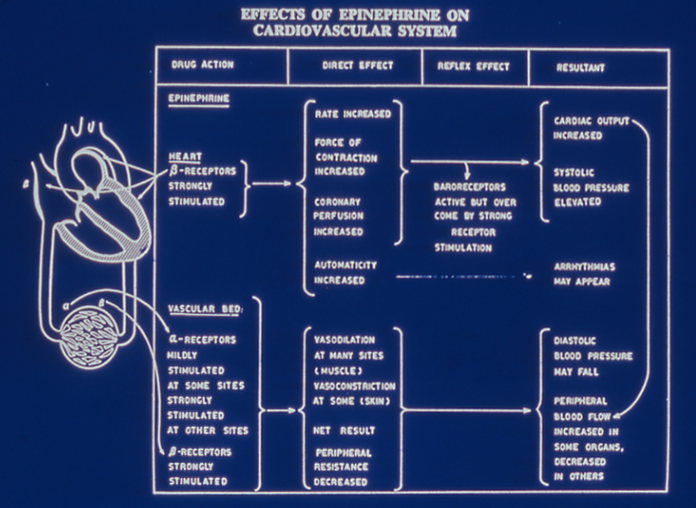
Epinephrine effects on the cardiovascular system
- This is a summary of what E does to the cardiovascular system. If we give a slow continuous IV administration of E, an unspecified low dose of E.
- We will preferentially activate the Beta-2 receptors over the alpha-1 in VSM leading to vasodilation and net result is decrease in peripheral resistance. Primarily Beta-2 vasodilation. This should cause a decrease in diastolic BP.
- E will also act on the beta-1 receptors in the heart, increases the rate and force of contraction of the heart, leading to increased cardiac output. You would expect an increase in systolic BP.
- What is the net effect? What actually happens? Diastolic pressure has gone down and systolic pressure has gone up, you expect mean blood pressure to not change very much.
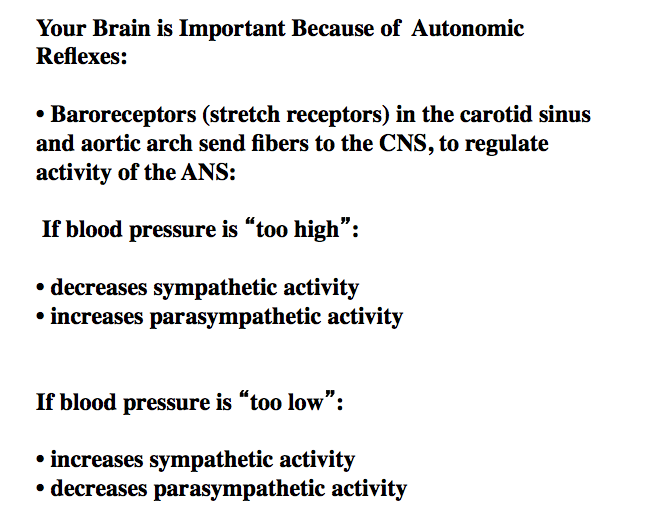
Baroreceptors
- One of the issues which contributes to the effect of catecholamines on cardiovascular responses in baroreceptors.
- Baroreceptors (stretch receptors) in the carotid sinus and aortic arch send fibers to the CNS, to regulate activity of the ANS:
- If blood pressure is “too high”:
- decreases sympathetic activity
- increases parasympathetic activity
- If blood pressure is “too low”:
- increases sympathetic activity
- decreases parasympathetic activity