Prokaryote
Prokaryotes: simple organisms which are small in size, do not have a nucleas not membraneous organelles.
Typical organelles in prokaryotes
- cell membrane
- cell wall
- slime capsule
- nucleoid
- plasmid
- ribosomes (70S)
- cytosol
- pili
- flagellum
Nucleoid vs plasmid
Nucleoid: circular DNA molecule, not aassodiated with proteins which stores all the genetic material of the organism
Plasmid: additional autonomous DNA molecule of circular shape which can be transferred in bacterial conjugation
Pili
Attachement pili: used to attach to surfaces and one another
Sex pili: used in bacterial conjugation to exchange plasmids
Cytokinesis
Cytokinesis: process in binary fission when the cytoplasm of the mother cells divides into two daughter cells
Resolution
Resolution: making separate parts of an object distinguishable by an eye
Eukaryotes
Eukaryotes: complex living organisms with a nucleus and single or double membrane compartmentalised ultrastructure.
Typical organelles in eukaryotes
- nucleus
- nucleolus
- rER
- sER
- Golgi apparatus
- mitochondria
- plasma membrane
- free ribososmes (80S)
- microtubules
- centrioles
- lysosome
- vacuole
- cilia, flagella
- chloroplasts/amyloplasts
Advantages of compartmentalisation
- Enzymes and substrates for reactions are concentrated
- Dangerous substances (digestive enzymes) are kept within a membrane
- Ideal conditions for reactions (pH)
- Organelles with contents can be moved around the cell
Role of nucleus and nucleolus
NUCLEUS: enclose nucleolus, store genetic material, transport mRNA out into cytoplasm - double membrane with pores
NUCLEOLUS: ribosomes are assembled
Role of rER and sER
rER: from citernae, ribosomes on surface, synthesise proteins for secretion, carried by vesicles to Golgi
sER: citernae, syntheiss and transport of lipids, steroids, involved in carbohydrate metabolism
Role of Golgi app
GOLGI APP: membraneous sacs - cisternae (more curved than ER), process (store, sort, modify) secretory products
Role of lysosome
LYSOSOME: spherical, formed from Gogli vesicles, many enzymes inside - appear dark in e micrographs, hydrolyse macromolecules into monomers, can digest organelles, cells
Role of mitochondria
MITOCHONDRIA: double membrane (inner invaginated - cristae), fluid inside - matrix, spherical, produce ATP by aerobic respiration, fat is digested of used as E source
Role of free ribosomes
RIBOSOMES: made up from rRNA and proteins (appear dark in micrographs), not membraneous, subunits synthesisesd in nucleus, synthesise proteins from mRNA
Prokaryote: 70S
Eukaryote: 80S
PROKARYOTE vs EUKARYOTE cell
D: DNA: circular - linear, naked - histones, introns
O: organelles: membraneous, compartmentalisation, nucleous, 70S- 80S ribosomes
R: reproduction; binary fission - mitosis/meiosis, haploid - diploid
A: average size: smaller (1-5 um) - bigger (50-100 um)
Role of chloroplasts, tonoplasts, plasmodesmata
CHLOROPLASTS: double membrane, membrane sacs thylakoids, spherical, produce org. comp. by photosynthesis, starch grains if rapid photosynthesis
TONOPLAST: membrane surrounding plant cell
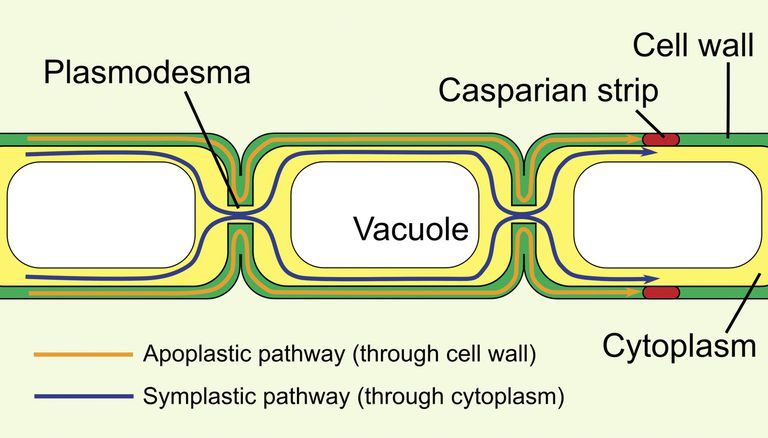
PLASMODESMA: channels in plant cell walls to connect to adjacent cells
Role of vacuoles and vesicles
BOTH: single membrane, used for storage
VACUOLES: larger, can be digestive vacuoles, can experll water (Paramecium)
VESICLES: small vacuoles, used for transporting materials inside the cell
Role of microtubules and centrioles
MICROTUBULES: small cylindrical fibres, move chromosomes in cell division,
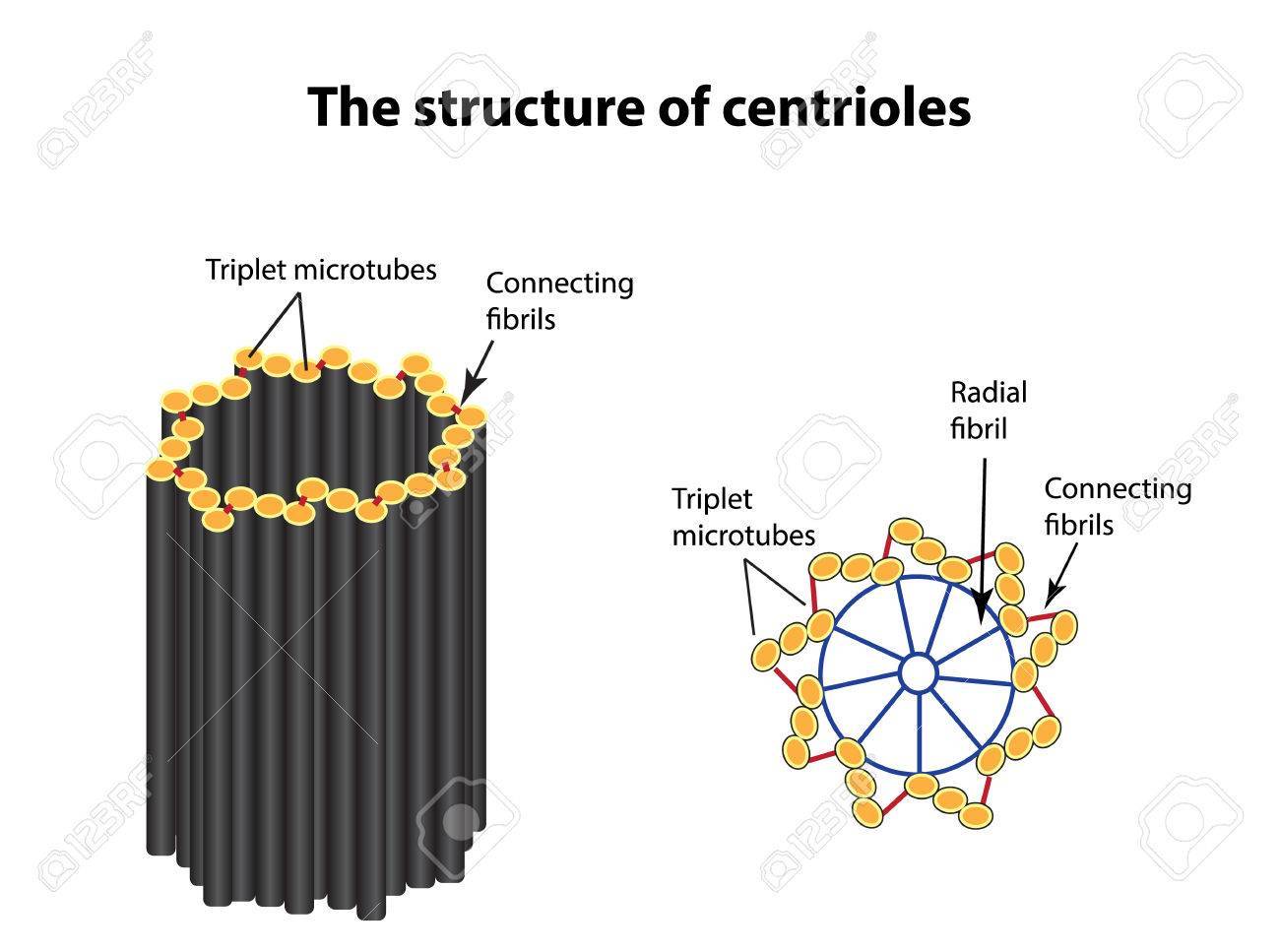
CENTRIOLES: from two gorups of nine microtub., form an anchor for microtub. to attach in cell division, for microtubules in cilia, flagella
PLANT vs ANIMAL cell
- Cell wall
- Chloroplasts (plastids)
- Cholesterol in membrane
- Starch and glycogen
- Large vacuole
- Centrioles only in animal cells
- Shape
Role of cilia and flagellum
BOTH: containa ring of nine double microtubules and two central ones, fro locomotion
CILIA: small, many, can be used to create currents in surrounding fluids
FLAGELLUM: larger, in sperm
Extracellular components of plant/animal cells
PLANTS: cell wall (support, shape, prevents excess water uptake, against infection)
ANIMALS: from glycoproyeins (support, attach to form tissues, intercellular communication)
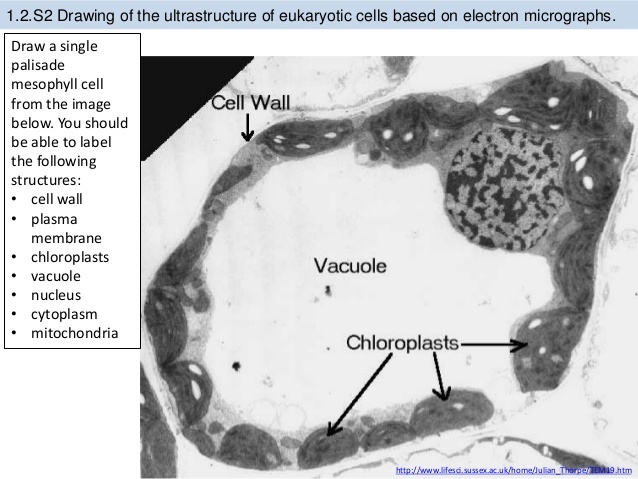
Palisade mesophyll cell
- typical plant cell of the leaf
- performs photosynthesis - many chloroplasts
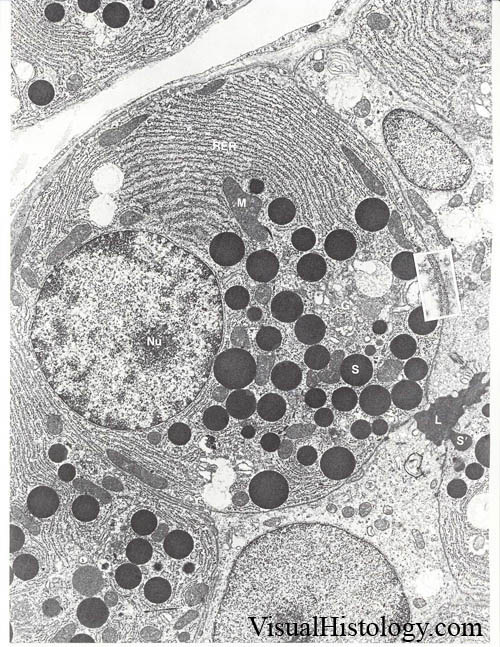
Exocrine gland cell of the pancreas
- endocrine secrete hormones, exocrine secrete digestive enzymes fro the small intestine
- enzyme - proteins - many ribosomes, rER, Golgi

-
1.1 Intro to cells13
-
1.2 Ultrastructure24
-
1.3 Membrane structure10
-
1.4 Membrane transport9
-
1.5 Origin of cells13
-
1.6 Cell division12
-
2.1 Metabolism molecules14
-
2.2 Water9
-
2.3 Carbohydrates & lipids12
-
2.4 Proteins20
-
2.5 Enzymes9
-
2.6 Structure of DNA and RNA7
-
2.7 + 7.1 Replication12
-
2.7 + 7.2 DNA transcription and gene expression13
-
2.7 + 7.3 Translation10
-
8.1 Metabolism13
-
2.8 + 8.2 Respiration33
-
2.9 + 8.3 Photosynthesis32
-
3.1 Genes14
-
3.2 Chromosomes16
-
3.3 + 10.1 Meiosis16
-
3.4 + 10.2 Inheritance25
-
3.5 Genetic modifications16
-
10.3 Speciation18
-
9.1 Xylem transport19
-
9.2 Transport in phloem11
-
9.3 Plant growth11
-
9.4 Plant reproduction10
-
5.1 Evidence for evolution11
-
5.2 Natural selection7
-
5.3 Classification13
-
5.4 Cladistics11
-
6.1 Digestion13
-
4.1 Species and ecosystems14
-
4.2 Energy flows7
-
4.3 Carbon cycling10
-
4.4 Climate change6



