Describe how visceal pain will present in GI tract
- Viscera is innervated by sympathetic system (the greater, lesser and least splanchnic nerves)
- Pain information is is transmitted back to corresponding spinal level (e.g. T5-T9 for greater splanchnic)
- Brain interprets this as pain in corresponding dermatomes
Hence pain is poorly diffused and often in midline. Nausea, vomiting and sweating may accompany pain
Why is visceral abdominal pain often poorly localised and in the midline
- Poorly localised as pain corresponds to dermatomes
- Midline as spinal nerves either side send signals
Define a hernia
Bulge or protrusion of an organ through a structure or muscle that normally contains it
Define an inguinal hernia
Protrusion of part of the abdominal contents beyond the normal confines of the abdominal wall
Hernias can be stuck or unstuck; explain what is meant by this and how to differentiate between the two
Stuck/incarcerated
- Cannot be moved
- Symptoms: pain, cannot be moved, nausea & vomitting, systemic problems if bowel become ischaemic
Unstuck
- Can be moved
- Symptoms: fullness/swelling, gets larger as intrabdominal pressure increases, aches
State some possible causes of abdominal hernias
- Weakness in cavity
- Congenital
- Post surgery leading to incisional hernia
- Normal points of weakness e.g. Hesselbach’s triangle
- Increases in intra-abdominal pressure
- Obesity
- Weight lifiting
- Chronic cough or constipation
State the 3 parts of a hernia
- Sac
- Contents
- Coverings of sac
For an abdominal hernia state what usually forms the:
- Sac
- Contents of sac
- Coverings of sac
- Sac: pouch of peritoneum
- Contents: any structure in abdominal cavity e.g. loops of bowel, omentum
- Coverings: layers of abdominal wall through which the hernia has passed
State 4 points of weakness in the abdominal wall
- Inguinal canal
- Femoral canal
- Umbilicus
- Previous incisions
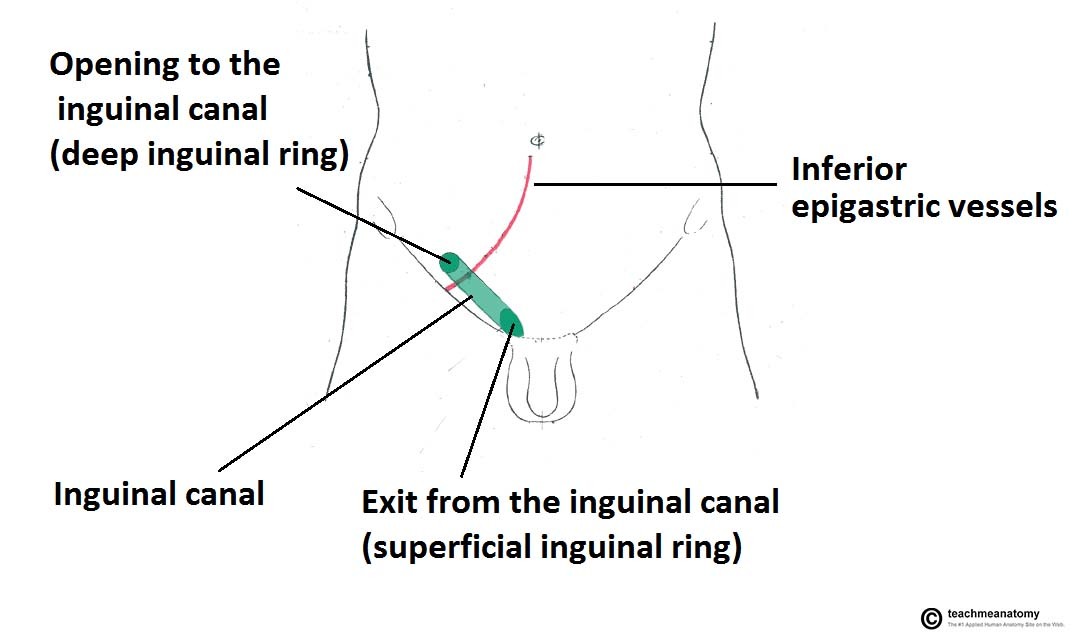
What is the inguinal canal?
Oblique passage through lower part of abdomen wall
State some risk factors for inguinal hernias
- Male
- Age
- Obesity
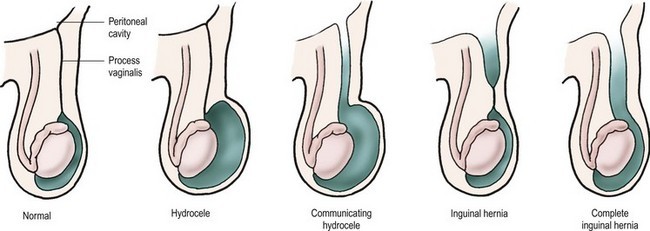
Describe under what circumstances a scrotal hernia may develop
If processesus vaginalis doesn’t degenerate there will be a connection betwen abdomen and scrotal sac through which a hernia may develop
What is the function of the inguinal canal?
Passage through which structures can pass from abdomen to external genitalia
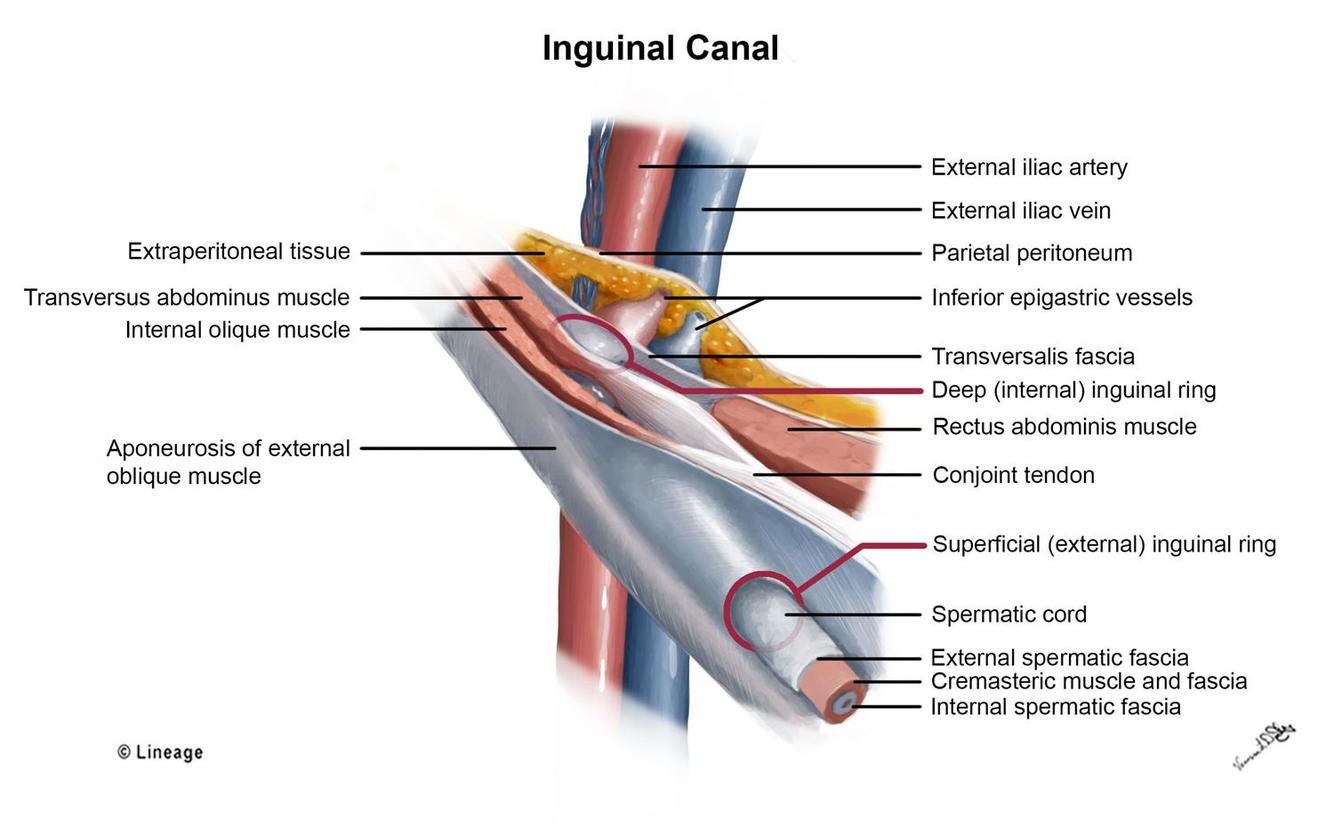
State the boundaries of the inguinal canal
- Anterior: aponeurosis of external oblique reinforced by internal oblique muscle laterally
- Posterior: transversalsis fascia and conjoint tendon medially
- Roof: transversalsis fascia, internal oblique, transversus abdominis
- Floor: inguinal ligament thickened medially by lacunar ligament
Superficial and deep rings are openings
State the contents of the inguinal canal
- Spermatic cord (MALES)
- Round ligament (FEMALE)
- Ilioinguinal nerve
- Genital branch of genitofemoral nerve
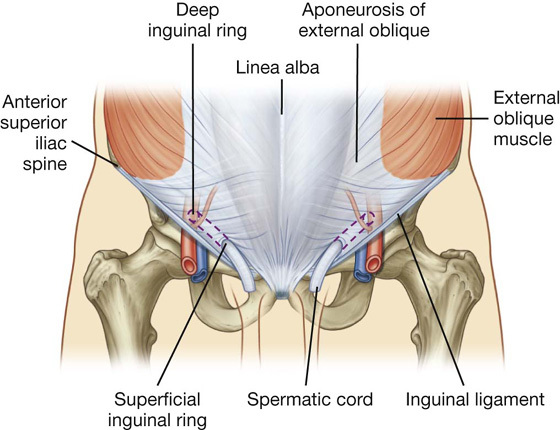
Describe where the deep and superficial inguinal rings can be found
- Deep: above midpoint of inguinal ligament, lateral to epigastric vessels
- Superficial: superior to pubic tubercle
For both the superficial and deep inguinal ring state what they are made of
- Superficial: triangle shaped evagination of external oblique
- Deep: transversalis fascia (which invaginates to form a covering of contents of inguinal canal)
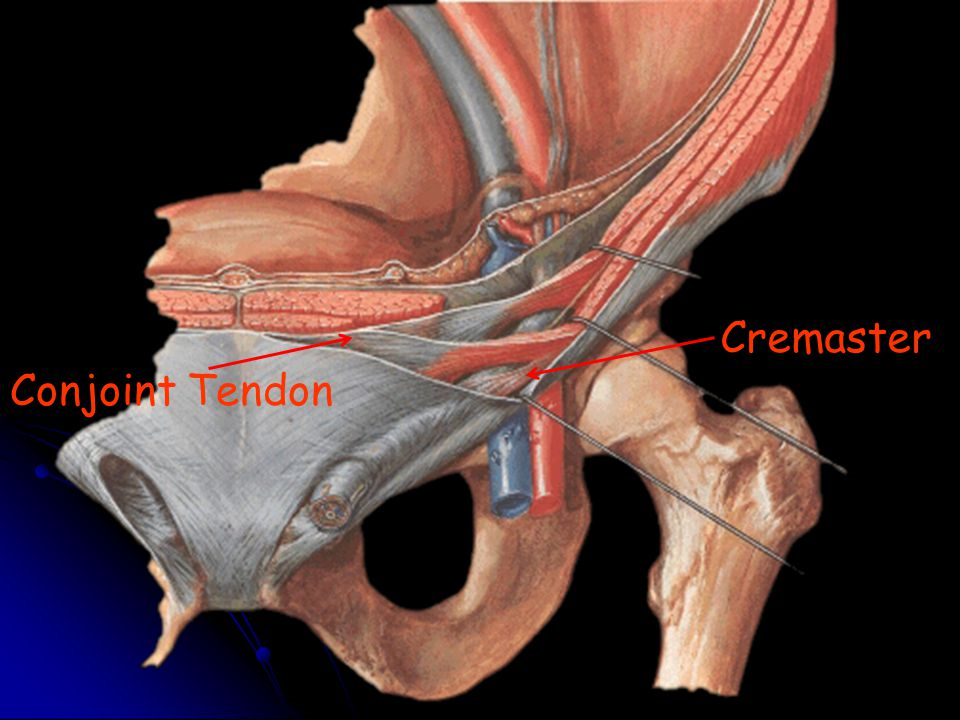
What is the conjoint tendon/inguinal falx?
Combined fibres from the lower internal oblique and aponeurosis of transversus abdominis muscle. Inserts onto pubic crest
What is the most common type of abdominal wall hernia?
Inguinal
State two types of inguinal hernias and state which is more common
- Direct
- Indirect (more common)
On which side are inguinal hernias more common?
Right
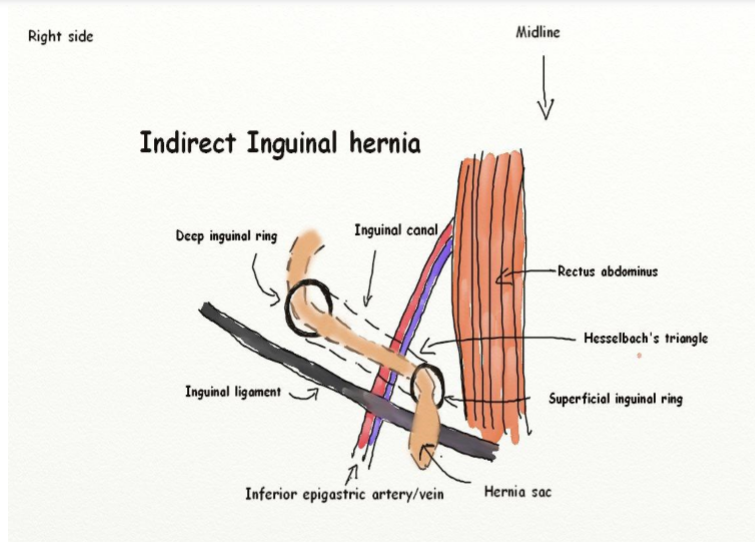
Describe the pathway of indirect inguinal hernias
- Exit abdomen through deep inguinal ring
- Pass into inguinal canal- either partially into or all the way into scrotum depending on whether processus vaginalis was obliterated
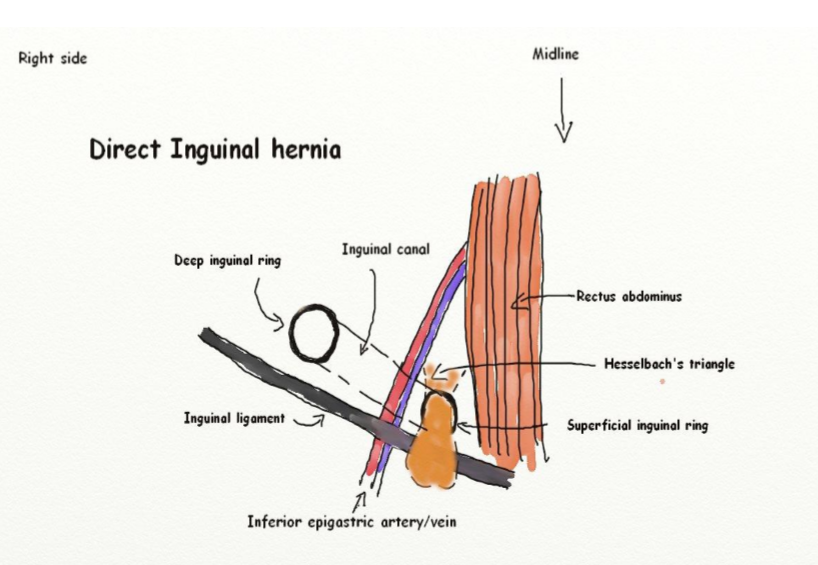
Describe the pathway of direct inguinal hernias
Pass directly through abdominal wall in an area of potential weakness called Hesselbach’s triangle
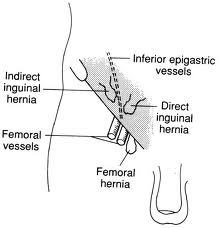
Describe where each of the following passes in relation to the inferior epigastric vessels:
- Indirect inguinal hernia
- Direct inguinal hernia



-
1a.) Purpose of Gut37
-
1b.) Basic Anatomy60
-
2a.) Hernias40
-
2b & 3a.) Embryology75
-
3b.) Salivation & Swallowing36
-
4a.) Intro to Stomach43
-
4b.) Pathology of Stomach40
-
5a.) Chyme, Liver & Pancreas56
-
5b.) The Intestines55
-
6a.) Liver & Biliary System62
-
6b.) Jaundice & LFTs30
-
7a.) Large Intestine/Inflammatory Bowel Disease44
-
7b.) Distal GI Tract Pathology73
-
8a.) GI Malignancy74
-
9b.) GI Emergencies63
-
9a.) GI Infections59
-
10a.) Imaging of GI Tract55
-
11a.) Endoscopic Tour of GI Tract8



