




6. RBC Flashcards

(77 cards)

1
Q
A
2
Q
A
3
Q
A
4
Q
A
5
Q
A
6
Q
A
7
Q
A
8
Q
A
9
Q
A
10
Q
A
11
Q
A
12
Q
A
13
Q

IRIS vs RBC

similar 1

difference 1

difference 2

A

similar- Both are quantitative, use financial statement data

different - RBC is min capital required, IRIS looks at rsv adequacy

different - RBC gives regulators authority to intervene, IRIS does not

14
Q

RBC adv

A
  1. Formula based & easy to calculate from financial statements→hard to manipulate→ easy to compare across companies.
15
Q

RBC disadv (2)

A

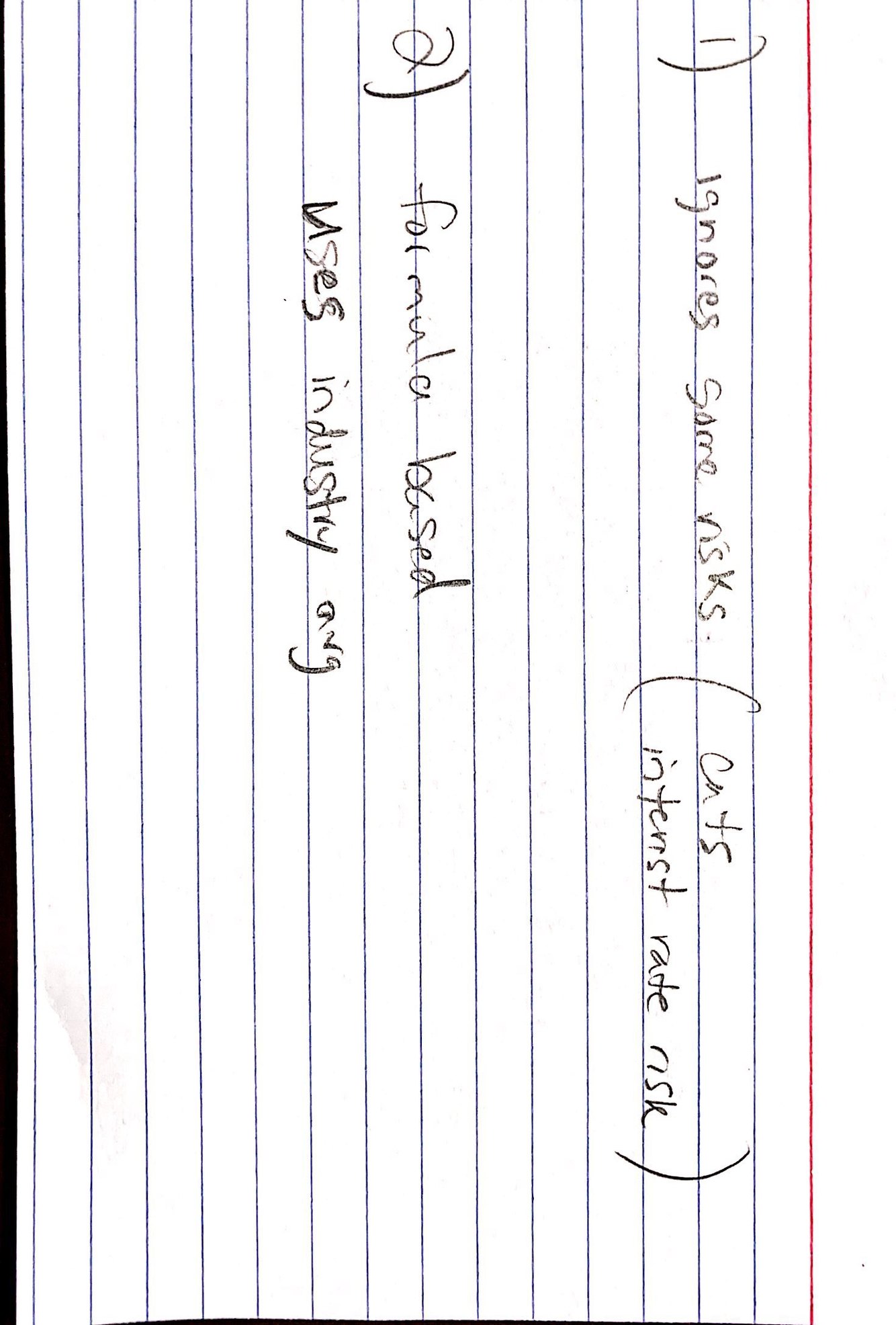
Ignores cat risk, interest rate risk, operational risk

Isn’t customized to company via talking to management

16
Q

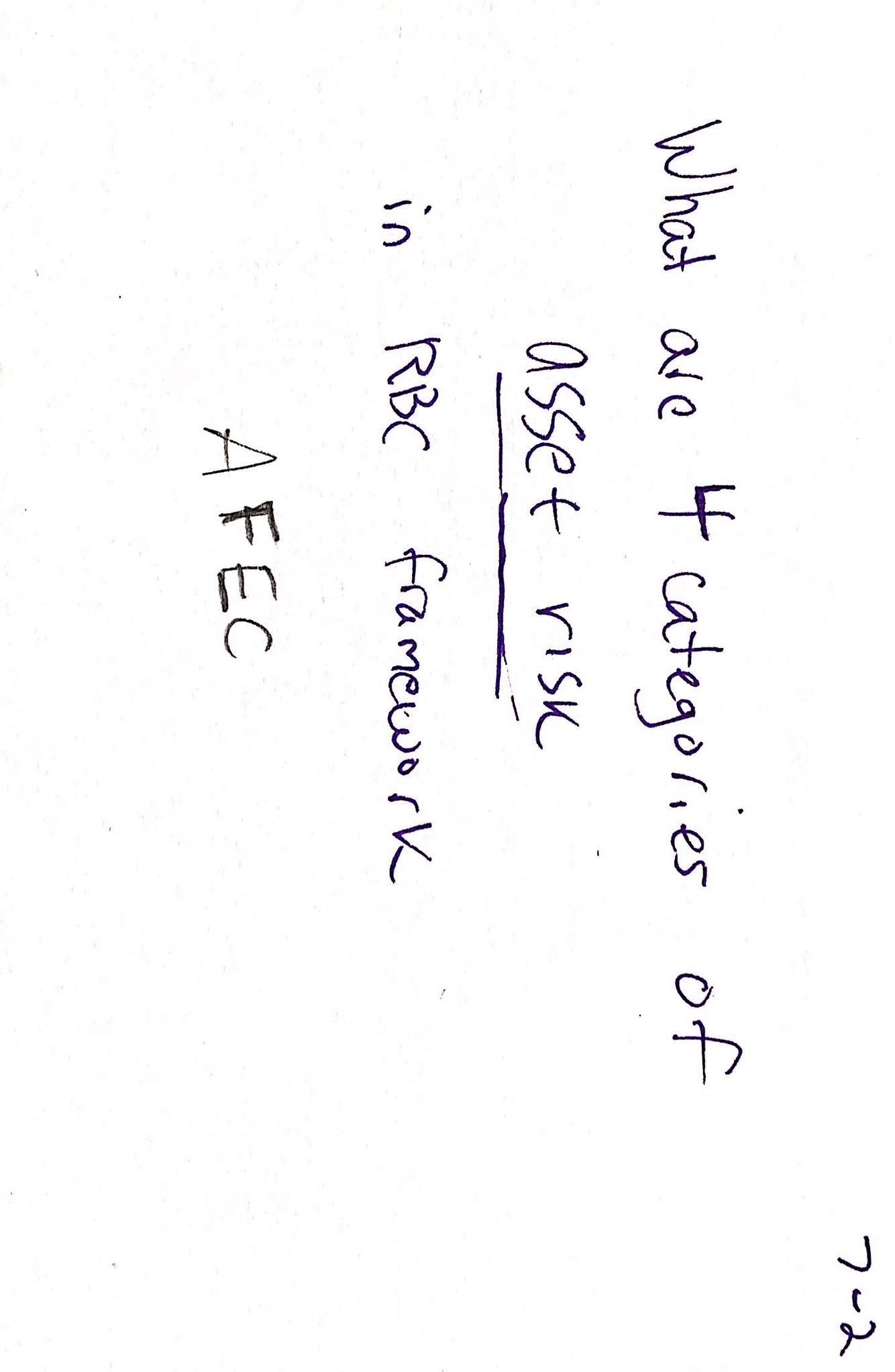
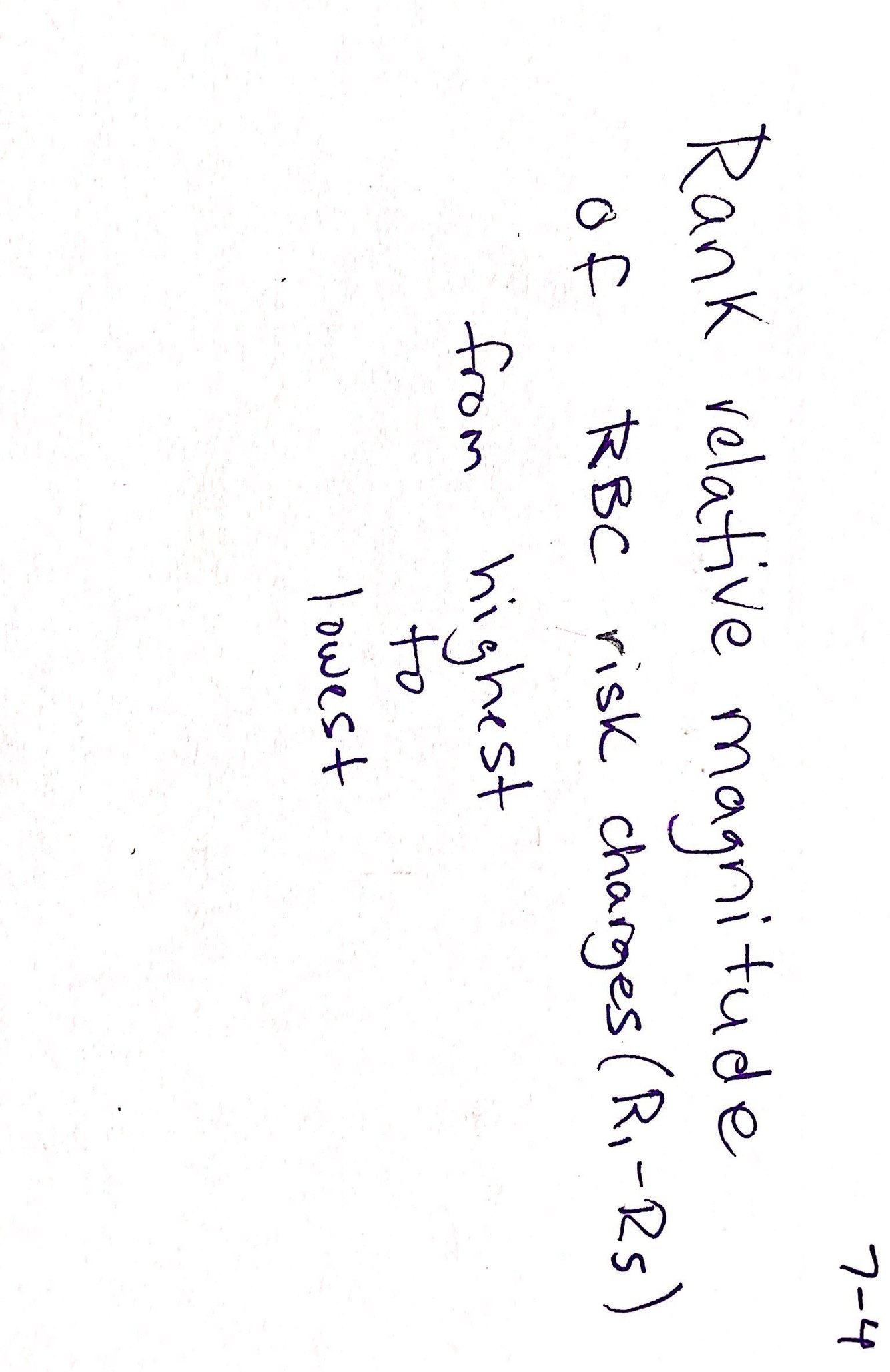
RBC risk categories (6)

A

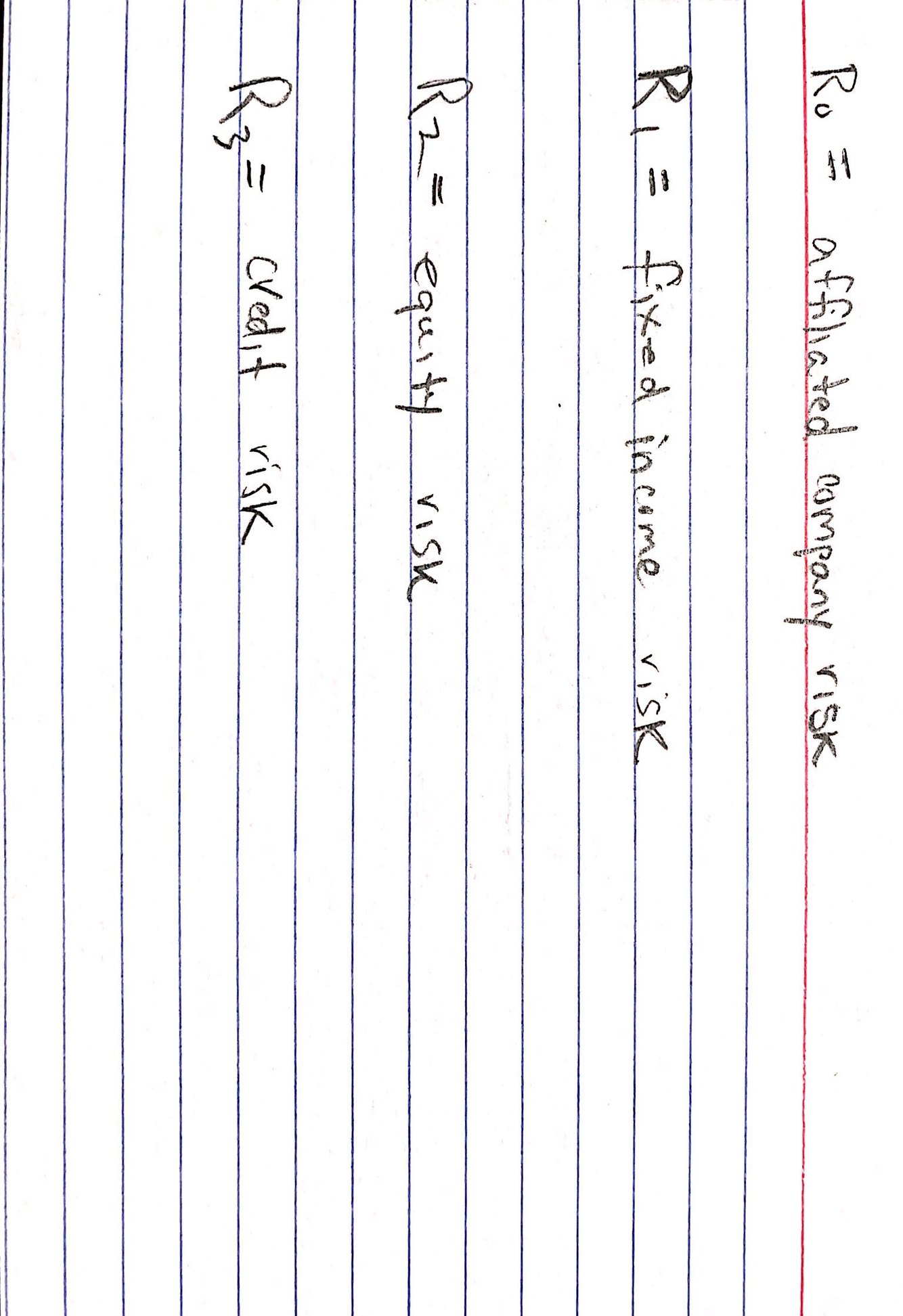
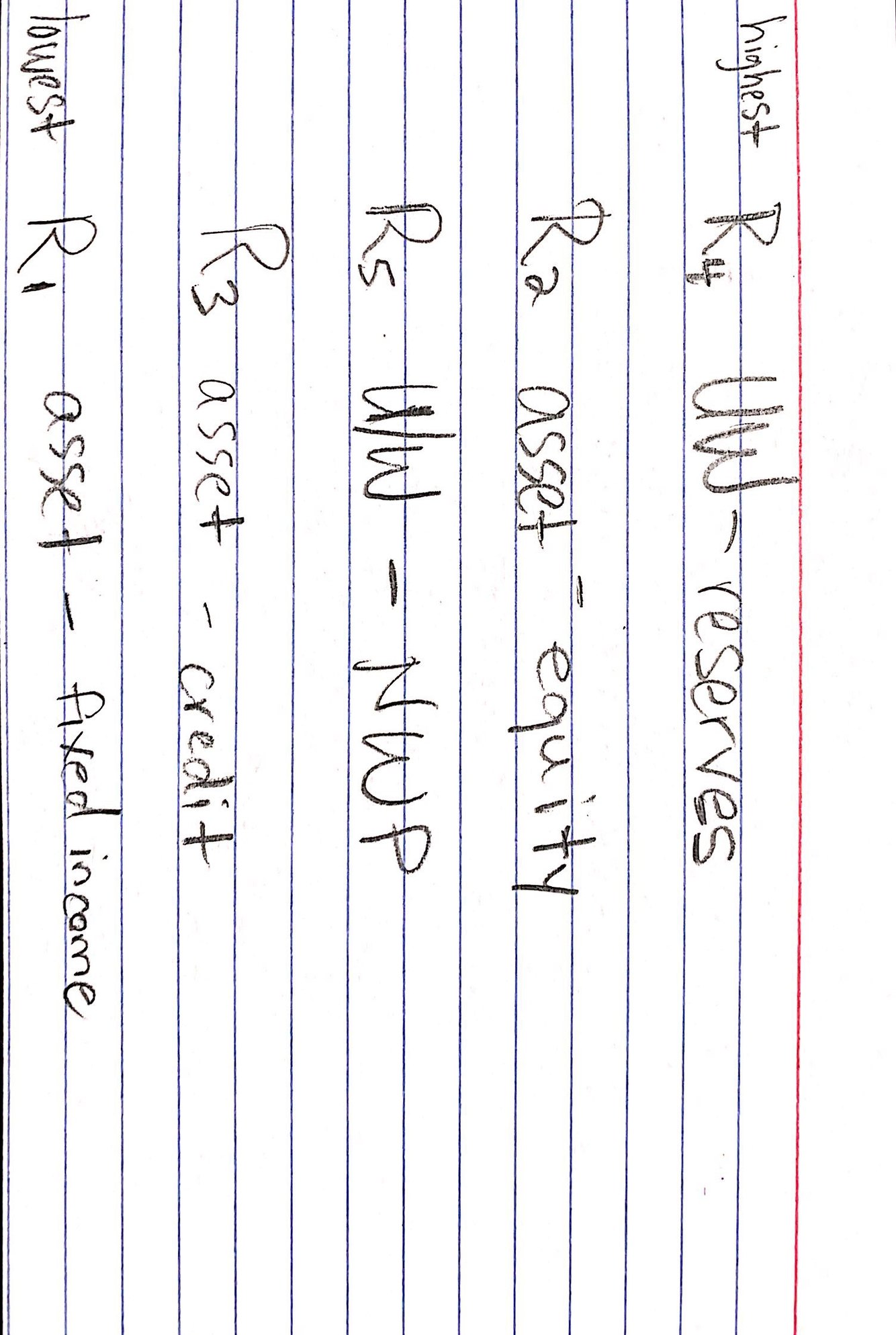
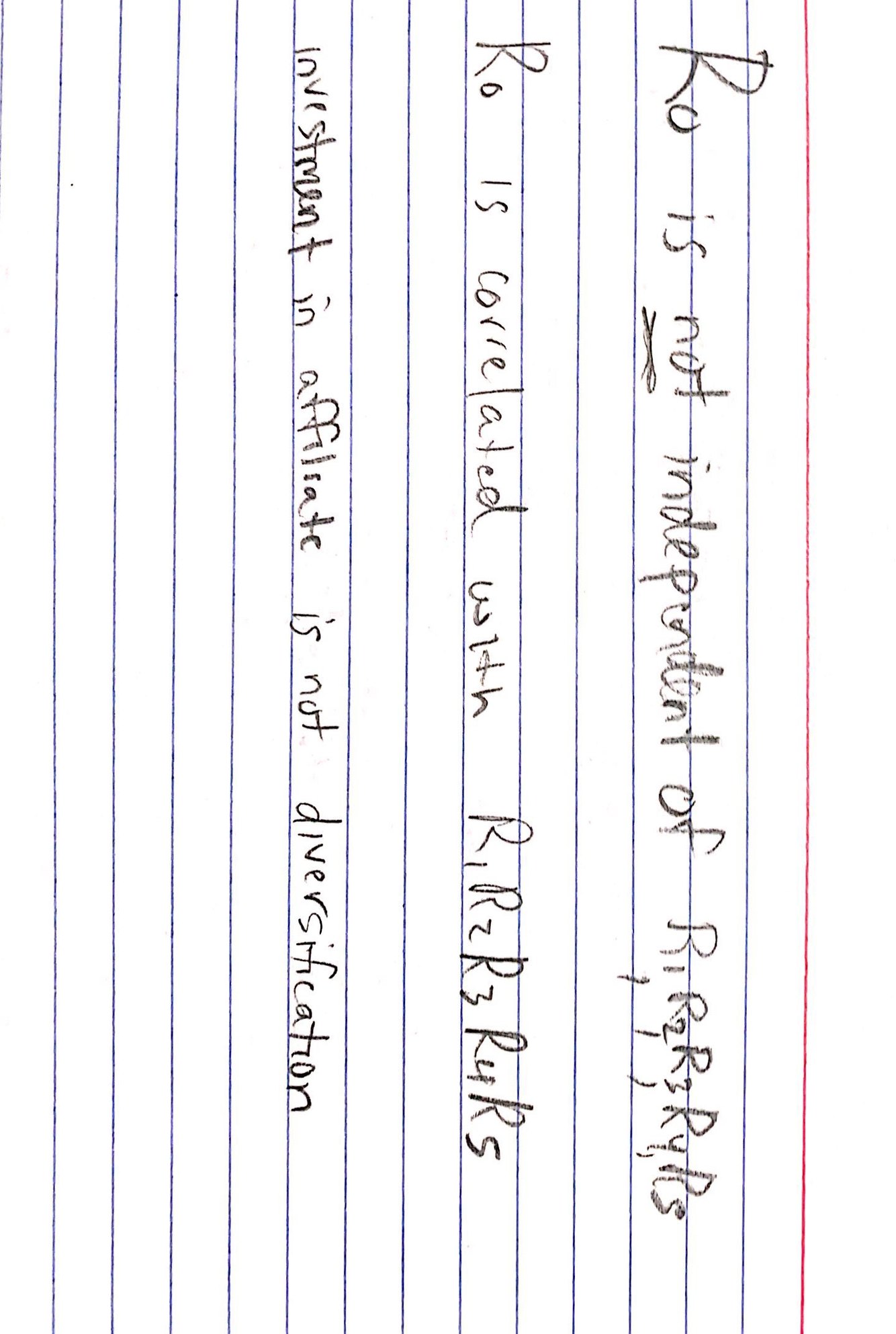
R0:asset risk – affiliates(default risk for investment in affiliates/subsidiaries)

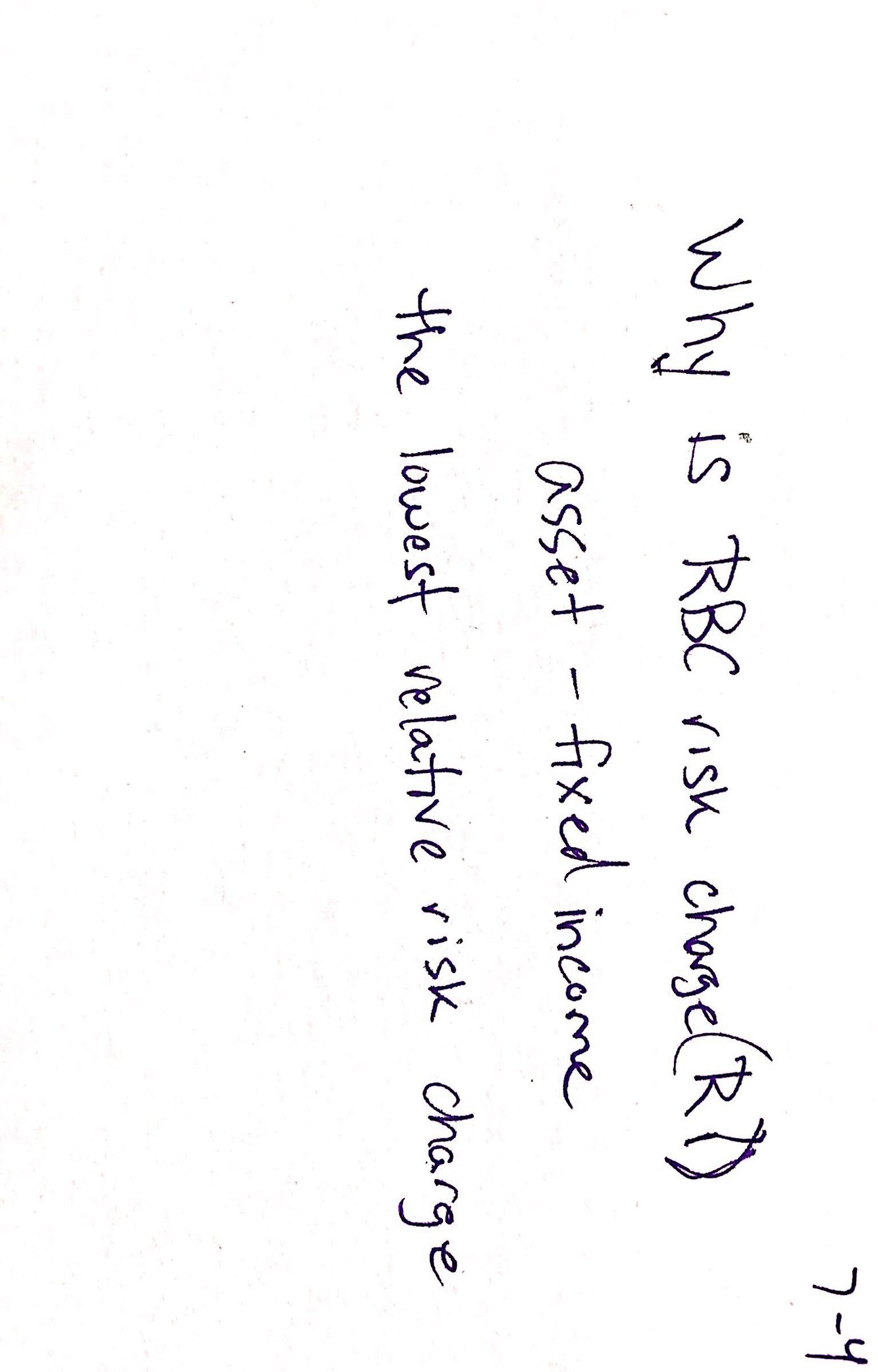
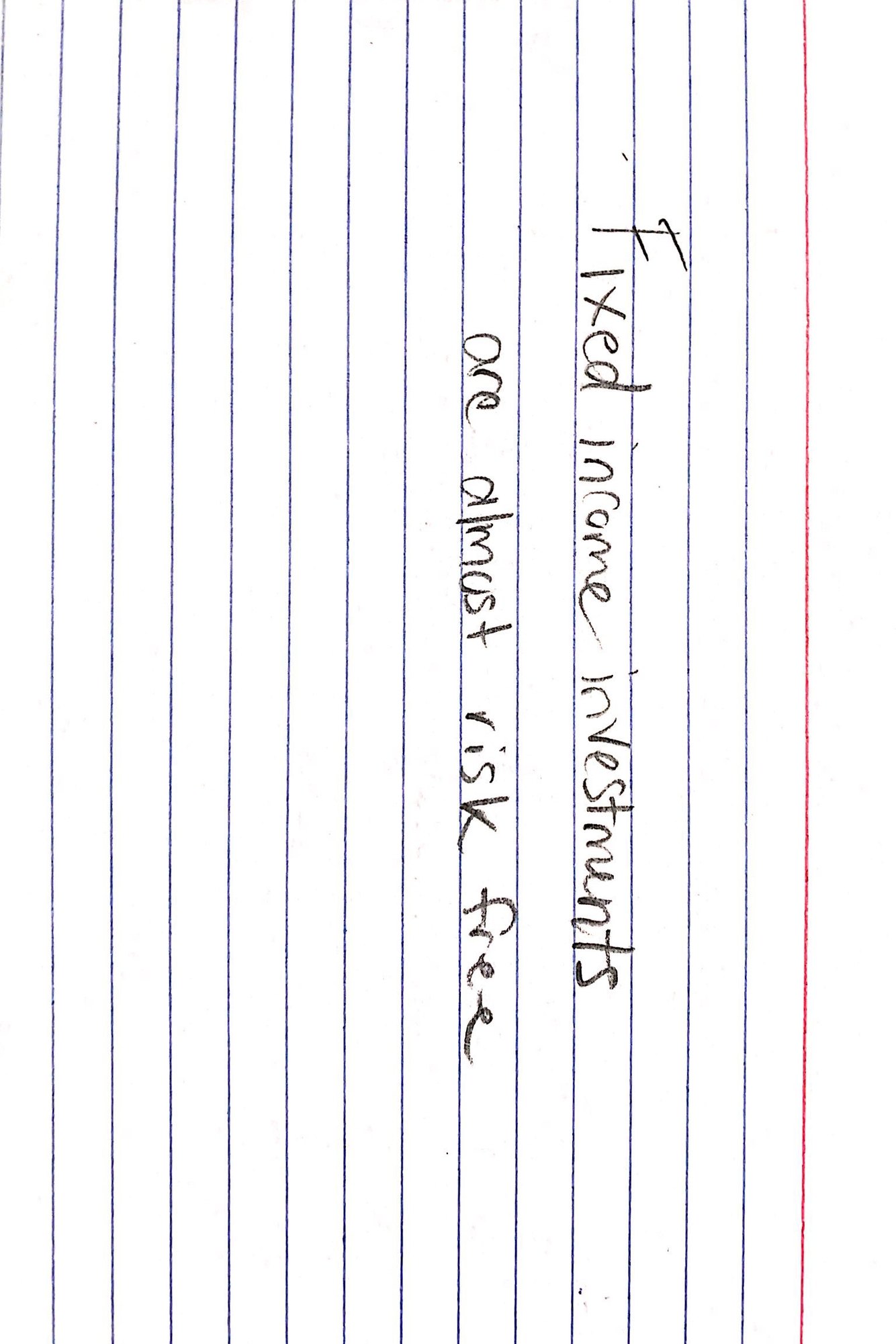
R1:asset risk – fixed income(default risk of bonds + risk of change in interest rates) - smallest

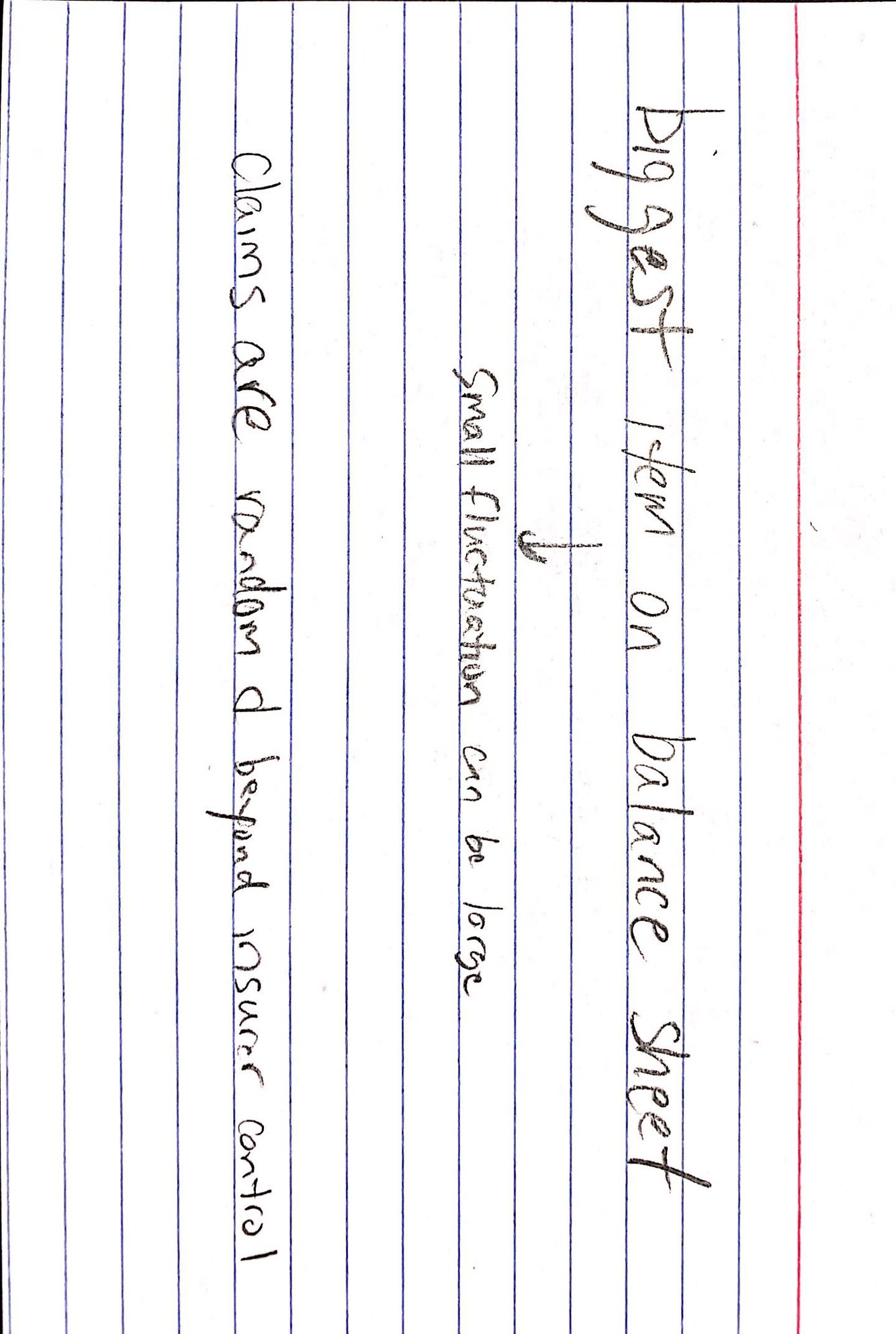
R2:asset risk – equity(change in market value of stocks, real estate) – 2nd largest

R3:asset risk – credit(default risk of receivables & reinsurance recoverables)

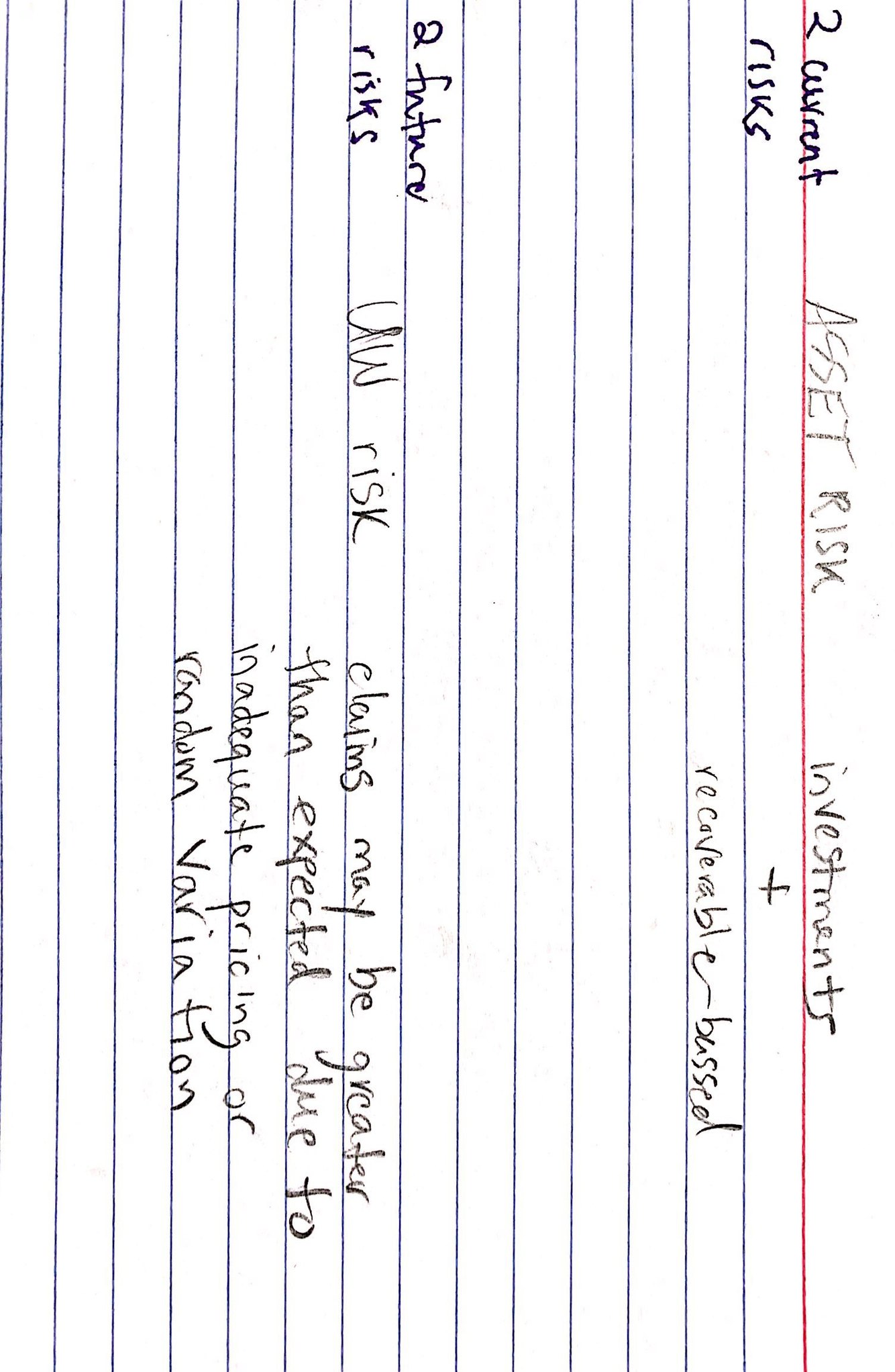
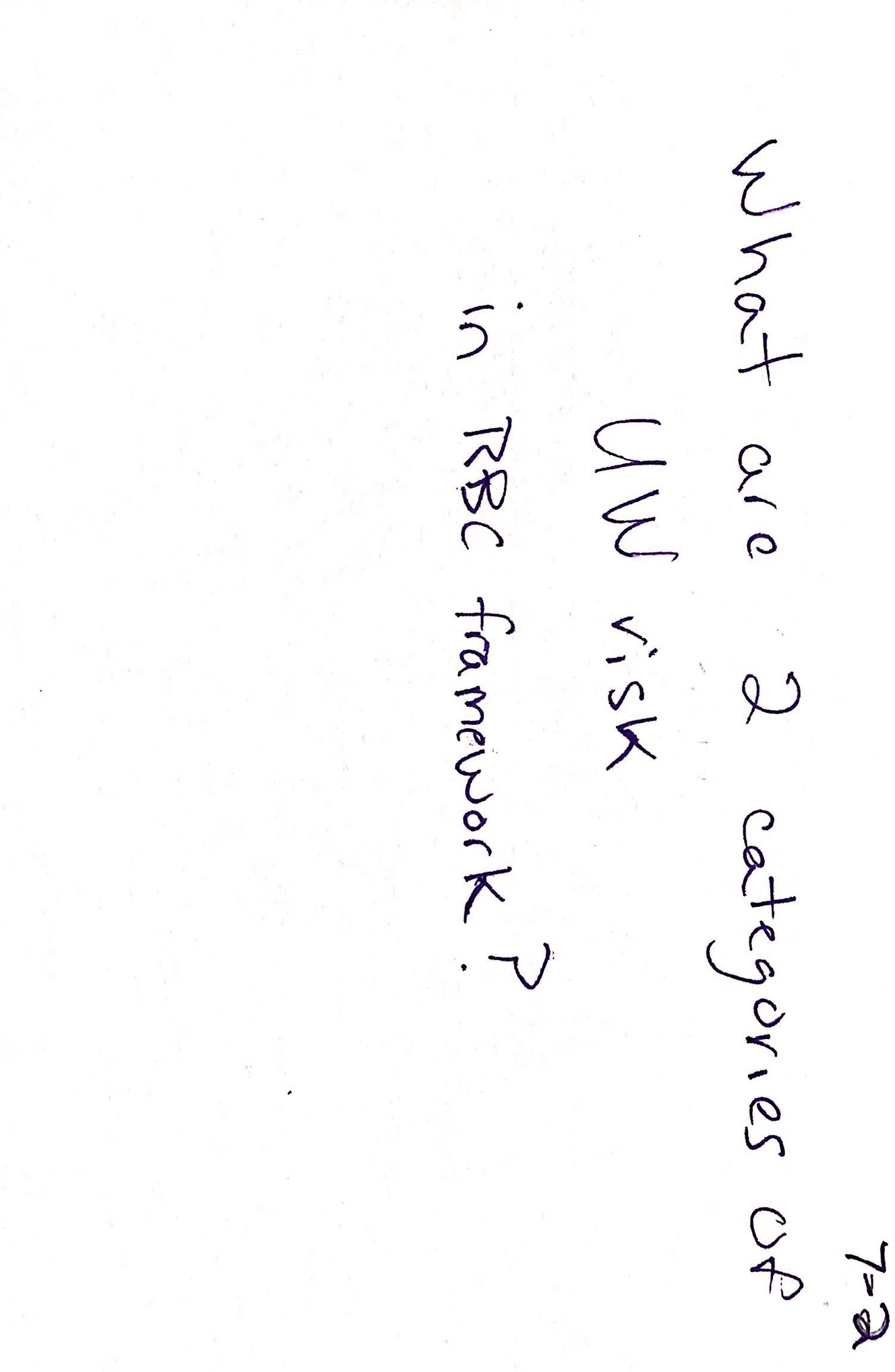
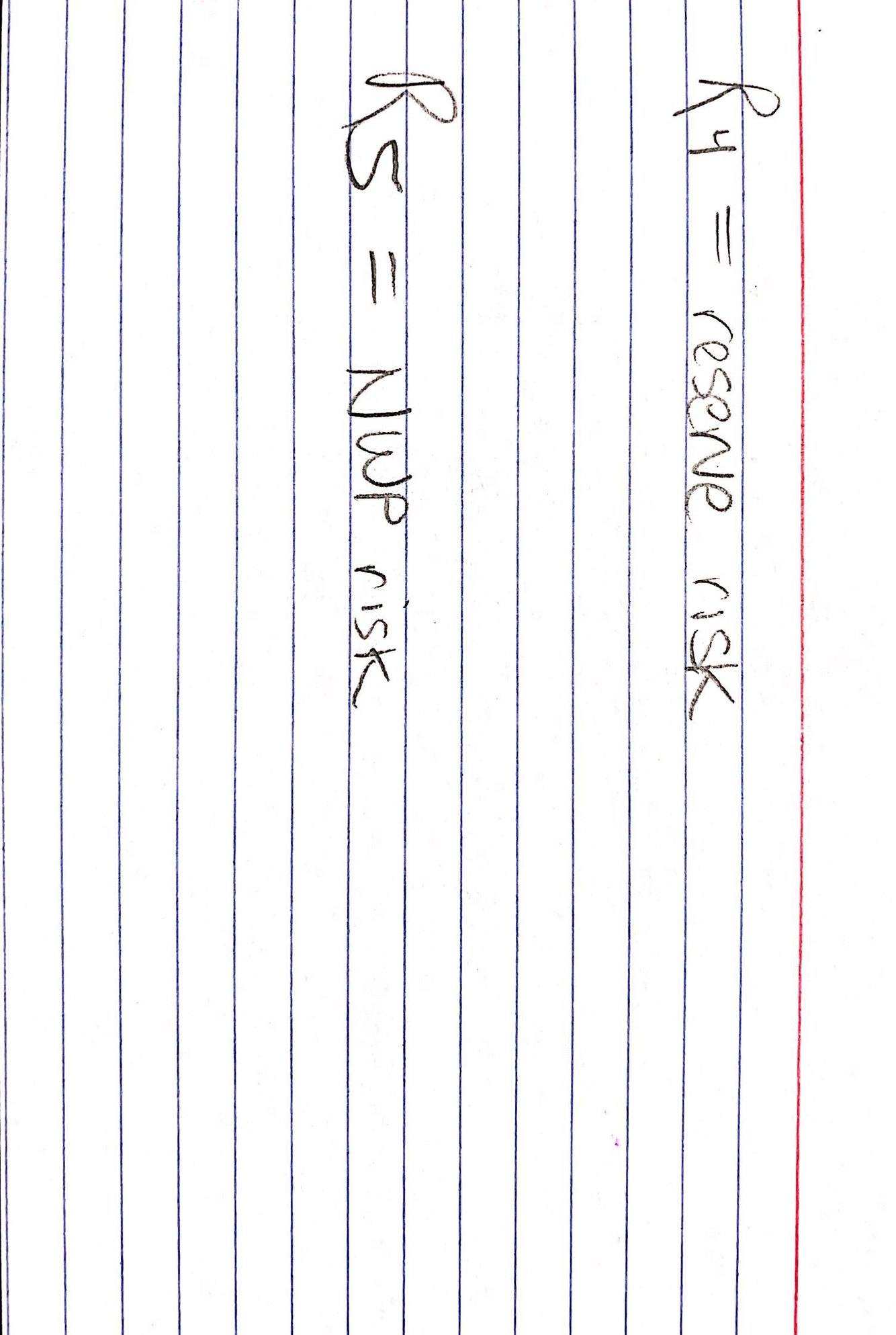
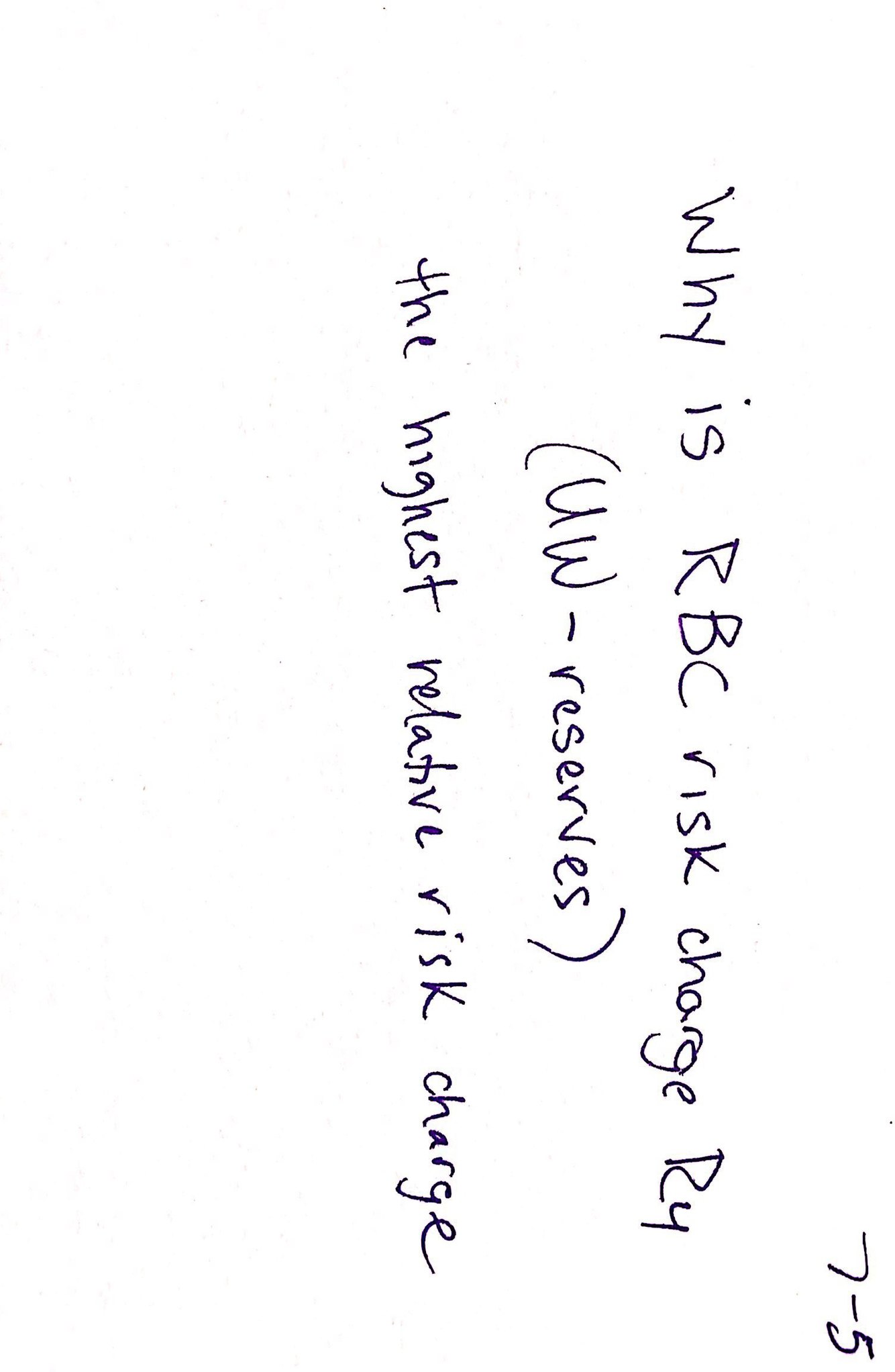
R4:UW risk – reserves (risk of adverse development of rsvs)

R5:UW risk – NWP (risk that prem form future business won’t cover future losses)
17
Q
A
18
Q
A
19
Q
A
20
Q
A
21
Q
A
22
Q
A
23
Q
A
24
Q
A
25
_5 yr historical exhibit_ Why useful in RBC?
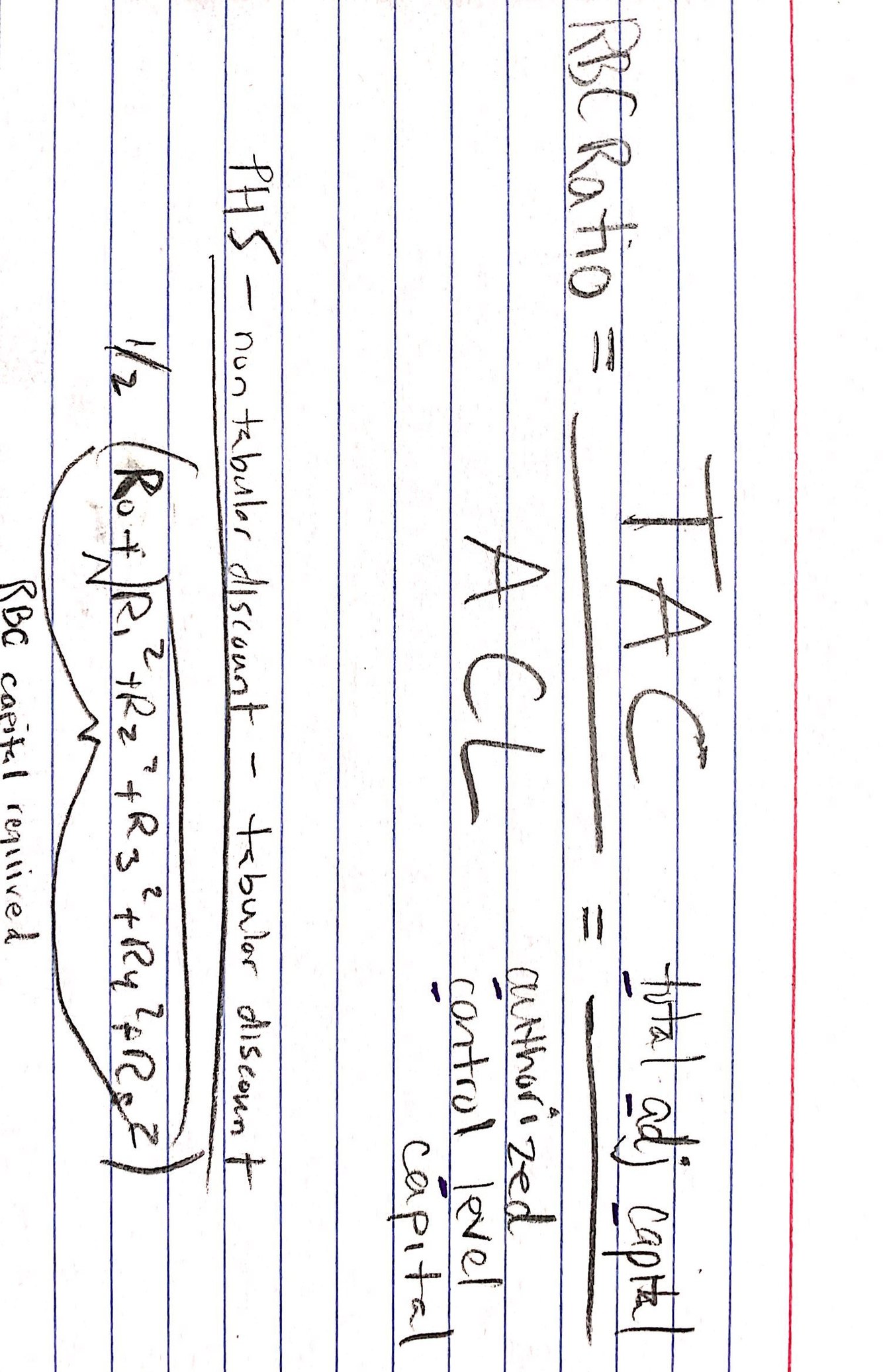
1. Has Total adjusted capital & ACL capital which can be used to calc RBC ratio
26
R1 components (not in other R) [4]
Unaffiliated bonds Bond size adjustment factor Mortgage loans Misc assets (cash, cash equivalents, short term investments, non-admiited collateral loans)
27
_R1 Bond size charge_ what bonds? reflects what?
*Class 2-6 unaffiliated bonds + non US govt class 1* _Reflects_ diversification of bond portfolio (larger portfolios has lower BSC)
28
_R1 Bond Asset concentration charge_ consists of? doubles what?
*Class 2-5 unaffiliated bonds + collateral loans + mortgage loans* _Doubles_ risk charge for $ amts in top 10 issuers
29
_R2 components (not in other R) (5)_
1. Unaffiliated stocks 2. Real estate 3. Schedule BA assets 4. Misc assets 5. Stock Asset concentration factor
30
_R2 Stock Asset concentration charge_ consists of?
* Class 2-5 unaffiliated preferred stock +* * all unaffiliated common stock +* * real estate +* * derivatives +* * receivables for securities*
31
_RSAT (replication/synthetic asset transaction)_ what is it? whcih RBC risk categories does it go to?
Derivative split ½ R1 & ½ R2
32
_Reinsurance recoverable_ how is it split? what is it equal to?
Usually split ½ R3 & ½ R4 (split IF R4 for rsvs \> R3 non invested assets +1/2 R3 reinsurance recoverables) 10% of reinsurance recoverables in schedule F part 3
33
_can be R1 or R2 components depending on if related to fixed income or equity_
1. Holding or parent company 2. Investment affiliate 3. Other non-insurance subsidiary 4. insurance subsidiaries NOT subject to RBC 5. OBC collateral & schedule DL Part 1 Assets
34
_R0 components (7)_ _which are off balance sheet items (3)_
Non controlled asset (*off balance sheet item*) Contingent liab (*off balance sheet item*) Guarantee for benefits (*off balance sheet item*) Investments in alien insurance company affiliates Common Stock investment (in the subsidiary IF subject to RBC) Preferred Stock investment (in the subsidiary IF subject to RBC) Bond investment (in the subsidiary IF subject to RBC)
35
_Non-invested assets_ – less liquid part of which risk category? list 9
Part of R3 1. Interest due and accrued 2. Fed income tax *recoverable* 3. Agg write for other than invested assets 4. Amt *receivable* for uninsured plan 5. Guaranty funds *receivable* or on deposit 6. Uncollected/deferred prem & agent balance 7. Amt recoverable from reinsurer 8. Net deferred tax asset 9. Receivables from parent, subsid, affiliate
36
37
38
39
40
41
42
43
44
45
46
47
48
49
50
51
52
53
_Describe average growth rate factor used if_ 1. just 1 year of growth experience 2. start up 3 no CWP in current year
1. J_ust 1 yr of growth experience_→ 1 yr growth - 0.10 2. _Start up_ → 0.40 - 0.10 3. _No GWP in current yr_→0.0
54
R4 - what kind of premium is used to calculate the average growth rate factor used in the excessive prem growth charge for R4?
**GWP** = DWP + assumed prem from **non-affilates** **on a group basis**
55
_Purpose of A (investment income adjustment) in R4 & R5 calculation_
1. Remove risk margin that exists b/c (rsvs recorded on undiscounted basis under SAP)
56
_Purpose of company RBC % in R4 calculation_
Surplus cushion vs adverse development
57
_R4 calculation –_ _describe L&LAE rsvs in terms of reinsurance & discounts_
1. *Gross of non-tabular discounts* 2. Net of tabular discounts 3. Net of reinsurance
58
_Purpose of loss sensitive discount for R4 & R5 calculation_ (2)
Retrospective rated policies: Loss*↑* → Prem *↑*→ less surplus needed Lower discount for assumed b/c if Loss *↑*→ ceding commission down→ more surplus needed
59
60
61
62
63
64
65
66
67
68
69
70
71
72
73
74
75
76
77