1
Q
Describe the process of DNA profiling
A
- DNA extraction: DNA is extracted from a tissue sample (which has cells containing and individual’s genome)
- DNA must be amplified by PCR
- DNA digestion: The DNA is digested by cutting it into smaller fragments using restriction endonucleases
- Restriction endonucleases: An enzyme that cuts DNA at specific base sequences called recognition sites
- The active site recognises particular nucleotide sequences (known as recognition sites)
- The enzyme cuts the DNA at these points leaving VNTRs intact – as they are needed to create a DNA profile
- DNA separated by gel electrophoresis:
- Smaller DNA fragments move faster and further than larger DNA fragments
- The fragments are transferred onto a nylon membrane by Southern Blotting
- Hybridisation: Fluorescent/radioactive DNA probes are added in excess to the nylon membrane.
- The DNA probes complementary base pair to known DNA sequences
- The probes identify microsatellite regions
2
Q
How is the DNA profile examined?
A
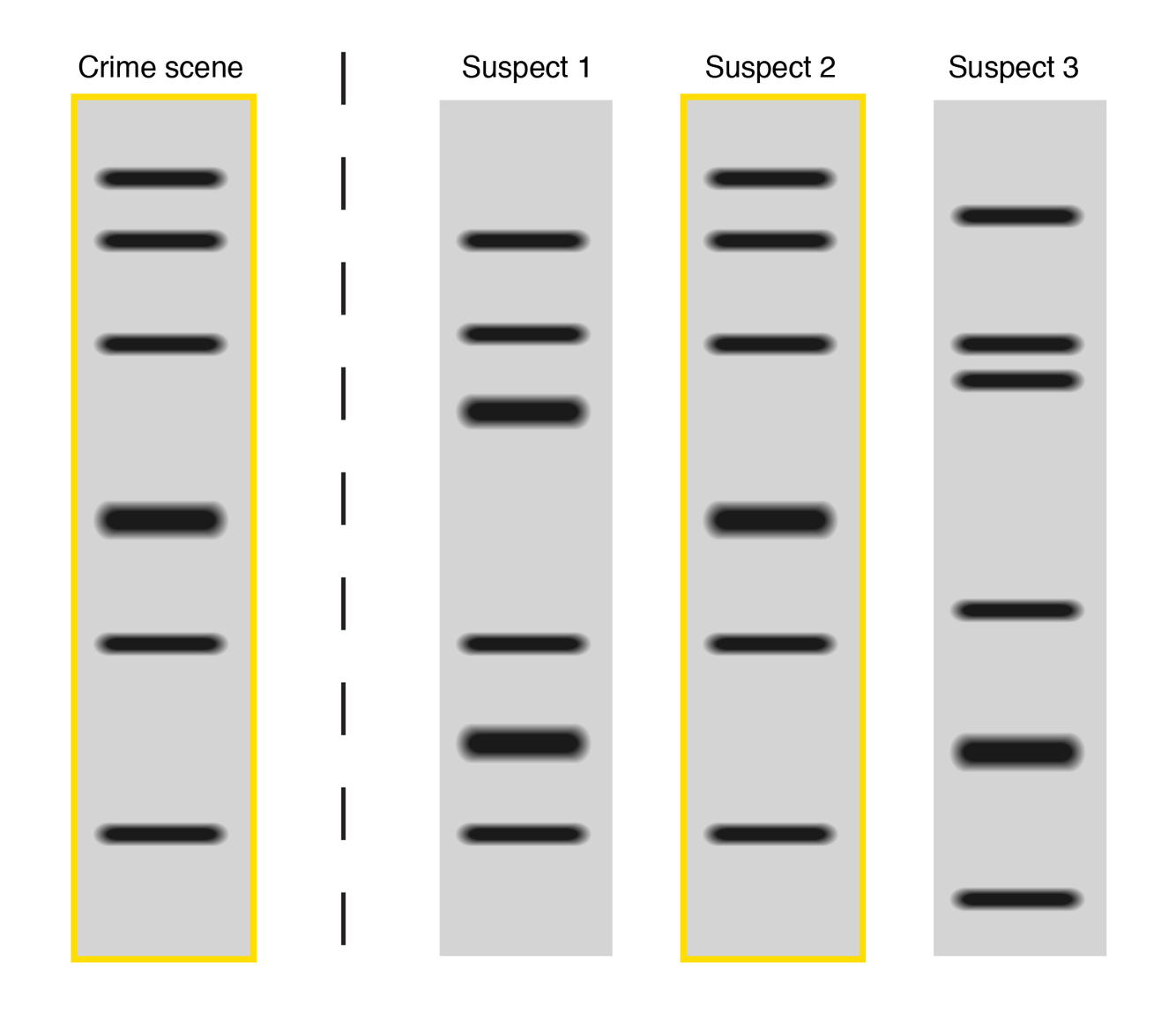
- Examining evidence – fragments give a unique pattern of bars per individual
- If radioactive DNA probes were used, an X-ray of the membrane can be examined
- If fluorescent DNA probes were used, the membrane can be placed under UV light to allow the tags to glow
3
Q
Describe the process of gel electrophoresis
A
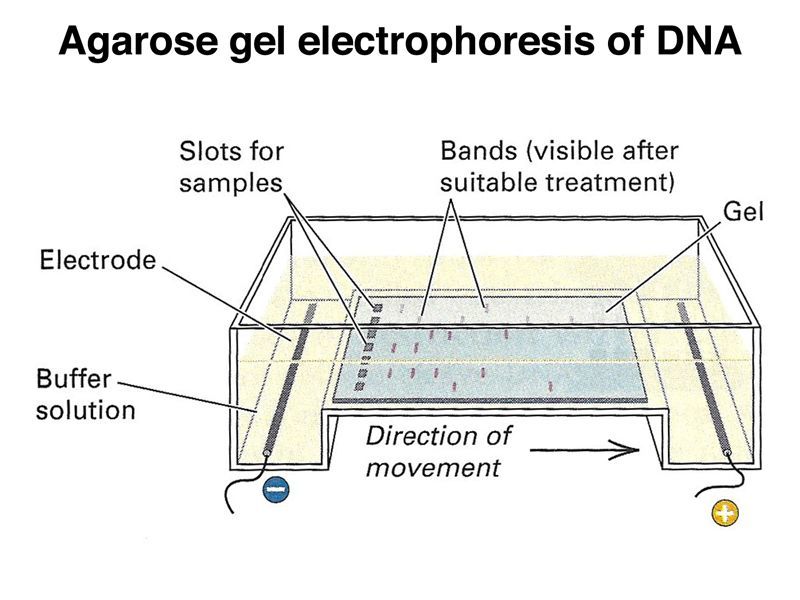
- Place DNA fragments into wells in agarose gel strips (load DNA) at the cathode (that have buffers to maintain pH)
- In the 1st and last wells, there are fragments of known length for reference for fragment sizing
- An electric current is passed over the electrophoresis plate at the cathode and since DNA is negatively charged (phosphate groups) it moves towards the anode (+ve charge)
- Rate of fragment movements depends on mass/length of fragments
- The gel acts as resistance to molecular movement, smaller fragments move faster than longer ones
- Once the smallest fragment reaches the anode, the current is switched off
- The gel is placed in an alkaline buffer solution to denature DNA fragments to expose the bases
- SOUTHERN BLOTTING
4
Q
Describe the process of southern blotting?
A
- The alkaline solution is transferred to a nylon membrane that’s placed over the gel
- The membrane is covered in dry absorbent paper, drawing the alkaline solution with DNA out
- The fragments of DNA are transferred to the membrane as they cannot move through it, in the same positions as on the gel
- They are then fixed in UV light or heat
5
Q
What are DNA probes?
A
- DNA fragments separated in electrophoresis are not visible
- Need to be labelled to identify desired gene/nucleotide sequence
A DNA probe:
- Short DNA sequence
- Single stranded
- Has specific nucleotide sequence complementary to the desired sequence
- Is labelled
- Either radioactively
- Fluorescently
6
Q
How are DNA profiles compared?
A

OCR A Biology A Level - 6.1.3
flashcards
Decks in class (5)
# Cards



