What layers make up the periosteum?
- Outer layer - vascular fibrous tissue
- Inner layer - osteoprogenitor / osteoblastic cells
- Sharpey fibres, attach to cortex
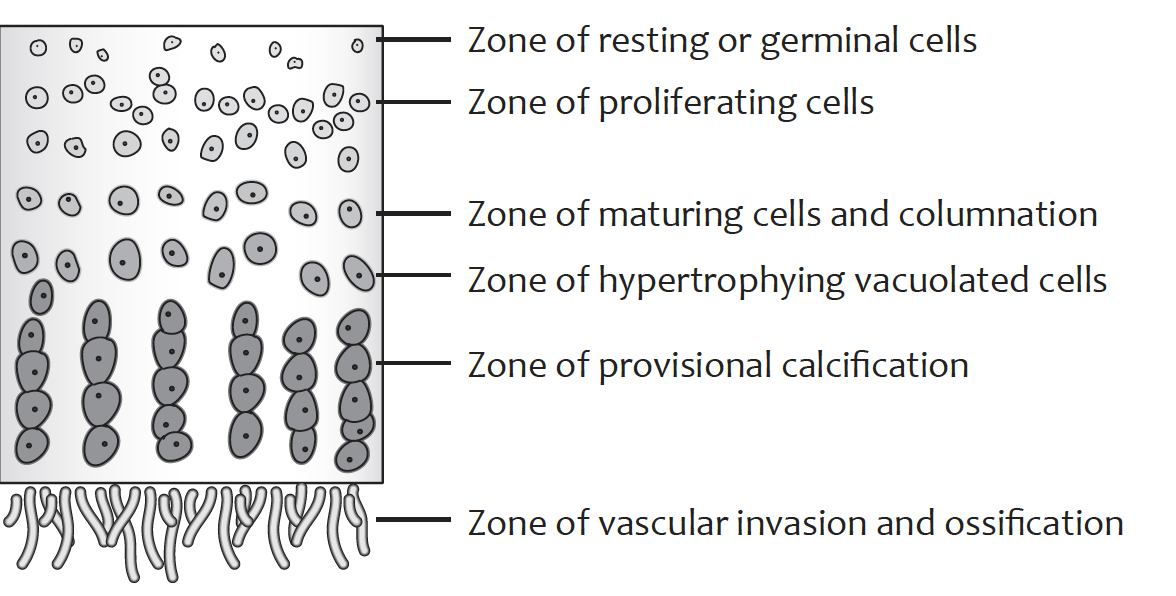
Name the layers of the physis!
What direction do nutrient foramen generally run in? In which bone is this reversed?
Periosteum (proximal) -> Endosteum (distal)
REVERSED IN ULNA
Which cell type comprises the majority of compact bone? What other pertinent stuctural feature of compact bone is present?
- Osteocytes
=> HAVERSIAN system: interconnected canaliculi and Volkmann’s canals
Define endochondral ossification
- MOST BONES DO THIS - develop from a cartilage model
- Ossifications centres form from hyaline cartilage centres IN UTERO
- Surrounded by perichondral new bone
- Ossification centres: All trabecular bone bone resorbed and replaced by marrow AT BIRTH
=> Trabecular bone persists at metaphyses
- Secondary ossification centres develop at epiphyses
=> Articular cartilage contributed to growth
Which bones develop by intramembranous ossification?
Flat bones - e.g. SKULL
=> Form directly from connective tissue
What are apophyses?
Non-articular cartilagenous protuberances -> ossify.
In young animal seperated from body of bone by cartilageneous band which fuse when mature
Sites of tendious attachement
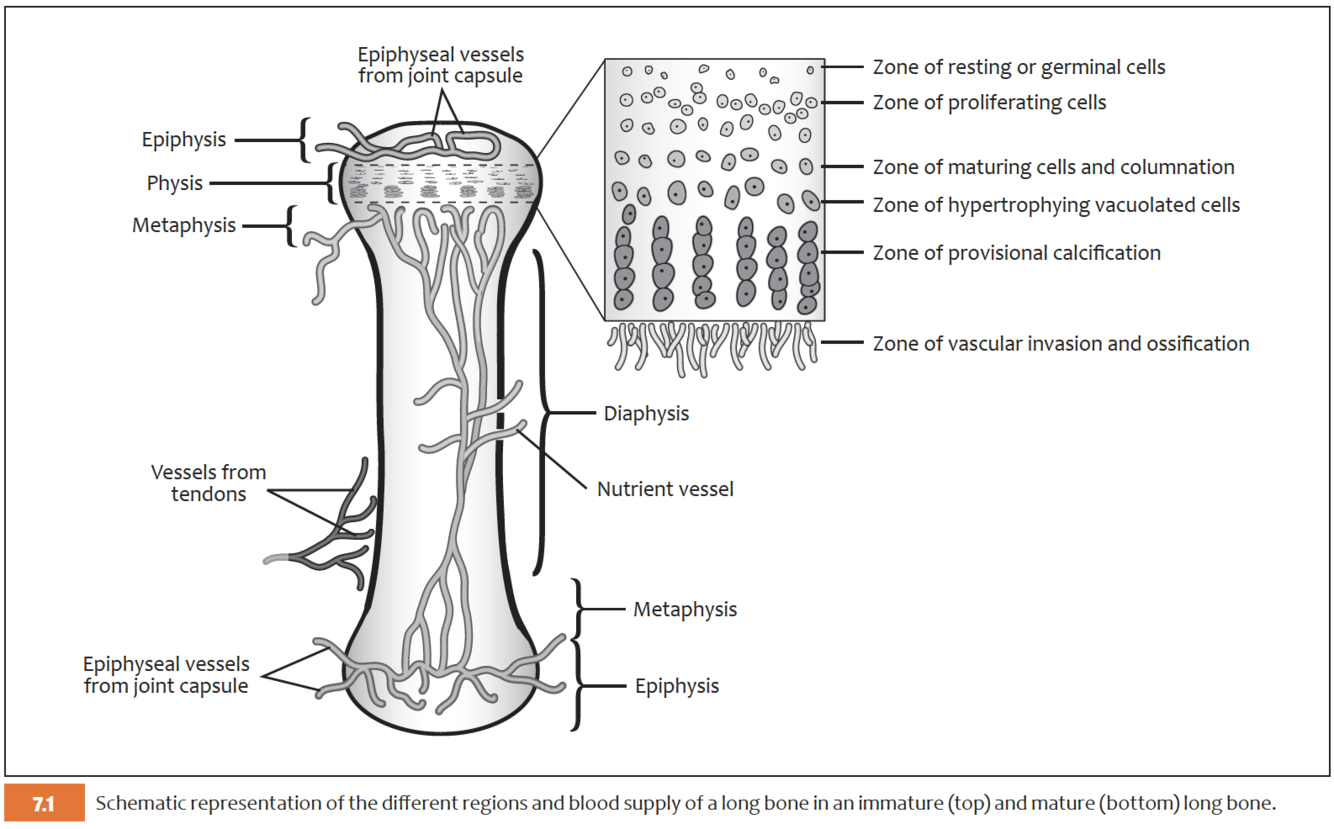
Describe the vascular supply to bone
Epiphyses: JOINT CAPSULE
Physis: Essentially avascular
Metaphysis: Nutrient foramen. PARTICULARLY BLOOD RICH -> osteomyelitis predisposition
Cortical bone: Medullary cavity via medullary arteries (centrifugal) to whole cortex, EXCEPT at sites of fascial attachment where outer 1/3rd supplied by small fascial arterioles
NB: Periosteum highly vascular in YOUNG DOG, vestigial with maturity. Facilitates component of intramembranous ossification
Which portion of the bone is predisposed to osteomyelitis and osteosarcoma?
METAPHYSIS! Increased blood supply
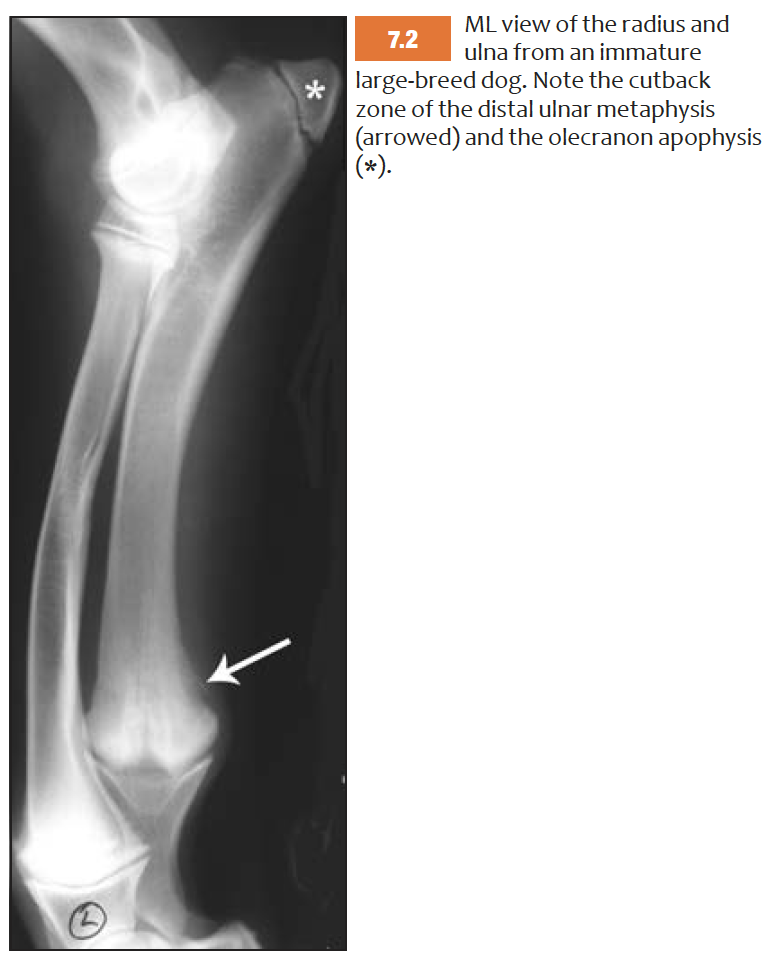
What is the cutback zone?
- Region of subperiosteal osteoclastic activity in region of metaphyseal zone as physis remodeleed to become diaphyseal
List causes of endosteal / medullary osteosclerosis
Chronic osteomyelitis
Margins of neoplastic process / neoplastic new bone formation
Panosteitis
Bone infarction (e.g. malignancy associated in dogs, leukaemia in cats)
List 7 periosteal reaction patterns in order of aggression
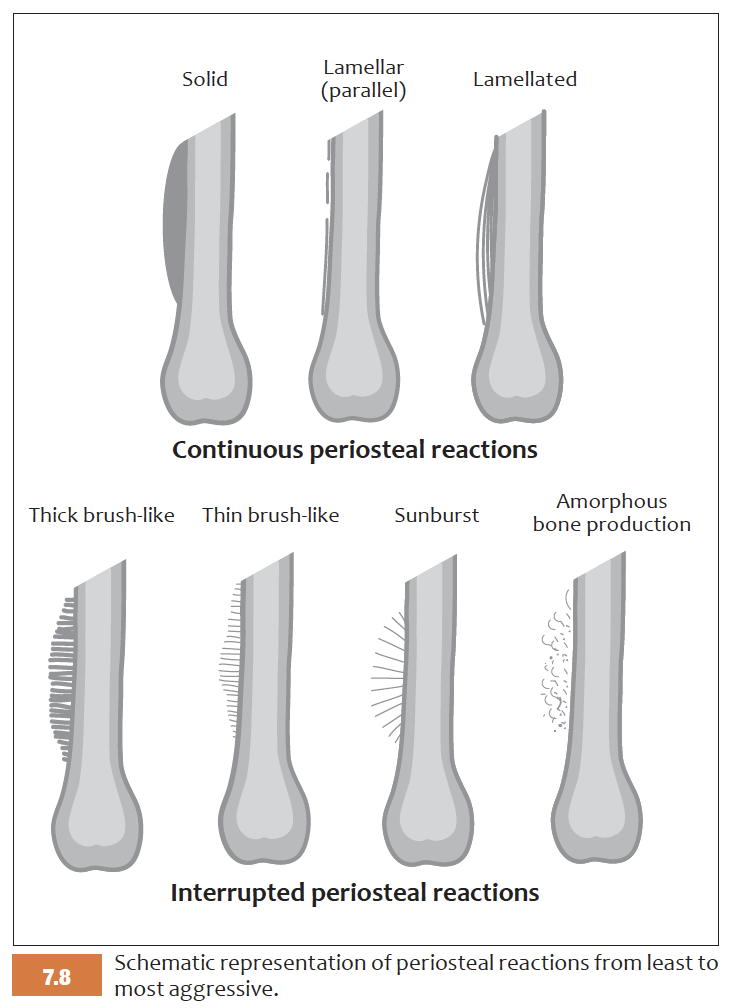
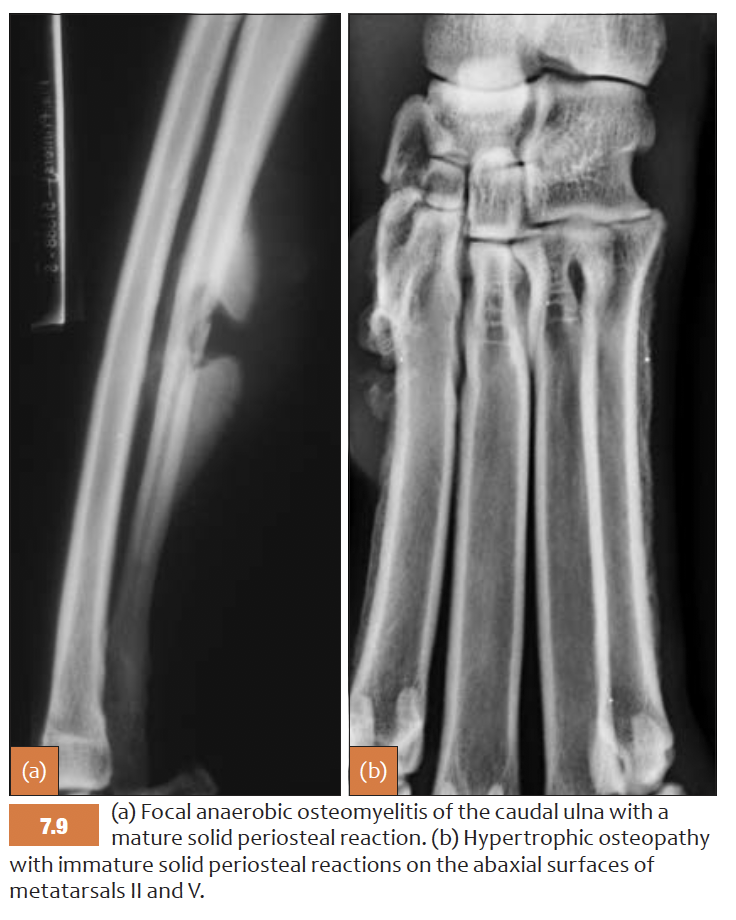
List features of SOLID periosteal reaction
- Likely benign
- Periosteum slowly lifted over time
e. g. fracture callus, chronic osteomyelitis, panosteitis, CODMANS TRIANGLE
=> the latter can be associated with neoplasoia
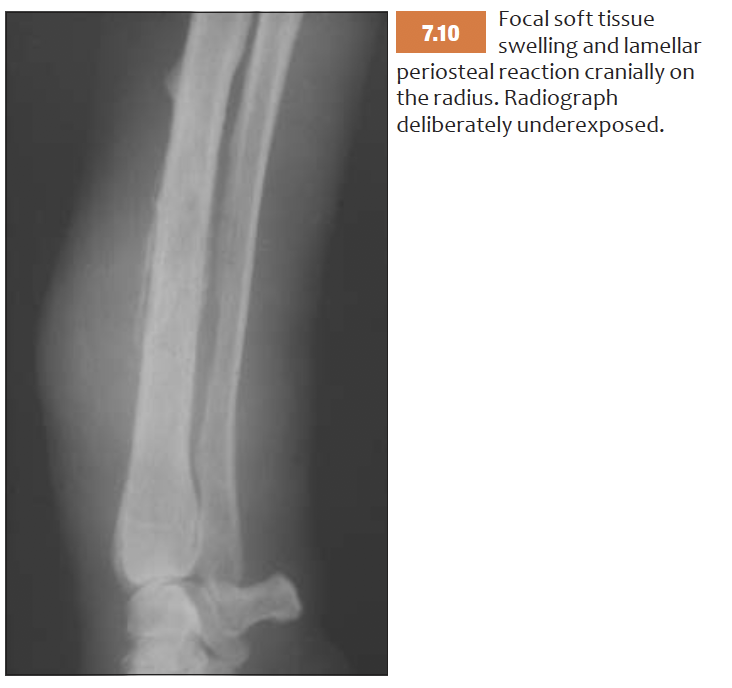
List features of lamellar (parallel) periosteal reaction
- Periosteum lifted by e.g. exudate, haematoma or neoplastic cells (less commonly)
- Seperated from underlying cortex by radiolucent line
- Will fill with bone to beome solid reaction
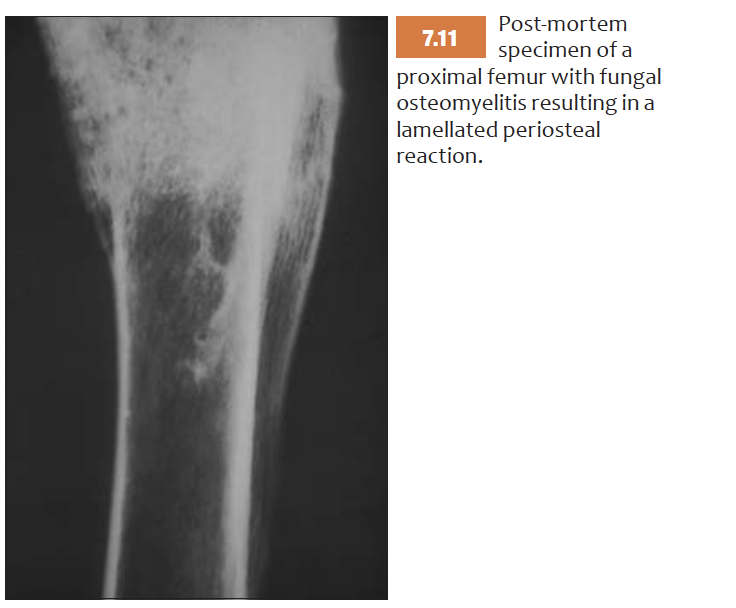
List features of Lamellated periosteal reaction
- More aggressive than lamellar = “onion skin” sequential elevations of periosteum
- Typically with fungal osteomyelitis and malignant neoplasai
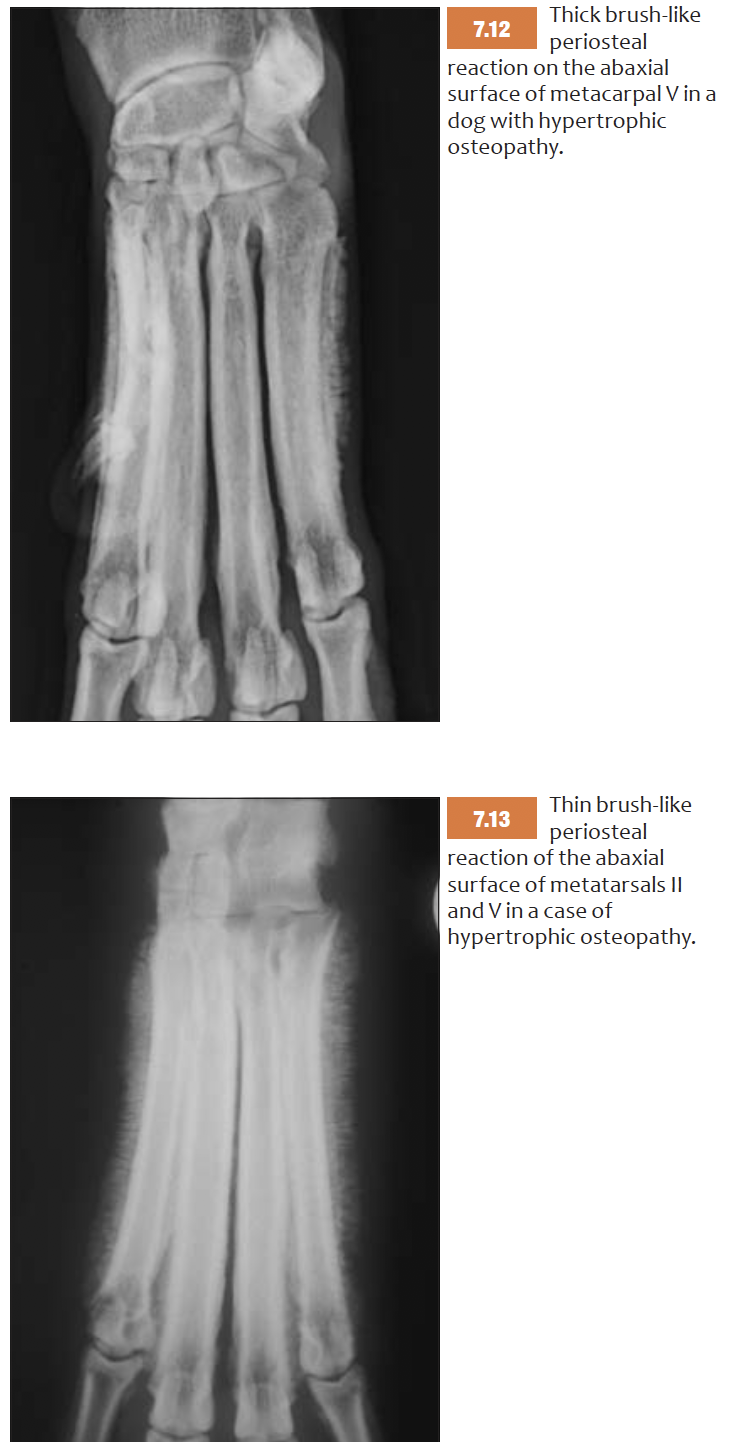
List features of brush like periosteal reaction
- Periosteum lifted rapidly, with osteoblastic activity along vertically oriented sharpey fibres
- Thicker brush = palisading: less aggressive as SLOWER growing
- Thinner = spiculated: faster, more aggressive
E.g osteomyelitis, neoplasia, hypertrophic osteopathy
List features of sunburst periosteal reaction
- Highly aggressive process, typically OSA
- Periosteum lifte rapidly -> domed shape
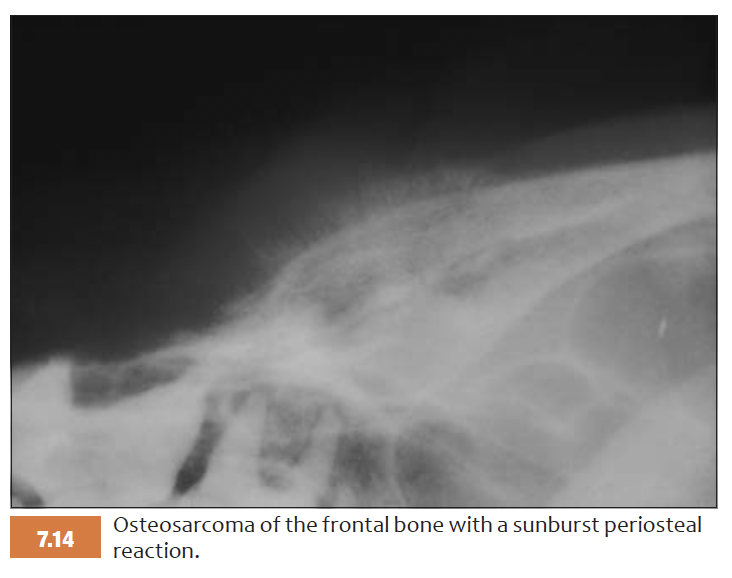
List features of amorphous bone production
NOT PERIOSTEAL REACTION -> neoplastic new bone, beyond confines of periosteum
=> cotton wool or candyfloss appearance
Highly suggestive of OSA
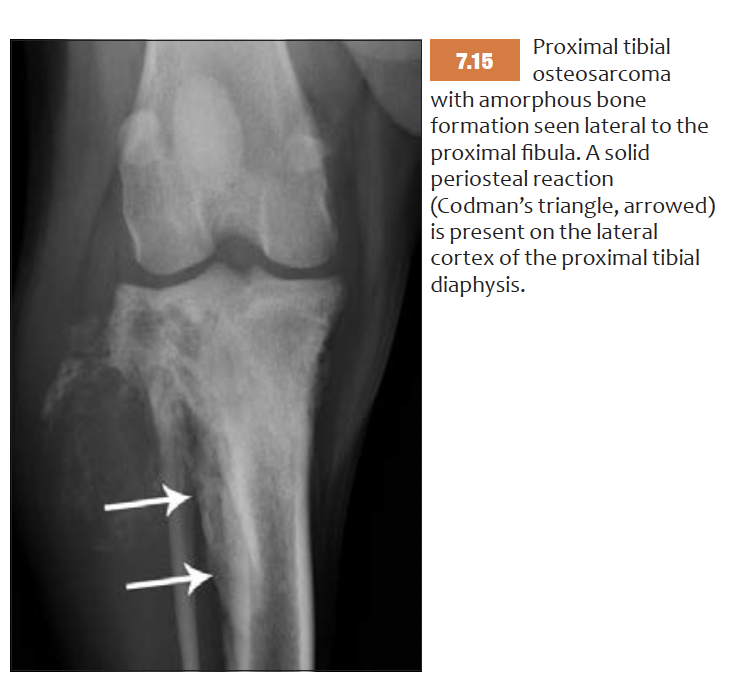
What % of bone loss is detectable radiographically?
30-50%
Define osteoporosis vs osteomalacia
Osteoporosis: Bone atrophy (local or generalised) without change to composition. Fewer / coarser trabeculae, thin cortex
Osteomalacia: Decreased bone mass with disturbance to composition due to insufficient / abnormal osteoid mineralisation. Usually affects whole skeleton and metabolic in origin
List types of lysis
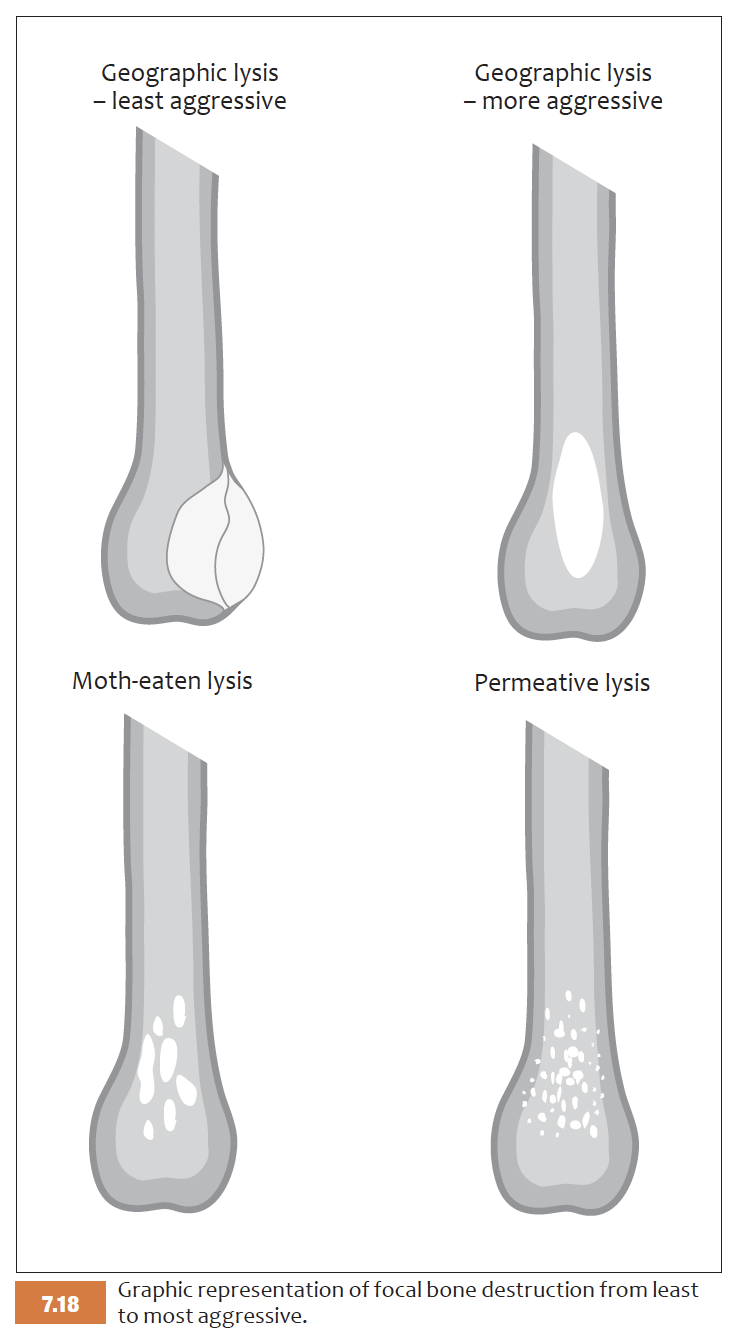
Define differences between geographic, moth eaten and permeative lysis
Geographic
- Least aggressive
- Usually cancellous bone at extremitis
+- sclerotic rim. If present less aggressive, if not = “punched out”
- Cortical destruction may be present e.g. myeloma, metastasis
Moth eaten
- Larger seperate foci (2-3mm), ill-defined
- Intermediate aggressiveness
Permeative
- Numersous small foci, 1-2mm.
- Often with cortical scalloping or defects
- MOST aggressive
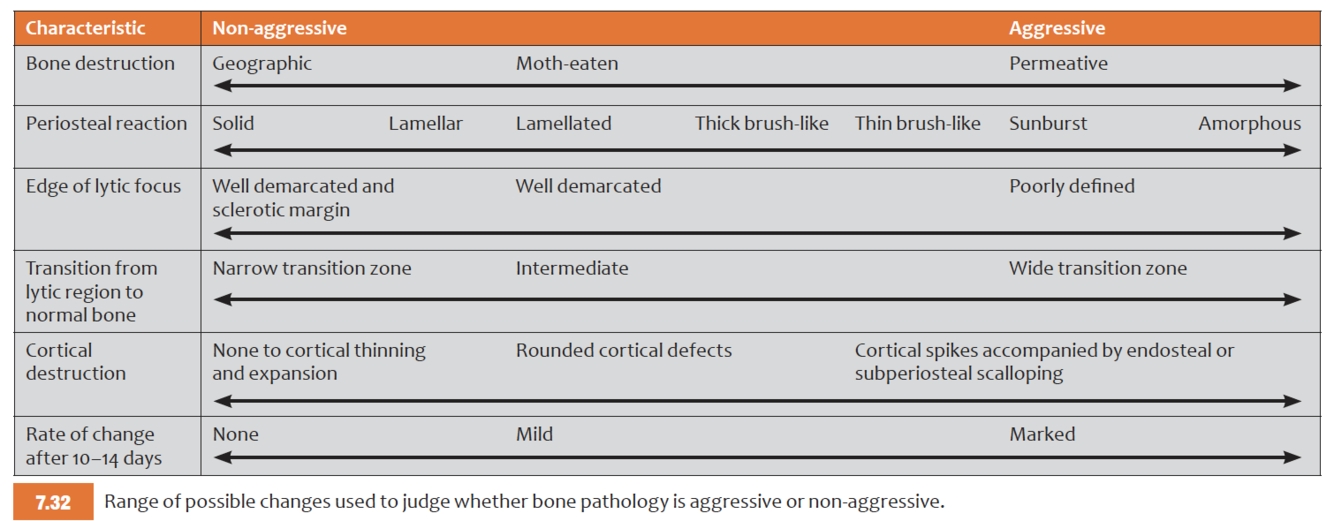
Features of aggression!

-
6. Soft tissues10
-
7. Bones - General23
-
9. Long bones - Mature45
-
10. Long bones - Fractures37
-
11. Joints - General17
-
12. Shoulder and scapula20
-
14. Hip joint and pelvis22
-
15. Stifle27
-
8. Long bones - juvenile39
-
16. Distal limbs16
-
17. Skull - General21
-
18. Nasal chambers and frontal sinuses9
-
19. Teeth6
-
20. Spine - General20
-
21. Spine - Not IVDD22
-
22. Spine IVDD and Wobblers13
-
23. Spine - LS and cauda equina12



