what is this condition
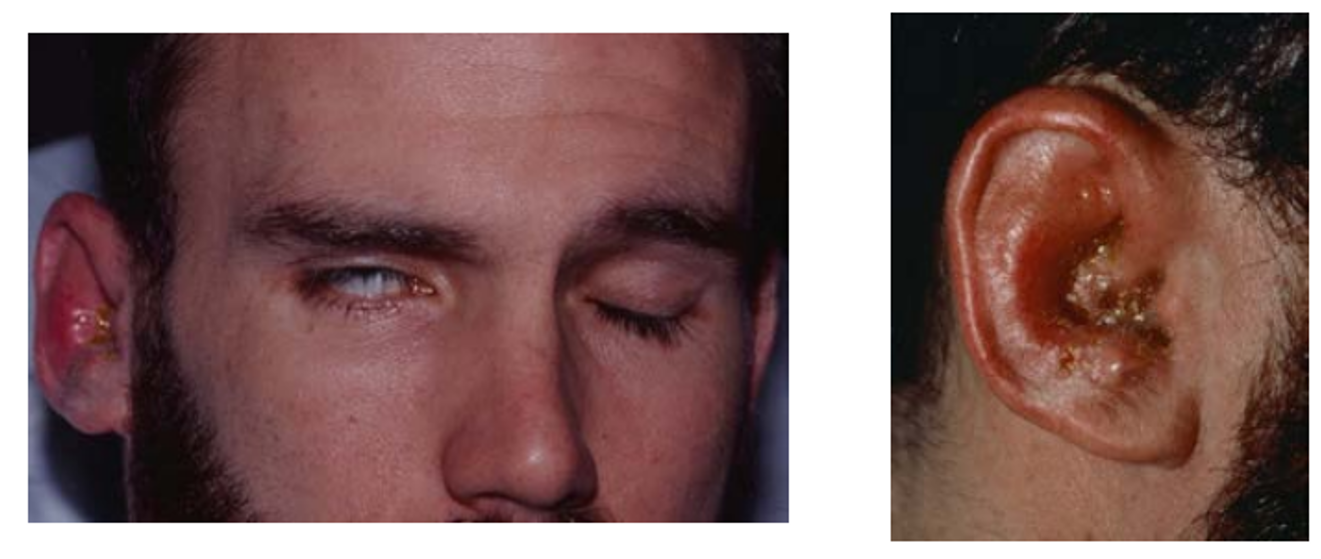
RAMSAY-HUNT SYNDROME: facial n palsy due to shingles by varicella zoster - can cause appearance of vesicles around auricle
what is this condition and explain why it has occured. how should it be treated
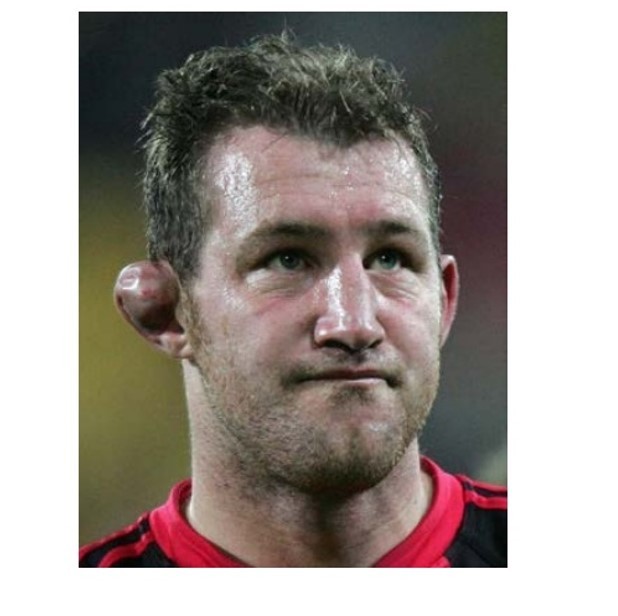
PINNA HAEMATOMA with CAULIFLOWER DEFORMITY
Blunt injury to pinna… accumulation of blood between cartilage and perichondrium… cartilage deprived of blood supply… avascular and pressure necrosis of tissue… fibrosis and new asymmetrical cartilage dev.
Requires prompt drainage, measures to prevent re-accumulation and re-apposition of 2 tissue layers.
what is this condition and what are the main symptoms
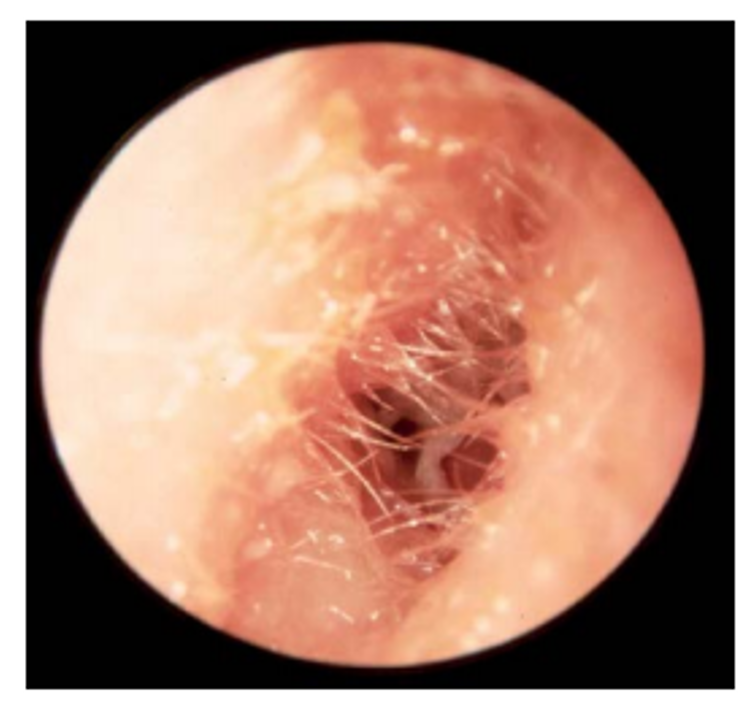
OTITIS EXTERNA - inflammation of EAM (can be acute, recurrent or chronic) caused by infection or eczema
Symptoms:
1- pain
2- pruritis
3- discharge
4- temporary dulled hearing
what is otosclerosis
fusion of ossicles at articulations… sound vibrations cannot be transmitted… progressive hearing loss (conductive)
what is this condition, which signs suggest this and explain how this occurs
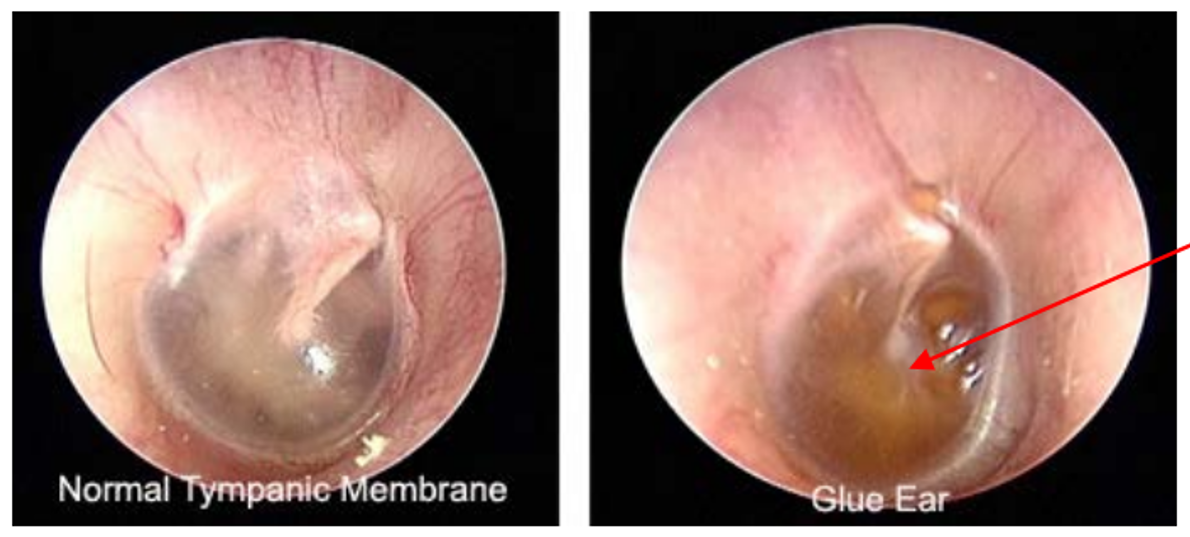
OTITIS MEDIA WITH EFFUSION (glue ear): build-up of fluid and negative pressure in middle ear due to Eustachian tube dysfunction (eg enlarged pharyngeal tonsils or adenoids). Causes decreased mobility of TM (retracted inwards) and ossicles, affecting hearing.
Signs: retracted and straw-coloured TM
describe the management of otitis media with effusion. are there any possible complications
Management:
- most resolve spontaneously in 2-3 mths
- some may persist - reauire grommets (tympanostomy tube) to ventilate middle ear
Complications: predisposes to otitis media as effusion allows pathogen growth
what is this condition, suggest signs and symptoms of this
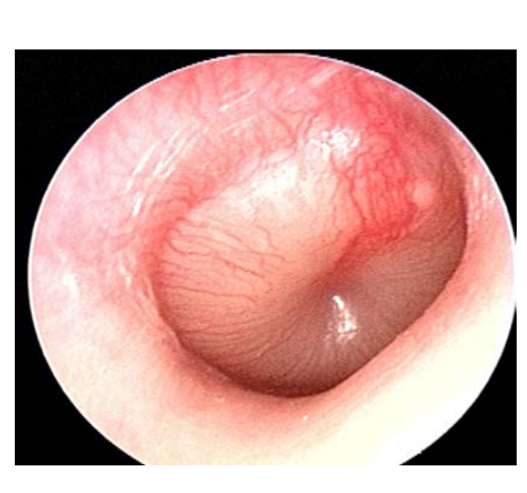
ACUTE OTITIS MEDIA - acute middle ear infection
Signs: red +/- swollen TM with loss of normal landmarks
Symptoms: otalgia and other non-specific symptoms, eg temp
suggest possible complications of acute otitis media
1- TM perforation (due to increased pressure)
2- facial n involvement
rarer:
3- mastoiditis
4- intracranial complications (meningitis, sigmoid sinus thrombosis, brain abscess)
why is acute otitis media more common in children than adults
eustachian tube is shorter and more horizontal so easier passage for infection from nasopharynx and can block more easily, compromising ventilation and drainage
which condition is this, what are the associated signs and explain why this can occur
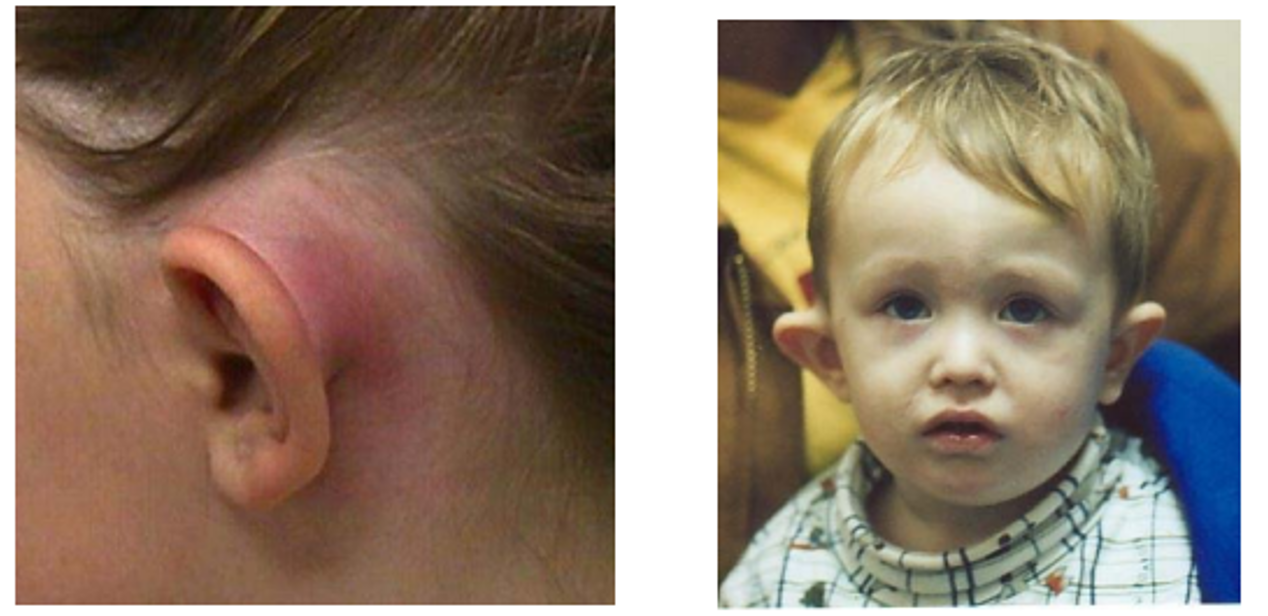
MASTOIDITIS: middle ear communicates posteriorly via mastoid antrum with mastoid air cells, providing potential route for middle ear infections to spread into mastoid bone
Signs: external rubor and swelling which pushes ear anteriorly
what is cholesteatoma and which signs suggest this condition
- rare abnormal skin growth into middle ear - not malignant but slowly grows and expands, eroding into structures, eg ossicles, mastoid bone, cochlea
- usually secondary to chronic ET dysfunction or ear infections
- signs:
1- painless often smelly otorrhea
2- crusting and retraction of superior TM
3- +/- hearing loss
what is labyrinthitis and what symptoms suggest this
- infection and inflammation of inner ear labyrinth, affecting hearing and balance
- symptoms (often pass within a few weeks):
1- vertigo
2- nausea and vomiting
3- hearing loss (+/- tinnitus
what is benign paroxysmal positional vertigo and how can this be treated
- short episodes of intense vertigo on head movement, caused by OTOCONIA (tiny calcium carbonate crystals broken off inside lining of vestibule) entering the semicircular canals
- usually resolves after several weeks but can often be treated using the Epley manoeuvre
what is Meniere’s disease
- attacks (20min - several hrs) of vertigo, nausea, hearing loss and tinnitus, variable in severity and frequency
- caused by fluid build-up in labyrinth causing increased pressure and swelling, affecting stereocilia
- hearing loss and tinnitus may become permanent over mths-yrs
- no cure
what is the most common cause of hearing loss in >55 yo
PRESBYACUSIS: degeneration of cochlear stereocilia with age
describe how to perform the 2 tests differentiating between conductive and sensorineural hearing loss
- RINNE’S: strike tuning fork and place base against P’s mastoid process for 2-3 secs and then about 1 cm from EAM - better bone or air conduction?
- WEBER’S: strike tuning fork and place base in midline, high on P’s forehead - which ear hears sound louder?
what are the test results in conductive and sensorineural hearing loss?
CONDUCTIVE:
- Rinne’s: bone conduction better than air
- Weber’s: sound heard better in affected ear
SENSORINEURAL:
- Rinne’s: air conduction better than bone
Weber’s: sound heard in normal ear but not affected ear

-
3. Lymphatics of H&N19
-
6. ANS Of Head And Neck7
-
10. The Cervical Plexus6
-
5. The cavernous sinus8
-
11. H & N cancers12
-
1. Anatomy of scalp11
-
1. General organisation of H&N14
-
1. Muscles and nerves of the head9
-
8. Orbit anatomy & pathology15
-
8. Eye globe anatomy and pathology19
-
8. Muscles of the eye9
-
7. Anatomy of the ear19
-
7. Ear pathology17
-
10. The larynx18
-
10. Muscles and innervation of the larynx14
-
9. Oral cavity & tongue9
-
9. Pharynx & swallowing15
-
9. Nasal cavity and paranasal sinuses15
-
4. Neuroanatomy8
-
3. Blood vessels of the H&N19
-
2. The meninges11
-
2. Development of the H&N18



