What are the inputs and outputs to the cortex?
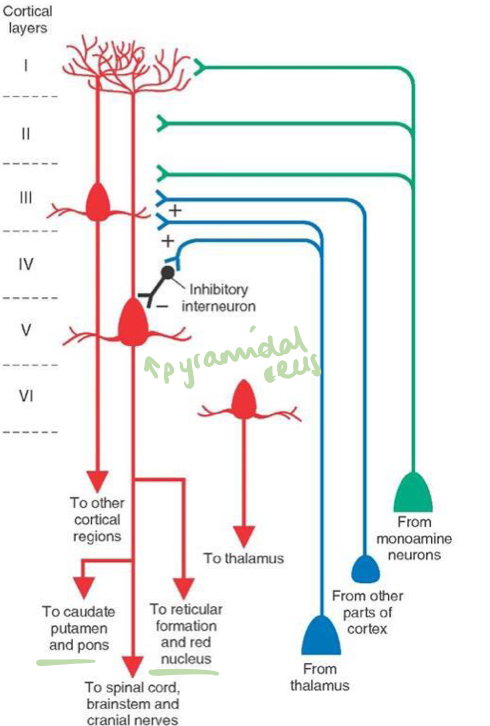
- Cerebral cortex made up of 6 layers
- Input: thalamus and other cortical areas e.g reticular formation
- Output: pyramidal cells and project to wide cell areas (projection fibres via UMNs, commisural fibres via corpus callosum, association fibres like arcuate fasiculus)
- Interneurones connect inputs and outputs
What is the function of the frontal lobes?
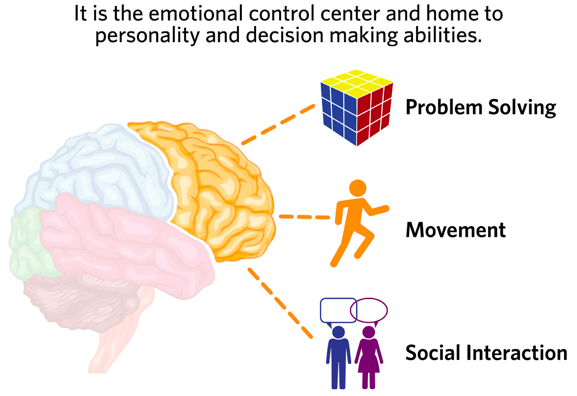
- Motor cortex
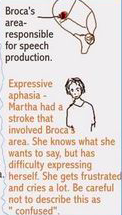
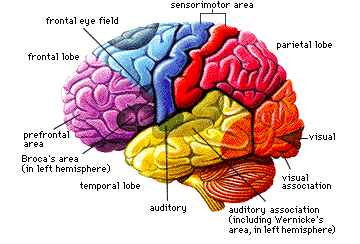
- Expression of speech (left hemisphere - Broca)
- Behavioural regulation (prefrontal cortex)
- Cognition
- Eye movements (frontal eye fields)
- Urinary Continence (paracentral lobules)
What are some features that a person may display with a frontal lobe lesion?
- Contralateral weakness
- Expressive/Broca’s dysphasia (left hemisphere)
- Impulsive disinhibited behaviour e.g aggressive, sexually inappropriate
- Difficult with complex problem solving (right hemisphere)
- Conjugate gaze issues/diplopia with other cortical features show frontal lobe lesion not nuclei/brainstem lesion
- Urinary incontinence
What is the function of the parietal lobes?
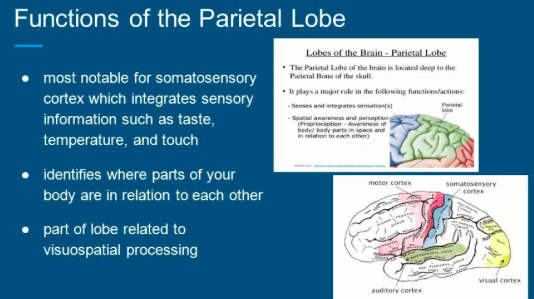
- Sensory cortex
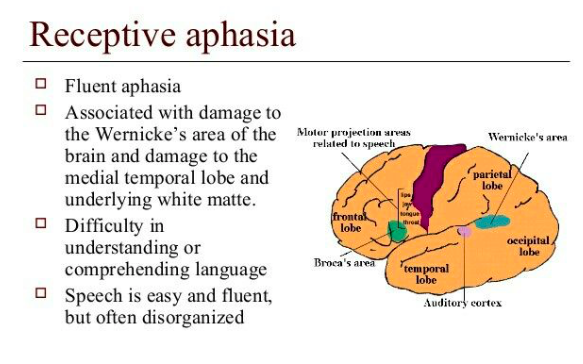
- Understanding speech (left hemisphere - Wernicke’s)
- Body image (right hemisphere)
- Awareness of external environment
- Calculation and writing
- Superior optic radiation runs through here
What are some features that a person may have if they had a parietal lobe lesion?
- Contralateral anaesthesia in all modalities (convergence at cortex)
- Receptive Dysphasia/Wernicke’s Aphasia (left)
- Poor calculation ability
- Contralateral inferior homonymous quadrantanopia
What lobes are disinhibited when drinking alcohol?
- Frontal
- Cerebellum
What is the function of the temporal lobes?
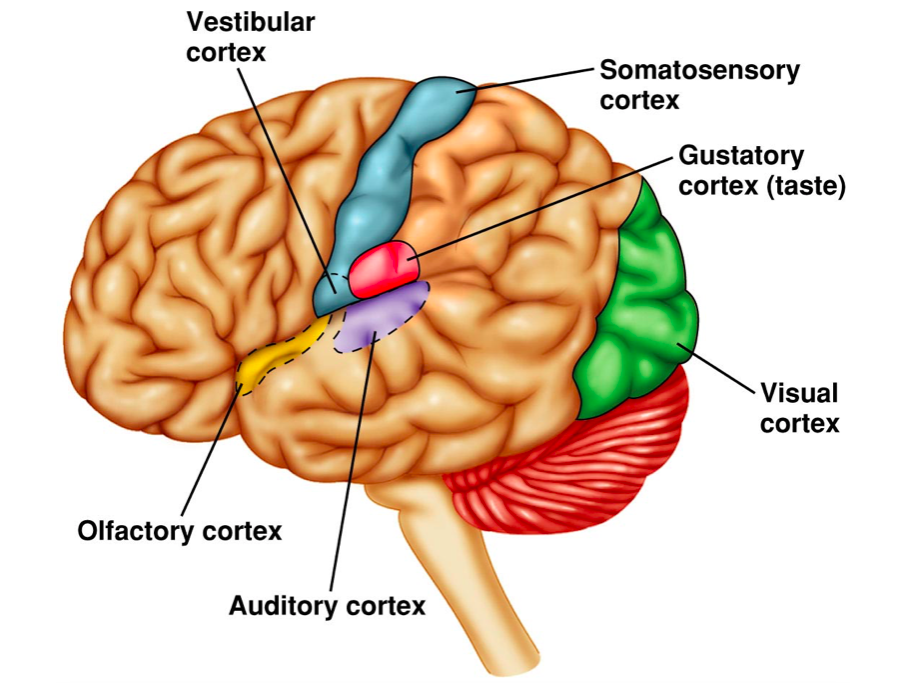
- Hearing (primary auditory cortex on superior surface near Wernicke’s)
- Olfactory (primary olfactory cortex on infero-medial temporal lobe)
- Memory (hippocampus for declarative memories)
- Emotion (limbic system like hippocampus and amygdala)
- Inferior optic radiation
What are some features that a person may display if they have a temporal lobe lesion?
- Hearing effects like auditory hallucinations
- Changes in smell like olfactory hallucinations
- Amnesia
- Temporal lobe epilepsy (retriggering memories so like deja vu)
- Psychiatric disorders
- Contralateral superior homonymous quadrantanopia
What is the theory of cerebral dominance?
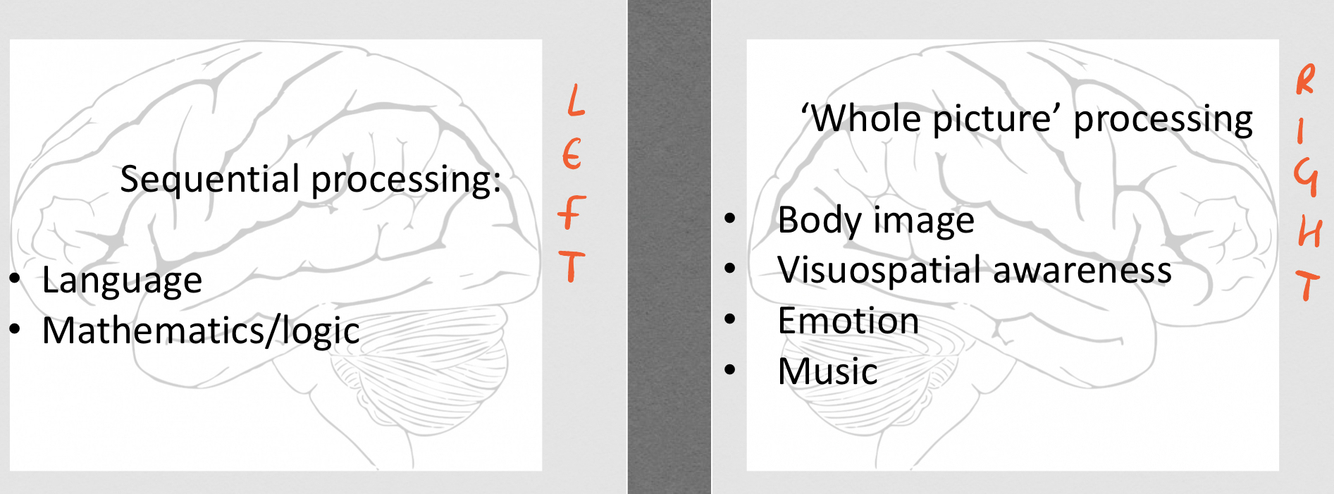
- A person does not depend equally on both hemispheres for a function e.g speech
- Right hemisphere tends to both halves of space but left only attends to right half of space (neglect - man and house on fire)
- Corpus callosum allows two hemispheres to communicate so we are the average of both
What is Alien Hand Syndrome?
- Destruction of the corpus callosum (supplies by ACA) so the two hemispheres cannot connect so one hand doesn’t know what the other is doing
- Destruction can also cause language issues

If a patient draws this what is the issue?
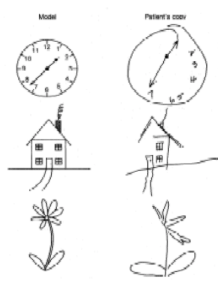
Left neglect due to damage with right hemisphere, often after a stroke
What is the language pathway in the brain?
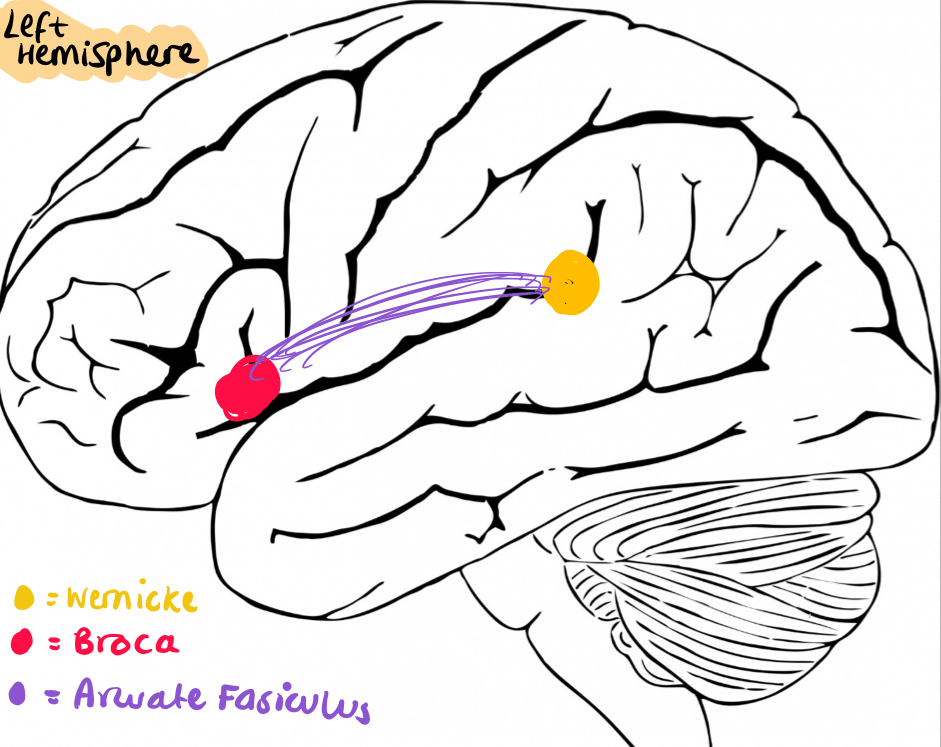
- Left hemisphere
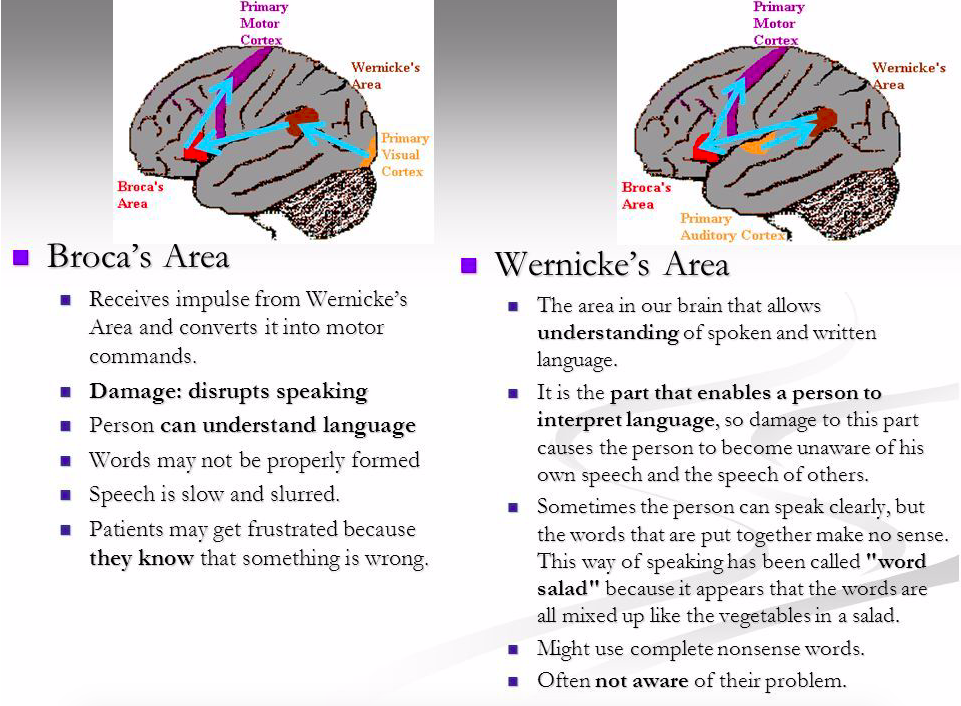
- Wernicke’s understands speech in parieto-temporal area near auditory cortex. Fluent receptive dysphasia if damaged
- Broca’s produces speech in inferolateral frontal lobe near mouth/pharynx motor area. Staccato speech/expressive dysphasia if damaged
- Joined by arcuate fasiculus and then Broca’s projects to motor cortex
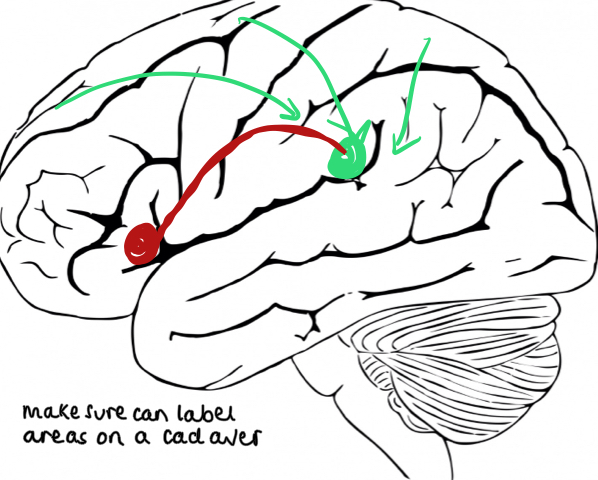
What is the input and output to the language pathway in the following scenarios:
- Repeating a heard word
- Speaking a written word
- Speaking a thought
- All outputs from Broca to motor cortex
- Input: primary auditory cortex
- Input: primary visual cortex
- Input: all of cortex
What is Wernicke’s and Broca’s aphasia?
What can be the language issue if someone has a lesion to their arcuate fasiculus?
Inability to repeat a word said to them
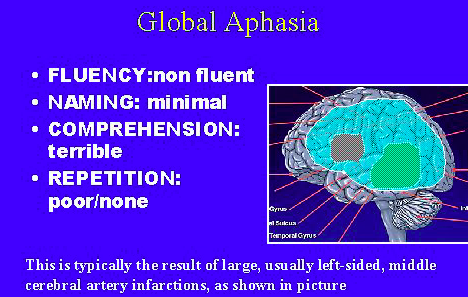
What is the blood supply to the language pathway in the brain?
- MCA so large stroke/infarct here can cause global aphasia so no verbal language at all
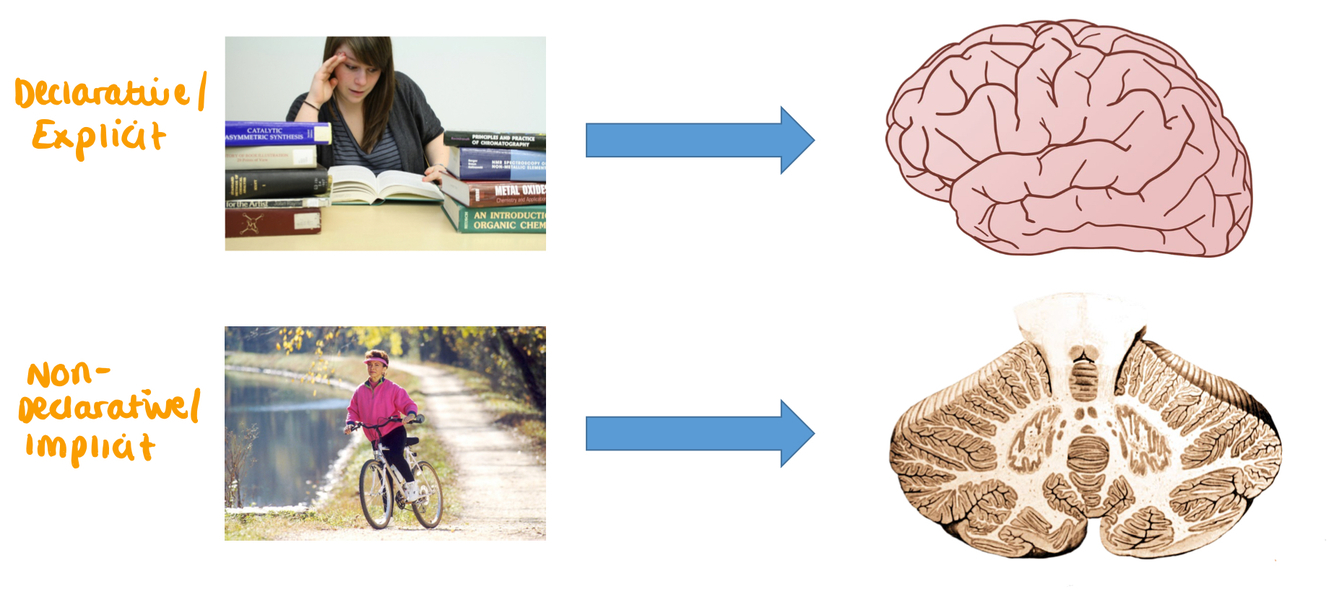
What are the two different classifications of memory and where are they both storeds?
- Declarative: factual information and is stored in cerebral cortex
- Non-declarative: motor skills and emotions and tend to be stored in subcortical areas (basal ganglia) and cerebellum. Starts in basal ganglia and moves to cerebellum the more you consolidate
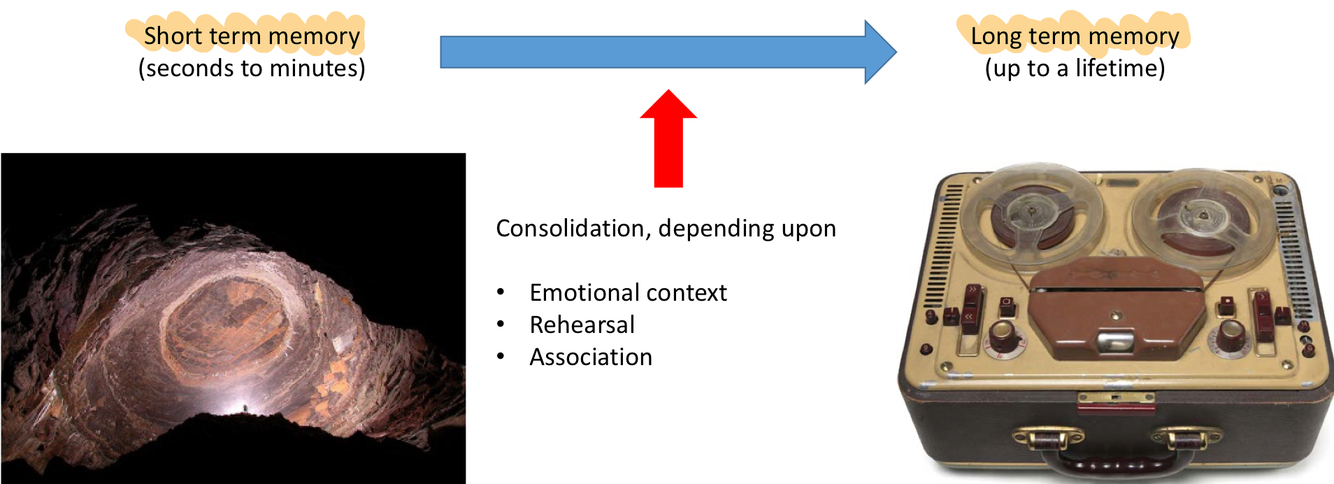
How are long and short term memories stored and what can help with consolidation of memories (conversion from short to long term)?
- Short term memory stored for seconds to minutes as an ‘echo’ in cortical circuits
- Long term stored for very long periods in cerebral cortex, cerebellum following consolidation
Which part of the brain helps to consolidate declarative memories?
- Hippocampus (deep temporal lobe)
- Multimodal inputs from many brain systems (making it
good at associating stimuli e.g perfume and dying)
- Role as an ‘oscillator’, facilitating consolidation of
memories in the cortex via its output pathways (primarily the
fornix–> mammillary bodies – >thalamus –> cortex)
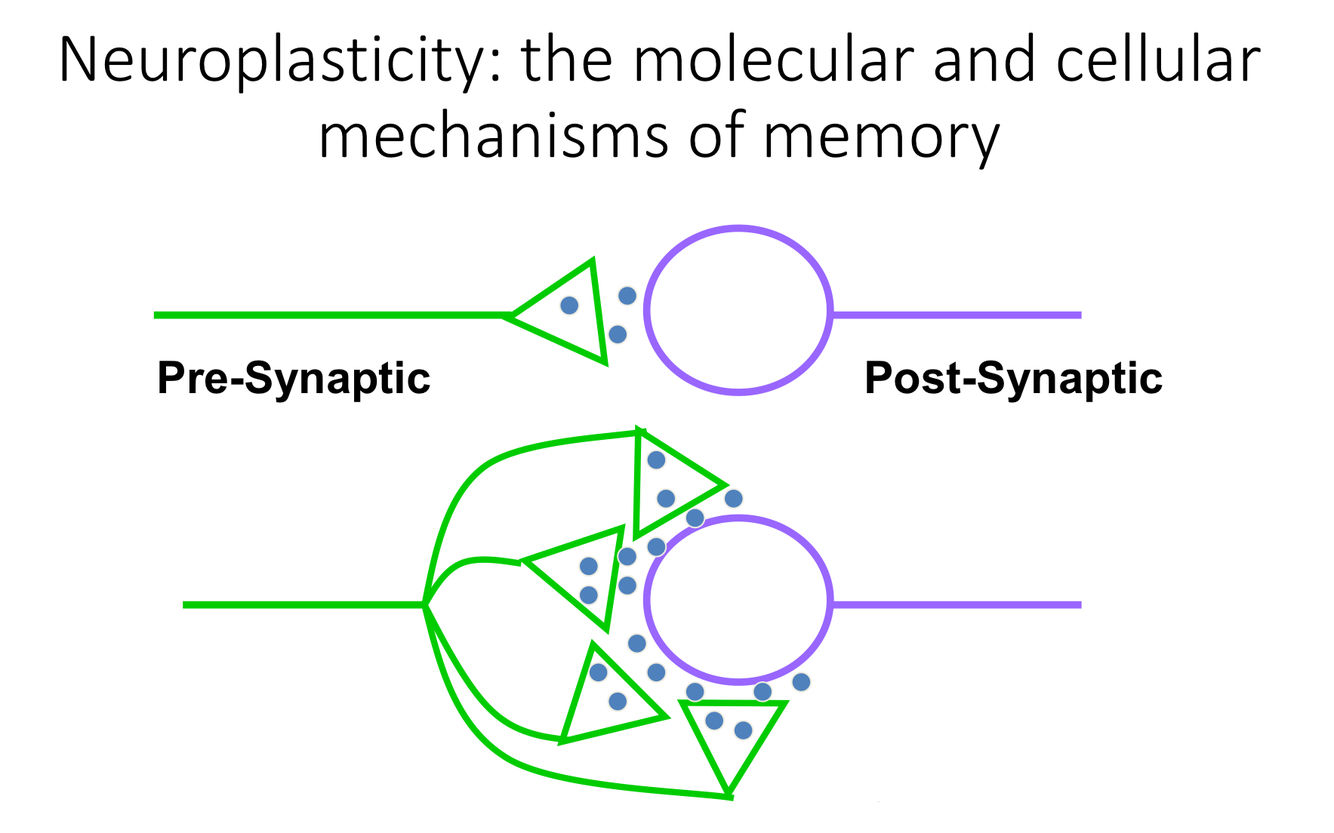
What is the cellular mechanism of consolidation of memory?
Long term potentiation
- Changes in glutamate receptors leads to synaptic strengthening
- New physical connections can form between neurones to further strengthen connections (axonal sprouting)
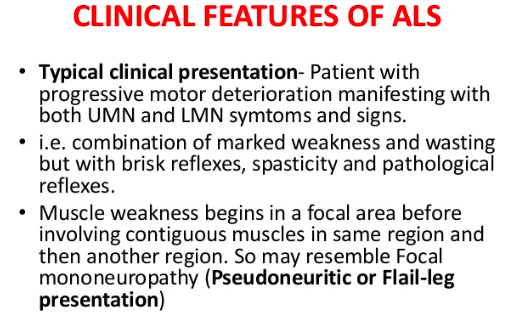
What are the features of motor neurone disease?
Has a mixture of upper and lower motor neurone signs
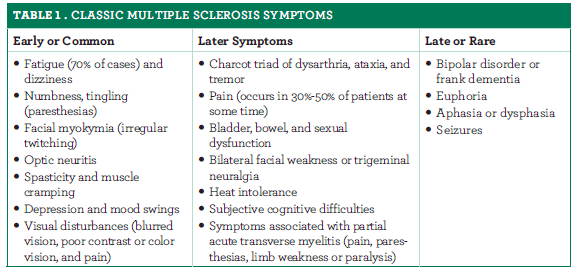
How does MS typically present?
Progressive relapsing disease common in young women aged 20-40

-
1 - Topography of the Nervous System30
-
2 - Embryology of the Nervous System18
-
3 - Glia36
-
4 - Somatosensory System32
-
5 - The Eye43
-
6 - Arterial Supply to the Brain17
-
7 - The Motor System40
-
8 - Movement Disorders46
-
9 - Higher Cortical Function22
-
10 - Reticular Formation and Consciousness24
-
11 - Neuropathology35
-
12 - Confusion in the Elderly36
-
13 - Headaches40
-
14 - Stroke27
-
15 - Raised ICP27
-
16 - Meningitis and Subarachnoid Haemorraghe34
-
17 - Anxiety Disorders24
-
18 - Mood Disorders28
-
19 - Psychosis31



