what is acne
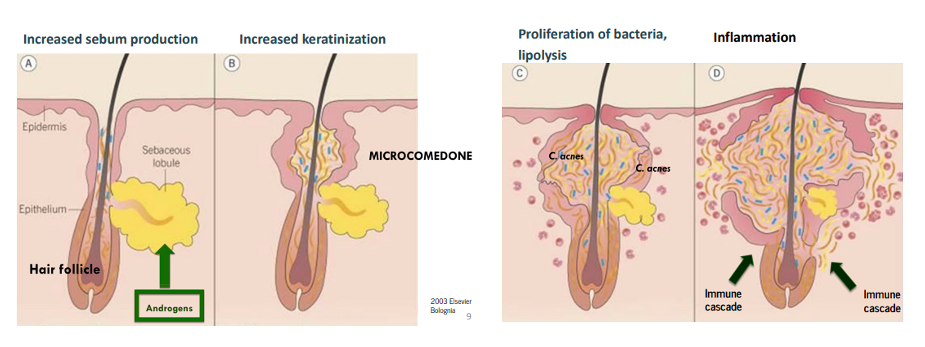
- increased sebsum rpoduction (androgens can paly rile) and inc follicular keratinization
- proliferation of bacteria (cutibacterium anes) resulting in lipolysis of sebum triglycerides to free fatty acids
*bacteria feast on triglycerides
- above processes result in inflammation
who deos acne affect
85-90% of Canadian teens
2-35% cases are moderate/severe
50% of cases (esp women) persist into adult years
acne is considered a ____ disease
– Relapses and recurrences
– Prolonged course
– Acute outbreaks
– Psychosocial impact
– Treat like other chronic conditions *want to contorl treatment early
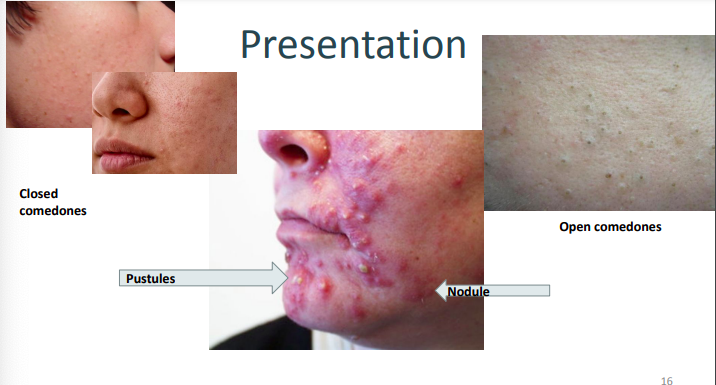
what is a white head
closed comedone
first clincially visible lesion of acne
- completely obstructed
what is a black head
open comedone
- dark colour is due to contents of comedone being oxidized (lipid and melanin)
what is a papule
solid elevated lesion <5mm
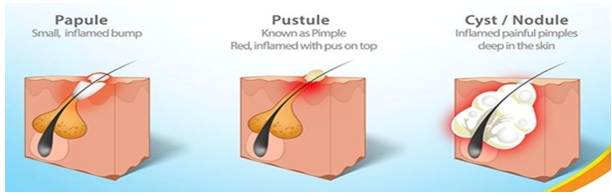
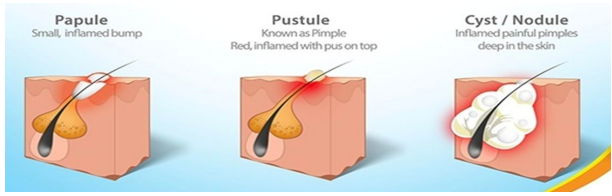
what is a pustule
a vesicle filled with purulent liquid <5mm
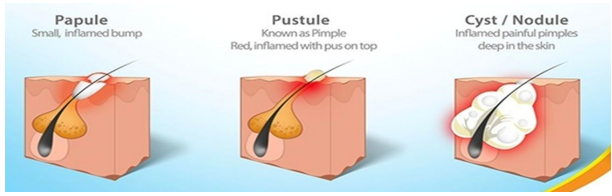
what is a nodule
Deep lesion. Warm, tender, firm, >5mm diameter
Cyst
A nodule containing liquid
compare mild, moderate and severe acne
- Mild
- the rpesence of comedones, papules and pustules or a mix of them
- Moderate acne
- primarily several to many papules and psutules
- Severe
- several to many papules and pustules + few to several nodules/cysts
What are the categories of acne
- comedonal
- small white (closed comedones) or grey/white (open comedones) papules due to compelte or patrial ductal occlusion
- Mild-to-moderate (papulostular)
- inflammatroy lesions are mostly superficial with small papules, pustules
- Severe (papulopustular and nodular)
- deeper and larger papules, pustules and/or nodules
- can be painful or extended over large areas
effects of acne
gloabally there are scales to assess impact -> acne quality of life scales
- Social impact
- embarassment, humiliation, self consciousness
- inc unemployment rates (in those w/ severe)
- Physical
- soreness, itching, painful, scarring
- Psychosocial ipmact
- anxiety
- low self esteem
- withdrawing from society
- depressive symptoms
what needs to be considered when making an acne diagnosis
- Family history of derm conditions
- Duration of acne, timing of eruption
- Previous medication tried
- Relevant medical history
- histroy of atopic dermatitis, sensitive skin
- symptoms in relation to hormonal causes
- consider female sex contemplating pregnancy
- psychosocial impact of acne
- medications
- anabolic steroids, COCs high in progestin, coal tar products, crystal meth, gabapentin
- cosmterics, hair products, acnegenic skin products
- occlusive garmts, helmets and chin straps
classifications of skin colour
Type I: Ivory, always freckles, always burns/peels, never tans
Type II: fair or pale, usually freckles, often burns/peels, rarely tans
Type III: fair to beige, with goldren undertones. might freckle, burns on occasion, sometimes tans
Type IV: olive or light brown, doesnt really freckle, rarely burns, often tans
Type V: dark brown, rarely freckles, almost never burns, always tans
Type VI: deeply pigmented dark brown - darkest brown, never freckles or bunds, always tans
when should you consider referring for acne
- Age <12
- New onset at age >30
- widesread dsitribution of lesions beyond face
- severe scne (scarring)
- significant psycosocial impact
- sings of hyperandrogenism: hirsutism, infertility, infrequent menses, insluin resistant diabetes, middle age onset in female sex
- suddent onset of acne associated ith fever and arthralgias
- unresponsive to therapy or unclear diagnosis
scholar for acne
- Symptoms:
- itch, pain, systemic symptoms, psychological sympact, excessie hair growth, signs and symp of infection, scarring, hypo or hyperpigmentation
- characteristics:
- numer/type lesions, distribution of lesions? inflammation?
- History:
- how long? does it come/go? experienced before?
- Onset:
- when did it start? what were you doing? anything change in life?
- location
- where is it
- Remitting factors:
- what makes it better? probe w/ specific examples
- Explanatory model
- how does this symptom/condition affect you
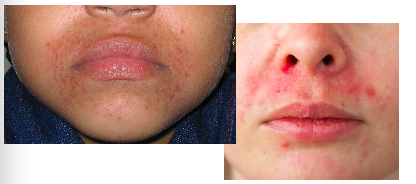
what is perioral dermatitis
- due to excessive use of steroids on face
- erythema/violaceous hue, scaling and papulopustular lesions clustered around nasolabial folds, mouth and chin
- D/C topical steroids on face and refer to dermatology for management
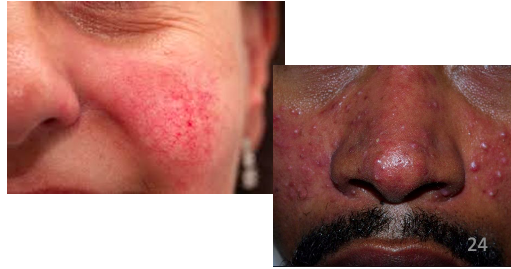
what is rosacea
- chonic, relapsing condition invovling blood vessels
- flushing (erythema, violaceous hue) followed by developmen of inflammatory esions
- refer to dermatologist
what is neonatal acne
- developed in 1/5 infacts <3 months
- develop papules, pustules, closed or opn comedones on face
- due to placental transfer of maternal androgens (neonatal acne)
- usually resolves on its own but topical agents under advice of paediatrician may be used
what is acne conglobata
- acne cysts and nodules fuse together deep in the skin
- form a nodulocystic acne (rate but serious inflammatory skin condition)
- face, back and chest affected
- refer
what are the goals for treating acne
- clear existing lesions and prevent new ones
*do this by initating effective treatment at earlist opportunity
- lessen physical discomoft from inflamed acne lesions
- improve dermal appearance
- prevent/minimize potential adverse psychological effects
- preventing and minimizing any scarring or dyspigmentation
adhereence and acne treatment
- treatment is effective but adherence is poor
- 30-65% of patients do not adhere
- 50% do not achieve full benefit due to poor adherence
- to improve adherence tailor tratment based in skin type, sensitivity, risk of adverse and patients preference
- frame patietns expectations -> acne doesnt clear right away
considerations for topical vs systemic acne treatment
- Topical
- first line for mild-moderate acne
- good efficacy for most patients
- immediately targets affected site
- less adverse efects than systemic agents
- geat for maintenance
- Systemic
- usually reserved for moderate/severe
- lesions affecting large number of sites (back, chest, face)
- patient presents with scarrubg
- patients with significant psychosocial impact
- patients who fial topical therapy

-
Top 50 Drugs50
-
Acute cough32
-
Upper respiratory tract symptoms and conditions30
-
Viral Rhinitis36
-
Viral Rhinitis pt 216
-
NHP for treatment of URI22
-
COVID-1927
-
Allergic Rhinitis: condition overview25
-
Allergic Rhinitis: patient assessment41
-
Allergic rhinitis: product selection, implement/follow uo7
-
URI terms to know19
-
Insect Bites & Stings26
-
Hives (urticaria)20
-
Pinworms21
-
Dermatitis40
-
Dermatitis Pt 230
-
Derm Drugs10
-
Diaper Dematitis23
-
Dandrugg and seborrheic dermatitis48
-
Acne38
-
Acne pt 214
-
Fungal skin infections30
-
Lice0
-
Scabies0
-
Lyme0
-
Impetigo0
-
W10. Consitpation34
-
W10. Diarrhea and Dehydration32
-
W.10 Constipation pt 215
-
W10. Hemorrhoids32



