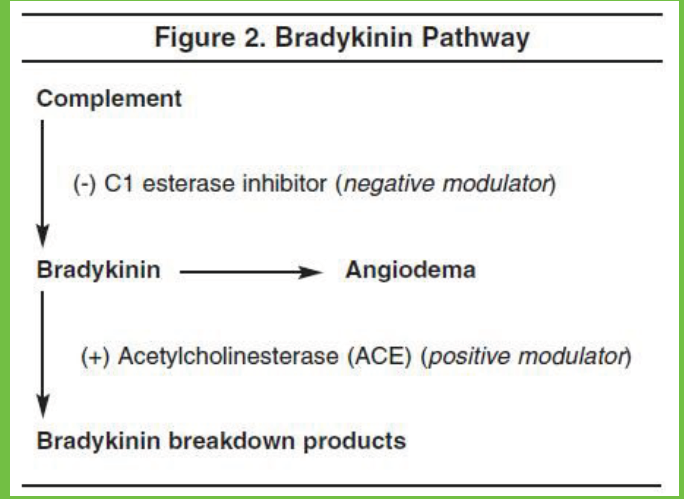
What’s anaphylaxis?
- acute allergic reaction to an antigen to which a body is hypersensitive
- it has a rapid onset and may cause death
- Characteristics: severe, life-threatening, generalised or systemic, hypersensitivity reaction
Mechanism of anaphylaxis (immunologic)
- IgE binds to antigen -> activation of receptors on mast cells and basophils -> release of inflammatory mediators (e.g. histamine)
- Mediators lead to: increase the contraction of bronchial smooth muscles, vasodilation, increase leakage of fluid from blood vessels, heart muscle depression
What are non-immunologic reactions?
- substances that directly cause degranulation (and release of chemicals/cytokines) of mast cells and basophils
- contrast medium, opioids, temperature (hot/cold) vibration
Allergy vs anaphylaxis
- Allergy - is a disorder of immune system; exaggerated response by the immune system to a foreign substance; usually predictable
- Anaphylaxis - is an acute systemic (multi-systemic) and severe type I hypersensitivity allergic reactions; it is a life-threatening emergency; it is an unusual/not predictable response
Possible signs and symptoms of anaphylaxis
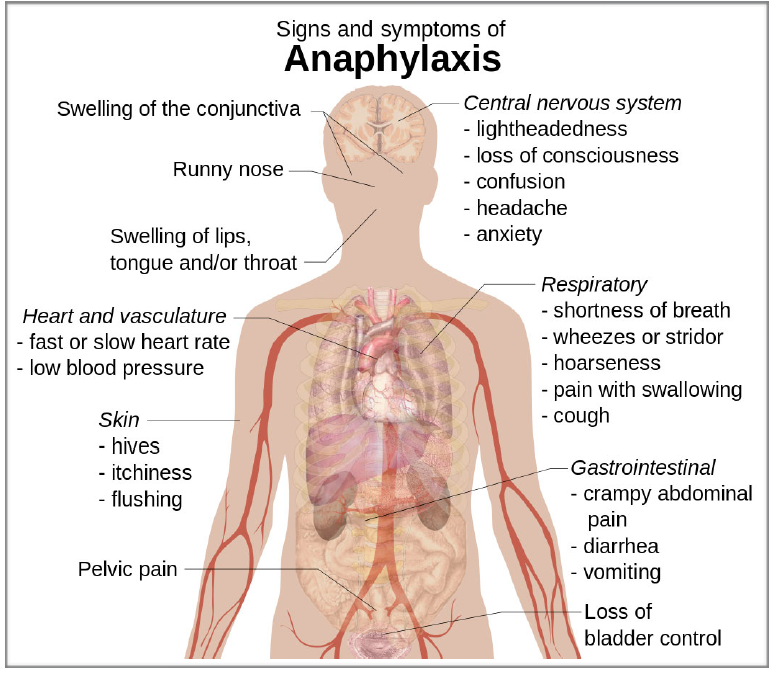
What’s angiooedema?
Angioedema - swelling in deep dermis and subcutaneous tissues
- acute mast cell- mediated reaction caused by
exposure to an allergen
- happens due to increased vascular permeability
and eruption of intravascular fluid
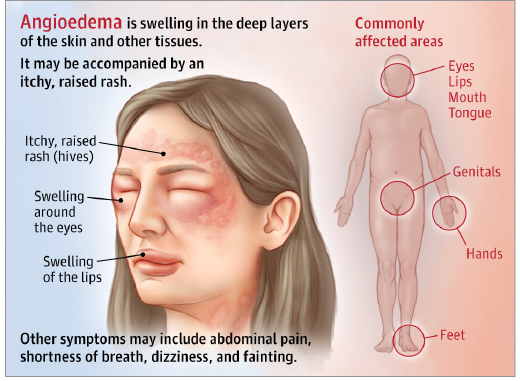
Grades of anaphylaxis
Differentials fir anaphylaxis
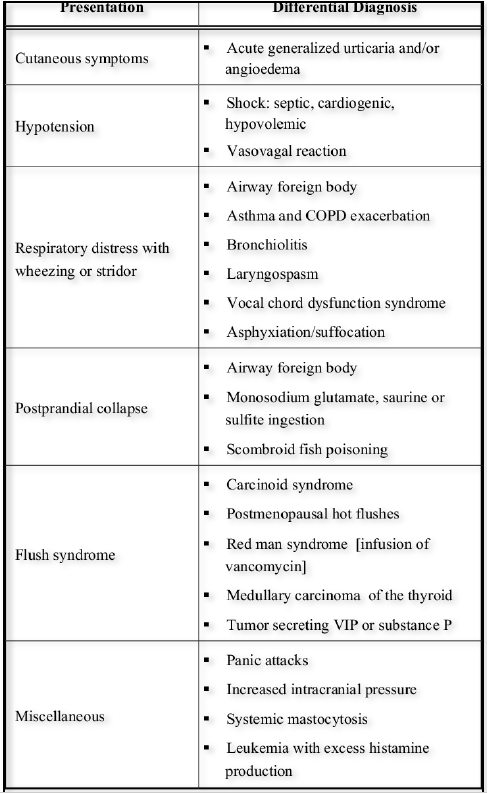
What blood test is used in anaphylaxis?
Meaning of it
Mast cell tryptase
- a marker for mast cell activation
- normal serum level is 11.5 ng/mL (elevated result in anaphylaxis) -> less likely to be elevated in food allergy (as opposed to other causes
- not used in paediatric food related allergy
Timing of mast cell tryptase blood test
- blood taken on arrival (time the blood sample)
- after emergency treatment (ideally within 1-2
hours, no later than 4 hours of symptoms onset)
- peak at 1-2 hours
- repeat 1-2 hours later
*blood sample may be required later, at follow up specialist allergy service -> to measure
baseline mast cell tryptase level (so inform the patient about it)
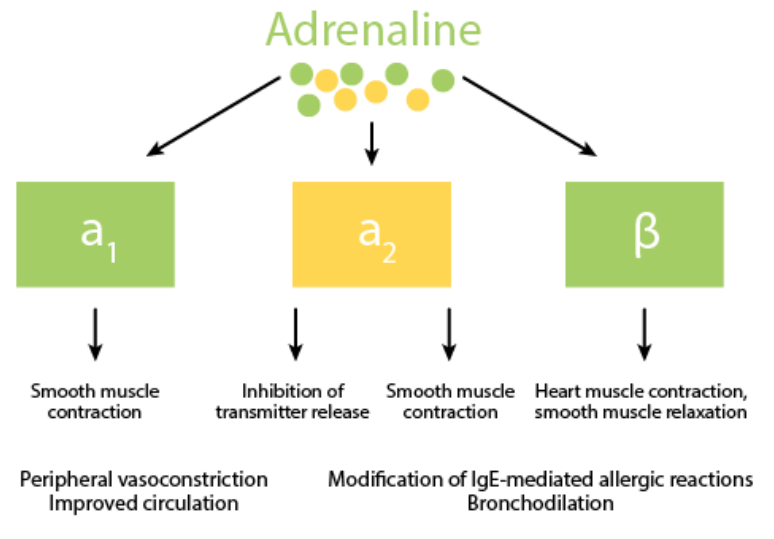
MoA of adrenaline in Rx of anaphylaxis
- respiratory system
- cardio-vascular system
- respiratory system: adrenaline -> relaxing of respiratory system as it acts on
sympathetic system (including smooth muscle walls of the airways) -> so air can get in
- cardio-vascular: adrenaline stimulates alpha-adrenoceptors -> peripheral vascular resistance
increased -> improved blood pressure and coronary perfusion (reverses peripheral vasodilation)
Site of IM injection of adrenaline
epinephrine/adrenaline is given intramuscularly into the mid-antero-lateral thigh
Anti-Histamine MoA
Antihistamine counteracts the effect of histamine
(histamine is involved in inflammatory response and it is a mediator of itching; it is produced by basophils and mast cells; increases permeability of capillaries to white cells, vasodilations, increasing heart rate, cardiac contraction and glandular secretions)
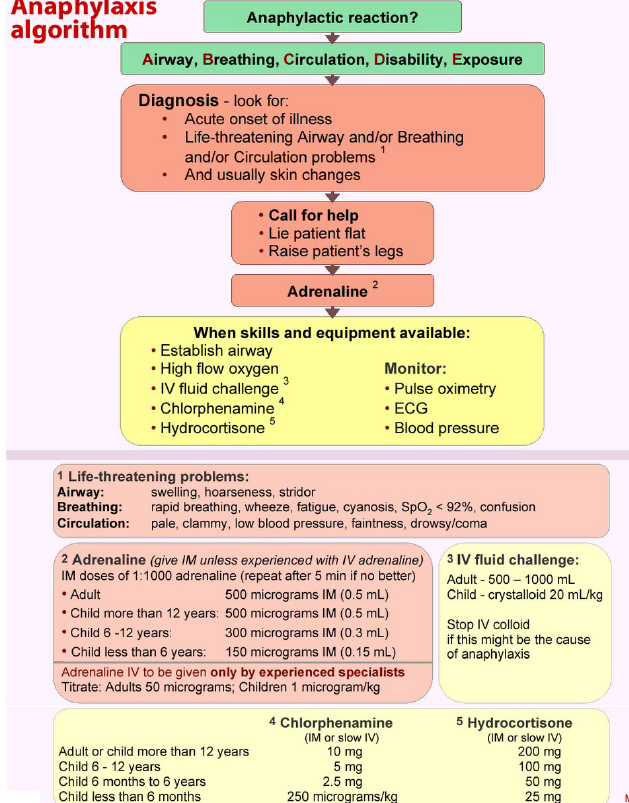
Treatment algorithm for anaphylaxis
Observation time (in the hospital) for a person with anaphylaxis
- depends on response to treatment
- observe an adult person (16+) for 6 - 12 hours after the onset of symptoms -> depends
on treatment response
- shorter periods of observation time may be considered if patient responses for treatment quickly, but before discharge post-reaction care should be provided
Do we need to refer a patient with anaphylaxis?
- person need to be referred to a specialist allergy service (age appropriate)
- trusts should have separate referral pathways for suspected anaphylaxis in peads and adults
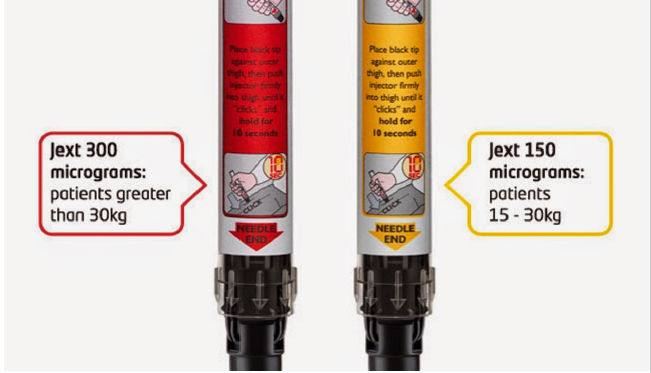
Two choices of EpiPens
What to do before the discharge of a patient with anaphylaxis?
Before discharge offer information on the following:
- anaphylaxis and its signs and symptoms
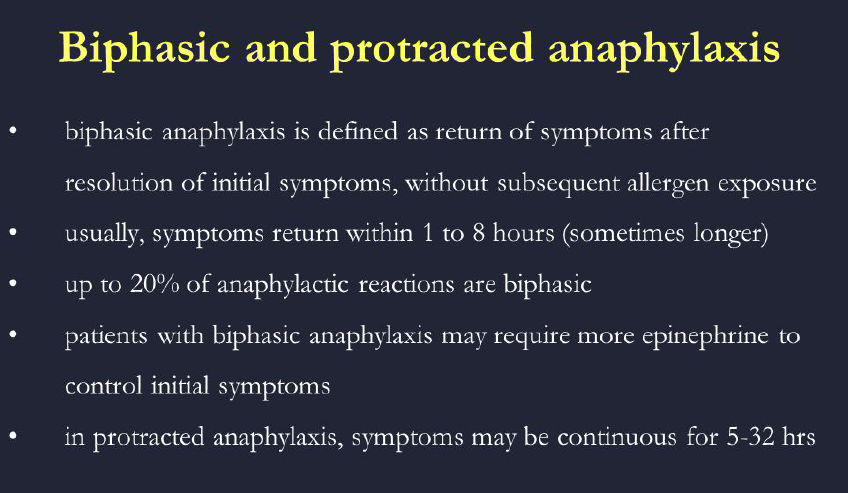
- risk of biphasic reaction (recurrence of anaphylaxis after appropriate treatment)
- what to do if anaphylactic episode occurs (use of epinephrine injector and call emergency services)
- demonstrate the correct use of adrenaline injector
- need for referral and referral process
information + support groups
Biphasic anaphylaxis - what is this?
Therefore important to monitor a patient in ED for 4-6 hours after an attack
Symptoms of laryngeal angioedema
A. First symptoms*: dysphagia, sensation of lump
in the throat, feeling of tightness, voice changes
(hoarse, rough voice)
B. Fully developed laryngeal attack: dyspnoea,
fear of asphyxiation (suffocation), aphonia
*patients recognition of first symptoms is crucial ->
need to to educate patient about them
What further questions to ask/answer when we diagnose laryngeal angioedema in a physical exam?
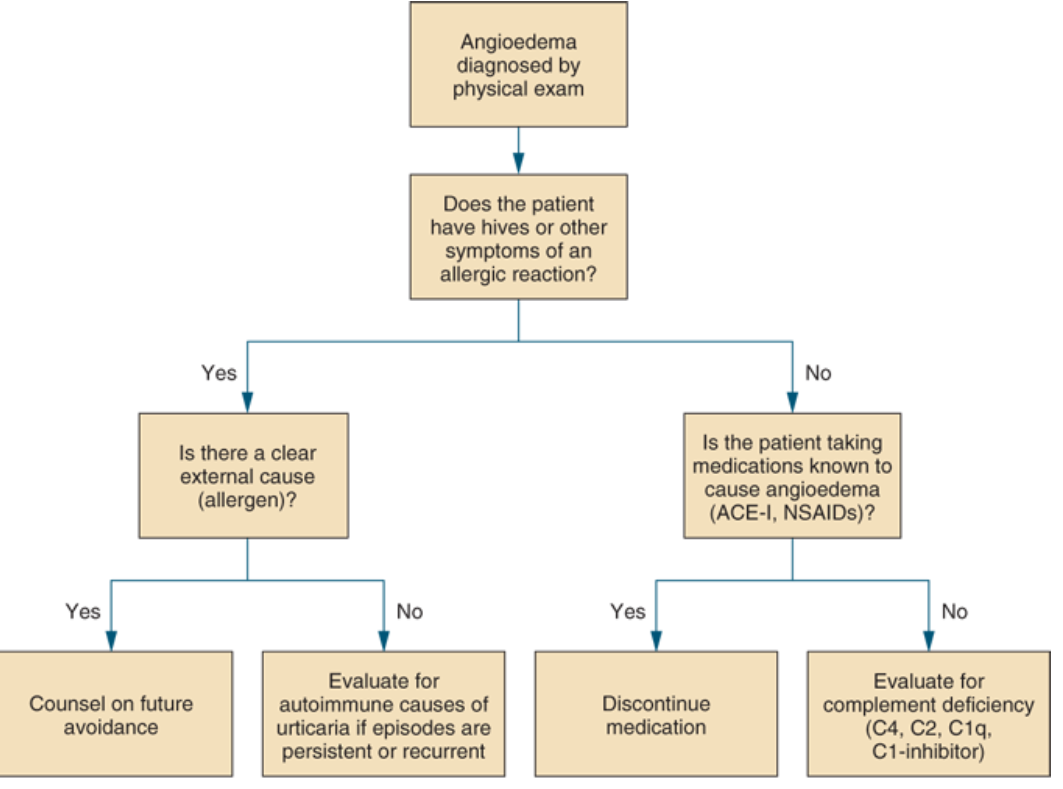
Treatment of angioedema
- allergic
- idiopathic
- Allergic: anti-allergic agents- > antihistamines, glucocorticoids, adrenaline (inhalation)
- Idiopathic: antihistamines *
*antihistamines may work in non-allergic idiopathic laryngeal angioedema but not in bradykinin-mediated angioedema
What is HAE?
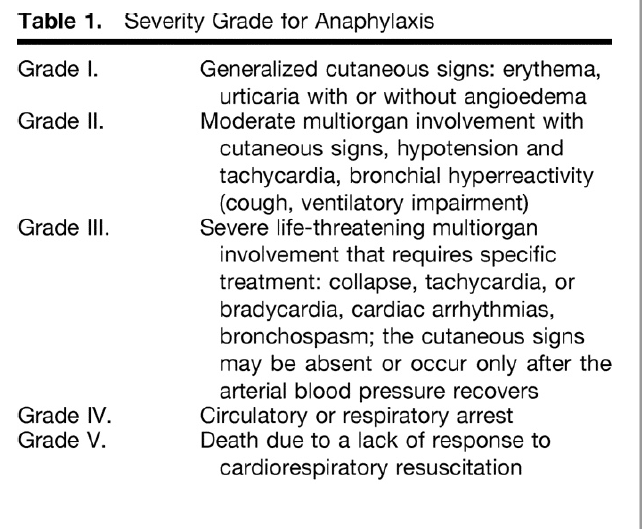
HAE - recurrent attacks of severe swelling (arms, legs, face, intestines and airway) with no itchiness -> possible obstruction, vomiting and abdo pain (intestines are affected)
Pathophysiology of Type II HAE
- mutation (autosomal dominant) in SERPING1 gene (which makes C1 inhibitor protein - inhibition of complement pathway) -> increased amount of bradykinin -> swelling