describe the classification of aortic dissection?
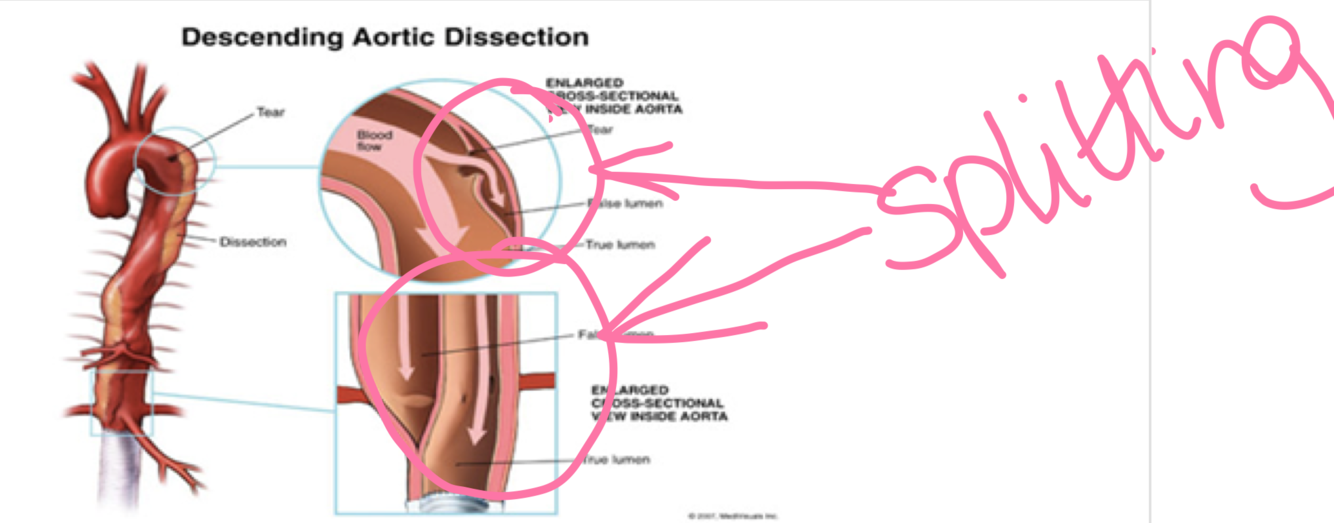
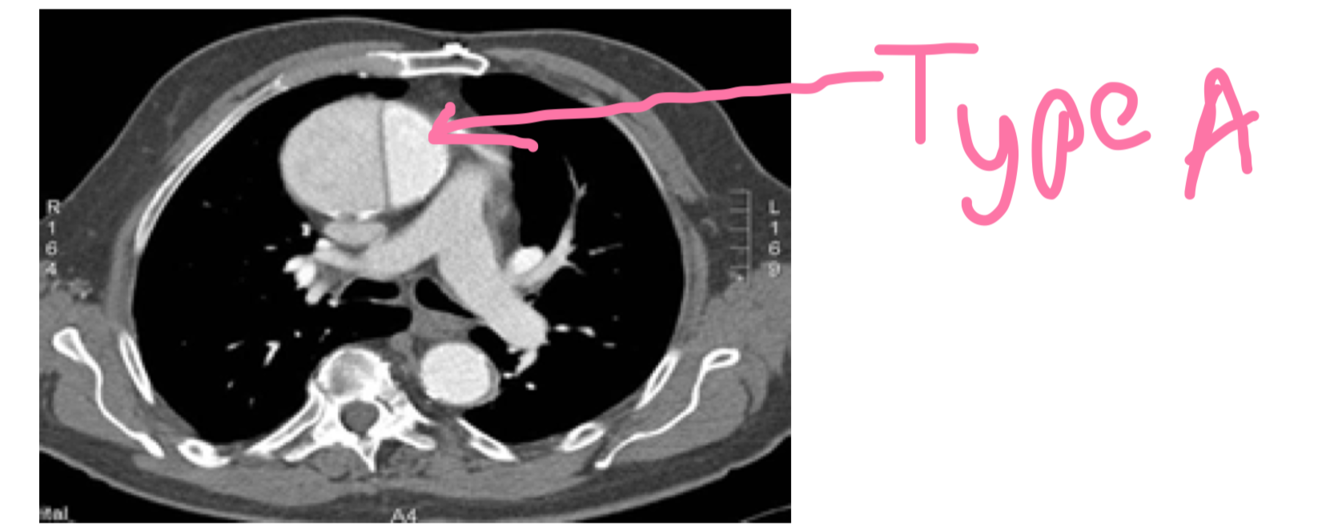
Type A : Ascending aorta ( most common ) 70% - retrosternal chest pain
Type B: Descending aorta ( distal to the left subclavian artery) 30% - interscapular pain
define aortic dissection
condition where the tear in the aortic intima allows the blood to surge into the aortic wall -> causing a split between the inner and outer tunica media-> creating a false lumen
summarise the epidemiology of aortic dissection?
most common in males aged 40-60 years
give the cause and common risk factors for aortic dissection?
usually preceded by degenerative changes in the smooth muscle of the aortic media
HYPERTENSION
- Aortic atherosclerosis
- Connective tissue disease (e.g. Marfan’s, Ehlers-Danlos, SLE)
- Congenital cardiac abnormalities (e.g. coarctation of the aorta)
- Aortitis
- Iatrogenic (e.g. during angioplasty/angiography)
- Trauma
- Crack cocaine
- Bicuspid aortic valve
- annuloaortic ectasia
- Coarction - aorta narrowing
what are the main presenting symptoms of aortic dissection?
MAIN SYMPTOM: sudden central ‘tearing’ pain, it may radiate to the back in between the shoulder blades (it can mimic MI)
Other symptoms caused by obstruction of branches of the aorta:
- Carotid artery -> hemiparesis, dysphasia, blackout, parasthesia
- Coronary artery -> chest pain (angina or MI)
- Subclavian artery -> ataxia, loss of consciousness
- Anterior spinal artery àparaplegia
- Coeliac axis -> severe abdominal pain (due to ischaemic bowel)
- Renal artery -> anuria, renal failure
- Hypoperfusion of the target organs of these major arteries can give rise to other symptoms
- If dissection moves proximally, may develop aortic valve incompetence, inferior MI and cardiac arrest
what are the features of Marfan’s syndrome?
tall stature
arachnodactyl
pectus excavatum
hypermobile joints
high arched palate
narrow face
What are the features of Ehler’s danlos syndrome that can help in the diagnoses of aortic dissection?
Type IV Ehlers-Danlos syndrome predisposes to both aneurysms and/or dissections
Features include translucent skin, easy bruising, hypermobility of small joints, and premature ageing of the skin (acrogeria)
what are the signs of aortic dissection on physical examination?
- Murmur on the back (below the left scapula), descending to the abdomen
- Hypertension
- Blood pressure difference between the two arms > 20 mm Hg
- Wide pulse pressure(large difference between systolic and diastolic pressure)
- Hypotension may suggest tamponade
- Check for pulsus paradoxus = abnormally large decrease in systolic blood pressure and pulse wave amplitude during inspiration
This may indicate:
- Tamponade
- Pericarditis
- Chronic sleep apnoea
- Obstructive lung disease
6. Signs of Aortic Regurgitation
- High volume collapsing pulse
- Early diastolic murmur over aortic area
- Unequal arm pulses
- There may be a palpable abdominal mass
what is pulsus paradoxus and what may it indicate?
abnormally large decrease in systolic blood pressure and pulse wave amplitude during inspiration
This may indicate:
Tamponade
Pericarditis
Chronic sleep apnoea
Obstructive lung disease
what are the signs of aortic regurgitation?
high volume collpasing pulse
early diastolic murmur over aortic area
what are the appropriate investigations for aortic dessection
bloods
CXR
ECG
CT Thorax/CT angiogram- ORDERED AS SOON AS SUSPECTED
what bloods do you need in aortic dissection?
FBC- anaemia may present in haemorrhage
X match 10 units of blood- prep for surgery
U and Es- check renal function ( may be compromised)
LFTs may be compromised
lactate- indicative of malperfusion ( may be elevated)
cardiac enzymes- exlcude MI
what can be seen on the CXR in aortic dissection?
( exclude other pulmonary causes of chest pain )
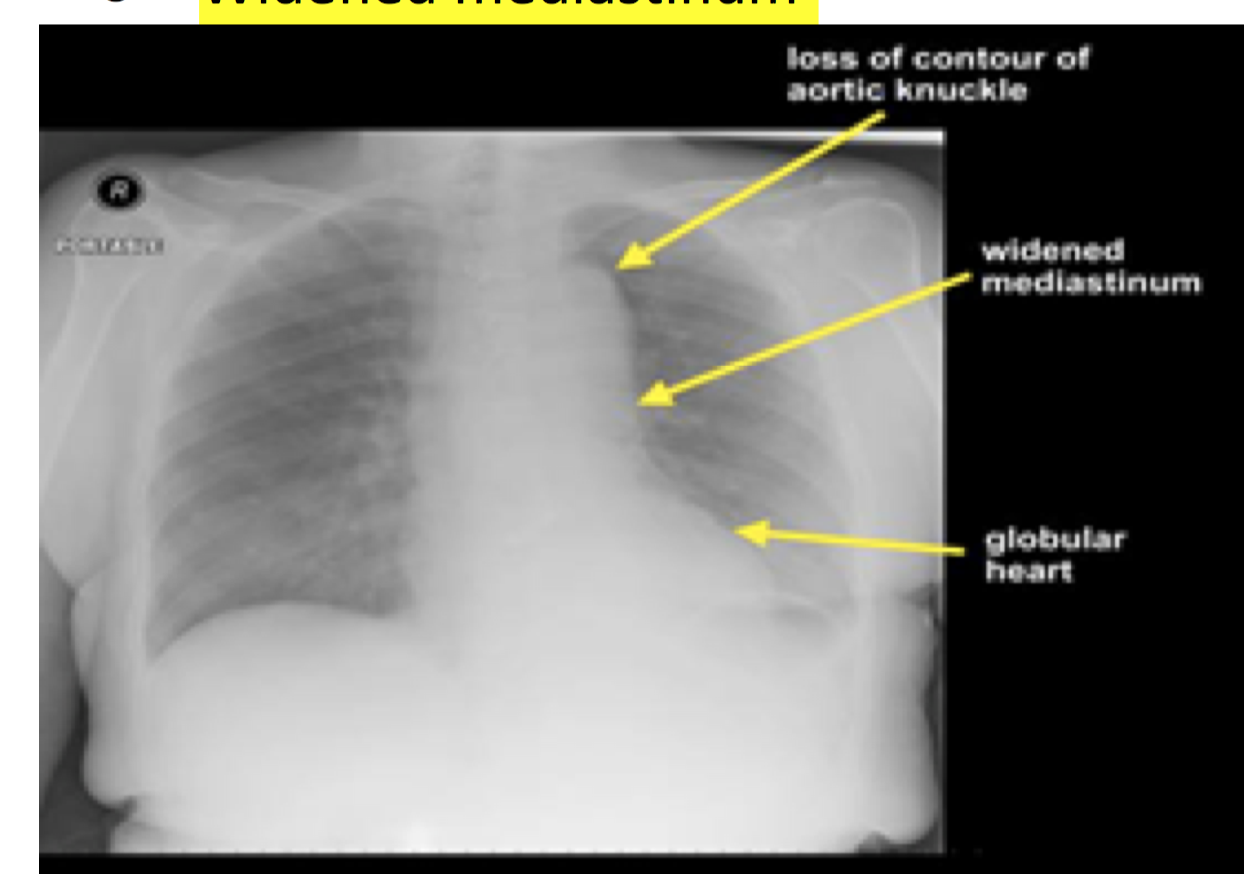
widened mediastinum
what can be seen on the ECG in aortic dissection?
may be normal
if ostia of right coronary artery is compromised-> get signs of:
- left ventricular hypertrophy
- inferior MI- ST elevation in inferior leads
What can be seen on the CT thorax/aniogram in aortic dissection?
ordered as soon as suspected- include chest,abdo and pelvis to visualise the extent of aneurysm and to see if its suitable for an endo vascular repair
=> shows false lumen
what investigations should you consider in a patient suspected of aortic dissection?
D-dimer: should be positive
Magnetic resonance angiography: very accurate to show intimal flap but rarely used in an acute setting due to difficulty to obtain
Trans-thoracic echo: may show the intimal flap – done more in the emergency department or op theatre if there is any question about diagnosis or CTA is unavailable or contraindicated

-
Abdominal aortic examination12
-
Aortic dissection16
-
aortic stenosis13
-
Aortic Regurgitation12
-
DVT16
-
Tricuspid regurgitation6
-
Rheumatic Fever11
-
Infective Endocarditis22
-
Mitral regurgitation6
-
Pericarditis21
-
Mitral Stenosis16
-
Heart Block22
-
Ventricular Fibrillation12
-
Atrial Fibrillation21
-
pulmonary hypertension10
-
Supraventricular Tachycardia17
-
Ventricular Tachycardia17
-
Procedures20
-
Intestinal Ischaemia22
-
Vasovagal syncope6
-
arterial ulcers8
-
Venous ulcers12
-
Varicose veins21
-
Wolf Parkinson White7
-
Gangrene14
-
Cardiac arrest15
-
Dyslipidaemia4
-
IHD30
-
Peripheral Vascular disease24
-
Hypertension39
-
Cardiac Failure23
-
cardiomyopathy20
-
Constrictive pericarditis4
-
Myocarditis4
-
Dyslipidaemia6



