How do you define respiratory failure? (include number values)
- PaO2 < 50 (nl:80) on 50% oxygen
- PaCo2 > 50 (nl:40)
- acute resp failure: pH <7.25 (nl:7.4)
- chornic resp failure: pH approaching 7.4 (compensatory)
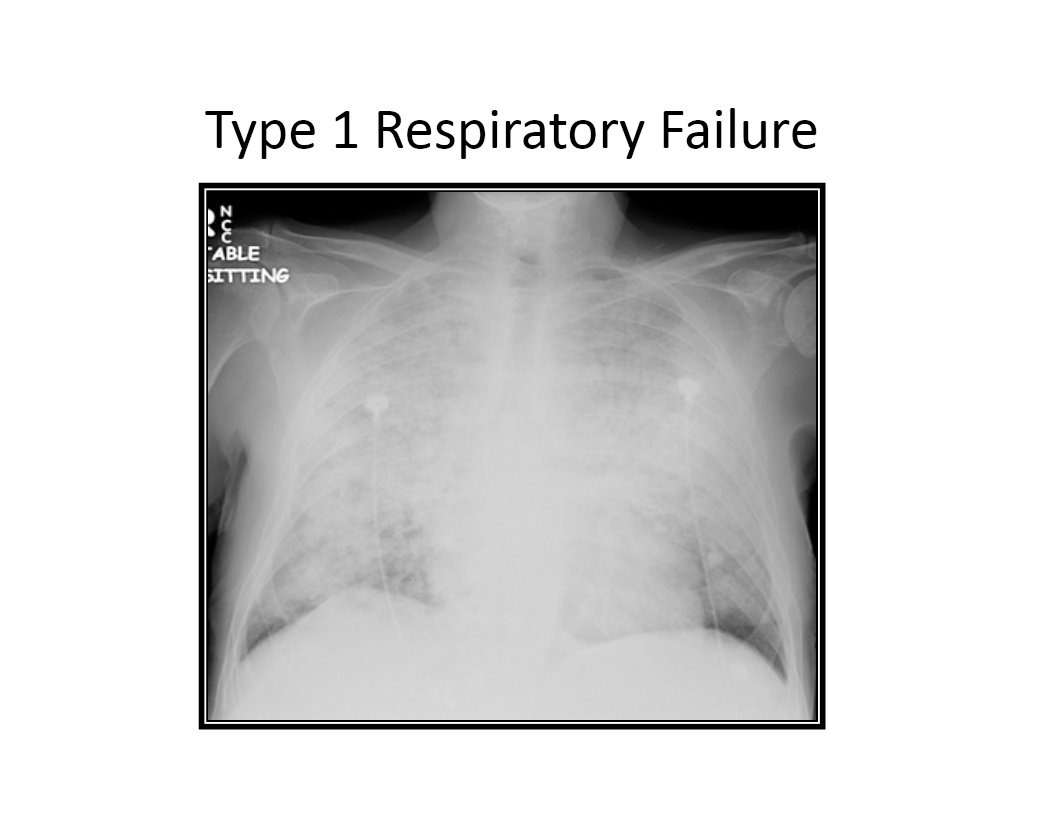
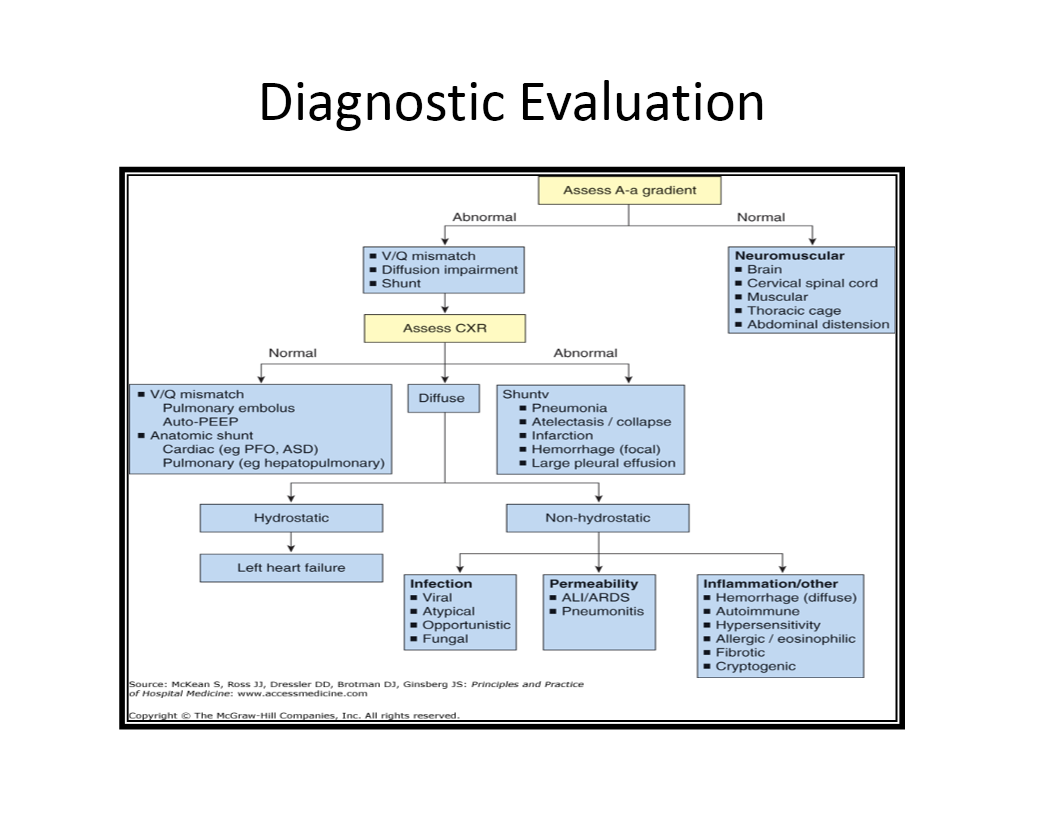
Type 1 respiratory failure
- hypoxemia
- alveolar flooding –> shunting
- ex: pulm edema (cardiogenic with CHF, or non-cardiogenic), pneumonia, alveolar hemorrhage,
Type 2 Respiratory failure
- hypercapnic (cant get rid of CO2)
- due to alveolar hypoventilation
- treat underlying cause
3 “sources” of alveolar hypoventilation
- CNS (drugs, hypothyroidism, metabolic alkalosis, CNS lesion, idiopathic alveolar hypoventilation)
- Chest wall, neuromuscular system (kyphoscoliosis, Myasthenia Gravis, Guillain-Barre, ALS, Muscular dystrophy, Obesity, diaphragmatic fatigue, polymyositis, cervical cord injury)
- **Lung **(COPD, CHF, ARDS, Severe Asthma)
Type 3 Respiratory Failure
- from atelectasis, “perioperative respiratory failure”
- decreased FRC (after general anesthesia)
Type 4 Respiratory Failure
- hypo-perfusion of respiratory muscles
- occurs durign shock, multi organ system failure
Pulmonary Rules of Arterial Blood Gases
PaCo2:
ACUTE: for every 10 unit change in PaCO2, you have a 0.08 pH change
CHRONIC: for every 10 unit change in PaCO2, you have a 0.03 pH change (note: overcompensation never occurs)
PaO2:
AaDo2<25 normal lung/gas exchange unit
What is ARDS, how does it present
sudden onset of severe dyspnea from some diffuse lung injury
- severe dyspnea
- reapid onset
- diffuse infiltrates in imaging
- hypoxemia
- leads to resp failure
Etiology of ARDS
Divided into direct and indirect lung injury
direct: pneumonia, aspiration of something, pulmonary contusion (bruise), drowning, toxic inhalation
indirect: sepsis, severe trauma (bone fractures, rail chest, head trauma, burns), multiple transfusions, drug OD, pancreatitis, postcardiopulmonary bypass
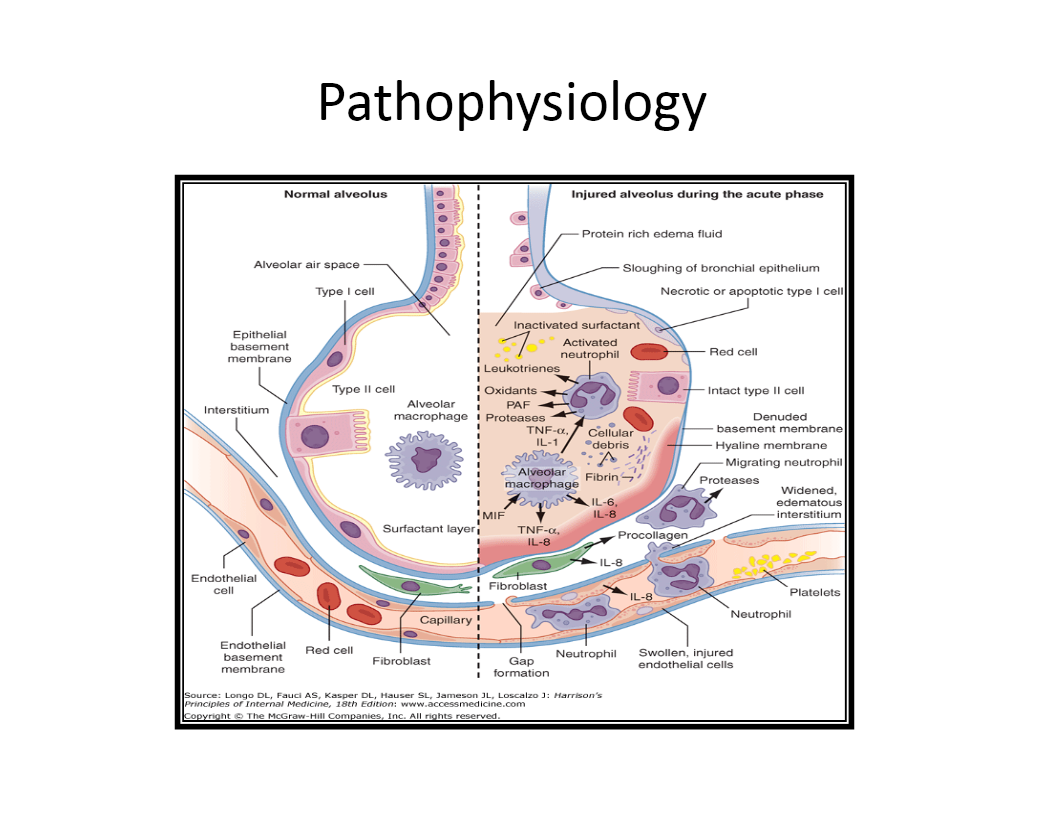
Pathophysiology of ARDS (4 steps)
key is to remember that inflammation takes place
- insunlt
- inflammation
- cytokine storm
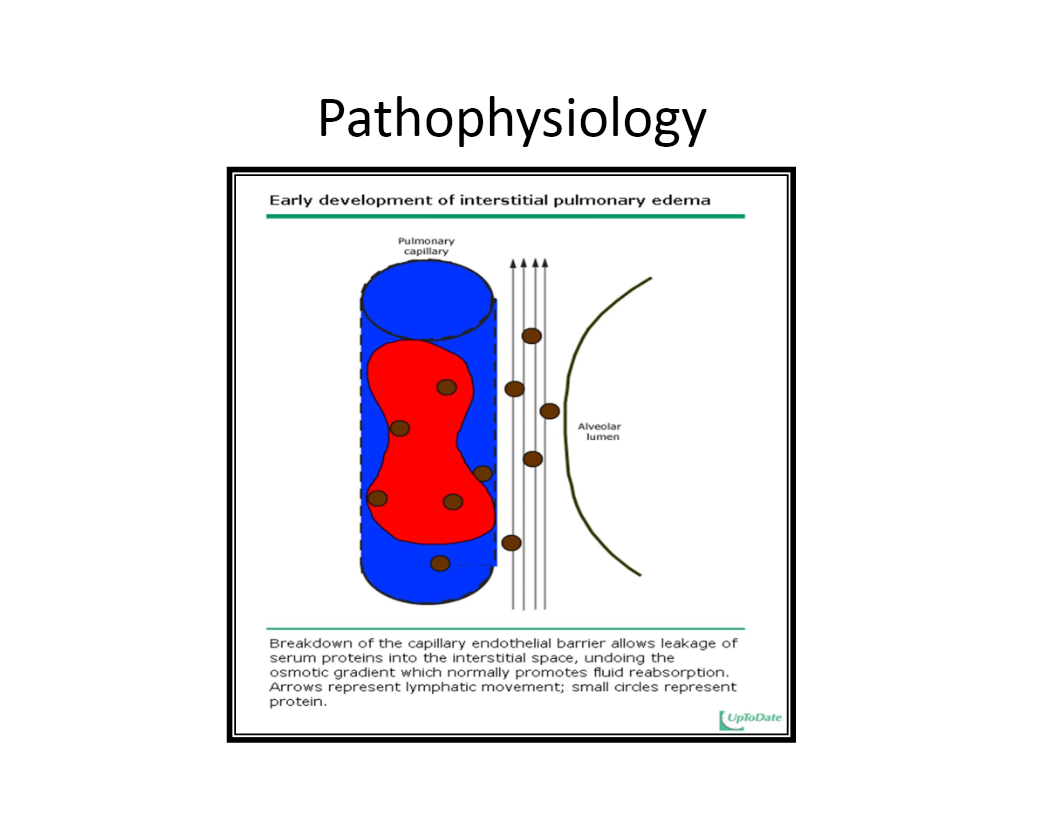
- acute lung injury (increase capillary leak, lungs fill with fluid-interstitium first then alveoli) note: leakage causes proteins to leave vessel, and fluid follows. n ormally osmotic pressure keeps the fluid in the blood vessels, but you lose this with leakage
Clinical course of ARDS
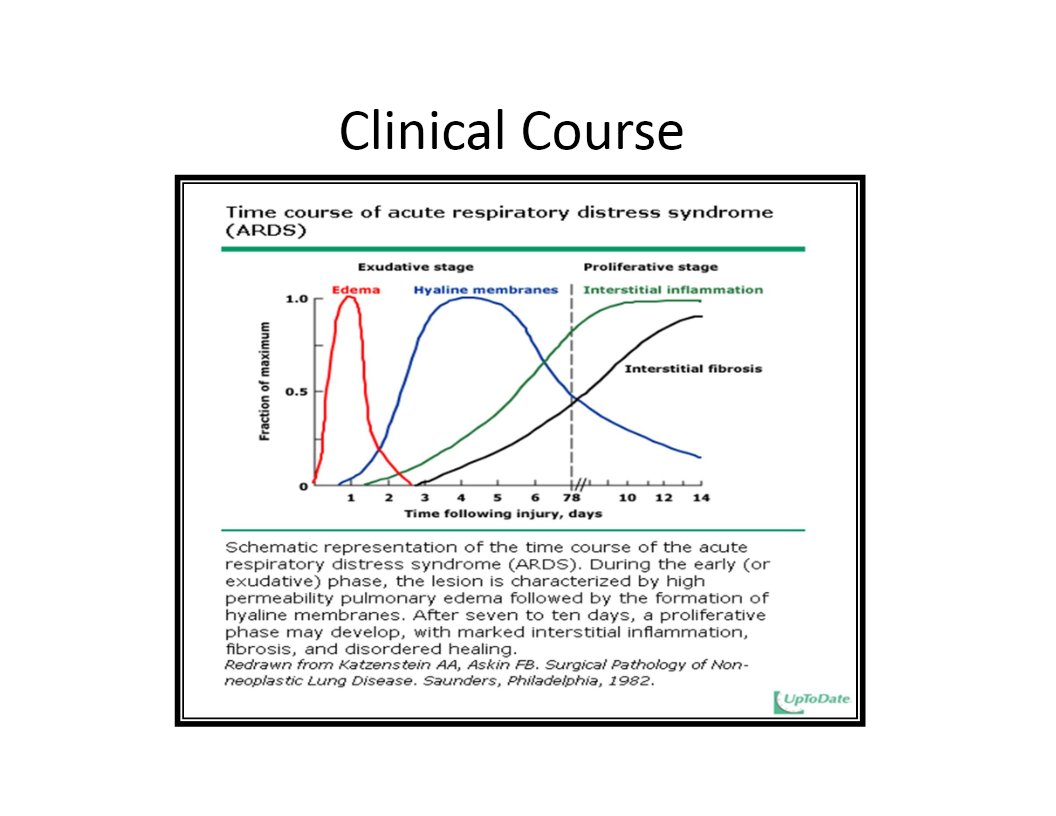
Exudative stage:
- edema
- hyaline membrane (lung trying to repair itself)
Proliferative stage:
- interstitial inflammation
- interstitial fibrosis
Key cells and features in the pathophysiology of ARDS
- shunting AND V/Q mismatch
- secondary alterations in surfactant function
- increased pulmonary vascular resistance
- decreased pulmonary compliance
- decreased FRC (lungs collapsing)
how do you rule out heart failure in ARDS?
wedge pressure (LAP) must be <18
if it were high, that would imply you have LHF and back up of blood and thus increased pressure in the LA
seeing a normal LAP tells us that its an isolated lung problem
treatment
ventilation to control RR,Tidal Vol, FiO2,
PEEP (to pop/stent open those collapsing alveoli)
Qualitative distinction between acute lung injury and ARDS
ALI: P/F less than or equal to 300
ARDS: P/F less than or equal to 200
P:F ratio is the ratio of arterial oxygen concentration to the fraction of inspired oxygen. It reflects how well the lungs absorb oxygen from expired air.

-
Electrocardiography + PE36
-
Harrison: principles of electrophysiology18
-
Atherosclerosis pathology19
-
Hypertension and pharmacotherapy44
-
Resp phys review13
-
COPD17
-
ARDS15
-
Autonomic Pharmacology54
-
Antithrombotic pharmacotherapy40
-
Arrhythmia and Pharmacotherapy73
-
Pathophysiology of MI and Pharmacotherapy73
-
Lipid Metabolism and Drugs27
-
Heart Murmur, Sounds, and Congenital45



