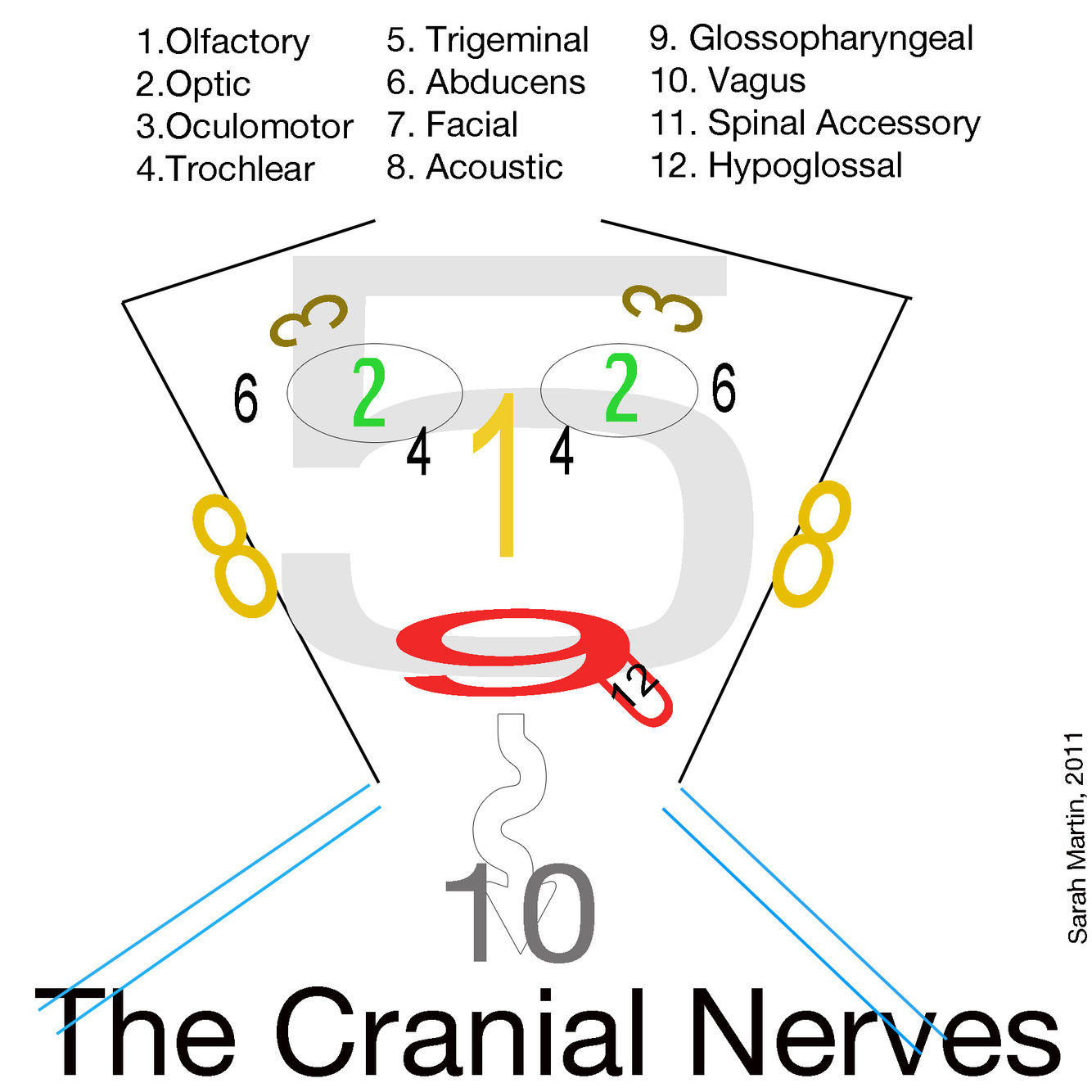
Cranial nerves
01 Olfactory (smell)
02 Optic (vision)
03 Oculamotor (lift eyelid)
04 Trochlear (turns eye)
05 Trigeminal (3 branches: Opthalmic, maxillary, mandibular)
06 Abducent (turn eye laterally)
07 Facial (expressions)
08 Vestibulocochlear (balance and hearing)
09 Glossopharyngeal (temp, pressure on tongue)
10 Vagus (taste and constrict muscles after swallow)
11 Spinal accessory nerve (
12 Hypoglassal nerve
Where there is neuro changes, how will changes progress?
- LOC (earliest sign of change!)
- then posturing, VS and focal neuro signs follow
Diabetes Insipidus
Can be a result of damage to hypothalamus or pituitary gland as a resut of surgery, infecin or tumor from cranial surgery
- there will be inadequate ADH released
- lead to POLYURIA
- extremely low urine specific gravity (b/c so diluted 1.001 to 1.003)
- *note > 1.03 = hypovolemia which occurs
Lab signs of Meningitis
Acute angle closure glaucoma
Open angle glaucoma
Cataract
Retinal detachment
Acute angle closure glaucoma
- severe pain in affected eye, blurred vision, and bulging, increased IOP may cause N/V
Open angle glaucoma
- vision is gradually lost, peripheral. No pain.
- dilation increases IOP, no pseudoephedrine
- mitoics reduce the pupil, but cause impaired night vision
- laser surgery is helpful to reestablish flow of aqueous humor
Cataract
- clouding of the lens of eye (over black pupil), can cause blindness
- introcular lens implant is necessary
- after avoid lifting, bending, coughing, valsalva
Retinal detachment
- retina at back of eye pulls away (EMERGENCY!!!)
- Will see sudden floaters, flashes of light, and then shadow or curtain of vision field as it progresses
- Scleral buckle needed
- a gas bubble is injected a applies pressure to back of eye to reinforce buckle and pt s/b prone with affected eye up so that the gas bubble floats up
Types of Aura
(signs that seizures is imminent)
hearing bells
seeing lights
smelling something
Meniere’s disease
affects inner ear which controls:
balance and hearing
can cause:
- vertigo, hearing loss, tinnitus
Tell pt to avoid:
- sudden movements and bright lights/tv/reading
Tx: diuretics
ALS
no sensory or cognitive loss
A PROGRESSIVE NEURODEGENERATIVE DZ
attacks motor nerve cells in teh brain and spinal cord
Early symptoms: muscle weakness, especially distal arms and legs, speech, swallowing, breathing
Late stage: total paralysis b/c voluntary muscles affected
External otitis
swimmer’s ear
TIA
warning sign of adv atherosclerosis dz
a temporary interuption of O2 to brain d/t thromboembolism
common symptoms:
loss of vision in one eye | inability to speak | transient hemiparesis | tinnitus | vertigo | diplopia | dysphagia | numbness | weakness
NEURO DEFICIT DISAPPEARS W/IN 24HR
no permanent disability
- Pt may have carotid endarterectmy to reduce freqency of TIA and danger of CVA
- carotid arteries are scraped to remove plaque
Right vs Left CVA
How is pt impaired?
**RIGHT: impulsive, neglect left (can’t see or feel on left side)
**LEFT: cautious, speech is affected
Ataxia
uncoordinated mvmts of extremiti
Cheyne-Stokes respirations vs Apneustic
C-S
over 1 minute, there is a 10-20 sec apnea or hypopnea, then followed by respirations of increased depth and frequency, then repeats
Apneustic
slow, w/ prolonged pause b/w inspire and expire
Autonomic dysreflexia
usually sustained cervical or thoracic above T6
- mostly assoc. w/ full bladder and distended rectum
- at risk for HTN crisis:
- extreme HTN, bradycardia, severe throbbing h/a, flushing of face and neck
VS associated w/ increase ICP
widening pulse pressure
decreasing HR
increasing temperature
Somogyi effect
“rebound hyperglycemia”
result of poor DM mgmt
(too much insulin or not enough snack at night)
- blood sugar drops too low in the middle of the night, so body counters by releasing hormones to raise the sugar levels
early manifestations of hypoglycemia
drowsy
headache
shaky
nausea
manifestations of hyperglycemia
polyuria (urine freq)
polydipsia (thirst)
Polyphagia (hunger)
anorexia
dry mouth
What causes agromegaly?
too much SOMATOTROPIN hormone from pituitary gland after closure of epiphyses
- tissues enlarge over bones of face, jaw, hands, feet, skull
Thyroid storm s/s
sudden tachycardia, fever, HTN, sweating, restlessness, tremors, abdominal pain
Mysedema
severe form of hypothyroidism
Graves disease
hyperthyroidism
- diarrhea
- heat intolerance
- anxiety
- difficulty sleeping
- increased appetite, but weight loss occurs
- exophthalmos, restlessness
Addison’s dz
don’t produce enough cortisol, sometimes aldosterone
**Diet: **needs to be high in salt, carbs and protein, low in potassium
Skin: bronze pigmentation of exposed and unexposed skin
when might a pt show jaundice of face and sclera
hepatic, biliary, or gallbladder dz




