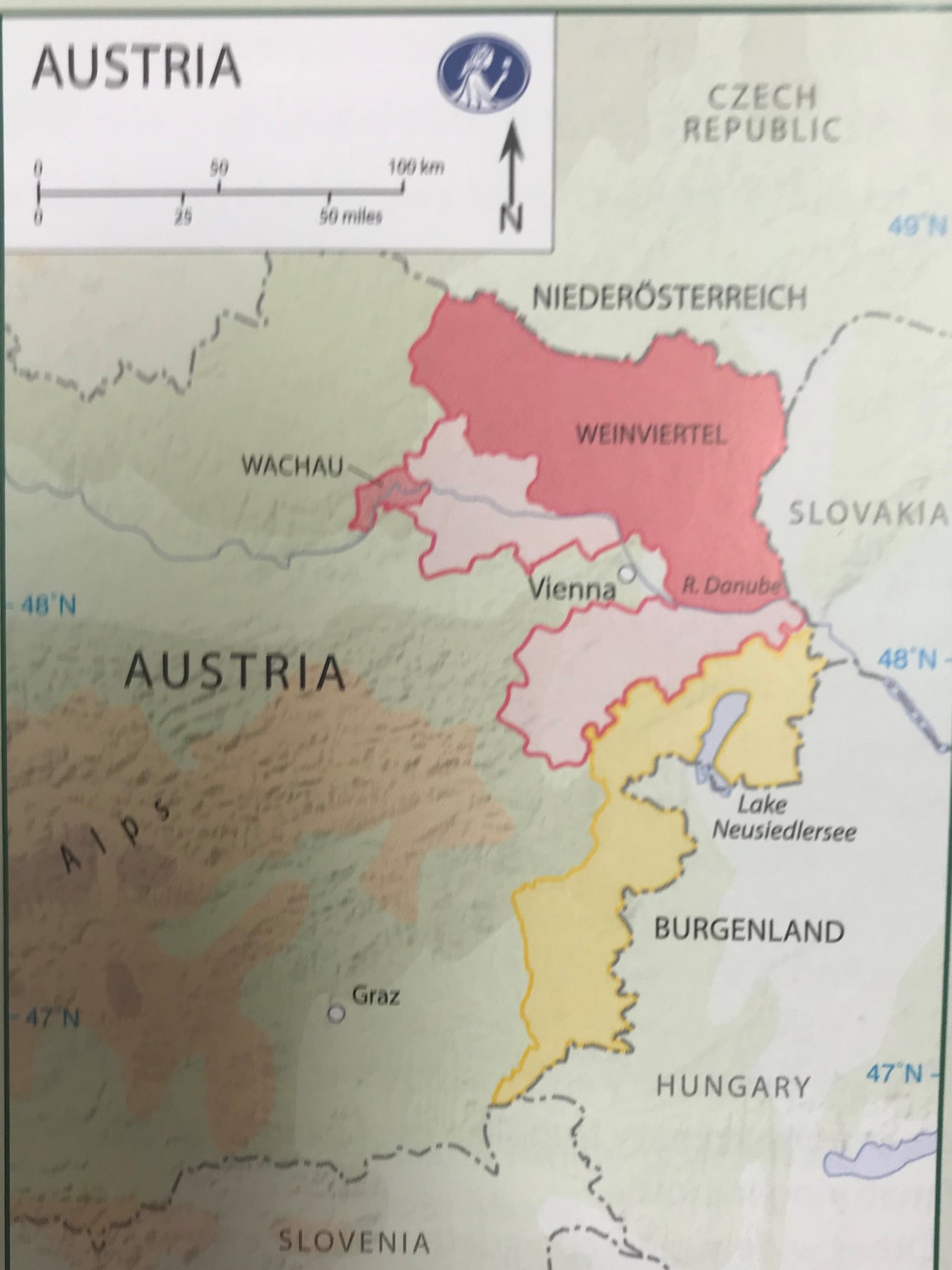
Austria Map
Austrian White Grapes
- Gruner Veltliner – Primary grape
- Welschriesling - this is NOT Riesling
- Riesling – less widely planted
- Chardonnay, Muller-Thurgau, Sauv blanc
- Sauv blanc is getting a good reputation in the south – Steiermark
Burgenland
Dry wines from Pinot Blanc, Welschriesling, Gruner Veltliner, Chardonnay
Lake Neusiedlersee - sweet Welschriesling
- Low-lying vyds near lake, autumn mist
- Ideal for Botrytis, almost guaranteed
Best reds: high ground in the hills
- Neusiedlersee DAC for Zweigelt
- 3 DACs for Blaufrankisch (Mittelburgenland)
Austria’s Climate
The Alps take up the west, so grapes are grown in the lowlands of the east
Cool continental climate, short summers and harsh winters
North regions get cooling northerly winds, SE regions get warm easterly winds
Less annual weather variation than northern Europe
Welschriesling
This is NOT Riesling – secondary grape
When dry is fresh, simple, citrus, green apple, high acid
Susceptible to botrytis, so used in dessert wines
Niederosterreich - Weinviertal DAC
Austria’s largest vine-growing area and first DAC
Wines can only be from Gruner Veltliner
Klassik – made in light, fresh, fruity style – no oak
Reserve – must have higher alc and can mature in oak
Niederosterreich (Lower Austria)
Largest region for both production and exports
Most vineyards on the banks of the Danube and toward Slovak border
8 sub-regions, primary are:
- Wachau
- Kamptal DAC and Kremstal DAC
- Weinviertal DAC
Gruner Veltliner
Primary grape, high-quality, point of difference in export market
Fresh but unexciting wines at high yields
Premium: Full-body, concentrated, high acid
In youth: citrus, stone fruit, white pepper; ages to honey and toast
Ferment and stored in SS, some use old oak casks, a few put best wines in new oak barriques.
Riesling
Less widely planted
Tends to come from Wachau, Kamptal and Kremstal
Usually dry and medium-to-full bodied w ripe peachy primary fruit
Best examples can mature in bottle
Austrian Wine Regions - PDO
4 federal states are used, w top 2 accounting for the vast majority
- Niederosterreich (Lower Austria)
- Burgenland
- Steiermark (Styria)
- Wein (Vienna)
Austrian Red Grapes
- Zweigelt-cross of Blaufrankisch x St Laurent
- Deep color, soft tannins, brambly fruit
- Blaufrankisch-most highly regarded
- Med tannin, high acid, peppery, sour cherry
- St Laurent
- Austrian-specific grape similar to Pinot Noir
- Oak aging common
- Many blending in Pinot Noir, Cab Sauv, Merlot
Niederosterreich - Wachau (and Kamptal / Kremstal)
Most renowned
High quality dry Gruner or Riesling
Steep, terraced south-facing vineyards next to the Danube max exposure and improve ripeness / concentration
Wachau is not a DAC, uses its own system
Kamptal DAC and Kremstal DAC lie just north of Wachau and make similar wines from GV and WR

-
North and South Rhone22
-
The Loire13
-
Southern France14
-
Dordogne, SW France and Alsace16
-
Burgundy and Beaujolais20
-
Bordeaux17
-
Germany25
-
Austria12
-
Tokaj8
-
Greece6
-
Northern Italy20
-
Central and Southern Italy17
-
Spain32
-
Portugal16
-
North America24
-
Chile14
-
Argentina15
-
South Africa15
-
Australia23
-
New Zealand14
-
Champagne Making18
-
Sparkling of the World15
-
Sherry15



