Define “Population”.
The total number of all the organisms of the same species that live in a particular geographical area.
Define “Community”.
A group of 2 or more populations of different species that live in the same geographical area.
Define “Competition”
The contest between organisms for resources.
What is “interspecific competition”?
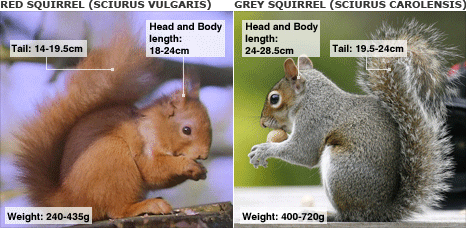
Competition between organisms of different species in a community eg between red and grey squirrels.
What is “intraspecific competition”?
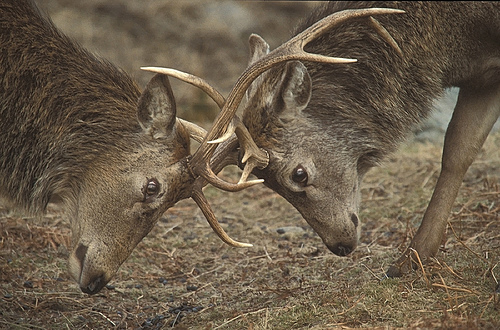
Competition between organisms of the same species.
What three things do plants compete for?
Light, space and water.
What three things do animals compete for?
Food, mates and territory.
What is an “Abiotic factor”?
Non-living parts of the environment.
Give two examples of abiotic factors.
- Light intensity
- Water / Moisture level
- pH of soil
- Mineral content of soil
- Wind intensity
- Wind direction
- Temperature
- Carbon dioxide / Oxygen levels
What is a “biotic factor”?
Living parts of the environment.
Give 2 examples of biotic factors.
- Predators
- Food / Prey
- Disease
- Competitors
What is a structural adaptation?
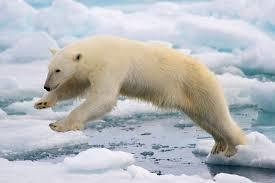
Physical features that allow an organism to compete eg a polar bear has thick white fur to stay warm and camouflaged.
What is a behavioural adaptation?

Specific behaviours that benefit an organism.
Define “Ecosystem”.
The interaction of biotic and abiotic parts of an environment.
What is an “extremophile”?
An organism that is adapted to live in extreme environments eg polar regions.
Describe how a transect can be used to measure whether the distribution of an organism changes in an area.
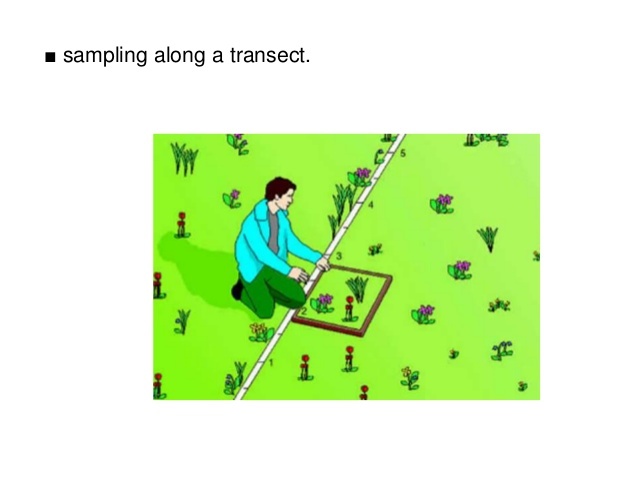
- Place a line / tape measure along the area.
- Systematically place a quadrat on the line (eg every 1 m)
- Record the numbers of species present
Describe how a quadrat could be used to estimate the number of daisies in the playing field.
- Use a pair of random numbers to get 6 sets of coordinates.
- Visit each coordinate and put the quadrat down.
- Count the number of daisies in each quadrat.
- Calculate the mean number of daisies per quadrat.
- Multiply the mean by how many quadrats would fit on the field.
What is a “producer”?
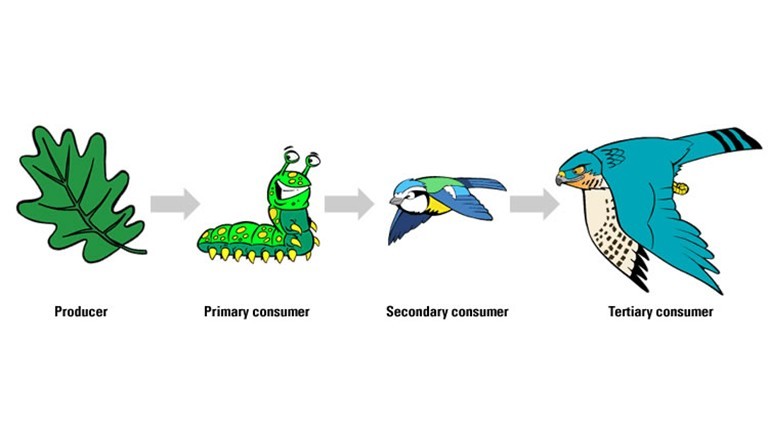
An organism that produces its own food and energy by photosynthesis.
What is a “consumer”?
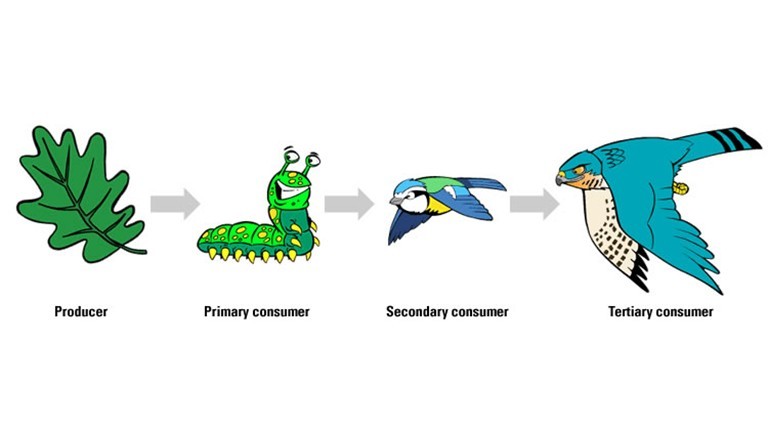
Any organism that obtains energy by eating another organism.
Name one way in which carbon is removed from the atmosphere.
Photosynthesis
Give 2 ways in which carbon is released in to the atmosphere.
- Respiration
- Combustion / Burning
How is carbon passed from plants to animals?
Feeding
How does carbon in animal biomass (faeces and dead organisms) get returned to the soil?
It is decayed by decomposers (bacteria and fungi)
Name the main processes in the water cycle.
- Condensation
- Evaporation
- Precipitation
- Transpiration
- Surface run-off






