Features that distinguish Prokaryotes/Eukaryotes (5)
- A single circular chromosome instead of nucleus with multiple chromosomes
- No nuclear membrane or mitotic apparatus
- Transcription coupled to translation (70S ribosome)
- Cell wall with unique residues
- No endoplasmic reticulum, mitochondria or other organelles; bacteria have complex plasma membrane
Eukaryotes
Sharp natural species boundaries - Species are defined by the ability to produce fertile offspring
Prokaryotes
No sharp natural species boundary - Species defined by genetic relatedness and possession of similar physiological function
Binary fission
Asexual multiplication, where each individual cell gives rise to two identical offspring
Two ways of identifying prokatyotic species
Conventional
Molecular
Two methods of molecular identification of bacteria
Hybridization techniques
Amplification techniques
Amplification of pathogen specific DNA - PCR
- Identify slow growing - or - non-cultivable bacteria
- Rapid identification - amplify gene encoding difficile toxin from stool of an individual with antibiotic-associated pseudomembrane
Difficile
Difficult to isolate and grow; due to extreme oxygen sensitivity of this organism
Analysis of restriction endonuclease patterns of the bacterial chromosome
Restriction fragment length polymorphisms (RFLP) - Used during hospital acquired infections to determine the source of an infection
Utility and Application of molecular diagnosis
Distinction of DNA from bacterial strains separated by pulsed field gel electrophoresis (RFLP)
- To determine whether an infection was community or hospital acquired
Conventional Identification of a prokaryotic species determines:
Morphology - Cell shape, gram stain, motility - presence of capsule
Biochemistry - Ability to metabolize specific substrates - Production of specific end products - Antibiotic sensitivity
Goal of conventional identification
Rapid Diagnosis of pathogens
Response to O2
Aerobes:
Microaerophiles:
Facultative anaerobes:
Aerotolerant:
Anaerobes:
Aerobes: Metabolize O2; grow only in its presence
Microaerophiles: Metabolize O2; grow only in low O2
Facultative anaerobes: Metabolize O2 in the presence of O2; ferment in the absence
Aerotolerant: Do not metabolize O2; but ferment in the presence or absence of O2
Anaerobes: Do not metabolize O2; do not grow in the presence of O2 (gut bacteria)
Oxidase Test
Differentiates aerobes from facultative anaerobes:
- Aerobes: use cytochrome C as the terminal oxidase
- Facultative anaerobes use cytochrome D as terminal oxidase
Describe Anaerobic Respiration
- Unique to prokaryotes
- Occurs in the absence of O2
- Bacteria reduce NO3 → NO2 or N2
- NO3+ → NO2 → N2
Fermentation Properties
- Permit the overall oxidation-reduction balance to be preserved (NADH2/NAD)
- Pyruvate is usually the electron acceptor
- Inefficient in energy generation
Energy from respiration vs fermentation
Oxidation of Glucose: △G = -686 Kcal/mole
Fermentation to lactate: △G = -47 Kcal/mole (selective advantage in the environment)
Mixed Acid Fermentation: Enterobacteriaceae
Describe the process
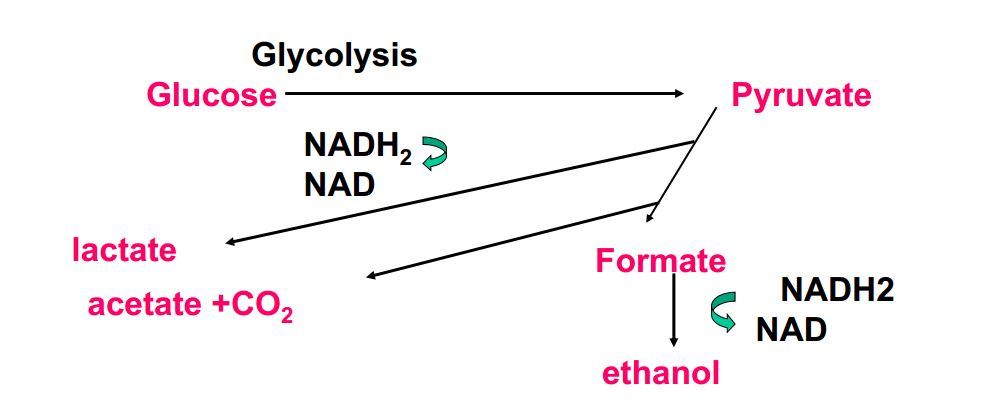
Diagnostic test for enterobacteriaceae
Grow bacteria anaerobically in sugar and score for acid (yellow) and gas
Properties of Bacterial growth
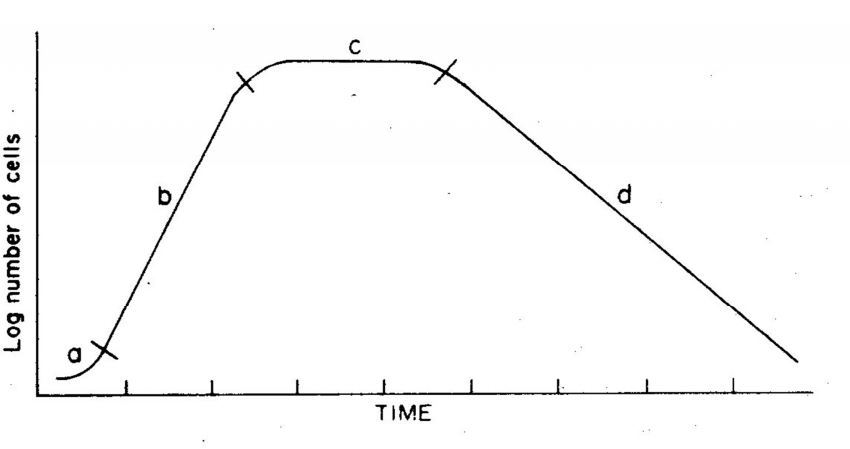
Lag - No cell division: Adaptation; Increased metabolism
Exponential - balanced growth
Stationary - decreased nutrients, △pH, builup to toxic products
Death - Eventual, slope varied with species
Bacteria associated with oxygen
- Obligate anaerobes
- Aerotolerant anaerobes
- Facultative anaerobes
- Microaerophiles
- Obligate aerobes
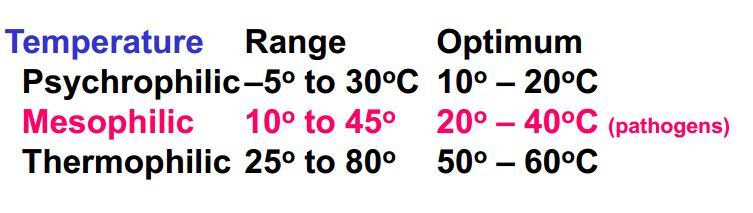
Temperature: Survival Range and Optimum Range
- Psychrophilic
- Mesophilic
- Thermophilic
Pathogenic bacteria usually grow between pH ___ and ____
7.2 and 7.6
Most bacteria only tolerate moderate salt concentrations; ______ are an exception
Halophilic - Require up to 30% salt for growth

-
Bacteriology Part 134
-
Bacteriology Part 230
-
Antibiotics and Antibiotic Resistance30
-
Antibiotics and antibiotic resistance Pt. 232
-
Bacterial Genetics31
-
Macrophage Interactions17
-
Bacterial Toxins28
-
Anaerobic Bacteria38
-
Bacterial CNS and STDs43
-
Staphylococcus33
-
Streptococcus44
-
Bacteriology of the Colon85



