basic principles of oral surgery
- Risk assessment
- Good planning
- Medical history – anticoagulant med
- Aseptic techniques
- Minimal trauma to hard and soft tissues
environment for oral surgery
- Cross infection control
- Theatre environment not required – aspects of – light, PPE
All surgical procedures should be performed efficiently, using an aseptic technique and minimizing the trauma to the soft and hard tissues.
The surgeon should plan the stages of surgery before embarking upon the procedure
what is required before undertaking oral surgery
radiographic assessment
stages of surgery
- Consent
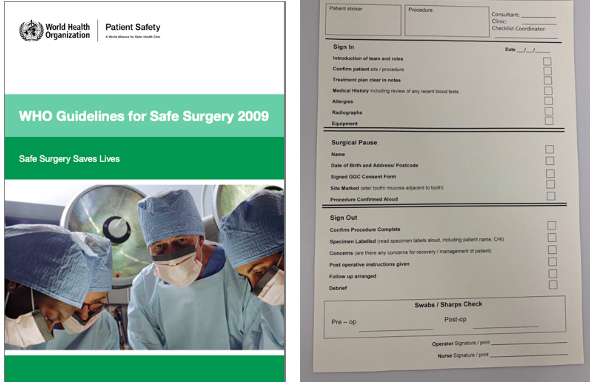
- Surgical Pause/Safety Checklist – Right pt, Right side, Right tooth
- Anaesthesia
- Access
- Bone removal as necessary
- Tooth division as necessary
- Debridement/Wound Management
- Suture
- Achieve haemostasis
- Post-operative instructions
- Post-operative medication
- Follow-up
consent
- GDC Standard 3
- Obtain valid consent
- 3.1.6 You must obtain written consent where treatment involves conscious sedation or general anesthetic
- Obtain valid consent
Procedure – risks and benefits written on, discuss with pt to ensure understanding and get them to sign
surgical safety checklist
when does LA occur in surgery
First step of carrying on surgery – anesthesia at site of surgery
surgical access
- Maximal access with minimal trauma
- Bigger flaps heal just as quickly as smaller ones
- Mucoperiosteum flap at site of surgery common
- Preserve adjacent soft tissues – handle appropriately with instruments
- Consider post operative aesthetics – where are incisions with regards to scars and healing
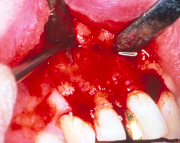
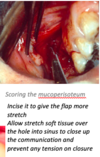
mucoperiosteum flap
Raise mucosa and periosteum as one – ensure periosteum lifted away from bone with mucosua
- Wide-based incision-circulation/perfusion
- Use scalpel in one firm continuous stroke
- No sharp angles
- Adequate sized flap
- Flap reflection should be down to bone and done cleanly
- Minimise trauma to dental papillae
- No crushing
- Keep tissues moist
- Ensure that flap margins and sutures will lie on sound bone
- Make sure wounds are not closed under tension
- Aim for healing by primary intention to minimize scarring
- more scarring with secondary intention - REVISE
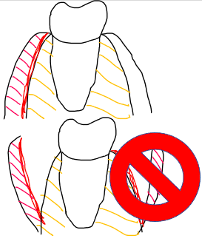
flap types
- 3 sided flap
- envelope flap
different flaps for different procedures
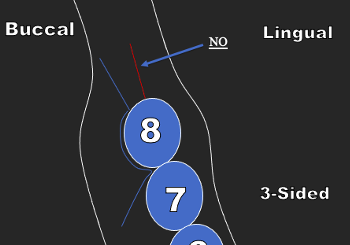
3 sided flap
- Distal relieving incision
- Crevicular incision around tooth
- Mesial relieving between 7 and 8
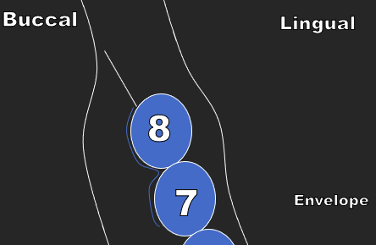
envelope flap
- Similar to 3 sided but don’t have mesial relieving incision
- Crevicular incision extends further to midpoint of 7 or mesial 7/distal 6
soft tissue retraction
lift flap once made
- Access to operative field
- Protection of soft tissues and minimise damage
- Flap design facilitates retraction
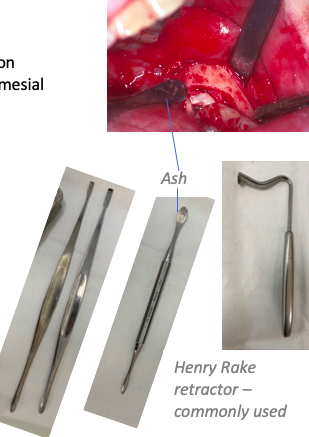
- Howarth’s periosteal elevator or rake retractor
- Narrower
- Help reflect flap whilst protecting adjacent structures e.g. nerves
- Narrower
- Should be done with care
Henry rake retractor is a broad instrument that will reflect light in
bone removal and tooth division
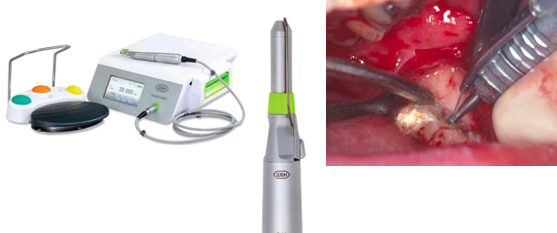
- Electrical straight handpiece with saline or sterile water-cooled bur
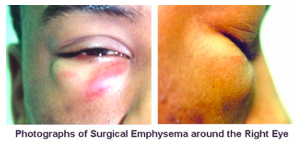
- Air driven handpieces may lead to surgical emphysema
- Round or fissure tungsten carbide burs
- Protection of soft tissues
motor with straight handpiece for surgical procedures
sugrical emphysema
Build-up of air or gas submucosa/subcutaneous due to use of air driven handpiece in surgical procedure
- Can need hospital care and antibiotics after draining
lots of air in area can be risk of damage to area – eye here
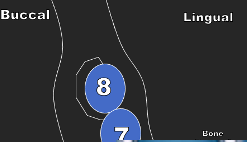
Buccal gutter around lower 8 – allow elevation, removal of crown, spitting roots
tooth division
Once removed the bone may need to split roots, take crown of tooth
Buccal gutter around lower 8 – allow elevation, removal of crown, spitting roots
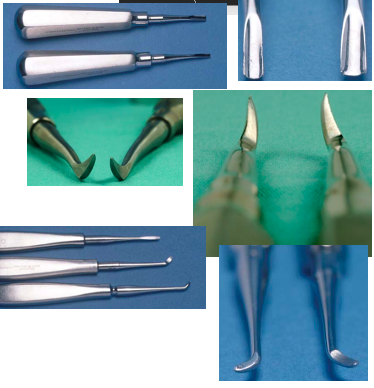
elevators
deliver roots or teeth
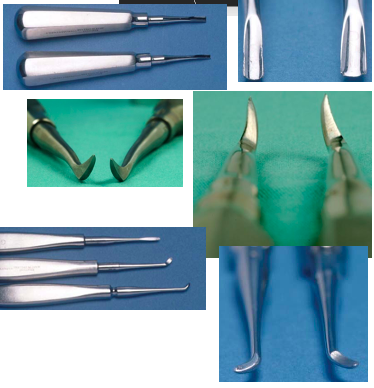
couplands (1, 2, 3 - increase in width)
cryers
warwick james (straight and curved)
principle of elevators use
- Mechanical advantage
- Avoid excessive force
- Support the instrument to avoid injury to the patient should the instrument slip
- Ensure applied force is direct away from major structures eg. antrum, ID canal, mental nerve (force directly coronally away from imp structures)
- Always use elevators under direct vision
- Never use an adjacent tooth as a fulcrum unless it too is to be extracted
- Keep elevators sharp and in good shape. Discard if blunt or bent.
- Establish an effective and logical point of application
- Careful debridement after the use of elevators to remove any bone fragments that have been created
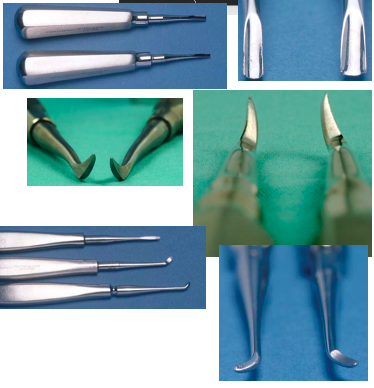
uses of elevators (6)
- To provide a point of application for forceps
- To extract a tooth without the use of forceps
- Removal of retained roots
- To loosed teeth prior to using forceps
- Removal of multiple root stumps
- Removal of root apices
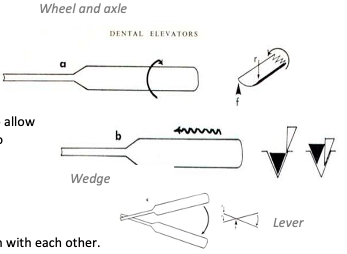
mechanics of elevator use
- Three basic actions
- Wheel and axle
- Rotate wrist while elevating the tooth to allow point of instrument to engage into tooth
- Wedge
- Lever
- Risk fracture – avoid
- Wheel and axle
All three actions can be used in combination with each other.
- Must avoid excessive force
The points of application of elevators includes:
mesial, buccal, distal, superior (upper teeth), mesial/buccal alternately, inferior (lower teeth).
debridement methods (3)
- Physical
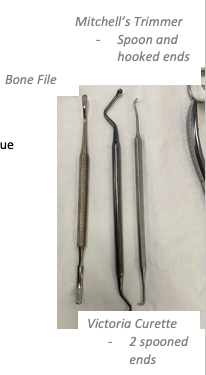
- Bone file or handpiece to remove sharp bony edges
- Mitchell’s trimmer or Victoria curette to remove soft tissue debris
- Irrigation
- Sterile water or saline into socket and under flap
- Suction
- Aspirate under flap to remove debris
- Check socket for retained apices etc
suturing aims (5)
Approximate tissues
Compress blood vessels
- Aims
- Reposition tissues
- Cover bone
- Prevent wound breakdown
- Achieve haemostasis
- Encourage healing by primary intention
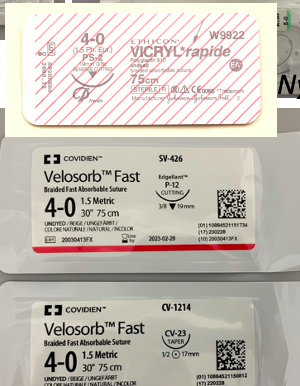
suture types
absorbable
non-absorbable
monofilament
polyfilament
absorbable sutures
- Holds tissue edges together temporarily
- Composed synthetic polyester – glyclide and lactide
- If removal of suture not possible/desirable
- Vicryl-breakdown via absorption of water into filaments causes polymer to degrade
- may mean review not required