- What does the acronym CITES stand for and what year did it become in effect?
- Convention on International Trade in Endangered Species of Wild Faunaand Flora; 1975
- What Appendix of CITES lists endangered species?
- Appendix I
- What the taxonomic classification of the Lemur? What are the distinguishing characteristics?
Suborder Strepsirrhini
(means “wet nose”)
- Wet patch around nares
- Nocturnal with tapetum lucidum
- Toilet claw on 2nd digit of feet (3rd in Aye Ayes)
- Tooth comb
- Sublingua
- Temporal fossa
- Epitheliochorial placenta
- What is the taxonomy of New World Monkeys? Name three characteristics of New World monkeys distinguishing them from Old World monkeys.
Suborder Haplorrhini
Infraorder Simiiformes
Parvorder Platyrrhini
- Flat nose
- Tympanic bulla
- Absence of ischael callosities
- Absence of cheek pouches
- Prehensile tail (e.g. Capuchin, Squirrel)
- No menstruation (except slight in Capuchin)
- Require vitamin D3 in diet or UV light
- The term neotropical primate is considered to be interchangeable with _________________.
New World Monkeys
- What is the taxonomic classification of marmosets and tamarins? Squirrel monkeys and Capuchins?
All in Parvorder Platyrrhini
Marmosets and tamarins in Family Callitrichidae.
Squirrel monkeys and Capuchins in Family Cebidae.
- What is common name, genus and species?
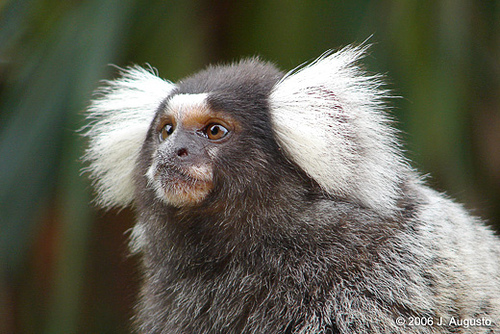
Callithrix jacchus jacchus
- What is the taxonomic classification of this animal? What are its distinguishing characteristics?
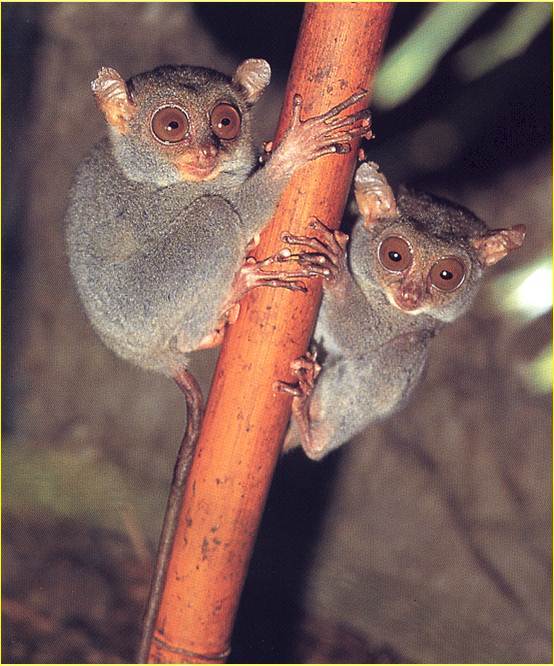
Suborder Haplorrhini
Infraorder Tarsiiformes
Genus Tarsius
Shares characteristics of both Strepsirrhini and Simiiformes.
Like Strepsirrhini: nocturnal, grooming claws (3rd digit)
Like Simiiformes: lack tapetum lucidum, closed eye sockets, sex skin tumescence, hemochorial placenta
- Taxonomy and characteristics of this animal?
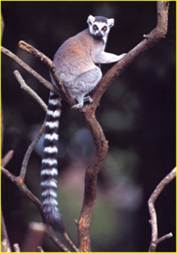
Suborder Strepsirrhini
Family Lemuridae
Lemur catta
- Wet nose
- Nocturnal with tapetum lucidum
- Toilet claw
- Tooth comb
- Sublingua
- Epitheliochorial placenta
- Which callitrichid used in research is classified as endangered by CITES?
Callithrix aurita, C. flaviceps
Sanguinus bicolor, S. geoffroyi, S. leucopus, S. oedipus
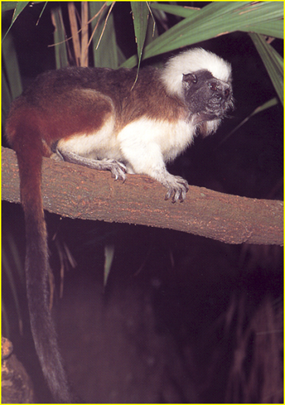
- What are distinguishing characteristics of Callitrichidae?
- small size (150-600 g)
- claws instead of nails on digits
- high frequency of twinning (~80%)
- All twins and many singletons are chimeras
- Hallux, specialized nail on 1st digit, is opposable
- Thumb is not opposable
- Only one female in an extended breeding group reproduces
- Circumgenital and sternal glands
- Which species are listed as endangered:
a. Howler monkey
b. Spider monkey
c. Red-backed squirrel monkey
d. Uakari monkey
e. All of the above
- e, all of the above
- What is unusual about dentition in marmosets?
Have prominent incisors same length as canines. These allow them to gnaw holes in trees and eat gums and exudates, a staple of their diet.
- What are common research uses for this species?
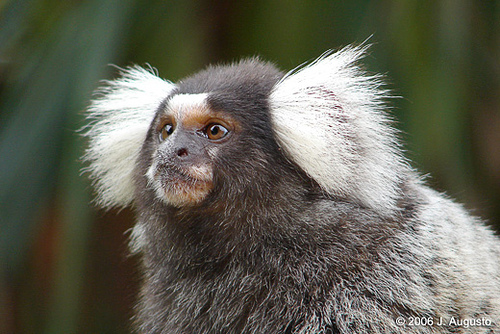
Callithrix jacchus, Common Marmoset
Model for Parkinson’s disease
Model fpr allergic encephalomyelitis, which mimics many facets of multiple sclerosis
Models for idiopathic hemochromatosis
- What is the concern about feeding neonatal mice to marmosets and tamarins as a supplemental protein source?
Health status of mice must be known. Lymphocytic choriomeningitis virus can be transmitted to marmosets and tamarins.
- What is the family, genus, and species? What are some uniques characteristics of this genus?
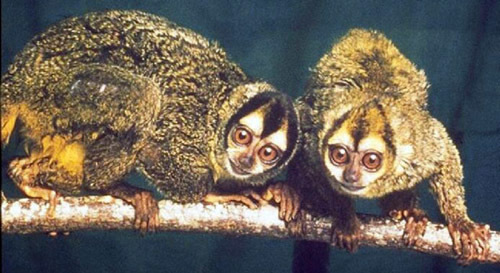
family Cebidae
Aotus lemurinus griseimemra
Gray-necked owl monkey
- Small (~1 kg)
- Nocturnal but no tapetum, and retain retinal fovea, have both rods and cones (cones decreased)
- Low metabolic rate (18-24% below predicted value for weight)
- All owl monkeys belong to Aotus but variation in chromosome number (46-56)
- Within A. l. griseimembra 2n is 52-54
- When does menarche occur in the macaque?
- Menarche (onset of menstruation) occurs at approximately 2 years
- Rhesus menstrual cycle lasts ________ days.
28 days
- How is pregnancy determined in monkeys?
- ultrasonography or palpation
- What is the range of gestation for macaques?
161-175 days
- What is the range of gestation for Callitrichids?
140-150 days
- What is the family, genus and species? What some characteristics of this genus?
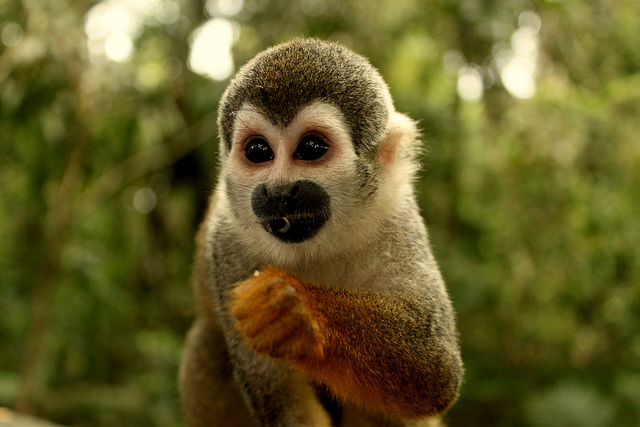
family Cebidae
Saimiri sciureus
Note high Gothic arch. Could also be S. oerstedii or S. ustus. Precise identification requires both phenotypic and karyotypic examination.
- Body weight < 1 kg
- Males 25-30% larger than females
- Males and females undergo seasonal reproductive changes, from infertility or anestrus to fertility, with corresponding low and high sex hormone levels
- Males undergo fatting and testes enlargement
- Have free/unbound cortisol ~100X that of humans or OWPs
- Naturally occurring atherosclerosis
- What is the ovarian cycle length in the common marmoset?
28.6-30.1 days
- Describe the chromosome number in squirrel monkeys.
2n = 44
Vary in number of acrocentric chromosomes (5-7), thought to be due to pericentric inversions.
Karyotyping is critically important because:
- Species and subspecies vary in susceptibility to both naturally and experimentally-induced disease.
- Interbreeding between different species or subspecies can lead to heterozygosity for pericentric inversions leading to non-viable gametes due to meiotic cross-over events at the inversion. Up to 50% of hybrid squirrel monkey conceptions could be non-viable.






