What was the first blockchain example?
To understand Blockchain from a human perspective it is important to review the people who inhabit Yap Island and their unique currency called Rai Stones. These stones could not be physically traded so the Yapese people used mental ledgers where all tribe members kept a copy of the ledger in their head.

What is “Group Consensus” as per the ledger example?
This all works with a decentralized ledger as the whole tribe must reach consensus on the truth in order to update the ledger. This is called “Group Consensus”. The truth is assumed to be the version of the ledger that 51% or more of the tribe members present agree on.
How are blocks “chained” together?
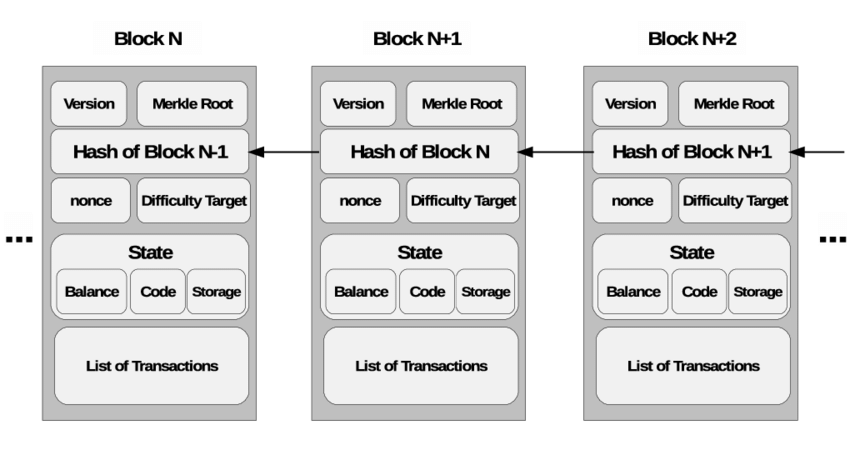
To chain blocks together today, all data in a block is run through a special function called a “cryptographic hash”. Cryptographic hashes create a unique output for a specific input. Therefore, the hash of each block will always be unique based upon the inputs. To link or chain blocks of data together the header of the current block contains the hash of the last (validated) block. Changing the data on any block in a Blockchain will result in a completely different hash and the new hash will not match the hash in the next block header thus breaking the Blockchain and invalidating all blocks linked to where the change was made. This gives Blockchain its property of immutability (can’t be changed) and makes it highly censorship-resistant.
What is a Blockchain?
Blockchain is a record keeping system that can record the transfer of “tokens” or “coins” monetary wealth. Bitcoin and other cryptocurrencies such as Ether, LiteCoin, and Monero are current examples of this. Blockchains provide a successful enabling platform for cryptocurrencies by providing a digital immutable ledger that is widely distributed and peer-validated
What is a block from the ledger example?
- Let’s say all transactions are recorded on paper
- Each sheet of paper has 25 lines
- When a sheet is filled, the tribe will “validate” the transactions on the current page
Who wrote the white paper on blockchain in 2009?
Satoshi Nakamoto

The three types of Blockchain transactions are.
- Two or more parties, exchange of monetary value such as cryptocurrency
- Two or more parties, but no exchange of monetary value such as updates to medical records, notary services
- One party announcing an important event such as supply chain management, business process automation, creation/auditing of financial records.
What are the primary benefits of blockchain?
Some of the primary benefits of Blockchain are:
- It leverages a decentralized infrastructure
- It is a completely trustless environment
- it provides immutability by cryptographically linking all blocks together.
- All blocks on the Blockchain are indexed using a Merkle Tree. A Merkle Tree is a lightweight digital fingerprint of all the transactions within a block.
Key Tenets of a Decentralized System?
- Peer-to-Peer data sharing
- Hosting hardware owned by many not a few
- Extremely high fault tolerant
- security
One drawback of Blockchain?
- Starting with how new Blockchain is, to the stigma of its use originating in the Dark Web.
- The creation of Blockchain is also a mystery that tends to put people on edge.
- ICO/ITO scams and the misperception that Blockchain is just another name for cryptocurrency are also drawbacks that aren’t technical but do impact the adoption of Blockchain itself.
Another drawback of blockchain?
- More tangible challenges with Blockchain today include the fact that Blockchain technology is still changing and evolving, best practices and recommended patterns for implementation are still being formed.
- There are not very many trained resources and therefore, the cost of trained resources is high.
Other Drawbacks of Blockchain?
- Scalability is a core concern when it comes to Blockchain. Blockchain prioritizes security over speed. Therefore, solutions that require high transaction speeds are not good candidates for Blockchain.
- Different group consensus methods beyond Proof of Work are currently being proposed to overcome current scalability limitations. Today, most major public Blockchains are able to process 10-20 transactions per second worldwide.
What is Cryptography?
Cryptography is the study of how to send information back and forth securely in the presence of adversaries. A cryptographic function is a function for encoding or encrypting data to protect the contents from others
What are the components are the basis of a cryptographic function?
- The Secret – The data which we are trying to protect
- The Key – A piece of data used for encrypting and decrypting the secret
- The Function – The process or function used to encrypt the secret
- The Cipher – The encrypted secret data, output of the function 5. The Secret and the Key are passed into the Function to create a Cipher
What are the two keys in Public Key Cryptography?
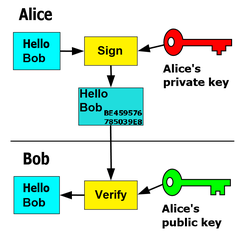
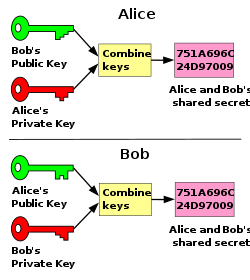
- In Public Key Cryptography there are two keys, the Public Key and the Private Key.
- The Public Key is used to verify the digital signature of a given key pair.
- The Private Key is used to sign/approve any transaction/action that might be made by the holder of the key pair.
- All transactions submitted to the Blockchain are signed using the user’s private key and are verified on the Blockchain using the public key.
What is Blockchain Consensus?
All announcements/transactions are recorded in blocks in Blockchain. When a block is filled up, it is validated
through group consensus before it can be added to the chain of previously validated blocks.
What is the Proof of Work (PoW) Consensus
In Proof of
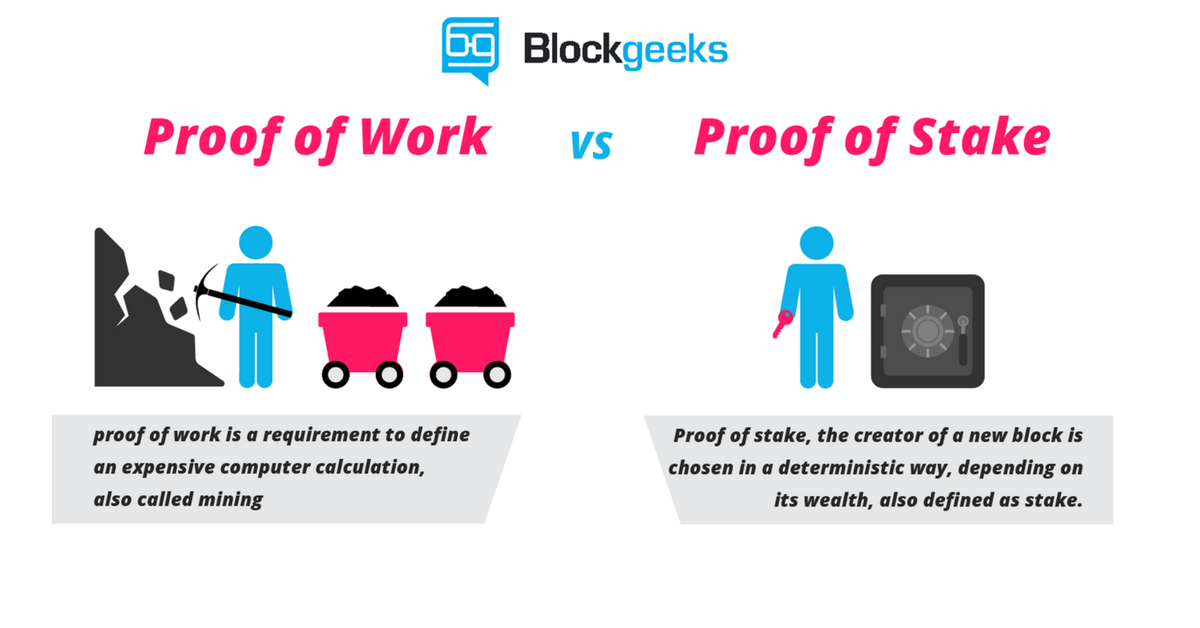
Work consensus, when a block is full each node competes to solve a guessing game problem to validate the
block of data. This problem is non-computational and random guesses are most efficient. Nodes are called
Miners and they have to guess the “nonce” to succeed in validating a block. All block data plus the current
guess (nonce) are run through a cryptographic hash, if the result matches the current level of “difficulty”, the
miner has guessed the right answer. The difficulty is adjusted by the network to correspond to load.
What is the Byzantine Generals’ Problem?
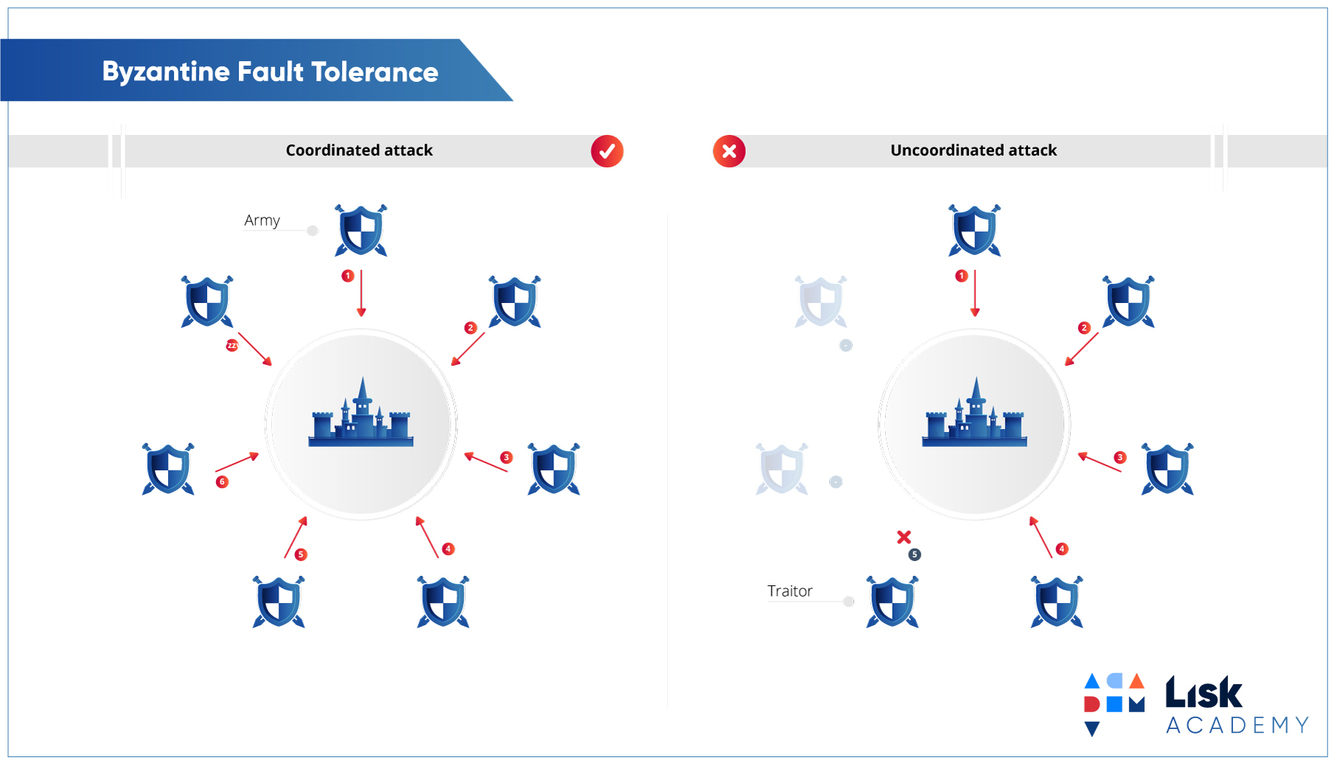
Imagine divisions of a Byzantine army, attacking a completely encircled city. To proceed, the generals of each division, who are dispersed around the city’s periphery, must agree on a battle plan. However, while some generals want to attack, others may want to retreat.
In the official description of the Byzantine Generals’ Problem (which you’ll find on page three of the aforementioned paper), there is a leader-follower set-up. In order to achieve consensus, the commanding general and every lieutenant must agree on the same decision.
What is the Proof of Stake (PoS) Consensus?
Proof of Stake consensus uses a system where “Validator” nodes each give or pay a stake in order to validate transactions. When it’s time for group consensus, all who wish to participate lock up funds in a stake. A random node is selected and the hash of that node’s block data is shown to all other participants. All other nodes wager on the validity of the block transactions. If the majority agree with the proposed block, the random node is rewarded as are all who wagered on that node. If the majority disagree, the random node loses their stake, gets no reward, and a new node is randomly selected to share their block data. The game theory incentive toward honesty and accuracy is maintained, only the mechanics of how it’s enforced are changed.
What is the Lifecycle of a Public Blockchain Transaction?
- User uses Dapp/web3 to start transaction
- User signs the transaction with their private key
- Transaction validated on locally running node
- Transaction broadcast to entire network
- Miners choose to accept or pass on the transaction
- Miner takes each accepted transaction and writes it to the current block
Other Consensus Mechanisms
Proof of Activity – is a hybrid of PoW and PoS. Empty template blocks are mined (PoW) then filled with transactions which are validated via PoS.
Proof of Burn – is where coins are “burned” by sending them to an address where they cannot be retrieved. The more coins burned, the better the chances of being selected to mine the next block.
Proof of Capacity – is where hard drive space is staked to participate. The most space ‘staked’, the better the odds of being selected to mine the next block. The consensus algorithm here generates large data sets called ‘plots’ which consume storage.
Proof of Elapsed Time – was created by Intel to run on their trusted execution environment. It is similar to PoW but far more energy efficient. The concern is this requires trust in Intel and can be viewed as a central authority.
Proof of Authority - uses a set of “authorities” which are nodes that are explicitly allowed to create new blocks and secure the Blockchain. This is a replacement for PoW but only for Private Blockchains. Nodes have to earn the right to become a validator/authority.
What is the information stored in a blockchain header?
This header contains information about the block
itself including
- platform version
- timestamp
- difficulty level
- nonce
- hash output of the previous block data it is being linked too.
Some key
benefits to issuing a token/coin on Blockchain include:
- Ownership of tokens is tracked on the Blockchain
- Trading and exchanging of tokens is managed on the Blockchain




