What are the basic functions of bone?
•MECHANICAL
–support and site for muscle attachment
•PROTECTIVE
–vital organs and bone marrow
•METABOLIC
–reserve of calcium
Bone and the struts and levers it forms is adapted to resist stress, support the body and provide leverage for movement. Macroscopically it is white and dense.
Describe the composition of bone
•INORGANIC - 65%
–calcium hydroxyapatite (10Ca 6PO4 OH2)
–is storehouse for 99% of Ca in the body
–85% of the phosphorous, 65% Na & Mg
•ORGANIC - 35%
– bone cells and protein matrix
Bone matrix is 60-70% inorganic salts (Ca &PO4) 30-40% collagen (Type 1 mostly with some type V) 10-20% water and ~5% non-collagenous protein & carbohydrate. Certain cations rg radium strontium and lead are ‘bone seeking’. They can be radioactive or toxic and cause bone marrow failure.
Describe basic bone geography
Bones display articular surfaces at synovial joints. If small these are called facet joints or fovea. Condyles are knuckle shaped and a trochlea is grooved like a pulley ( ref Grays anatomy).
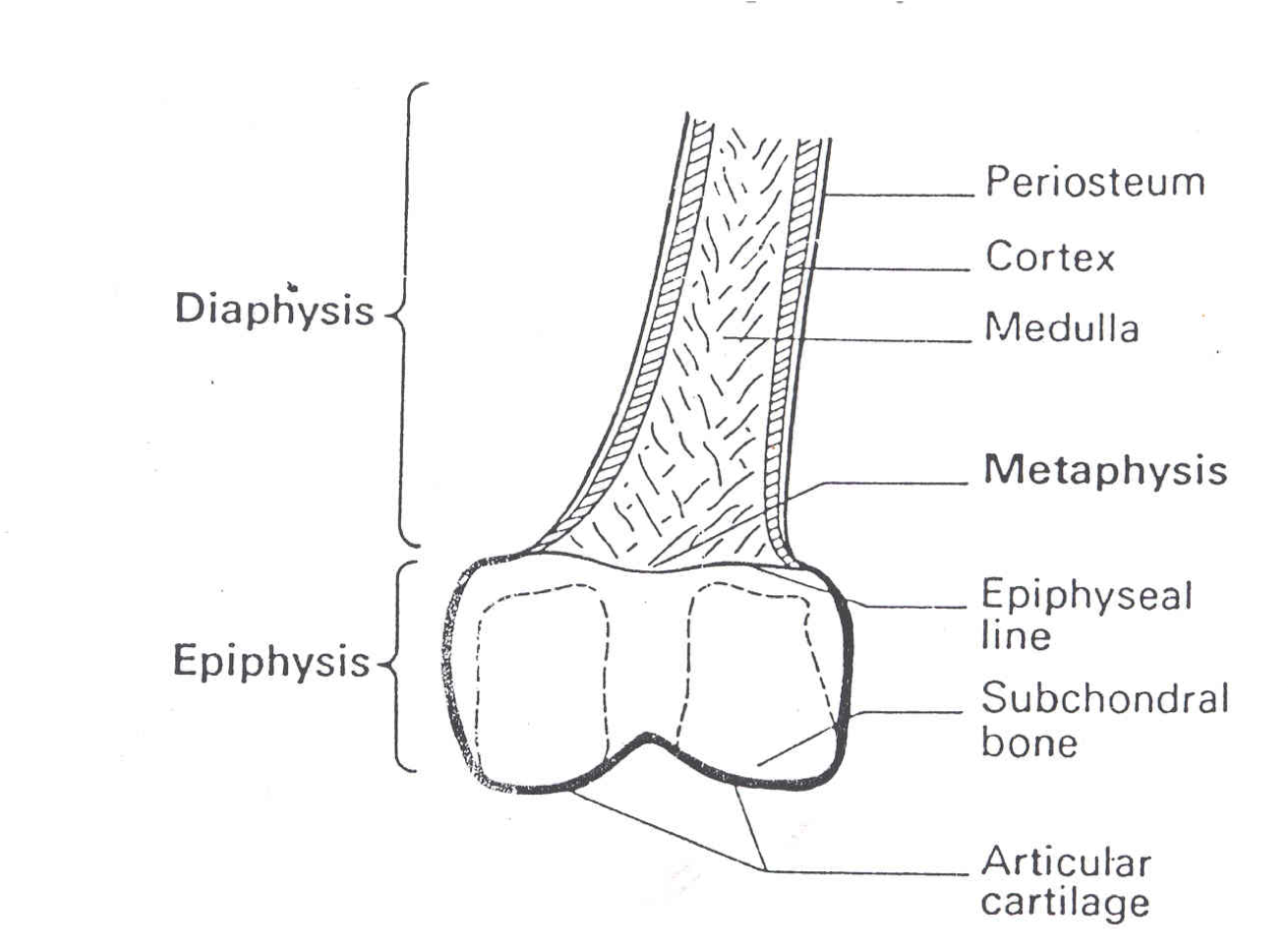
Compare and contrast the following types of bone
- Cortical
- Cancellous
Cortical:
- Long bones
- 80% of skeleton
- Appendicular
- 80-90% calcified
- mainly mechanical and protective
Cancellous:
- Vertebrae & pelvis
- 20% of skeleton
- Axial
- 15-25% calcified
- mainly metabolic
- Large surface
What does this image show?
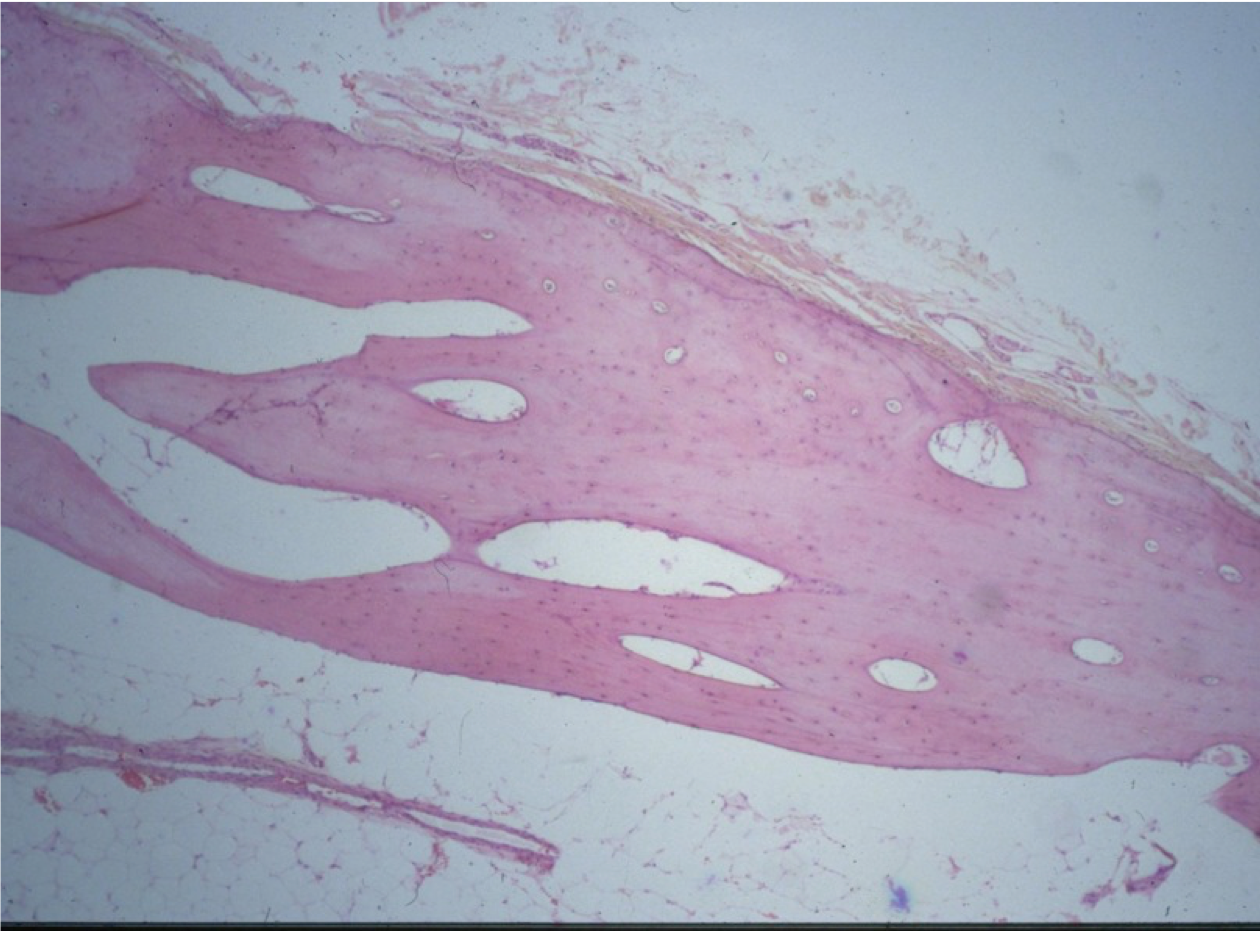
Cortical bone stained
What does this image show?
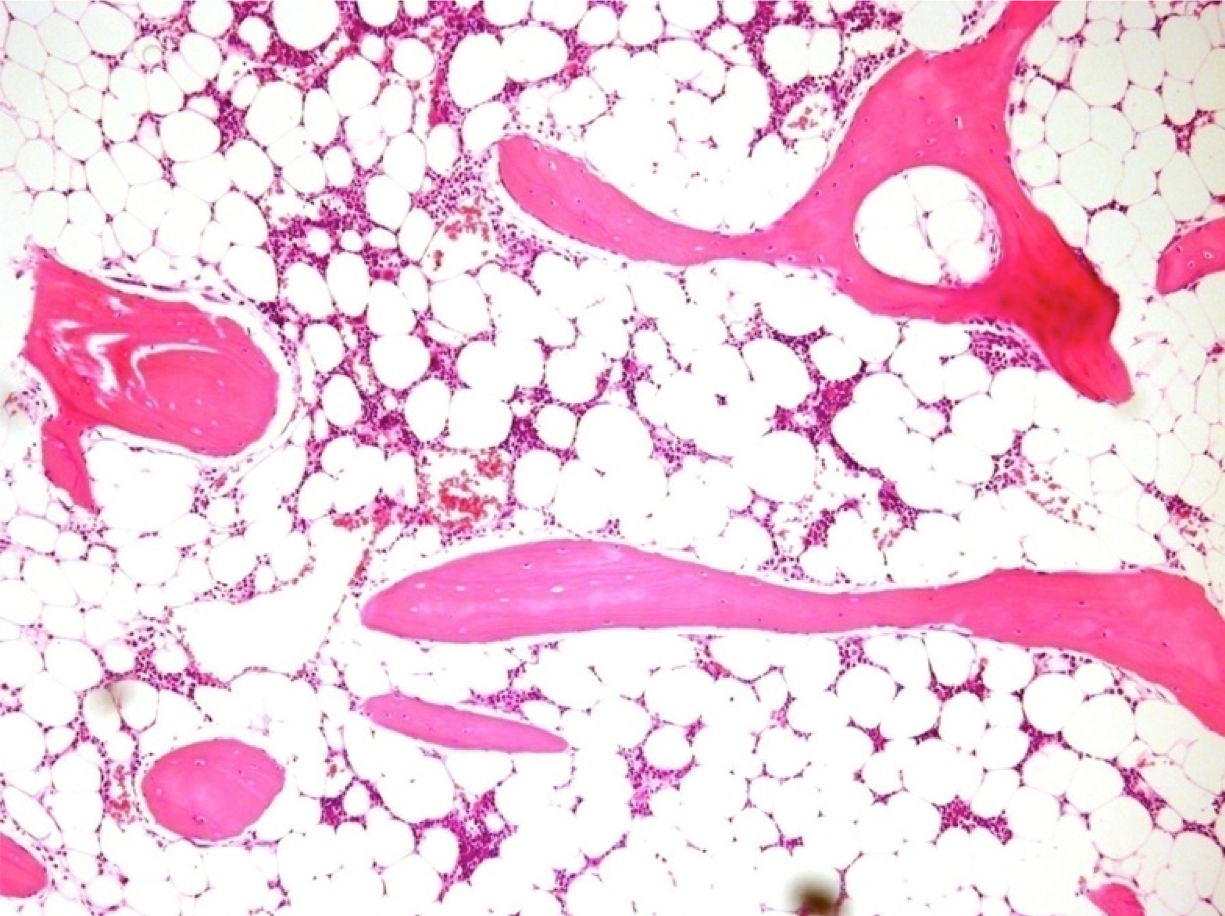
Cancellous bone stained
Define the function of the following bone cells
- Osteoblasts
- Osteoclasts
- Osteocytes
- Osteoblasts - build bone by laying down osteoid
- Osteoclasts - multinucleate cells of macrophage family resorb or chew bone
- Osteocytes - osteoblast like cells which sit in lacunae
Describe what is important for bone cells and their processes
Hormones, cytokines, growth factors, and signal-transducing molecules are instrumental in their formation and maturation, and allow communication between osteoblasts and osteoclasts. Bone resorption and formation in remodeling are coupled processes that are controlled by systemic factors and local cytokines, some of which are deposited in the bone matrix. BMP, bone morphogenic protein; LRP5/6, LDL receptor related proteins 5 and 6
What regulates osteoblast formation and function?
Paracrine molecular mechanisms
Describe the role of RANKL and OPG in osteoclast formation and function
Osteoclasts are derived from the same mononuclear cells that differentiate into macrophages. Osteoblast/stromal cell membrane-associated RANKL binds to its receptor RANK located on the cell surface of osteoclast precursors. This interaction in the background of macrophage colony-stimulating factor (M-CSF) causes the precursor cells to produce functional osteoclasts. Stromal cells also secrete osteoprotegerin (OPG), which acts as a “decoy” receptor for RANKL, preventing it from binding the RANK receptor on osteoclast precursors. Consequently, OPG prevents bone resorption by inhibiting osteoclast differentiation.
- What is metabolic bone disease?
- What is the overall effect?
- Disordered bone turnover due to imbalance of various chemicals in the body (vitamins, hormones, minerals etc)
- Overall effect is reduced bone mass (osteopaenia) often resulting in fractures with little or no trauma
What are the three main categories of metabolic bone disease?
- Non-endocrine (e.g. age related osteoporosis)
- Related to endocrine abnormality (Vit D; Parathyroid hormone)
- Disuse osteopaenia
How is metabolic bone disease diagnosed?
•Histology requires bone biopsy from iliac crest,
processed un-decalcified for histomorphometry
•‘Static’ parameters include
–cortical thickness & porosity
–trabecular bone volume
–thickness, number & separation of trabeculae
- Bone mineralisation is studied using osteoid parameters
- ‘Histodynamic parameters’ are obtained from fluorescent tetracycline labelling
What are the most common causes of osteoporosis?
•Aetiology – 90% cases due to insufficient Ca intake and post-menopausal oestrogen deficiency
–1º - age, post-menopause
–2º - drugs, systemic disease
What is the difference between ‘high turnover’ and ‘low turnover’ osteoporosis?
- ‘High turnover’ OP results from ↑ bone resorption
- ‘Low turnover’ OP results from ↓ bone formation
What are the risk factors for osteoporosis?
- Advanced age
- Female sex
- Smoking
- XS Alcohol
- Early menopause
- Long-term immobility
- Low body mass index
- Poor diet ↓vit D, ↓Ca2+
- Malabsorption
- Thyroid disease
- Low testosterone
- Chronic renal disease
- Steroids
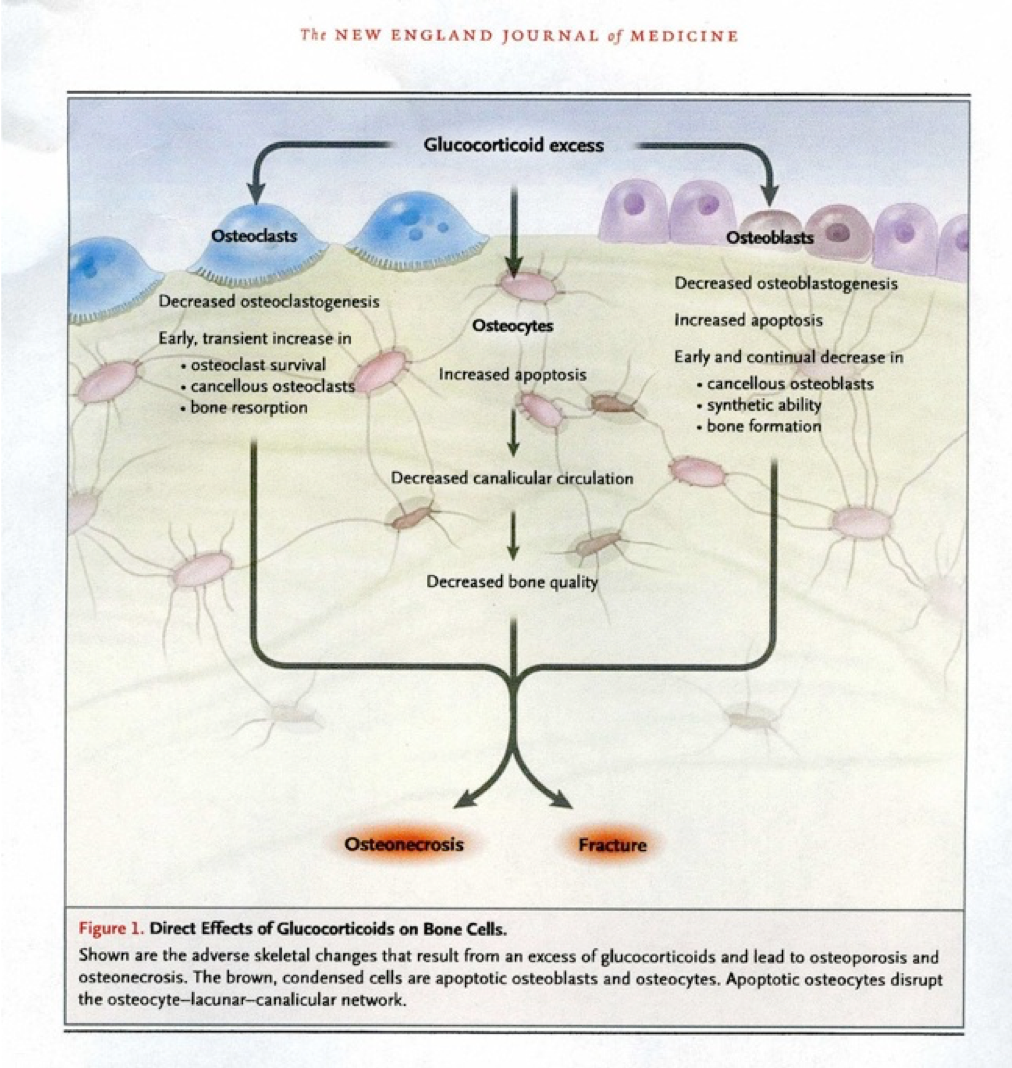
Describe what happens to the following bone cells when there is glucocorticoid excess
- Osteoclast
- Osteoblasts
- Osteocytes
How do osteoporosis patients commonly present?
Patients commonly present with back pain and fracture
- Wrist fracture (Colles’)
- Hip (NOF and intertrochanteric)
- Pelvis
All may be the first sign of disease
What investigations should be done for osteoporosis?
Lab investigations:
- Serum calcium, phosphorous & alk phos (usually N)
- Urinary calcium
- Collagen breakdown products
Imaging
Bone Densitometry
- T score between 1 & 2.5 SD below normal peak bone mass= osteopaenia
- T score >2.5 SD below normal peak bone mass = osteoporosis
Which four organs are directly/indirectly affected by PTH and between them control Ca metabolism?
- Parathyroid glands
- Bones
- Kidneys
- Proximal small intestine
What does Vitamin D deficiency do to PTH?
Vitamin D deficiency leads to increased PTH release and subsequent bone resorption.
What is the commonest cause of hypocalcaemia?
Vitamin D deficiency
How does hypocalcaemia present?
- Muscle twitching
- Spasms
- Tingling
- Numbness
What is the action of PTH on the following:
- Kidney
- Bone
- GI tract
- Kidney:
- Ca reabsorption
- Vitamin D activation
- Bone
* Osteoclast activity/resorption - GI Tract
* Ca absorption



-
Liver Pathology36
-
Pancreas and Gall bladder pathology42
-
Renal disease35
-
Lymphoma27
-
Upper Gastro-intestinal Disease33
-
Dermatopathology31
-
Urological histopathology46
-
Bone pathology80
-
Lower GI disease46
-
Cytopathology23
-
Neuro-oncology27
-
Cerebrovascular disease and Trauma21
-
Histopathology MedEd46
-
Neurodegeneration1



