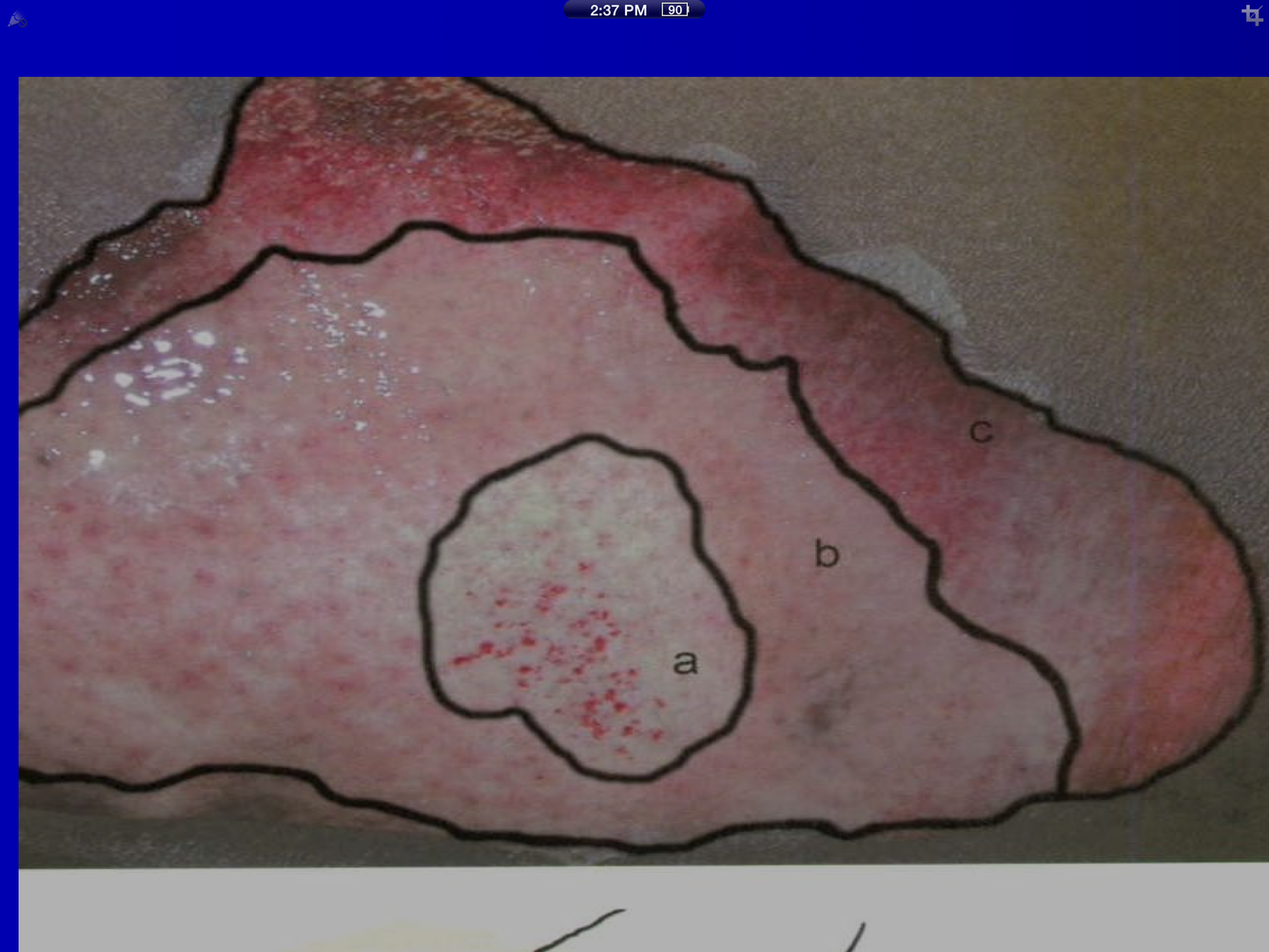
Name and describe the 3 zones of cellular damage in burns.
a. coagulation: usually where the heat source was strongest, tissue is dead and has undergone coagulation necrosis
b. Stasis: tissue that is damaged but not dead, proper treatment can allow full recovery
c. Hyperemia: vasodilation of medium and small arteries in the dermis turns the tissue red and inflammation can damage this tissue, however, proper care allows full recovery
Describe the two ways to classify burns
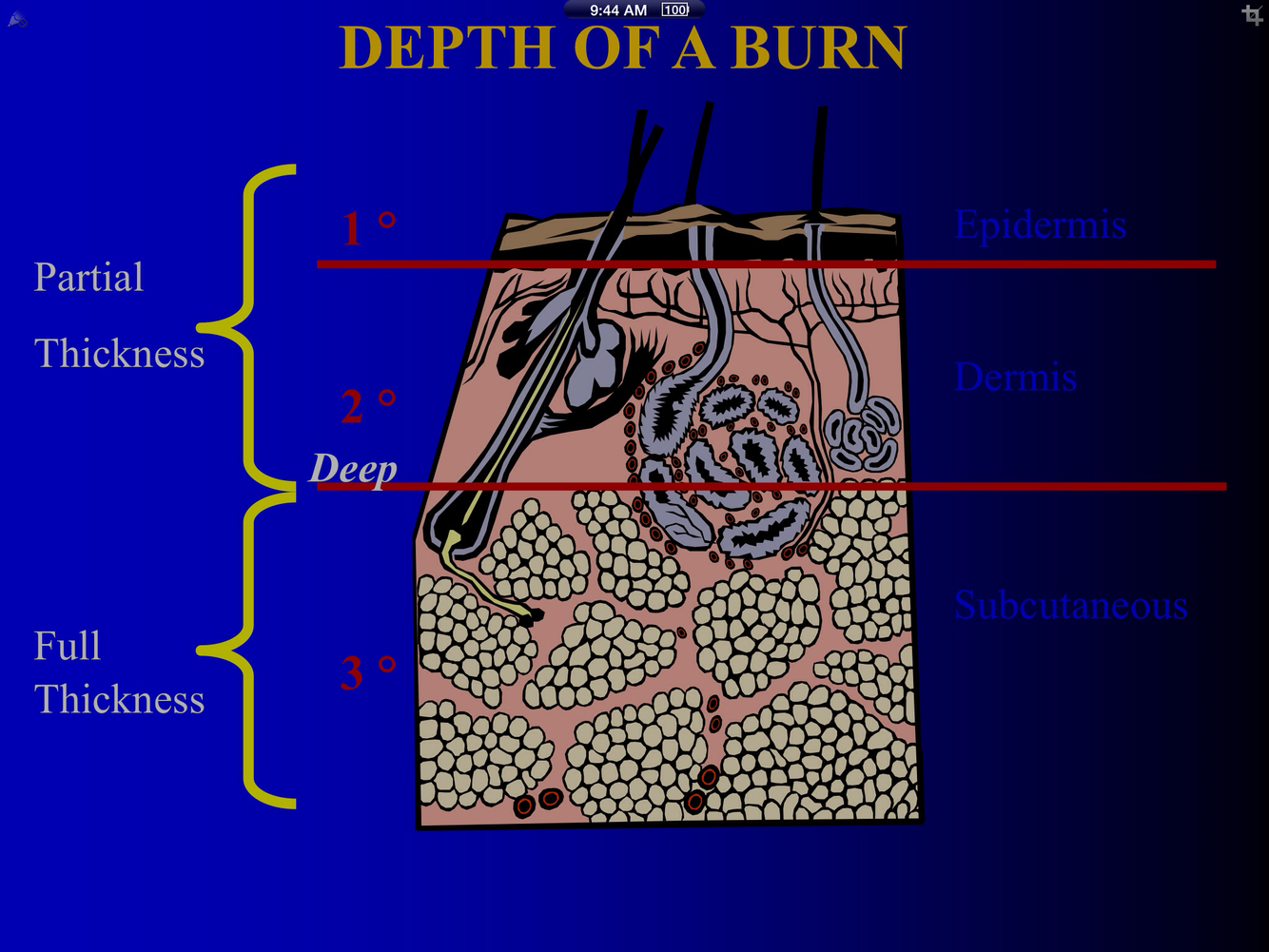
Describe the depth, pain and appearance of a 1rd degree burn.
Involves the epidermis only, painful and hypersensitive, usually reddened and dry
Describe the depth, pain and appearance of a 2st degree burn.
Involves the epidermis and part of the dermis, causes extreme pain, it’s red to pale with blisters. Wet, weepy, skin sloughing
Describe the depth, pain and appearance of a 3nd degree burn.
Destruction of the epidermis and dermis, no pain sensation, white, tan, black, charred appearance. Skin is dry and leathery
What is a pathophysiologic consequence of severe burn injuries?
If more than 40% of the body is involved, a hypermetabolic and hypercatabolic state that lasts up to 2 years occurs. In children it can result in growth restriction.
Describe the 2 phases of stress response to burns.
- ebb phase: 2-3 days with decreased tissue perfusion and decreased metabolism
- flow phase: 3-5 days with increased metabolic rate and hyperdynamic circulation
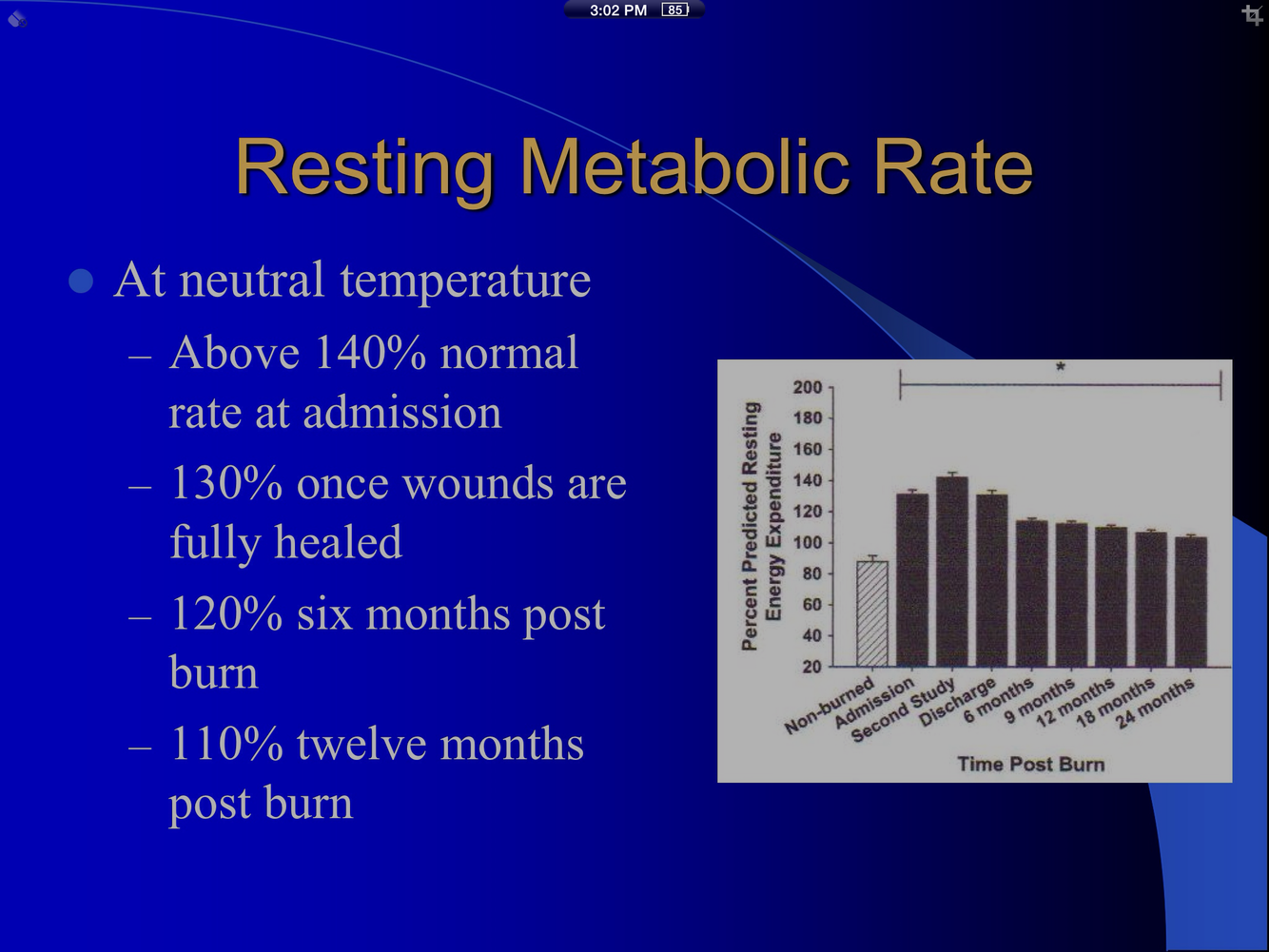
Describe the effect of burns on Resting Metabolic Rate
What effects does a severe burn have on the liver, heart, muscle, and glucose?
- Liver: severe hepatomegaly
- Heart: ebb phase-decreased CO, flow phase- increased CO
- Muscle: loss of lean mass because the muscle is degraded faster than it is synthesisized with increased BMR
- Hyperglycemia due to insulin insensitivity and increased glucose production by the liver
What is done in the primary survey of a burn patient?
ABCs just like any other trauma patient
Name the 3 types of inhalation injury and a general cause of each.
- Carbon Monoxide Poisoning: inhaling CO
- Injury above the glottis: heat damage or airway obstruction from edema
- Injury below the glottis: chemical injury
Treatment for CO poisoning
100% O2
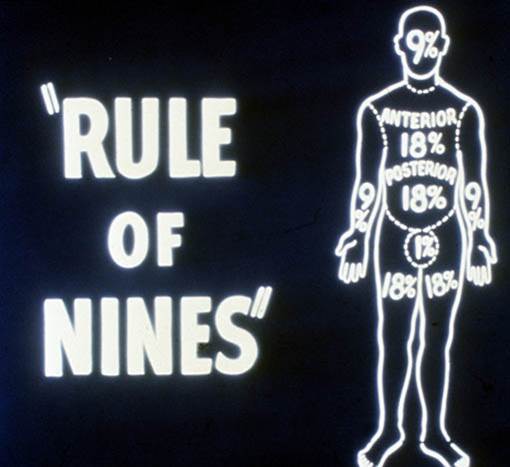
How is the extent of burns in adult burn victims determined for fluid resuscitation?
Rule of Nines (in children it’s a little different, the head accounts for 18% and the legs are 14% each)
What is teh ABA recommendation for fluid management during the primary survey of a burn patient?
IV lactated ringers
- Younger than 5: 125mL/hr
- 6-13yrs: 250mL/hr
- 14+: 500mL/hr
How is fluid resuscitaton managed in patients during the secondary survey?
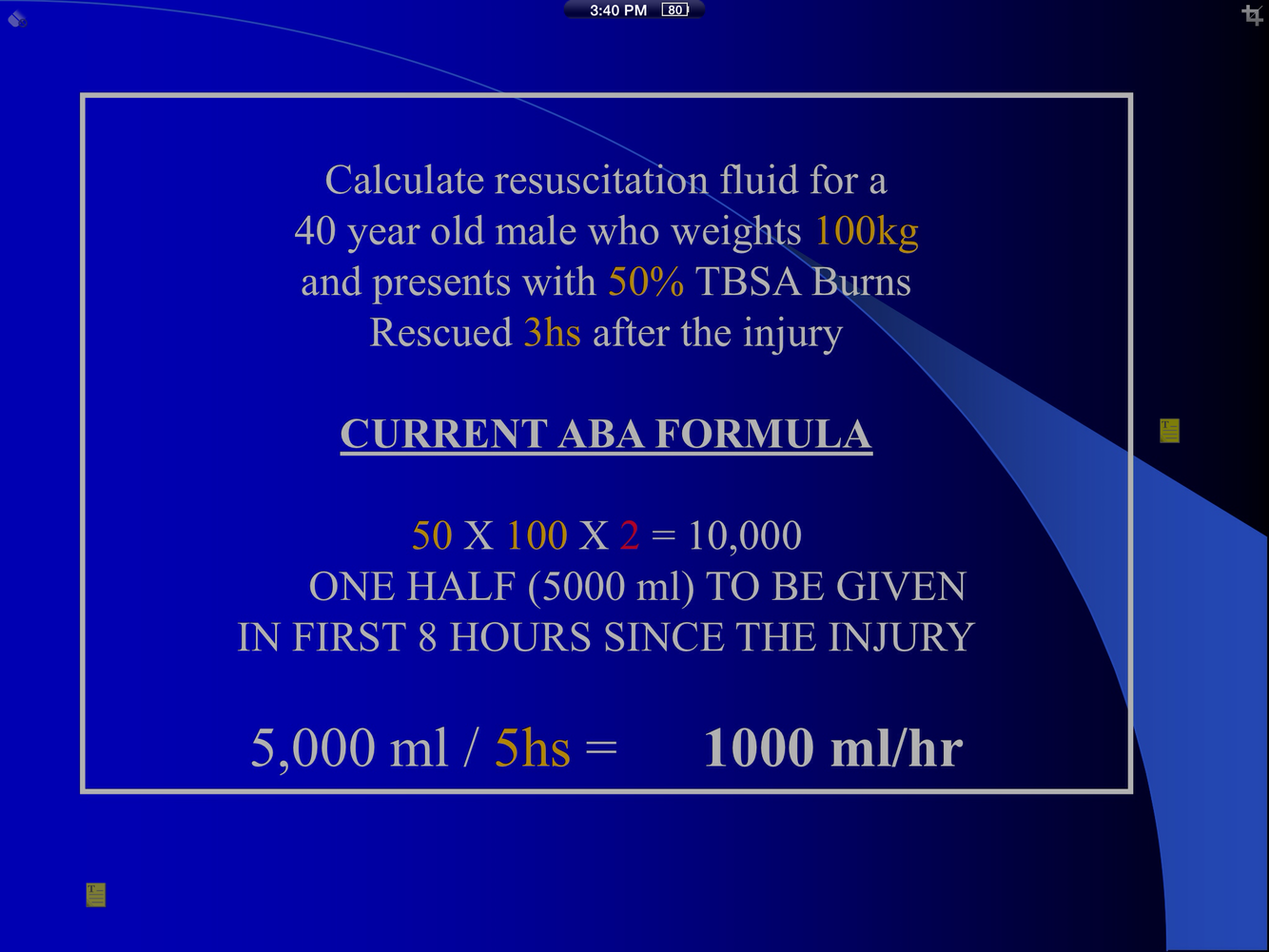
Body Surface Area burned (BSA%) x body weight (kgs) x type of injury (n)
Type of Injury:
- Adult or Chemical burn: 2mL
- Pediatric patient (less than 14): 3mL
- High voltage burn: 4mL
The 1st half is given in the first 8hrs and the second half is given in the last 16hrs.
What is the end point for fluid resuscitation?
Urine output. When an adult (greater than 30kg) reaches a 0.5cc/kg/hr urine output, they are done with fluids. When kids (less than 30kg) reach 1cc/kg/hr, they are done.
Drug used to manage burn patient pain.
IV Morphine
How is infection treated in burn victims?
Topical Antimicrobials (Silvadene ointment) used on wounds delay colonization. Prophylactic antibiotics have NO role.
What is a very crucial component in chemical burn management?
Copious Flushing for 30minutes
What are 3 multi-system concerns when a patient presents with an electrical burn?
- Cardiac Arrhythmias (V-fib)
- Comparment syndrome (muscular)
- Myoglobinuria (renal failure from muscle degradation)
What is the indication for an Escharotomy?
Deep circumferential trunk or limb burns. The leathery skin can cause ischemia to a limb or restrict the thorax making breathing dificult. Incisions are made in the burned skin to release pressure.
When are fasciotomies performed?
To relieve compartment syndrome and only done in the OR.
When is surgery indicated for burn patients?
Deep 2nd degree or 3rd degree burns.
What TBSA% requires referral to a burn center?
10% or greater or any “full thickness” burns




