What are the 4 main indications for catherisation?
- acute / chronic retention / outlet obstruction
- measure urine output accurately
- peri-operatively for selected surgery
- allow bladder irrigation
What are 4 further indications for catheterisation?
- incontinence
- (healing of scars / perianal / wounds / comfort / when no other means practical)
- empty bladder during labour as necessary
- to improve comfort for end of life care as necessary
- to instil cytotoxic drugs
What are the 6 main complications of catheterisation?
- infection
- trauma
- discomfort and pain
- pressure necrosis
- encrustations / blockage
- bypassing
What are the 2 different types of catheter based on how long they are used for?
Intermittent:
- used for conditions e.g. multiple sclerosis
- patients independently self-catheterise approximately every 4 hourly
Indwelling:
- short term - maximum 7 days
- medium term - maximum 28 days
- long term - maximum 12 weeks
How is the material of the catheter determined?
Material of the catheter is determined by the length of duration
- PVC is used for short-term use
- Teflon / silicone is used for medium-term use and it reduces irritation
- Hydrogel is used for long-term use and it reduces encrustation and infection
How is the size of the catheter measured?
What is the diameter for adults and children?
measured using Charriere (Ch) or French Gauge (Fg)
the standard diameter size for adults in 12Ch and for children is 6-10 Ch
there is one standard length for adults
What types of catheter are represented by letters A-D?
A - intermittent short term catheter
B - Three way catheter for irrigation
C - Teflon / silicone coated medium term catheter
D - hydrogel coated long term catheter
What is the main infection risk to the patient during catheterisation?
the main infection risk to the patient is the health professional
health professionals must understant what asepsis is and how to estabilish and maintain it
When is standard ANTT the technique of choice for asepsis?
What technique is needed in any other situation?
standard ANTT is the technique of choice if procedures are:
- uncomplicated
- short (approx < 20 minutes)
- involve small and minimal numbers of key components
surgical ANTT is needed in any other situation
Why are aseptic fields important?
they ensure a controlled safe working space to help maintain the asepsis of key components
Why is it important to identify and protect key components of equipment when maintaining asepsis?
What is the most effective way to do this?
- these are the parts of the equipment that have contact with the patient
- if contaminated, they present a significantly higher risk of infection
- the most effective way to protect them is to leave any protective caps on until they are required, and once they are exposed, do not touch them
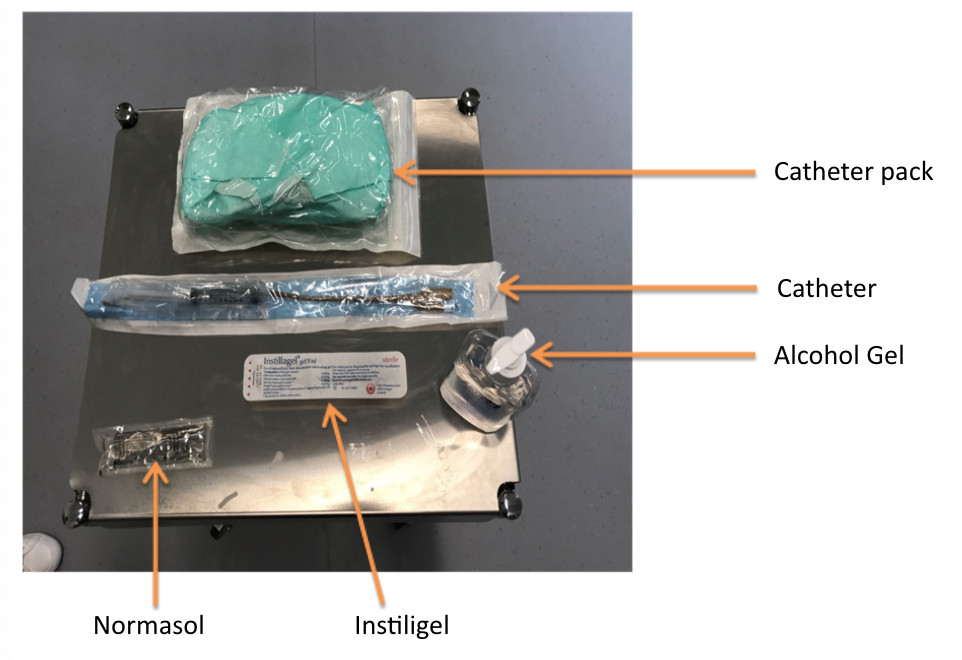
What equipment is needed for a catheter?
- catheter pack
- catheter
- alcohol gel
- instillgel
- normasol
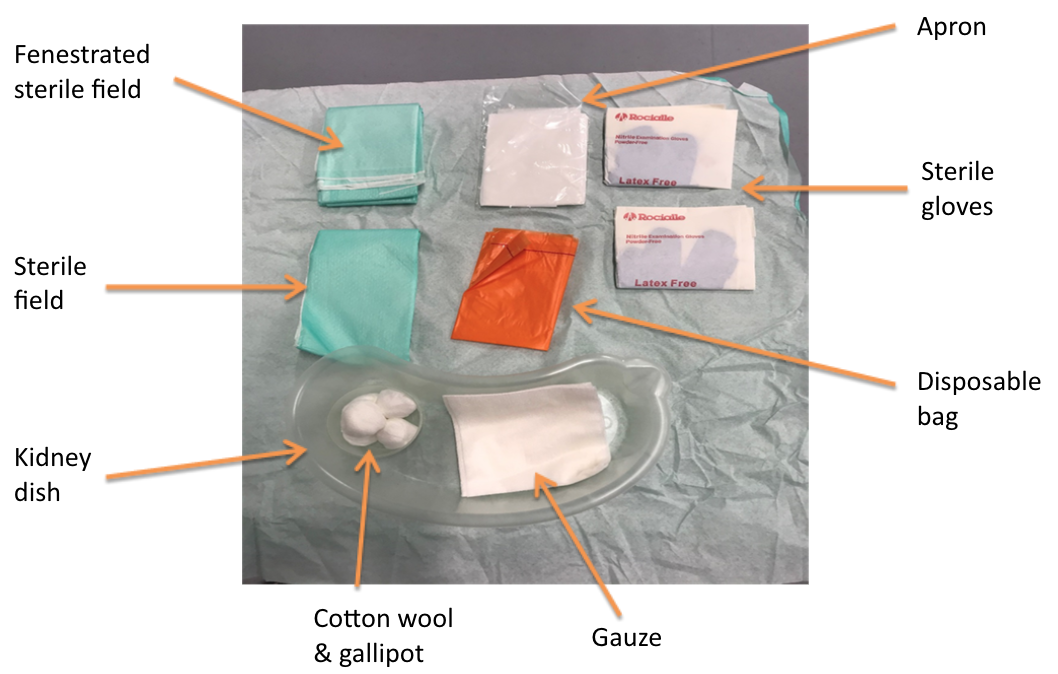
What is within the catheter pack?
- fenestrated sterile field
- sterile field
- kidney dish
- cotton wool and gallipot
- gauze
- disposable bag
- sterile gloves
- apron
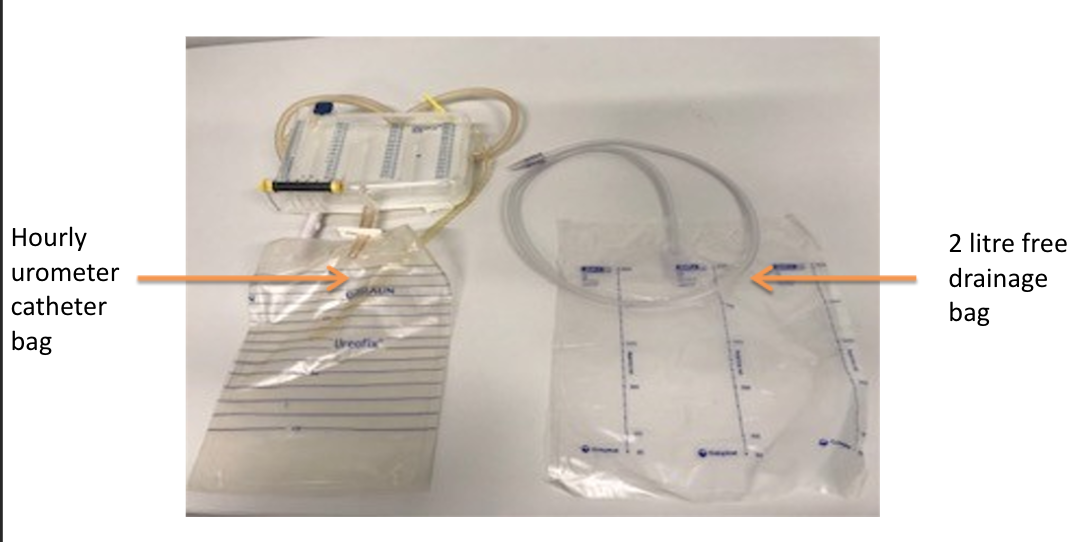
What are the 2 different types of catheter drainage bags?
- hourly urometer catheter bag
- 2 litre free drainage bag
What steps must be taken post-procedure in catheterisation?
- cover the patient ensuring comfort
- support drainage system and ensure below the bladder
- measure and document the amount of urine
- obtain a urine sample
- dispose of equipment in appropriate bags
- clean trolley, remove gloves and apron
- wash hands
- document procedure
What are the 2 different types of catheter documentation?
- urinary catheter insertion record
- eliminating urinary catheter care plan documentation
What is the definition of asepsis?
the absence of bacteria, viruses and other micro-organisms
What is ANTT?
aseptic no touch technique
this is a standardised technique for acheiving asepsis during invasive procedures
What is meant by encrustations?
the formation of mineral salts around the catheter which may cause it to block
What is bladder pressure necrosis and what causes it?
caused by the balloon of the catheter sat in the neck of the bladder for a period of time
this is due to tension and traction to the urethra where necrosis can occur, especially in men
What are the 5 steps involved in the introduction prior to beginning catheterisation?
- introduce yourself to the patient
- check the patient ID by asking their name and DOB
- explain the procedure and gain consent
- identify the need for a chaperone
- wash hands with soap and water
What is involved in the gathering equipment prior to starting catheterisation?
clean the trolley and gather together the equipment on the bottom shelf of the trolley
make sure to check expiry dates and integrity of the pack
How is the sterile field set up when preparing the catheterisation equipment?
- the patient should be assisted into the supine position, but not exposed or positioned at this stage
- wash hands
- open outer cover of catherisation pack and slide contents onto top shelf of trolley using aseptic technique
- open inner cover of catheterisation pack holding only the edges of the paper or plastic wrap - this is now the sterile field
- open supplementary packets onto sterile field without contaminating it and retain catheter packet for notes
What should be done after setting up the sterile field and equipment before the patient is exposed?
- cleaning solution is poured into a gallipot from a height of several cms
- a disposable pad is placed beneath the patient’s buttocks
- wash hands
- open sterile gloves onto another trolley and put gloves on
- arrange equipment on sterile field and tear off the inner wrapping of the catheter to expose tip and place catheter in receiver
- ask chaperone to expose the patient




