Immunity
Innate Immunity?
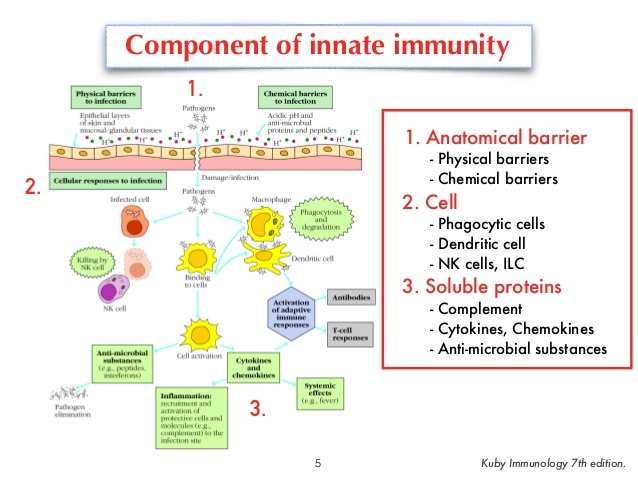
Physical:
- Skin: the stratum corneum prevents the entry of bacteria and viruses
- Mucous membrane: traps foreign agents and immobilises them
Physiological:
- body temperature, pH of body fluids, and various body secretion which prevent the growth of many disease-causing microorganisms
Cellular barriers:
Immunity
Innate Immunity
Cellular Barriers?
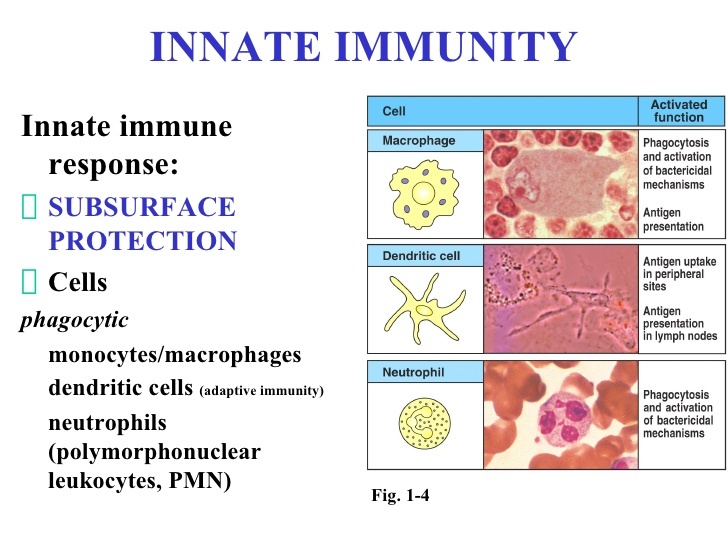
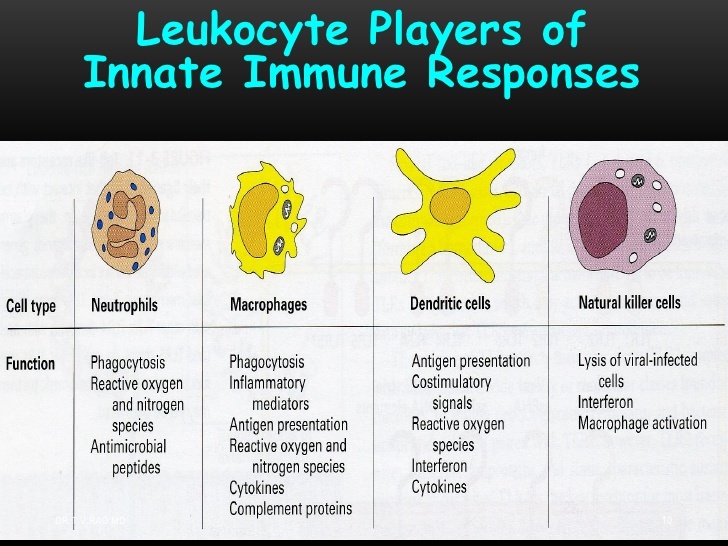
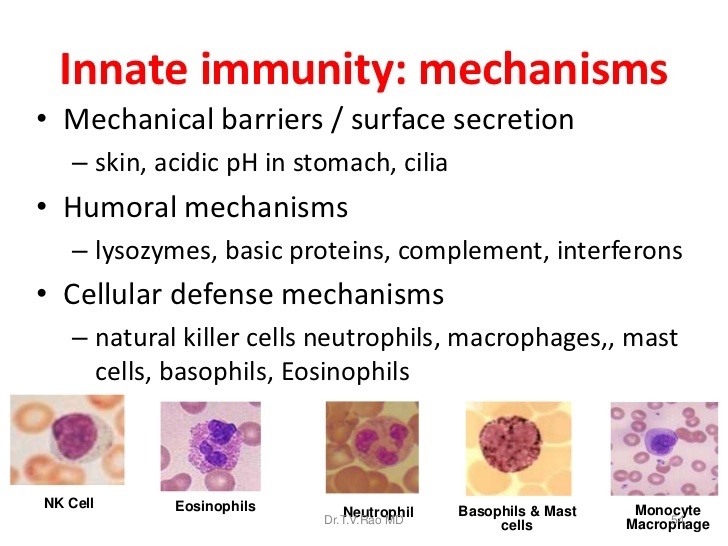
White blood corpuscles (leucocytes):
constitutes monocytes (2-10%), eosinophils, basophils, lymphocytes, and neutrophils (40-75%).
Macrophages:
- two types- fixed and wandering both of which are long lived and highly motile phagocytes
- Wandering macrophages serve different functions in different tissues, for example pulmonary alveolar macrophages in the lunges, Kuepfer cells in the liver, and glomerular mesangial cells in the kidney
Natural killer cells:
- destroy target cells by cytolysis and apoptosis, and also able to attack parasites which are much larger than bacteria. They constitute 5-10% ofperipheral blood lymphocytes in human
Immunity
Innate Immunity
Cellular Barriers?
Complement:
a group of 20 proteins many of which are enzyme precursors and are produced by the liver. They create pores in the plasma membrane of microbes and destroy them by cytolysis, inflammation, and phagocytosis
Inflammation:
a defence response to tissue damage, presentation of which includes redness, pain, heat, and swelling.
Fever:
activated by toxins from pathogens and endogenous pyrogen (fever producing substance). When enough pyrogen reach the brain, the body’s thermostat is reset to a higher temperature which strengthen the immune system by activating phagocytes and inhibiting growth of microbes
- Very high temperatures may prove dangerous- give anti-pyretics
Cytokines: chemical messengers of immune cells which stimulate or inhibit the differentiation, proliferation, or function of immune cell
Immunity
Adaptive Immunity?
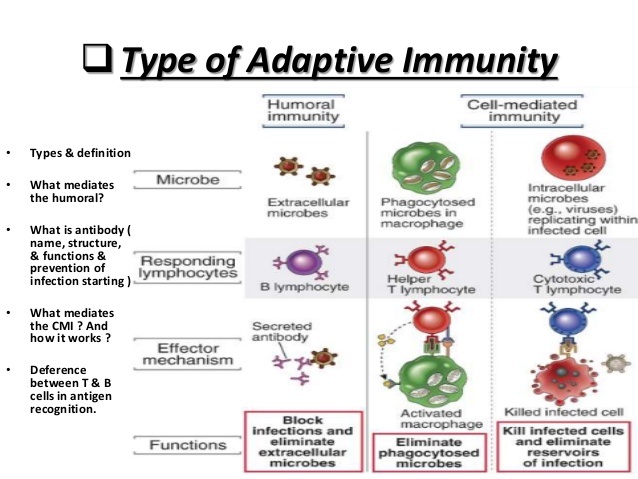
- acquired after birth, specific, and response mediated by antibodies or lymphocytes (or both).
- Relieves the body of infectious disease but also prevents further attacks in the future.
- Memory cells formed by B lymphocytes (B cells) and T lymphocytes (T cells) are the basis of acquired immunity.
- Characteristics of adaptive immunity: specific, diverse, discriminate between self and non-self, and memory cell formation.
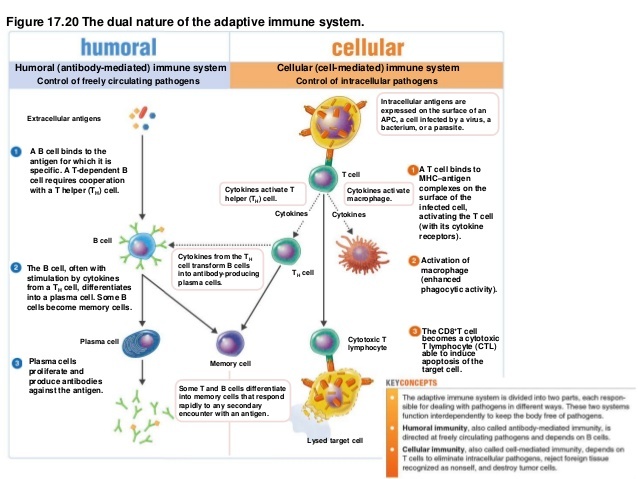
Immunity
Adaptive Immunity?
Antibody-mediated immunity
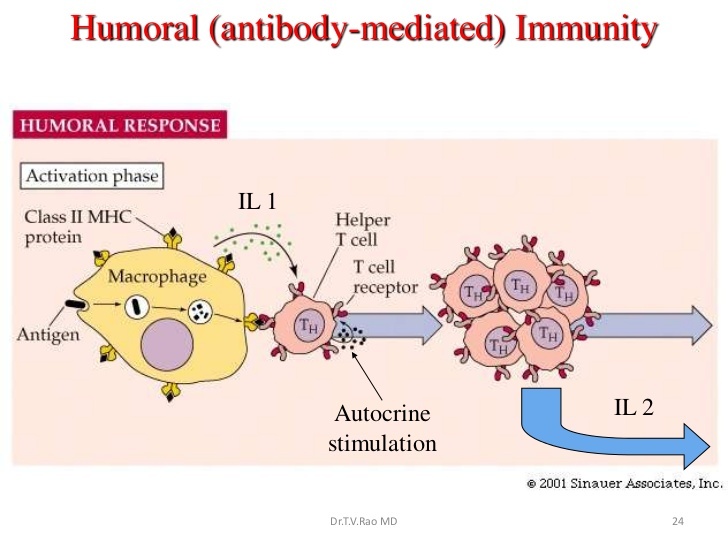
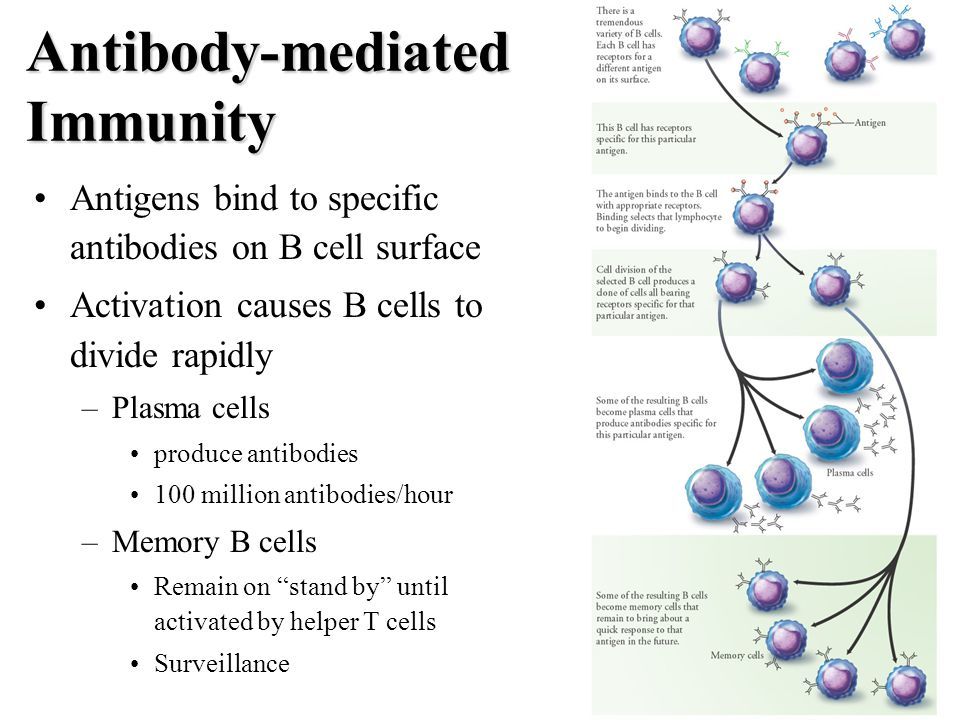
Antibody-mediated immunity:
- antibodies are produced by B lymphocytes to provide defence against most extracellular bacterial pathogens and viruses that infect through the respiratory and intestinal tract.
- Activation of B cells by antigens leads to clonal selection whereby plasma B cells and memory B cells are produced.
- Protects the body from viruses, some bacteria, and toxins that enter the body fluids like blood and lymph
Immunity
Adaptive Immunity?
Cell-Mediated Immunity
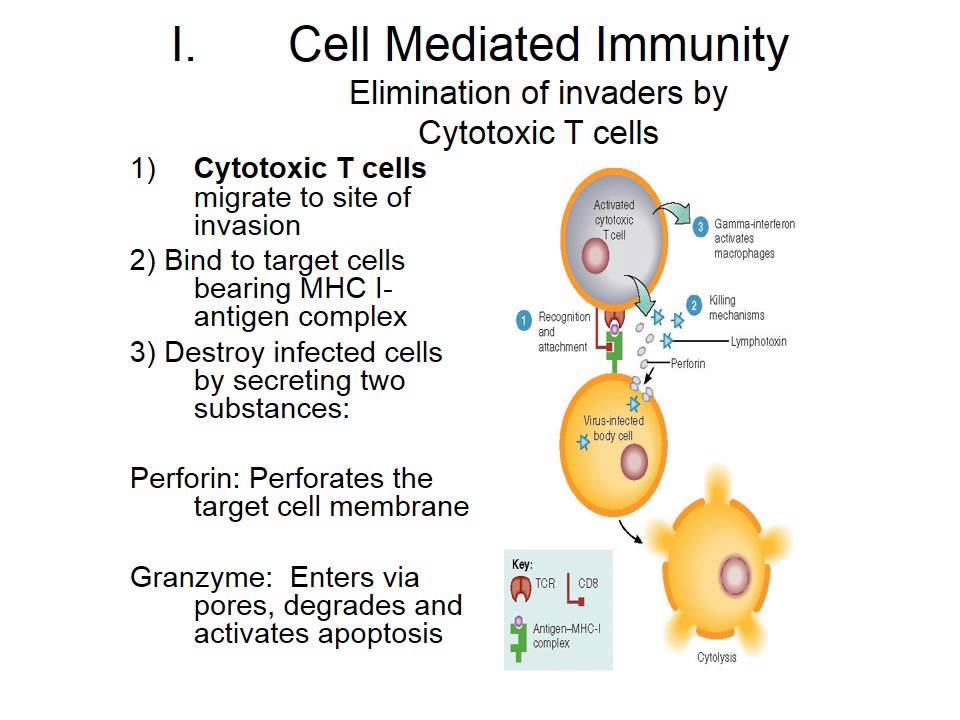
Cell-mediated immunity:
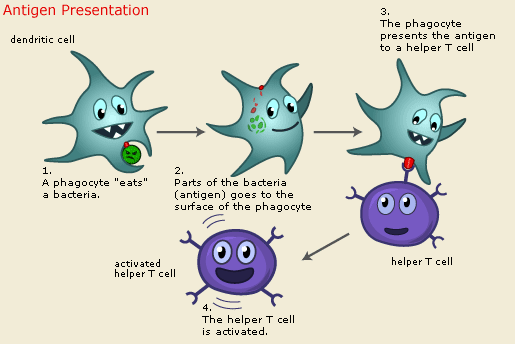
involves T cells which have two significant functions. Effector function- cytolysis of cells infected with microbes and tumour cells, and lymphokine production. Regulatory function- increases or suppresses other lymphocytes and accessory cells.
- Various types exist: Regulatory T cells (suppressor cells), Memory T cells, Cytotoxic T cells (killer cells), and helper T cells.
- Haematopoiesis: Production of cells of the immune system in bone marrow
Immunity
Adaptive Immunity?
Can be further classified?
Active immunity:
The persons own cells produce antibodies in response to infection or vaccination. formation of antibodies takes time, but long lasting and harmless.
- It can be natural (pathogenic infection) or artificial (vaccination)
Passive immunity:
Ready-made antibodies directly injected into a patient to protect against foreign agents. Immediate relief, but not long lasting and may create problems.
- It can be natural (i.e. maternal antibodies to foetus or newborn) or artificial (blood transfusion of monoclonal antibodies)
Immunity
Immune response consists of?
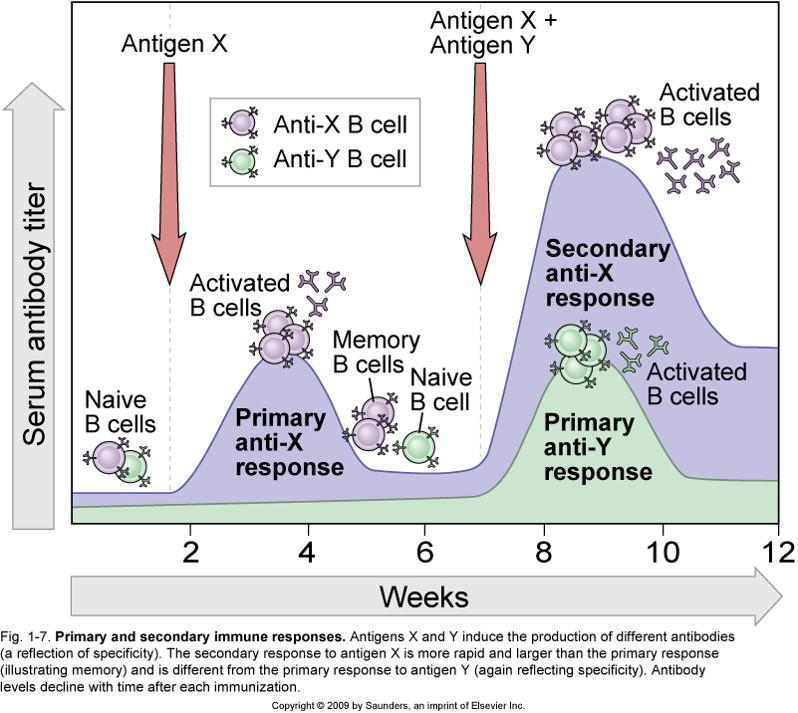
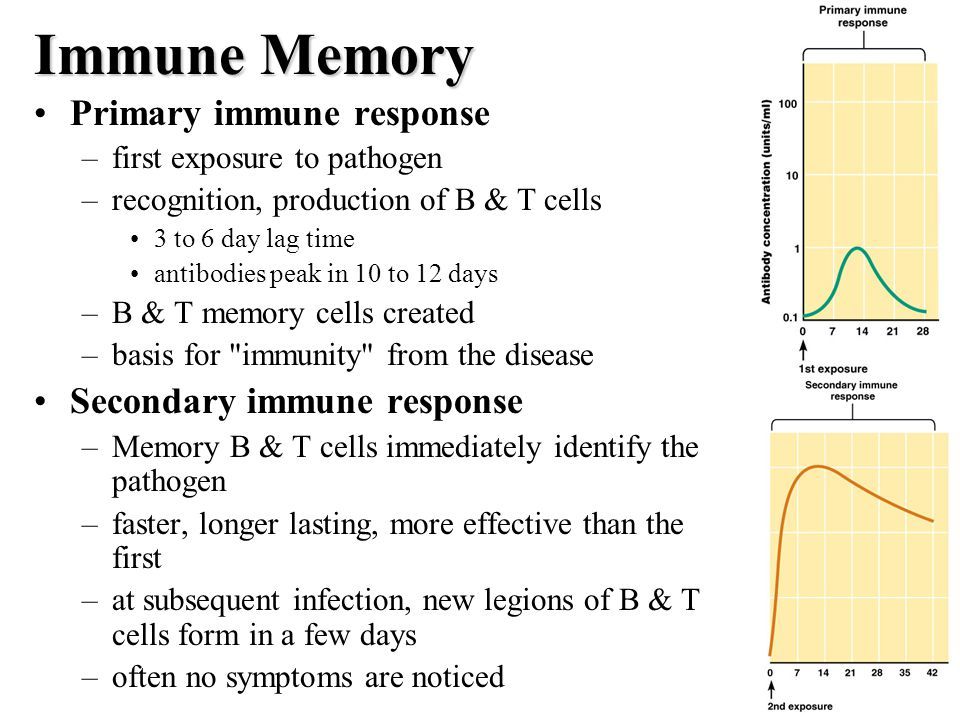
Primary response:
- initiated by the first contact with an antigen.
- A slow rise in antibody titre occurs (1st IgM and 2nd IgG),
- followed by a gradual decline in antibody titre.
Secondary response:
- The booster response whereby rapid proliferation of memory cells from the primary response results in accelerated and more intense immune response due to production of antibodies with higher affinity for the antigen.

-
Community Based Medicine - Introduction7
-
Community Based Medicine - ill and feverish child22
-
Community Based Medicine - Examination of Children10
-
Community Based Medicine - STSC - 3 minute checklist6
-
Community Based Medicicne - Antibiotics in URTIs4
-
Community Based Medicine - Common microorganisms in upper respiratory tract infections19
-
CBM - Red Flag Signs in Children5
-
CBM - Antibiotics14
-
CBM - The Throat5
-
CBM - Influenza6
-
CBM - Lymphadenopathy4
-
CBM -Ear Infections12
-
CBM - Prescribing Antibiotics for self limiting RTIs6
-
CBM - Travel Vaccines10
-
CBM - Childhood Diseases6
-
CBM - Childhood Immunization3
-
CBM - Immunity8
-
CBM - Measles5
-
CBM - Parasitic & Fungal STIs6
-
CBM - Vaccines6
-
CBM - Chronic Disease7



