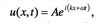
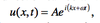
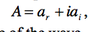
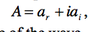
…………………. support many wavelike motions
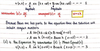
The governing equations
waves are broadly defined as
oscillations of the dependent variables
Some of the waves supported by the equations are:
- External (surface) gravity waves
- Internal gravity waves
- Inertia-gravity waves
- Acoustic waves (including Lamb waves)
- Rossby waves
- Kelvin waves
- Kelvin-Helmholtz waves
Some of these waves are important for the
dynamics of synoptic scale systems
Some of these waves are important for the dynamics of synoptic scale systems, while others are merely
noise
In order to understand dynamic meteorology, we must understand
the waves that can occur in the atmosphere.
what are the governing equations?
set of equations that controls processes in the atmosphere
ex: momentum
what does a wave mean? (particles)
particles are not moving (stationary)
- long wave (look like oscillation)
- wide wave (ring)
what is the difference between oscillations and waves?
oscillations
- No wavelength
- can be part of the wave
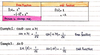
sin and cosine can be applied to both
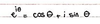
whenever you see sin and cosine think of
waves
define amplitude
half of the difference in height between a crest and a trough
define wavelength
(,) – the distance between crests (or troughs)
define wavenumber
K= 2pi/lamda
the number of radians in a unit distance in the direction of wave propagation. (sometimes the wave number is just defined as 1/lamda, in which case it is the number of wavelengths per unit distance.)
A higher wave number means
a shorter wavelength.
units of wavenumber
Units are radians m-1, or sometimes written as just m-1
We can also define wave numbers along each of the axes.
- k is the wave number in the x-direction (k = 2pi/,<sub>x</sub>).
- l is the wave number in the y-direction (l = 2pi/,\y).
- m is the wave number in the z-direction. (m = 2pi/,\z).
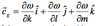
The wave number vector is given by

define angular frequency
(w) 2 pi times the number of crests passing a point in a unit of time.
angular frequency units
radians s-1, sometimes just written as s-1.
define phase speed
(c) the speed of an individual crest or trough.
phase speed for a wave traveling solely in the x-direction
c = w/k.
phase speed for a wave traveling solely in the y-direction
c = w/l.
phase speed for a wave traveling solely in the z-direction
c = w /m
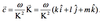
phase speed for wave traveling in an arbitrary direction
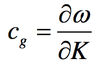
c = w /K, where K is the
total wave number given by K2= k2+ l2+ m2