What does the IRS do for QRPs?
1.1
Supervises
Monitors
Governs the tax aspects
What is ERISA?
1.1
- A law that governs non-tax aspects
- Also monitors group health and welfare plans
- Their goal is to protect the interest of the retirement participants
What is the Department of Labor?
- Enforces ERISA reporting and disclosure
- Oversees prohibited transaction rules
- Regulates plan fiduciaries
- Issues communications to explain ERISA
What is the PBGC?
1.1
- Insures plans
- Like the FDIC for DB retirement plans and cash balance plans
- Backed by the fed
- Doesn’t cover PSC
- It can terminate a plan if the min funding amounts are not met or if it can’t pay benefits when they are due.
- Doesn’t cover defined contribution plans
Types of plans include:
1.1
- Qualified Plans
- Tax Advantage Plans
- Nonqualified Plans
What is a Qualified Plan? 1.1
- Meets the requirements of 401(a)
- Meets ERISA requirements
- Employer can deduct money that goes in
- Employee pays taxes when they pull money out
- Grows tax deferred
What is a tax-advantaged plan? 1.1
Similar to qualified
What is a non-qualified plan? 1.1
Doesn’t have to meet the qualified requirements
NO deduction for the employer until the worker is taxed
Can discriminate
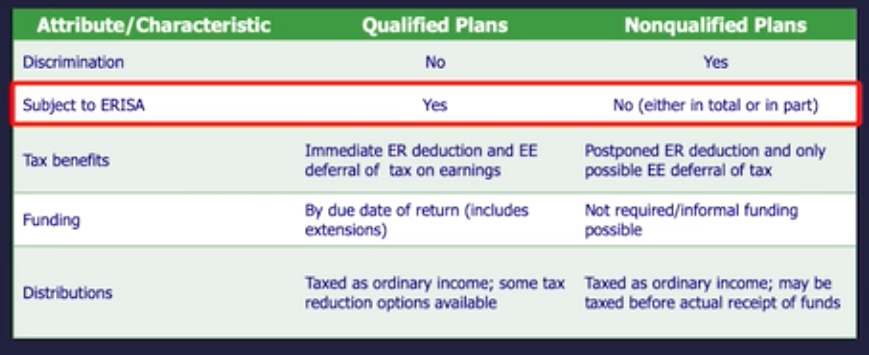
What are the attributes of a qualified versus a nonqualified plan?
1.2
Qualified plans:
- CAN’T discriminate
- Subject to ERISA
- Immediate employer deduction
- Employee deferral of tax and earnings
- Funding is required by due date of tax return
- Distributions are taxed as ordinary income
What are the main ERISA and IRC requirements that apply to qualified plans?
- Eligibility
- Coverage
- Limitations on contributions and benefits
- Vesting requirements
- Top-heavy plans
- Integration with Social Security rules
What are eligibility requirements?
1.2
- 21
- 1 year of service (at least 1000 hours of work)
What are coverage requirements?
1.3
They look at either
- HCE versus key employees
- 5% owners versus 1% owners
What makes you a highly compensated employee?
1.3
If you meet any of these requirements:
You’re in the top 20% of compensated people at the company.
or you are a 5% owner
What are the three coverage tests?
1.3
- Percentage test
- Ratio test
- Average benefits percentage test
You only have to meet one of these to be a qualified plan
What is the coverage rule for 401k plans?
1.3
If you are elibiligle to contribute, you are considered covered even if you aren’t actually contributing.
What is the percentage test?
1.3
At least 70% of the non-HCEs are covered.
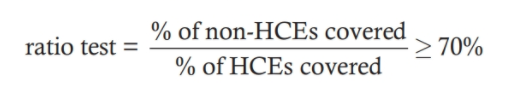
What is the ratio test?
1.3
The percent of non-HCEs that are covered is at least 70% of the HCEs that are covered.
What is the average benefits test?
1.3
The average benefits for non-HCEs is at least 70% of the average benefits for HCEs.

What is the 50/40 test?
1.3
This is only for defined benefit plans
50 people or 40% of your people are covered.
What are the limitations on DB retirement plans?
1.3
- It can’t cover more than $290k
- You can’t promise yourself more than 100% of your highest 3 consectuvie years of salary—limited at $230k
*
What is the contribution limit for DC plans?
1.3
$58k total
Doesn’t include catchup contributions
How do employer contributions vest? What are the different schedules?
1.3
DB Plans
- 5-year cliff or
- 3-7 year graded
DC Plans
- 3-year cliff
- 2-6 year graded
automatic vesting on plan termination
What are key employees?
1.3
Any of the following
- Officer making more than $185k
- Greater than 5% owner
- 1% owner with comp more than $150k
What happens if a plan is top-heavy?
1.3
It’s top-heavy when more than 60% of the benefits are going to key employees.
In DB plans:
- The vesting schedule changes from 3-7 to 2-6
- must provide a min defined benefit accrual of 2% times the number of years of service, up to 20% for all non key employees
In DC plans:
- Doesn’t make a difference for vesting
- The non-key employees must get at least a 3% contribution



