Sensory Receptor Cell Properties
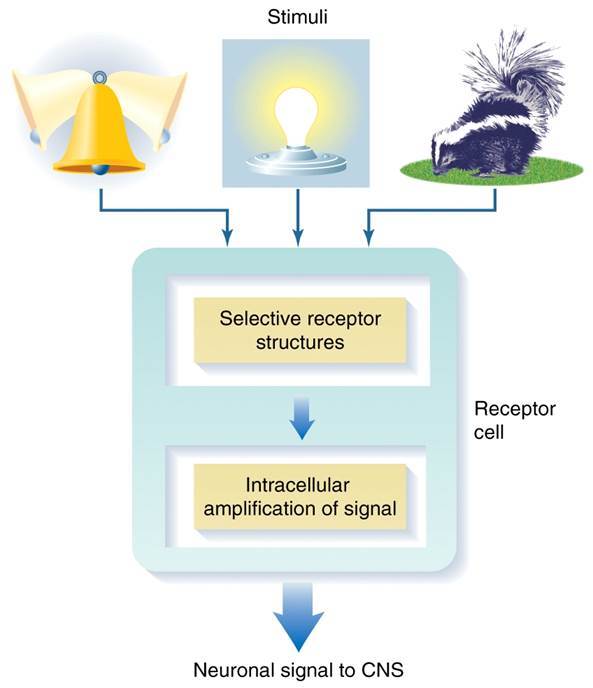
- Sensory receptor cells are specialized cells that transform a stimulus energy into a neural signal
- Receptors on sensory cells are sensitive to specific modalities
- Receptors send signals which are amplified in the cell
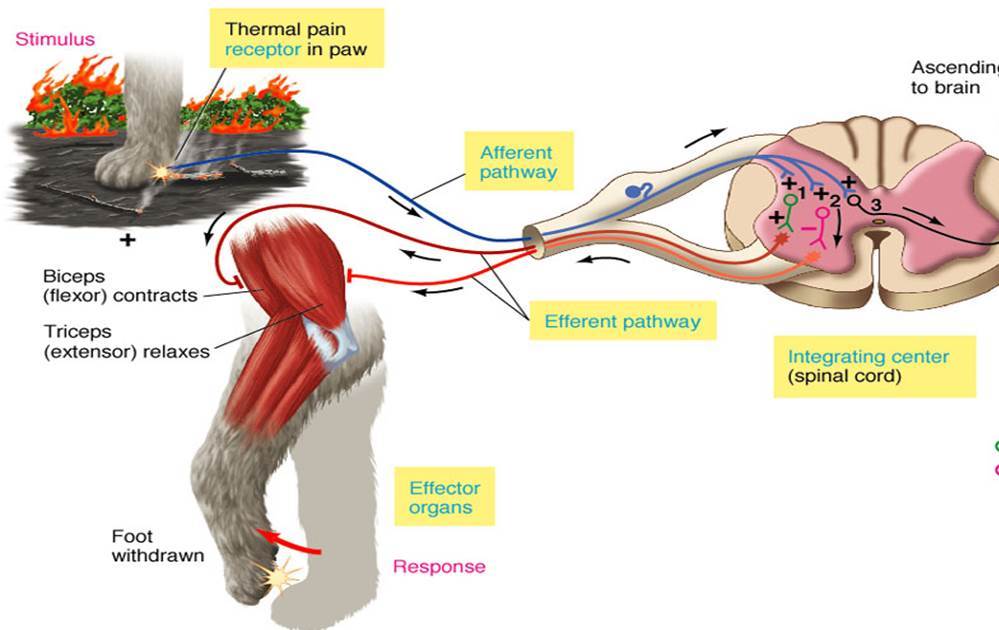
- The sensory cell’s output goes to the CNS
3 examples of different sensory modalities:
- sound (bell ringing)
- light (light bulb)
- taste (skunk)
Sensory Receptor Classification
Primary function
- Exteroreceptors- external environment
- Interoreceptors- internal environment (homeostasis)
- Proprioceptors- position of the body in space
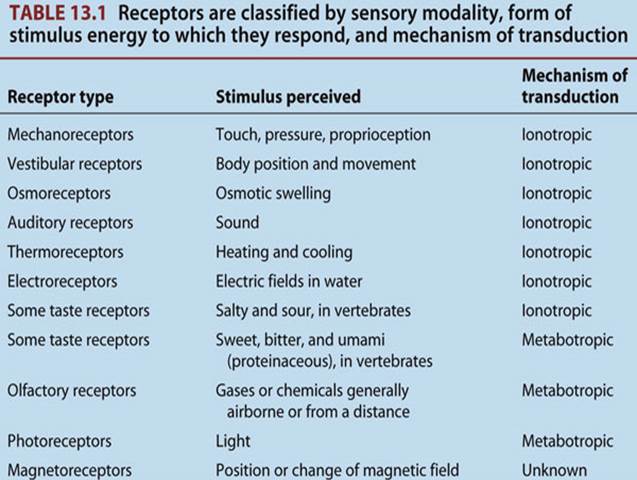
Receptor type
- Mechanoreceptors
- Photoreceptors- photons of light
- Chemoreceptors- chemical and olfaction
- Thermoreceptors- body temperature
- Nociceptors- pain
- Electroreceptors- electrical field (non humans)
- Magnetoreceptors- magnetics fields
Sensory Transduction
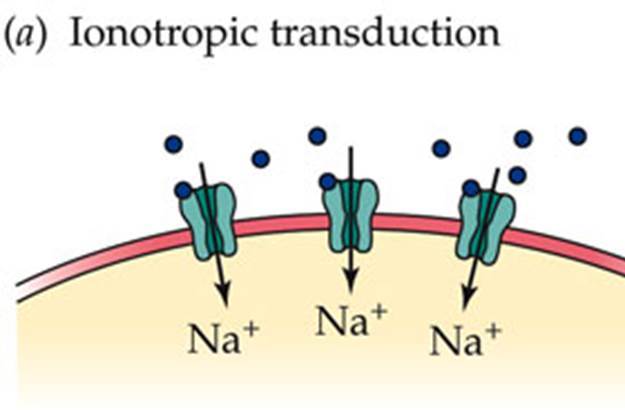
The process of converting stimulus energy into the energy of a nerve impulse
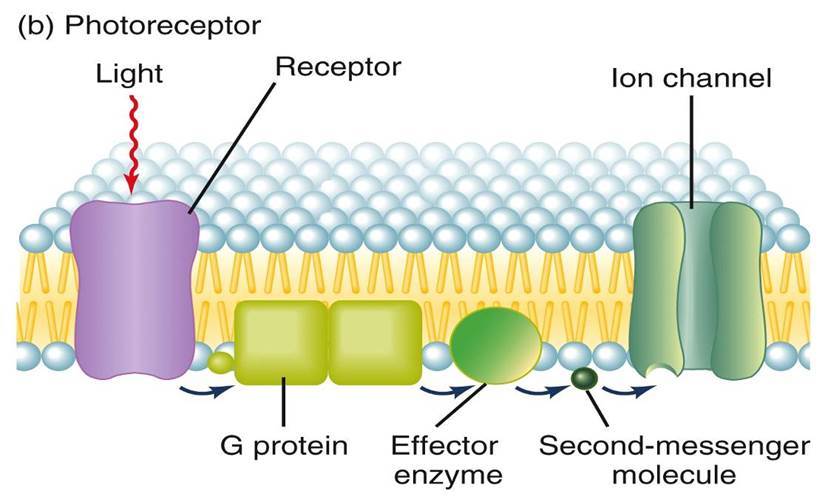
Intracellular Events in a Receptor Cell
Generator potential-when the receptor potential spreads to a spike initiating zone and generates an action potential
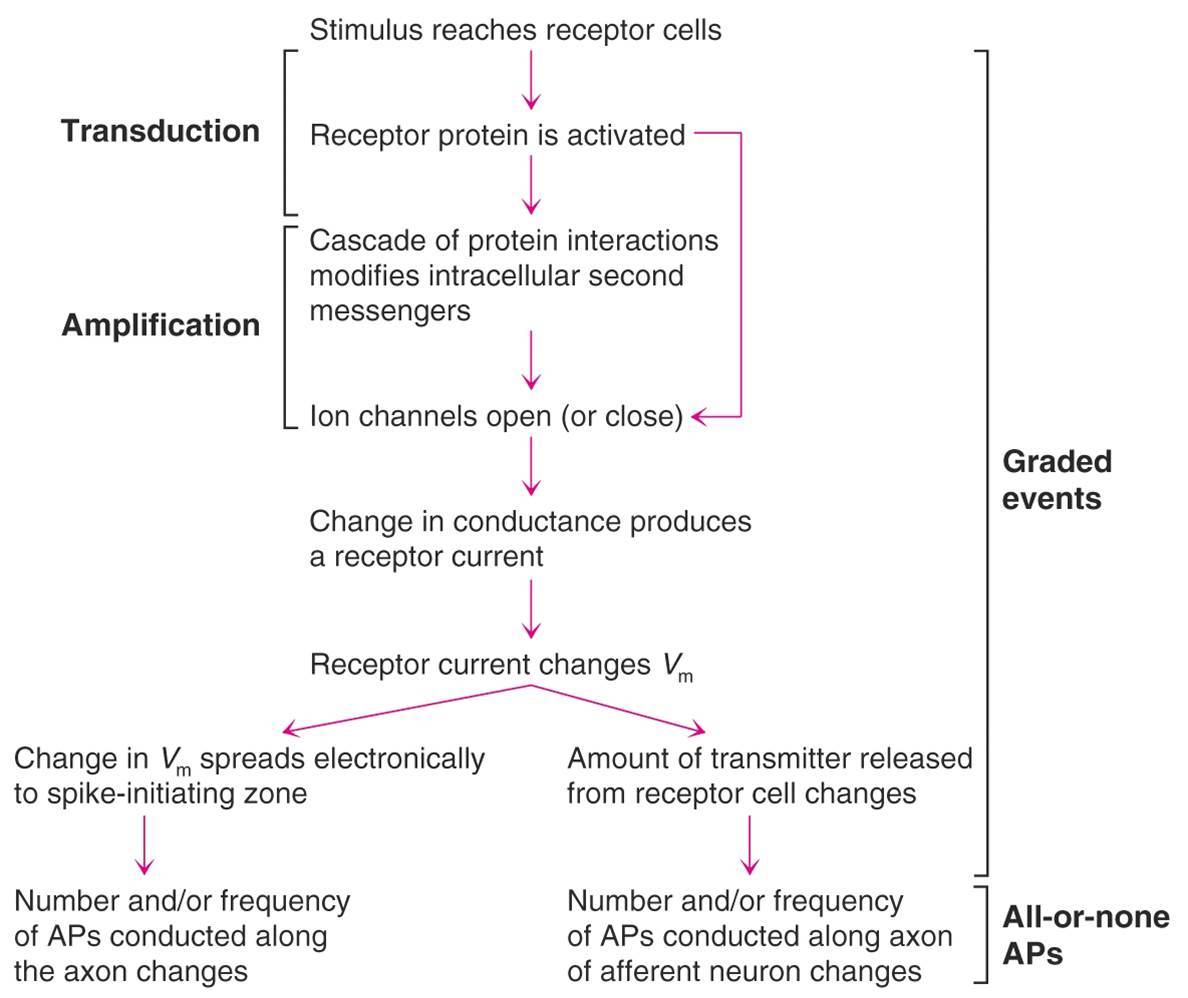
Mechanoreception
- Stretch-activated channels
- Ion channels that can be opened or closed by stretching a cell membrane
- open by tugging or stretching the cell membrane (cytoskeleton)
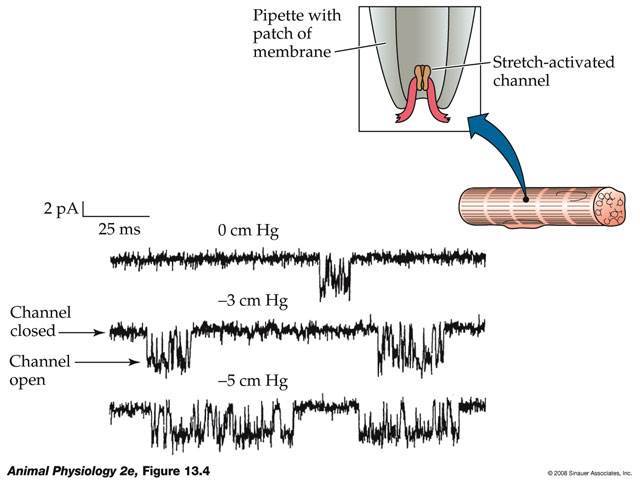
Mechanoreception: Crayfish Stretch Receptor
- Tetrodotoxin (TTX) prevents the production of action potentials, but not receptor potentials(blocks voltage gated Na+ channels)
- The receptor potentials are similar to EPSP’s
- Dendritic cell membranes are sensitive to stretch and can produce graded receptor potentials
- These are converted to APs in the spike initiation zone
Insect Mechanoreceptors
- The surface of insect bodies are covered with sensory “bristles” (bristle sensillum)
- The no mechanoreceptor potential C (NOMPC) receptor is activated as the bristle bends
- Similar to a v-gated K+ channel, but not v-sensitive
- ANK repeats are attached to the cytoskeleton
- Most stretch-activated receptors are nonselective cation channels
- Usually cause depolarization
Mammalian Mechanoreceptors: Touch
All touch receptors are dorsal root ganglion (DRG) cells
Channels responsible for transduction haven’t been identified
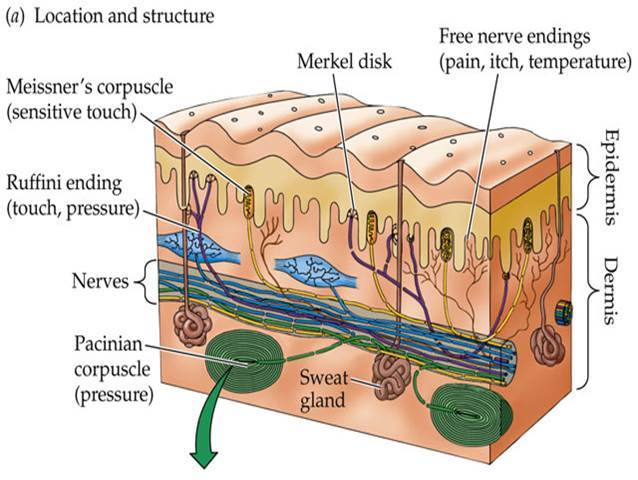
Mammalian Mechanoreceptors: Touch
DRG neurons have 5 types of endings in the skin
- Merkel disk
- Most important for form & texture
- 1 neuron goes to several disks
- Meissner’s corpuscles
- 2-6 endings surrounded by myelin & collagen
- Paccinian corpuscles
- Ruffini endings
- Endings around hair follicles
Receptor Adaptation
Tonic Receptors
- Adapt slowly, if ever
- Muscle stretch & joint proprioceptors
- ex: mocieptor, proprioceptor
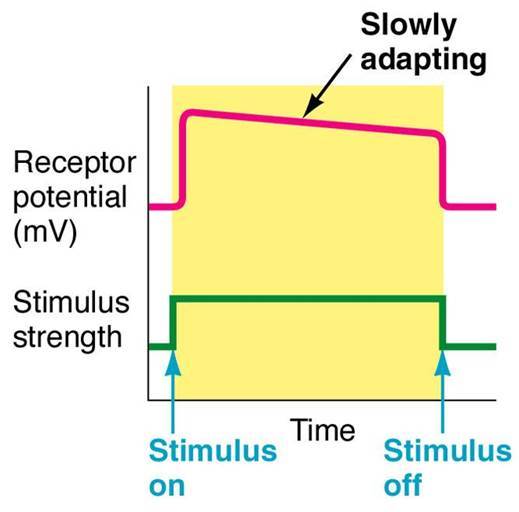
Receptor Adaptation Continued
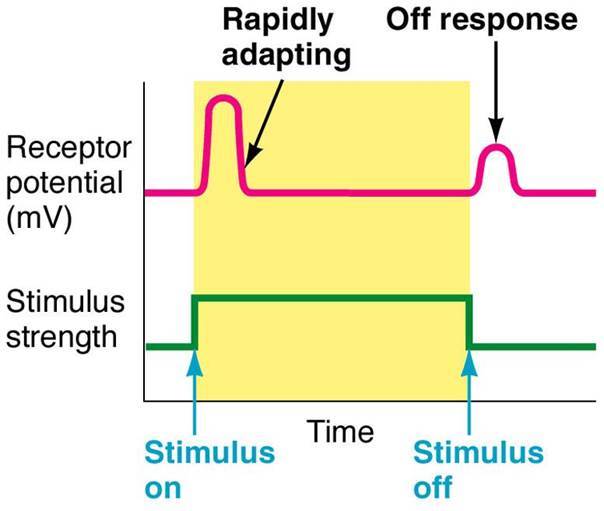
Phasic Receptors
- Adapt quickly
- On-off response
- Tactile stimulus
- can ignore the stimulus after awhile
- ex: sense of touch
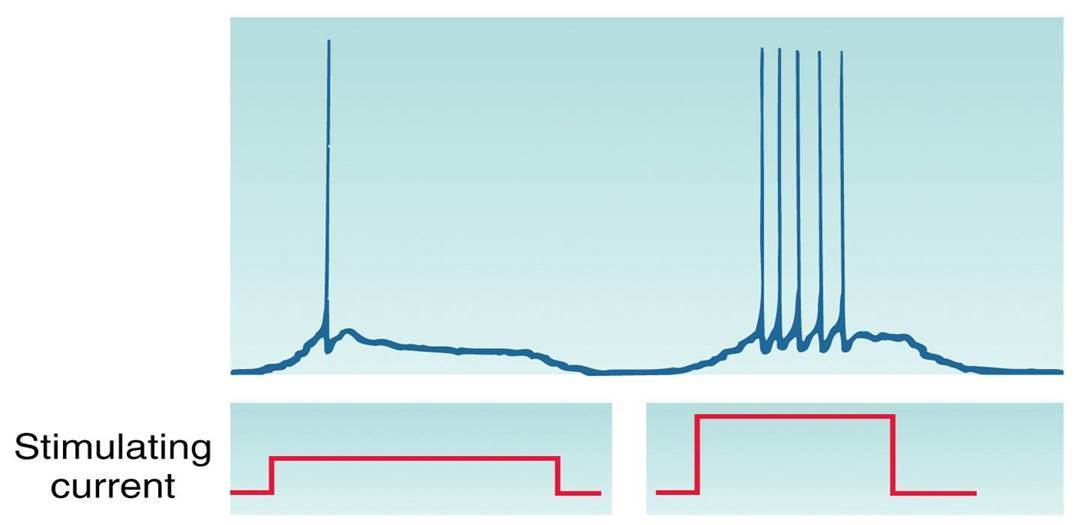
Crayfish Stretch Receptor Adaptation
- Phasic receptors (above) only produce AP’s during the beginning of a stimulus.
- Larger depolarizations may cause trains of multiple action potentials.
Mechanisms of Sensory Adaptation
- Mechanical properties may filter the stimulus. Common in mechanoreceptors
- The receptor molecules may “run-down.” Example: bleaching of photopigment
- Enzyme cascade may be inhibited by substance accumulation
- A change in the electrical properties. Example: increased intracellular Ca2+ levels
- The spike initiating zone may become less excitable.
- May take place in higher order cells in the nervous system
Vestibular organs & hearing
- Vestibular organs can be used for equilibrium
- Simplest organ is a statocyst
- Vertebrates use a type of hair cell
- Hearing
- Detection of low frequency vibrations within the air, water, or substrate
- Tympanal organ – most common insect form
- Found in many locations
- Thorax, abdomen, legs, labial palps
- Found in many locations
- Vertebrates use hair cells
Organs of Equilibrium: Invertebrates
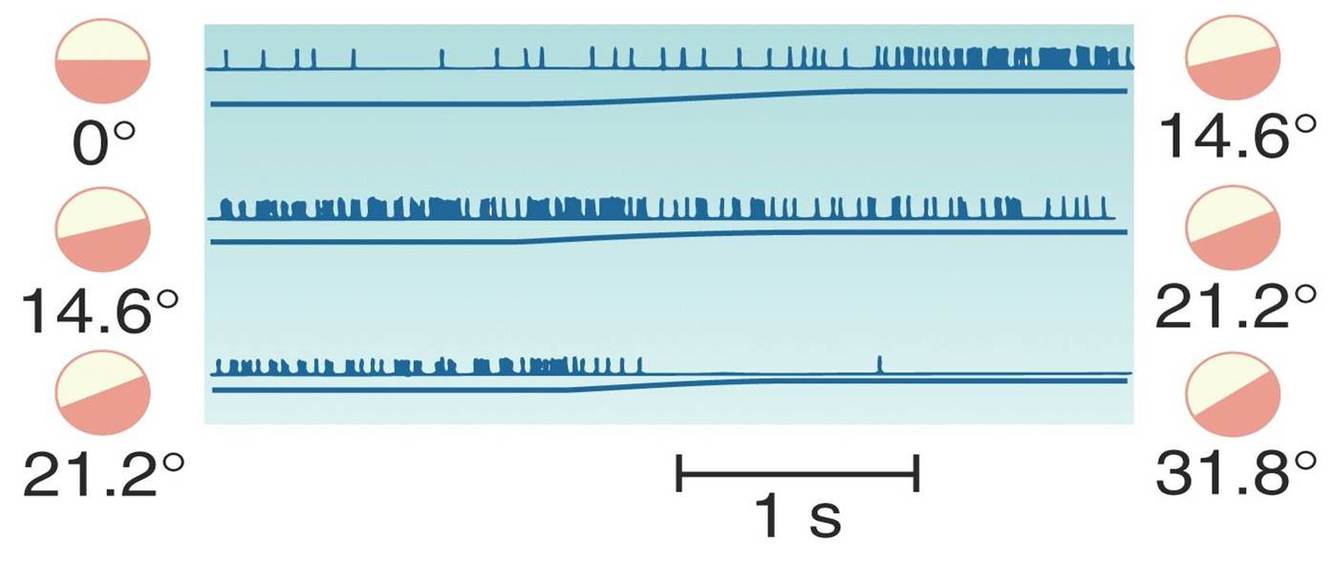
The lobster statocyst contains dense “statoliths” (made of sand or calcified secretions) which rest on hair cells connected directly to axons which go to the brain
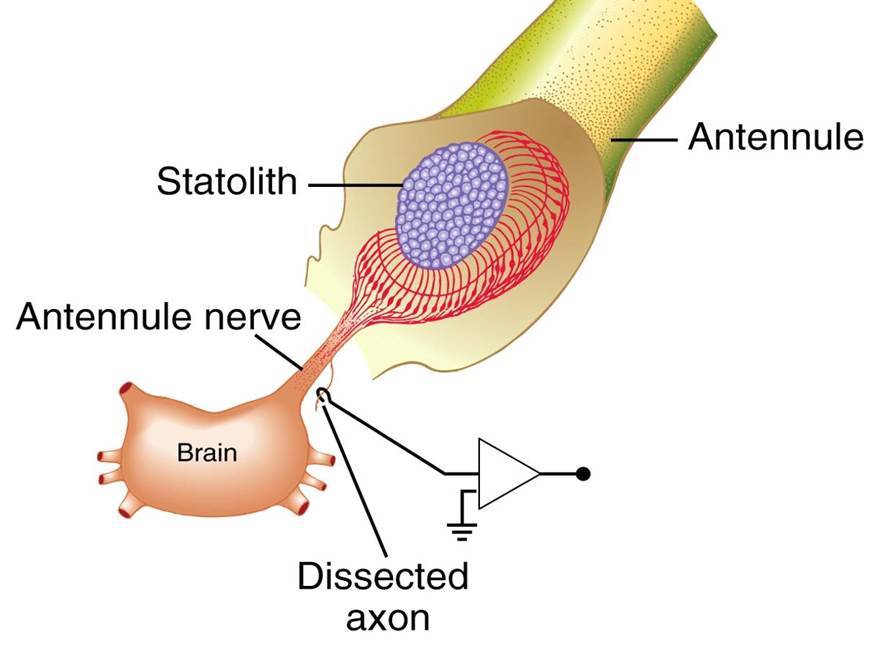
Organs of Equilibrium: Invertebrates 2
These AP recordings from a single receptor in the statocyst epithelium show how firing rate changes when a specially-trained lobster performs a somersault
Organs of Equilibrium: Vertebrates
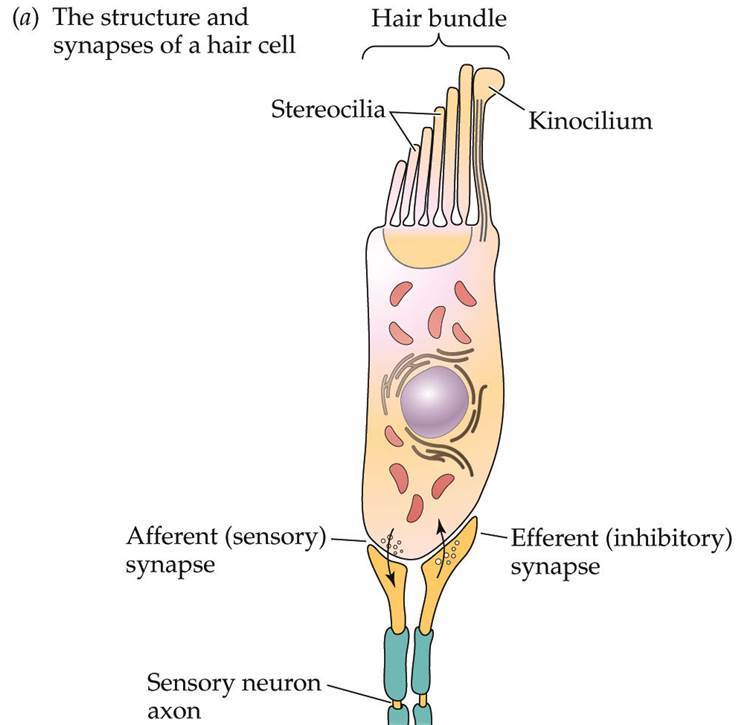
Hair cells
- Consist of stereocilia (a type of microvillus
- Some non-mammalian species also have a kinocilium
Organs of Equilibrium: Vertebrates 2
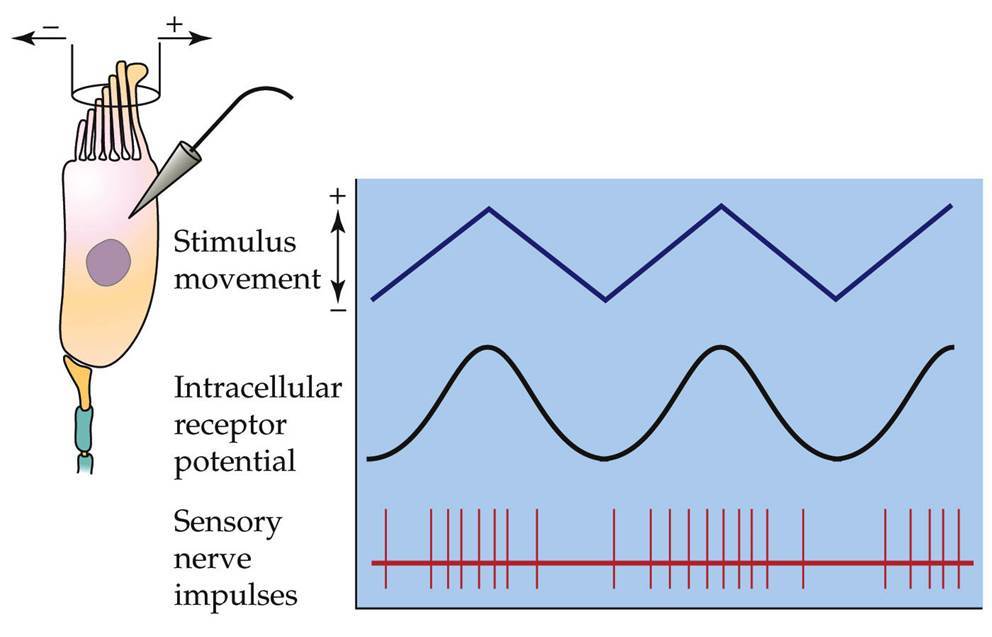
- Hair cells
- Movement may hyperpolarize or depolarize the hair cell
- Produces a receptor potential
- Alters neurotransmitter release
- Regulates sensory neuron response
- Movement may hyperpolarize or depolarize the hair cell
Ear Diagram
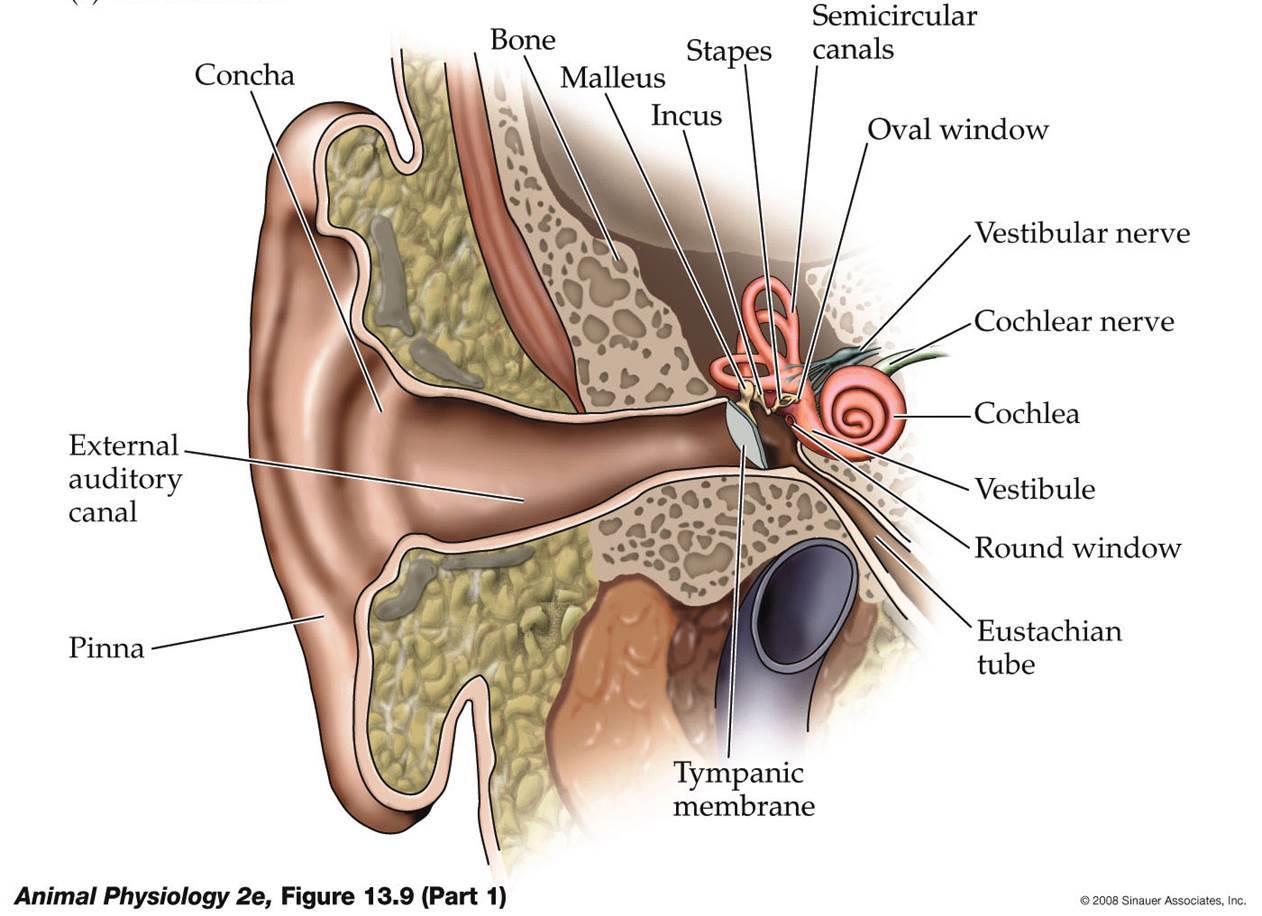
2 endolymph-filled inner ear chambers called the sacculus and the utriculus as well as the semicircular canals are the vertebrate organs of equilibrium
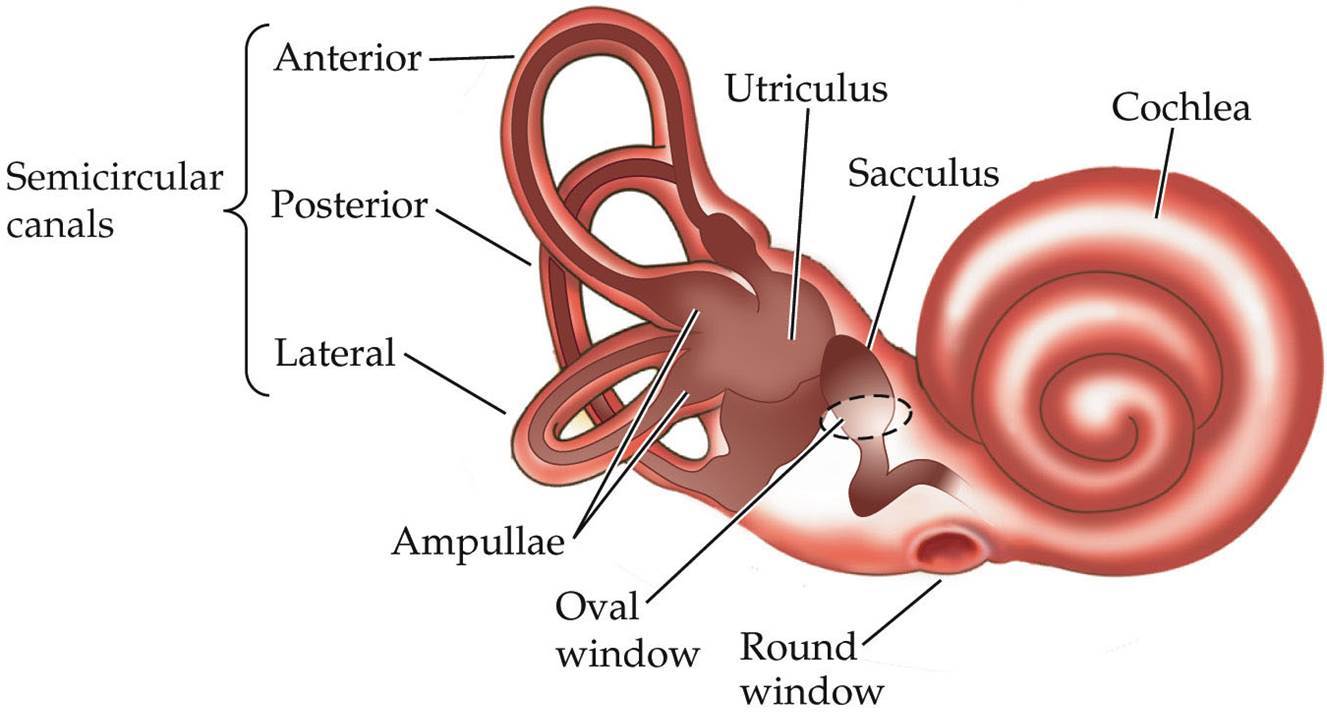
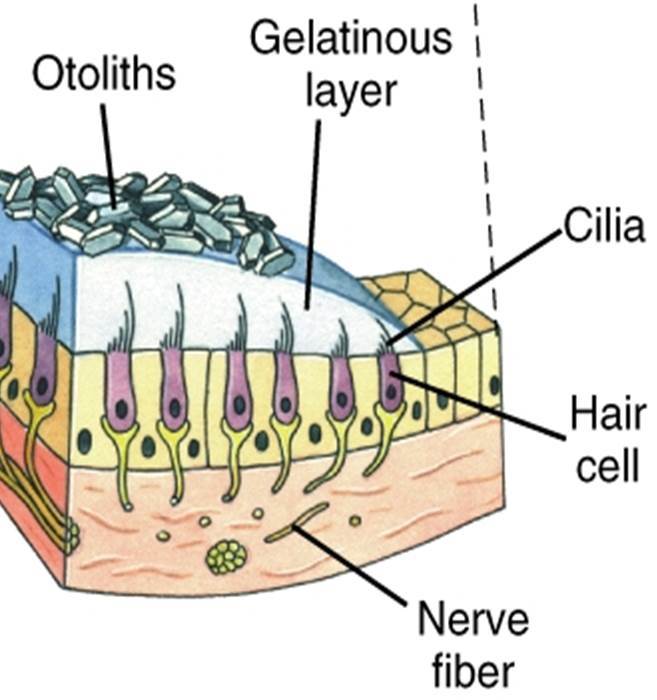
Static equilibrium (up, down, left, right)
- Sensed by hair cells within the macula of the sacculus and utriculus
- Movement of mineralized otoliths bends the stereocilia, giving the animal positional information relative to gravity
- Otoliths made of calcium carbonate
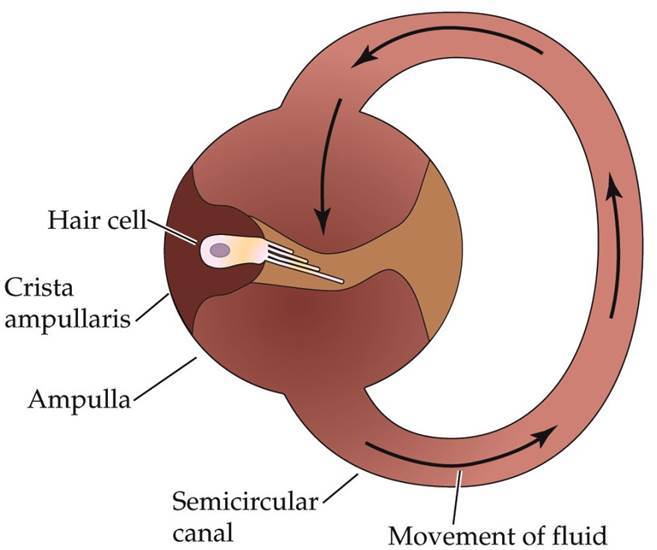
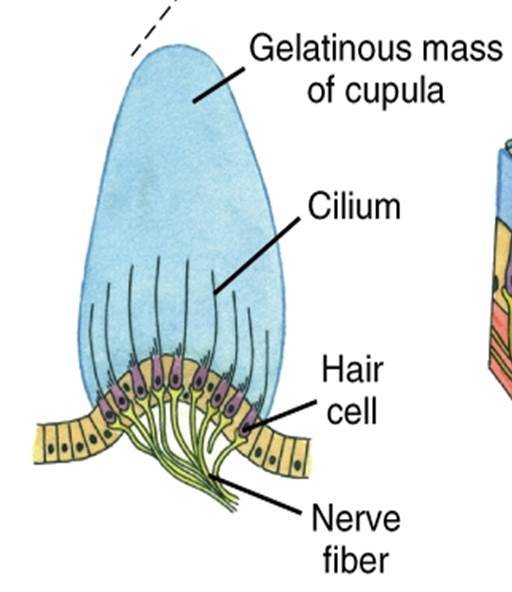
- 3 mutually perpendicular semicircular canals arise from the utriculus.
- Movement of the head will cause endolymph to distort the hair-cell containing gelatinous cupula lining the inside of the semicircular canals thereby causing a receptor potential.
- This gives the animal information about dynamic equilibrium.
Vertebrate Hearing: The Cochlea
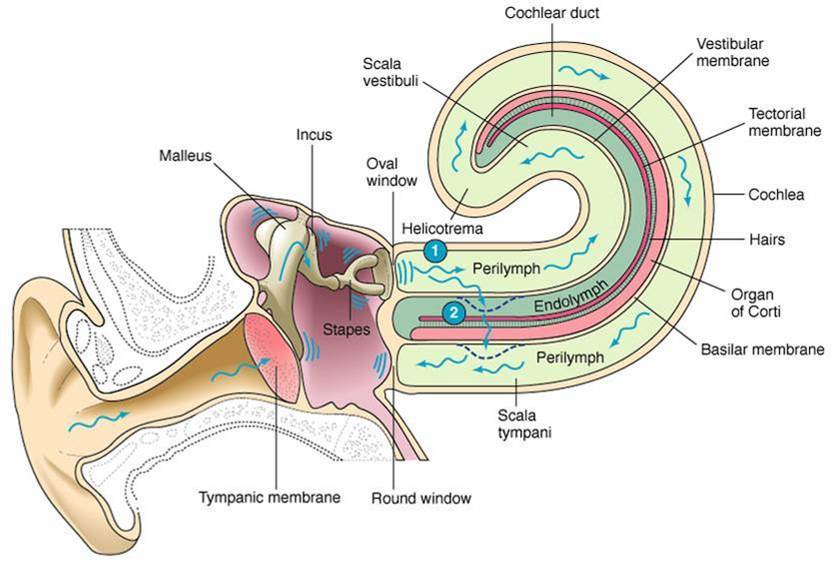
Vertebrate Hearing: The Cochlea Continued
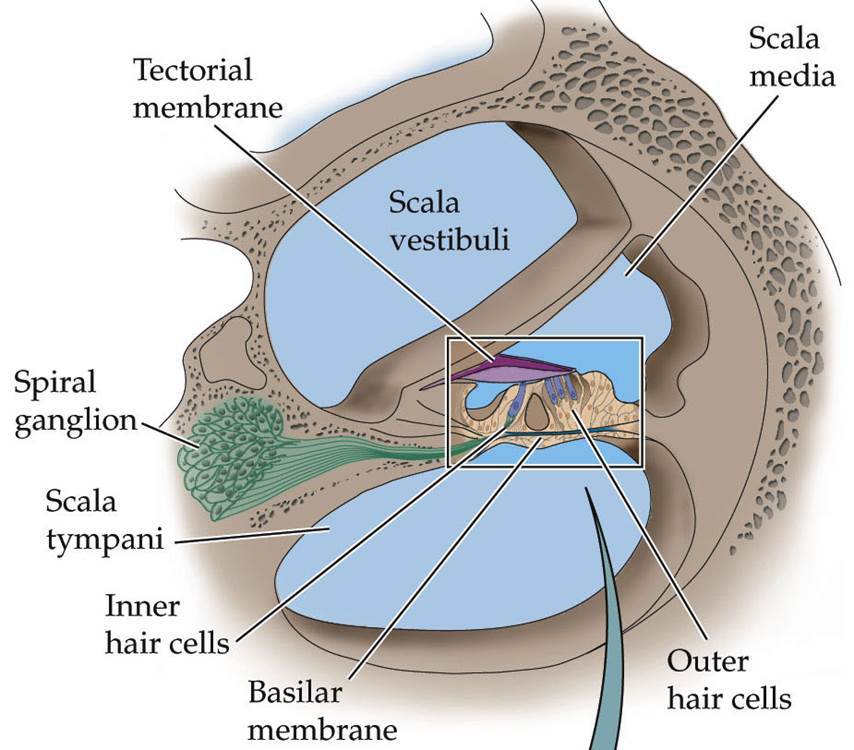
- Cochlear cross-section shows 3 chambers (scala)
- The hair-cell containing Organ of Corti sits on the basilar membrane of the scala media.
- Birds: no organ of corti
- Reptiles: no tectorial membrane
- Amphibians: no tectorial/basilar membrane






