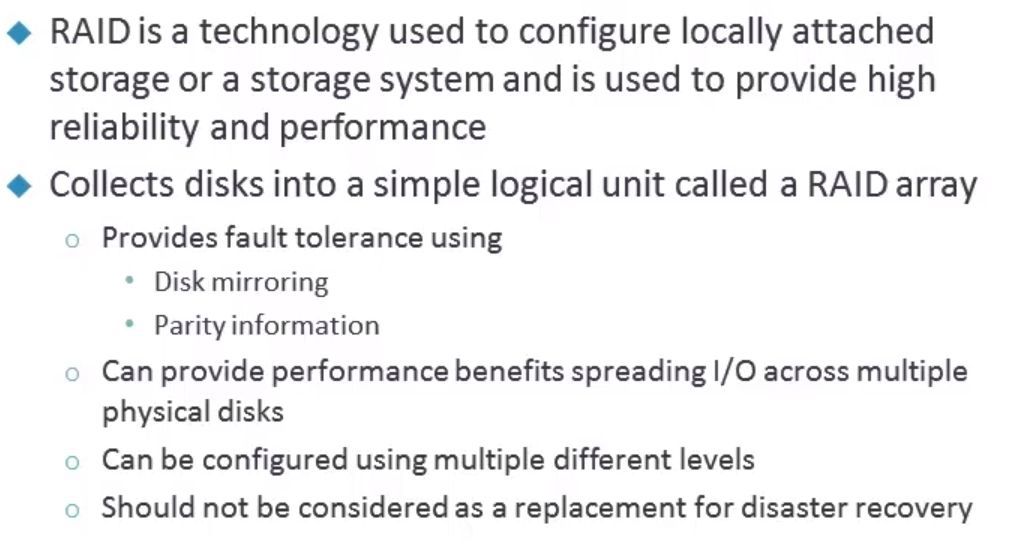
What is RAID?
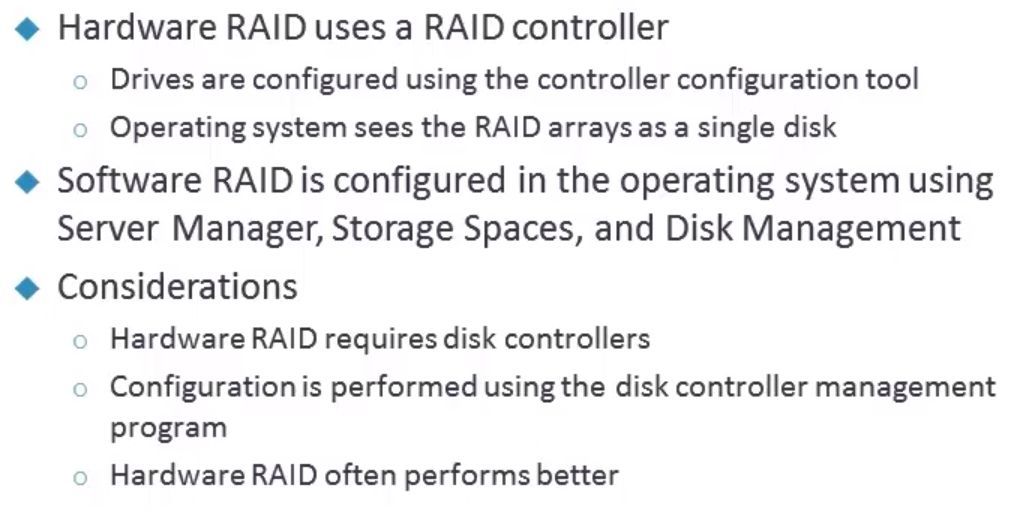
What is the different between hardware raid and software raid?
What are the raid types?
RAID 0, 1 & 5 are the only options available as software RAID in windows server.
- RAID 0 - Good for performance as data is striped across multiple disks but there is no redundancy
- RAID 1 - Data written to both disks simultaneously, good for redundancy, only 50% capacity and allows one disk to fail
- RAID 2,3,4 - Not used very often
- RAID 5 - Data is written in blocks to each disk and then the parity is spread across all disks, good read but no great write performance because of the parity overhead
- RAID 6 - RAID 5 with double parity, so allows two drives to fail
Requires large number of drives
- RAID 0+1 - Striped set in a mirrored set, striped set of drives but then the striped data is mirrored (duplicated), good read and write performance, not commonly used
- RAID 1+0 - Mirrored set in a striped set, several drives that are mirrored and one drive from each mirror is striped, best performance, can support the failure of 2 or more disks
- RAID 5+0 - Highest level of fault tolerence
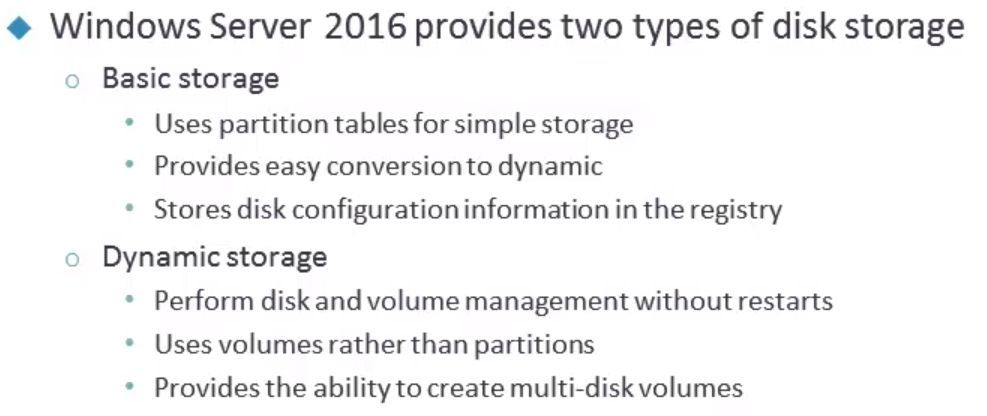
What two types of disk storage does Windows Server 2016 provide?
- You can convert basic to dynamic, but if you do it the other way all the data on the disk will be lost.
- Be careful about 3rd paty disk management software, they need to be aware of dynamic storage
How can you format hard drives?
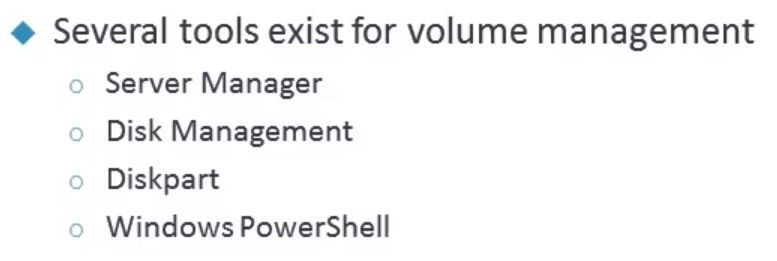
- Go to device manager, make the disk online, initialise the disk then format it with a file system
- Within server manager, go to file and storage services, then right click the server and add the volume
- Use diskpart
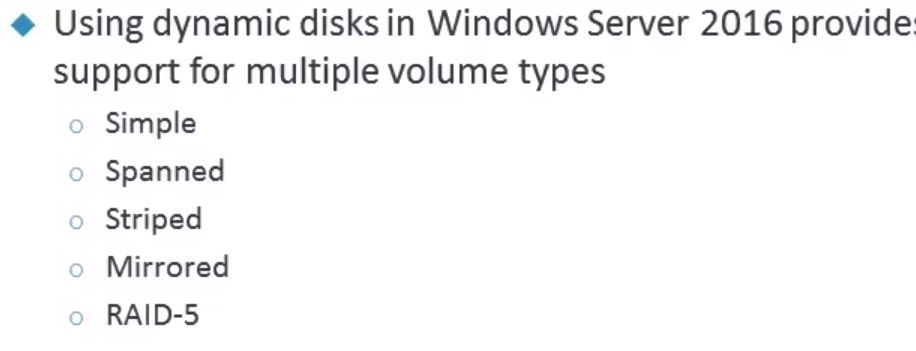
What different volume types does windows server 2016 support for use on dynamic disks?
- Simple, uses free space from a single disk, same as a basic partition, not a multi disk volume
- Spanned, uses free disk space from multiple disks that are linked together, 2-32 disks, uses up space on the first disk then will move onto the next and so on and therefore not fault tolerant, just simply extending the space
- Striped, data is spread across two or more disks, 2-32 disks, known as RAID-0, data is written to each disk in an even fashion (striped), therefore performance is greatly improvied but still does not provide fault tolerance
- Mirrored, RAID-1, data is duplicated on atleast two physical disks, so if one of the physical disks fails you will still be able to access the data
- RAID-5, striped set with parity, requires at least 3 disks, the parity and the data is written to each disk in an even fashion (striped), you get increased performance and if a drive fails, it can use the parity data on the other disks to rebuild the data
Dynamic disk is software level RAID, also, with the storage spaces option you may never even be using dynamic disks.
What tools are available for volume management?
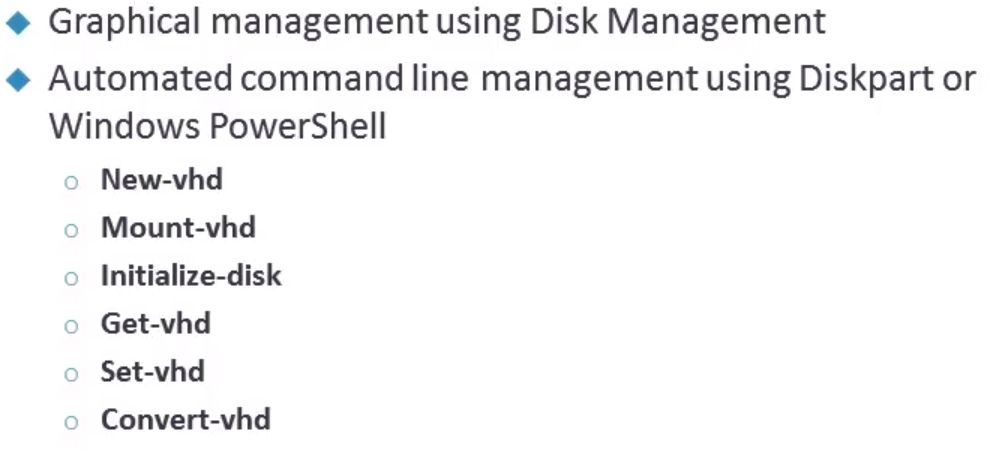
How do you manage virtual hard disks?
What different filesystem choices does Windows Server 2016 provide?
File Allocation Table (FAT)
- Basic file system
- Subject to partition size limits
- FAT32 is used for larger disks and exFAT for removeable drives
- Does not provide local security
- Suffers from performance issues and inadequate storage utilisation
New Technology File System (NTFS)
- Standard file system since Windows NT
- Better support for metadata
- Improved reliability and performance
- Improved disk space utilisation
- Support for local file system security
- Required by numerous Windows Server 2016 roles and features
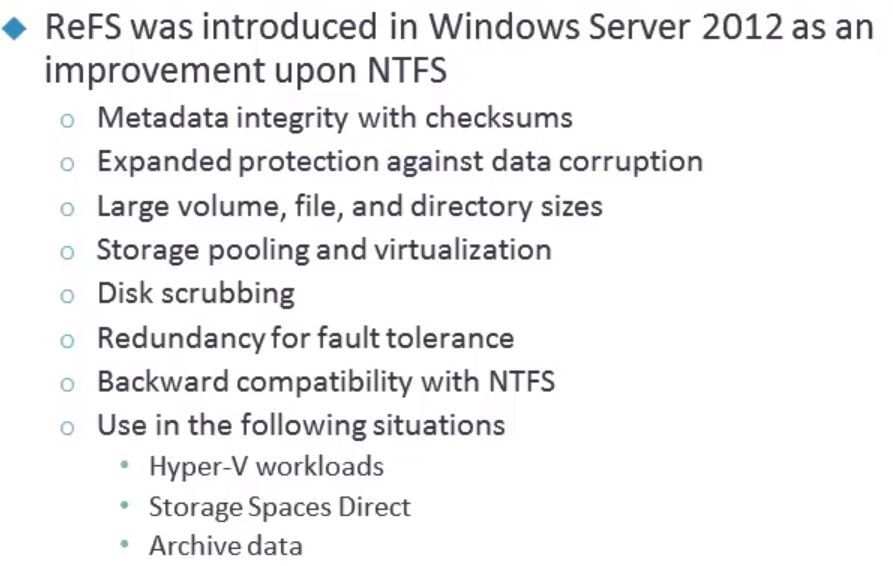
ReFS
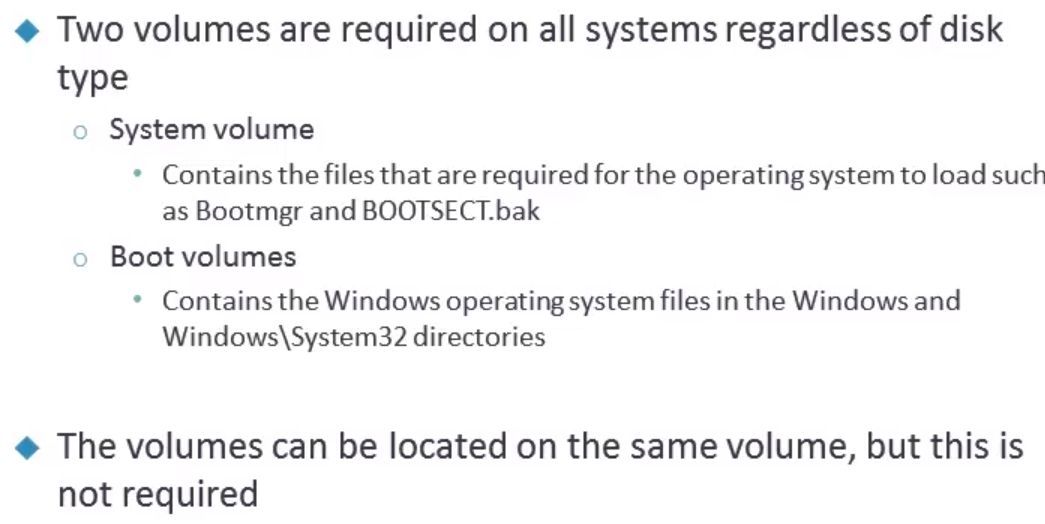
What are the required volumes regardless of disk type?
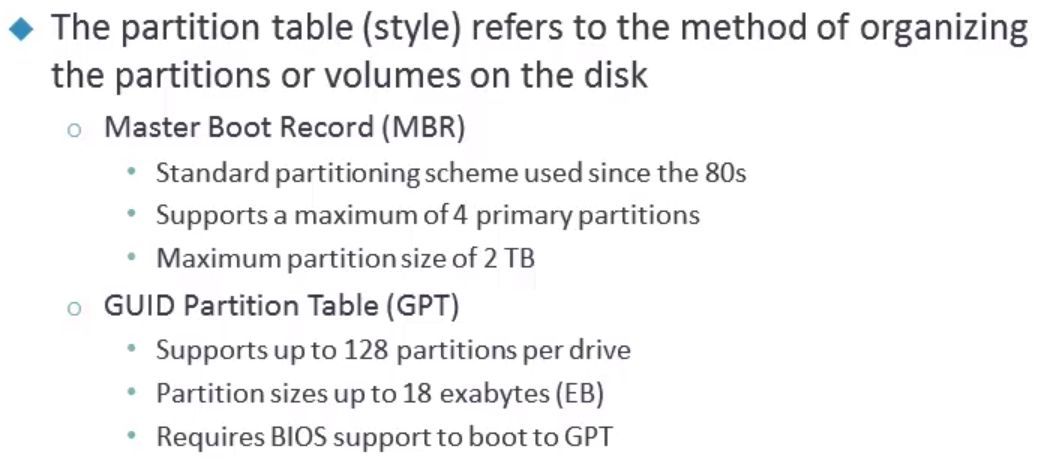
What are the different partition table formats Windows uses?
What is the difference between parallel and serial transfers?
Parallel
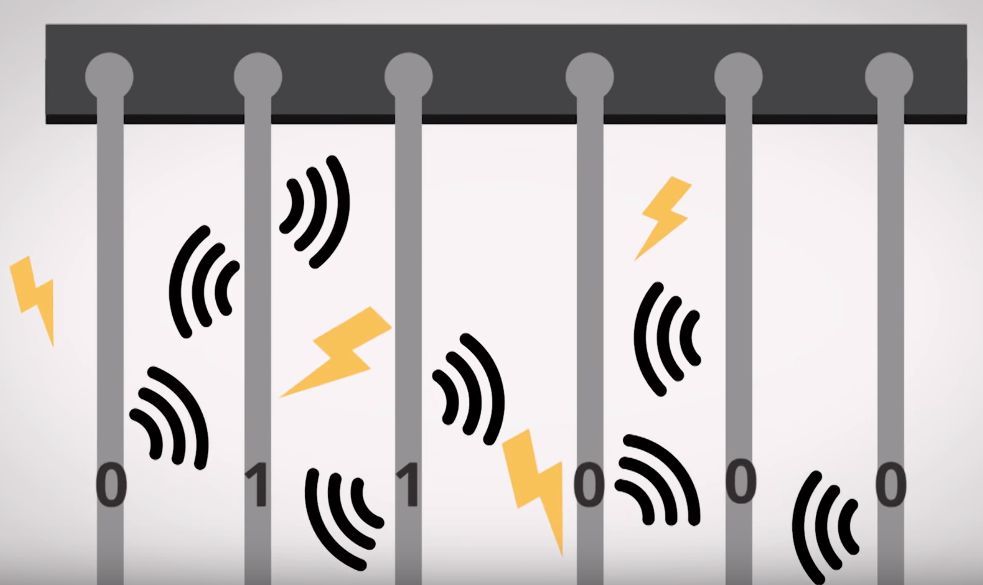
Older interfaces such as SCSI and IDE used a multi-pin cable to transfer data, there were several issues with this:
- the data had to be synchronious across the pins, so if the cable had 8 lines all the data on each line had to be received at the same time, but as speeds were increased they would get out of sync and the interface would slow down the transfer speeds to assure the data would be synchronised
- as there were multiple pins there would be crosstalk, which is interference from other pins, this would cause issues with the transferring of data and would slow the data transfer rates down. Also the more lines that were added, the more crosstalk there was.
- as there were multiple pins, it would be easy to damage one pin, potentially permanently damaging the interface
Serial
SAS (ISCSI’s replacement) and SATA (IDE’s replacement) uses a serial connection, which means that there is just one data line for each direction, this improved on parallel by:
- crosstalk is not much of an issue
- due to there being no need to synchronise data over multiple lines, each line in each direction can fire of as much information as possible, all you then need is the hardware at either end of the connection to be able to handle the data
- modern serial links dont normally use pins
What different types of physical disk are available in Windows Server 2016?
Storage interfaces (e.g. SAS, SATA, SCSI, IDE, FC etc…) define protocols on how data is accessed and transferred. Each interface is physically different and may require different components (e.g. inside the disk housing) for it work work, therefore the interfaces are not interchangeable.
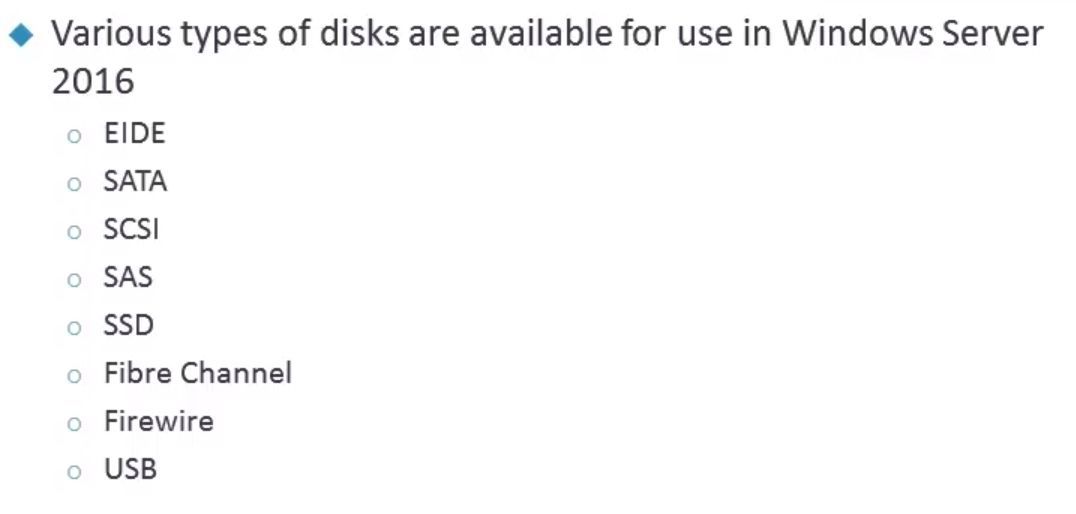
- EIDE (Parralel ATA), shouldnt really use anymore as it wont provide the IOPS required to run a server sufficiently
- SATA (Serial ATA), designed to replace EIDE
- SCSI (Small Computer Systems Interface), a standard for physically connecting and transferring data between computers and peripheral devices, server level disk
- SAS (Serial Attached SCSI), made for 24/7 uptimes in datacentres, up to 15,000 RPM
While the classic SCSI interfaces are being phased out of data centers, many modern high performance hard drives use SAS.
- SSD (Solid State Drive), far more expensive per gigabyte, but are extremely high speed
- Fibre Channel, Firewire, USB - In a lot of cases this will be the transport bus i.e its how we get to the disk
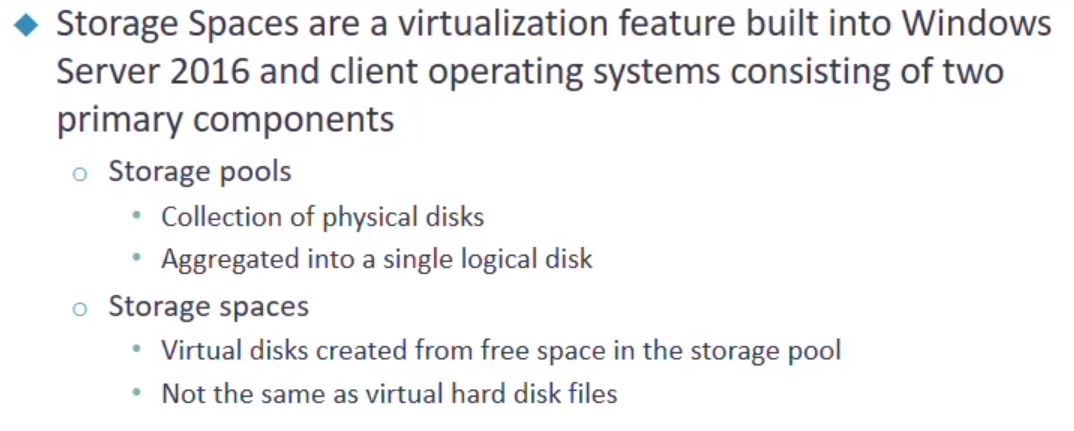
What is storage spaces?
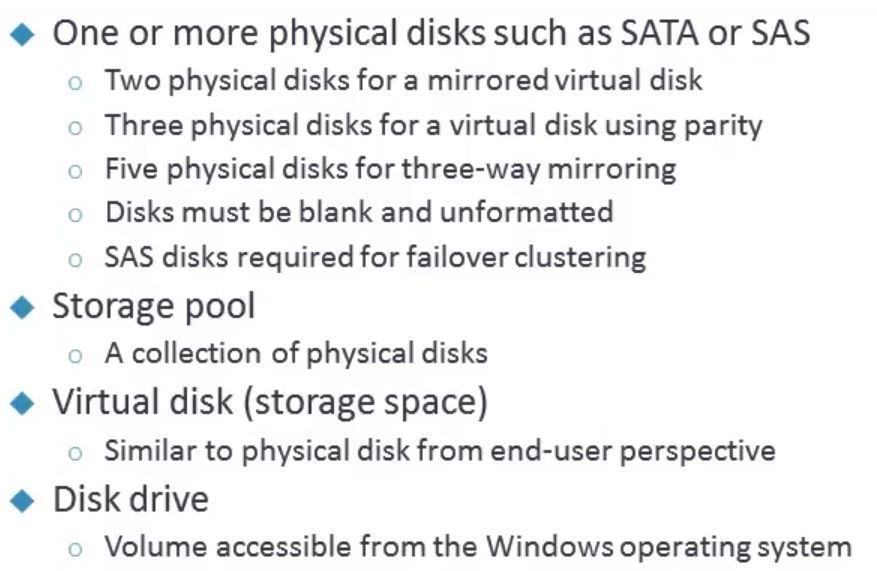
What are the requirements for storage spaces?
What are the features of storage spaces?
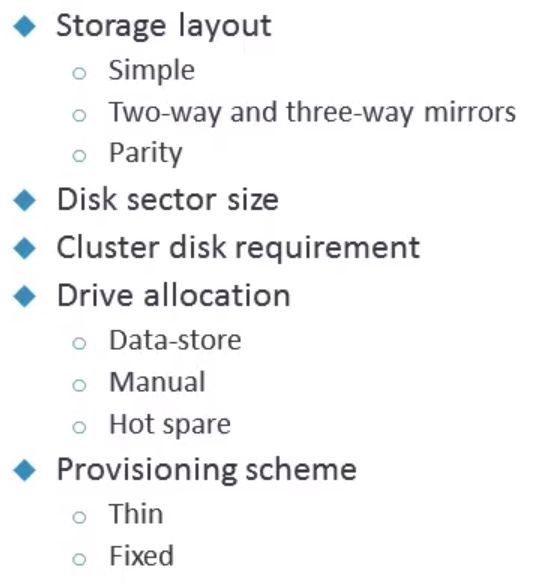
Storage Layouts - When creating a storage space this is the first option
- Simple, data striping but no redundancy
- Two/three way mirrors - provides protection against the loss of one or more disks, so it maintains 2 or 3 copies of the data therefore duplication occurs everytime you write to the disk, will also stripe the data cross multiple physical drives, two-way uses 2 disks and 3-way uses 5 disks
- Parity, data is striped across multiple disks with parity written, requires a minimum of three disks
Disk sector size - Second choice
Set when the storage pool is created, depends on the types of drives
Cluster disk requirement - Third choice
If you are using failover clustering it is going to require that all drives in the pool support SAS
Drive allocation - Fourth choice
For each drive in the storage pool, you can assign how the drive is allocated
- Data-store, default, storage spaces can automatically select capacity on that drive for both the creation of virtual disks and JIT allocation
- Manual, dont want to use a drive as part of a storage space, unless it specifically selected when the storage space is created
- Hot spare, reserve drive, not used in the creation of the storage space but they are added to the pool, if a drive fails then a reserve drive will be used
Provisioning scheme - Fifth choice
- Thin, amount of storage thats used for the drive can grow on an as need basis, optimises storage, can create a storage space that is larger than the physical amount of data that a drive has
- Fixed, set aside large portions of storage capacity
What is the primordial storage pool?
All physical disks will reside in the primordial storage pool by default and is replaced when a new storage pool is created
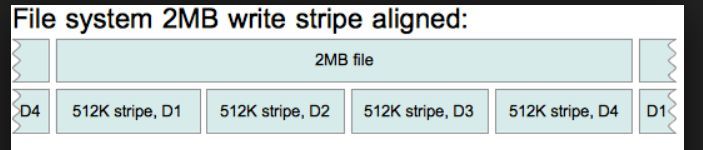
What is the strip size?
The stripe size is the size of the striped data, e.g.
If the stripe size is 512KB and the data is 2MB then this data is evenly written to each disk in 512KB chunks:
2 disks: (D1 1-512KB) (D2 2-512KB) (D1 3-512KB) (D2 4-512KB)
3 disks: (D1 1-512KB) (D2 2-512KB) (D3 3-512KB) (D1 4-512KB)
4 disks: (D1 1-512KB) (D2 2-512KB) (D3 3-512KB) (D4 4-512KB)
What is a storage space slab?
Slab is a quantum of disk space of 256 MB. All the physical drives in the pool are “sliced” into slabs which are then given to the Storage Spaces driver on request. The driver then assigns slabs to a particular virtual disk (known as space).
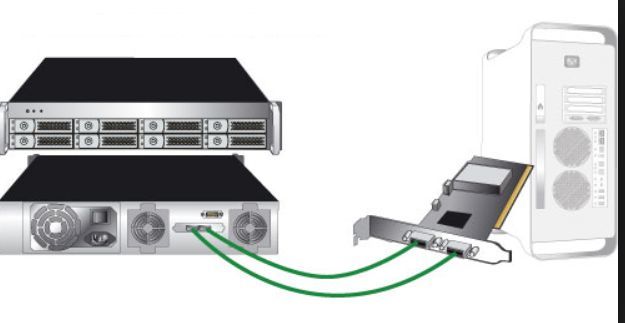
What is a HBA?
In computer hardware, a host controller, host adapter, or host bus adapter (HBA) connects a computer, which acts as the host system, to other network and storage devices. The terms are primarily used to refer to devices for connecting SCSI, Fibre Channel and SATA devices. i.e.
A HBA will be a PCIe expansion card allowing external devices to connect to the host.
A JBOD which uses a SAS connector will require a SAS HBA using a SAS external cable
What is a JBOD?
Just a Bunch Of Disks
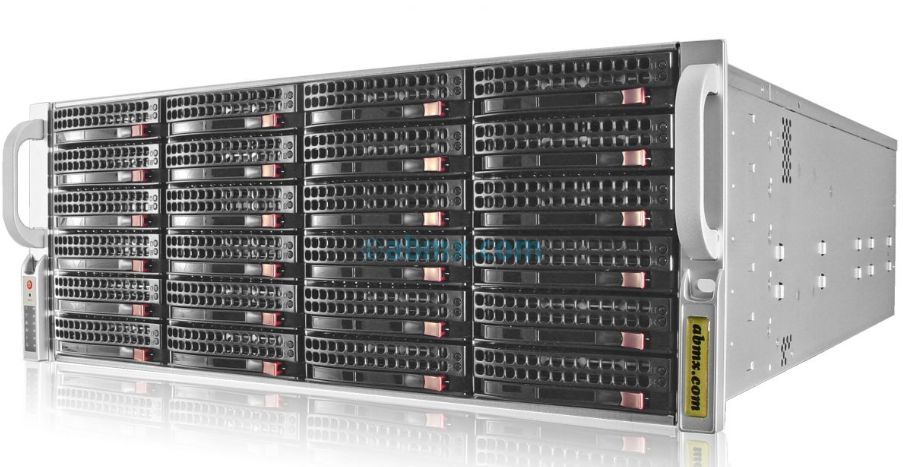
As the name implies, it is essentially just a bunch of disks, it does not include any extra components such as RAID. If RAID was to be implemented then it would need to be done using a seperate RAID controller or implemented in software.
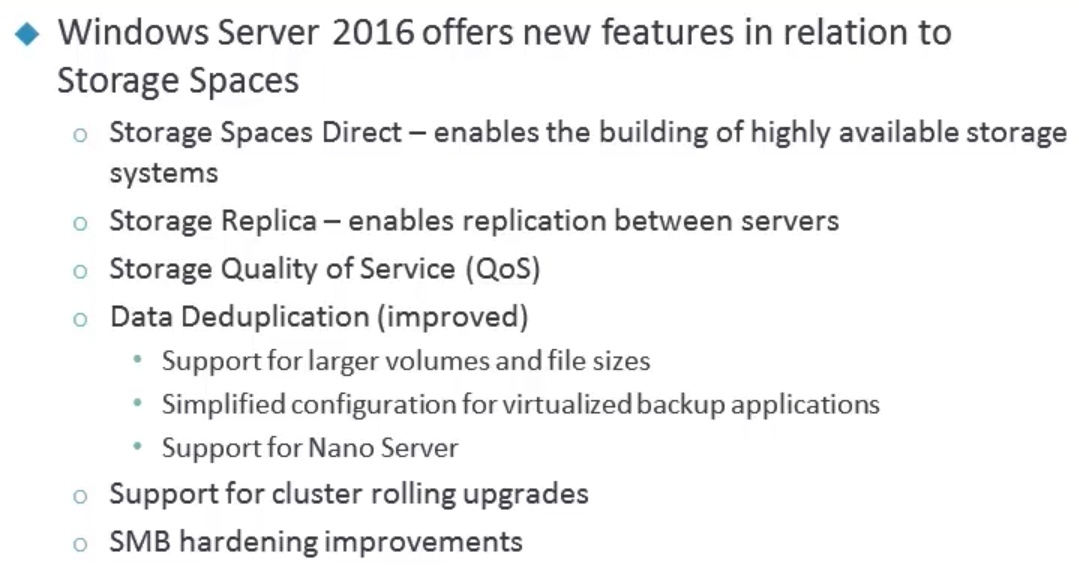
What new features does Windows Server 2016 offer in regards to storage spaces?
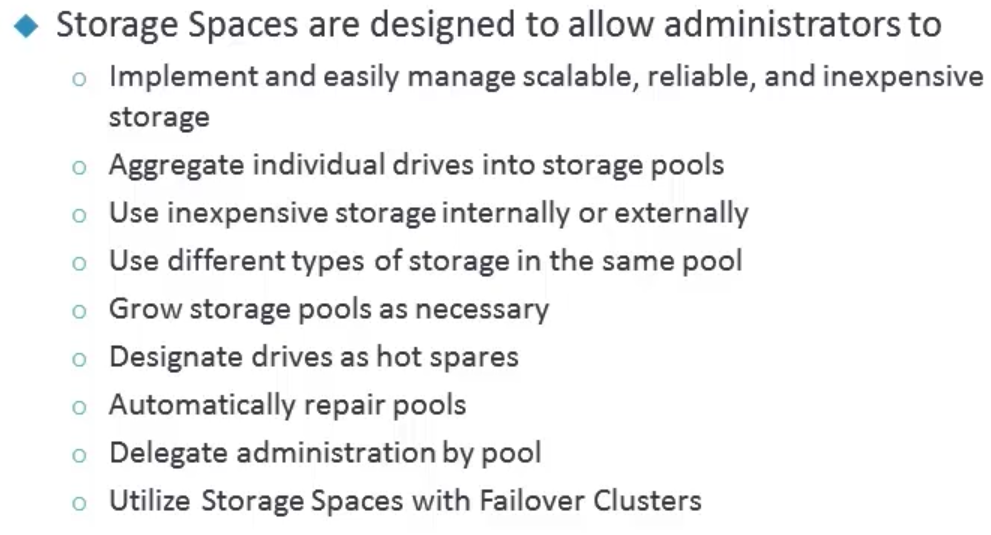
What do storage spaces allow administrators to do?
How do you manage storage spaces?