- MANAGERIAL COST CONCEPTS
a. Manufacturing costs
Manufacturing:
Manufacturing costs: classified in 3 categories:
- … vs…..:
- …: ….
- Indirect materials: have 1 of 2 characteristics:
- i. …
- ii. …
- … vs. ….:
- …: ….
- …: …. has one of two characteristics:
- ii. …
- i….
- …: ….
- MANAGERIAL COST CONCEPTS
a. Manufacturing costs
Manufacturing: consists of activities and processes that convert raw materials into finished goods
Manufacturing costs: classified in 3 categories:
- Direct materials vs. Indirect materials:
- Direct materials: materials that can be physically and
directly associated with the finished product during the
manufacturing process. E.g.: flour in bread, syrup in
soda, steel in cars- Indirect materials: have 1 of 2 characteristics:
i. Don’t physically become part of finished product (polishing compounds)
ii. Can’t be easily traced because physical association with finished product is so small (glue)
- Indirect materials: have 1 of 2 characteristics:
- Direct materials: materials that can be physically and
- Direct labour vs. Indirect labour:
- Direct labour: work that can be physically/directly associated with converting raw materials into finished goods
- Indirect labour: has one of two characteristics:
- ii. Work for which it is impractical to trace costs to the good produced (work of supervisors, maintenance people)
- i. Work has no physical associated with finished product
- Manufacturing overhead (also known as factory overhead, indirect manufacturing costs, burden): costs that are indirectly associated with the manufacture of the finished product. Includes indirect materials or indirect labour, depreciation, insurance, taxes, maintenance
b. Prime costs and conversion costs
■ Prime costs: …
■ Conversion costs: …
b. Prime costs and conversion costs
■ Prime costs: sum of all direct materials costs and direct labour costs
■ Conversion costs: sum of all direct labour costs and manufacturing overhead costs, which together = cost of converting raw materials into final product
Product vs. Period costs
■ Product costs (also known as inventoriable costs): ..
■ Period costs: …
Product vs. Period costs
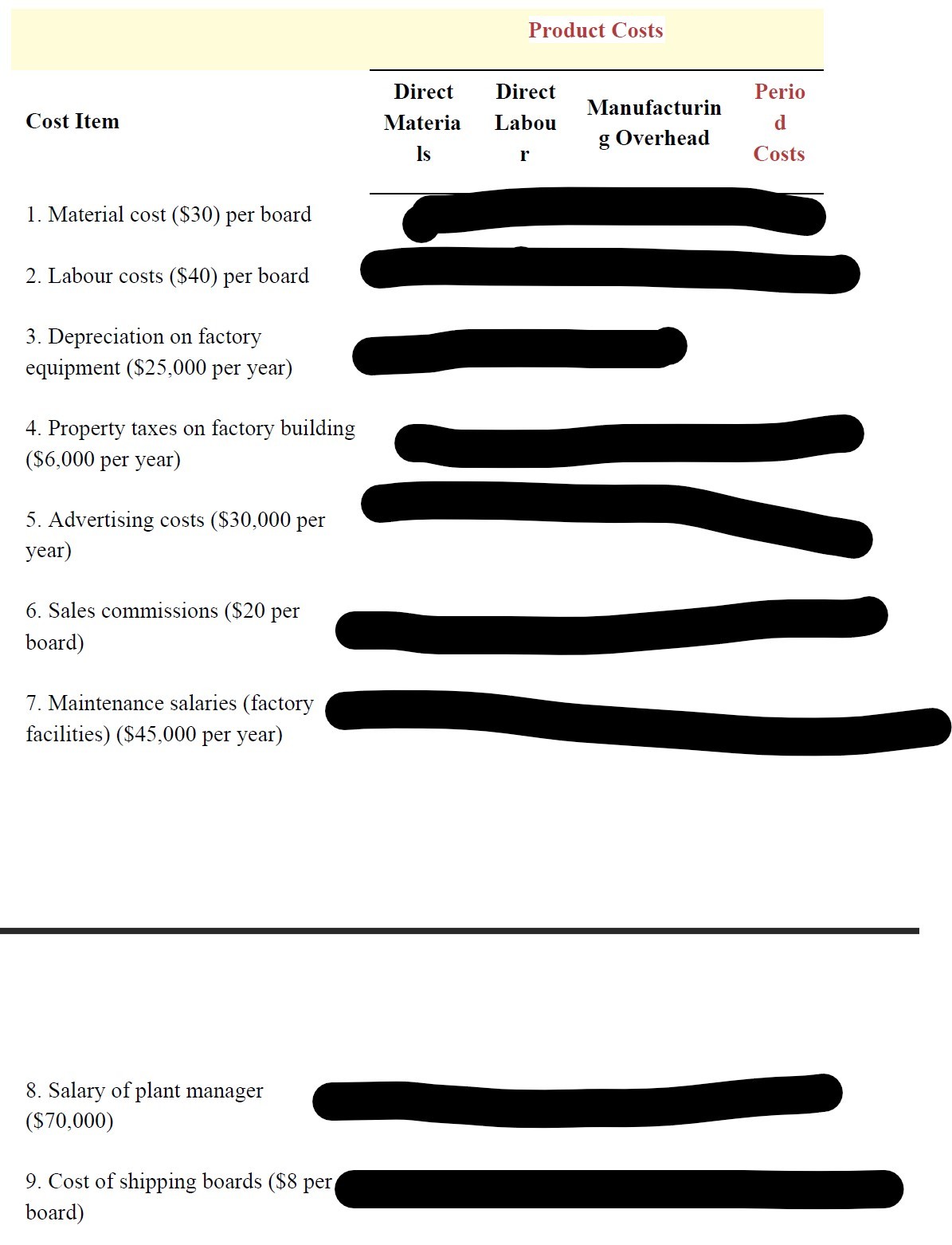
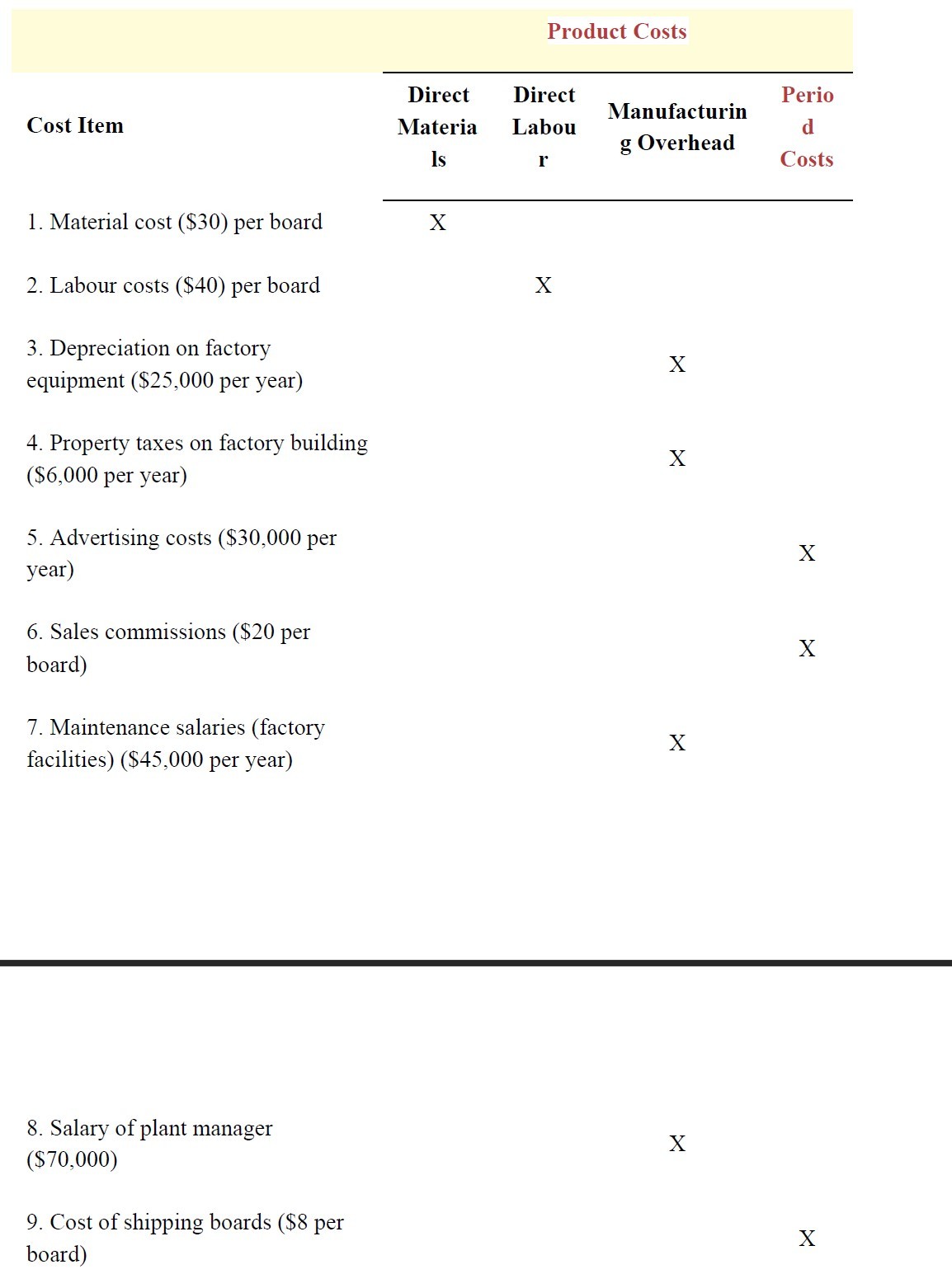
■ Product costs (also known as inventoriable costs): necessary to produce finished product, manufacturing costs, recorded as “inventory”, don’t become expenses till finished goods are sold & at that point it is recorded as expense as cost of goods sold. Include direct materials, direct labour, manufacturing overhead (indirect materials, indirect labour, other indirect costs). Total manufacturing costs are the sum of the product costs
■ Period costs: matched with the revenue of a specific time period, non-manufacturing costs, include selling and administrative expenses, deducted from revenues in period they are incurred to determine net income
- COST BEHAVIOR ANALYSIS
a. Variable costs:
a. Variable costs: costs that vary in total directly and proportionately with
changes in the activity level; remains constant per unit at every level of
activity. Includes direct materials, direct labour, cost of goods sold, sales
commissions. Manufacturers want less variable costs and more fixed cost
COST BEHAVIOR ANALYSIS
b. Fixed costs: …
b. Fixed costs: remain the same in total within the relevant range regardless of
changes in the activity level. Includes property taxes, insurance, rent, salaries,
depreciation. Fixed costs/unit vary inversely with activity →as volume
increases, unit cost declines and vice versa
c. Relevant range (also known as normal/practical range) :
■ Linear: changes in activity index = direct, proportional change in variable cost. Very rare in businesses
■ Curvilinear: changes in the activity index = not direct, not proportional change in the variable cost. Realistic in businesses
c. Relevant range (also known as normal/practical range) : the range that
company expects to operate in during a year; within relevant range there is
usually a linear relationship for both variable and fixed costs which produces
useful data for cost behavior analysis as long as level of activity stays in
relevant range
■ Linear: changes in activity index = direct, proportional change in variable cost. Very rare in businesses
■ Curvilinear: changes in the activity index = not direct, not proportional change in the variable cost. Realistic in businesses
d. Mixed costs (also known as semi-variable costs):
d. Mixed costs (also known as semi-variable costs): have both a variable element
and a fixed element; change in total but not proportionally with changes in the
activity level
Classifying costs:
Mixed costs:
- High-low method:
- *
Classifying costs:
Mixed costs: classified into their fixed and variable elements; determine the variable and fixed cost components of the total cost at the end of a period of time. Uses several methods, but explain high-low method
- High-low method: uses total costs incurred at the high and low levels of activity. The difference in costs between high and low levels represent variable costs (since only variable costs change when activity levels change). Steps: *page cost behavior analysis
- Determine variable cost/unit using formula: change in
total costs ÷ change in activity levels - Determine the fixed cost by subtracting total variable
cost at either the high or the low activity level from the
total cost at that activity level.
- Determine variable cost/unit using formula: change in
- MANUFACTURING COSTS IN FINANCIAL STATEMENTS
a. Income statement:
- Merchandiser:
- Cost of goods purchased:
- Manufacturer:
- Cost of goods manufactured:
- Cost of goods manufactured schedule:
- MANUFACTURING COSTS IN FINANCIAL STATEMENTS
a. Income statement: merchandiser and manufacturer income statements differ in the cost of goods sold section
- Merchandiser: cost of goods sold is calculated by adding beginning merchandise inventory to the cost of goods purchased and subtracting the ending merchandise inventory
- Cost of goods purchased: The net cost of merchandise purchased (after deducting purchase returns, purchase allowances, and purchase discounts) plus the cost of freight-in
- Manufacturer: cost of goods sold is calculated by adding the beginning finished goods inventory to the cost of goods manufactured and subtracting the ending finished goods inventory
- Cost of goods manufactured: Total cost of work in process less the cost of the ending work in process inventory.
- Cost of goods manufactured schedule: internal report that shows each of the cost elements described in the cost of goods manufactured formula. Presents data for direct materials and for manufacturing overhead. Numbers or categories in financial statements are often highlighted in red
- MANUFACTURING COSTS IN FINANCIAL STATEMENTS
b. Balance sheet:
■ Merchandising company:
■ Manufacturer company:
● Raw material inventory:
● Work in process inventory:
● Finished goods (appears first on list, most liquid):
- MANUFACTURING COSTS IN FINANCIAL STATEMENTS
b. Balance sheet:
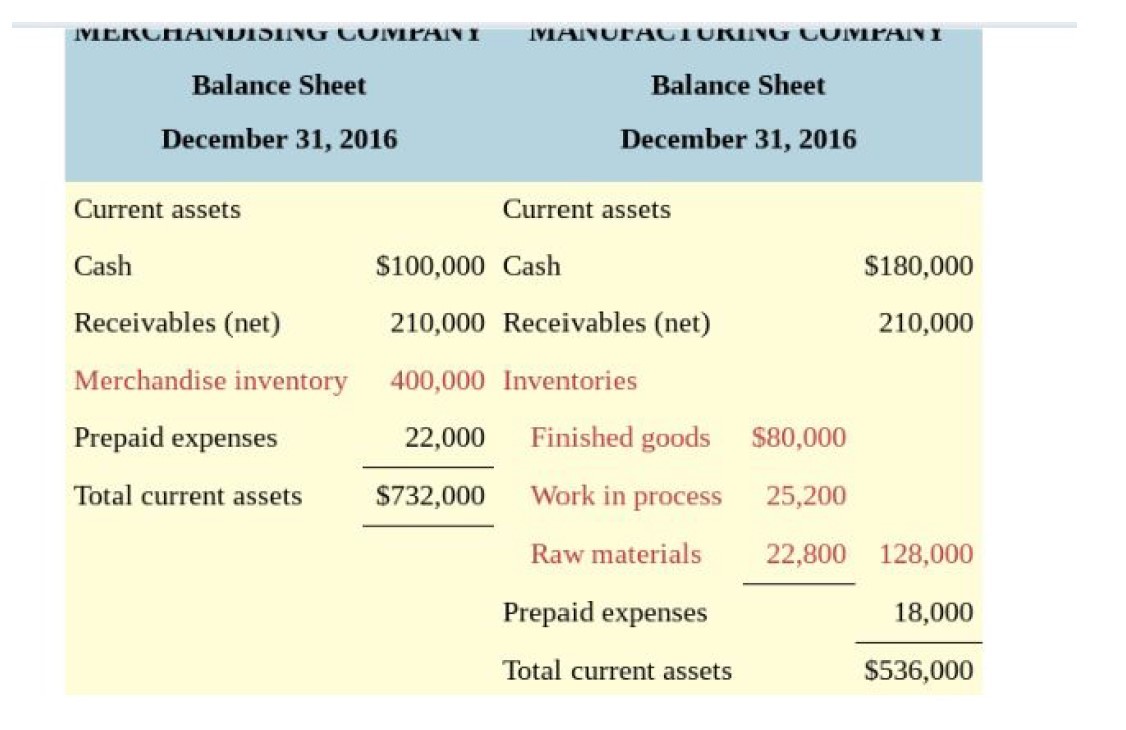
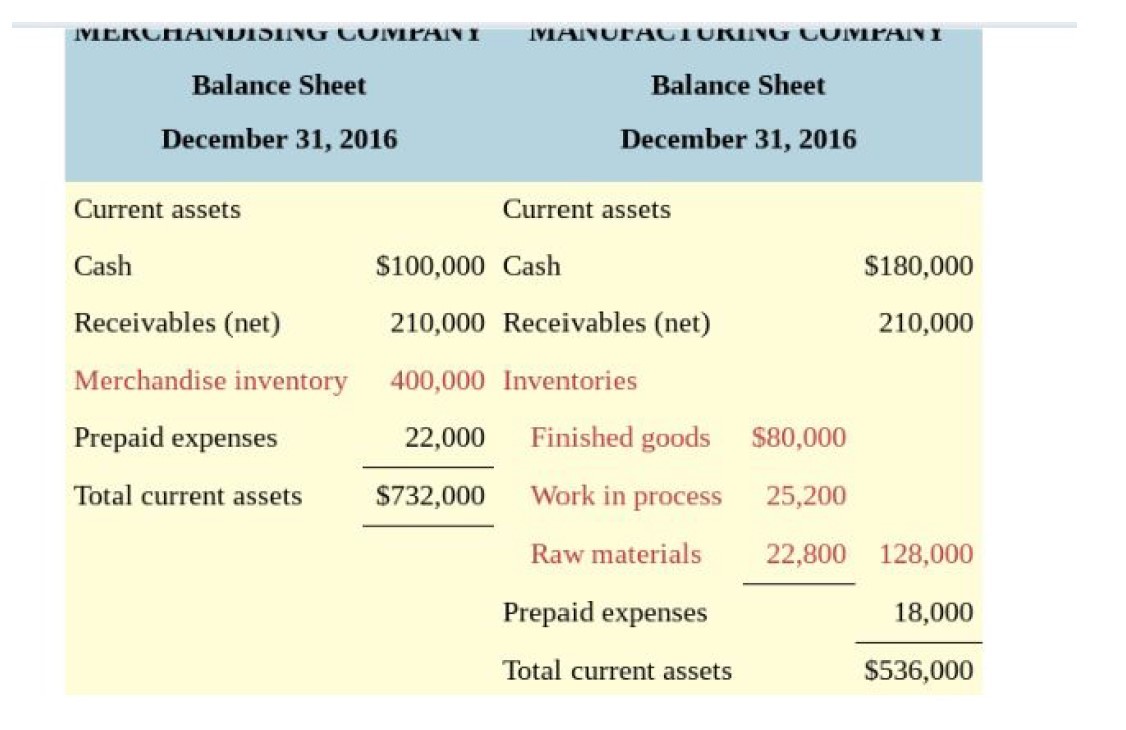
■ Merchandising company: shows just one category of inventory
■ Manufacturer company: inventories generally listed in order of their
liquidity , may have 3 inventory accounts
● Raw material inventory: shows cost of raw materials on hand
● Work in process inventory: shows cost of partially completed units
● Finished goods (appears first on list, most liquid): shows cost
of completed goods on hand
- Cost: an economic resource given up or foregone to accomplish a particular objective
- cost object: anything for which we want to calculate a cost, such as a product, product line, service, process for which cost information is measured and accumulated
- Cost behavior analysis: study of how specific costs respond to changes in the level of business activity
- Activity index: identifies the activity that causes changes in the behavior of costs. Used to classify behavior of costs in response to changed in activity levels into 3 categories: variable, fixed, or mixed
- Ending work in process inventory: Units that were partially completed at the end of the accounting period.




