The pars lumbalis of the diaphragm attaches to which vertebrae in dogs?
A) T10 and T11
B) L2 and L5
C) L3 and L4
D) L5 and L6
C) L3 and L4
The right and left crura of the pars lumbalis attach to the cranial ventral border of L4 and the body of L3.
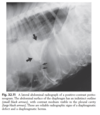
On lateral radiographs, the right diaphragmatic crus can be identified by its:
A) Association with the gastric fundus
B) Confluence with the caudal vena cava
C) Attachment to the left kidney
D) Connection with the thoracic duct
B
Approximately what percentage of intrathoracic volume change during quiet respiration is due to diaphragmatic movement?
A) 25%
B) 40%
C) 60%
D) 75%
Diaphragmatic contraction contributes ~75% of the change in intrathoracic volume; intercostal muscles contribute the rest.
Which of the following embryological structures contributes to the formation of the diaphragm?
A) Hepatic diverticulum
B) Septum transversum
C) Mesonephric ridge
D) Mesodermal ridge
B
The diaphragm is embryologically formed by the septum transversum, pleuroperitoneal folds, and mesentery of the foregut.
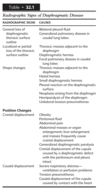
Which of the following is a radiographic sign specific to a peritoneopericardial diaphragmatic hernia (PPDH) in cats?
A) Asymmetry of the diaphragm on lateral projection
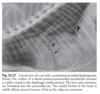
B) Dorsal peritoneopericardial mesothelial remnant between the heart and diaphragm
C) Caudal displacement of the cupula due to heart contact
D) Cardiac silhouette shifted laterally
b
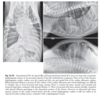
Which radiographic feature is most helpful in differentiating a diaphragmatic hernia from other thoracic abnormalities?
A) Displacement of the heart and mediastinum
B) Pleural fluid presence
C) Identification of abdominal viscera in the thorax
D) Altered slope of the diaphragm
c
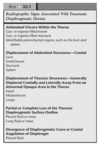
Which of the following is a nonspecific radiographic sign of diaphragmatic hernia that may obscure more important findings?
A) Gas-filled stomach in the thorax
B) Cranial displacement of abdominal organs
C) Pleural fluid
D) Divergence of diaphragmatic crura
c
Hiatal hernias are most often associated with which concurrent condition?
A) Pneumothorax
B) Esophagitis from gastroesophageal reflux
C) Hepatic cysts
D) Generalized pulmonary edema
b
Emrbyologically, the diaphragm is formed by
- Septum transversum (ventrally)
- foregut mesentery and 2 pleuroperitoneal folds (dorsally)

Movement of the diaphragm provides approximately ___ % of the change in intrathoracic volume during quiet respiration, and the ____ provide the rest.
- 75
- intercostal muscles

Lymph flow is unidirectional/bidirectional. What is the final destination of lymph?
unidirectional
thoracic trunks

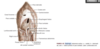
Parts of the diaphragm
Tendinous centre
3 thin peripheral muscles:
- pars lumbalis (R and L crura)
- pars costalis
- pars sternalis
Where do the crura of pars lumbalis attach?
L3 body / L4 cranioventral border

Which part of the diaphragm attaches to L3/L4?

Pars lumbalis crura
what passes through the aortic hiatus?
aorta
azygos
hemiazygos veins
lumbar cistern of thoracic duct
Where does pars costalis of the diaphragm attach?
8-13th rib


Where does pars sternalis of the diaphragm attach?
xiphoid process cartilage
From dorsal to ventral, what are the openings in the diaphragm?
aortic hiatus
esophageal hiatus
caudal vena cava foramen
what passes through the esophageal hiatus?
esophagus
vagus nerve trunks
what passes through the vena cava foramen?
caudal vena cava
Where is the caudal vena cava foramen located?
at the junction of the muscular and tendinous portion of the diaphragm
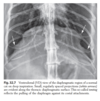
DV or VD?

VD

Which 2 recesses does the diaphragm form?
phrenicocostalis
phrenicolumbalis




-
1. Radiation Protection and Physics of Diagnostic Radiology36
-
2. Digital Radiographic Imaging23
-
3. Dental technique8
-
4. Physics of Ultrasound30
-
5. Principles of CT and MRI33
-
6. Contrast media34
-
7. Intro to radiographic interpretation2
-
8. Radiographic anatomy of axial skeleton10
-
9 - Principles of Interpretation of Axial skeleton16
-
Ch 10 - Dental136
-
Ch 11 Skull and Nasal113
-
Ch 12 CT/MRI Brain202
-
Ch 14 Vertebrae & Myelography198
-
Ch 15 CT/MRI Vertebral column229
-
Ch 16 Anatomy of appendicular skeleton28
-
Ch 17 - Appendicular skeleton/bone tumours + INFECTION87
-
Ch 18 Juvenile orthopaedic disease291
-
Ch 19 Fracture Healing & Complications123
-
20. Bone tumours and infections21
-
Ch 20 Joint Disease114
-
Ch 28 Thorax Principles42
-
Ch 29 Larynx & Trachea206
-
Ch 30 Oesophagus386
-
Ch 31 Thoracic Wall95
-
Chapter 32 - Diaphragm continue171
-
Ch 33 Mediastinum116
-
Ch 34 Pleural Space25
-
Ch. 35 Cardiovascular307
-
Ch. 36 Lung74
-
Ch. 42 Urinary bladder and urethra22
-
Ch 47 Small intestine84
-
Ch48 - Large bowel6
-
Other329



