What is normal ICP in dogs and cats?
5-15 mmHg
(Chapter 29 says 8-15 mmHg, chapter 35 says 5-12 mmHg)
What is the formula for CPP?
CPP = MAP - ICP
List 3 primary homeostatic mechanisms that maintain ICP within optimal range
- Volume buffering: Increase in volume of one component requires reciprocal decrease of others if ICP is to remain unchanged (Monro-Kellie doctrine). Usually CSF drainage
- Autoregulation: Autoregulation of cerebral blood flow is the ability of brain to maintain normal cerebral perfusion. Pressure regulation, chemical autoregulation
- Cushing reflex: response to global ischaemia and uncontrolled intracranial hypertension –> cathecholamines –> systemic vasoconstriction –> baroreceptior response –> vagally mediated bradycardia. Indicates imminent brain herniation
List 6 groups of medication that should be considered during intracranial surgery
- Anticonvulsants
- Analgesic
- Antibiotics
- Pressors
- Osmotic diuretics
- Sedatives
What is the optimal range of PaCO2?
30 - 35 mmHg
List 5 factors to consider in management of intracranial hypertension
- Reduce cerebral oedema (mannitol, hypertonic saline. Corticosteroids if neoplastic vasogenic oedema or inflammatory disease)
- Prevent hypercapnia and hypoxia (ventilation, oxygen supplementation + blood transfusion as necessary)
- Control central venous blood volume (head elevation, no neck wraps or jugular samples).
- Prevent systemic hypotension
- Control cerebral oxygen demand (pain, hyperthermia, seizures, halluconogenic drugs)
Below what level PaCO2 can cerebral ischaemia be seen
<30 mmHg
What is ideal CPP in small animals?
50 - 90 mmHg
(roughly speaking aim to keep MAP >80 mm Hg if unable to measure ICP (and therefore unable to calculate CPP))
What is dose of mannitol 20%
And dose of 7.5% NaCl
Mannitol: 1 g/kg over 10 mins
7.5% NaCl: 4 ml/kg over 10 mins
How is mannitol believed to affect ICP?
- Plasma expanding effect –> increased cerebral blood flow and O2 delivery. Immediate
- Delayed osmotic effect –> osmitoc gradient –> reduced brain water content. 20 - 30 minute delay
Why is hypertonic saline less likely to cause hypotension from diuresis than mannitol?
Because sodium (of hypertonic saline) is reabsorbed inthe kidneys.
How do ultrasonic aspirators work?
What are supposed benefits?
Ultrasonic vibration of tip –> fragmentation of tissue + simultaneous lavage + aspiration.
Advantages:
- Improved visibility with simultaneous lavage + aspiration
- Decreased haemorrhage through preservation of vasculature
- Combined, may result in improved extent of resection (improved survival times reported in dogs w meningiomas).
What 8 factors shoudl be considered when planning appropriate surgical approach for intracranial pathology?
- General location of the lesion
- Size and extent of the lesion relative to the size of head/brain
- Vital structures in the vicinity that will limit craniectomy size
- Suspected type of lesion (neoplastic vs. inflammatory vs. infectious) and need obtain a complete resection
- Purpose for approaching the lesion (biopsy vs. excision)
- Potential for complications with the approach, especially if more than one approach may be used
- Instruments available to the surgeon (e.g., endoscopic vs. classical instruments)
- Suspected nature of the lesion (e.g., fluid vs. solid, friable vs. fibrous, vascular vs. nonvascular)
Why is bipolar electrocaustery preferred over monopolar
Bipolar –> less widespread tissue damage
What 4 considerations should be borne in mind when opening dura?
- How to best access the pathology
- Location of major vessels within and under the dura
- How the dural defect will be closed (graft vs. direct closure)
- Effect of potential brain swelling.
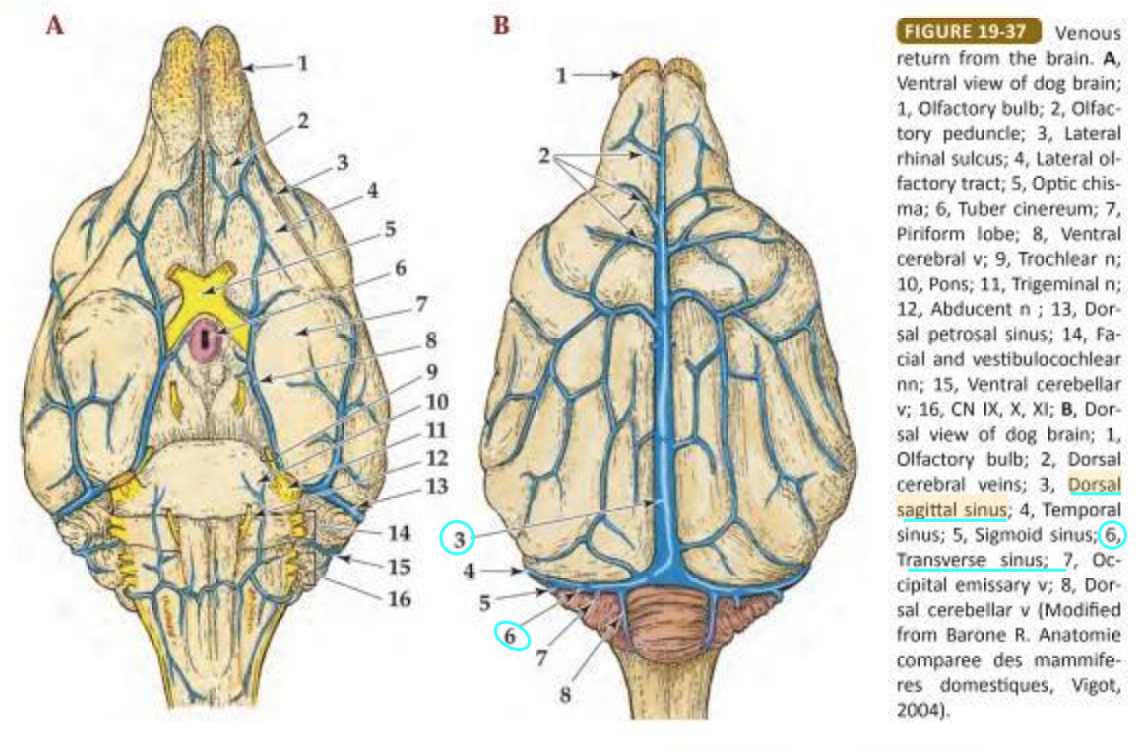
The dura meter of the brain possesses two distinct layers in certain places to enclose venous sinuses. Which respective venous sinus is associated with:
Falx cerebri
Tentorium cerebelli (n.b. often mineralised)
Diaphragm sellae
Falx cerebri = dorsal sagittal sinus
Tentorium cerebelli = transverse sinus
Diaphragm sellae (i.e top of sella turcica) = cevernous venous sinus
List 4 options for menigneal closure following craniotomy
- Primary closure
- Temporalis muscle fascia
- Porcine SI submucosa
- Prosthetic dura (GoreTex or DuraGen)
List 5 options for craniotomy closure
(n.b. if small defect may not need to be closed)
- Replacement of excised bone
- Calvarial allografts
- Acrylic cranioplasty i.e. PMMA
- Metallic mesh (titanium preferred)
- 3D printed implant
What is the preferred material for post-craniotomy mesh and why
Titanium
- Resistant to biofilm formation
- Relative radiolucency/MRI compatibility
- corrosion resistant
- Rigid but malleable
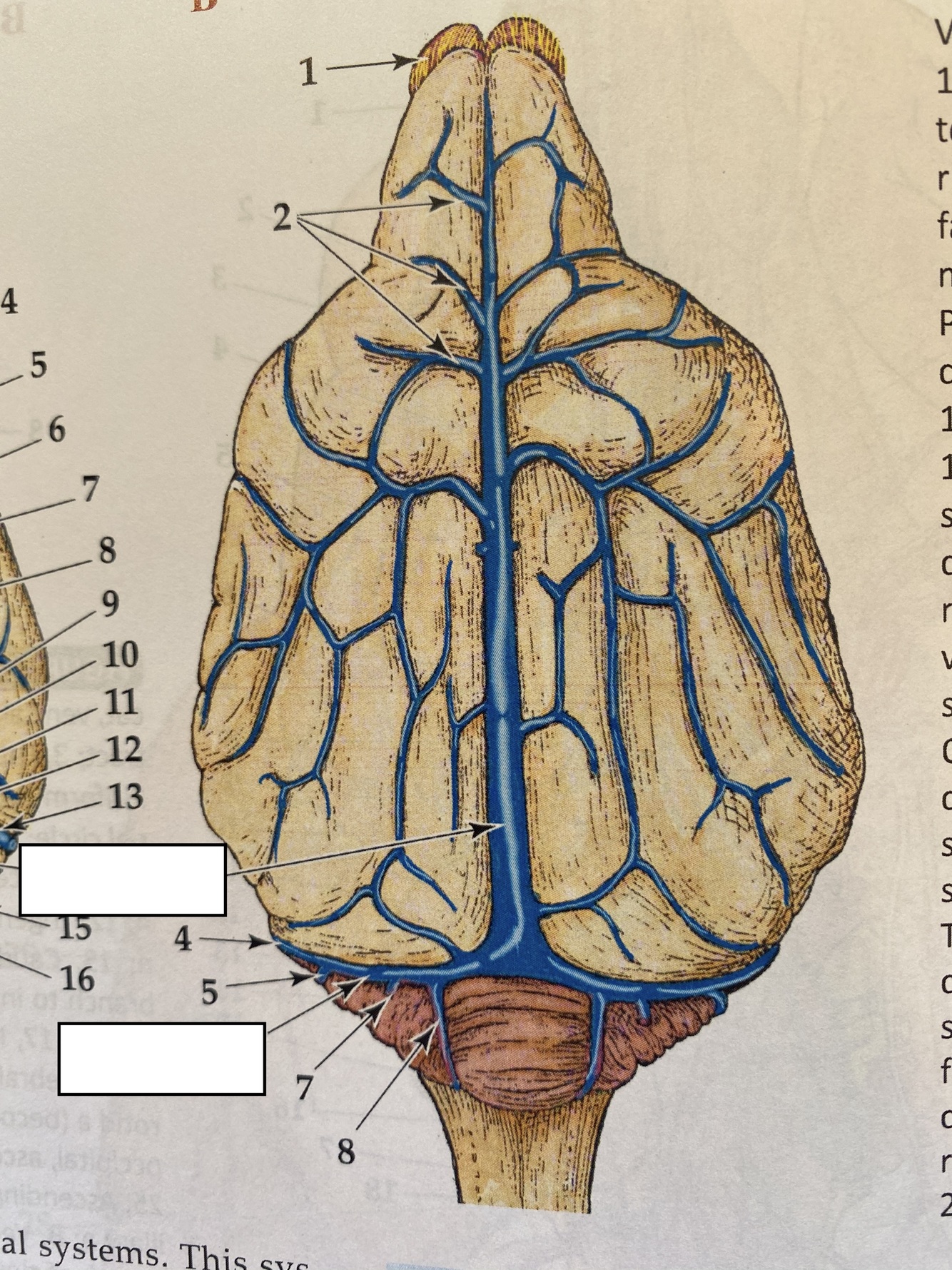
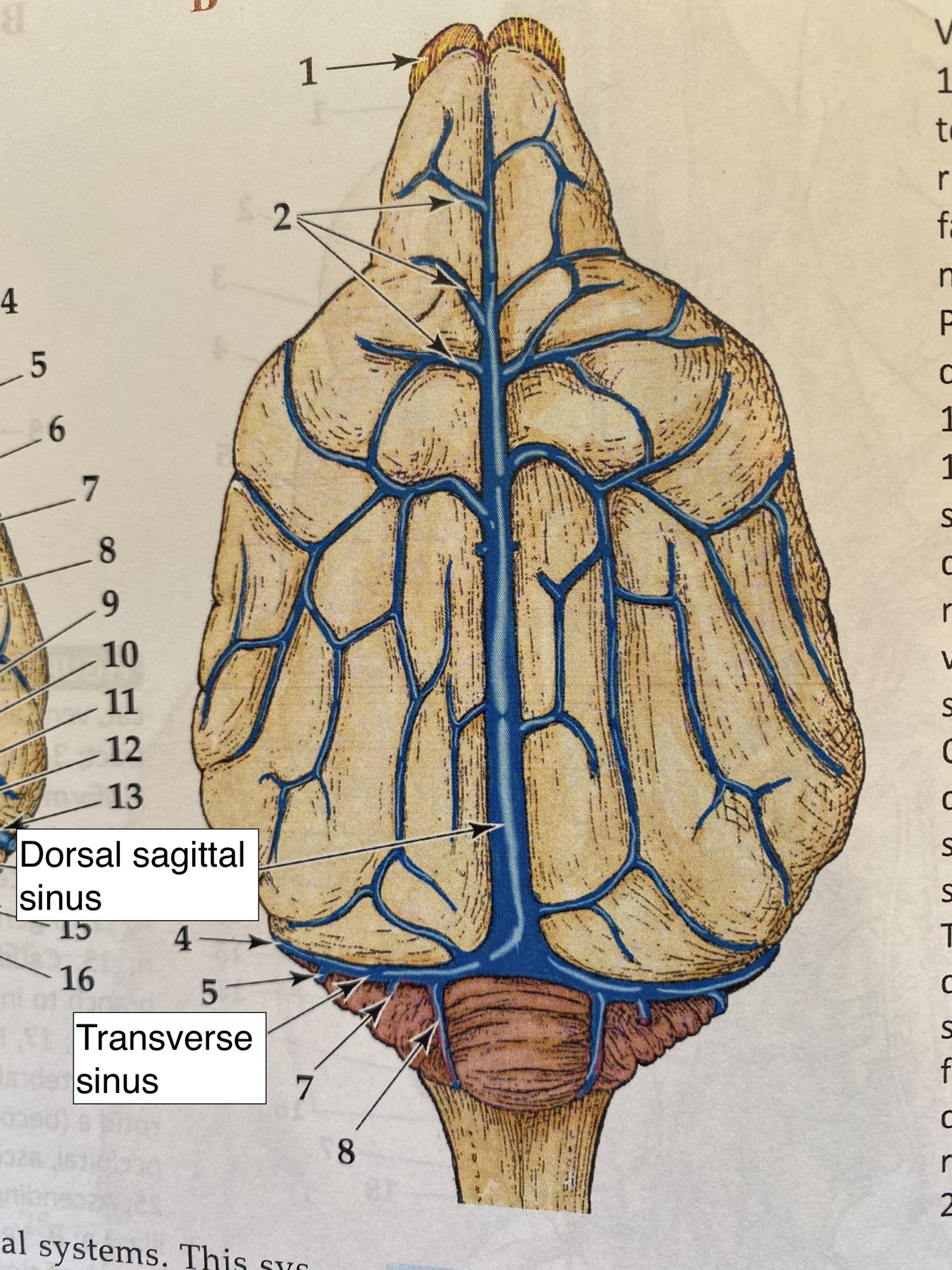
Label the diagram:
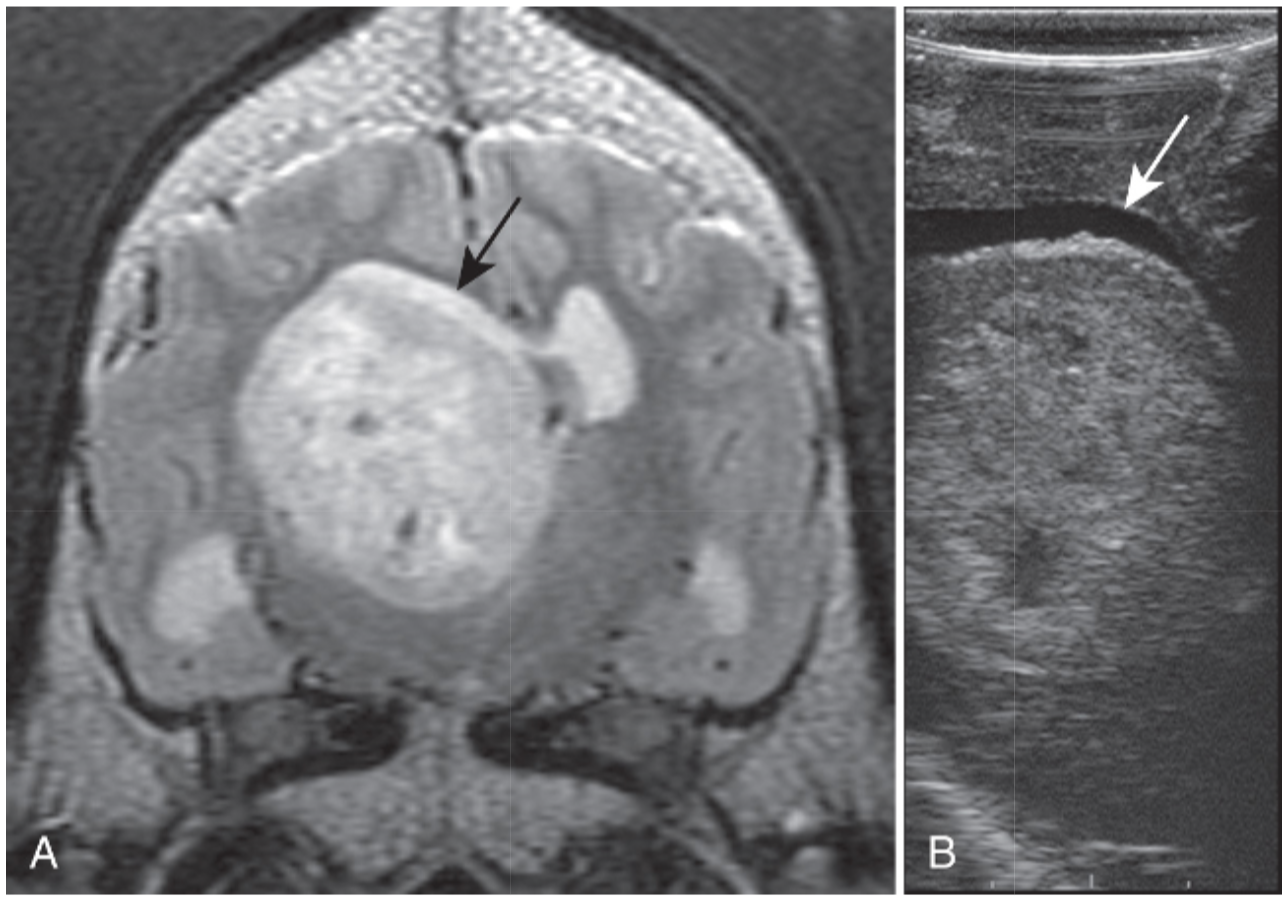
What intraoperative imaging technique can be used to better visualise lesion?
US
Flourescence guided techniques under investigation:
- Intra-operative IV fluoroscein sodium had agreement with pre-op gadolinium MRI enhancement (Nakano, VetSurg, 2018)
A, On the transverse plane, T2-weighted image, a large hyperintense intraparenchymal, high-grade glioma can be seen displacing the right lateral ventricle that appears crescent shaped and hyperintense (black arrow).
B, Intraoperative ultrasonography clearly defines the location and depth of the mass, and the overlying ventricle is seen as an anechoic rim dorsal to the mass (white arrow).
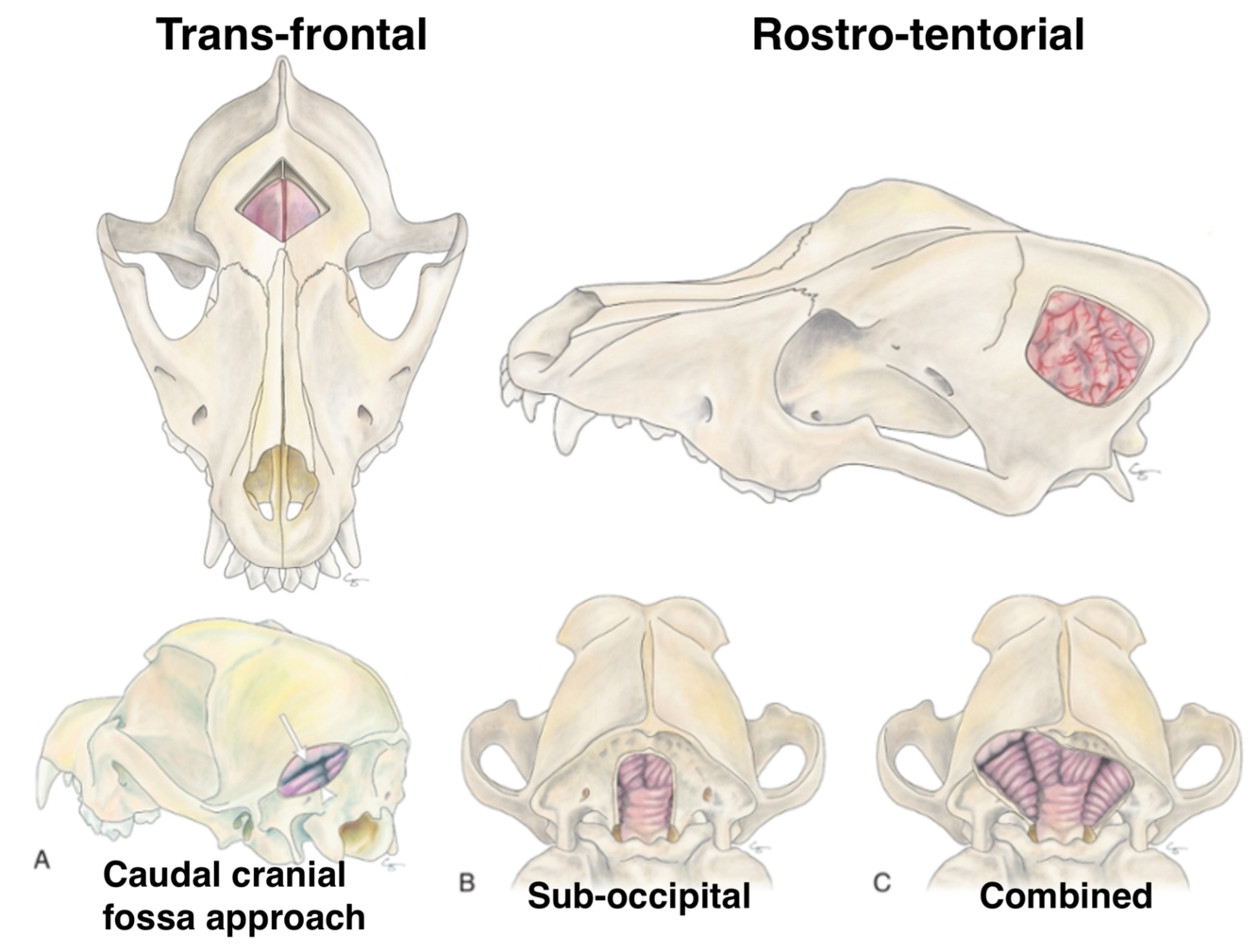
List 4 approaches to the cranial cavity and the areas accessed with each
N.B. cranial cavity is compartmentalized into rostrotentorial compartment (i.e. cranial to tenorium cerebelli) and caudotentorial compartment.
Cranial compartment contains:
- Cerebral hemispheres
- Thalamus
- Hippocampus
- Olfactory system
Caudal compartment contains:
- Cerebellum
- Pons
- Medulla
- 4th ventricle
Transfrontal (and modified transfrontal)
- Olfactory bulb
- Rostral frontal lobe
Rostrotentorial (depending on where approach made - can be bilateral)
- Frontal lobe
- Parietal lobe
- Temporal lobe
- Occipital lobe
- Lateral ventricles
- Falx cerebri
- Corpus callosum
Sub-occipital aka occipital
- Caudal cerebellum
- Dorsal medulla
- Fourth ventricle
- Cranial cervical SC
Caudal cranial fossa approach with transverese venous sinus occlusion
Most commonly in conjunction with rostrotentorial or sub-occipital approach
- Enter at level of tentorium cerebelli
List 2 approaches to the pituitary gland
Trans-sphenoidal
Ventral paramedian
Which vessel might cause bleeding from ventral olfactory/rostral lobe
Ethmoidal artery



-
Chapter 26 Neurologic Examination and Neuroanatomic Diagnosis60
-
Chapter 27 Neurodiagnostics48
-
Chapter 28 Imaging of the Neurologic System36
-
Chapter 29 Pathogenesis and Physiology of CNS Disease and Injury46
-
Chapter 30 Medical Conditions of the Vertebral Column and Spinal Cord51
-
Chapter 31 Cervical Vertebral Column and Spinal Cord119
-
Chapter 32 Thoracolumbar Vertebral Column53
-
Chapter 33 Degenerative LS Stenosis39
-
Chapter 34 Vertebral Fractures, Luxations and Subluxations47
-
Chapter 35 Cranial Surgery45
-
Chapter 36 Anaesthesia for Intracranial Surgery21
-
Chapter 37 Neoplasms of the Vertebrae and Spinal Cord70



