Emily Carr
- Born in Victoria B.C.
- wealthy/afforded art school
- sets up studios in family born to gain income after father died
- 1899 - saw her first First Nations village
- have to be careful with car’s art it’s a documentation not a representation - she didn’t understand what she was seeing/ their culture
Emily Carr 2
- became friends w. Native women/ welcomed into First Nations communities
- 1899 - traveled to Europe & picked up trends
- set herself up as artist / teacher in Vancouver
- west coast Aboriginal became carr’s inspiration
- Carr condemns the effects of residential schools
- fascinated by First Nations way of life but critical of missionaries.
Carr
- when Carr began her training there was no art school in BC
- Studied in San Franciso from french trained teachers
- In St. Ives explored the plein-air naturalism that was a moderate alternative to Impressionism.
- after establishing herself as a professional artist in Vancouver she travelled to Paris 1910-11 where she became concerned with Impressionism and fauve-inspired pure colors and decorative line.
Carr 4
Carr’s studies in Paris had introduced her to the cult of primitivism
- This confirmed her belief that First Nations carvings had great aesthetic value, which should be recorded and imitated.
- By 1907 she had already begun to paint totem poles and villages on the northwest coast of British Columbia.
- Carr’s journey east to attend the national gallery of canada’s exhibition and her meeting with the group of seven launched her onto the national art scene.
Carr & First Nations
- 1912 travelled to Kwakiutl villages and to Haida Gwaii.
- she had now produced nearly 200 paintings of First Nations subjects.
- Carr was encouraged by the members to turn to a more subjective vision of First Nations subjects, in these paintings Carr attempted to express values that she attributed to Native culture: pride in ancestry represented through totem animals, the power of Native women, and the terror inspired by nature and the elements.
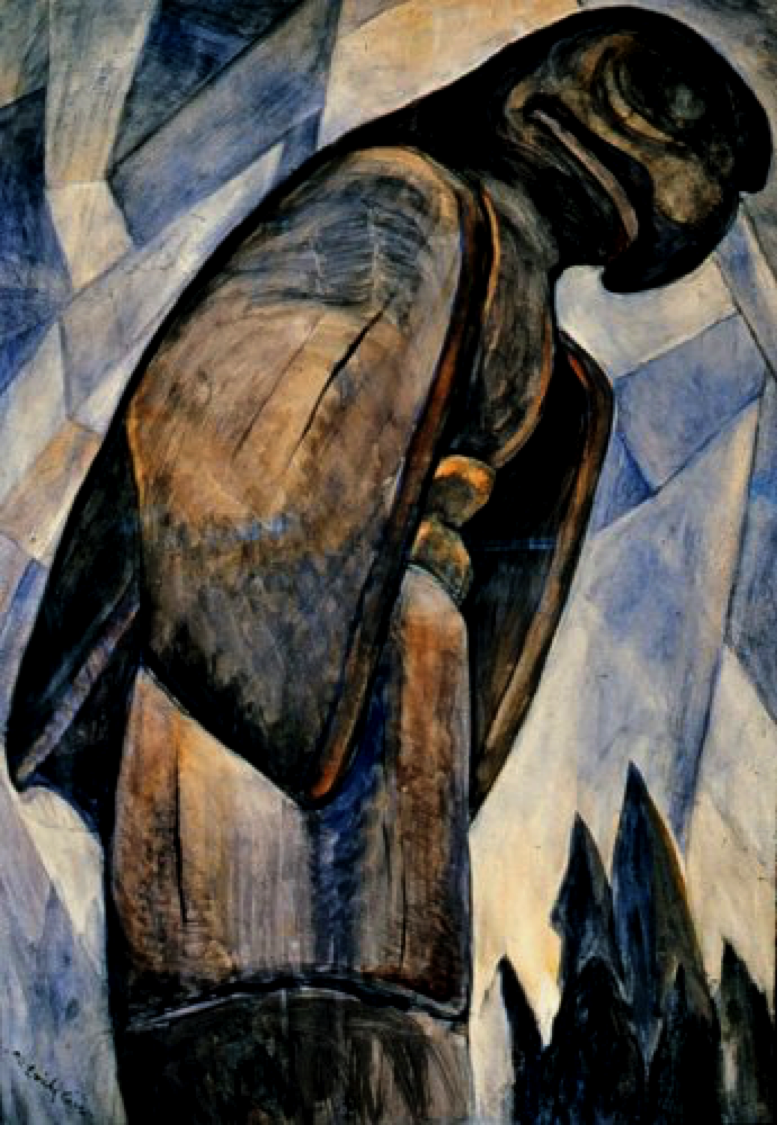
EMILY CARR, BIG EAGLE, SKIDEGATE, 1928-29
- Carr’s interest in combining the aesthetic of First Nations carvings with the geometric forms and spatial ambiguities of cubism made her one of the most challenging and experimental Canadian artists of 1930.
- Carr was placed alongside the Group of Seven as a foundational figure in the emergence of modern Canadian art.
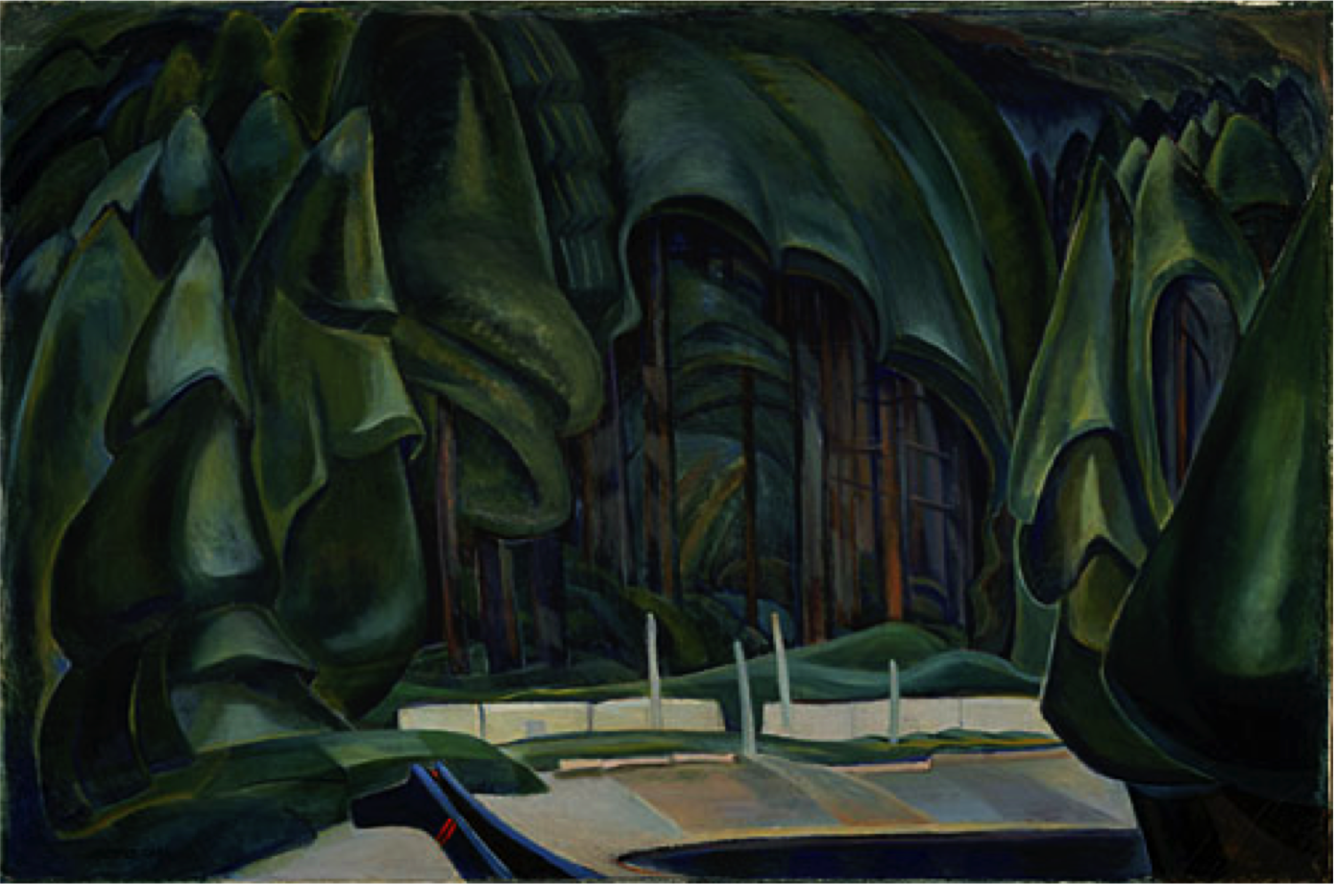
EMILY CARR, OLD TIME COAST VILLAGE, 1929-30 (FIGURE 4.4)
Emily Carr & First Nations
- Emily Carr was celebrated by Euro-Canadian authorities as engaging in the enterprise of salvaging the treasures of a disappearing culture.
- her project to make a record by painting First Nations villages and carvings in 1907 - 1913 allowed her to spend time in Native villages.
- Carr was attracted by many aspects of Aboriginal life and culture, and tried to move beyond the settler community’s prejudices and fears.
Carr & First Nations cont’d
- her first encounters with Native communities were typical encounters for her time: an 1899 visit to a mission school at Uclulelet and a tourist cruise to Alaska in 1907.
- She went back alone to visit remote northern villages, she sought out information to help her understand what saw by reading ethnographic publications and talking to Native People
– Carr condemned the attitudes of missionarries and the effects of residential schooling
-Carr had a very limited understanding of Native traditions but she was taken by the public as an authority.
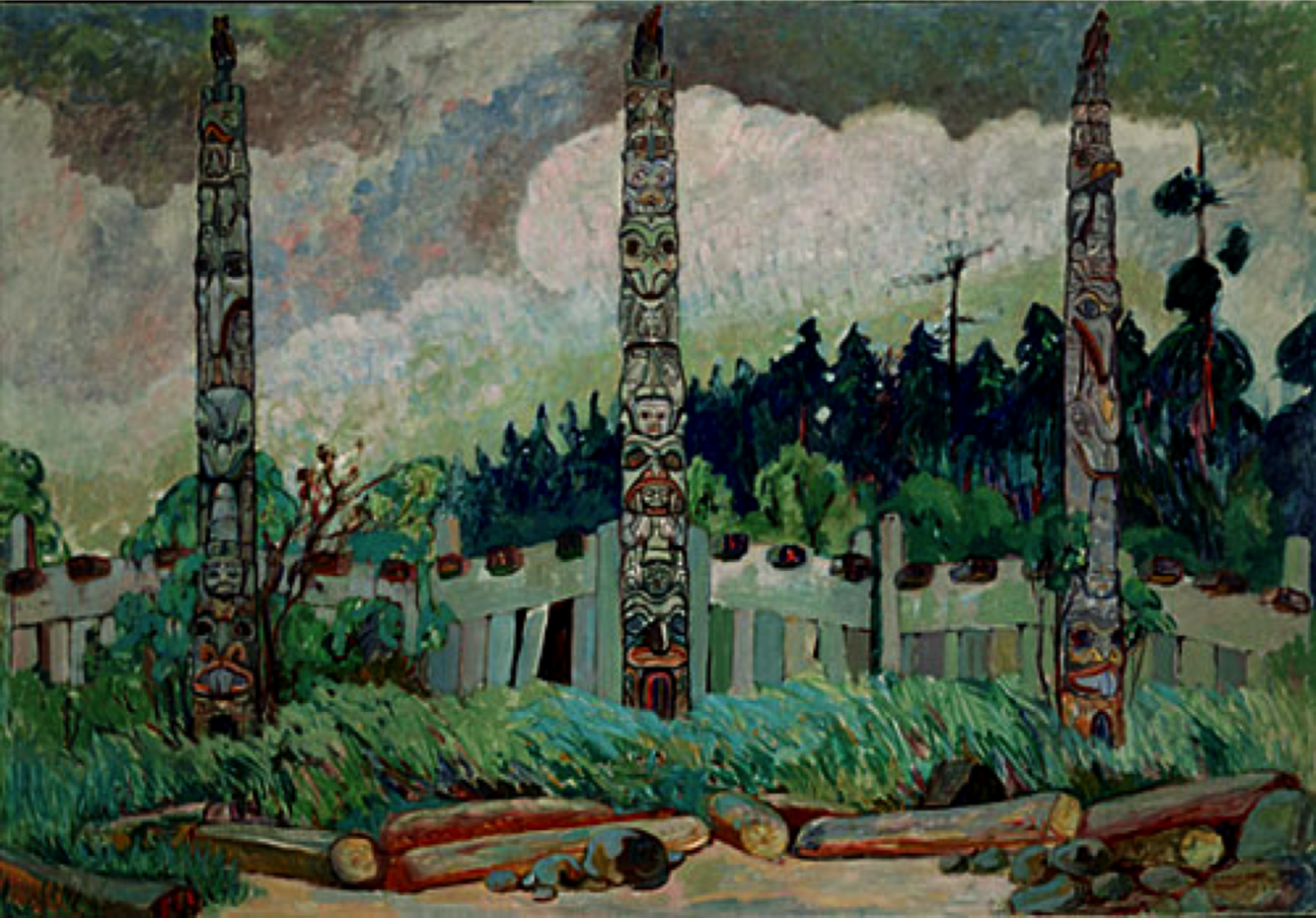
Paintings such as Tanoo 1913 were intended by her as witnesses to the grandeur of the ancient Haida villages and their tragic abandonment because of the smallpox epidemics.
EMILY CARR, TANU VILLAGE, HAIDA GWAII, 1913 (FIGURE 4.2)
Carr as a Canadian Artist
- Her work and life were important resources for growing Canadian art institutions.
- In her own province Carr has the presence of a folk heroine and is a reliable stable for tourism.
- Carr has produced art that has been a boon to Canadian institutions, since it is modern in style, recognizably figurative and local in reference.
-
Carr as a Feminist Icon
- she was considered a feminine heroine due to her life story of rebellion against social conformity and her independence as a woman who did not marry because of devotion to her artistic career.
- Her unusual friendships now seemed appropriate to a woman whose career taught her about the problems of marginalization.
- her sketching trips to First Nations territories gave her opportunities for travel and freedom unusual for middle class women and native imagery enabled her to pursue personal concerns
Carr as a feminist icon 2
these concerns include anxieties about feminity recurrent in her paintings of Zunuquoa of the Cat Village 1931 and admiration of the maternal qualities of Native women in her writings and such paintings as Totem Mother Kitwancool 1928.
- To many Carr seeemed the arechetypal rebel and unruly woman.
- Her work appeared to mesh with the concerns of eco-feminism in her desire to convey the living qualities of the forest, in her identification with trees, vegetation and mountains - forest landscape No2. 1935.
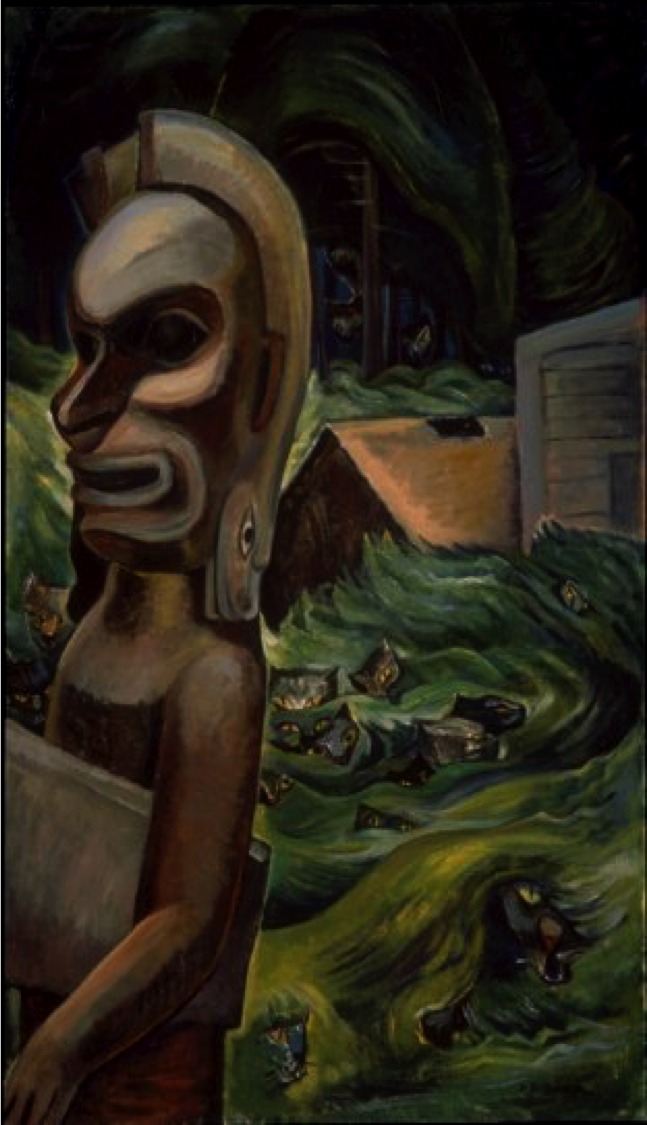
: EMILY CARR, ZUNOQUA OF THE CAT VILLAGE, 1931
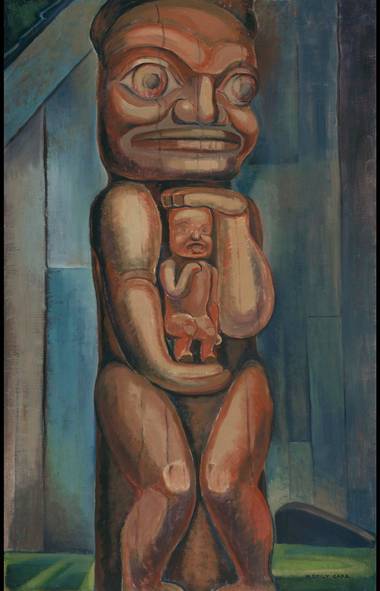
Totem Mother Kitwancool 1928 Emily Carr
Carr as a Feminist icon 3
- Institutions have found Carr a useful symbol to signify their support for feminist aspirations.
- National Gallery of Canada presented its 1990 Carr restrospective in part as a response to the 1970 Report of the royal commission on the status of women in Canada.
- The Vancouver School of Art was renamed the Emily Carr College of art now (The Emily Carr university of art and design)
Carr & Feminism
- Since Carr is hardly a neglected figure the choice of her for these symbolic gestures was sen as an easy option that prevented the need to recognize other more controversial women.
- for feminists concerned with symbol of empowerment carr’s cultivation of the Dzunukwa figure was seized upon as being similar to the goddess imagery prevalent in the womens movement of the 1970s.
- For others, this interpretation like the view of Carr as a spiritualized eco ffeminist was less pleasant since it seemed to reinforce traditional stereotypes of women as being idenfitied with nature and passive religiosity rather than rational intellect and power.
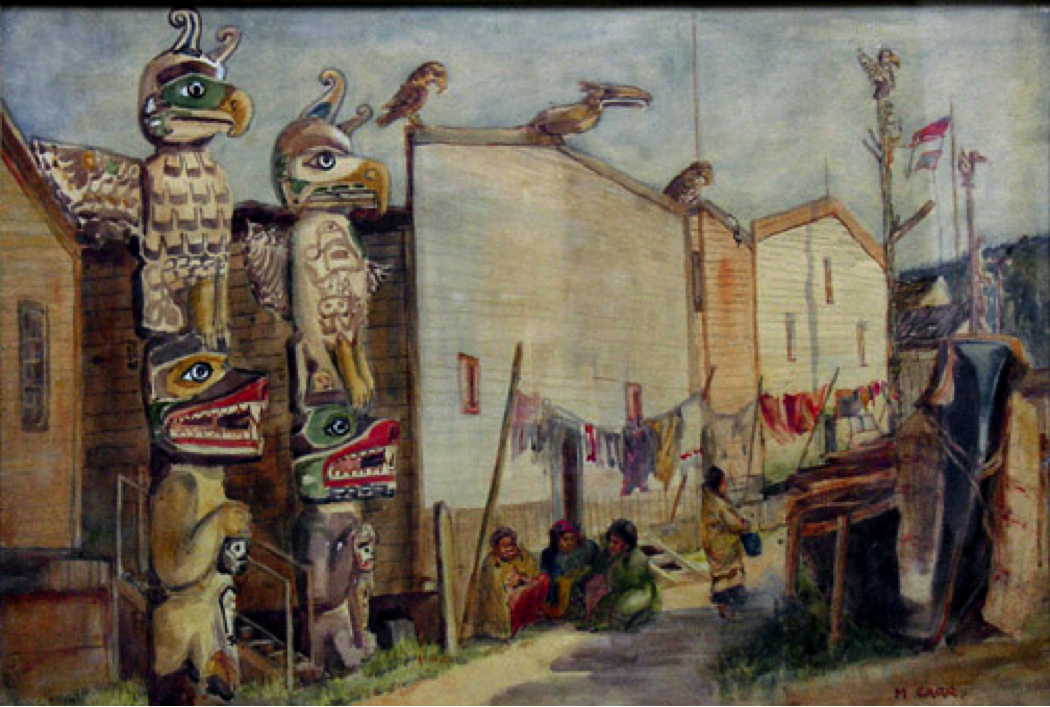
EMILY CARR, INDIAN VILLAGE, YALIS/ALERT BAY, 1909
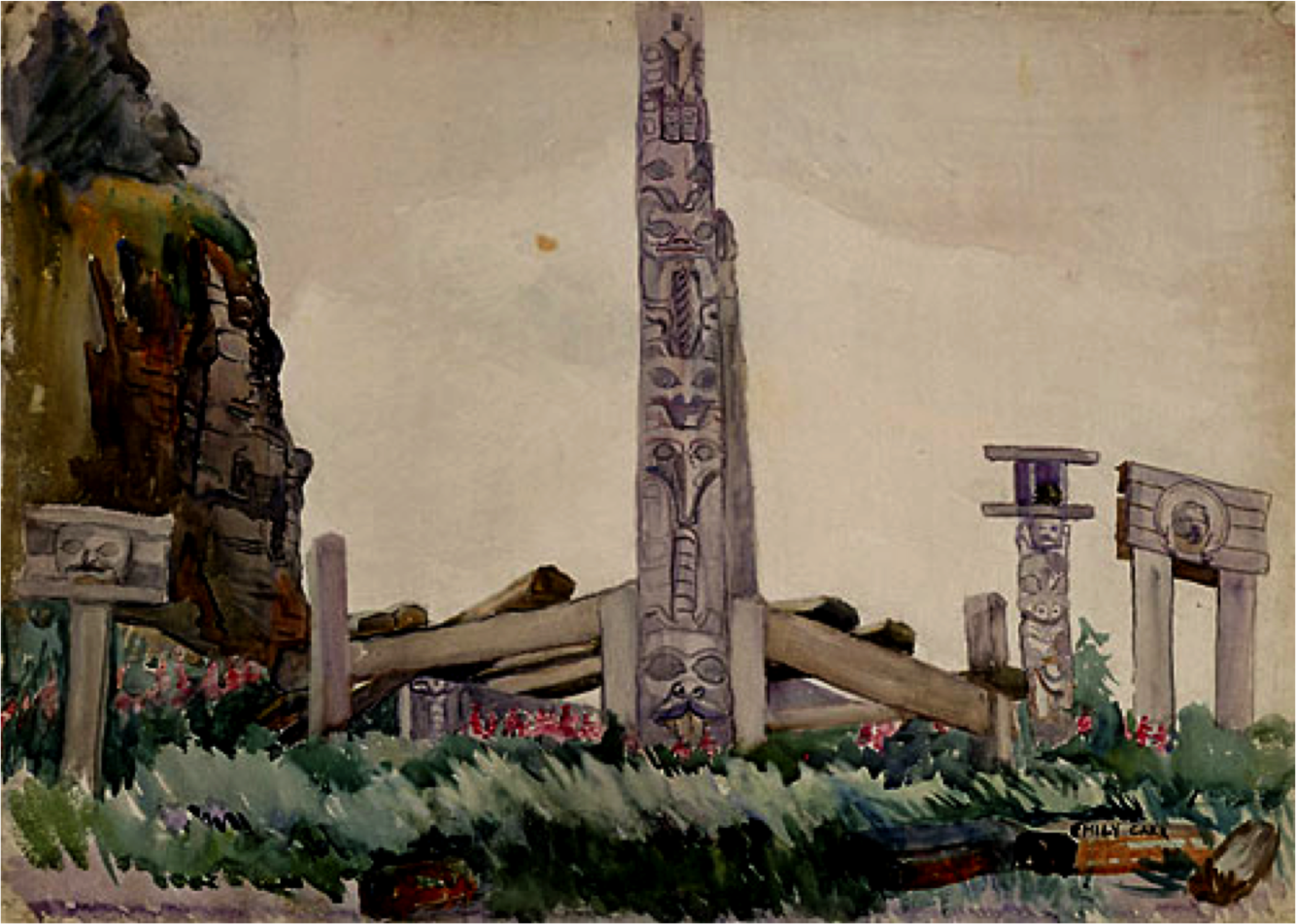
EMILY CARR, SKEDANS, 1912, WATERCOLOUR
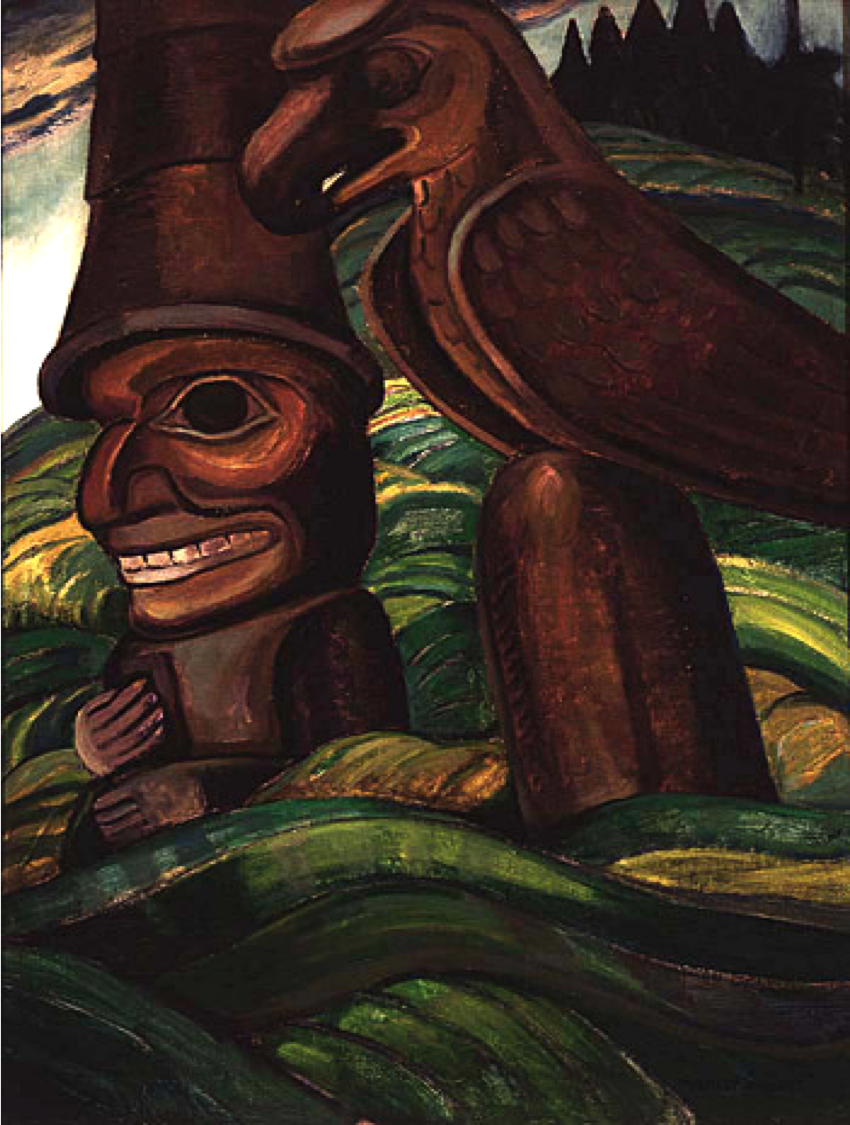
EMILY CARR, YAN MORTUARY POLES, 1928-29 (ART GALLERY OF WINDSOR)
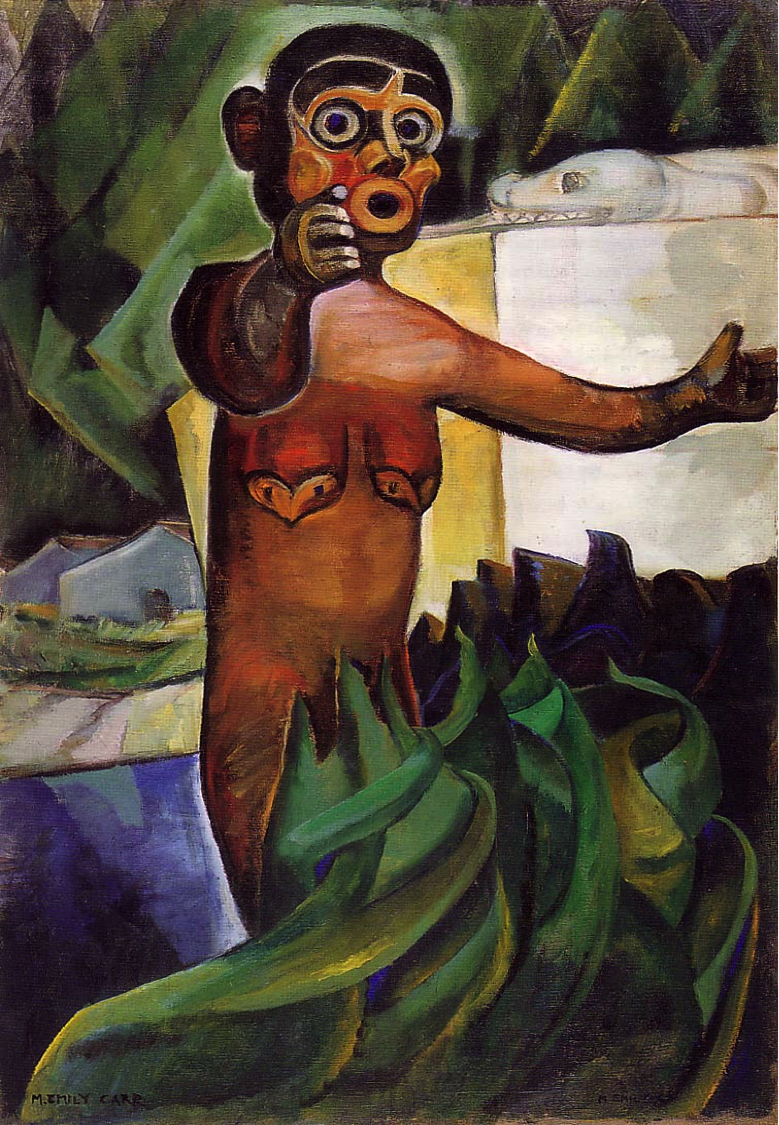
EMILY CARR,
GUYASDOMS D’SONOQUA,
C. 1928-30
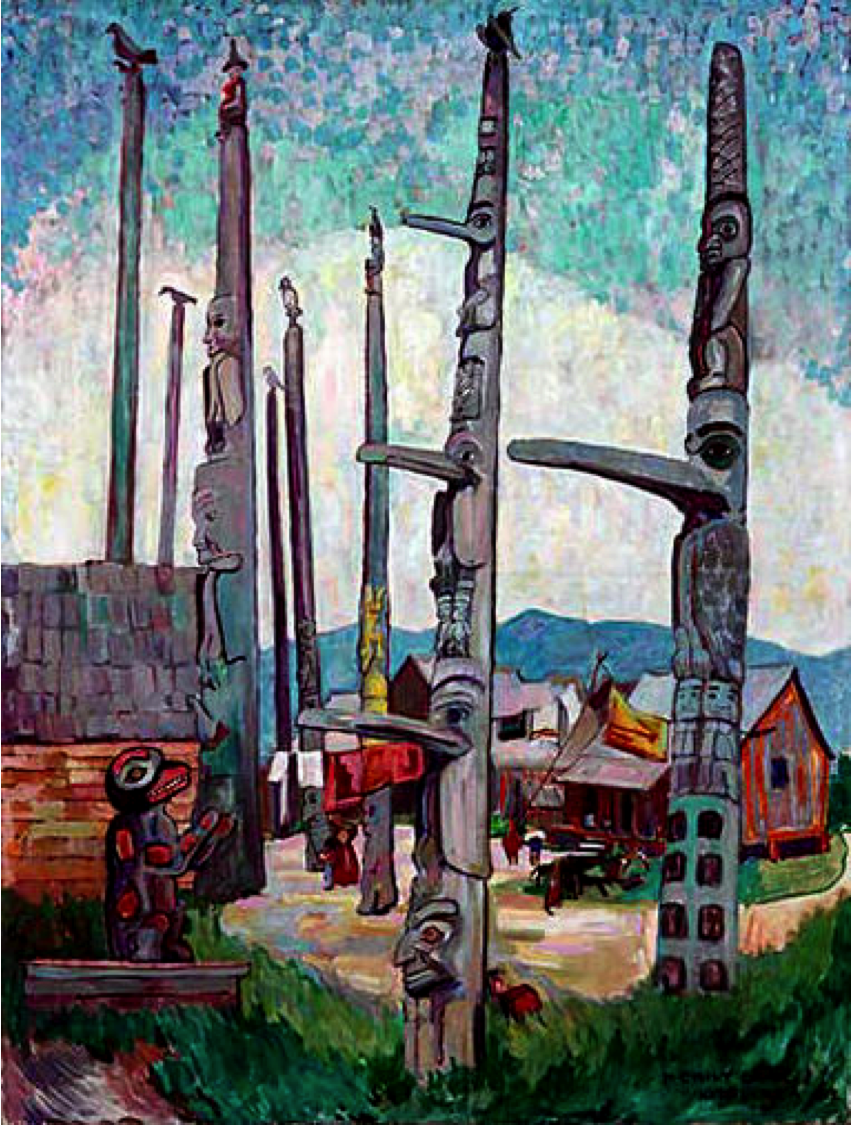
RIGHT: EMILY CARR, TOTEM POLES, KITSEGUKLA, 1912 (Vancouver Art Gallery/VAG)
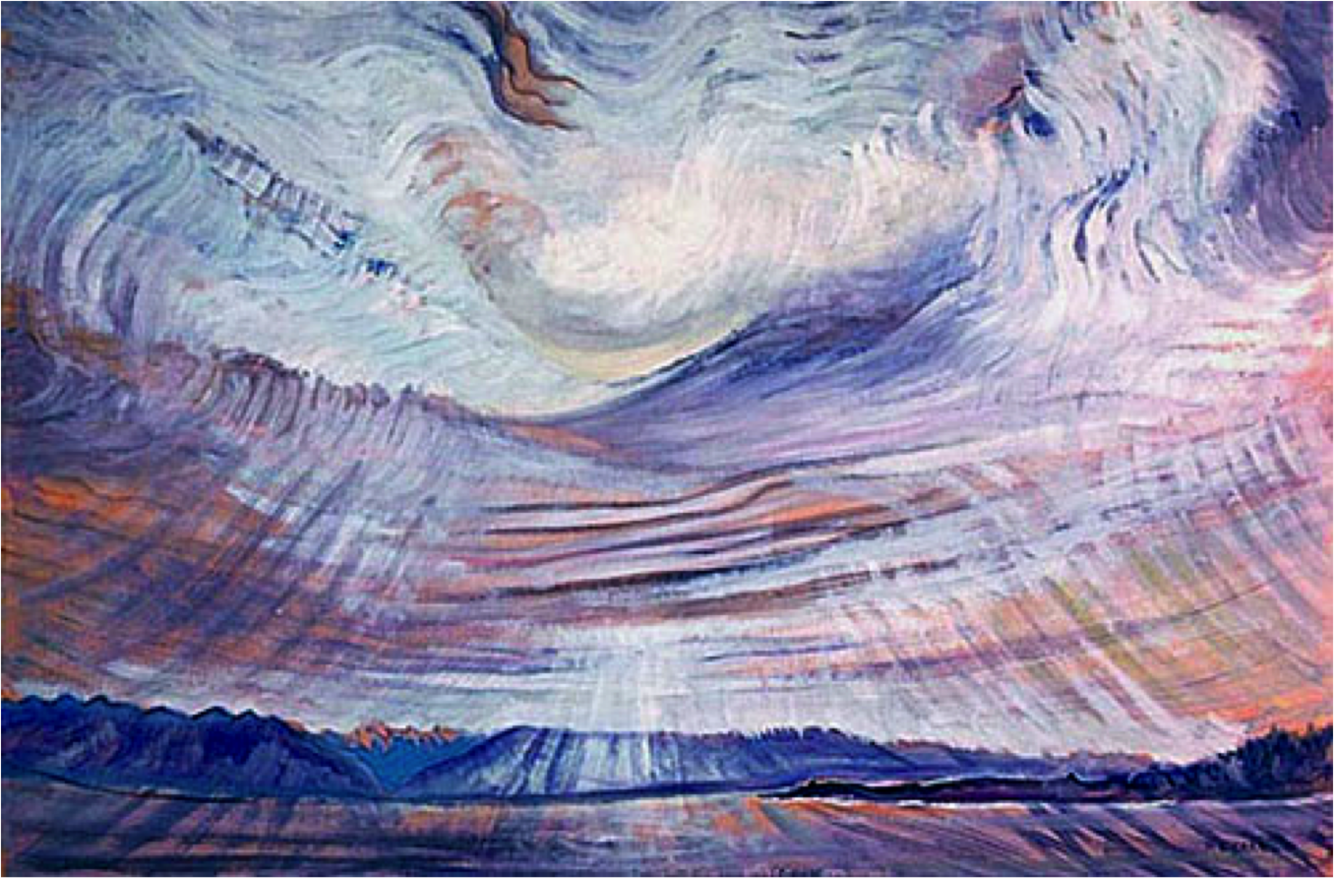
EMILY CARR, SKY, 1935-36 (NGC)




