Traditional Costing System
Allocates overhead using a predetermined Overhead rate
- Job Order Costing
- Direct labor as a possible activity base
- Process Costing
- Machine hours as a possible activity base
Activity-Based Costing (ABC)
An approach for allocating overhead costs
- Allocates overhead to MULTIPLE activity cost pools
- Asssigns the activity cost pools to products or services by means of cost drivers
- Four Steps
Activity-Based Costing (ABC)
Key Concepts: Activity
Any event/action/transaction/work sequence that incurs cost when producing or performing a service
Activity-Based Costing (ABC)
Key Concepts: Activity Cost Pool
The overhead cost attributed to a distinct type of activity
e.g., ordering materials, setting up machines, assemblung products
Activity-Based Costing (ABC)
Key Concepts: Cost Drivers
Any factor/activity that has a direct cause-effect relationship with the resources consumed
Activity-Based Costing (ABC)
Four Steps - Two Stages
Stage 1: Overhead Costs are assigned to activity cost pools
- Step 1: Identify and Classify Activities and Allocate Overhead to Cost Pools
Stage 2: Allocate overhead assigned to activity cost pools to products, using cost drivers
- Step 2: Identify the Cost Drivers that has strong correlation to the cost accumulated in each cost pool
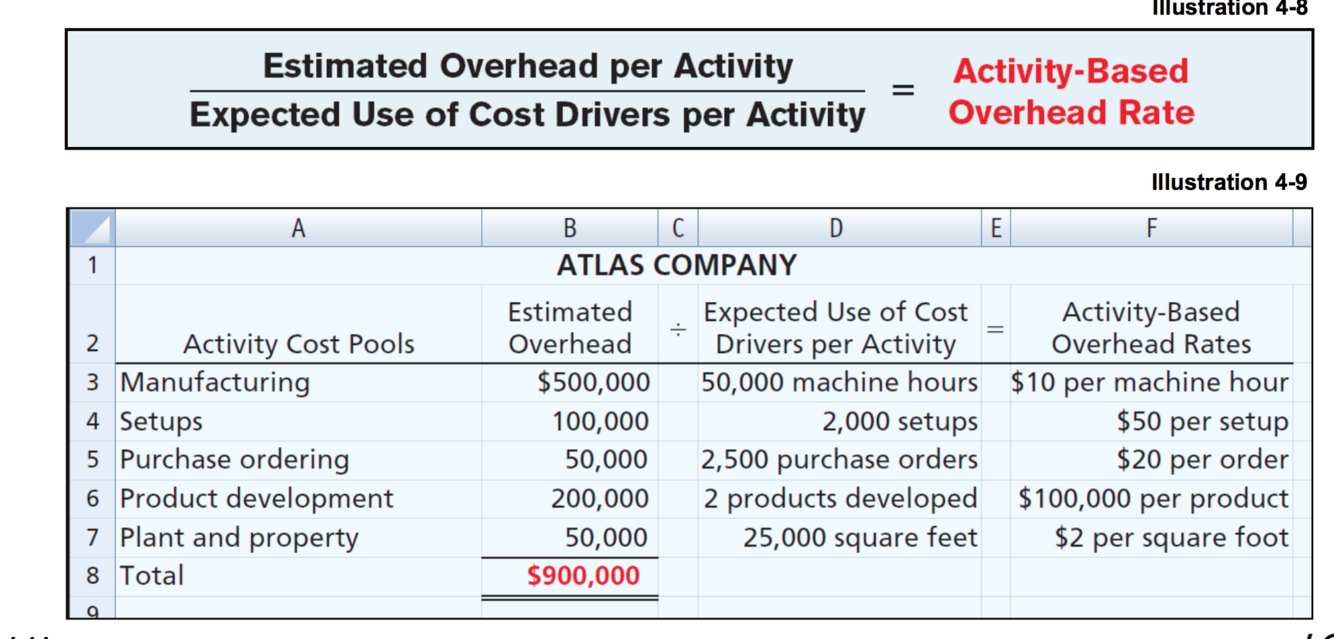
- Step 3: Compute the Activity based overhead rate for each cost pool
- Step 4: Allocate overhead costs to products, using the overhead rates determined for each cost pool
Formula:
Activity-Based Overhead Rate
Anmerkung:
Estimated Overhead Rate per Activity -> Step 1
Expected Use of Cost Drivers per Activity -> Step 2
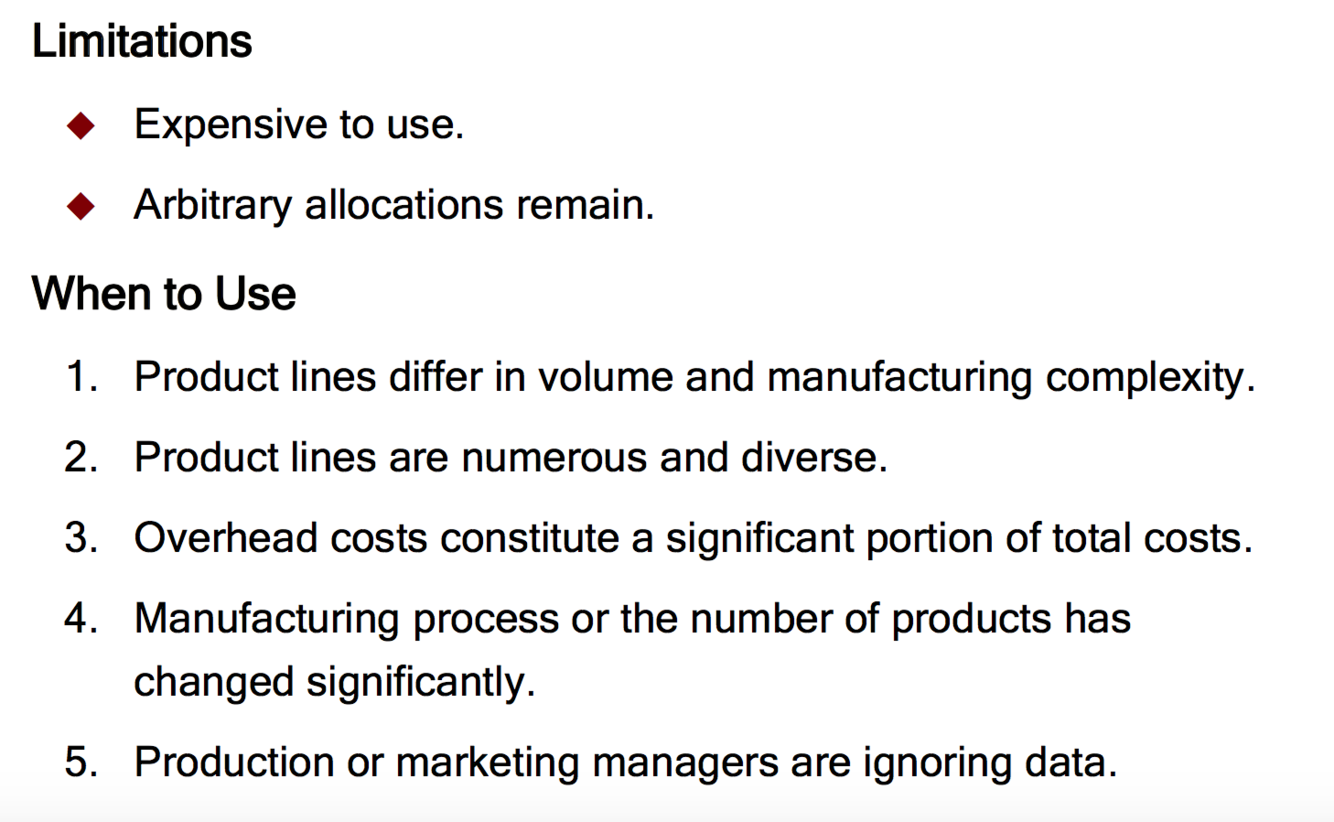
Limitations and knowing when to use ABC
Value Added Activites
Increase the perceived value of a product or service to customer.
Example:
- Engineering desing
- Machining service
- Assembly
- painting
Non-Value Added Activites
These Activity simply add cost to, or increase the time spent on, a product or service without increasing its perceived value
Classification of Activity Levels
Unit-Level
- Performed for each unit of production
- Example:
- Assembly of cell phones is a unit-level activity because the amount of asselby the company performs increases with each additional cell phone assembled
Classification of Activity Levels
Batch Level
- Performed every time a company produces another batch of a product
- Example: Batch of ice cream
- Suppose that to start processing a new batch of ice cream, an ice cream producer needs to set up its machines. The amount of time spent setting up machines increases with the number of batches produced, not with the number of units produced
Classification of Activity Levels
Product Level
- Performed every time a company produces a new type of product
- Example: Time spend testing a new drug by a pharmaceutical company
- The amount of time spent on testing activities increase with the number of products the company produces
Classification of Activity Levels
Facility Level
- Required to support or sustain an entire production process
- Example: Hospital
- The builiding must be insured and heated, and the property tax must be paid, no matter how many patients the hospital treats.
- These cost do not vary a function of the number of units, batches or products




