What are the different subjects that will be discussed in the lecture? (you obv don’t have to learn this)
- Stem cells and differentiation
- Epigenetic mechanisms regulating self-renewal and differentiation
- Different kind of stem cells and how to make them
- Cancer cells with self-renewal capacity: cancer stem cells
- Leukemia and leukemic stem cells
- Self-renewal signaling pathways: Notch, Wnt and Hedgehog
- The polycomb pathway
- Lineage specific transcription factors
What are the two characteristics of a stem cell?
- Ability to divide (self replicate) for indefinite periods throughout the life of an organism (self renewal)
- Ability to differentiate to the many different cell types upon different signals (pluripotency)
How is the process called whereby stem cells become specialized to perform a particular function
Differentiation
In what two ways can a stem cell divide?
Symmetrical (copy) and asymmetrical (differentiation)
What are the different types of stem cells and their characteristics?
- Totipotent Stem Cell: the potential to create any type of cell necessary for embryonic development
- (extraembryonic membranes and tissues, the embryo itself, and all postembryonic tissues and organs).
- Pluripotent Stem Cell (PSC): the capability of developing cells of all germ layers
- (endoderm, ectoderm, and mesoderm).
- Multipotent Stem Cell: give rise to cells that have a function dependent of the embryonic germ layer they derived from.
Which cells are in heterochromatin, and which are in euchromatin form: stem cells or differentiated cells?
- Heterochromatin: differentiated cells (‘closed’ structure)
- Euchromatin: stem cells (‘open’ structure)
Stem cells can also be divided into embryonic stem cells and adult stem cells. Can you explain what they mean?
- Embryonic stem cells – they are pluripotent – indefinite self-renewal
- Embryonic stem cells of the inner cell mass are able to differentiate to generate primitive ectoderm which differentiate during gastrulation into endoderm, ectoderm and mesoderm
- Adult stem cells – they are multipotent – limited self-renewal
- They are present in every tissue and involved in regeneration of these tissues.
- Examples: hematopoietic stem cells (in the bone marrow), hair follicle stem cells, breast stem cells and intestinal stem cells
There are many different strategies for stem cell therapy but what are the three types that will be discussed?
- Embryonic stem (ES) cells
- Induced pluripotent stem (iPS) cells
- Nuclear transfer embryonic stem (NT-ES) cells
How are embryonic stem (ES) cells ‘made’?
Embryonic stem cells are derived from inner cell mass (from embryo’s)
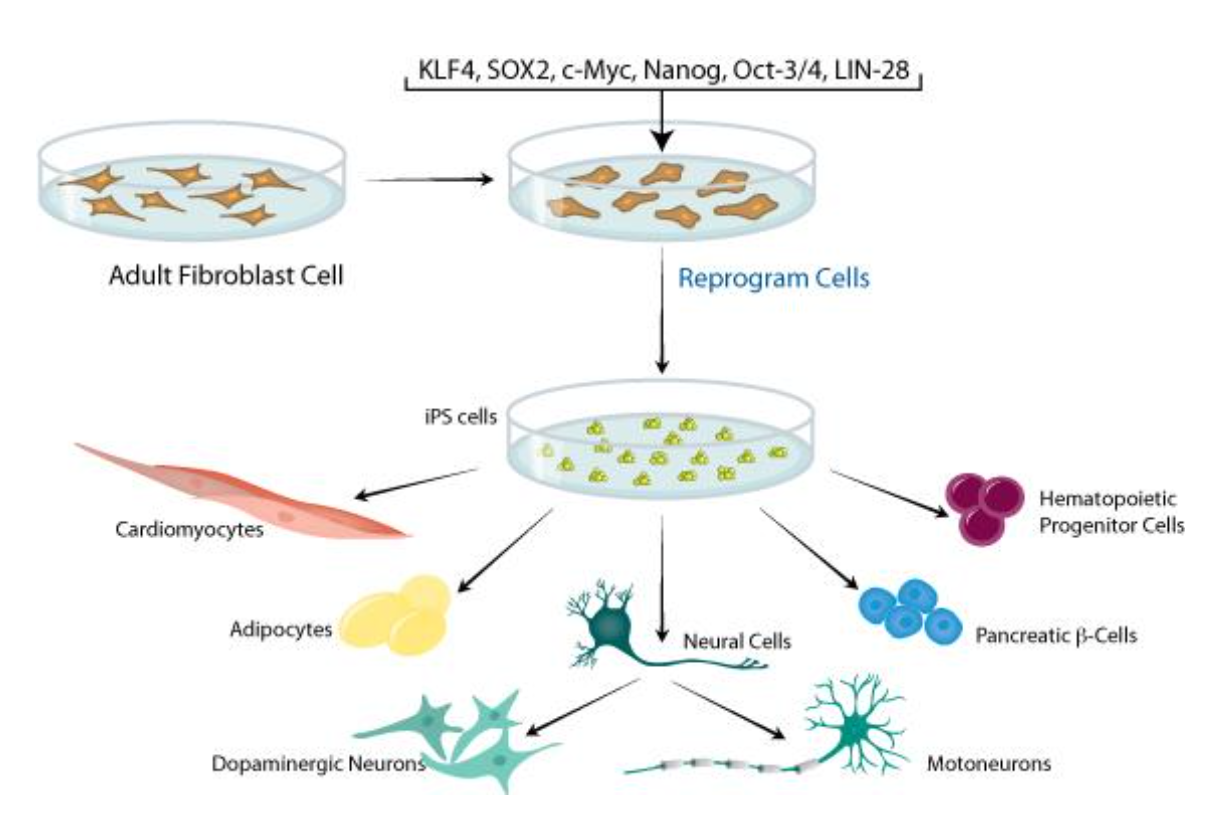
How are induced pluripotent stem (iPS) cells ‘made’?
They are induced, by adding repogragramming factors (Yamanaka factors) to mature differentiated cells, so they become pluripotent stem cells
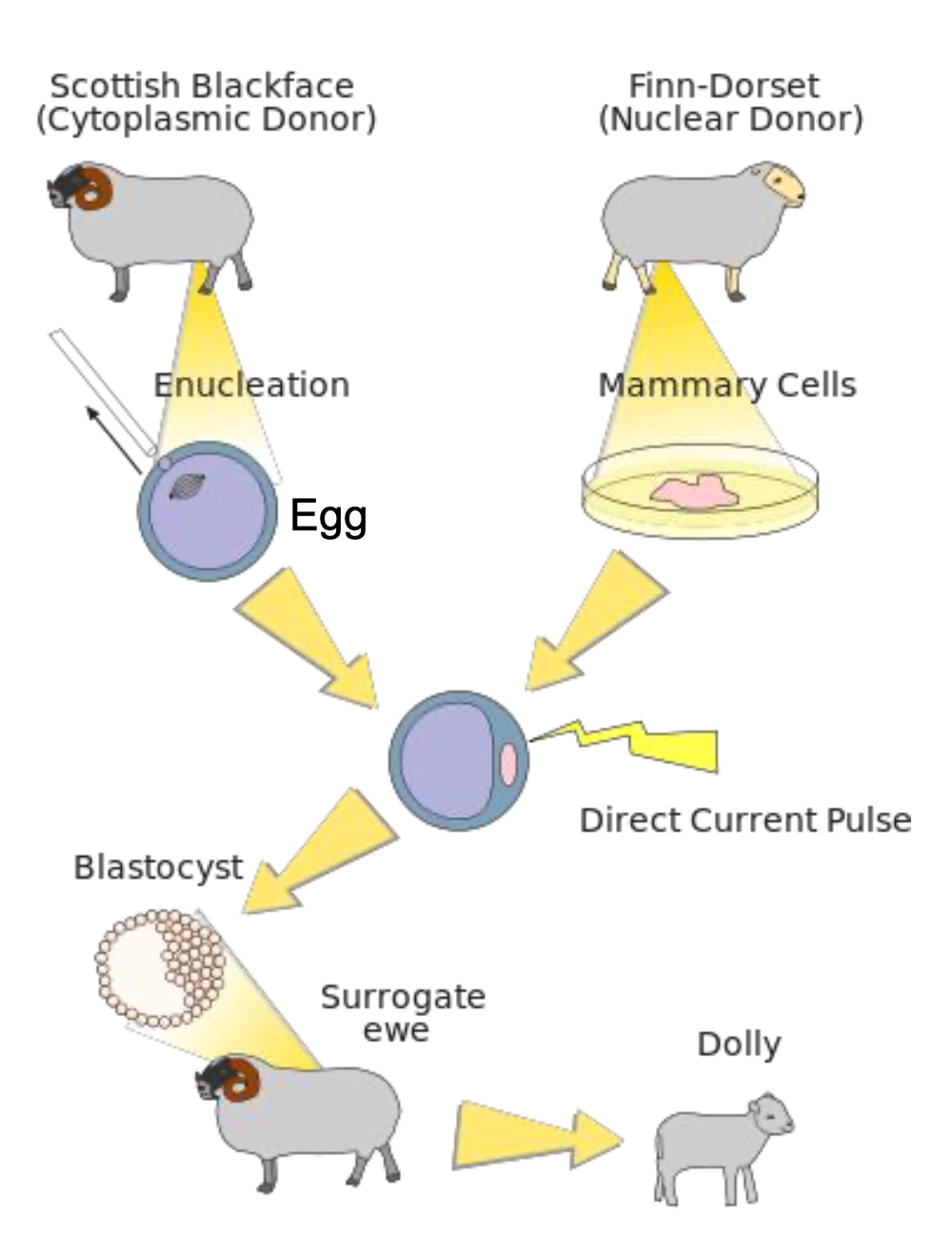
How are nuclear transfer embryonic stem (NT-ES) cells ‘made’?
This was how Dolly was made, a cytoplasmic donor with enucleated cell/oocyte and a somatic nuclear donor cell is needed. After the cell and the DNA are ‘merged’, it is injected in a third animal that will carry the blastocyst.
In the cell, there is a balance between self-renewal and differentiation. What happens when the cell is in balance?
There is tissue homeostasis, a.k.a. normal tissue
In the cell, there is a balance between self-renewal and differentiation. What happens when the cell is shifted towards differentiation?
There is tissue aging and/or degeneration
In the cell, there is a balance between self-renewal and differentiation. What happens when the cell is shifted towards self-renewal?
Cancer.
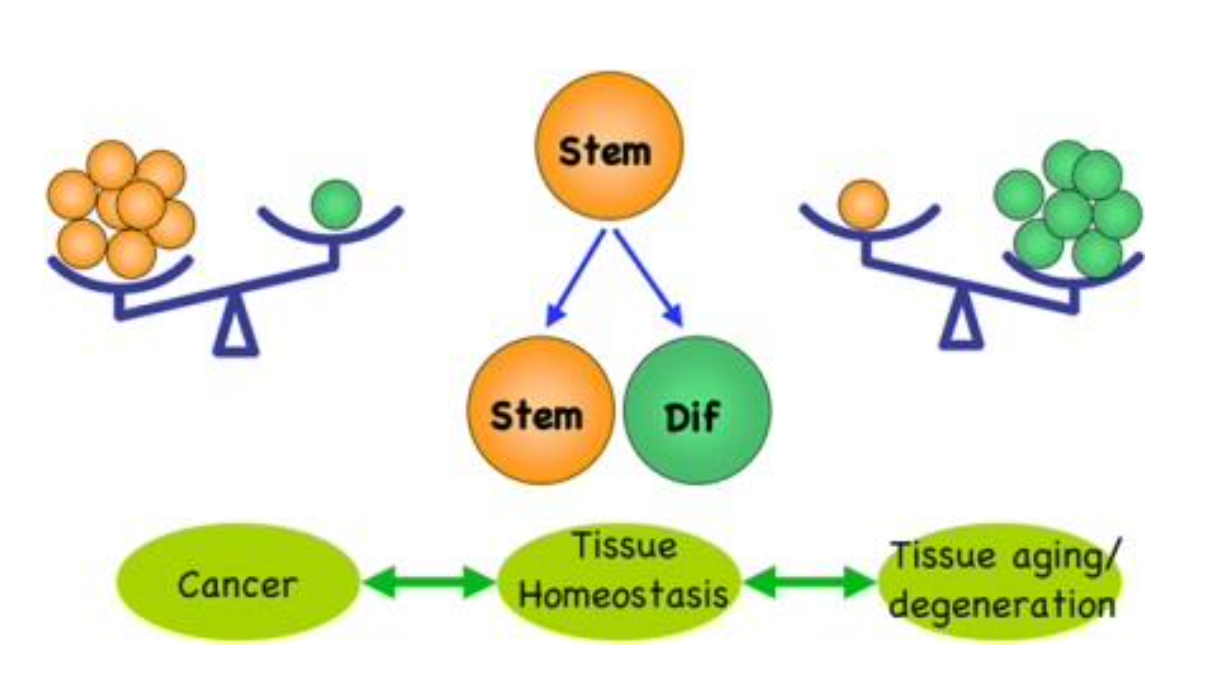
For an overview of the different ‘balances’, see this figure
So, tumor cells are associated with self-renewal. In what ways can they acquire self-renewal?
- Aberrant expression of (mutated) genes induce stem cell features
- The initial/founder hit (driver mutation) is in a stem cell. Tumor has inherited the stem cell state/features of the cell of origin
- Microenvironment imposes stem cell features onto the cancer cells
What is the evidence that suggests that stem cells are the origin of cancer? (+ can you also name examples?)
- Self-renewal-long life of normal stem cells offers opportunities for mutations and thereby for cancer formation (Example: skin).
- More differentiated normal cells obtain self-renewal capacity (mutation) (example: acute and chronic myeloid leukemia and colon cancer): “De novo stem cells”
There is additional evidence for stem cell origin of tumors… what are they?
(besides:
- Self-renewal-long life of normal stem cells offers opportunities for mutations and thereby for cancer formation.
- More differentiated normal cells obtain self-renewal capacity (mutation) “De novo stem cells”)
- Tumor specific mutations are present in the normal stem cell compartment (Example for leukemia)
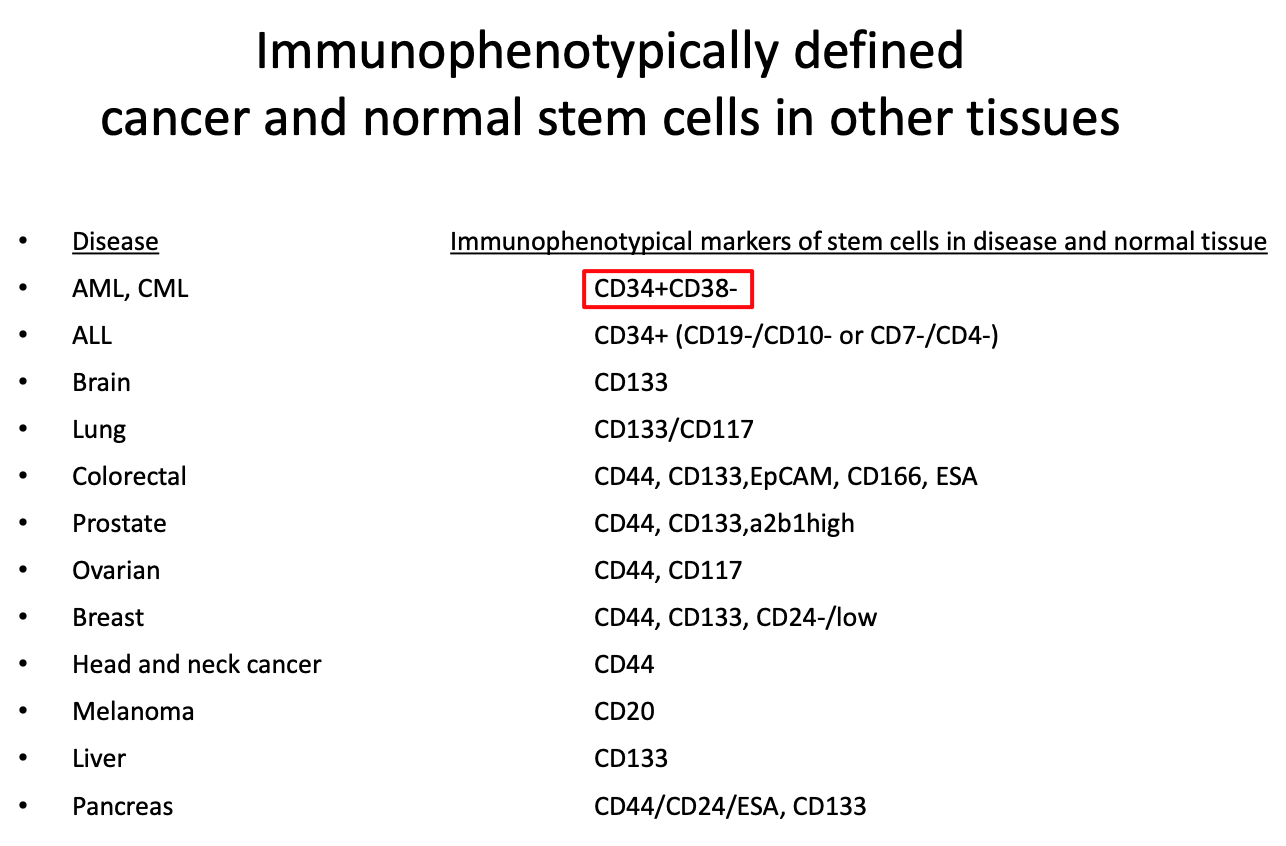
- Presence of similar cell surface markers in normal- and cancer stem cells
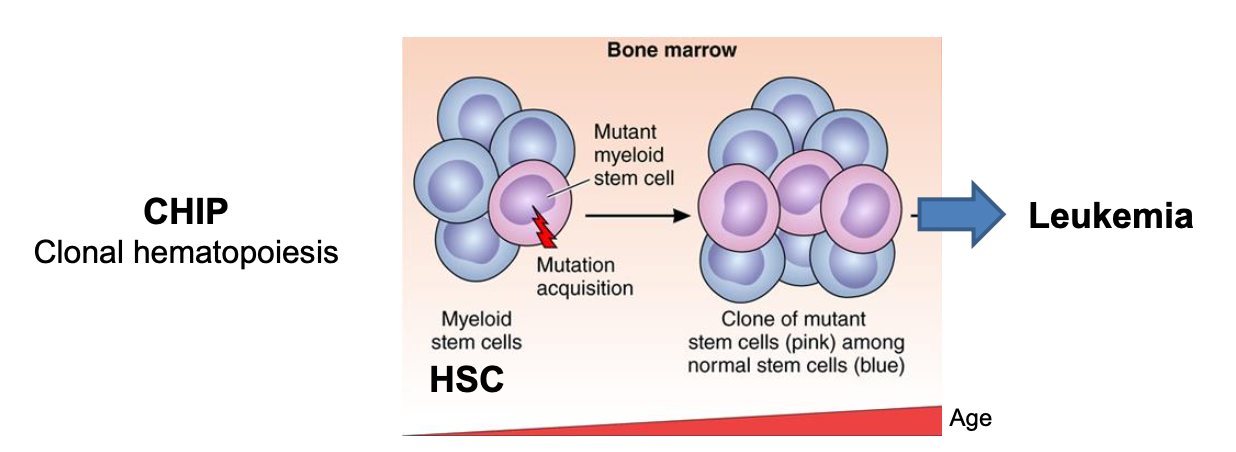
Earlier, we noticed that tumor specific mutations that are present in the normal stem cell compartment are additional evidence that stem cells are the origin of tumors. How is this phenomenon called and how does it ‘work’?
Clonal hematopoiesis (CHIP): aging related phenomenon in which hematopoietic stem cells (HSCs) contribute to the formation of a genetically distinct subpopulation of blood cells (example: acute and chronic myeloid leukemia)
Earlier, we noticed that the presence of similar cell surface markers in normal and cancer stem cells is evidence that stem cells are the origin of cancer. What are some examples of diseases where these markers can be used?
Examples are AML, CML and brain tumors, but as you can see in this figure there are many more
In cancer, there is heterogeneity. What does this mean?
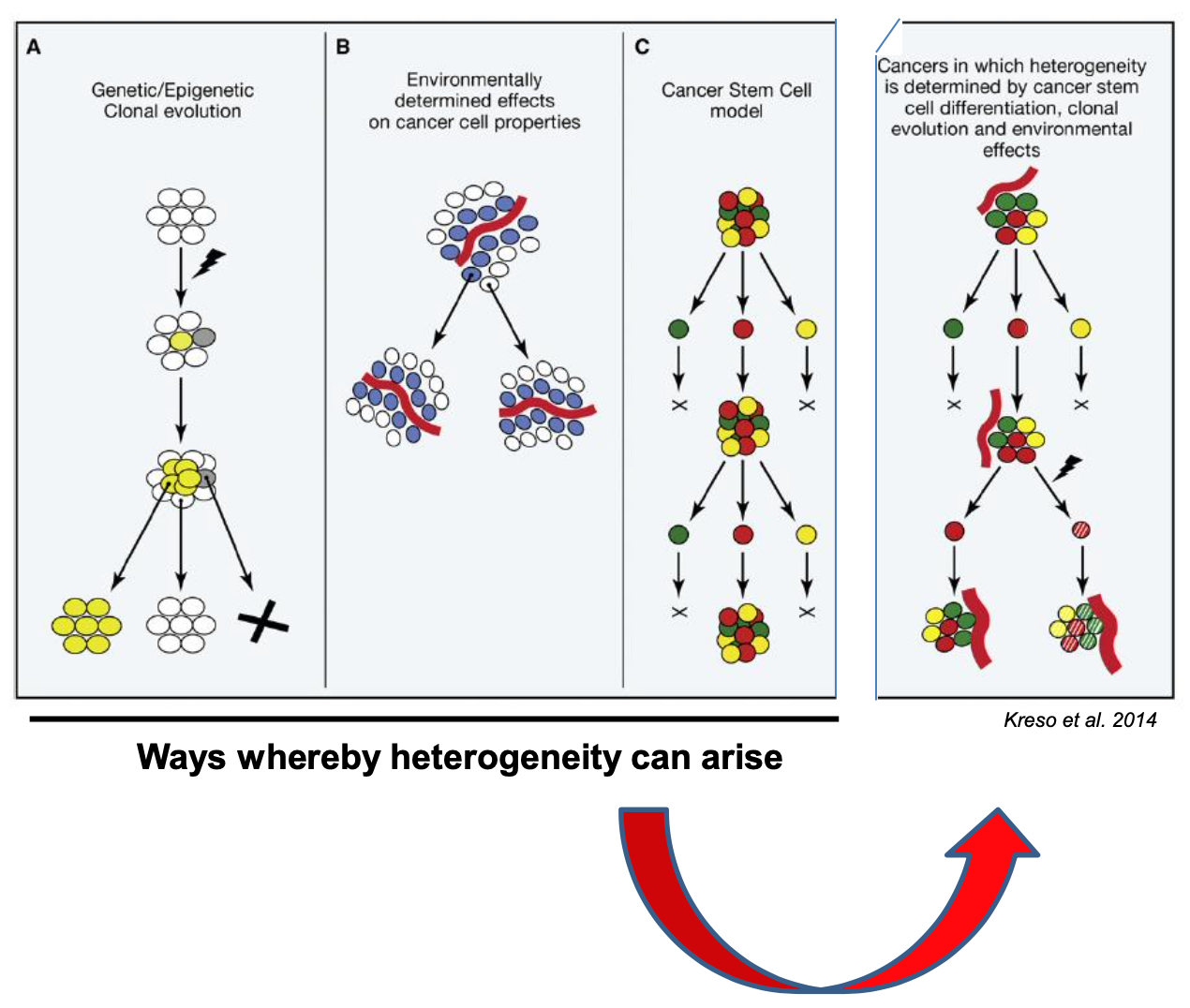
Tumor heterogeneity refers to observations that although cancer formation is believed to be a clonal process beginning with a single transformed cell, not all malignant cells within a tumor are the same
How does heterogeneity occur? (3 answers)
- Intrinsic differences among cancer cells caused by stochastic genetic and epigenetic changes, clonal evolution.
- Extrinsic mechanisms lead to phenotypic and functional differences between tumor cells; microenvironment.
- Stem cell model; in which stem cell-like cells “differentiate into non-stem cells.
What is the definition of stemness and what three things belong to stemness?
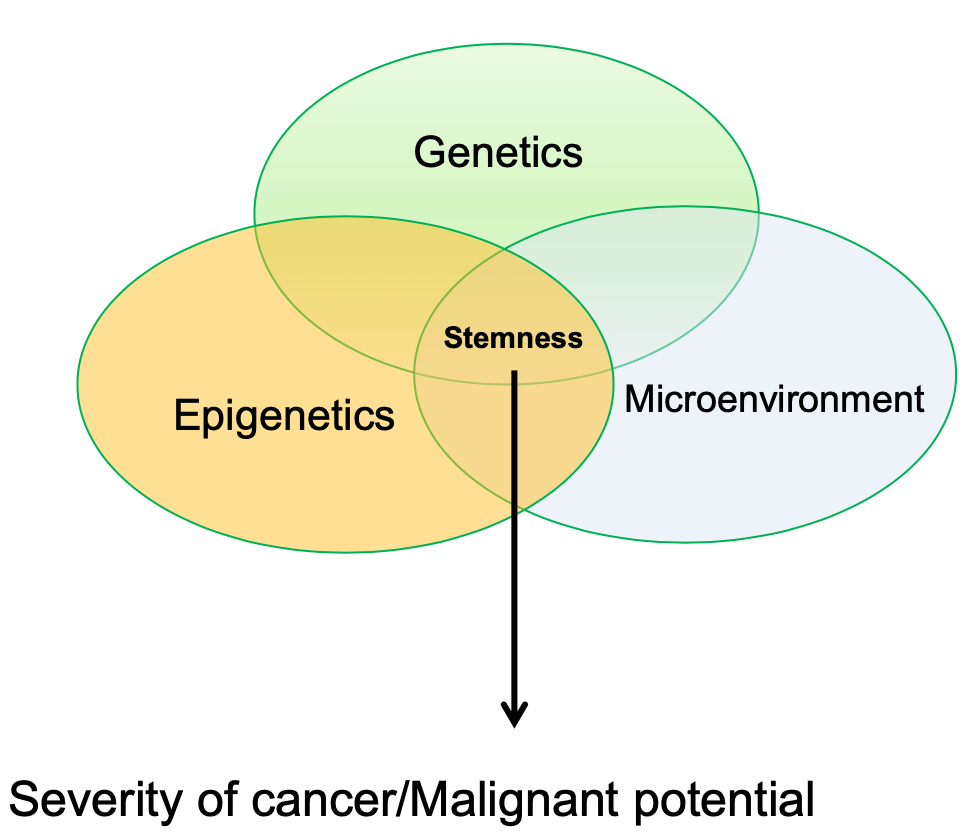
Stemness refers to common molecular processes underlying the core stem cell properties of self-renewal and the generation of differentiated progeny.
- Heterogenous mixture of genetic subclones (genetics)
- Non-genetic determinants; epigenetic modifications (epigenetics)
- Microenvironment
True/false: The severity of cancer is directly related to the stemness of the cell
True! This also means that the patient survival can be predicted upon the factors that impinge on stemness, and also the treatment is less effective if the cell has more of these features
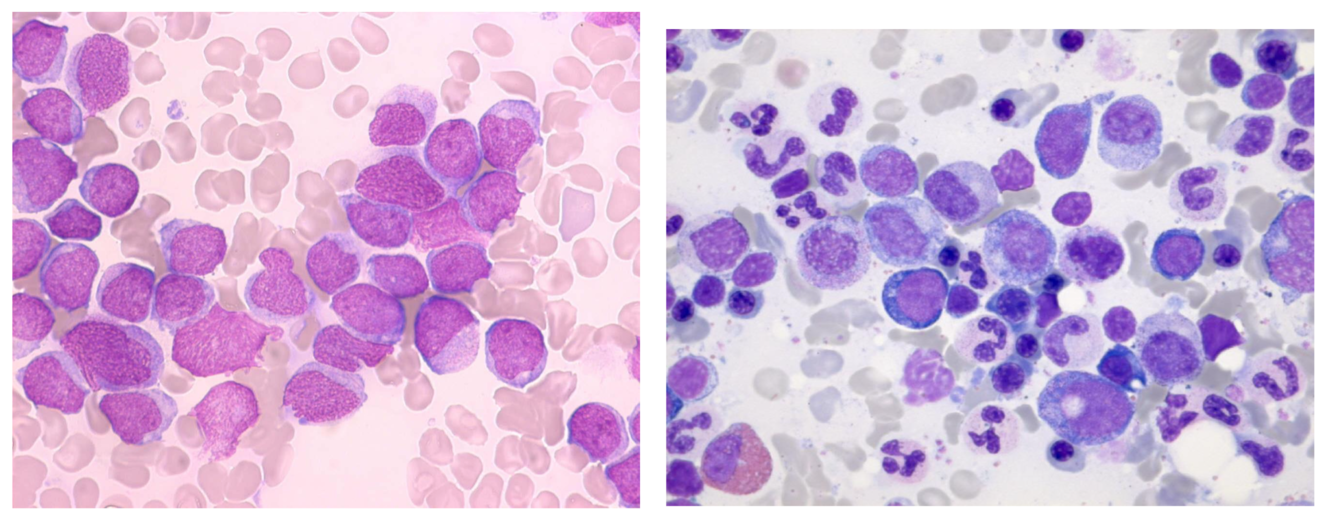
Which of these two figures shows a normal bone marrow, and which shows (immature) blast cells?
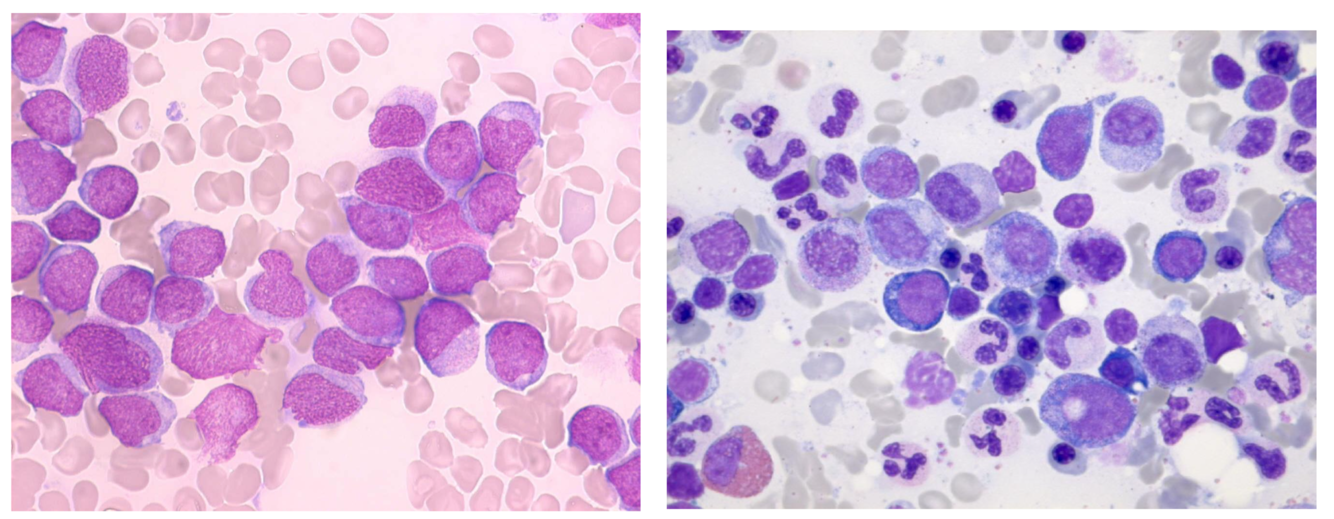
The left figure is a blast cell, the right figure is a normal bone marrow


-
Chapter 7: Apoptosis (Lecture, main)48
-
Chapter 7: Apoptosis (Book, main)32
-
Chapter 7: Apoptosis (Secondary details)28
-
Chapter 8: Stem cells and differentiation (Lecture, main)49
-
Chapter 8: Stem cells and differentiation (Book, main)30
-
Chapter 8: Stem cells and differentiation (Secondary details)48
-
Chapter 9: Metastasis (Lecture, main)39
-
Chapter 9: Metastasis (Book, main)37
-
Chapter 9: Metastasis (Secondary details)28
-
Chapter 10: Angiogenesis (Main)31
-
Chapter 10: Angiogenesis (Book, main)25
-
Chapter 10: Angiogenesis (Secondary Details)12
-
Chapter 11: Nutrients, hormones, and gene interactions (Lecture, main)47
-
Chapter 11: Nutrients, hormones, and gene interactions (Book, main)45
-
Chapter 11: Nutrients, hormones, and gene interactions (Secondary details)23
-
Chapter 12 and 13: Immunology, immunotherapy and inflammation (Lecture 1/2, main)41
-
Chapter 12 and 13: Immunology, immunotherapy and inflammation (Lecture 2/2, main)44
-
Chapter 12: Tumor immunology and immunotherapy and inflammation (Book, main)37
-
Chapter 13: Infectious agents and inflammation (Book, main)21
-
Chapter 12 and 13: Immunology, immunotherapy and inflammation (Secondary details)30
-
Chapter 14: Technology and drugs and diagnostics development (Lecture, main)36
-
Chapter 14: Technology and drugs and diagnostics development (Book, main)24
-
Chapter 14: Technology and drugs and diagnostics development (Secondary Details)31
-
Lung Cancer Clinic (Practical)47
-
KW seminar: Principles of immunotherapy for head and neck cancer60
-
KW seminar: Hematology clinic: fast implementation of science36
-
KW seminar: Radiotherapy23
-
KW seminar: Quality of life27
-
KW seminar: Interventional Oncology39
-
KW seminar: Molecular imaging38
-
Chapter 13: some questions about viruses12



