Recall the phase of flight that the Speed Trim System operates most frequently.
STS operates most frequently during takeoffs, climb and go-arounds.
Explain the meaning of the SPEED BRAKES EXTENDED light.

In flight –
- SPEED BRAKE lever is beyond the ARMED position, and
- TE flaps extended more than flaps 10, or
- Radio altitude less than 800 feet.
On the ground –
- SPEED BRAKE lever is in the DOWN detent, and
- Ground spoilers are not stowed.
Explain the meaning of an amber LE FLAPS TRANSIT light.
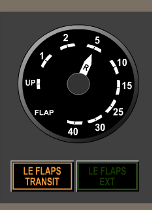
- any LE device in transit.
- any LE device not in programmed position with respect to TE flaps.
- a LE uncommanded motion condition exists. (two or more LE flaps or slats have moved away from their commanded position)
- during alternate flap extension until LE devices are fully extended and TE flaps reach flaps 10.
Note: Light is inhibited during autoslat operation in flight.
Explain the meaning of an illuminated Flight Control LOW PRESSURE light.
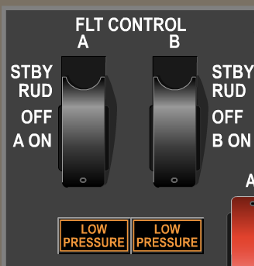
- Indicates low hydraulic system (A or B) pressure to ailerons, elevator and rudder.
- deactivated when associated FLIGHT CONTROL switch is positioned to STBY RUD and standby shutoff valve opens.
Explain the meaning of the FEEL DIFF PRESS light.
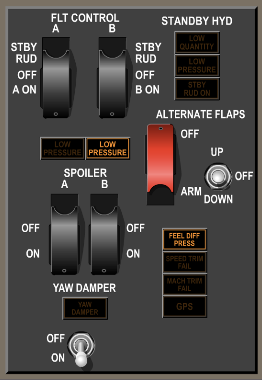
Indicates excessive differential pressure in the elevator feel computer.
Explain the meaning of the SPEED TRIM FAIL light.
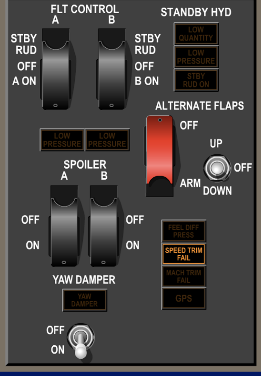
- Indicates failure of the speed trim system.
- Indicates failure of a single FCC channel when MASTER CAUTION recall is activated and light extinguishes when Master Caution System is reset.
Explain the meaning of the MACH TRIM FAIL light.
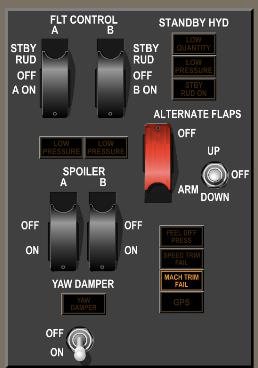
- Indicates failure of the mach trim system.
- Indicates failure of a single FCC channel when MASTER CAUTION light recall is activated and light extinguishes when Master Caution System is reset.
Explain the meaning of the AUTO SLAT FAIL light.
- Indicates failure of the auto slat system.
- Indicates failure of a single Stall Management/Yaw Damper (SMYD) computer when illuminated during MASTER CAUTION recall and extinguishes when master caution system is reset.
Explain the meaning of the YAW DAMPER light.
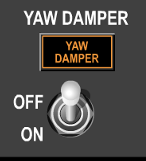
Yaw damper is not engaged.
Explain the meaning of the SPEED BRAKE DO NOT ARM light.
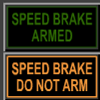
- light deactivated when SPEED BRAKE lever is in the down position.
- When SPEED BRAKE lever is armed, indicates abnormal condition or test input to the automatic speed brake system.
- during landing, indicates wheel speed has dropped below 60 kts, and the speedbrake lever is not in the DOWN position.
Explain the function of the FLT CONTROL switches located on the Forward Overhead panel.
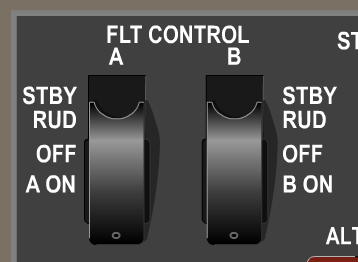
STBY RUD – activates standby hydraulic system pump and opens standby rudder shutoff valve to pressurize standby rudder power control unit.
OFF – closes flight control shutoff valve, isolating ailerons, elevators and rudder from associated hydraulic system pressure.
ON (guarded position) – normal operating position.
Explain the function of the Control Column Stabilizer cutout switches.
Control column actuated stabilizer trim cutout switches stop operation of the main electric and autopilot trim when the control column movement opposes trim direction.
Note: This mechanism is inside the control column near the floor. It senses excessive pressure on the yoke that opposes trim direction.
Understand the purpose of the STAB TRIM OVERRIDE switch on the AFT Electronic Panel.
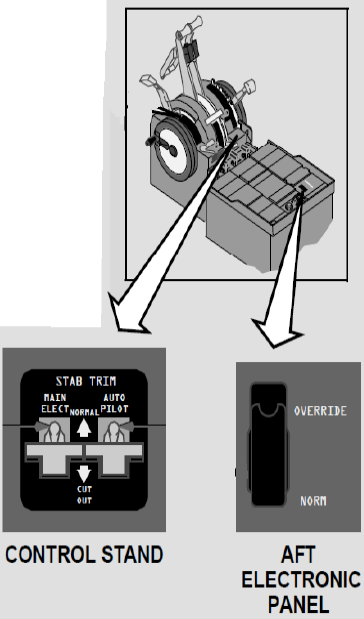
OVERRIDE- bypasses the control column actuated stabilizer cutout switches to restore power to the Stabilizer Trim switches on the Control Wheel.
NORM (guarded position) - normal operating position.
Explain the function of the STAB TRIM Cutout switches on the Control Stand.
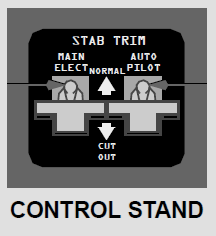
MAIN ELECTRIC
NORMAL-normal operating position.
CUTOUT- deactivates control wheel trim switch operation.
AUTOPILOT
NORMAL- normal operating position.
CUTOUT- deactivates autopilot stabilizer trim operation. Autopilot disengages if engaged.
Explain how the Flap Load Relief system operates.
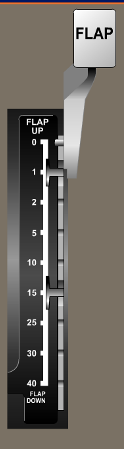
When the flaps are set at 40, the TE flaps:
- retract to 30 if airspeed for flaps 40 is exceeded.
- re-extend when airspeed is reduced below flaps 40 speed.
When the flaps are set at 30, the TE flaps:
- retract to 25 if the airspeed for flaps 30 is exceeded.
- re-extend when airspeed is reduced below flaps 30 speed.
Explain how primary flight controls are powered.
The flight controls are powered by redundant hydraulic sources; system A and system B. Either hydraulic system can operate all primary flight controls. The ailerons and elevators may be operated manually if required. The rudder may be operated by the standby hydraulic system if system A and system B pressure is not available.
Recall that flight spoilers assist the ailerons in roll control.
The flight spoilers rise on the wing with up aileron and remain faired on the wing with down aileron. When control wheel is displaced more than approximately 10 degrees, spoiler deflection is initiated.
Explain the function of the ALTERNATE FLAPS Master Switch.
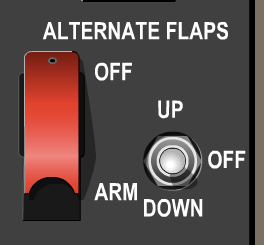
OFF (guarded position) – normal operating position.
ARM – closes TE flap bypass valve, activates standby pump, and arms the ALTERNATE FLAPS Position Switch.
Explain the positions of the Speed Brake Lever.
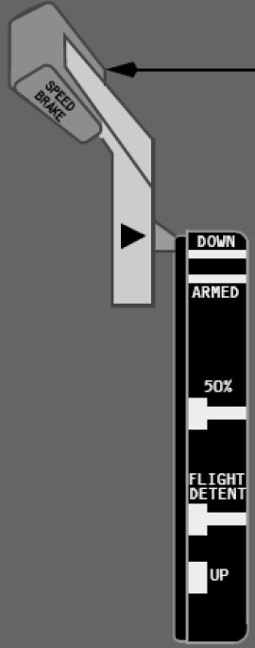
DOWN (detent) – all flight and ground spoiler panels in faired position.
ARMED –
- automatic speed brake system armed (illuminates SPEEDBRAKE ARMED light.)
- upon touchdown, the SPEED BRAKE lever moves to the UP position, and all flight and ground spoilers extend.
50% (as installed) – if the speed brakes are deployed beyond the 50% position and the speedbrake load alleviation feature is activated:
- the speed brake lever moves to the 50% position.
- all flight spoilers retract to one-half of their maximum position for inflight use.
FLIGHT DETENT – all flight spoilers are extended to their maximum position for inflight use.
UP – all flight and ground spoilers are extended to their maximum position for ground use.
Explain the function of the Speedbrake Load Alleviation Feature.
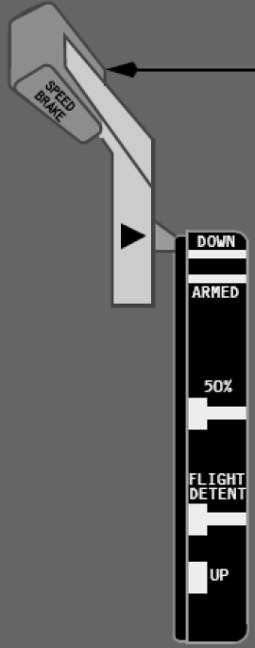
(As installed)- The automatic speed brake load alleviation feature limits the deployment of the speed brakes under certain high gross weight/airspeed combinations. Under these conditions, if the speed brakes are deployed to the FLIGHT DETENT, they automatically retract to 50 percent of the FLIGHT DETENT. The SPEED BRAKE lever moves to reflect the position of the speed brakes. Manual override is available. Increased force is needed to move the SPEED BRAKE lever beyond the 50 percent position with load alleviation active. The SPEED BRAKE lever must be held in place when manual override is used between 50 percent and the FLIGHT DETENT.
Describe the Speed Brake system during ground operations.
During landing, the auto speed brake system operates when these conditions occur:
- SPEED BRAKE lever is in the ARMED position.
- SPEED BRAKE ARMED light is illuminated.
- radio altitude is less than 10 feet.
- landing gear strut compresses on touchdown.
- both thrust levers are retarded to IDLE.
- main landing gear wheels spin up. (more than 60 kts)
The SPEED BRAKE lever automatically moves to the UP position and the spoilers deploy.
If the SPEED BRAKE lever is in the DOWN position during landing or rejected takeoff, the auto speed brake system operates when these conditions occur:
- main landing gear wheels spin up. (more than 60 kts)
- both thrust levers are retarded to IDLE.
- reverse thrust levers are positioned for reverse thrust.
The SPEED BRAKE lever automatically moves to the UP position and spoilers deploy.
Note: After an RTO or landing, if either thrust lever is advanced, the SPEED BRAKE lever automatically moves to the DOWN detent and all spoiler panels retract. The spoiler panels may also be retracted by manually moving the SPEED BRAKE lever to the DOWN detent.

-
Chapter 1: Airplane General, Emergency Equipment, Doors, Windows12
-
Chapter 2: Air Systems24
-
Chapter 3: Anti-Ice, Rain10
-
Chapter 4: Automatic Flight38
-
Chapter 5: Communications7
-
Chapter 6: Electrical22
-
Chapter 7: Engines, APU15
-
Chapter 8: Fire Protection12
-
Chapter 9: Flight Controls21
-
Chapter 10: Flight Instruments, Displays40
-
Chapter 11: Flight Management, Navigation11
-
Chapter 12: Fuel9
-
Chapter 13: Hydraulics6
-
Chapter 14: Landing Gear12
-
Chapter 15: Warning Systems16
-
Differences (not tested on eSV)10



