Where are polyps more common?
Polyps are most common in the colon but may occur in the esophagus, stomach, or small
intestine.
How do polyps begin?
Most, if not all, polyps begin as small elevations of the mucosa.
These are referred to
as sessile, a term borrowed from botanists who use it to describe flowers and leaves that grow directly from the stem without a stalk.
As sessile polyps enlarge, several processes,including what?
- proliferation of cells adjacent to the mass and the
- effects of traction on the luminal protrusion,
- may combine to create a stalk
What are pedunculated polyps?
Polyps with stalks are termed pedunculated.
In general, intestinal polyps can be classified as what?
- non-neoplastic or
- neoplastic in nature.
What is the most common neoplastic polyp ?
adenoma,
which has the potential to progress to cancer.
The nonneoplastic
polyps can be further classified as what?
- inflammatory,
- hamartomatous,
- or hyperplastic.
What is an example of purely inflammatory lesion?
The polyp that forms as part of the solitary rectal ulcer syndrome is an example of a purely
inflammatory lesion.
What is the clinical triad of inflammatory polyp?
- rectal bleeding,
- mucus discharge,
- and an inflammatory lesion of the anterior rectal wall.
What is the underlying cause in solitary rectal ulcer syndrome?
The underlying cause is impaired
relaxation of the anorectal sphincter that creates a sharp angle at the anterior rectal shelf and
leads to recurrent abrasion and ulceration of the overlying rectal mucosa.
Inflammatory polyp ultimately form as a result of what reasons?
chronic cycles of injury and healing.
Entrapment of this polyp in the fecal stream leads to mucosal prolapse.
Thus, the distinctive histologic features are
those of a typical inflammatory polyp with superimposed mucosal prolapse and include lamina
propria fibromuscular hyperplasia, mixed inflammatory infiltrates, erosion, and epithelial
hyperplasia ( Fig. 17-41 ).
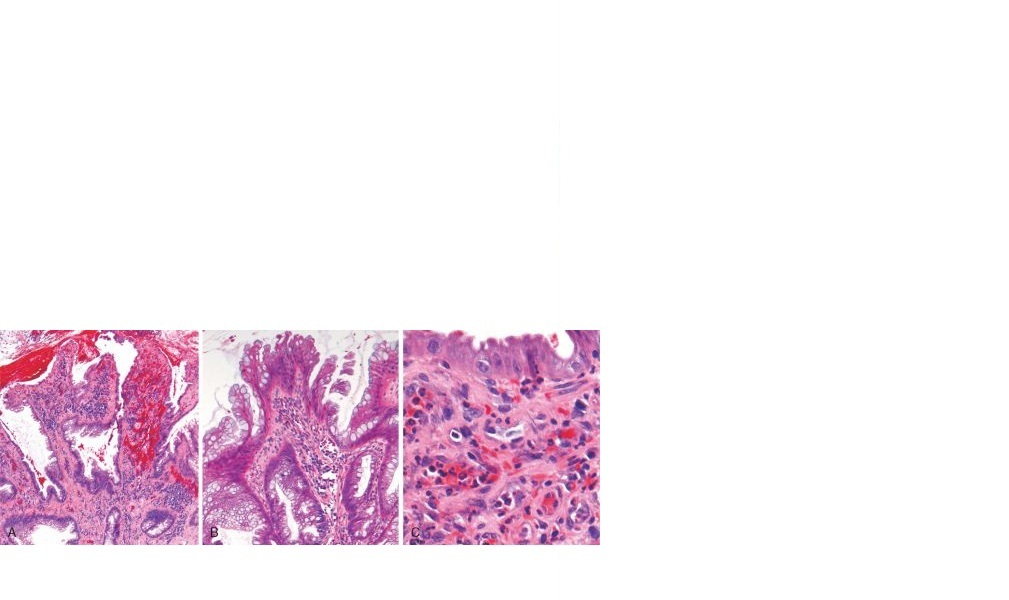
FIGURE 17-41 Solitary rectal ulcer syndrome.
- A, The dilated glands, proliferative epithelium, superficial erosions, and inflammatory infiltrate are typical of an inflamatory polyp. However, the smooth muscle hyperplasia within the lamina propria suggests that mucosal prolapse has also occurred.
- B, Epithelial hyperplasia.
- C, Granulation tissue-like capillary proliferation within the lamina propria caused by repeated erosion and re-epithelialization.
What are Hamartomatous polyps?
occur sporadically and in the context of various genetically determined or acquired syndromes ( Table 17-9 ).
Recall that hamartomas are tumor-like growths
composed of mature tissues that are normally present at the site in which they develop.
Although hamartomatous polyposis syndromes are rare, what is their importance?
they are important to recognize
because of associated intestinal and extra-intestinal manifestations and the possibility that
other family members are affected.
TABLE 17-9 – Gastrointestinal Polyposis Syndromes
Syndrome
- Peutz-Jeghers syndrome
- Juvenile polyposis
- Cowden syndrome, Bannayan- Ruvalcaba-Riley syndrome
- Cronkhite-Canada syndrome
- Tuberous sclerosis
- Familial adenomatous polyposis (FAP)
- Classic FAP
- Attenuated FAP
- Gardner syndrome
- Turcot syndrome
TABLE 17-9 – Gastrointestinal Polyposis Syndromes
Peutz-Jeghers
syndrome
- Mean Age at Presentation (yr)
- 10–15
- Mutated Gene
- LKB1/STK11
- Gastrointestinal Lesions
- Arborizing polyps; Small intestine > colon > stomach; colonic adenocarcinoma
- Selected Extra- Gastrointestinal Manifestations
- Skin macules;
- increased risk of thyroid, breast,lung, pancreas, gonadal, and bladder cancers
TABLE 17-9 – Gastrointestinal Polyposis Syndromes
Juvenile polyposis
- Mean Age at Presentation (yr)
- <5
- Mutated Gene
- SMAD4,
BMPR1A
- SMAD4,
- Gastrointestinal Lesions
- Juvenile polyps;
- risk of gastric, small intestinal, colonic, and pancreatic
adenocarcinoma
- Selected Extra- Gastrointestinal Manifestations
- Pulmonary arteriovenous malformations,
- digital clubbing
TABLE 17-9 – Gastrointestinal Polyposis Syndromes
Cowden syndrome,
Bannayan- Ruvalcaba-Riley
syndrome
- Mean Age at Presentation (yr)
- <15
- Mutated Gene
- PTEN
- Gastrointestinal Lesions
- Hamartomatous polyps, lipomas,
ganglioneuromas, inflammatory polyps, risk of colon cancer
- Hamartomatous polyps, lipomas,
- Selected Extra- Gastrointestinal Manifestations
- Benign skin tumors, benign and malignant thyroid and breast lesions
TABLE 17-9 – Gastrointestinal Polyposis Syndromes
Cronkhite-Canada
syndrome
- Mean Age at Presentation (yr)
- >50
- Mutated Gene
- Nonhereditary
- Gastrointestinal Lesions
- Hamartomatous colon polyps, crypt dilatation and edema in
nonpolypoid mucosa
- Hamartomatous colon polyps, crypt dilatation and edema in
- Selected Extra- Gastrointestinal Manifestations
- Nail atrophy, hair loss,
- abnormal skin pigmentation,
- cachexia,
- and anemia
TABLE 17-9 – Gastrointestinal Polyposis Syndromes
Tuberous
sclerosis
- Mean Age at Presentation (yr)
- Mutated Gene
- TSC1, TSC2
- Gastrointestinal Lesions
- Hamartomatous polyps
(rectal)
- Hamartomatous polyps
- Selected Extra- Gastrointestinal Manifestations
- Facial angiofibroma,
- cortical tubers,
- renal angiomyolipoma
TABLE 17-9 – Gastrointestinal Polyposis Syndromes
Familial
adenomatous
polyposis (FAP
Classic FAP
- Mean Age at Presentation (yr)
- 10–15
- Mutated Gene
- APC, MUTYHs
- Gastrointestinal Lesions
- Multiple adenomas
- Selected Extra- Gastrointestinal Manifestations
- Congenital RPE hypertrophy
Attenuated FAP
- Mean Age at Presentation (yr)
- 40–50
- Mutated Gene
- APC, MUTYHs
- Gastrointestinal Lesions
- Multiple adenomas
- Selected Extra- Gastrointestinal Manifestations
TABLE 17-9 – Gastrointestinal Polyposis Syndromes
Gardner
syndrome
- Mean Age at Presentation (yr)
- 10–15
- Mutated Gene
- APC, MUTYHs
- Gastrointestinal Lesions
- Multiple adenomas
- Selected Extra- Gastrointestinal Manifestations
- Osteomas,
- desmoids,
- skin cysts
TABLE 17-9 – Gastrointestinal Polyposis Syndromes
Turcot syndrome
- Mean Age at Presentation (yr)
- 10–15
- Mutated Gene
- APC, MUTYHs
- Gastrointestinal Lesions
- Multiple adenomas
- Selected Extra- Gastrointestinal Manifestations
- CNS tumors,
- medulloblastoma
What are juvenile polyps?
- focal malformations of the mucosal epithelium and lamina propria.
- sporadic or syndromic, but the morphology of the two forms may be indistinguishable.



-
Chapter 17: GIT- Congenital Abnorm-Atresia, Fistulae & Duplications21
-
Chapter 17: GIT- Congenital Abnorm- Diaphragmatic Hernia, Omphalocele & Gastroschisis7
-
Chapter 17: GIT- Congenital Abnorm- Ectopia9
-
Chapter 17: GIT- Congenital Abnorm- Meckel Diverticulum13
-
Chapter 17: GIT- Congenital Abnorm- Pyloric Stenosis7
-
Chapter 17: GIT- Congenital Abnorm-Hirschsprung Disease20
-
Chapter 17: GIT- Esophagus3
-
Chapter 17: GIT- Esophagus Obstruction31
-
Chapter 17: GIT-Esophagitis83
-
Chapter 17: GIT- Esophageal Tumors33
-
Chapter 17: GIT-STOMACH6
-
Chapter 17: GIT- STOMACH-Acute Gastritis41
-
Chapter 17: GIT- STOMACH- Chronic Gastritis77
-
Chapter 17: GIT-Complications of Chronic Gastritis39
-
Chapter 17: GIT- Hypertrophic Gastropathies20
-
Chapter 17: GIT- Gastric Polyps and Tumors110
-
Chapter17: Small Intestine & Colon2
-
Chapter17: Intestinal Obstruction26
-
Chapter17: INTESTINES: Ischemic Bowel Disease34
-
Chapter17: INTESTINES: Angiodysplasia6
-
Chapter17: INTESTINES:Malabsorption and Diarrhea87
-
Chapter17: INTESTINES:Infectious Enterocolitis114
-
Chapter17: INTESTINES:Irritable Bowel Syndrome9
-
Chapter17: INTESTINES:Inflammatory Bowel Disease58
-
Chapter17: INTESTINES:Other Causes of Chronic Colitis15
-
Chapter17: INTESTINES:Sigmoid Diverticulitis12
-
Chapter17: INTESTINES:Polyps45
-
Chapter17: INTESTINES:Familial Syndromes25
-
Chapter17: INTESTINES:Adenocarcinoma63
-
Chapter17: INTESTINES:Tumors of the Anal Canal3
-
Chapter17: INTESTINES:Hemorrhoids7
-
Chapter17: INTESTINES:Acute Appendicitis0
-
Chapter17: INTESTINES:Tumors of the Appendix6
-
Chapter17: Peritoneal Cavity24



