Chile
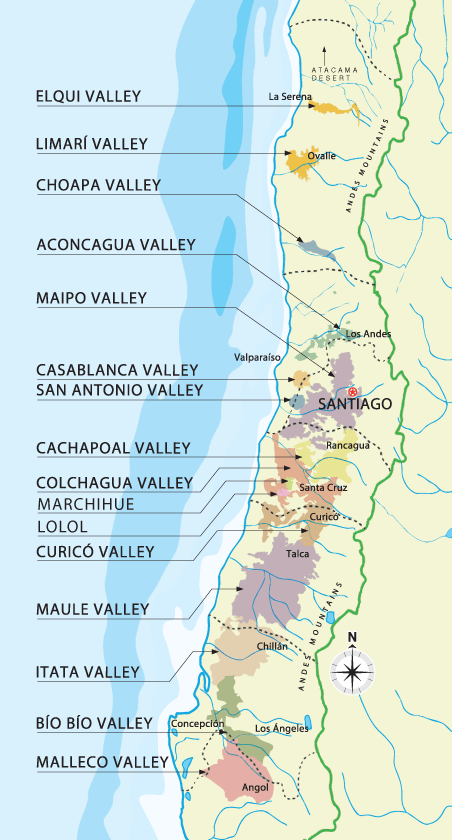
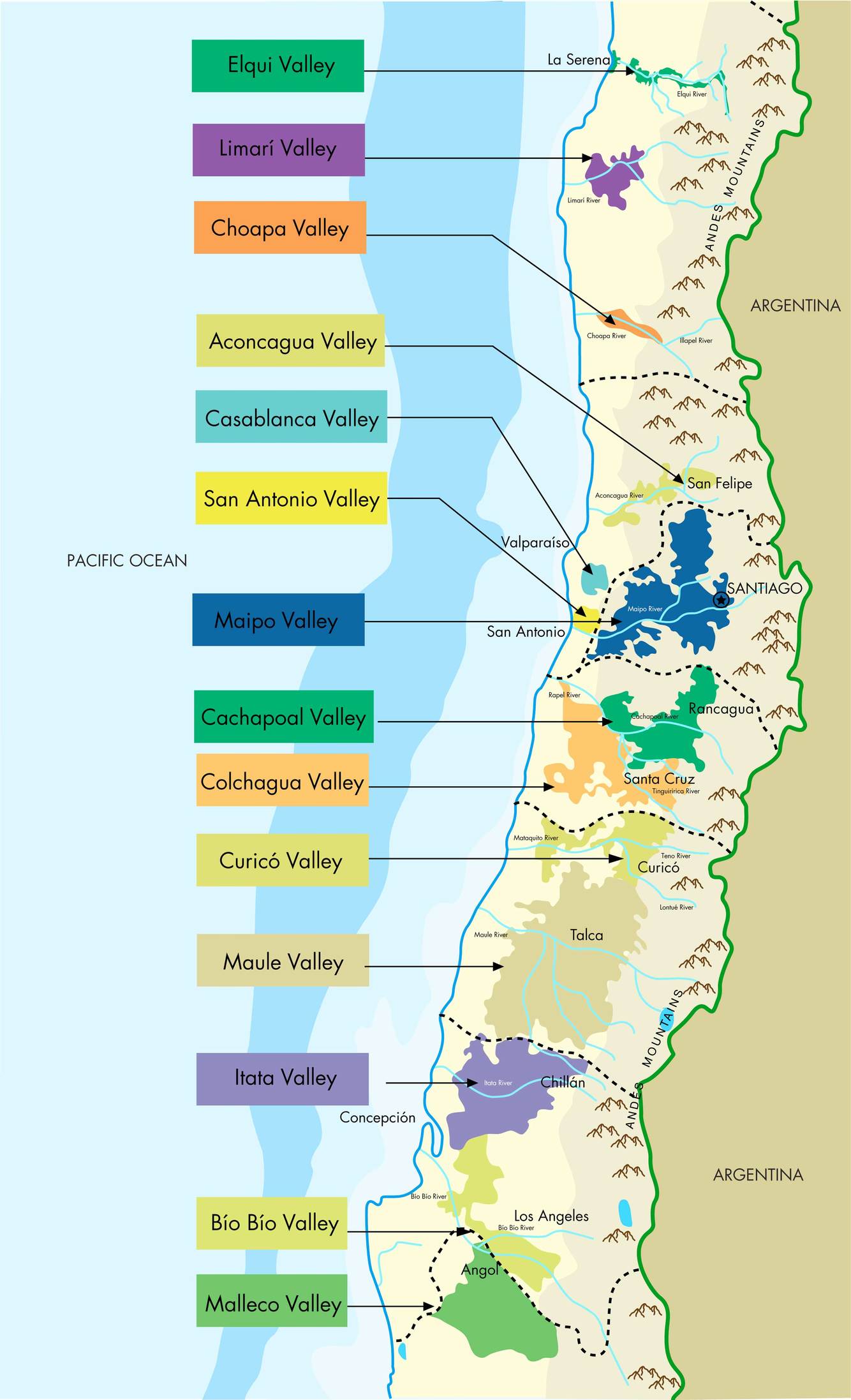
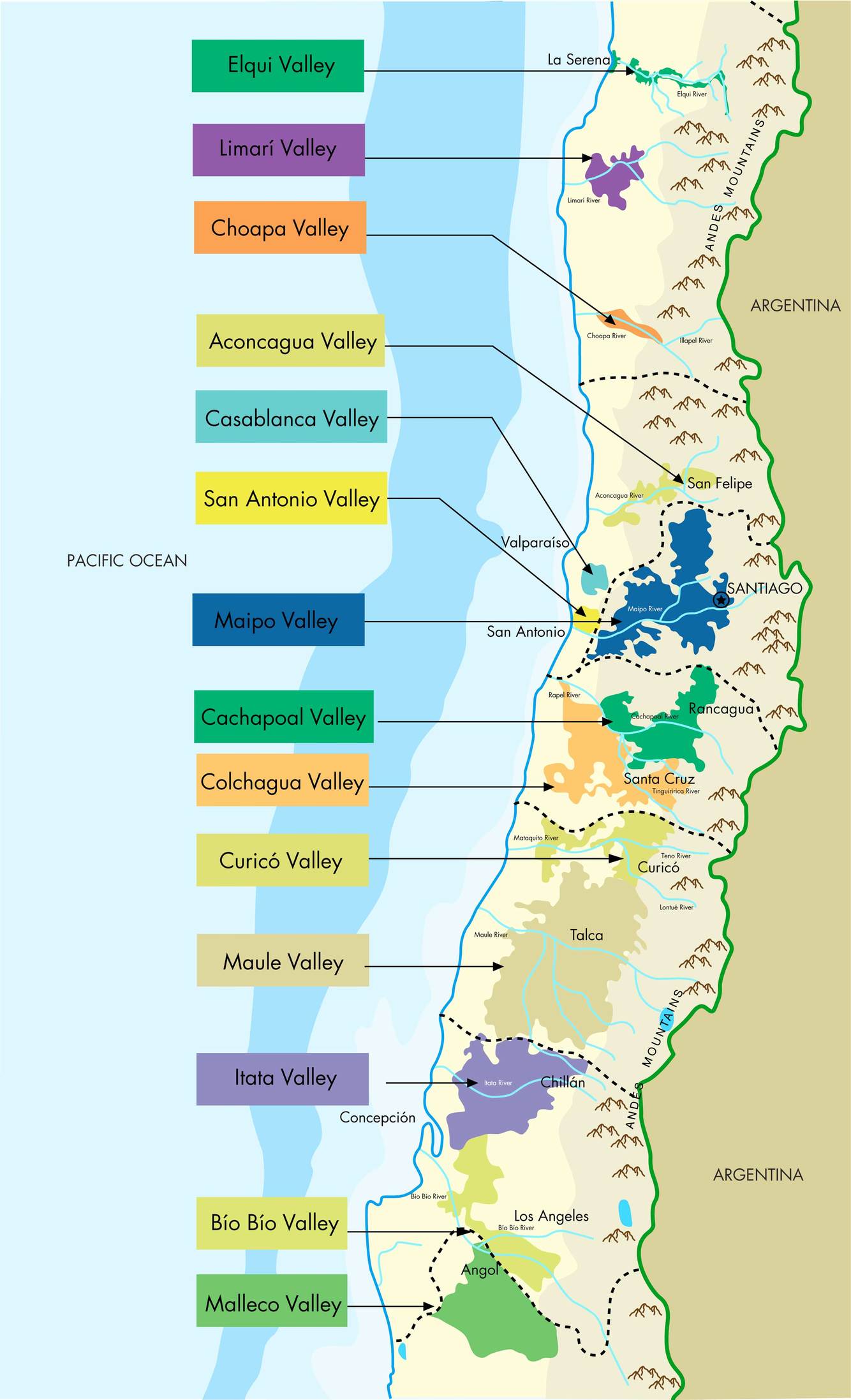
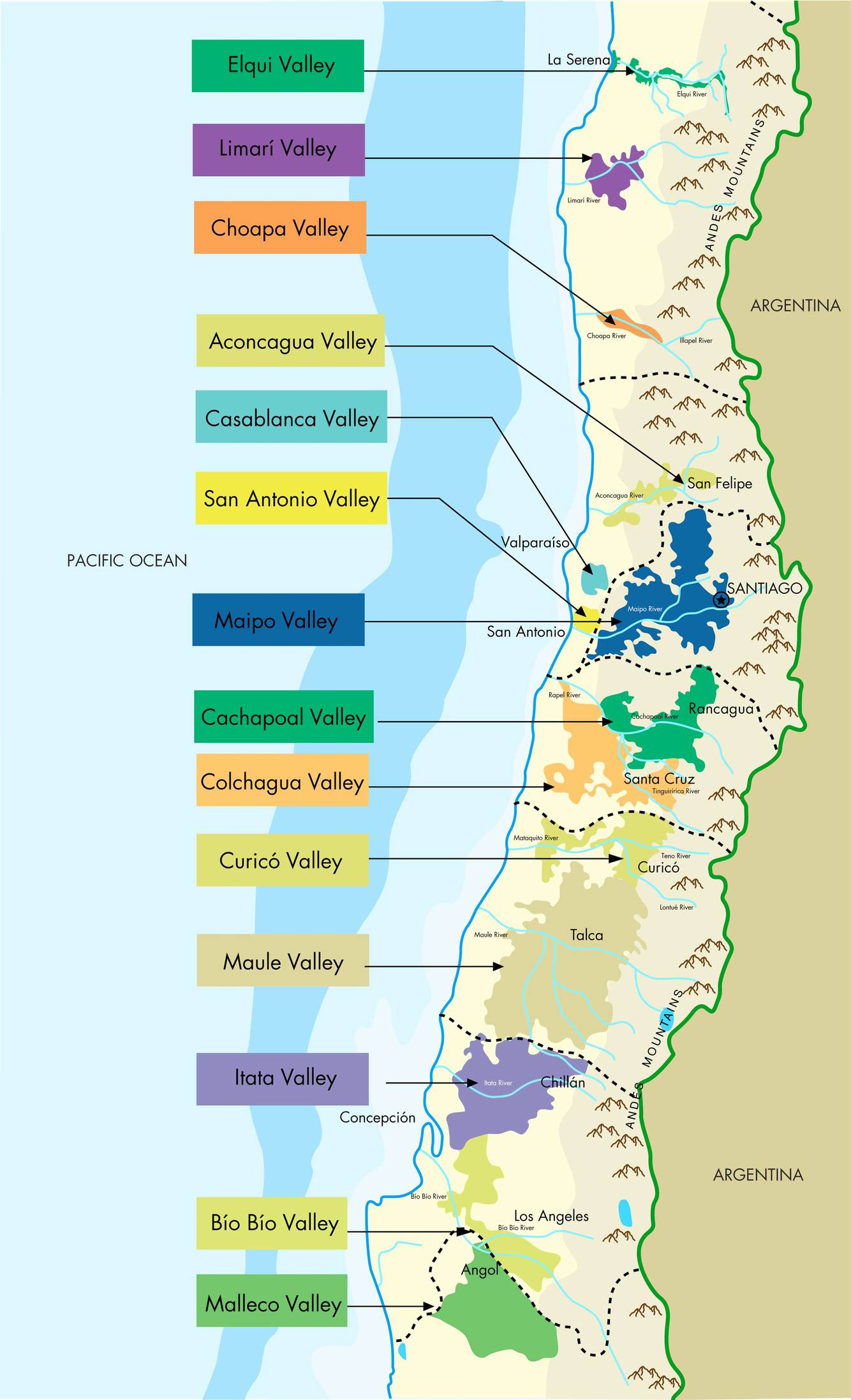
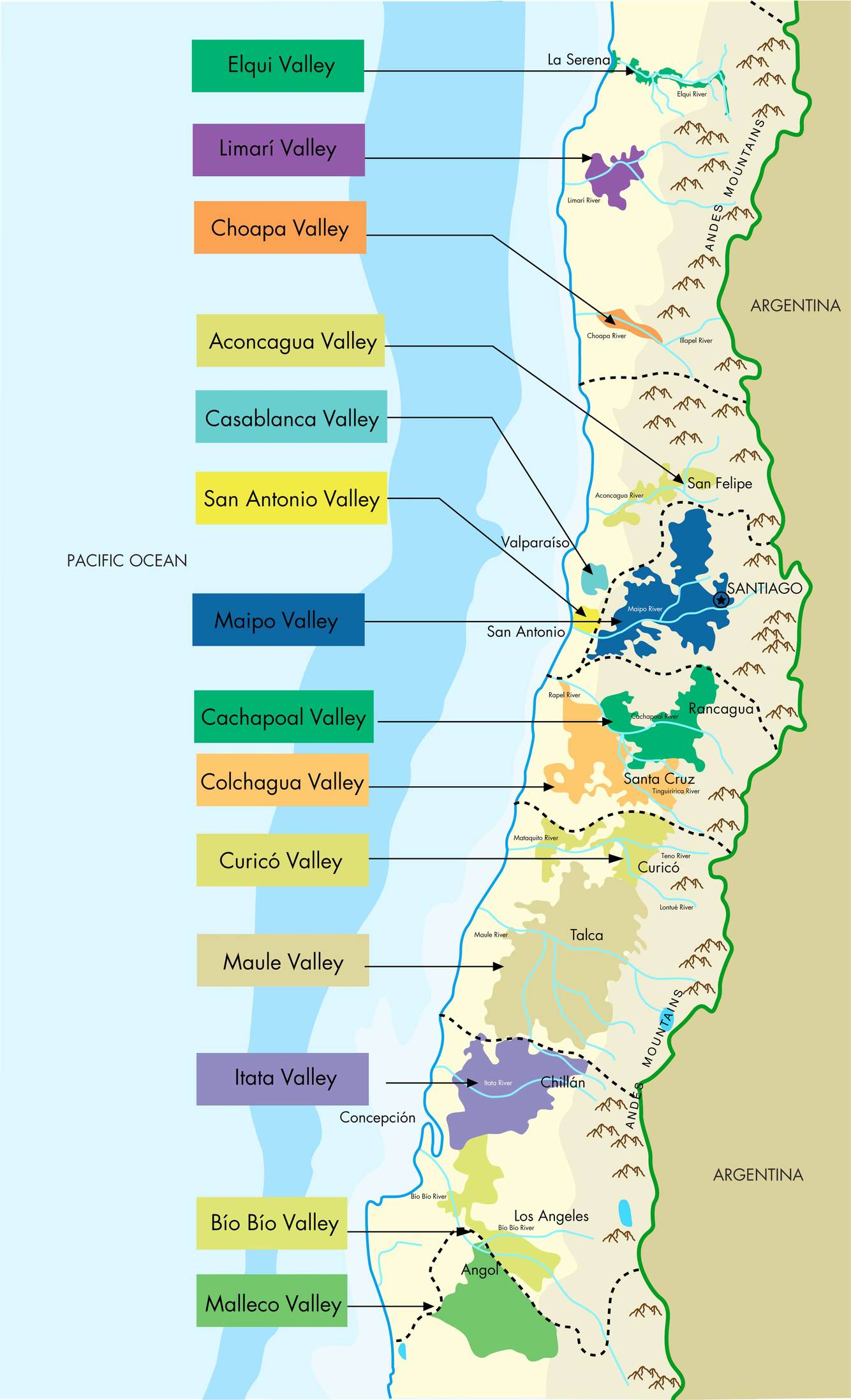
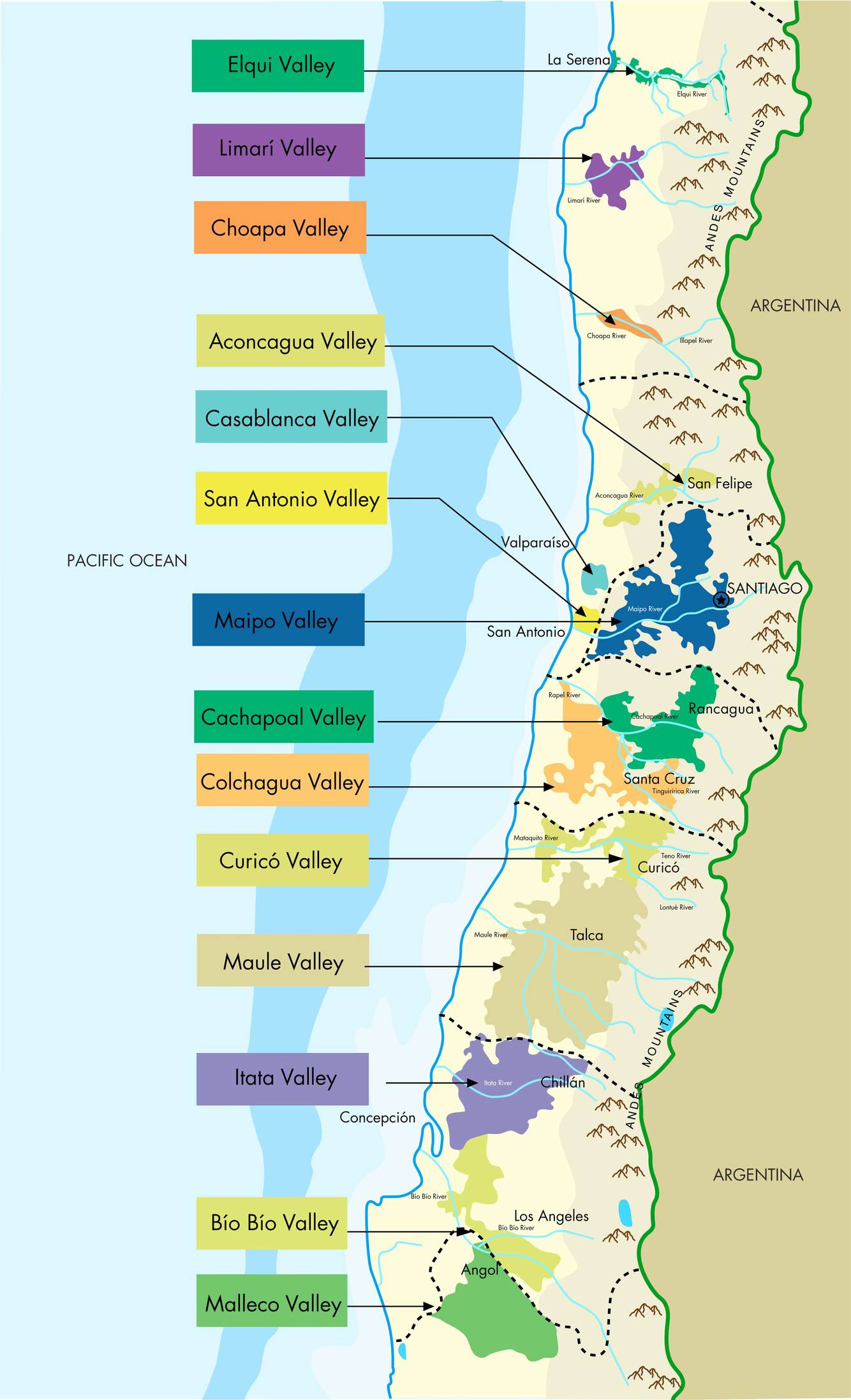
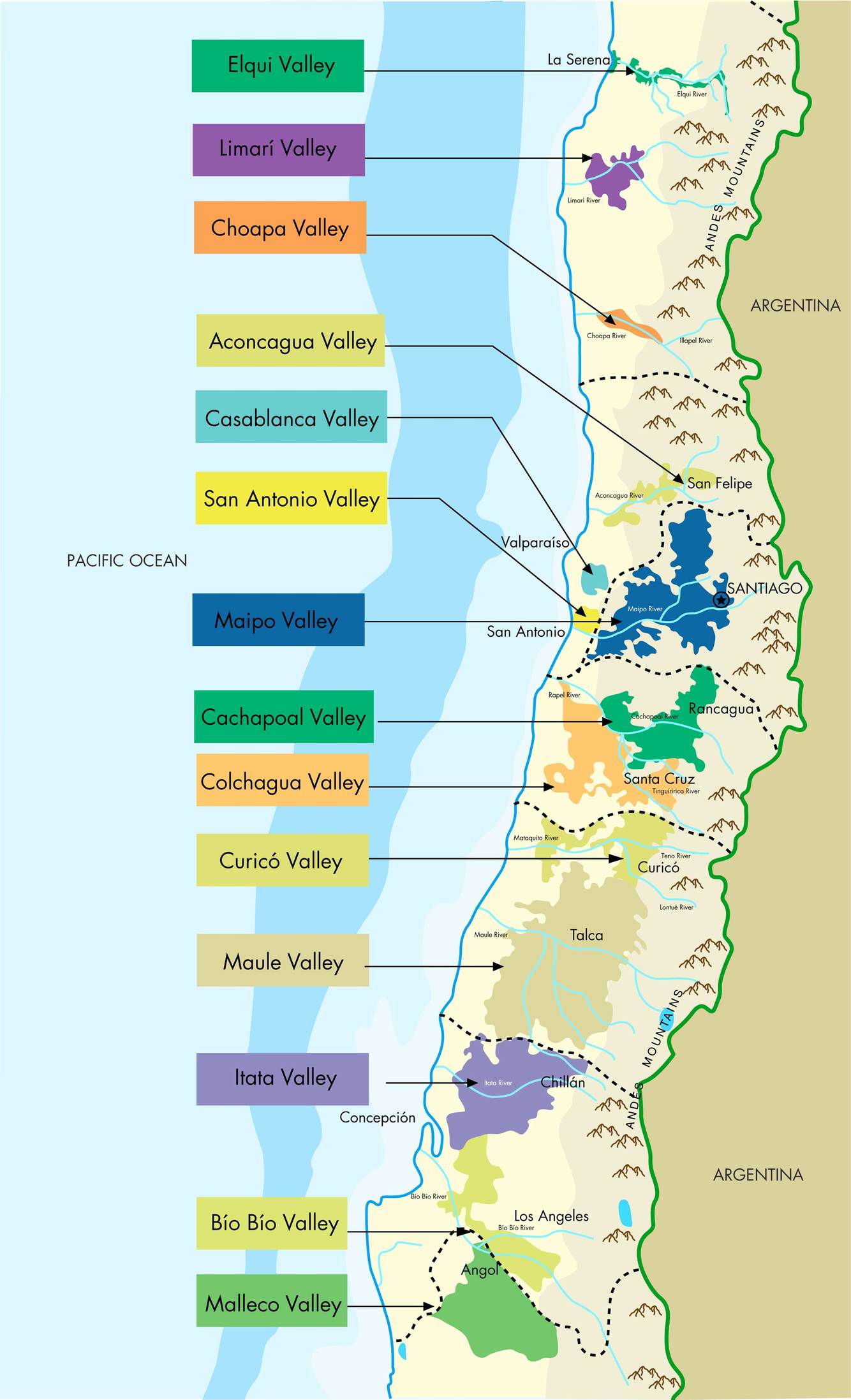
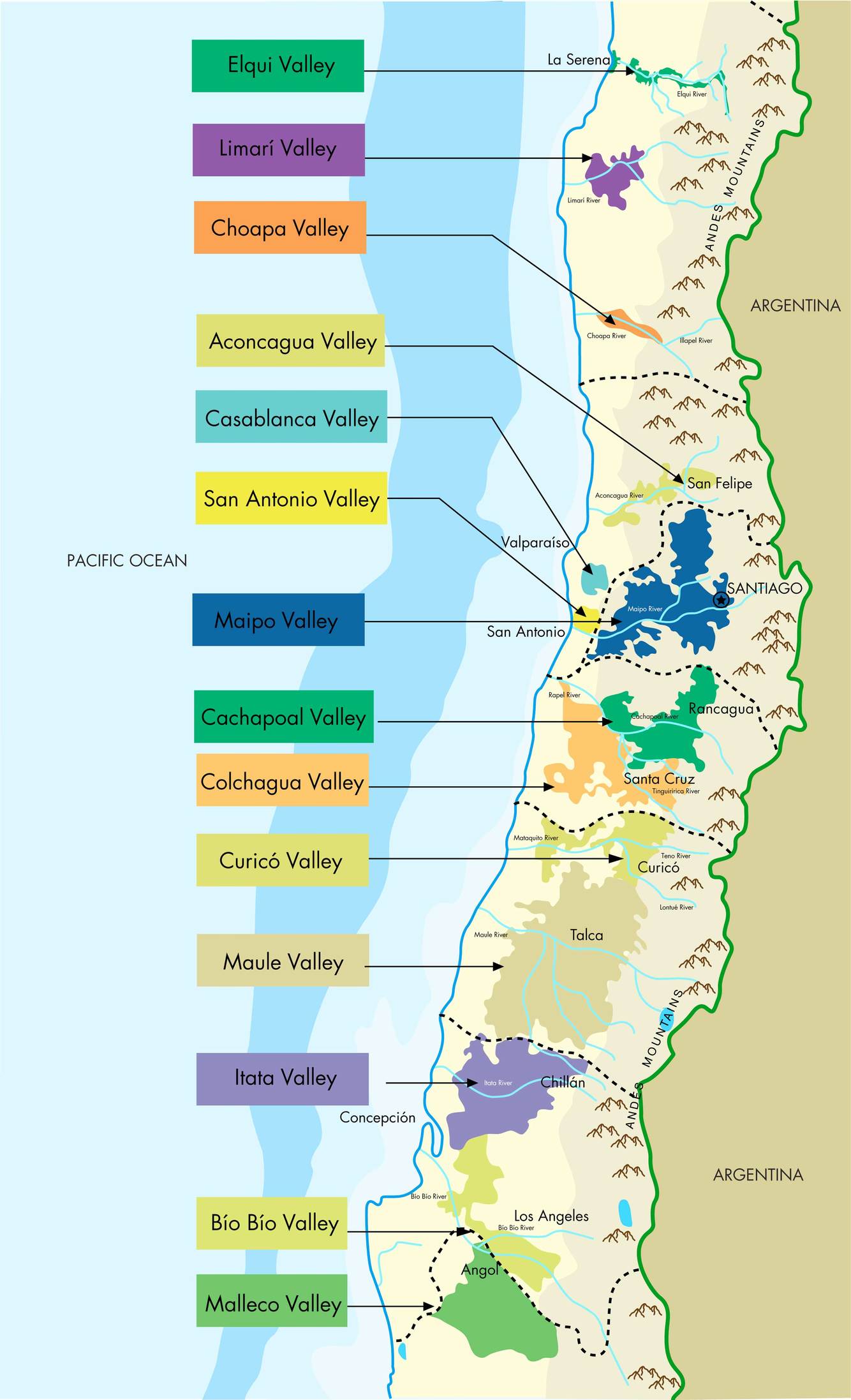
6 Regiones Vitivinícolas / Denominations of Origins (DOs)
N to S
- Atacama
- Coquimbo
- Aconcagua
- Valle Central (Central Valley)
- Sur (Southern Regions)
- Austral Region - new area at the southernmost limit of grape growing in the country
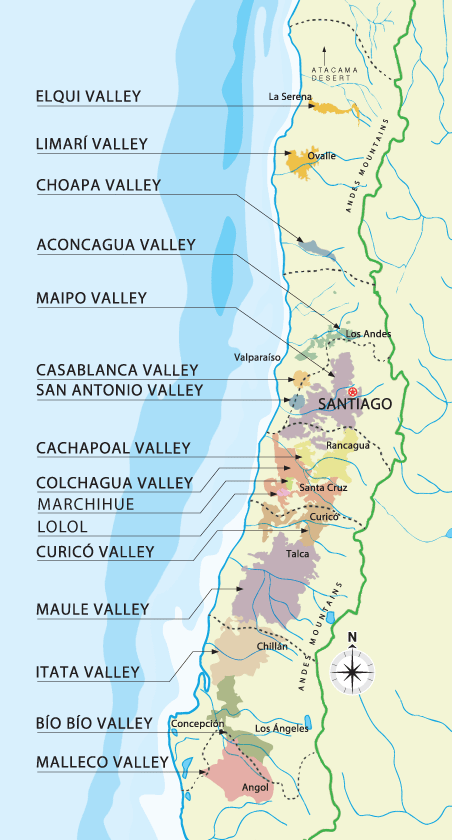
Regions that grow grapes for Pisco production
- Atacama
- Coquimbo
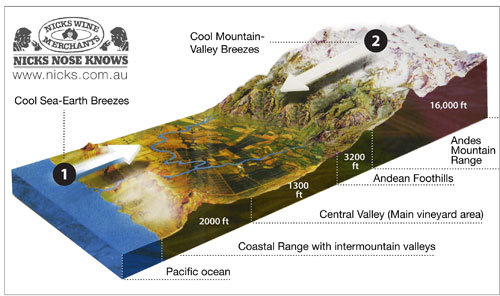
Coastal current that forces cool sea air inland through the river valleys to affect the Central Valley during the day
Humboldt Current
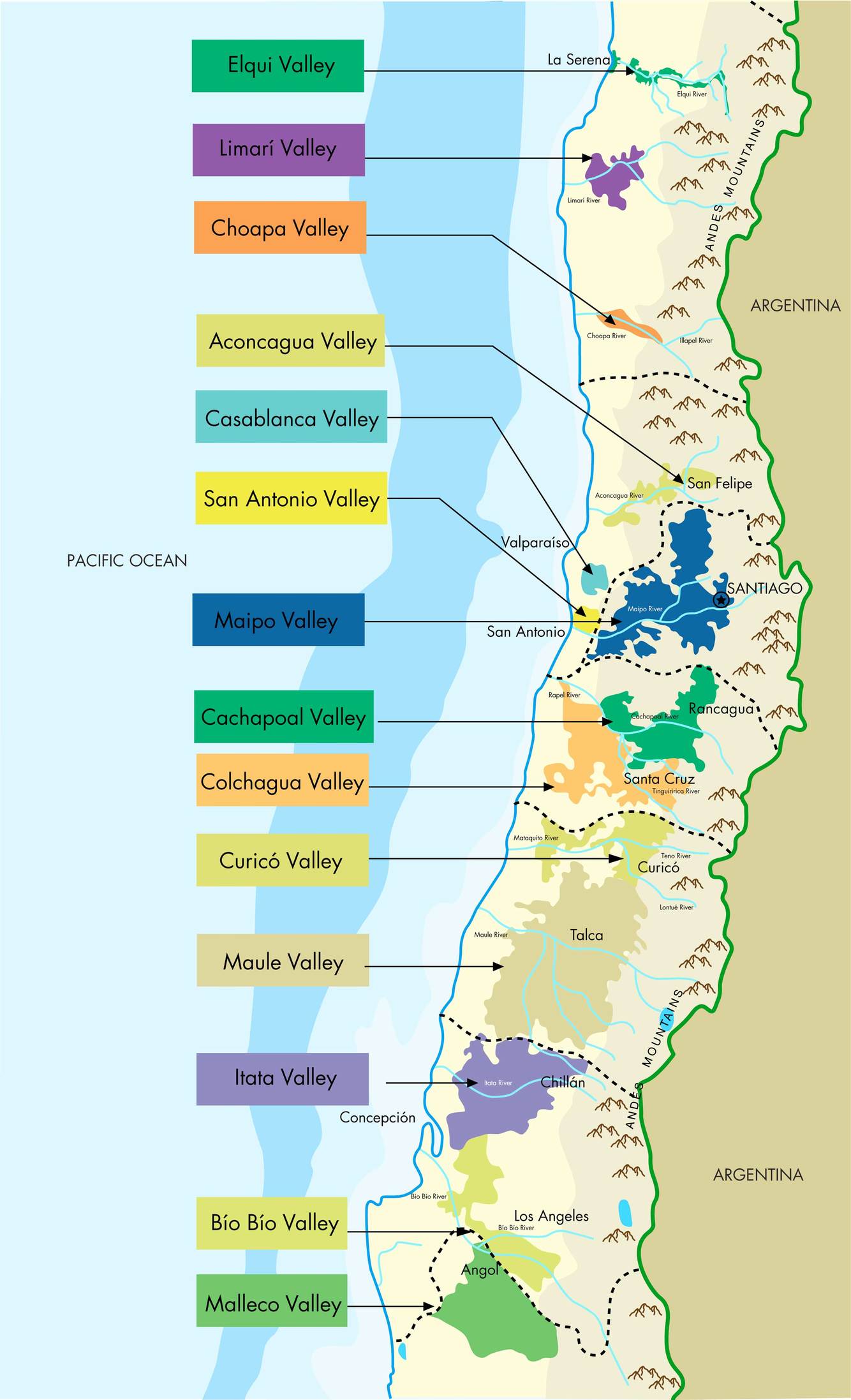
Aconcagua and Valle Central (Central Valley)
Irrigation
- Irrigation is essential
- While neither zone is as dry as the deserts to the north
Year 75% rule was established
1995
- Chilean Decree No. 464 (Viticultural Zoning Ordinance, published in 1995 and updated in 2012, and in 2018)
- Chilean wine law that institutes the blend must comprise 75% of vintage, varietal, and denomination of origins, if listed on the bottle
- Many wineries observe an 85% min for all three categories to comply with EU standards for export
Chilean wine law
Hybrid grapes
Hybrid grapes are NOT permitted
Chilean wine law
Min. alcohol for all wines
11.5% abv
‘Reserva’ and ‘Reserva Especial’
Min. alcohol
12% abv
‘Reserva Privada’ and ‘Gran Reserva’
Min. alcohol
12.5% abv
2 labelings terms that indicate the wine spent time in oak
- ‘Reserva Especial’
- min 12% abv
- ‘Gran Reserva’
- min 12.5% abv
Chile
% Red grape production
73%
Northernmost wine growing region in Chile
Atacama
Chili’s oldest and most established winemaking region
Central Valley DO
Year Chilean wine producing regions (DOs) were established
December 1994
Major reasons for tempered growth of the Chilean wine industry in the 20th century
- Political instability, coupled with bureaucratic regulations and high taxes
- Prior to the 1980s, the vast majority of Chilean wine was considered low quality and mostly consumed domestically
Chile
Beginning of viticultural history
16th century
- When Spanish conquistadors brought Vitis vinifera with them as they colonized the region
Century French wine varieties were introduced to Chile
mid 19th century
- Cabernet Sauvignon, Merlot, Carmenere, Cabernet Franc
Decade when a renaissance began with the introduction of stainless steel fermentation tanks and the use of oak barrel aging.
early 1980s
1995: number of wineries in Chile
2005: number of wineries in Chiles
1995: 12 wineries
2005: over 70 wineries
Chile’s 3rd most planted white varietal
Muscat
- Although on the decline, nearly 6000 acres are planted in the Southern Regions DO (Sur)
- 3rd most planted white varietal after Sauvignon (Blanc and Vert) and Chardonnay
Entre Cordilleras
‘between mountains’
- Describes the valley areas between the coastal range and the Andes, a region in which over three-quarters of Chilean wine grapes are grown
‘Costa’, ‘Entre Cordilleras’, ‘Andes’
% of grapes that must be from the appropriate region
85%
Decade when Miguel Torres set up Chilean operations in Curico
1970s
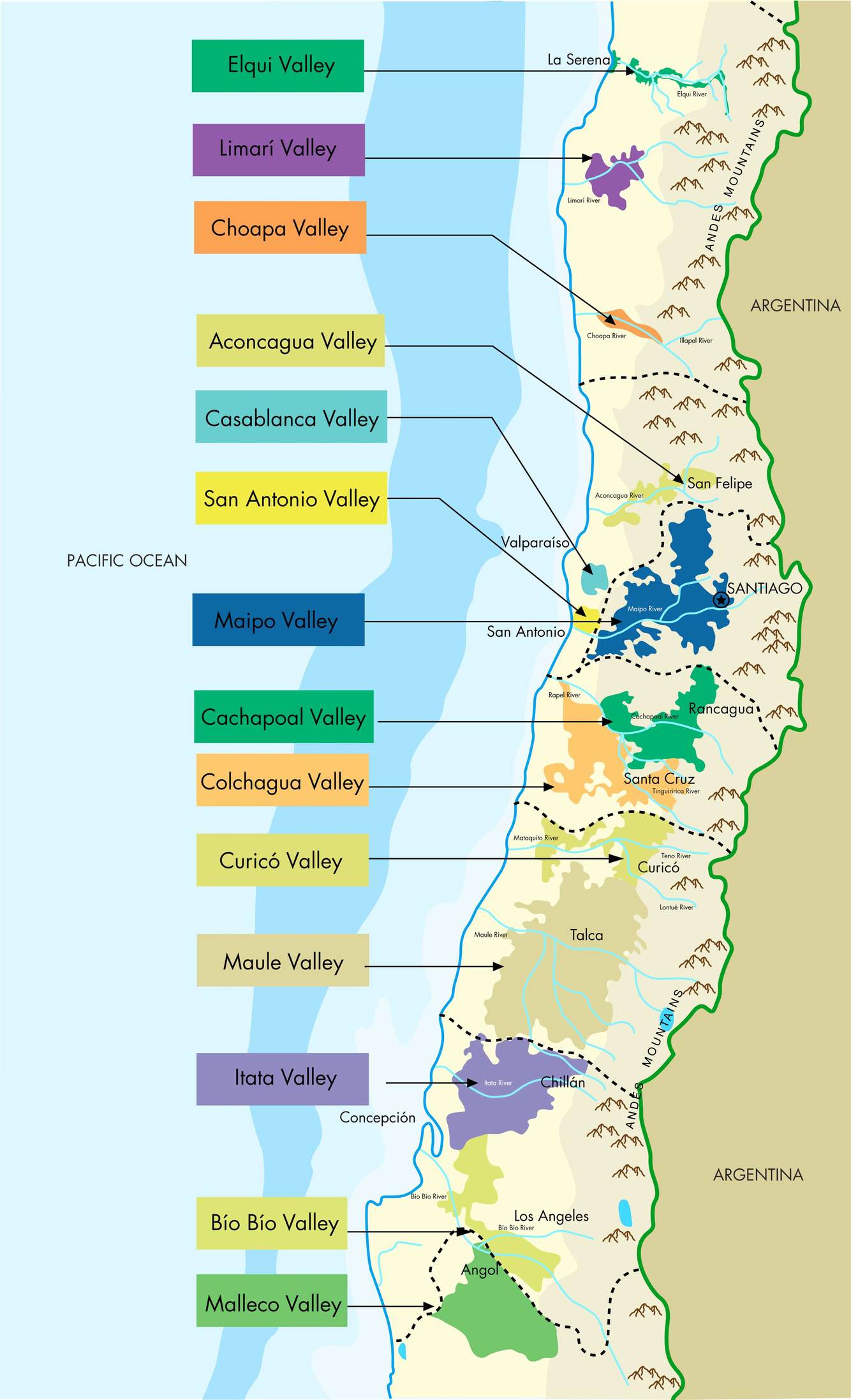
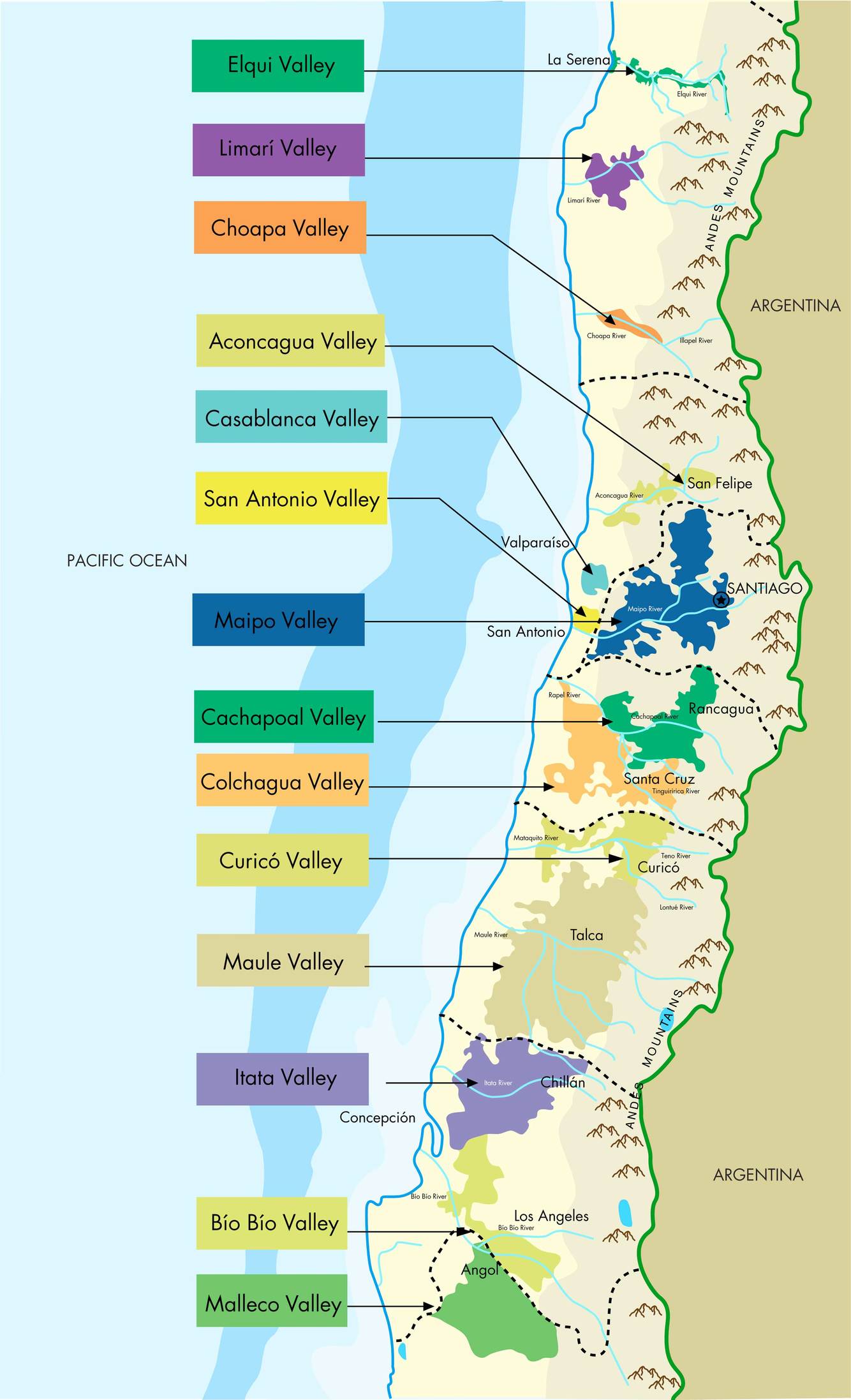
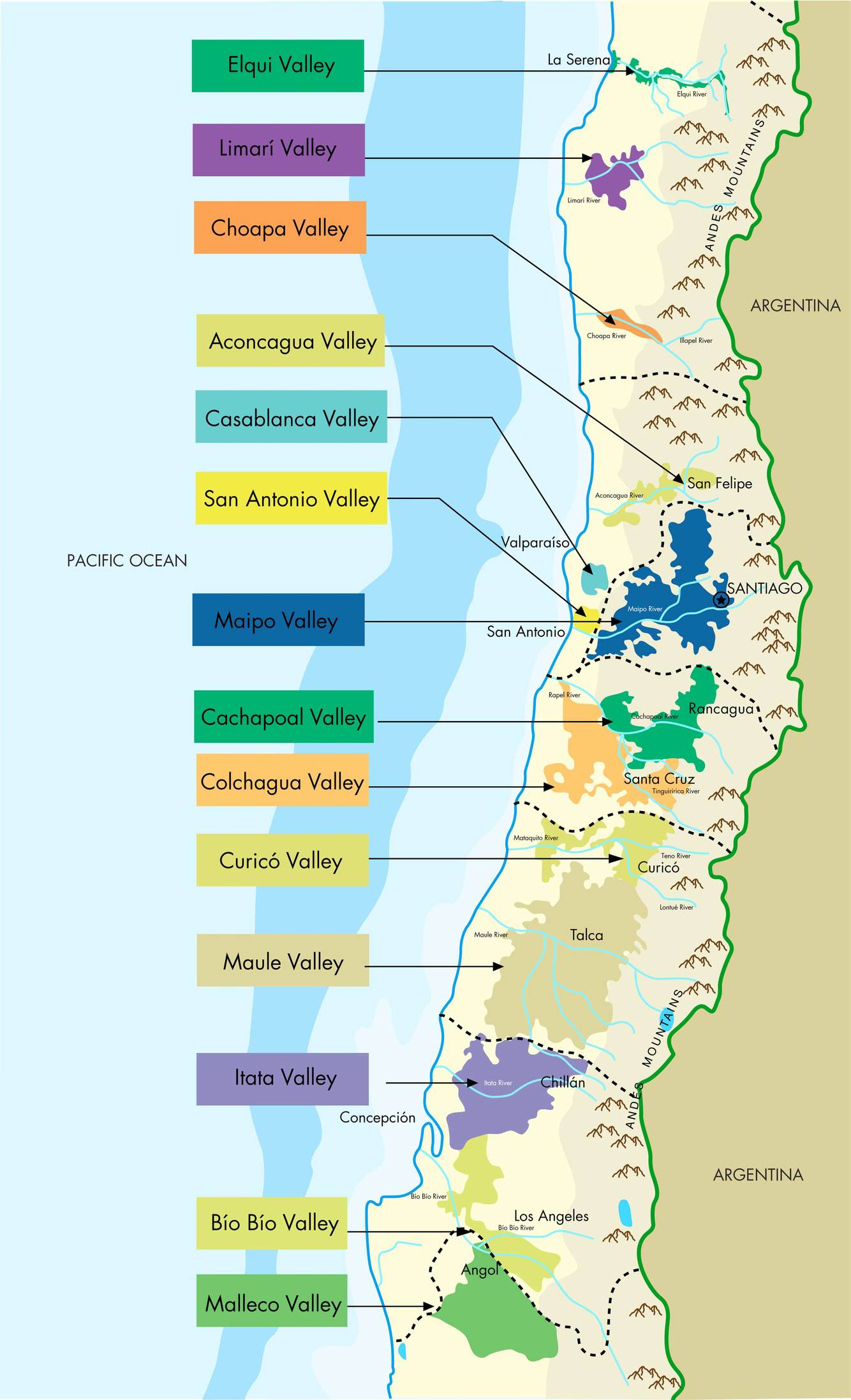
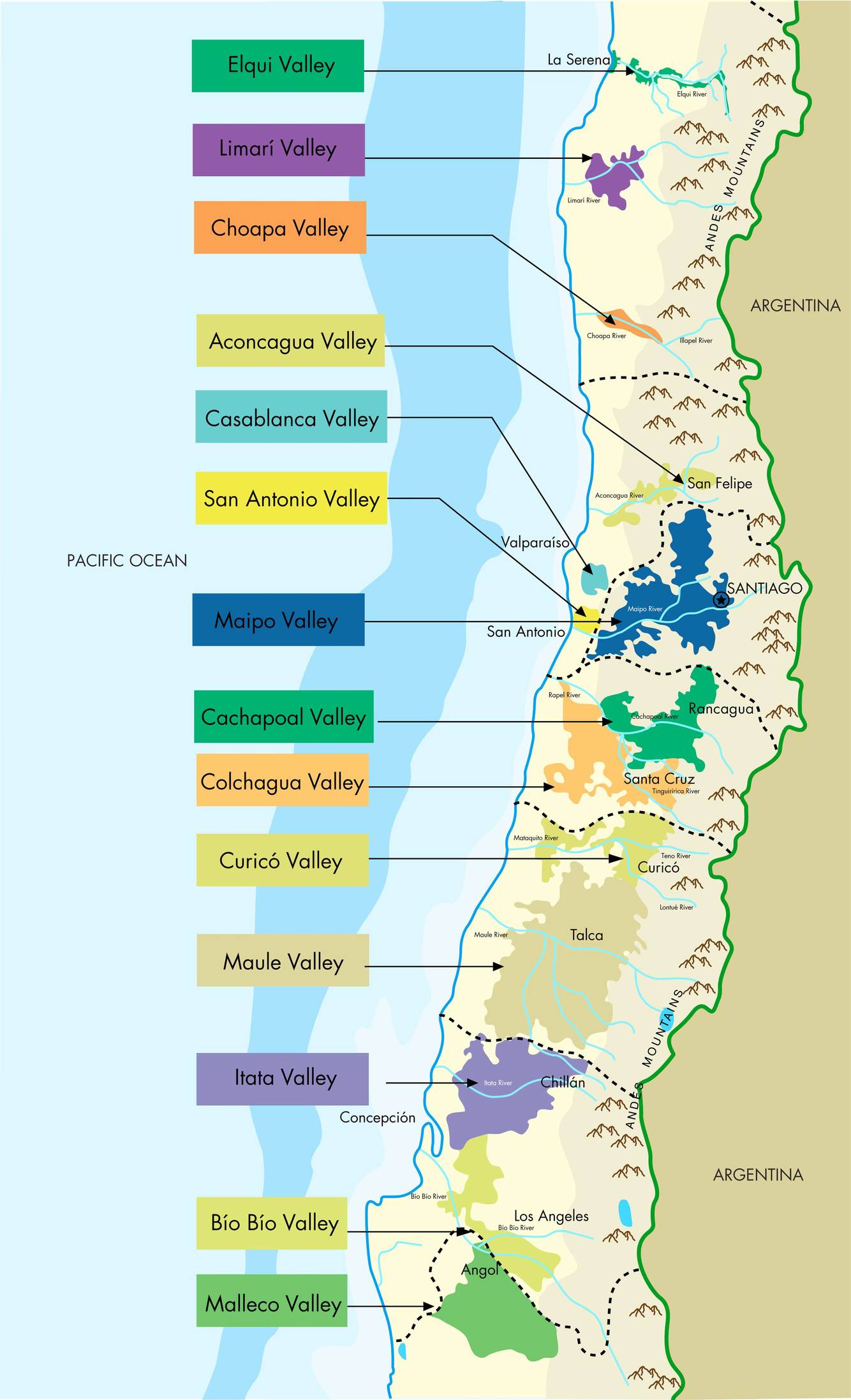
Chile’s Región Vitícola from North to South
Atacama
Coquimbo
Aconcagua
Valle Central (Central Valley)
Sur (Southern Regions)
Austral



