Clinical Case 1
- What is the disease?
- What is the most likely cause?
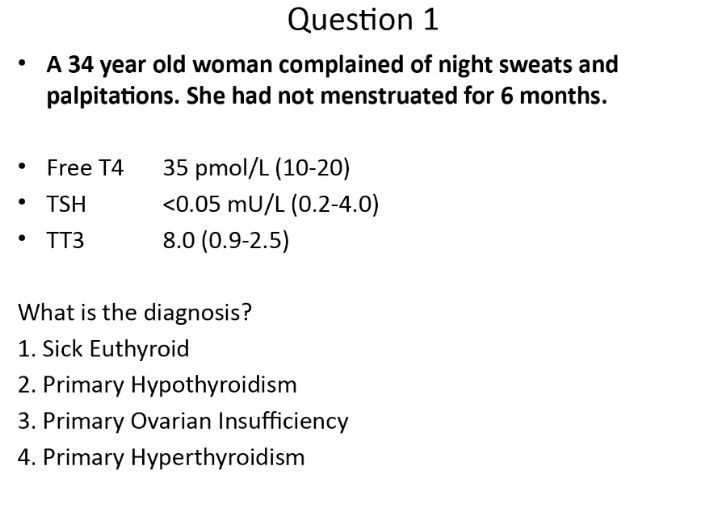
Primary hyperthyroidism:
- High T4; feeds back to supress TSH
- High T3; T4 converted to T3 in peripheries
- Low TSH
Most likely cause: Grave’s disease
What is Grave’s disease?
An autoimmune condition associated with the formation of antibodies, which bind to and activate the TSH receptors in the thyroid gland.
What is the most likely immediate treatment for thyrotoxicosis / Grave’s?
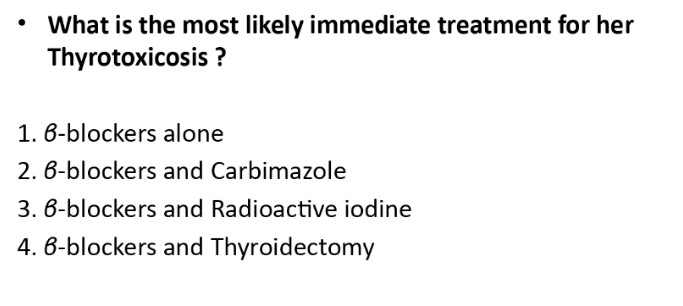
Beta-blockers and carbimazole; helps symptoms and starts to treat underlying cause.
N.B. 1-4 are treatments that are increasing in severity.
Function of beta-blockers in hyperthyroidism?
Beta blockers ameliorate the symptoms of hyperthyroidism that are caused by increased beta-adrenergic tone. These include palpitations, tachycardia, tremulousness, anxiety, and heat intolerance by affecting the way thyroid hormone acts on your body.
These medications don’t change the amount of thyroid hormone in your body, but they can help you feel better by controlling your symptoms.
Function of Carbimazole in hyperthyroidism?
Carbimazole is used to reduce the formation of thyroid hormones.
Clinical Case 1 Continued
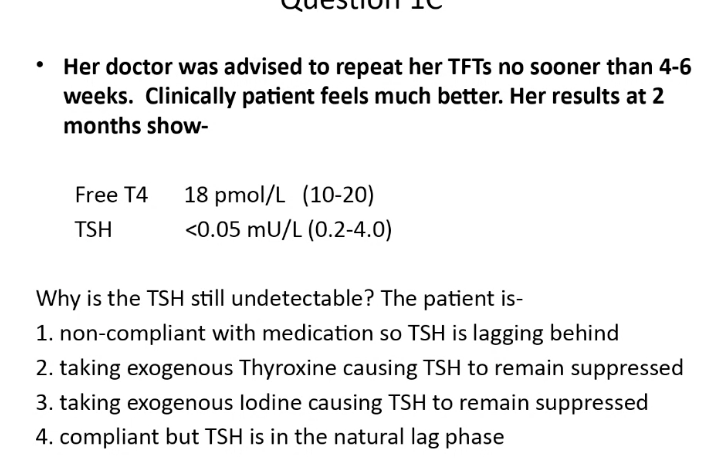
Compliant but TSH is in the natural lag phase; patient clinically feeling better
Why are TFTs not usually repeated before 4-6 weeks?
Natural lag for changes to occur and thyroid to settle
Clinical Case 2
- What is the disease?
- What is the most likely cause?
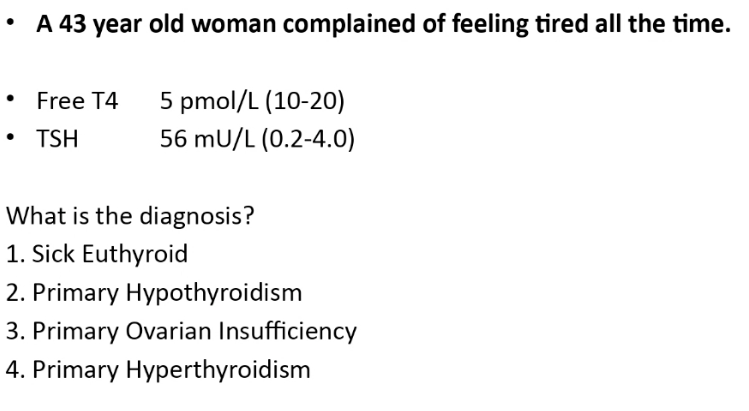
- Low free T4 & high TSH –> primary hypothyroidism
- Most likely cause –> Hashimoto’s Disease
What is Hashimoto’s Thyroiditis? Treatment?
Hashimoto’s disease is an autoimmune disorder that can cause hypothyroidism. Treatment is thyroxine.
Clinical Case 2 Continued (Hashimoto’s)
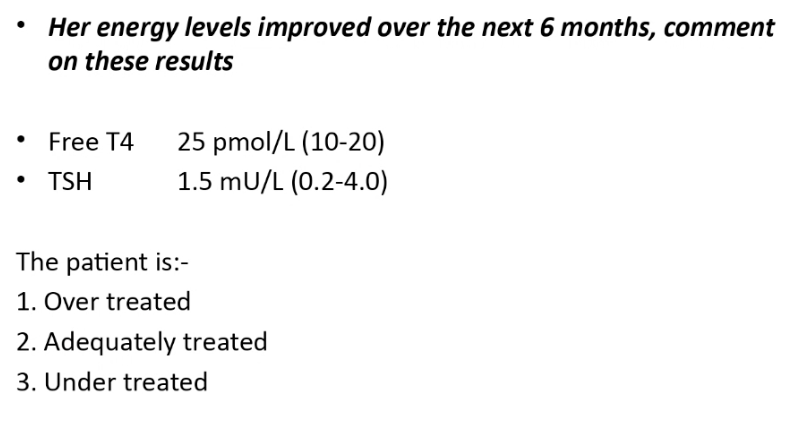
- T4 increase is a result of medication; shows patient is compliant
- TSH in normal range; adequately treated
Clinical Case 3
- What is disease?
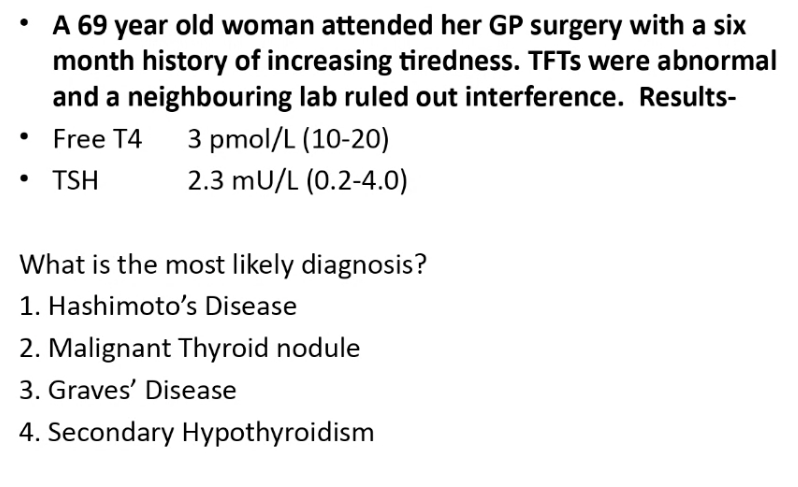
- Check for immunoassay interference!
- Low T4 but normal TSH –> secondary hypothyroidism
- Pituitary is not stimulating thyroid
- (with a malignant thyroid nodule; high T4 and low TSH suspected)
- Pituitary is not stimulating thyroid
Clinical Case 3 Continued: 2ary Hypothyroidism
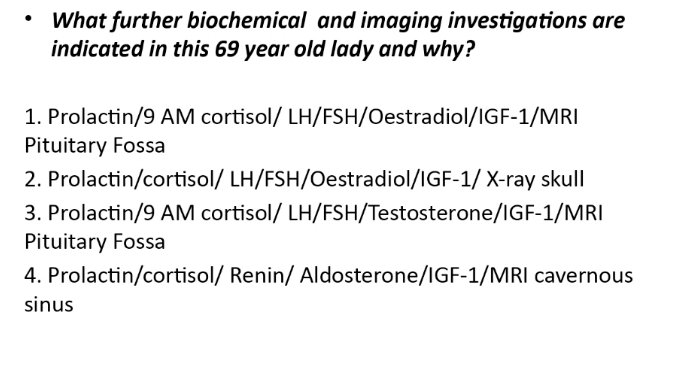
1:
- Prolactin; to judge pituitary function
- 9 AM cortisol; cortisol peaks at this time (random cortisol unhelpful)
- LH/FSH/Oestradiol; hypothalamic-pituitary-gonadal axis for females
- MRI Pituitary Fossa; where lesion likely to be
Clinical Case 3 Continued: 2ary hypothyroidism
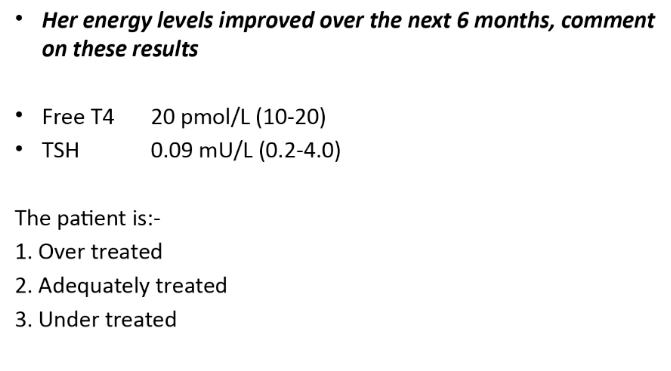
- Compliant –> patient feeling better
- T4 levels good (in upper 2/3s of range) –> adequately treated
- TSH cannot give any indication as pituitary is not functioning
Clinical Case 4
Part 1:
A 60 year old male is found to have raised blood sugar. Which endocrine cause is the least likely?
a) diabetes
b) acromegaly
c) Cushing’s
d) Addison’s disease
Part 2:
Upon further examination the clinician noted purple abdominal striae and moon face, from the list above which diagnosis is now most likely?
Part 1
- DM likely
- Acromegaly and Cushing’s syndrome likely –> cortisol and GH both act to increase blood glucose levels
- Addison’s disease
- This is underfunction of adrenal gland so unlikely to be producing enough cortisol –> least likely to cause raised blood sugar
Part 2
- Cushing’s syndrome
What initial screening test is used to investigate Cushing’s syndrome? What would the results show?
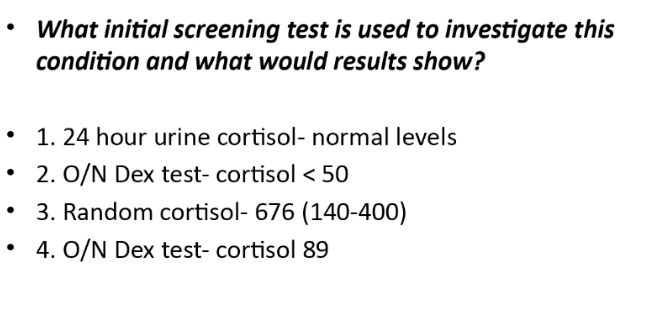
- 24 hour urine inaccurate, also cortisol unlikely to be normal
- Random cortisol unhelpful due to diurnal rhythm (and other triggers e.g. stress)
- Overnight dexamethasone test - cortisol 89 is the correct answer
What is the least likely cause of Cushing’s syndrome?
a) exogenous steroids?
b) pituitary tumour?
c) adrenal tumour?
d) obesity?
- Exogenous steroids are likely (e.g. overtreatment with steroids is common)
- Pituitary tumour can secrete ACTH - is likely
- Adrenal tumour can secrete cortisol - is likely
- Obesity is least likely (but still can happen)
Clinical Case 5
- What is the next most important test to determine underlying cause?
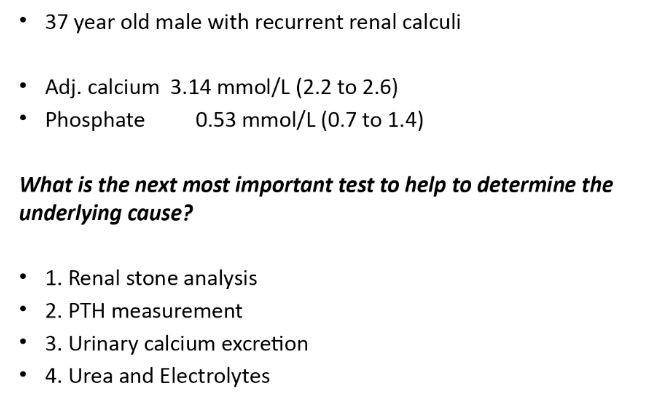
- High calcium tends to lead to renal stones
- Underlying cause likely to be:
- Malignancy
- Primary hyperparathyroidism
- PTH measurement is most useful
Clinical Case 5 Continued: renal stones
What is the most likely diagnosis cause?
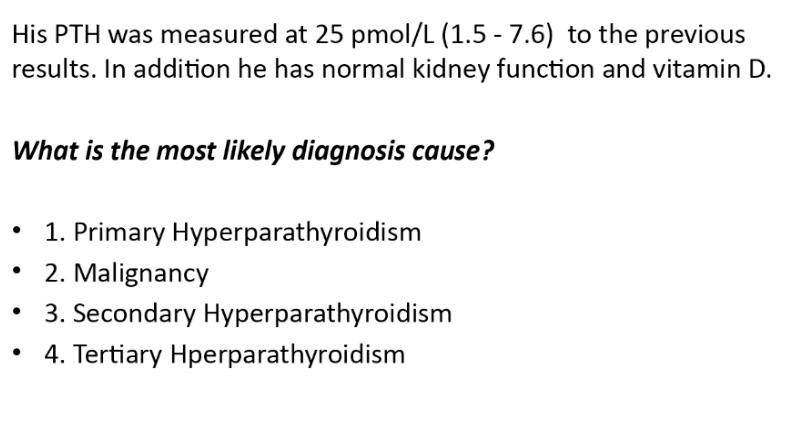
Primary hyperparathyroidism
Clinical Case 6
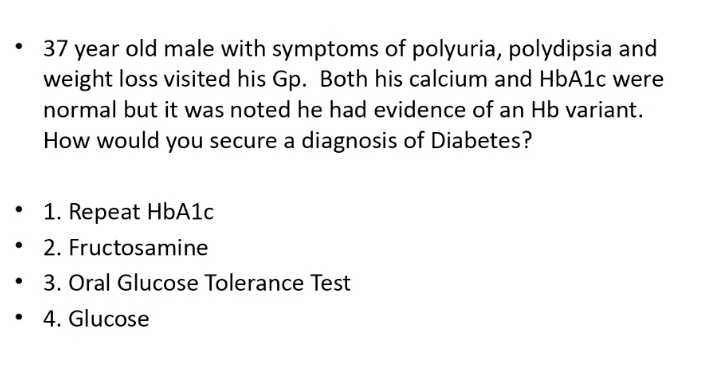
- Repeat HbA1c; he has a Hb variant which reduces the normal life cycle of a red cell so not give an accurate reflection of glucose level over past 2-3 months
- Fructosamine; monitors only, not approved for diagnosis
- Glucose; only fasting plasma glucose has been certified for diagnosis (this glucose does not state if its fasting or random)
- Oral glucose tolerance test

-
Bacterial Pathogens135
-
Viral and Prion Pathogens192
-
Interpreting Test Results19
-
Fungal Pathogens97
-
Parasitology111
-
Crossword 1 - Core Microbiology14
-
Allergic Diseases65
-
Hypersensitivity64
-
Autoimmune Diseases78
-
Diagnosing Autoimmune Disease54
-
Immunodeficiency87
-
Immunomodulation and Immunosuppression58
-
MHC and Transplant Rejection51
-
Immunology - Haematology22
-
Infection in the Immunocompromised53
-
Immunology - Antibiotics67
-
Crossword 2: Core Clinical Immunology15
-
Immunology - Pathogens57
-
Antibacterial & Antifungal Agents76
-
Antivirals for the treatment of influenza, herpes, hepatitis and HIV infection75
-
Infection Tests52
-
Investigation of Specific Infections114
-
Pathogen-Antibiotic Matching 169
-
Immunology - Viral Infection17
-
Immunology - Cells of the Immune System48
-
Antibiotic Resistance65
-
Pathogen-Antibiotic Matching 227
-
Antibiotic Stewardship46
-
Immunisation26
-
Infection Prevention and Control35
-
Urological Pathology96
-
Tests of Renal Function41
-
Renal Pathology78
-
Urinary Tract Infection96
-
Crossword 4 - Renal11
-
Diseases of Endocrine System105
-
Investigations of Endocrine System53
-
Diabetes83
-
Bone and New Markers97
-
Calcium, Phosphate and Magnesium Homeostasis107
-
Crossword 5 - Core Clinical Biochemistry14
-
Clinical Biochemistry Tutorial - Quiz Questions20
-
Breast Pathology62
-
Uterine Pathology102
-
Childhood and Pregnancy Infections75
-
Crossword 6 - Gynae and Breast14
-
Intro to Haematology49
-
Blood Transfusions94
-
Heritable Bleeding Disorders79
-
Haemoglobinopathies & Obstetric75
-
Paediatric Haematology40
-
Thrombosis and Risk Factors86
-
Acquired Bleeding Disorders104
-
Anaemia and Thrombocytopenia81
-
Chronic Myeloproliferative Disorders and CML69
-
Acute Leukaemia and MDS74
-
Myeloma, Lymphoma and CLL102
-
Haematological Emergencies60
-
Crossword 7 - Haematology16
-
Benign Lung Pathology91
-
Malignant Lung Pathology53
-
Clinical Infections: Respiratory154
-
Pleural Pathology107
-
Cardiovascular Pathology 169
-
Cardiovascular Pathology 2122
-
Cardiovascular Pathology 377
-
Vascular Infections42
-
CNS Infections55
-
Inflammatory Skin & Tumours116
-
Diseases of MSK80
-
Diseases of Head & Neck60
-
Upper GI Pathology78
-
Lower GI Pathology81
-
Liver Tumours and Gallbladder Disease55
-
Pancreatic Pathology20
-
GI Infections116
-
Nutritional Support in Trauma92
-
Medical Liver Disease143
-
Investigations of Liver & Pancreatic Disease72
-
GI Infections II104



