Coma results from …?
Disturbance in the function of EITHER the brainstem reticular activating system above the mid pons OR of BOTH cerebral hemispheres.
Emergency management of the comatose patient - Immediately:
- Ensure adequacy of airway, ventilation, and circulation. 2. Draw blood for serum glucose, electrolytes, liver and renal function tests, PT, PTT, and CBC. 3. Start IV and administer 25g of dextrose, 100mg of thiamine, and 0.4-1.2mg of naloxone IV. 4. Treat seizures.
Emergency management of the comatose patient - Next:
- If signs of meningeal irritation are present, perform LP to rule out meningitis. Obtain a history if possible. 2. Perform detailed general physical and neurologic examination. 3. Order CT scan of head if history or findings suggest structural lesion or SAH.
Emergency management of the comatose patient - Later:
- ECG. 2. Correct hyper/hypothermia. 3. Correct severe acid-base and electrolyte abnormalities. 4. CXR. 5. Blood and urine tox studies. 6. EEG.
Adequacy of ventilation can be established by …?
- The absence of cyanosis. 2. A respiratory rate greater than 8/min. 3. The presence of breath sounds on auscultation of the chest. 4. The results of arterial blood gas studies.
Flumazenil ( GABA antagonist to reverse sedation) 1 to 10mg IV, may be useful when benzodiazepine OD contributes to coma. However, …?
It should NOT be used in patients with: 1. History of seizures. 2. Chronic benzodiazepine use. 3. Suspected co-ingestion of tri- or tetracyclic antidepressants. ( anatgonises the effect of benzo - reducing seizure threhold)
Suspect ingestion of TCAs if?
The ECG shows: 1. Sinus tachycardia at a rate of 130/min or more. 2. QTc interval greater than 0.5sec. 3. QRS duration greater than 0.1sec.
History - The most crucial aspect of history is …?
The TIME OVER WHICH COMA DEVELOPS.
History - A sudden onset of coma suggests:
Vascular origin –> Especially a brainstem stroke or SAH.
History - Rapid progression from hemispheric signs, such as hemiparesis, hemisensory deficit, or aphasia, to coma within MINUTES to HOURS is characteristic of …?
INTRACEREBRAL HEMORRHAGE.
History - A more protracted course leading to coma (days to a week or more) is seen with:
- Tumor. 2. Abscess. 3. Chronic subdural hematoma.
History - Coma preceded by a confusional state or agitated delirium, without lateralizing signs or symptoms, is probably due to …?
A metabolic derangement or infection (meningitis, encephalitis).
Metabolic coma - DDx - Respiratory acidosis:
- Sedative drug intoxication. 2. Pulmonary encephalopathy - causes coma when arterial ph falls under 7.20 and paCO2 goes over 80mmHg)
Metabolic coma - DDx - Respiratory alkalosis:
- Hepatic encephalopathy. 2. Salicylate intoxication - result of ingestion of chemicals metabolised to salicylate e.g. asprin OD - nausea/vomiting/dizziness - hyperventilation -Resp Alkalosis - develop metabolic acidosis later on 3. Sepsis.
Metabolic coma - DDx - Metabolic acidosis:
- DKA. 2. Uremic encephalopathy - acquired toxic syndrome characterised by delirium in end stage renal disease 3. Lactic acidosis - build up of lactate due to nausea and vomiting 4. Methanol intoxication. 5. Ethylene glycol intoxication. 6. Isoniazid intoxication ( OD of antiobiotic drug for TB) 7. Salicylate intoxication. 8. Sepsis (terminal).
Metabolic coma - DDx - Metabolic alkalosis:
Coma unusual.
General physical examination - Signs of trauma - Inspection of the head may reveal signs of basilar skull fracture, including:
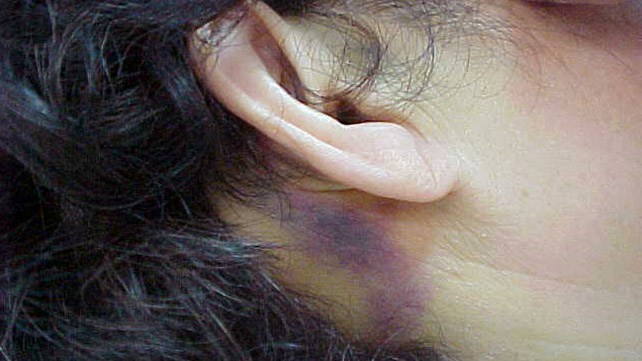
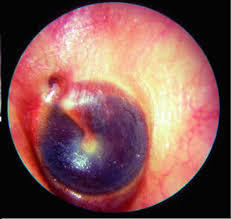
- Raccoon eyes - Periorbital ecchymoses. 2. Battle sign. 3. Hemotympanum. 4.CSF rhinorrhea or otorrhea.
Periorbital ecchymoses

battle sign
haemotympanum
CSF rhinorrhea
Cerebrospinal fluid (CSF) rhinorrhea is a condition where the protective fluid that surrounds the brain finds its way into the nose and sinuses, often appearing as a very watery runny nose. Most cases of CSF rhinorrhea occur after major accidents where the bones of the face and skull experience significant trauma
CSF rhinorrhea must be distinguished from other causes of rhinorrhea, such as allergic rhinitis:
- Glucose concentration does NOT reliably distinguish CSF from nasal mucus. 2. Beta-2 transferrin is UNIQUE to CSF, and its presence documents a CSF source of rhinorrhea.
Hypothermia occurs in coma caused by:
- Ethanol or sedative drug intoxication. 2. Hypoglycemia. 3. Wernicke encephalopathy. 4. Hepatic encephalopathy. 5. Myxedema.
Coma with hyperthermia is seen in:
- Heat stroke. 2. Status epilepticus. 3. Malignant hyperthermia related to inhalational anesthetics. 4. Anticholinergic drug intoxication. 5. Pontine hemorrhage. 6. Certain hypothalamic lesions.

-
Neuroanatomy10
-
Basal ganglia15
-
the Pituitary gland0
-
the Cerebellum8
-
the Cerebrum17
-
the Pineal gland5
-
Cranial nerves ( function and palsies )25
-
Head aches + Facial pain19
-
Guillian Barre'6
-
Multiple sclerosis12
-
Myasthenia gravis5
-
Motor neurone disease7
-
Meningitis0
-
Mononeuropathies0
-
Cranial nerves ( 7-12)23
-
Epilepsy + Seizures35
-
Seizures24
-
neuro terminology25
-
anti epileptic drugs10
-
the pyramidal system11
-
Haemorrhagic stroke24
-
Somatic symptom disorder9
-
Overal neuro debrief166
-
MS pt 216
-
Movement Disorders + Parkinson14
-
Factitious Disorder4
-
Hypochondriasis2
-
Conversion disorder10
-
Antiepileptics18
-
CN LANGE - Coma I109
-
Pass medicine NEURO0



