Compiled Flashcards

(247 cards)

1
Q
A

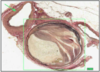
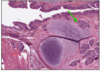
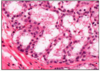
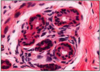
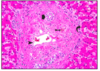
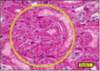
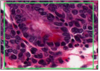
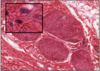
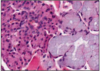
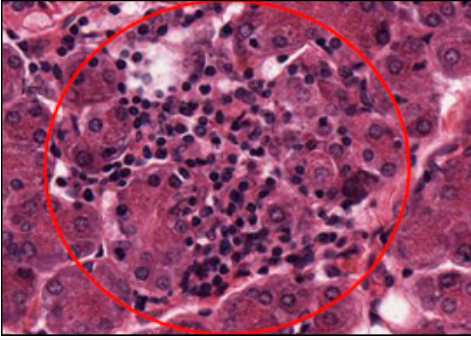
LYMPH NODULE WITHIN SUBMANDIBULAR GLAND
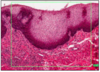
2
Q
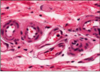
A

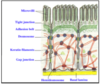
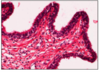
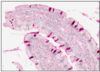
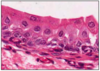
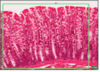
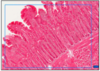
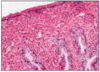
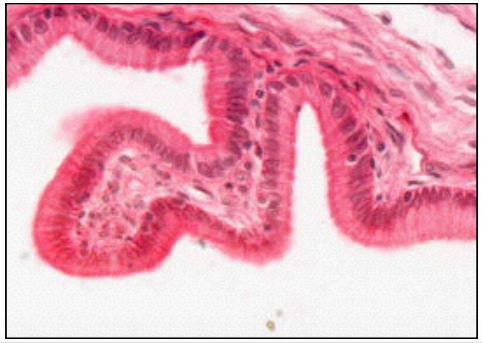
SIMPLE COLUMNAR

  • height > width
  • oval nucleus
  • longer axis perp. to base of cell
  • often microvilli or cilia at apical membrane
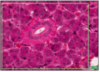
  • GUT ENTEROCYTES and RESPIRATORY TRACT

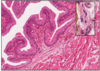
left = gallballder
3
Q
A

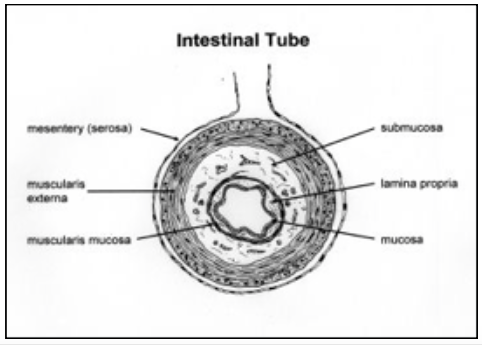
GI TRACT LAYERS (x4)

  1. mucosa - innermost. epithelium (folded), connective tissue (lamina propria - w/ lymphoid tissue), smooth muscle ring (muscularis mucosa)
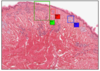
  2. sub-mucosa - loose connective tissue, glands and lymphoid tissue, many blood vessels, meissner’s plexus (enteric nervous sytem)
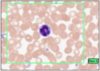
  3. external muscle coat (muscularis externa)- 2 layers of smooth muscle - persistalis -auerbach’s plexus (enteric nervous system)
  4. serosa - simple squamous epithelium
4
Q
A

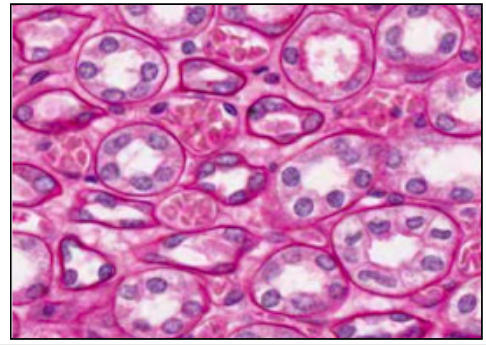
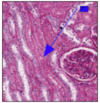
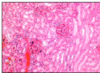
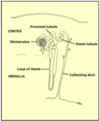
LOOP OF HENLE (PAS)

  • mostly @ medulla
  • thick/straight descending, thin loop, thick ascending
  • thick descend = similar to proximal tubule
  • thick ascend = similar to distal tubule
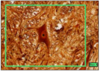
  • longest thin loop penetrate deepest to medulla when glomerulus = cortico-medulla junction
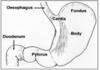
  • thin descending portion = low permeability to ions and urea, high permeability to water
  • thin ascending portion retains water, reabsorption Na+ and Cl-
  • this produces dilute/hypotonic filtrate but a hypertonic interstitium
  • vasa recta (straight capillaries) run alongside tubules

this slide - thick and thin limbs and vasa recta
5
Q
A

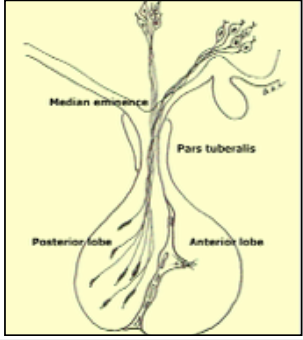
PITUITARY GLAND

  • anterior / posterior

POSTERIOR - neuronal origin, down growth of brain, pituitary stalk to median eminence of mid-brain @ floor of V3

supra optic and para-ventricular nuclei

  1. oxytocin
  2. vasopressin

ANTERIOR (TROPHIC) - epithelial origin. roof of primitive gut. adheres @ anterior border of posterior pituitary and surrounds stalk (pars tuberalis)

  1. growth hormone
  2. thyroid stimulating hormone
  3. follicle stimulating hormone
6
Q
A

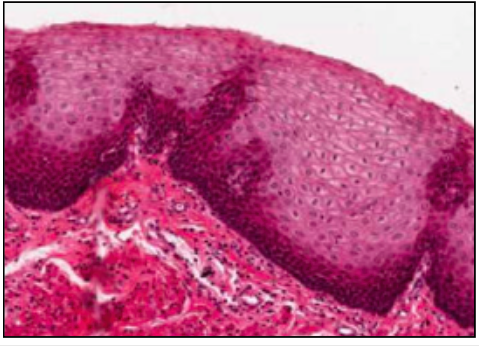
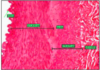
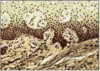
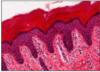
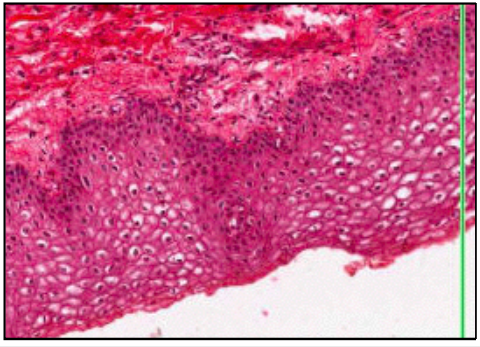
STRATIFIED SQUAMOUS

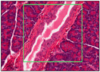
  • mouth, throat, oesophagus, anus, vagina
  • cells replaced from below
  • stem cells (mitosis capable) at basal layer
  • sloughed off from top

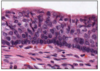
this slide = moist non-keratinised stratified squamous epithelium at mouth

(moist from glandular secretion)
7
Q
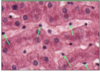
A

CONNECTIVE TISSUE - INTRO

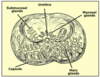
  • extracellular fibre scaffold - COLLAGEN/ELASTIN
  • jelly-like matrix - hydrophilic polysaccharide polymer - GAG - glycosaminoglycans
  • GAG - synthesises @ epithelial cells, muscle, cartilage, bone
  • COLLAGEN/ELASTIN synthesised by fibroblast
8
Q
A

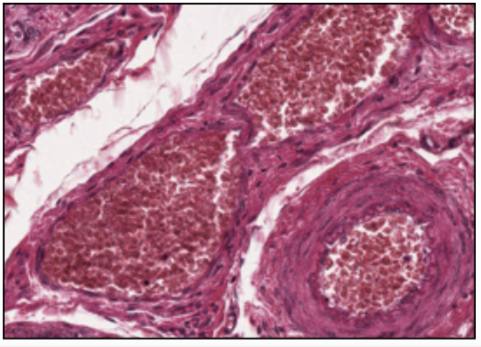
VEINS (TOP LEFT x2)

  • same layers as arteries, but thinner and poor boundaries
  • irregular outline, large lumne (therefore same blood at lower pressure)
  • wider lumen than arterioles (but slower flow) therefore same volume/sec
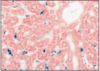
9
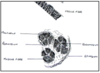
Q
A

LIP 1

  • mucosa = typical of mouth (stratified squamous non-keratinising epithelium - SSNKE)
  • @ margin, abrupt transer to skin (stratified squamous keratinising epithelium - SSKE)
  • connective tissue (sub-mucosa) - collage and elastin
  • deeper layers - glands and striated skeletal muscle (change shape of oral cavity)
  • small blood vessl @ sub-mucosa help keep moist
10
Q

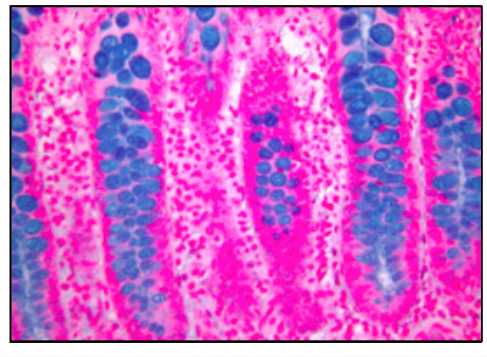
What is this?

A

ALCIAN BLUE

  • GAG-rich
  • mucous
  • mast cells
  • cartilage

BLUE

11
Q
A

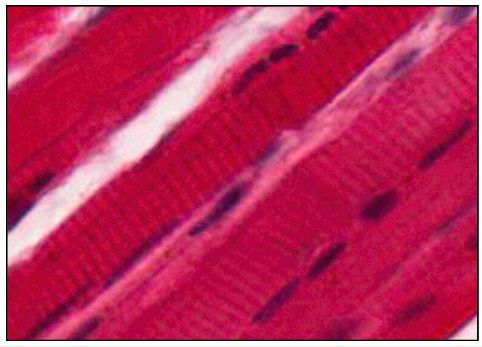
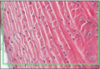
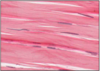
SKELETAL MUSCLE LONGITUDINAL

  • each skeletal muscle fibre = hundreds of myoblasts fused to syncitium
  • each fibre = many nuclei under plasmalemma at side of fibre - DISTINGUISHING POINT

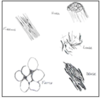
this slide -tongue

n.b. small fascicles usuall denote smaller motor units = fine control
12
Q
A

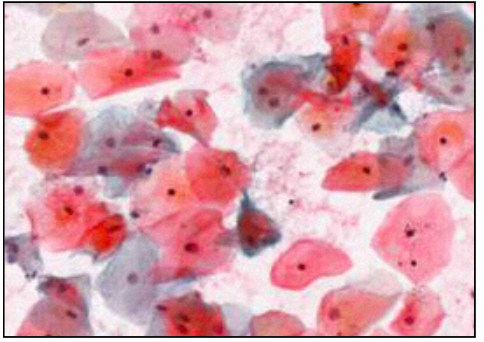
EPITHELIAL SQUAMES

  • in menstrual cycle surface cells accumulate glycogen and flake off
  • desquamated cells rupture and bacteria generate lactic acid
  • low pH at vagina

pale green cells - outermost layer, predominate at first half of menstrual cycle

pink cells - deeper layer
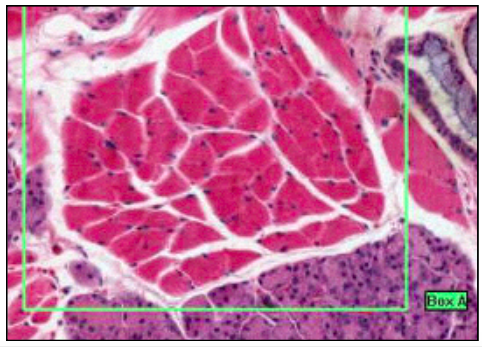
13
Q
A

SKELETAL MUSCLE (TRANSVERSE)

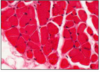
  • loosely aggregated to fasciuli by PERIMYSIUM
  • nuclei at periphery of fibre

SKELETAL MUSCLE INDIVIDUALLY INNERVATED IN MOTOR UNITS

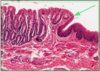
MITOCHONDRIA BETWEEN MUSCLE FIBRILS WITH MUSCLE FIBRES

MAY SEE GLYCOGEN AND LIPID DROPLETS
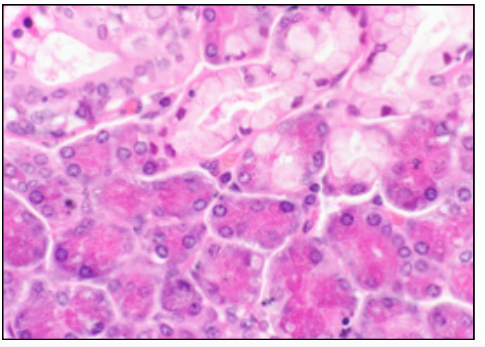
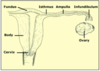
14
Q
A

GI FORMATIVE 3

  • serous glands @ bottom
  • mucus glands @ top
  • this is mixed

therefore this is a submandibular gland

(mixed = submandibular)
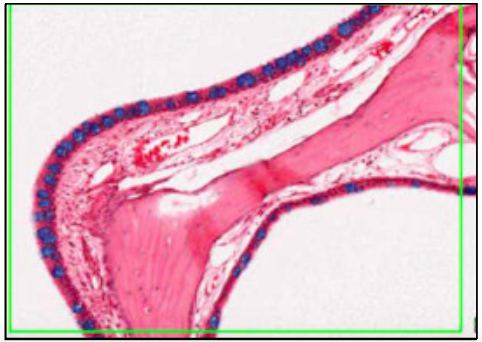
15
Q
A

NOSE (H&E AND ALCIAN BLUE)

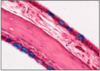
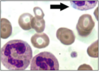
  • mucous/cartilage - blue
  • central bone plate - pink
  • respiratory epithelium either side
  • thin walled blood vessels between epithelium and bone
  • mucous containing goblet cells stained bright blue
16
Q
A

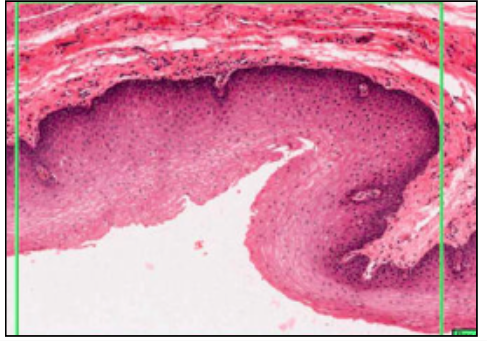
EPIGLOTTIS 2

  • SSNKE
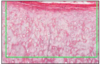
17
Q
A

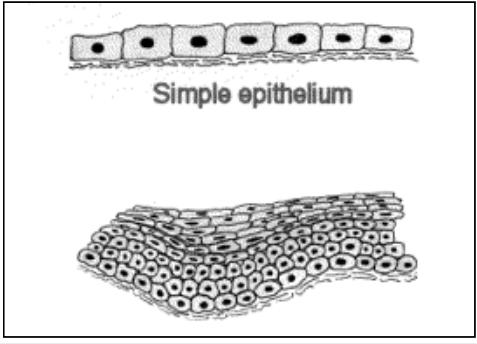
EPITHELIA

  • barries
  • single layer = simple
  • multi layer = stratified
  • stratified = protection
18
Q
A

LYMPHOCYTE SIZE

  • small = 5 microns
  • little cytoplasm as dormant and not fully differentiated
  • metabolically inactive
  • minimal rER
19
Q
A

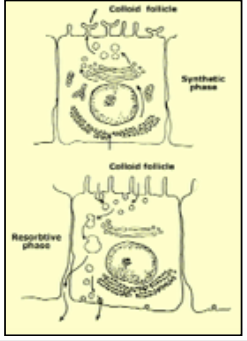
FOLLICULAR PHASES

  • cyclical
  • synthesise thyroglobulin and store within follicle
  • after dormant period re-sorb and break down colloid and release active hormone (T4) into bloodstream
20
Q
A

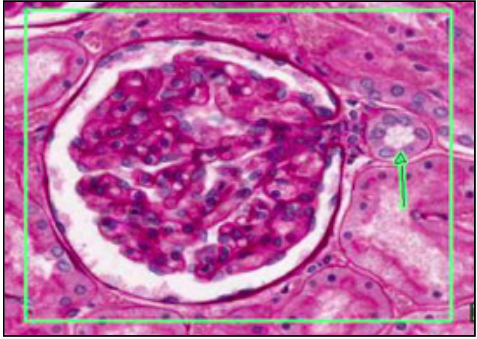
GLOMERULAR TUFT (PAS)

  • arise from vascular pole of glomerulus = entrance afferent and exit efferent
  • in this angle lies a distal loop of nephron with palisade of macula densa
  • capillary loop surrounded by podocyte
  • surrounded by urinary space - separates glomerulus from bowman’s capsule
  • arrow to distal tubule
  • MACULA DENSA - around blood vessels regulate blood flow, provides framework for glomerulus.
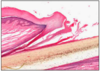
21
Q
A

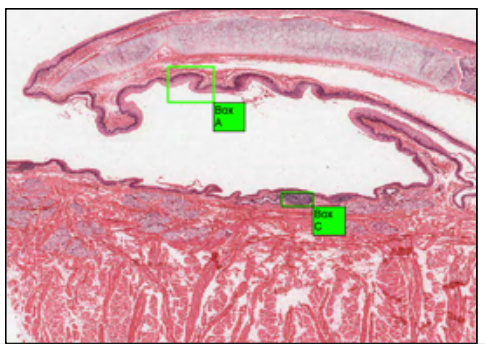
EPIGLOTTIS

  • @ posterior of tongue
  • boundary of oropharynx and laryngeal pharynx
  • mostly SSNKE
  • lower part posterior - pseudo-stratified columnar ciliated epithelium (respiratory)

contains:

  1. elastic cartilage plate
  2. lymph nodules (submucosa)
  3. salivary glands (submucosa)

Box A = buccal surface - faces mouth
22
Q
A

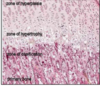
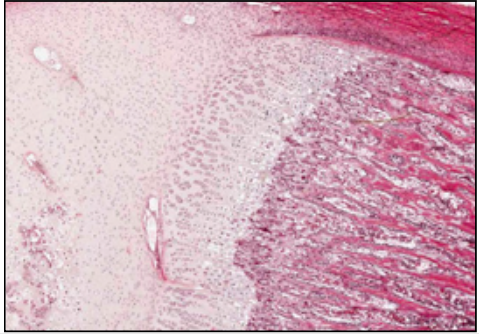
LYMPHOCYTES

  • small cells with dark stained nucleus and little cytoplasm
  • B and T are indistinguishable
  • immature are bigger than RBC, smaller than granulocytes
  • mature roughly equal size to granulocyte
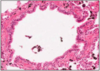
23
Q
A

GROWING LONG BONE

  • increase in length by adding bone at epiphyseal plate
  • additional bone on outside of shaft
  • ossification starts at diaphysis
  • single epiphyseal growth plaet at distal phalanges of fingers and toes
  • carpal and tarsal bones last to ossify @ 7/8yo
24
Q
A

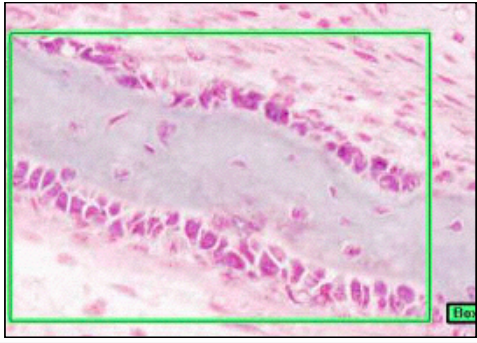
MEMBRANOUS BONES & OSTEOBLATS

  • some skull bones formed by direct deposit of bone in condensed mesenchyme = intra-membranous ossification
  • easier to recognise osteoblasts
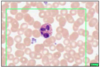
  • larger than osteocyte
  • dark blue/purple cytoplasm (as large amounts of RNA)

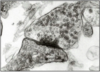
trapped within bone when they lay down new bone - form osteocytes
25
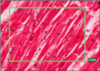
3 TYPES * SMOOTH - visceral, many body organs and blood vessels * SKELETAL - **voluntary**, mainly attached to bony skeleton - **striated** * CARDIAC - only at heart, **branching/striated** OTHER CONTRACTILES 1. PERICYTES (along some blood vessels) 2. MYOFIBROBLASTS (scar formation 3. MYOEPITHELIAL CELLS (milk @ lactate
26
SKELETAL MUSCLE BANDING (IRON HAEMATOXYLIN) * I band - pale, predominantly actin * Z line - @ centre of I band * A band - darker staining, MYOSIN RICH A band is not actin @ centre of each A band = paler H band with M line I stands for ISOTROPIC A stands for ANISOTROPIC
27
CELL JUNCTIONS * bound tightly together to prevent macromolecule or fluid movement * DESMOSOMES * TIGHT (ADHERENT) JUNCTIONS * GAP JUNCTIONS
28
What is this?
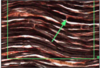
PERIODIC ACID SCHIFF (PAS) * hexose sugars (complex carbs) * goblet cell mucins * cartilage matrix * glycogen * basement membranes * brush border MAGENTA (DARK PINK)
29
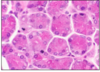
SUBMANDIBULAR SALIVARY GLANDS (MIXED) * well defined / globular * branched tubulo-acinar * interspersed with fat **adipose** * mixed secertion - part mucus, part enzyme rich **demi-lunes** - serous cells form demi-lunes (half-moons) at closed ends of tubules
30
CORPUS LUTEUM 2 * centre contains pale staining amorphous material and blood clot * surround is wide band of cells from theca interna invaded by blood vessels * theca externa also contains many blood vessels **theca externa** - stellate shape, small, pale **theca interna** - large, globular, intense pink
31
FIBROUS CARTILAGE * large amount of collagen arranged in sheets **this slide - IV disc** 1. **​**thick fibrous outer shell 2. more fluid centre 3. condrocytes distributed throughout both 4. chondrocytes **between** collagen laminae OUTER CASING - **annulus fibrosus** INNER CASING - **annulu pulposus**
32
NERVE CELL BODIES (SILVER) * either @ CNS or in discrete ganglia close to spinal cord * exception is PNS with clusters close to organ innervated * silver stain has affinity for cytoskeleton of cells * neurons have **developed cytoskeleton,** therefore stain heavily GOLDEN BROWN - nucleus pale but nucleolus black **cytoskeleton - mictrotubules** (tubulin and dynein) = axonal transport i.e. vesicles from golgi to end and back/**neurofilaments** (intermediate architecture) = axonal diameter **no. processes** unipolar - sensory bipolar - interneurons multipolar - motor neurons
33
STOMACH * 4 regions: cardia/body/fundus/pyorus * cardia and body are histologically similar with respect to glands * muscosa thrown into folds (**rugae**) * simple columnar epithelium punctuated by gastric pits * muscularis externa is **3 layers thick** - **additional oblique** fibers for churning gastric mucosa scattered with pale-staining endocrine cells - serotonin, somatostatin, vasoactive intestinal peptide (VIP). these regulate breakdown and delivery to duodenum
34
OSEOPHAGUS **mucosa:** * SSNKE * thin lamina propria * narrow muscularis mucosa (thicker @ gastric end) below diaphragm: * simple columnar epithelium (same as gastric region of stomach) * site of pathological change - Barrett's oesophagus! **sub-mucosa**: sero-mucous glands (lubrication), large thin-walled veins (@ distal end - oesophageal variscosities) **muscularis externa:** upper 1/3 = skeletal / middle 1/3 = mixed / lower 1/3 = smooth
35
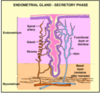
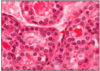
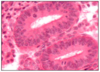
ENDOMETRIUM * uterus = **simple columnar with tubular glands** **PROLIFERATIVE PHASE** - first half, stroma tickens and length glands increase **SECRETORY PHASE** - second half of menstrual cycle - glands secrete and stroma differentitates to environment for ovum **MENSTRUATION** - most endometrium shef leadving only **bases of glands - MENSES = 4 days**
36
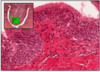
PSEUDOSTRATIFIED * multilayered but when stretched flattens * TRACHE AND BRONCHI * @urinary tract = specialised UROTHELIUM **distinguish from stratified** all cells in contact with BM cells replaced by lateral migration not vertical **this slide - trachea**
37
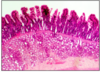
GI FORMATIVE 5 * villous * sub-mucosa with Brunner's glands * duodenal epithelium contains some lymphocytes between epithelium DUODENUM
38
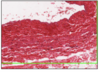
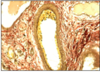
ARTERY WITH PLAQUE AND THROMBUS (WITH IRON HAEMATOXYLIN) * elastic/nucleus = black
39
PROXIMAL TUBULES 2 (PAS) * **this slide - straight portion of proximal tubule** * leads to loop of Henle * if glomeruli present = cortex * some project to medulla
40
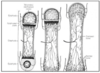
ENDOCHONDRAL OSSIFICATION 2 * secondary centres formed in heads of bones (epiphyses) * at birth most bones have primary, some secondary * centres expand = reduces cartilage * restricted to **epiphyseal growth plates** * separates diaphysis from epiphyses * growth plates extend beyond PUBERTY = bone growth * epiphyseal cartilage responds to **growth hormones and sex hormone**
41
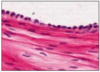
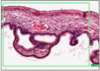
SQUAMOUS * outer surface of most thoracic and abdominal organs * simple squamous epithelium (SEROSA) * also lines pleural and peritoneal cavities * air sacs of lungs (alveoli) * FLATTENED * CYLINDRICAL/ELLIPTICAL NUCLEI @ base of cell **LEFT = serosa @ outer wall intestine**
42
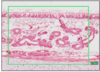
LYMPH VESSELS * w/ pink staining blood plasma and valves * small = like capillaries * large = like veins * walls = connective tissue with some muscle * less pressure than venules * sometimes lymphocytes * transports antigens and activated lymphocytes from tissue to lymph nodes (and resident macrophage) * drains excess fluid fro tissue (hydrostatic/oncotic pressure imbalance) * no blood
43
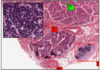
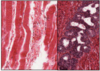
PAROTID GLAND 2 * C (bottom) = nerve * D = large lymph node **inset** - close up of lymph node parotid saliva contains IgA (from plasma), combines with proteinous pieces so reaches intestine unmodified by amylase **striated duct** - from invaginations, indicative of water reabsorption
44
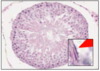
TESTES * within collagenous capsule = tunica albuginea * within fibrous septa to 250 lobules (each lobule with up to 4 germ cell producing semniferous (tubules) * semniferous tubule = 50cm loop (open both ends) * drain to rete testes (channels) * **Leydig cells** between semniferous tubules
45
DEVELOPING MEMBRANE BONE * more direct method (intramembranous ossification) * no cartilage proformer * @ flat bones of skull -\> bone deposited in mesenchyme @ 2/3yo * small clusters of progenitor cells within mesenchye -\> osteoblasts * deposti isolated islands of bone * isands coalesce - meshwork of bone * osteoblasts continue till mesh filled - **primary plate of bone** * later eroded and replaced with more organisesd lamellar secondary bone **this slide - skull and brain with immature membrane bone. blue/purple osteoblasts lining holes - synthesise osteoid - profuse endoplasmic reticulum - dark blue**
46
PYLORIC REGION * cardiac and pyloric glands are shorter * glands are **coiled** * mainly mucus neck cells * scattered with cells producing **gastrin**
47
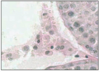
GI FORMATIVE 4 * this is purely serous (granules) **this is parotid gland** therefore contains branches of facial nerve
48
FATTY CONNECTIVE - DIPOSE * white and brown * **white fat** more abundant * large cells with single fat droplet * protect vital organs and energy store (INSULATION AND PACKING) * usually deposited alongside capillaries therefore many vessels * **brown fat** abundant in new born * limited in later life (chest and shoulder-blade) * multi-locular - many droplets per cell * generation of heat via oxidation of FAs
49
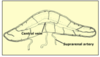
ADRENAL GLANDS * OUTER CORTEX = STEROID HORMONES * INNER MEDULLA = ADRENALINE AND NORADRENALINE * centripetal blood supply * arterioles from capsular arteries to cortical sinusoids and direct links to medulla * both systems drain to central vein -\> to renal vein or direct to IVC
50
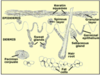
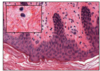
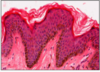
EPIDERMIS * 4 layers 1. GERMINATIVE - single layer 2. SPINOUS - thickest 3. GRANULAR - narrow with **keratohyaline** 4. DEAD LAYER - dead keratinised squames, thickness varies depending on location and abrasion DERMIS: * 2 layers 1. rich in collagen (close to epidermis) 2. deeper fatty layers
51
URINARY BLADDER * wall = thick bundles of smooth muscle with no preferred direction except neck = 3 distinct layers 1. innermost = longitudinal projects inferiorly and turns transversely to form a sphincter around prostatic urethre (male) and external meatus (female) thrown into folds w/ umbrella cells walls of bladder contains small nerves (autonomic) sympathetic NS = mainly blood vessels at bladder **inset = nerves** **micturition** when external sphincter relaxes (sympathetic) and muscle wall (detrusor) contracts (para)
52
UTERINE BODY * 3 poorly defined layers **myometrium** smooth muscle * lined by epithelial **endometrium** * myometrium hormonally sensitive **hyperplasia and hypertrophy @ pregnancy** large arteries and veins between inner and middle layers, also supply endometrium and give rise to **spiral arteries** (**significant @ menstruation**)
53
What is this?
IRON HAEMATOXYLIN * nuclei * elastic fibres BLACK
54
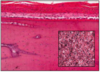
DENSE REGULAR CONNECTIVE TISSUE * ligament * thick ribbons of parallel collagen * fibroblasts at layer between * compact and regular **COLLAGEN NEITHER ELASTIC NOR CONTRACTILE**
55
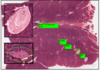
MALT NODULE (@ TRACHEA) * left arrow points to MALT nodule * right arrow points to smooth muscle band LYMPH NODE = discrete, encapsulated collection of lymphoid tissue MALT NODULE = no capsule, intimately related to epithelium
56
SMOOTH MUSCLE * discrete cells with cell junctions - function as whole * LONGITDUINAL - FUSIFORM w/ cylindrical nuclei * TRANSVERSE - ROUND cell and nuclei * CENTRAL NUCLEUS / NO STRIATIONS **not organised into sarcomeres** * anchored to cell membrane in clumps * reticulin (collagen T3) rich **external lamin****a** / BM that joins cells together * electrically coupled via **gap junctions** * surface receptors for hormonal stimuli **this slide- double layer of smooth muscle @ intestines**
57
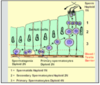
SEMNIFEROUS TUBULE * stratified epithelium with support (**sertoli**) and germ line (developing spermatazoa) * at periphery = germinal epithelial * GE produces large cells with speckled chromatin = **spermatagonis** * spermatogonia develop to spermatocytes * spermatocytes pass blood testis barrier created by Sertoli * Sertoli = blood testis barrier and nurture sperm * production = 64 days * maturation wave passes slowly down each tubule
58
INTESTINAL EPITHELIUM * enterocytes w/ goblet cells * epithelia sit on BM - permeability barrier between epithelium and connective tissue * microvilli at apical surface = BRUSH BORDER * brush border - increase SA / attachment of exo-enzymes * samll intestine = simple columnar
59
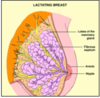
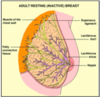
BREAST * start as mainly adipose tissue, into which grow solid cords from the nipple * branch out/hollow to form **lactiferous ducts** but no milk producing alveolar cells * **15-20 segments formed by fibrous strands from nipple** * **suspensory ligaments of Cooper** * ducts open to nipple via lactiferous sinuses * blind ended before pregnancy * adult inactive breasts are responsive to fluctuating hormones * @ 2nd half of each mesntrual cycle **PROGESTERON PROMOTED OEDEMA** - distension of segments
60
VAS DEFERENS * spirally arranged smooth muscle * similar to epididymis but shorter cells and microvilli * sometimes has longitudinal folds - lamina propria * sudden and rhythmical contraction expels sperm thick muscular wall makes vas feel cord like
61
ILEUM 2 * serosa (simple squamous) on edge of longitudinal muscle
62
PURKINJE FIBRES (WITH PAS PROCEDURE - MAGENTA) * large modified muscles * large vacuoles * few myofibrils therefore pale H&E * stores of GLYCOGEN (PAS) CARDIAC CONDUCTION
63
LIVER * hepatic portal system receives nutrients * main cells - hepatocytes functions: 1. creation/store energy as glycogen & fat 2. synthesise plasma proteins 3. de-amination of amino acids and production of urea 4. uptake, synthesis, excretion of bilirubin and bile acids 5. detox and inactivation of drugs by oxidation, methylation or conjugation * polygonal lobules of cells * each lobule with central vein and radiating hepatocytes (cords) * between cords = sinusoids (blood vessels) - bathe hepatocytes in mix of venous and arterial blood * blood drains from each lobule via central vein - hepatic
64
GASTRODUODENAL JUNCTION
65
PENILE URETHRA * prostatic, membranous, penile * membranous and penile = non-secreting **pseudostratified columnar** * at distal end = stratified squamous epithelium (within glans) * **bulbo-urethral glands within membranous urethra** produce watery galactose rich secretion, precedes main ejaculate - can sometimes be a problem with catheterisation
66
LARGE VEINS * thick wall * distince intima/media and internal elastic lamina * medial layer w/ longitudinal smooth muscle * adventitia - thick w/ longitudinally arranged muscle fibres
67
DISTAL TUBULE (PAS) * from medulla to cortex then to vascular pole of **glomerulus** * macula densa here **monitors sodium levels** to influence intitial filtration of glomerulus * paler than proximal * deep invaginations of basal plasma membrane with numerous mitochondria * mitochondria indicative of control acid/base balance and concentration of urine (ATP) * with **aldosterone** sodium reabsorbed, potassium excreted * bicarbonate ions reabsorbed, hydrogen excreted - acidic urine @ cortex both proximal and distal tubules present proximal more tightly coiled therefore appear to be more numerous
68
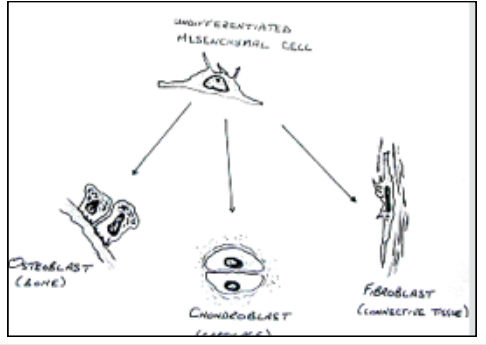
CARTILAGE * cartilage/bone = rigid conenctive tissue (CLOSELY RELATED) * undifferentiated **mesenchymal cell** * cells in dense GAG rich matrix * variable amounts of collagen and elastic tissue * FLEXIBLE/COMPRESSIBLE/HARD WEARING
69
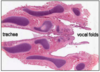
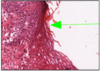
VOCAL FOLDS 2 * red arrow points to voluntary skeletal muscle * green arrow points to sero-mucous glands
70
BASOPHILS - BASOPHILIC LEUKOCYTES * not multi-lobar * dark blue granules which appear to fill cell * least common * similar role to **MAST** cells * secrete **HISTAMINE** and other vasoactive substances - **increased blood flow locally**
71
ENTEROCYTES * major absorptive cell * 300 short microvilli on apical surface - **brush border** * @ outer surface brush border = glycocalyx (enzymes) - filter most nutrients through this * water and glucose (some) via intracellular pathways high concentrations of HEXOSE SUGARS mean brush border stains intensely by PAS
72
SCHWANN CELLS AND AXONS SUPPORTED * each axon with continuous Schwann cell chain * MYELINATED - 1:1 relationship with Schwann * UNMYELINATED - several:1 MYELINATED AXONS - generally larger (greater diameter) with increased velocity of conduction **MYELIN** membranous, bilipid (phospholipid), proteins inserted between layers Predominantly phospholipid = **SPHINGOMYELIN** **MESAXON** - where 2 limbs of Schwann/Oligo around axon **fuse = focal point where myelin inserted in myelin sheath**
73
BREAST TISSUE - LACTATING * alveoli displace much of fat * contain secretory cells that produce milk proteins and fats and ion rich watery solution * milk protein and fat synthesis by same cells within alveoli but discharged differently * **milk fats - apocrine secretion** * **milk protein - merocrine process** **this slide = fibrous connective tissue - stroma**
74
SWEAT GLANDS * dermis = 2 layers - outer with collagen and elastic fibres (**fibrous layer**) deeper = adipose (**fatty tissue**) * @ dermis = **roots of hairs, glands, plexi of blood vessels, sensory transducers and nerve endings** * most common = **ECCRINE SWEAT GLANDS - lined by glycogen rich cells** * tighly coiled knot of fluid secreting cells and straight duct with simple cuboidal epithelium * duct to surface of skin * coiled section surrounded by **MYOEPITHELIAL CELLS** * @ armpits and anus = apocrine sweat glands - earwax
75
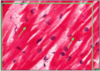
SKELETAL MUSCLE TRANSVERSE * polygonal pink fibres * arranged in clumps = **fascicles** not all skeletal muscle is attached to bone when skeletal muscles are attached together by fibrous connective tissue = **RAPHE**
76
SINUSOIDAL MACROPHAGES * Kupffer cells in lining of endothelium * phagocytose blood borne pathogens * part production of bilirubin (taken up and excreted by hepatocytes) n.b. demonstrate presence by uptake of coloured dye, contain particulate deposits **this slide - Kupffer cells have taken up blue/black ink.** they line cords between pink-staining hepatocytes.
77
PORTAL TRIAD
78
ARTERIOLES * 3 layers or fewer of muscle @ media * no internal elastic lamina - therefore amy completely close when muscle contracts * poor adventitia - mainly collagen and elastin **function:** highly responsive to vasoactive stimuli - regulation of TPR
79
TONGUE 1 * SSNKE on ventral (lower) surface * SSKE on dorsal (upper) surface - constant abrasion * coarse multi-directional skeletal muscle bundles **extrinsic fibers** - skeletal muscle inserted to lower jaw **intrinsic fibers** - skeletal muscle inserted to fibrous connective tissue underlying mucosa **mixed sero-mucous salivary glands** (SUBLINGUAL) **lymph nodules** - particularly @ posterior 1/3 of tongue (linguinal tonsisl)
80
LARYNX * respiratory epithelium, except vocal folds * **vocal folds** - stratified squamous epithelium (more robust, may withstand vibration) below epiglottis larynx -\> 2 sets of folds **Vocal folds** * contain free upper margin of elastic tissue (conus elasticus) * tensioned by voluntary skeletal muscle - **vocalis muscle** FALSE FOLDS - upper - respiratory epithelium TRUE FOLDS - lower - stratified squamous epithelium VESTIBULE - between - respiratory epithelium
81
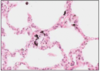
ALVEOLI * walls = capillaries between **simple squamous epithelium** * fibroblasts in walls - produce type 3 collagen (reticulin) and elastic tissue (recoil) * adjoining alveoli connected by pores = equal inflation **type 1 cells** (thin) - flat cells, flat nuceli, 40% of population, 90% of SA **type 2 cells** (globular) - secretes surfactant (lipid rich), 60% of pop., 10% SA, rounded, round dark staining nuclei
82
TENDON -TYPE 1 COLLAGEN * tendons and aponeuroses = condensed parallel bundles of collagen fibres interspersed with fibroblasts * at end of muscle fasciculi split becoming smaller but more numerous * connective tissue between more numerous TENDON = continuation of peri/epimycium tearing a tendon causes inflammation inflammation stimulates fibroblasts to synthesise actin (draws would together) and collagen
83
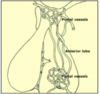
PITUITARY PORTAL SYSTEM @ ANTERIOR * release trophic @ anterior pituitary regulated by factors @ neurons of hypothalamus * project to medial eminence * here they release secretions which are taken up by capillaries of pituitary portal and carried to anterior lobe * then act on hormone secreting cells "portal system" = one that starts and ends @ capillaries
84
SMOOTH MUSCLE ARRANGEMENT AND GAP JUNCTIONS * each junction = **6 CONNEXON PROTEINS** span cell membrane and link interior of adjacent cells * vital for co-ordinated contraction * **guarded central pore** - small molecules to pass from one cell to the next (signal molecules) electrical coupling - freely and quicker than transporting
85
LACTATING BREAST * @ first trimester, enter proliferative phase stimulated by **OESTROGEN, GROWTH HORMONE + CORTISOL** * ducts divide and secretory alveoli develop at ends - columnar surrounded by flattened myoepithelial cells * alveolar cells mature and secretory material builds up within them and lumena, at the same time the **stroma becomes depleted of adipose tissue** * **@ latter stages = lymphocytes** **lactation suppressed by high levels of oestrogen and progesterone**
86
CARTILAGE 2 * surrounded by fibrous capsule - collagen **perichondrium** * perichondrium contains undifferentiated progenitor cells (to chondroblast if needed)) 3 FORMS 1. HYALINE (T2 collagen) - fine **collagen and elastic** fibres - glassy. POOR STAIN WITH H&E - eg. articular surfaces. **all long bones originally H&E** 2. ELASTIC (T2 collagen and elastic) - **irregular** arranged elastic fibres VISIBLE 3. FIBROUS (T1&2 collagen) - **banded collagen** eg. intervertebral discs
87
OLFACTORY EPITHELIUM * @ roof of nose below cribriform plate * pseudo-stratified columnar epithelium with basal and sustentacular (supporting cells) * with bipolar neurons - dendritic process to surface (arrow) * serous glands to surface (solvent for odorous substances) * thicker than other respiratory epithelium special cells = **Bowman's glands** - small serous glands below olfactory epithelium **sustentacular cells** tall, narrow, in contact w/ BM. bulky cytoplasm near lumen. cytoplasm accumulates yellow/brown pigment.
88
FIBRE ARRANGEMENT LONGITDUINAL * striations (myofibrils and repeat sarcolemmas) * Dark = A band * Light = I band * Z lines connected IN REGISTER between myofibrils = mitochondria and elements of sarcoplamic reticulum **DYSTROPHIN** - binds actin to plasmalemma of muscle cells - structural integrity
89
OSTEOCLASTS (MEMBRANE BONE H&E AND ALCIAN BLUE) * bone resorbing cells * active macrophage differentiated from monocytes * therefore different lineage form osteoblast and osteocyte * multi-nucleate * on surface of bone in depression **HOWSHIP'S LACUNAE** * primary erosion sites * LARGER than osteoblast, multinucleate, intense pink stain (to digest bone, need lysosome - eosinophilic)
90
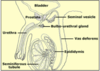
SEMINAL VESICLE * highly coiled glands at postero inferior bladder * double layered capsule of smooth muscle * long narrow folds * stimulated by **testosterone** - enlarge and secrete creamy opalescent fluid with acid pH. rich in globulin, vitamin C, amino acids and sugars * contraction of smoooth muscle mixes with spermatozoa * simple columnar epithelium
91
FILTRATION BARRIER * basement membrane * synthesised and maintaiend by endothelial capillary cells and epithelial cells (podocytes) that ensheath them * endothelial = fenestrated * podocytes stand off membrane with foot processes * creates physical pores * pores guarded by filtration membrane * membrane is charged and resists passage of some molecules * water and solutes may pass to urinary space = primary filtrate
92
CHIEF (ZYMOGENIC CELLS) * pyramidal @ deeper gland * cytoplasm - blue H&E - contains granules (pepsiogen/lipases) * @ body and fundus * close to muscularis mucosa PEPSIN - affinity for collagen
93
BONE - T1 CARTILAGE * mainly collagen (95%) - becomes mineralised (5%) * synthesised by osteoblasts * osteoblasts secrete collagen rich matrix - **osteoid** * mineralised with **hydoxyapetite** * cells trapped in bone -\> less active osteocytes * BONE REABSORBING CELLS - **osteoclast (multinucleate/phagocytotic** * bone dynamic - actively resorb bone - continous remodelling PRIMARY BONE * randomly organised (woven) * collagen fibrils - multidirectional * poor weight/strength ratio * soon replaced by more organised secondary bone
94
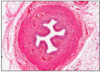
MUSCULAR ARTERY * well defined medial layer (smooth muscle in concentric rings) * medial layer interspersed with elastic * media-intima divide = wavy **internal elastic lamina** (condensed perforated elastic) * adventitia-media divie = **external elastic lamina only in large muscular**
95
CAPILLARIES * sometimes have **contractile pericytes** along bed * continuous or fenestrated (gut, kidney glomerulus, endocrine glands) * diameter is size of RBC **this slide - mature adipose**
96
SILVER STAIN - NEURONS * neurons are large * 25-60 microns * because of slide thickness you cannot see all processes * 1-5 dendritic processes * metabolically active * fully differentiated
97
TERMINAL/RESPIRATORY BRONCHIOLES (not respiratory epithelium) **terminal** * SIMPLE CUBOIDAL EPITHELIUM * sparsely ciliated * **CLARA CELLS** - many large ribosomes, ER, and granules -\> function is secretory and synthetic * sphincter-like smooth muscle ring **respiratory** * SIMPLE CUBOIDAL EPITHELIUM * larger than terminal - beginning of respiratory portion of lung **this slide - terminal**
98
ELASTIC FIBRES * microfibres of **fibrillin** set in amorphous matrix of **elastin** * **fine fibres** or **sheets** * PINK WITH H&E - tough to distinguish collagen * DARKER STAINING **this slide - large elastic artery** concentric sheets of elastic tissue (in vessels near heart) stain pink with eosin difficult distinguish collagen (GLISTENS) perforated elastic sheets with snake-like character
99
PARATHYROID * 4 @ dorsal surface of thyroid * mixture of fat cells and other secretory cells in clusters or short cords * **CHIEF CELL** - small an palely stained - very small granules = **parathormone (calcium from bone to serum)** * larger pink staining **OXYPHIL** cells fewer in number
100
PROSTATIC EPITHELIUM * glands varied - straight, coiled, branched * epithelium thrown into broad, branching folds * with testosterone, cells increase in height and secrete digestive enzymes - **acid phosphatase** (major component of seminal fluid) - **(PSA) prostate specific antigen** * lumen often with sec product / calcified glycoprotein
101
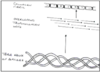
COLLAGEN (TROPOCOLLAGEN = 300n) * 12 types * NEITHER ELASTIC NOR CONTRACTILE **TYPE** 1. SKIN/BONE/TEETH/ORGAN CAPSULES 2. CARTILAGE 3. LIVER/KIDNEY/SPLEEN/**ARTERIES**/UTERUS (reticulin) 4. BASEMENT MEMBRANES (sheet like) 5. PLACENTA **STRUCTURE** - overlapping linear strands **TROPO-COLLAGEN** **TC** secreted from fibroblasts - arranged to fibrils extracellularly overlapping gives rise to characteristic **banding** **TC =** 3 linear polypeptide chains @ alpha helix
102
CILIATED SIMPLE COLUMNAR EPITHELIUM * nose/larynx/bronchial tree/fallopian tube * SIMPLE COLUMNAR EP w/ goblet cells and cilia * cilia = 2 microns LEFT = NOSE stained with H&E and ALCIAN BLUE **cilia movement by tubulin and dynein**
103
SEMNIFEROUS TUBULES * thin fibrous capsule * closest to membrane = germinal epithelium with spermatogonia (speckled) * between cells are smaller primary spermatocytes and Sertoli cells (**pale irregular nuclei**) * towards centre depends on stage in cycle * sometimes primary/secondary spermatocytes (**small dense nuclei**) * otherms more mature (narrow and elongated heads) * between tubules = **leydig clumps** **arrow to spermatid** reduction division (2n-1n -\> first meiotic) takes place when primary to secondary @ luminal side of blood testis barrier i.e. not in contact with blood stream
104
PROFORMER CARTILAGE * long bone formation * cartilaginous proformer -\> converted to bone * long bones not fully developed till after puberty * hyaline cartilage with fibrous perichondrium contains progenitor cells and chondrocytes * oxygen and nutrients by diffusion
105
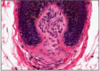
HAIRY SKIN * roots of hair project from dermis, but are of epidermal origin * arise from geminative epithelium within hair bulb that contains melanocytes - hair colour * hair lengthens when a root sheath of epidermis with same layers as rest of skin but **thicker BM = glassy membrane** * surrounded by **collagenous follicle sheath** with **erector pili (smooth muscle)** (& autonomic nerve) * sympathetic stimulation = stand on end * to shaft = **sebaceous glands (lubrication)** * some parts of body with hairless sebaceous glands - face and groin
106
MONOCYTES * kidney-shaped nucleus * no granules * pale blue cytoplasm * immature cells which differentiate to one of various forms when leave blood and enter connective tissue * many to macrophages (fixed marcophage @ liver = Kupffer, and @ spleen) in blood and alveolar air spaces macrophage phagocytotic, actute inflammation, arrive after neutrophils
107
ARTERY - LEFT, VEIN - RIGHT * 3 layers 1. **intima** (innermost) - endothelial cells on loose connective tissue w/ occasional myo-intimal cells (contractile potential) 2. **media** (middle) - thicker in arteries than in veins - smooth muscle, elastic, collagen 3. **adventitia** (outermost) - dense collagen and elastic
108
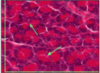
EXOCRINE PANCREAS * exocrine = 98% of gland * serous (watery/enzyme rich) * digestive enzymes from same cell, secretion granules at upper part of cell * enzymes released as food enters duodenum * enzymes activated by alkaline environment of duodenum stimulated by secretin to release ALKALINE FLUID from CENTRO-ACINAR and small duct cells **this slide - centro-acinar cells by green arrows**
109
OSTEOCYTES IN IMPREGNATE BONE * impregnate with dye * reveals osteocytes and **fine processes (filopodia)** through bone * filopodia make contact with adjactent cells * passage of nutriets/oxygen etc * respond to hormones and break down or deposit bone to **regulate calcium levels**
110
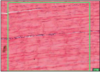
ILEUM * final segment of small intestine, therefore fewer plicae and shorter villi (less absorption) * goblet cells increase towards distal end * large **peyer's patches** @ submucosa (lymphoid tissue w/ lymphocytes) * Peyer's patches erupt through muscularis mucosa to lamina propria
111
NERVE CELL BODIES (H&E) * sensory cell bodies at DRG * large * one axon * one major dendrite * appear more rounded than motor neurons **this slide - DRG with large cell bodies** DARK STAINING PATCHES IN PERIKARYON (cytoplasm around nucleus) = **NISSL SUBSTANCE (aka rER)** nissl substance synthesis of proteins for export from cell or inclusion in membrane
112
INTERCALATED DISC * w/ desmosomes + adherent junctions (stick) * w/ gap junctions (electrical coupling) **disc = black** **myofibrial = blue/black** **function:** desmosome - anchor one cardiac muscle to next by **immediate cytoskeleton filaments** gap junctions - allow ion transfer between cardiac smooth muscle **electrochemical coupling - not cardiac conduction**
113
RETICULIN (TYPE 3 COLLAGEN) - SILVER STAIN * shape and intergrity of many organs by extracellular fibres * coarser elements = T1 * fine frameworkd = T3/reticulin TISSUE OF RETICULO-ENDOTHELIAL SYSTEM ie. lymph nodes, spleen, liver **RETICULIN FORMS BRANCHED FIBRES** - most collagen forms linear fibres
114
TOLUIDINE BLUE * nuclei/ribosomoes (DARK BLUE) * cytoplasm (PALE BLUE) * cartilage/matrix/mast cell/GAG rich (BRIGHT PURPLE)
115
LOBULE * cords of hepatocytes * sinusoids (wide, thin, fenestrated capillaries) = 70% portal vein blood, 30% portal artery blood * portal triads at corners of loules * arteriole (hepatic artery), venule (hepatic portal vein - nutrient rich blood), bile ductule * hepatocytes store: **glycogen, trigylcerides** * bile ductule = simple cuboidal epithelium **this slide - small muscular arteriole (top left), venule (bottom), bile ductule (top right, simple cuboidal)** hepatocytes secrete nile to extra-cellular bile canaliculi hepatocytes **replicate**
116
MUCOUS GLANDS * small salivary mucus gland * michael palin = mucus pale* mucus glands stain paler than serous!
117
ALVEOLAR MACROPHAGES * free roam in alveoli - phagocytose particulate matter and cell debris * from monocytes in blood * other macrophages stay in lung substance and engulf material that enters alveoli wall * contain black ingested dust (carbon) particles ALVEOLAR - enter teminal/respiratory bronchioles and pass to lymphatics or are transported by muco-ciliary escalator FIXED/SEPTAL - remain in interstitium between cells and tissue
118
HYALINE CARTILAGE * GAG rich * invisible collagen/elastic - glassy * **clumped** chondrocytes in matrix (pale staining lacunae) * MATRIX BINDS WATER - when compressed exudes water (reabsorbed when pressure released **this slide - trachea** n.b. 1. ARTICULAR CARTILAGE has no perichondrium 2. hyaline receives nutrients via diffusion from surrounding tissue
119
STOMACH BODY - GASTRIC MUCOSA * simple columnar epithelium - produce acid resistant mucin * gastric pit invaginations (green arrows) * several tall, straight or brached glands to each pit * submucosa = loose connective tissue with abundant vessels * muscularis externa = 3 layers of smooth muscle muscularis mucosa also contains elastic (black) to stop stomach collapse on empty
120
ADRENAL MEDULLA * irregular clumps interspersed with blood vessels * 2 types of secretory cells 1. ADRENALINE 2. NORADRENALINE stored in small neurosecretory granules in cytoplasm of cell until required **bathed in blood draining from adrenal cortex, thus influenced by steroid hormones** sympathetic stimulation
121
UTERINE TUBES * 10 cm within broad ligament * 4 regions: 1. intramural 2. short narrow isthmus 3. long ampulla 4. wide infundibulum (with fimbria) * lumen varies in appearance * UTERINE = star-shaped * INFUNDIBULUM = complex folds and wide * ciliated - **cilia become longer and beat more strongly soon after ovulation**
122
SINUSOIDS * wide, thin walled, fenestrated capillaries * endothelial cells interspersed with: 1. **kupffer cells** - fixed macrophages 2. **ito cells** - perisinusoidal cells (fat storing) * too thin to resolve * sit of meshwork of reitculin (collagen 3) * separated from heaptocyte cords by **space of Disse** (no blood cells here, but there is plasma) - albumin/fibrinogen synthesised at liver enters blood @ space of Disse **this slide - cords of hepatocytes with paler staining sinusoids between. nuclei of endothelial sinusoidal cells smaller and darker than that of hepatocytes.**
123
PROSTATIC URETHRA * urethra longer in males 1. prostatic 2. membranous 3. bulbous 4. pendulous * urothelium (pseudo-stratified columnar) except at distal end * mucus glands along length * distal urethra = stratified squamous (male and female) * both sexes = striated (voluntary) muscle sphincter from muscles of pelvic diaphragm around **membranous part** * under prostatic urothelium = dense fibrous connective tissue to prevent distension **inset = U-shaped prostatic urethra**
124
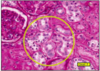
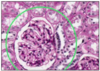
GLOMERULUS * blood to glomerulus for filtration * passes **primary filtrate** to nephron for selected reabsorption * parallel array of **fenestrated capillaries** **ensheathed by podocytes** * between loops = **mesangiel cells** (matrix forming) * afferent arteriole wall produces **renin** * next to glomerulus = segment of distal tubule with **macula densa**
125
CORPUS LUTEUM * when Graafian follicle ruptures - antrum collapses = central blood clot * remaining **thecal cells** persist as corpus luteum * with **lutinising hormone** cells continue to secrete oestrogen and progesterone for 10 days - support secretory endometrium * if fertilisation occurs, corpus luteum **persists for 4 weeks till placenta** * most thecal cells produce **progesterone** but some at centre synthesise **oestrogen - thecal lutein cells** * final involution forms pale fibrous mass - **corpus albican** **this slide - theca interna and blood vessels**
126
LACTIFEROUS DUCT gynecomastia = proliferation of lactiferous ducts lobar carcinomas = dysplasia in small ducts
127
PROXIMAL TUBULES (PAS) * highly coiled (sometimes with straight projection to medulla) * prominent brush border and complex invaginations @ basolateral membrane **dark pink** * extensive **reabsorption** here * Na+ active transport with glucose (cotransporter - GLUT) * take up protein and polypeptide by endocytosis * cells contain **lyzosomes** which break down proteins before returning to circulation * any small negatively charged protein can enter primary filtrate
128
PANCREAS * inset 1. **pacinian corpuscle** - pressure sensor in pancreas (and skin) 2. **nerve plexus** - with vagus nerve also contains **islets of langerhans** (see SUGER)
129
DENSE IRREGULAR CONNECTIVE TISSUE * dermis of scalp * long fibres of collagen in many directions * fibres stain pink * fibres with dark nuclei (**fibrobalsts**) alongside * collagen fibres not uniform thickness * INSET - fibroblast * COLLAGEN FIBRES = EXTRACELLULAR
130
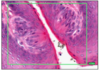
LIP 2: TRANSITION SSNKE (lower) to SSKE (upper)
131
TESTICLE * ovaries/testes/placenta are also hormone secreting **this slide - Leydig cells clumped between semniferous tubules**
132
LIP 3 * inner lip: SSNKE * small clumps of salivary tissue * sebaceous glands (**Fordyce's spots**) open to surface rather than hair follicles
133
TYPE 2 PNEUMOCYTE * A - alveolus * BL - basal lamina (basement membrane) * EP and EP1 - type 1 pneumocyte * G - surfactant containing granules
134
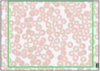
RBC (LEISHMAN'S STAIN - TYPE OF ROMANOVSKY SMEARS) * 44% of blood * anucleate - leads to biconcavity * 120 day lifespan
135
MUSCULAR ARTERY 2 * circumferential sm @ media * when this contracts reduces diameter of vessel
136
JEJUNUM * close-packed plicae circularis * **many** goblet cells * long narrow villi (finger-like) * short crypts * loose submucosa (almost detached from muscularis externa) * no brunner's glands or peyer's patches * lymph nodules at lamina propria, but do not penetrate submucosa
137
MUSCLE SPINDLE * sensory * embedded within muscle * small number intrafusal * surrounding msucle = extrafusal * separated by connective tissue sheath **intrafusal fibres:** 1. nerve fibres wound round 2. parallel with extrafusal fibres 3. relay information about contraction of surrounding muscle fine movement= smaller motor units and more spindles
138
NOSE OVERVIEW * simple ciliated respiratory epithelium except at opening (hairy skin) * concha covered in respiratory epithelium * **swell bodies** - thin arterioles/venules deep to epithelium (nose bleeds) * thin skin allows the escape of water (moistening air)
139
MICROVILLI/INTESTINAL WITH PAS AND HAEMATOXYLIN * microvilli with carb. rich GLYCOCALYX * goblet cells and BM rich in HEXOSE * stain magenta
140
SENSORY NERVE ENDINGS (OSMIUM TETROXIDE) * many are too fine to be resolved except: 1. **PACINIAN CORPUSCLE** - **pressure** @ dermis/pancreas - large structure with nerve ending at core - resembles an onion 2. **MEISSNER'S CORPUSCLE** - numerous with spiral appearance @ dermal papillae
141
MINERALISED BONE - GROUND SLIDE * too tough to cut thin * golden brown haversian canal * average diameter = 200 microns * cement line separates each osteon - seals from neighbours - so oxygen/nutrients from HC diffuse throughout osteon * stops osteocyte contact intra osteon
142
DUODENUM 2 * crypts form new enterocytes and goblet cells * dividing cells have very dark staining nuclei or sets of chromosomes * @ bottom of crypts = DIFFERENTIATED **PANETH CELLS** * secrete lysozyme - breakdown of bacterial cell walls * regulate flora of gut * bright pink cytoplasmic granules
143
DECALCIFIED BONE * dissolve mineral with H2SO4 or EDTA * mostly condensed collagen left * HC size increases as bone **reabsorbed** from osteon * narrower as new bone deposited * before puberty
144
KERATINISED EPITHELIUM * thickest @ soles of feet and on hands (hairless) - subject to compression * thin on parts of abdomen/thorax and lips * epidermis **compact** and boundary with dermis **wavy** creating **dermal piapillae** * at upper boundary = thin, darkly-staining granular layer, synthesises **keratin** that surrounds dead squames - prominent **keratohyaline**
145
NERVES OF TONGUE * small nerves lying in sub-mucosa of tongue * supple close by taste buds
146
VERMIFORM APPENDIX * from caecum * simple columnar epithelium * goblet cells * no villi * simple crypts * lamina propria and submucosa full of lymphoid tissue (declines w/ age) * no muscularis mucosa * muscularis externa present * transverse smooth muscle at muscularis externa = **taenia colis** - 3 longitudinal bands * fat filled
147
SUBLINGUAL SALIVARY GLAND (MAINLY MUCUS) * pale staining secretory cells * darker staining duct w/ simple cuboidal epithelium * flattened oval nuclei to base of cells * branched tubular acinar glands * sticky **mucus rich** secretion major constiuent - polysaccharide
148
AIR / BLOOD BARRIER * septa = capillaries covered by simple squamous ep * typically 1 micron * overall thickness = 5-10 microns * with 2x capillary endothelial cells, 2x T1 pneumocytes and capillary lumen
149
COMPACT MINERALISED BONE * mature secondary bone * 5% hyroxyapatite - hard crystalline calcium salt * contrast by refraction from mineral crystals
150
MUSCLE FIBRE & LONGITUTIDNAL SKELETAL MUSCLE * long unbranched * many nuclei * LONGITUDINALLY - nuclei at fibre edges * TRANSVERSELY - aggregated to fasciuli, nuclei at edges **this slide - tongue** (with longitudinal muscle fibres) EXTRINSIC FIBRES - poke out motuh INTRINSIC FIBRES - manipulate food myofibrils **in register = striations**
151
FIBRE ARRANGEMENT TRANSVERSE * actin and myosin appear as dots * @ I band = small dots only (light) * @ A band = small and large dots - actin and myosin (dark) between myofibrils may see parts of T-tubules and sarcoplasmic reticulum. also glycogen and mitochondria. **Z DISC COMPOSITION** lipid = 60% - electrostatically binds proteins major protein = **ALPHA ACTININ**
152
ELASTIC ARTERY (WITH MALLORY'S STAIN) * elastic - red / collagen & muscle - blue * = **aorta** and **GT vessels** close to heart * medial layer thick w/**concentric** sheets of elastic interspersed w/smooth muscle * as vessels large - contain own blood supply **vasa vasorum** at top = intima then internal elastic lamina, then vascular endothelial cells on BM
153
LOOSE AND DENSE * dense irregular at penis erectile compartment (inner) forms a capsule/sheath * this is common between cells of most organs and tissue * outside = loose @ penis - an inextensible capsule around erectile compartments means extra blood makes it turgid
154
PSNS (parasympathetic nervous system) GANGLION * PSNS ganglion * many nerve cell bodies * involved heavily in secretion regulation **this slide = sublingual**
155
GASTRIC GLANDS * tubular @ mucosa * fill lamina propria * 3 main cell types 1. parietal (HCl + intrinsic factor [B12 absorpition]) 2. chief cells (digestive enzymes - pepsinogen, zymogen for pepsin) 3. mucus neck cells (lubricant - acid resistant mucus) * full glands @ body and fundus * no parietal / chief @ cardia and pylorus
156
VILLI AND CRYPTS * intestinal lining - folds - **plicae circularis** (highest @ jejunum, lowest @ distal colon) * further SA increase - villi **villi** - simple columnar epithelium (enterocytes and goblet cells). short life - but replaced by crypt production **contain** - veule, arteriole, lacteal, smooth muscle (milks the villus) **venule and lacteal** to liver **crypts of leiberkuhn** - between villi, stem cell population, migrate to top and shaved off (takes 5 days)
157
GI FORMATIVE 7 * flat surface * no villi * numerous straight crypts * abundant goblet cells * prominent muscularis mucosa * stem cells at base of crypts COLONIC MUCOSA
158
GI FORMATIVE 6 * all of this fits on a microscopic slide therefore not colon * flat mucosa with no villi * abundant lymphoid tissue in lamina propria and submucosa * lacks a muscularis mucosa * receives lod from superior mesenteric artery VERMIFORM APPENDIX
159
CERVIS * protrudes to anterior wall vagina * surrounded by gulley - lateral, anterior, posterior ornices * **outer surface** - SSNKE (identical to vagina) * **cervical canal** (between internal and external os) = tall columnar epithelium thrown into deep gland-like folds * stroma = fibrous connective and smooth muscle * **this slide - external os**
160
ANTERIOR PITUITARY * 3 cell types 1. stain heavily with acid dyes - **alpha cells / acidophils /eosinophilic (dark red)** growth hormone 2. stain heavily with basic dyes - **beta cells / basophils (dark blue)** thyrotrophs/gonadotrophs/cotricotrophs 3. stain weakly **chromophobes**, undifferentiated and no hormone * cells with no stain may be immature of any type **anterior pituitary is darker staining than posterior**
161
COLLECTING DUCTS (PAS) * pale cuboidal cells * wide lumen * starts at cortex, filtrate to collecting tubules than larger ducts * collecting tubules from many nephrons coalesce to larger ducts and form visible streaks - **medullary rays** * few organelles * collecting tubules - dark intercalated cells with high mitochondria * surrounded by hypertonic medium interstitial from loop of Henle * ADH increases permeability to water (concentrates urine) prone to kidney stones and infection
162
PENIS * erectile compartments = large endothelium lined blood vessels supported by connective tissue * each surrounded by compact collagen layer = **tunica albuginea** * helicine branches of pudendal artery * when flaccid arteries transmit very little blood due to **artero-venous shunts** * para. stimulus shut shunts (point and shoot) * most skin = hairy, loosely attached to columns - except prepuce and glans (non-kerat)
163
What is this?
EOSIN * colloidal proteins * plasma PINK EOSINOPHILIC = ACIDOPHILIC
164
CONNECTIVE TISSUE - TERMINOLOGY SOFT - flexible/gel-like * fibrous - collagen/elastic/**reticulin (with silver = black lines)** LOOSE IRREGULAR - few visible fibres/random orientate DENSE IRREGULAR - large number of fibres/little matrix DENSE IRREGULAR - large number of fibres - **long parallel bundles** * fatty - mainly fat cells with intervening capillaries **HARD** - bond
165
RECTO-ANAL JUNCTION * rectum = similar to colon * simple columnar epithelium * anal canal - stratified squamous epithelium, keratinised at distal end (as lip) * submucosa was FAT, VEIN PLEXUS (anal varicosity) * smooth muscle of muscularis externa thickened and surrounded by STRIATED MUSCLE of EXTERNAL ANAL SPHINCTER
166
SKELETAL MUSCLE TERMINOLOGY * **sarcomere** - regular repeat structure within myofibrils = interdigitated actin and myosin * **myofibril** - small intracellular fibril - sarcomeres joined end to end * **muscle fibre** - fusion of many myocytes with 100s of myofibrils. surrounded by common **plasmalemma**, behaves as single cell - many nuclei * **fasciculus** - bundle of muscle fibres surrounded by connective tissue * **endomyosium** - lace work of connective tissue between muscle fibres * **perimysium** - surrounds group of fibres to form fasciculus * **epimysium** - connective tissue around fasciuli to form muscles
167
SKELETAL MUSCLE: TYPE 2 * type 2 - fewer/smaller mitochondria * large reserves of carbohydrates/glycogen running = anaerobic, therefore uses carbs as energy source
168
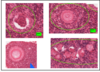
FOLLICULAR DEVELOPMENT 2 * TL - secondary follicle * TR - primary follicle * BL - mature graafian follicle * BR - primordial follicle
169
GI FORMATIVE 2 * mucus acini * basally located nuclei * ducts lined by cuboidal/columnar epithelium **this is a sublingual gland**
170
BONE 2 SECONDARY BONE * organised * layers - long axis of hydroxyapetite crystals in parallel with collagen * collagen fibres at right angles layer to layer - plywood * INTERNALLY = **OSTEONS** * osteons = cylindrical units w/ concentric layers bone and **HAVERSIAN CANAL** * HC contains blood vessels and nerves to osteocytes in bone * osteons continually eroded and replaced * between osteons = **interstitial bone** (remnants of previous osteon) * surrounded by fibrous capsule (**periosteum**) w/ progenitor cells = healing * open framework/compact lamellae or osteons
171
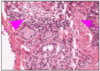
VENULES * thin walled * pericytes alongside them * pericytes become continuous as vessel gets bigger * in veins no pericytes, replaced by smooth muscle * irregular outline
172
BRONCHUS (H&E) * respiratory epithelium * held open by hyaline cartilage framework (dark stain) which appear as isolated islands * smooth muscle band under epithelium * lymph nodules (MALT- mucosa associated lymph tissue) @ connective tissue
173
ELASTIC TISSUE (ELASTIC VAN GIESON'S WITH IRON HAEMATOXYLIN COUNTER STAIN * elastic tissue in tube like sheets - elastic lamina * elastic = black * sm = mushroom * collagen = pink
174
GI FORMATIVE 1 * this is a tastebud surrounded by squamous epithelium
175
VOCAL CORDS * stratified squamous epithelium
176
C CELLS * calcitonin producing cells * clumps between follicles * parafollicular * sometimes between BM and follicular cells **calcitonin is antagonistic to parathormone** calcitonin @ high blood calcium levels lowers serum calcium by promoting uptake of calcium in blood to bones (and muscles) inhibits absorption of calcium from blood
177
FINGERNAILS * compacted keratin * arise from nail matrix cell under a fold of skin (**eopnychium/cuticle**) at proximal end of nail * nail lengthens across epidermal nail bed, remains firmly attached at distal end where underlain by a skin fold - **hyponychium**
178
EXOCRINE PANCREAS DUCTS * each acinus has a narrow intercalated duct (ID) * IDs connect acinus to main duct (MD) * larger ducts -\> 1/2 MDs that enter duodenum with bile duct SIMPLE CUBOIDAL EPITHELIUM (stratified at distal end, as GB) n.b. duct cells produce most of the fluid in secretion
179
KERATINISED STRATIFIED SQUAMOUS * epidermis * lower layers epidermis similar to stratified squamous * upper layers syntehsise unique collection of proteins - interact with cytoskeleton of cell to produce **keratin** * keratine - dense protein, fills cytoplasm of cells = **tough and waterproof** * when full of keratin cells die and are sloughed off **this slide - hairless skin @ lower lip** blue/purple = living pink = dead keratinised squames @ boundary =layer with **blue keratohyaline granules** **STRATUM GRANULOSUM** - intermediate with blue grans STEM CELLS @ basal layers
180
UROTHELIUM * ureters, bladder and **most** urethra * pseudo-stratified epithelium * surface cells adapted to withstand prolonged urine exposure * 3-8 layers (distension dependent) * basal cells = cuboidal * above = columnar (relaxed) * surface = large, binucleate **umbrella cells** **umbrella cells:** 1. thickened membrane plates joined by thin membrane bands 2. lipid composition (unique) 3. relaxed plated = perpendicular to membrane 4. stretched = drawn to surface of cell
181
MATURE DECALCIFIED BONE * treat with acid to remove calcium * inset = bone marrow @ core * compact lamellar secondary bone stains bright pink (collagen matrix of bone) * trapped within bone are osteocytes * surrounded by **periosteum** **PERIOSTEUM** 1. outer fibrous 2. inner cellular (paler) - rows of dark staining osteoblasts laying down new bone = **appositional growth** 3. site of osteoprogenitor cells 4. @ fracture stiumlated to differentiate to chondroblast to cartilage which then undergoes endochondral ossification
182
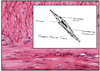
PROSTATE 2 * **this slide L - skeletal muscle at underside of prostate - pelvic diaphragm with levator ani** * **this slide R - spiral tubular gland at submucosal level**
183
COLON * all segment similar histologically * little folding * no villi * mucosa contains close packed crypts with abundant goblet cells and enterocytes * restricted lamina propria (by crypts) * prominent muscularis mucosa * mucosa and sub-mucosa contain a lot of lymph - GALT (gut) * musuclaris externa - thickened inner circular layer, outer layer drawn into 3 longitudinal bands = taeniae coli **this slide - close packed crypts and abundant goblet cells**
184
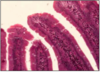
ADRENAL CORTEX * 3 zones 1. OUTER **GLOMERULAR** (narrow) - **ALDOSTERONE AND MINERALOCORTICOIDS** 2. INTERMEDIATE THICK **FASCICULAR** long parallel cords responsible for **CORTISOL and GLUCOCORTICOIDS** 3. INNER **RETICULAR ZONE** anastomosing cords of cells that produce testosterone and other androgenics (DARKER STAINING) do not store the steroid hormones they synthesise - discharged to sinusoids accumulate droplets of **fat and cholesterol** from which hormones are synthesised = pale-staining of many cells
185
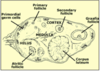
FOLLICULAR DEVELOPMENT * @ cortex, many germ cells many = dormant primordial follicles with germ cell in **theca** from stromal cells * **theca** - simple squamous (primordial), later to cuboidal or columnar * then differentiates into **granulosa cells** = theca interna that begin to secrete oestrogen and theca externa (flattened) and follicle becomes secondary * further growth and development -\> mature **Graafian follicle with fluid-filled antrum** * follices perish as atritic * once oocyte released from Graafian follicle theca persists and releases oestrogen and progesterone as **corpus luteum** **this slide - primordial follicles**
186
SECRETORY ENDOMETRIUM * ovulation @ day 14-16 * cells have large **vacuole of glycogen below nuclei** * from these stores syntehsise mucins * glands = irregular / sacculated with secretions @ lumen * stroma oedematous * arteries lengthen and become spiral * @ end (late phase) **spiral arteries close down and blood leaks to stroma** = anoxia therfoer decidua detaches and menses begins
187
VAN GIESON'S TRICHROME WITH HAEMATOXYLIN COUNTER STAIN * collagen (PINK RED) * cell cytoplasm (YELLOW/OLIVE GREEN) * nuclei (BLACK) * elastic tissue (DARK BROWN)
188
GALLBLADDER * BILIARY TREE = ALL CUBOIDAL EPITHELIUM * smaller vessels = simple * distal end = stratified **gallbladder** * simple columnar w/ poor brush border * adapated for water reabsorption (concentrating bile) * epithelium thrown into folds (not villi!) * large veins in walls * smoth muscle at outer surface * serosa visible at top (simple squamous) n.b. contracts by CCK released from duodenum in response to fat from stomach
189
PROLIFERATIVE ENDOMETRIUM * post menses * 10 days, regrow glands stroma and blood vessels * at end of proliferation = ovulation, then secretory * **TUBULAR GLANDS APPEAR STRAIGHT** and cells do not secrete endometrial mucus * stroma compact * uncoiled arteries and veins * **mitotically dividing cells within glands and stroma** * simple glands (often circular) * loose connective tissue
190
URETER * epithelial tube with 2 **helical** layers of smooth muscle * **star shaped lumen** * towards bladder = longitudinal smooth muscle * **3 constrictions** (kidney stones will lodge here) 1. origin (pelvis of kidney) 2. at sacro-iliac joint (passes to true pelvis) 3. as enters postero-inferior bladder surface * reflux prevented by compression of ureter by muscular wall bladder * contains blood vessels and adipose * smooth muscle for peristaltic contraction
191
ELASTIC CARTILAGE * larger amounts of elastin * PINK STAINING STRANDS * may be fractured (though tougher than hyaline/fibrous **this slide - epiglottis**
192
BRONCHIOLES * simple ciliated respiratory epithelium * no hyaline cartilage * smooth muscle * lymph nodules * closely associated arteries and veins (branches of pulmonary artery/vein) * no goblet cells unlike bronchi may be contstricted by smooth muscle as no cartilage
193
ENDOCHONDRAL OSSIFICATION 3 * @ head of growing long bone * stages cartilage -\> bone * chondrocytes of resting cartilage divide = zones of progeny (ZONE OF HYPERPLASIA) * newly formed cells grow eroding cartilage (HYERPTROPHY) * all that remains are spicules of cartilage (chondrocytes released and resorbed( * remnant cartilage strands calicified and substrate to osteoblast attachment. osteoblasts lay down primary bone (ZONE OF OSSIFICATION) * at same time bone eroded and replaced on outside of shaft of bone by appositional growth (= length and girth)
194
What is this?
ROMANOVSKY/LEISHMANN'S (BLOOD FILMS) * Chromatn/nuclei and neutrophil granules (PURPLE) * eryhtrocytes/eosin granules (RED/PINK) * lymphocyte/monocyte plasma (PALE BLUE) * basophil granules (DARK BLUE/PURPLE)
195
DUODENUM * 12 inches, few plicae circularis * villi - broad and leaf like * few goblet cells * **submucsoa** conatins mucus secreting **brunner's glands** - alkaline secretion neutralises CHYME brunner's gland bottom right few pale staining goblet cells long crypts n.b. submucosal brunner's glands not found in jejunum/ileum inner circular layer thicker than outer longitudinal layer of muscularis externa
196
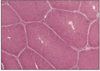
CARDIAC MUSCLE (MYOCARDIUM) * branching chains of cardiac myocytes * striations (myofibrils and repeat sarcolemmas) * dark intercalated discks (myocyte junctions) **differ from skeletal -** 1. **structural** - branched, mononuclear (central), no stem cells 2. **physiological** - contract/relax without rest, secrete hormones (**ANP**- when stretched excessibely, increases water/Na+/K+ excretion, inhibits RAAS)
197
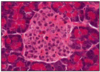
PANCREATIC ISLETS * 5% of pancreatic mass, 4 types: 1. BETA - INSULIN - 70% 2. ALPHA - GLUCAGON - 20% 3. DELTA - SOMATOTSTATIN - 8% 4. PANCREATIC POLYPEPTIDE SECRETING CELLS - 2% beta cells at periphery of islets form cords to centre. other cell types lie between cords, plexus of capillaries/veins transport hormones to **hepatic portal system**
198
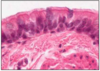
TRACEHA 2 * lumen of trachea = top * C-shaped cartilage = bottom * epithelium = pseudo-stratified columnar epithelium * note serous glands visible which secrete to surface * with H&E, goblet cells stain white
199
UTERINE TUBE EPITHELIUM * two helical layers of smooth muscle (inner circular) and outer (longitudinal) * **simple columnar epithelium - ciliated and mucous secreting** * epithelium is hormonally-sensitive - cels taller and cilia beat more strongly around ovulation * also secretions are thinner and more copioius at this time 1. fertilised at ampulla 2. ectopic pregnancy at uterine tube 3. surrounded by broad ligament and mesovarium connecting ovary and broad ligament
200
SKELETAL MUSCLE: TYPE 1 & 2(a/b) most fibres contain all 3 but proportions vary 1. **TYPE 1 - SLOW TWITCH:** oxidative / fatigue-resistant / postural muscles 2. **TYPE 2a - FAST TWITCH:** oxidative / glycolytic - moderately fatigue resistant 3. **TYPE 2b - FAST TWITCH:** depend on glycolytic processes and are therefore fatigue sensitive (SPRINT MUSCLES) **this slide** - stained for fibrillar ATPase (DARK BROWN) and greatest in slow twitch with greater number of mitochondria postural muscles at spine have largest proportion of slow twitch fingers have highest proportion of fast twitch
201
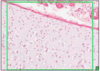
PINEAL GLAND * small gland * backward projection of V3 between corpus callosum * covered by meninges * calcium may accumulate making it visible on brain X-Ray * irregular clumps of neurone-like pinealocytes linked by **glial cells** * innervation = autonomic * secretes melatonin - diurnal rhythms * UNIFORM **this slide - loose layers of meninges @ bottom, small blood vessels @ pia**
202
EYELID * outside = thin hairy skin with row of prominent lashes * sweat glands discharge to outer surface of eyelid * inside = **conjunctiva** = stratified columnar with 2 cell layers * @ substance = single row of hairs, striated muscle (orbicularis oris) and glands to keep inside surface moist * **largest gland = MEIBOMIAN GLAND modified sweat = lipid rich secretion - reduces evaporation** * smaller sweat and sebaceous * **this slide - meibomian gland**
203
ENDOCHONDRAL OSSIFICATION * hyaline cartilage proformer @ 2/3 fetal like * shaft/diaphysis becomes ossified * collar penetrated by blood vessels = more osteoprogenitor cells -\> osteoblasts and lay down bone
204
RECTO-ANAL JUNCTION * box B - striated muscle of sphincter * box D - anal glands
205
SPINOUS (PRICKLE) CELL LAYER * thickest layer - joined by desmosomes - prevent skin splitting when stretched * if shrink - desmosomes become obvious and cells appear spiny * within = **LANGERHAN'S CELLS** = pale cytoplasm and irregularly shaped nucleus * @ basal layer of epidermis = **MERKEL CELLS** - difficult to resolve, synapse with nerve fibres @ dermis and transmit fine touch
206
TONGUE - SEROUS GLANDS * more pink staining (darker than mucous) * small serous salivary glands * acini - clusters of grapes * nucleus on base
207
NERVES * supporting cells **OLIGODENDROCYTES (CNS), SCHWANN CELLS (PNS)** produce myelin (insulate/conductive) * cell bodies mainly at CNS or sensory at DRG * myelin lost in tissue processing **this slide - axons in transverse section** * each axon surrounded by Schwann cell cytoplasm * with dark staining lamina = myelinated * A - Schwann cell nucleus * B - axon w/myelin sheath * C - unmyelinated axon * D - myelin sheath Schwann cells may contain many unmyelinated axons Myelin linkage: adhesion proteins
208
TRACHEA * pseudo-stratified, ciliated, columnar epithelium
209
CUBOIDAL EPITHELIUM * square * round nucleus * @ducts of exocrine glands - sweat glands, salivary, pancreas * kidney tissue
210
ELASTIC FIBRES 2 * with elastic Van gieson's trichrome * DARK BROWN
211
JUXTAGLOMERULAR APPARATUS (PAS) * afferent/efferent arterioles, macula densa, **lacis cells** * afferent - cells produce renin - granules in cytoplasm * renin catalyses angiotensin 1 (liver) -\> angiotensin 2 (**conversion at lungs**) -\> aldosterone release by suprarenal cortex -\> reabsorption of sodium and water @ distal tubules and collecting ducts * lacis cells and macula densa regulate renin secretion by monitoring sodium levels **this slide - obvious macula densa**
212
NIPPLE * area of skin with raised fibro-muscular core * 12-20 small openings of lactiferous ducts * surrounded by areola with raised sebaceous glands = **MONTGOMERY'S TUBERCLES** * undergo pigmentation at pregnancy lacteriferous duct = stratified cuboidal epithelium - **if nucleus roughly circular = cuboidal** contains muscle which many change protuberance of nipple
213
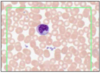
RETICULOCYTES * mature RBC loses cytoplasm and nucleus * **reticulocytes** = immature RBC w/ some visible ribosomes, ie. some dark staining granules * increased number with increased RBC produciton
214
OVARY * surface = germinal epithelium (thick BM) * attached by mesovarium mesentery to upper posterior surface of broad ligament (continuous with ovary) * 3 parts 1. hilum - blood vessels, lymphatics and nerves leave here 2. medulla - stromal cells with testosterone secreting cells (similar to Leydig) 3. cortex - **primordial germ cells and follicles from primary, secondary, atritic** GERM CELL PRODUCTION - to ovary @ w10 of devlopment - immediately start meiosis and reach prophase 1 of meiosis (primary oocutes @ birth) reawakened with each menstrual cycle - up to 20 cells begin to differentiate but only 1 acheives maturation -remainder resorbed **​**
215
SYNAPSE * large number of neuro-secretory vesicles @ presynaptic space * dark staining either side of synapse
216
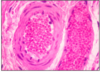
PERIPHERAL NERVES * mix of motor/sensory axons * surrounded by Schwann cells * between axons = connective tissue network (fibres and cells) CONNECTIVE TISSUE NETWORK * endoneurium * perineurium * exoneurium 5 **NERVE FIBRES** - with many axons - surrounded by endoneurium and perineurium Flattened nuclei = fibroblasts Rounded nuceli = Schwann
217
ISOLATED PERIPHERAL NERVES (OSMIUM TETROXIDE STAIN) - LONGITUDINAL * worm-like * constrictions = **NODES OF RANVIER** - boundary between one Schwann cell and next MYELINATED = 10-100 m/s UNMYELINATED = 1-20 m/s
218
KIDNEY * pale cortex / dark medulla / 10-15 meduallary pyramids * cortex contains **glomeruli** and coils of **proximal/distal tubules** * medulla contains pyramids with straight parts proximaal/distal tubule, loop of Henle, collecting duct **Blood** 1. 5/6 branches renal artery 2. arcuate arteries at medullary/cortical border (give off vasa recta - deep to medulla) 3. then interlobular arteries penetrate cortex at regular intervals 4. affertent to glomerulus 5. efferent from glomerulus (filtered blood) - thin walled and between tubules 6. acquire fluid and ions -\> drain to arcuate veins -\> systemic
219
EOSINOPHILS (ROMANOVSKY/LEISHMAN'S) * 2-3 lobe nucleus * bright pink granules * acidophils * circulate for a few hours * diurnal - highest in morning * **phagocytose** antigen/antibody complexes, associated w/ **parasitic infection** * **neutralise histamine** GRANULOCYTES
220
POSTERIOR PITUITARY * PALE STAIN H&E * axonal tracts and nerve endings of cell bodies @ hypothalamus (supraoptic or paraventricular nuclei) @ walls of V3 * swollen nerve terminals (**Herring bodies**) contain dark neuro-secreting granules - **brown** * granules contain: * **1) OXYTOCIN; 2) VASOPRESSIN** * hormones bound to carrier protein that is also secreted * much tissue (blue staining) is nerve axon/connective tissue OXYTOCIN - contraction of uterus, dilation of birth canal, contraction of myoepithelial cells around milk ducts + erect nipple for lactation
221
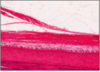
HAIR FOLLICLE * on keratinised surface of lip
222
PULMONARY BLOOD VESSELS * large pulmonary blood vessels accompany bronchi * indistinguishable from systemic counterparts EXCEPT large pulmonary arteries have **longitudinally running elastic fibers in wall** * large pulmonary veins w/ clearly defined medial layeer of muscle and elastic tissue and well-defined internal elastic lamina
223
EPIDIDYMIS * rete testis = cuboidal ep * rete testis to efferent ductules (similar) * epididymis = single 5m coiled tube * **thick fibrous capsule** attached to mediastinum of testes posteriorly - **storage and maturation site for sperm aggregated within lumen** * tall pseudo-stratified columnar ep * small rounded basal cells support tall columnar with microvilli (stereocilia) * **stereocilia (non-motile) reabsorb seminal fluid, phagocytose damaged sperm and cell debris. also nutrients** **for sperm** * thin layer of smooth muscle thicker as approaches vas
224
SARCOMERE (IRON HAEMATOXYLIN) * unit structure of sacromere * Z line to Z line * thin actin to Z line * interdigitate thick myosin * in contraction **shortens up to 1/3** * **I band** - actin only * **A band** - actin and myosin * **H band** - myosin only (with M line) * myofibrils run in parallel with sarcomeres in register = STRIATIONS SARCOMERES JOINED END TO END AND SIDE TO SIDE AT Z-LINE
225
ANTERIOR PITUITARY 2 * peptide based hormones in GRANULES * acidophils/basophils = small dark hormone containing granules * chromophobes = few or none
226
PARIETAL (OXYNIC CELLS) * @ gastric glands of body/fundus * @ upper part of gland close to pits * globular - bright pink with H&E * cell surface invaginated (intracellular canaliculi) w/ many mitochondria (dark staining- grainy appearance) * rich in carbonic anhydrase pH - 2
227
GERMINAL EPITHELIUM AND MELANOCYTES * majority = **keratinocytes** (from stem cells at germinal layer) * also within germinal layer = **melanocytes**, from neural crest of embryo * produce melanin - transferred to keratinocytes of **basal** and **prickle** cell layers * amount of melanin proportional to skin colour
228
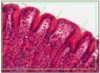
CARDIAC MUSCLE * discrete rectangular cells - end to end * central nuclei * branch * connected by **intercalated discs** - hold cells physically and electrically coupled 1. **desomosomes** 2. **adherent junctions** 3. **gap junctions** * **sarcomes i.e. STRIATED** with myofibrils but with different protein isoforms to skeletal * many mitochondria (ox phos dependent) therefore aerobic respiration only don't necessarily have own nerve supply as have innate contractility (SA and AV node regulated)
229
PAPILLAE AND TASTE BUDS * dorsal tongue surface - complex folds = papillae sweet (tip) / slaty (front/side) / sour (further back) / bitter (whole back) **filiform papillae** (threadlike) - most common, tall, pointed - @ whole **anterior 2/3** **fungiform papillae** (mushroom-like) @ tip and sides * @ lateral side fungiform papillae = pale-staining, spindle-shaped taste buds w/ nerves/synaptic vesicles **circumvallate papillae** (V-shaped row) @ divide between anterior 2/3 and post. 1/3 **this slide - 2 paler staining taste buds embedded in opposing sides of adjacent fungiform papillae**
230
SHARPEY'S FIBRES - TYPE 1 COLLAGEN * muscles connected to bones via CONNECTIVE TISSUE (MYSIUM) * either as 1. small collagen bundles (SHARPEY'S FIBRES) 2. discrete tendons * Sharpey's merge with fibrous periosteum of bone and collagenous bone matrix * spreads muscle force over wide area e.g. rotator cuff at scapular **this slide -** oblique = sharpey's / below = periosteum of bone / lower pale staining cellular layer / upper darker staining fibrous layer
231
ENDOTHELIAL CELLS (EM) * specialised - release vasoactive substances * capillary @ centre **function:** 1. active transport of molecules across cytoplasm 2. influence muscle tone 3. coagulation 4. produce cell adhesion molecules - influsence lymphocyte/neutrophil migration
232
APPENDIX 2 * simple columnar epithelium * rudimentary crypts with few goblet cells * lamina propria and submucosa full of lymphoid tissue
233
SARCOMERES * when stimulated actin fibres slide within th A-band * brings Z-lines close together * shortens sarcomere up to **30% - extrinsic work** * tension increases **- intrinsic work** * structural protein - **titin** between myofibrils: **T-tubules** - conduct impulse **sarcoplasmic reticulum** - sequester calcium glycogen/lipid storage mitochondria - ATP production **UPPER FIBIRL** - contractile **LOWER FIBRIL** - structural
234
PLATELETS * smaller than red cell * anucleate * fragements * from multinuclear megakaryocytes * blue * 4 types of granules: 1. alpha - clotting 2. dense 3. lysosomes 4. peroxisomes - elimination of oxygen radicals
235
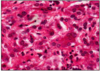
SKELETAL MUSCLE: TYPE 1 * type 1 - rows of mitochondria between myofibrils * fat globules alongside mitochondria used for ATP production
236
HAEMATOXYLIN * nuclei * RNA BLUE BASOPHILIC STRUCTURES = BLUE
237
NEUTROPHILS - POLYMORPHONUCLEAR LEUKOCYTES (LEISHMAN'S STAIN) * multi-lobar nucleus * most numerous * **phagocytic** * engulf and destroy bacteria * leave blood stream to enter tissue @ infection site fine granules = GRANULOCYTES 1. **primary** - lysosomes, acid hydrolases, antibac and digest 2. **secondary** - neutrophil specific, regulation of inflammation response 3. **tertiary** - facilitate insertion of proteis to cell membrane **lobes = 2-4, number increases with age**
238
THYROID FOLLICLES * lies between neck of thyroid cartilage and 4th tracheal ring * midling **thyroglossal ligamnet** links gland to foramen caecum of tongue * **THYROXINE AND CALCITONIN** * thyroxine producing cells arranged in follicles (hollow spheres) * **simple cuboidal epithelium** * centre of each follicle filled with **colloid rich thyroglobulin** * height of cells varies with metabolic activity * flattened when dormant * emptying when active/ if full when dormant * thyroid gland contains lymphocytes * parathyroid gland is posterior
239
GLANDS * epithelial in origin - develop as ingrowths * exocrine glands to surface by ducts * fluid, lubricants, enzymes **MUCUS** - separate acini from serous, occasionally mixed PALE - flattened nucleus at base of cell **SEROUS** DARK - round nuclei
240
CERVICAL LINING * secretes mucus - consitency of which varies throughout menstrual cycle * **first half** - thin and watery * **second half** - viscous after ovulation as plug to prevent microorganism entry * **transitional zone** - between sensitive cervical lining and other stratified squamous epithelium prone to infection and lesion * **this slide - mucus glands visible**
241
PROSTATE * 50 branched tubular glands * **smooth muscle matrix** * smooth muscle capsule around all * 3 layers (concentric) of glands - mucosal - submucosal - main * @ ejaculation, contract and mix secretions @ ejaculatory duct
242
PAROTID SALIVARY GLAND (SEROUS ONLY) * striated duct (top left) * surrounded by serous acini * synthesise alpha-amylase * secreted via ducts to mouth * ducts can alter ionic concentrations 1. branches of facial nerve pass through gland 2. large lymph nodes embedded within gland **secretory cells** - pyramidal, spherical nucleus, basal cytoplasm full of rER, apex contains prominent secretory granules (**pink staining**) **duct cells** - simple cuboidal (stratified at distal end)
243
RESPIRATORY EPITHELIUM (TOLUIDINE BLUE) * nuclei, ribosomes - dark blue, cytoplasm - blue * ciliated cells * non-ciliated goblet cells * underlying tissue rich in **blood vesseld** (temp and humidity) and **sero-muscous glands** (secretions via ducts) * mucous prevents dehydration of epithelium and traps particulate matter SIMPLE/PSEUDO-STRATIFIED COLUMNAR CILIATED EPITHELIUM with non-ciliated (basal/intermediate) stem cells - renewal of epithelium @nose, nasopharynx, larynx, trachea, bronchi, bronchioles
244
ISOLATED PERIPHERAL NERVES (OSMIUM TETROXIDE STAIN) - TRANSVERSE * lipid of myelin sheath extracted in processing * if treat nerve with osmium tertroxide renders myelin **insoluble** * myelin = brown/black **this slide - osmium tetroxide and H&E** various diameters many axons = nerve fibre (w/perineum) many nerve fibres = nerve (peripheral) w/epineurium
245
VAGINA * stratified squamous thinly keratinised at vulval end * thin pre-puberty and post menopause * beneath epithelium = lamina propria with small blood vessels (moisture by diffusion) * surrounding epithelium = fibro muschular tube with collagen/elastic and smooth muscle * sphincter of skeletal muscle at lower end * **bartholin glands** - mucus posterolaterally at lower end of vagina * with age = weaker fibro-muscular tube
246
TONGUE - UPPER SURFACE * SSKE * connective tissue * 2 types of salivary glands * large bundles of striated muscle
247
HEPATOCYTE ULTRASTRUCTURE * GI = glycogen * Mi = mitochondria * N = nucleus * RER = rough endoplasmic reticulum sinusoidal membrane contains transport mechanisms for pinocytotic release of macromolecules canalicular membrane is target for bile discharge well devloped rER - synthesis of plasma proteins sER - inactivation of drugs (enzymes) glycogen particule rosesstes and lipid droplets present