What is complement?
- group of proteins whose functions complement the antigen binding function of antibodies
- essentially a proteolytic cascade
- leads to the disposition or fixing of complement components to the pathogen surface
What does the complement system consist of? function?
serum and cell surface proteins that interact with one another and with other molecules of the immune system in a highly regulated manner to generate products that function to eliminate microbes
Where are complement components made? Where do they circulate? What are they?
- made in liver
- circulate in plasma
- many are enzymes (proteases) that circulate in an inactive form (zymogen) and activate complement (fixation)
What are the major functions of complement?
- opsonization
- direct lysis of target cells
- chemoattraction and activation of inflammatory cells
- can move in the direction towards high complement concentration
What are the three complement pathways?
- classical- antibody binds to specific antigen on pathogen surface
- lectin- mannose binding lectin binds to pathogen surface
- alternate- pathogen surface creates local environment conducive to complement activation
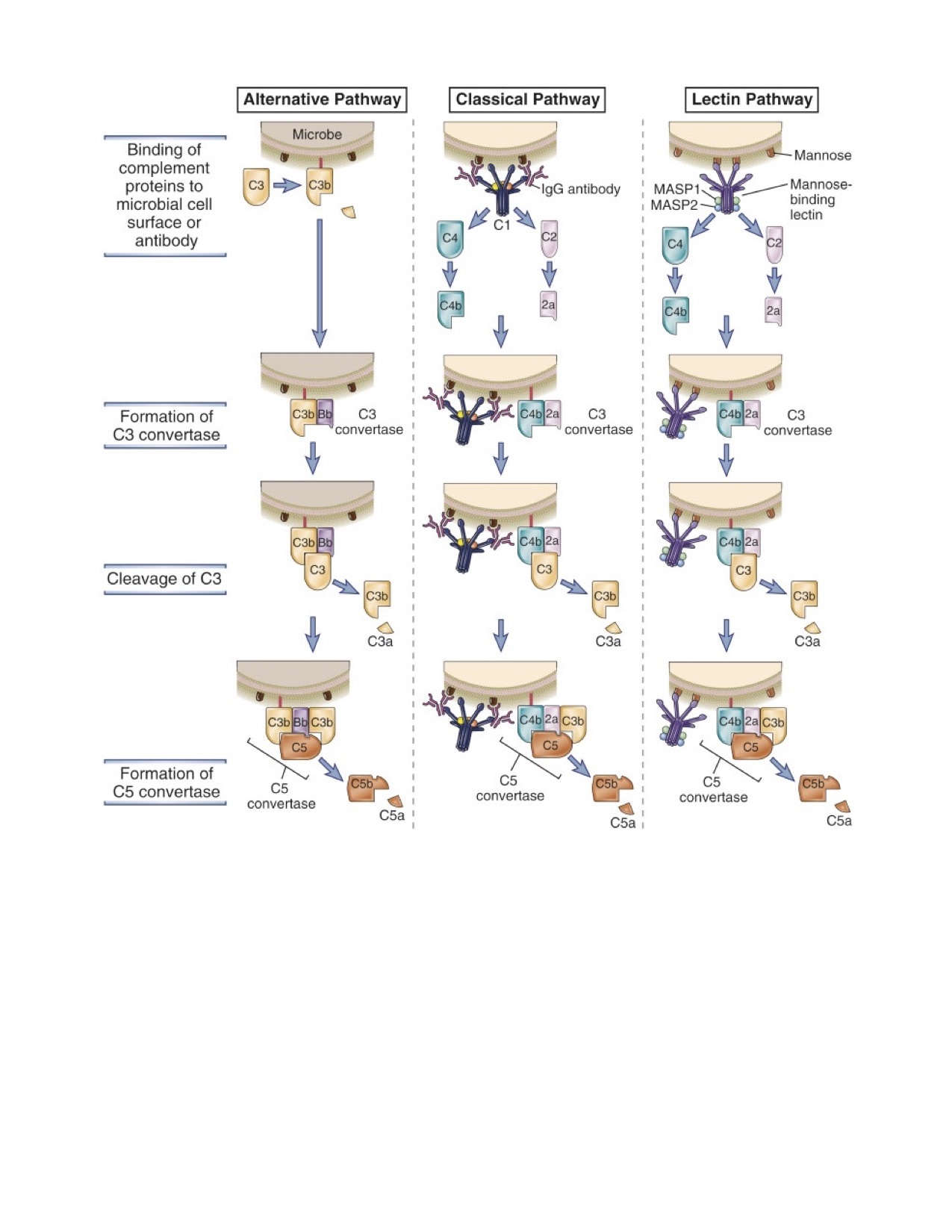
What happens after complement is activated?
C3b covalently is bound to surface components of pathogen
After C3b is bound, what are the results that lead to the death of the pathogen?
- recruitment of inflammatory cells
- opsonization of pathogens, facilitating uptake and killing by phagocytes
- perforation of pathogen cell membrane
Difference of proteins bound in the classical vs the alternate pathways of complement? lectin?
classical- C1, C2, C4
alternate- Bb
lectin- MASP 1, MASP 2, no C1
In the classical path, what does C1 consist of? function of each?
Three proteins:
- C1q- stable association with IgG or IgM (have receptors for C1q)
- C1r- activate C1s
- C1s- proteolytic activity, cleaves complement components
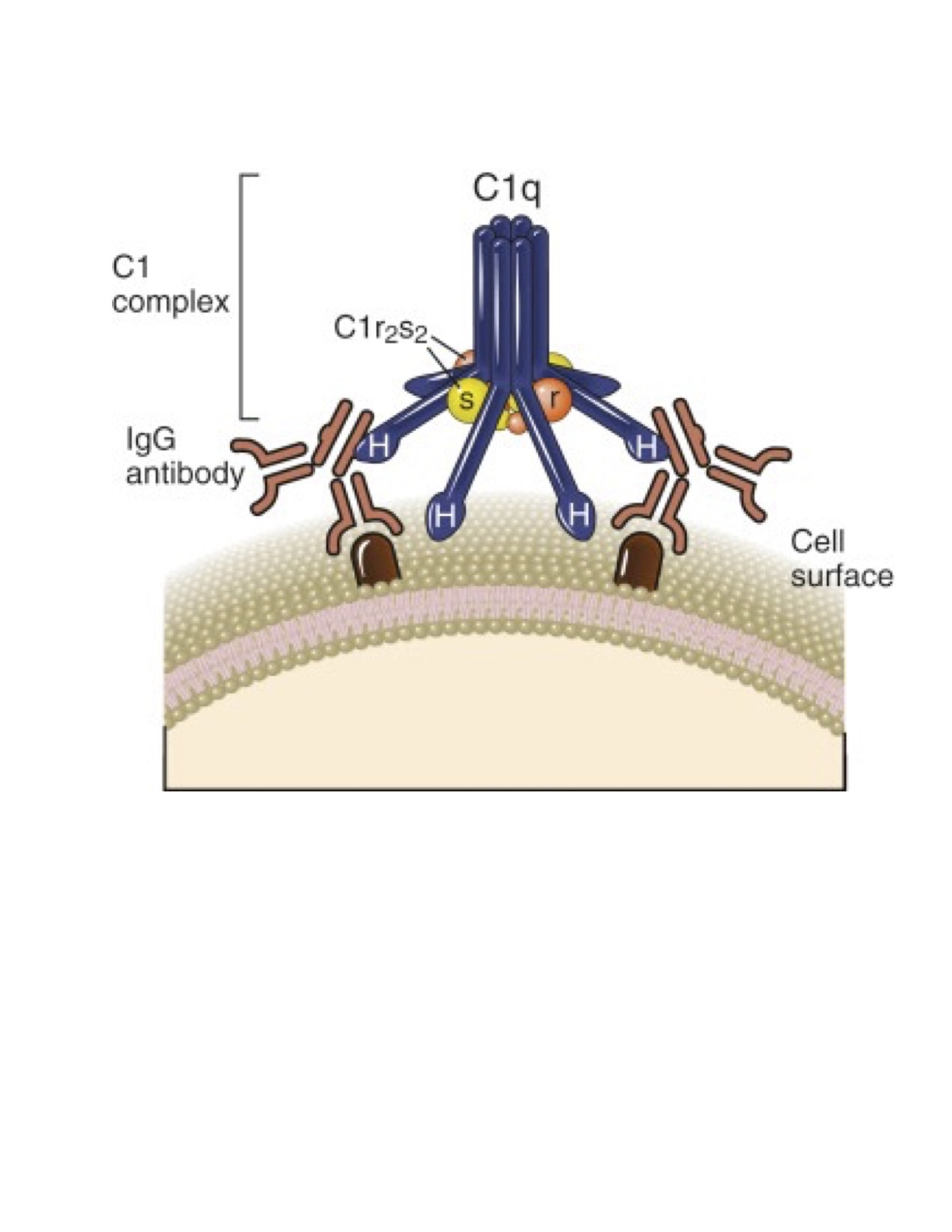
How is C1 activated in the classical path?
the receptors of C1q become available following conformational changes that take place on at least 2 antibody molecules each of which binding two epitopes on a multivalent antigen
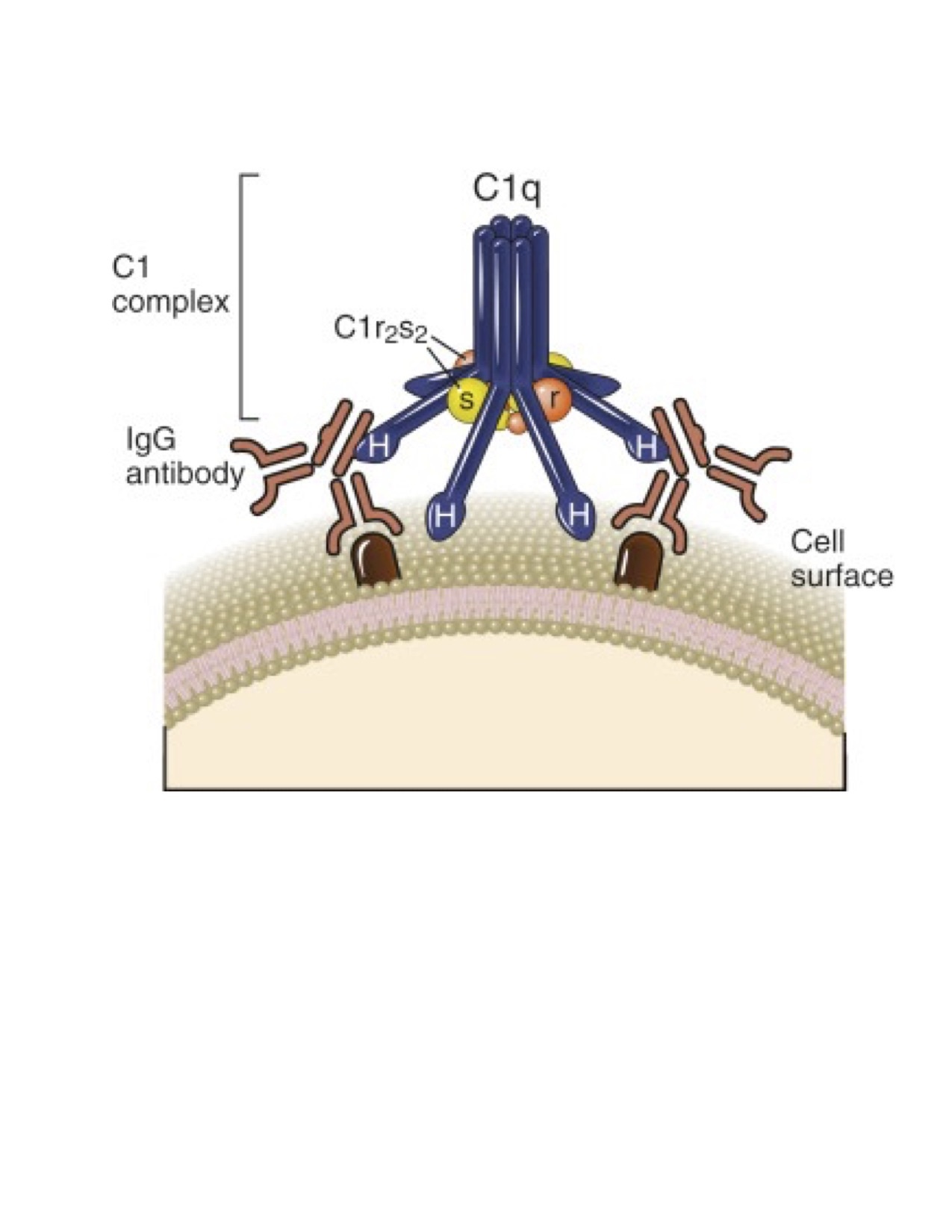
Where specifically does C1q bind?
binds to the Fc portion of antibody
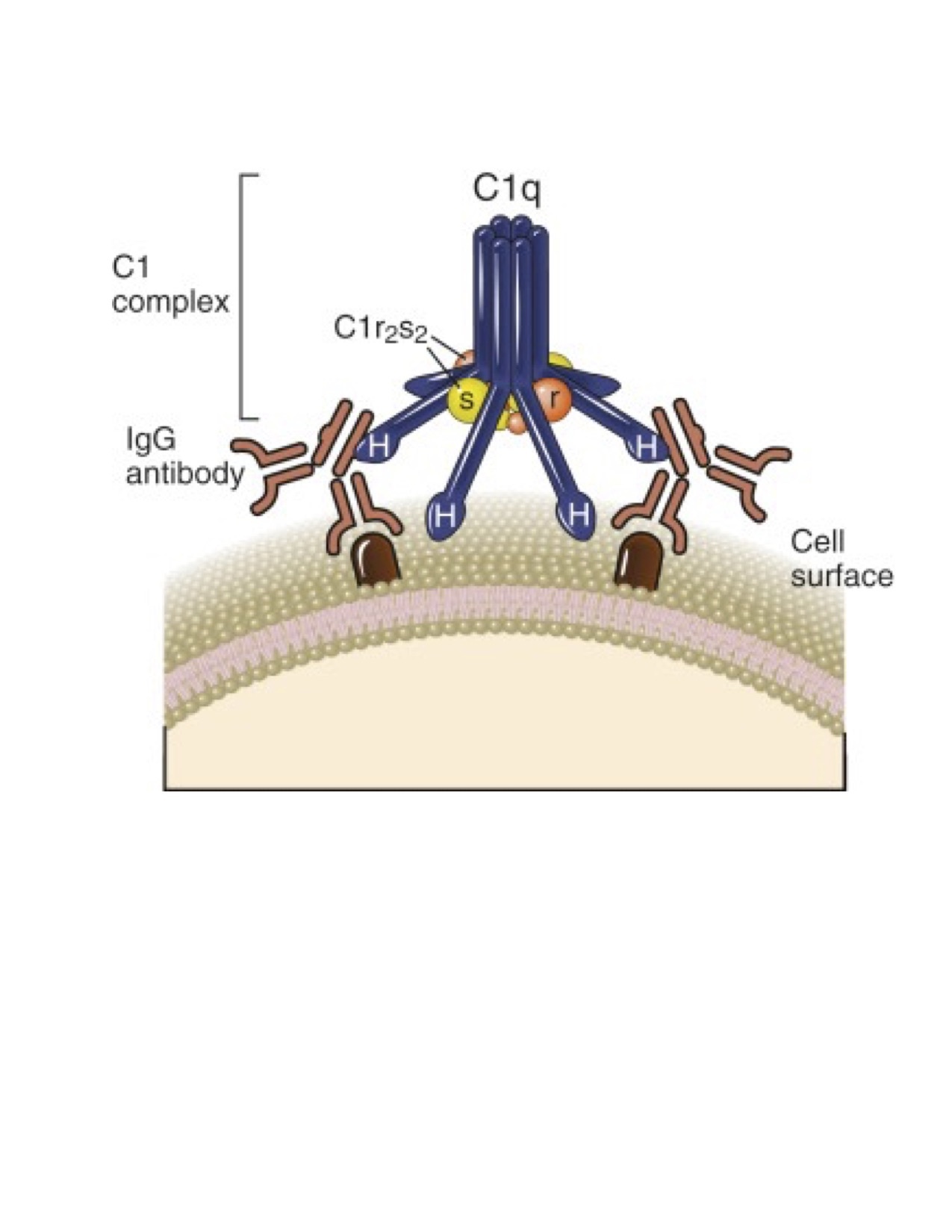
How does C1r activate C1s?
cleaves C1s to make it an active protease -serine protease
What does C1s do?
cleaves C2 and C4 -serine protease
What are the basic steps to the classical path of activating complement?
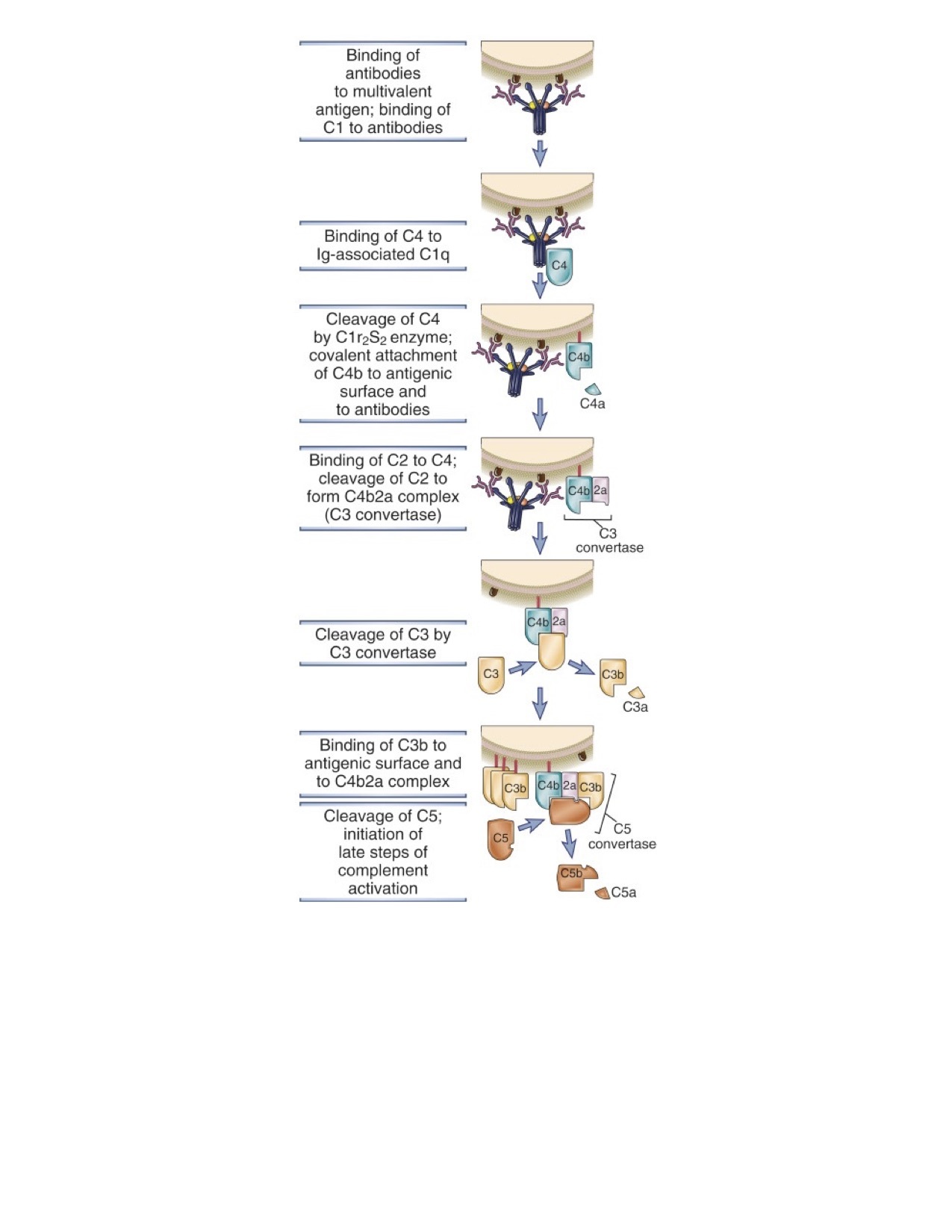
- activation of C1
- activation of C4
- activation of C2
- activation of C3
- activation of C5
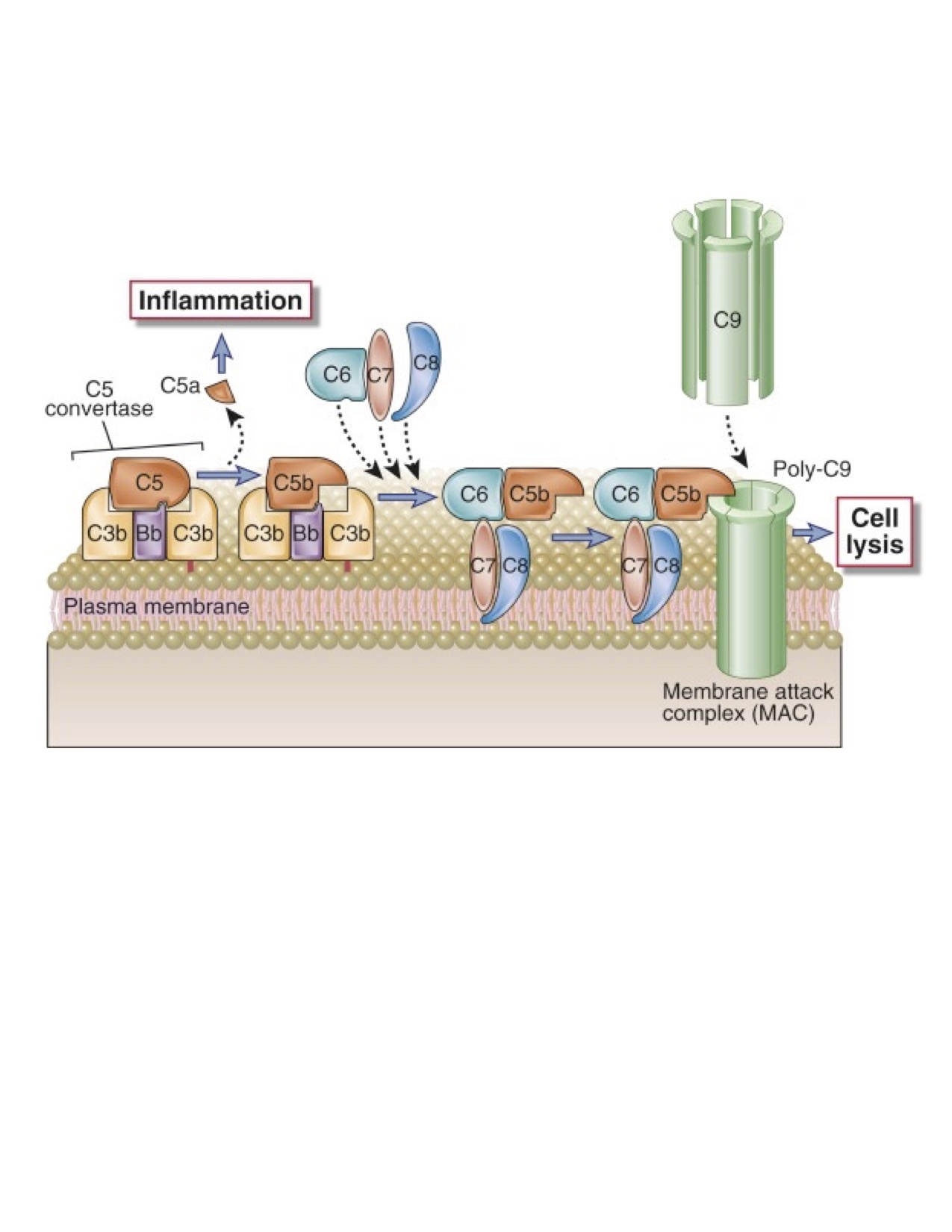
- membrane attack complex
- binding of C8
- polymerization of C9
- target cell lysis
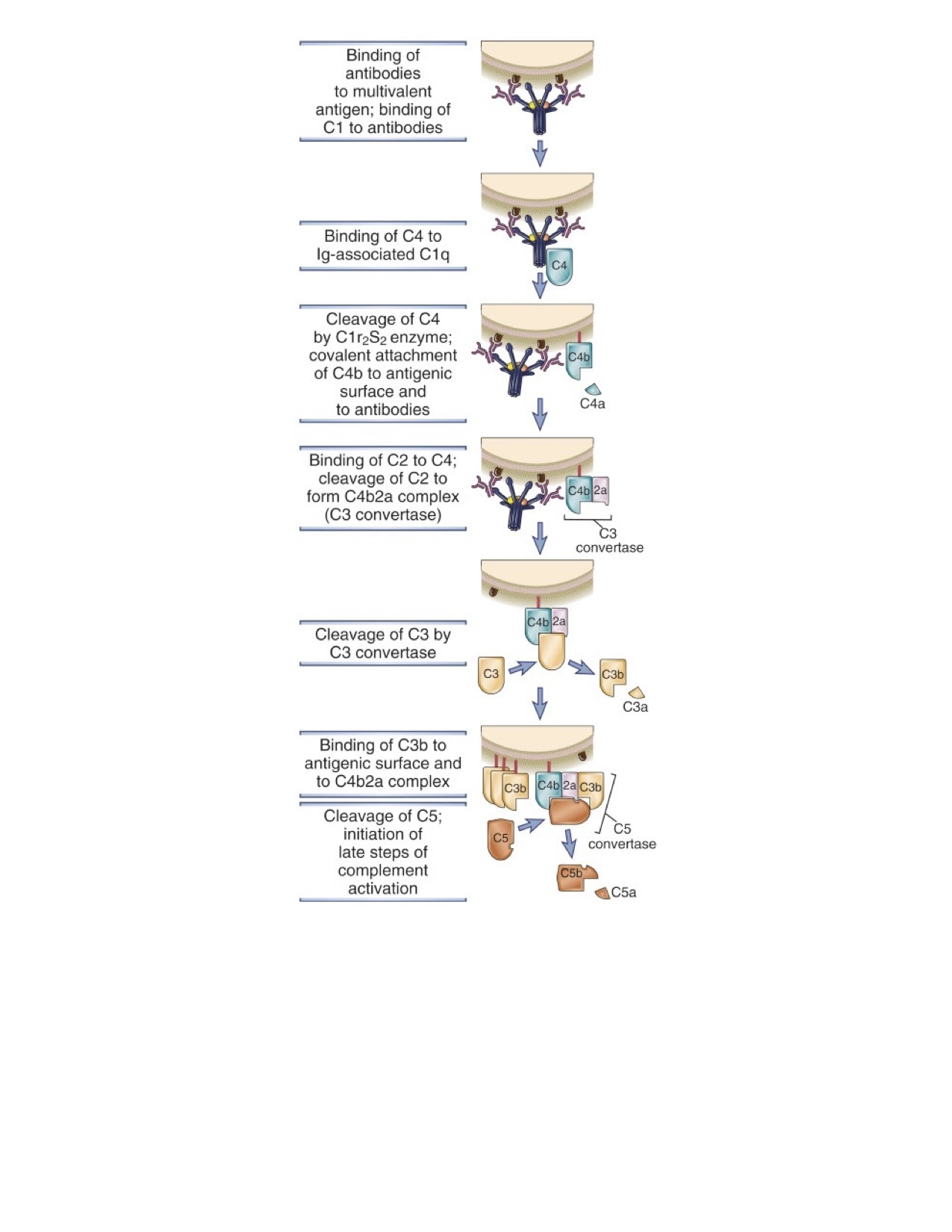
Explain step by step process of how C1 is activated?
- C1q binds the Fc portion of antibody and is activated
- C1q being bound activates C1r
- C1r cleaves C1s and activates it
- activated C1s has proteolytic activity on C4
Explain step by step process of how C4 is activated? what does C4 bind to?
- activated C1s cleaves C4 into C4b and C4a
- C4b binds to the cell surface near the Ag-Ab complex
- C4b also attaches C2
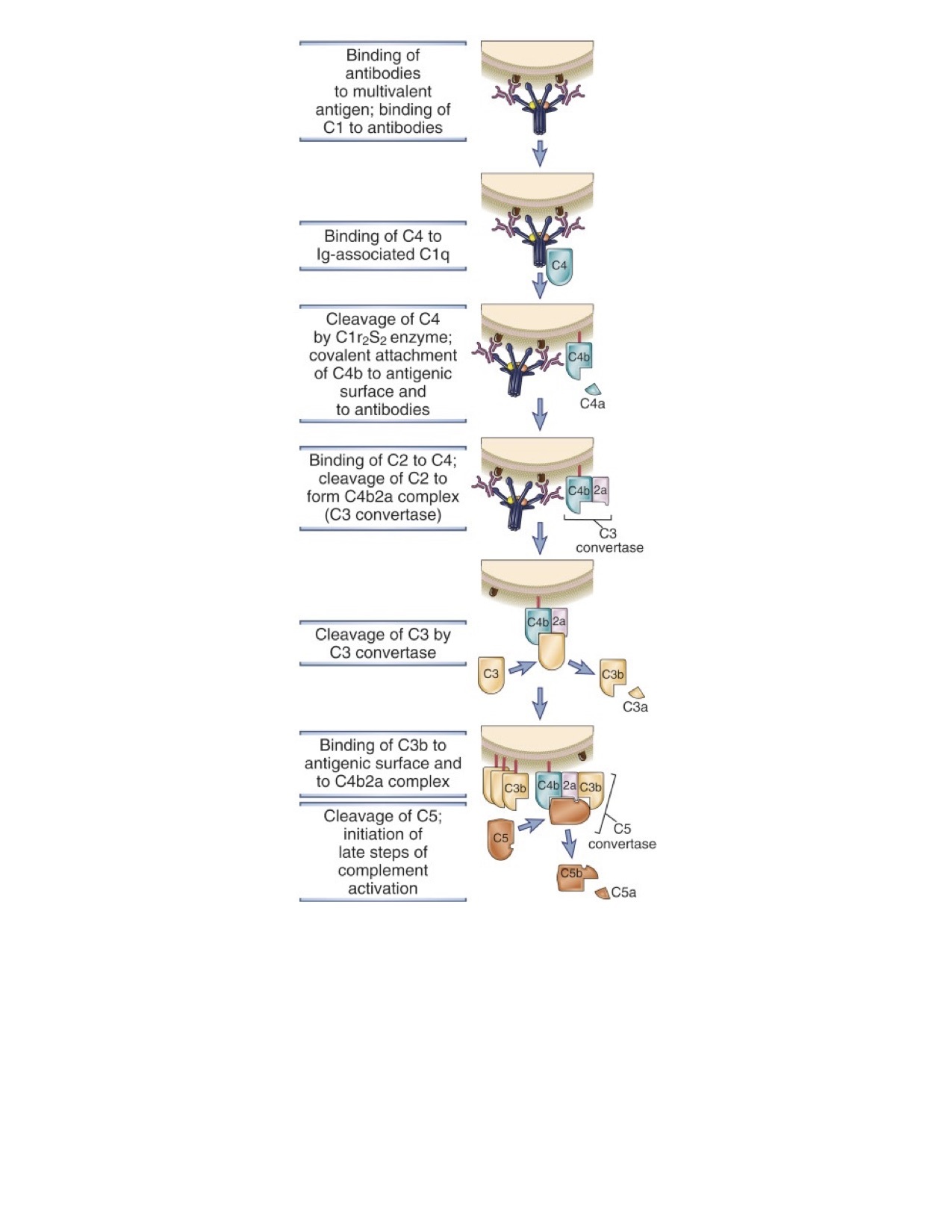
Explain step by step process of how C2 is activated? what does it associate with? what is the complex it forms?
- cleaved by the action of C1s and C4b
- remains associated with C4b
- active complex of C4b-C2a is called C3 convertase
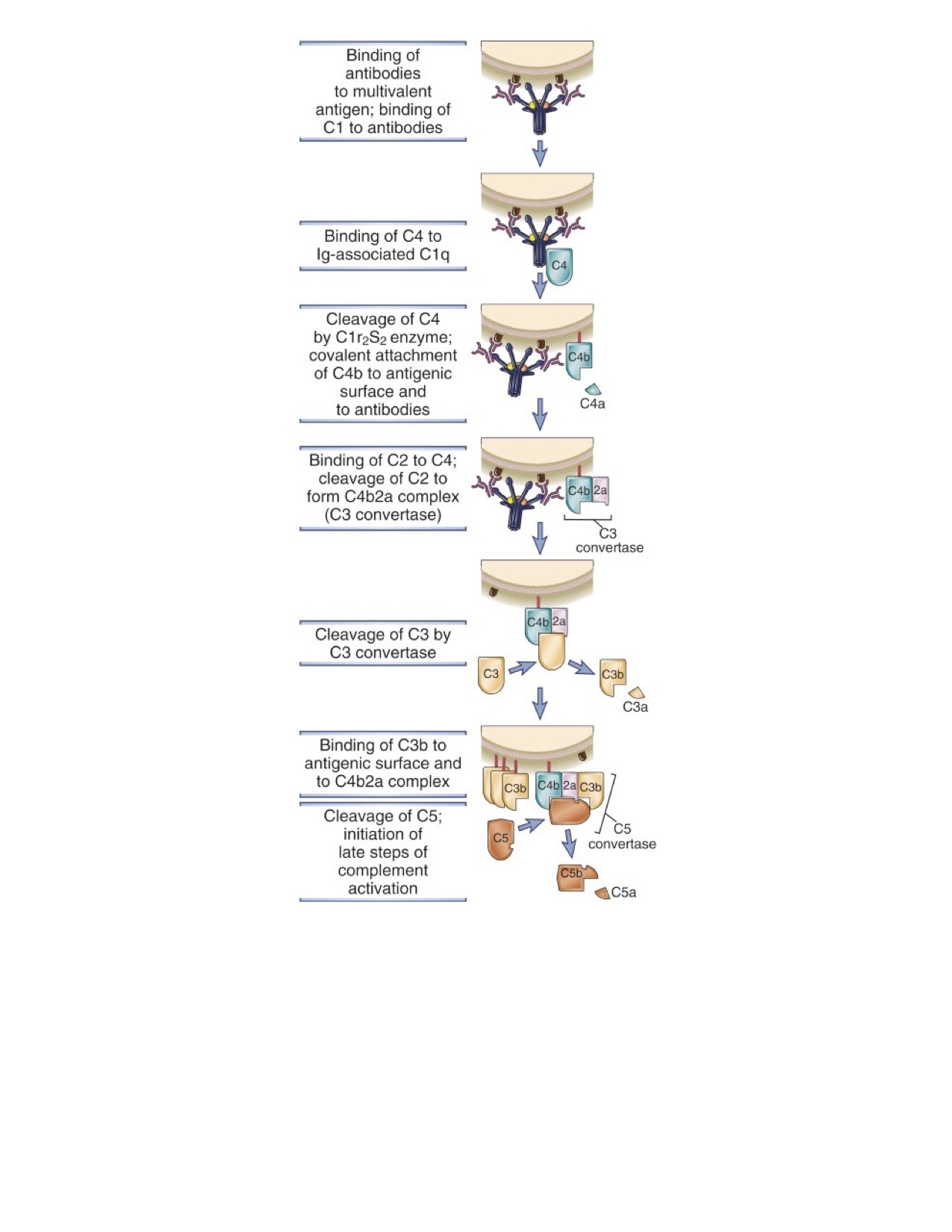
Explain step by step process of how C3 is activated? what is important about this step? where does C3b go?
- C3 is activated by C3 converts and is split into C3a and C3b -important amplification step
- C3b becomes attached to the target cell membrane
- C3 most abundant form in serum
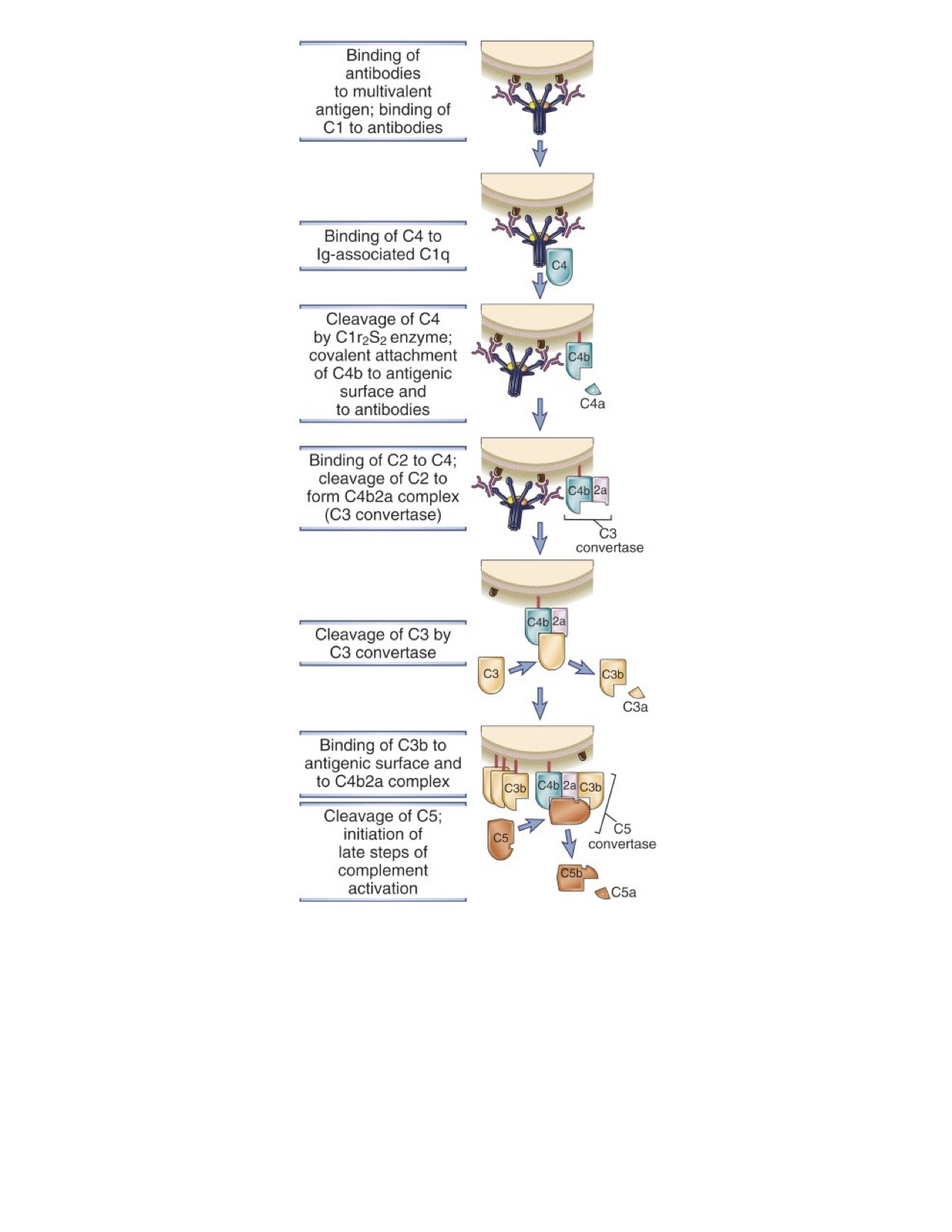
Explain step by step process of how C5 is activated? what is C5 convertase composed of?
- C5 convertase splits C5 into C5a and C5b
- C5 convertase = C4b-C2a-C3b-C5
Explain step by step process of how the membrane attack complex is formed? function?
- C5b binds to the target cell membrane and binds stoichiometrically to C6 and C7
- C5b, C6, C7 through conformational changes, inserts into the lipid bilayer
- structural- no enzymatic activity left
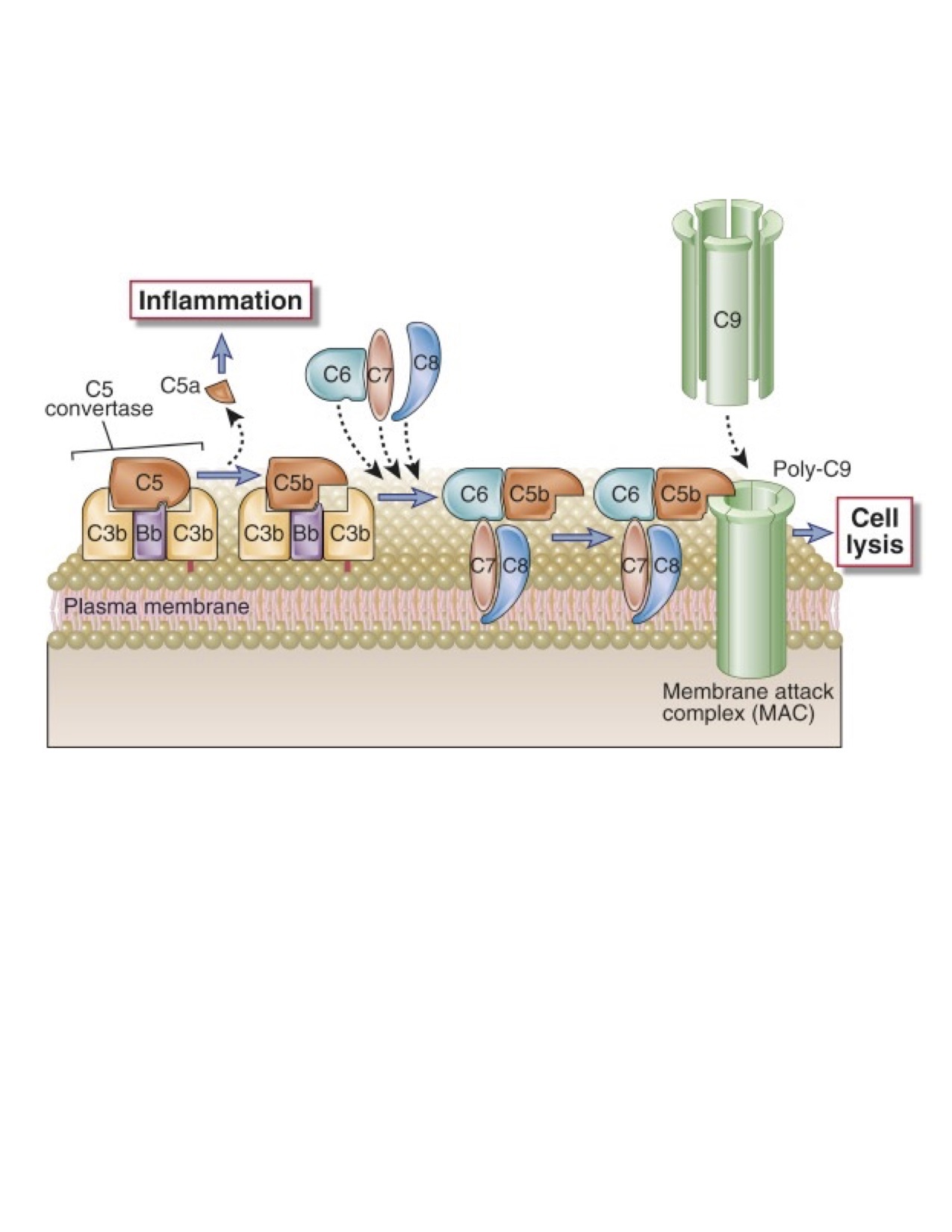
Binding of C8 step? results?
- C5b, C6, C7 also focuses the activities of C8 and C9
- association of C8 results in stable membrane spanning complex formation and facilitates the formation of a pore by C9 polymerization
- exposes hydrophobic region that inserts into cell membrane
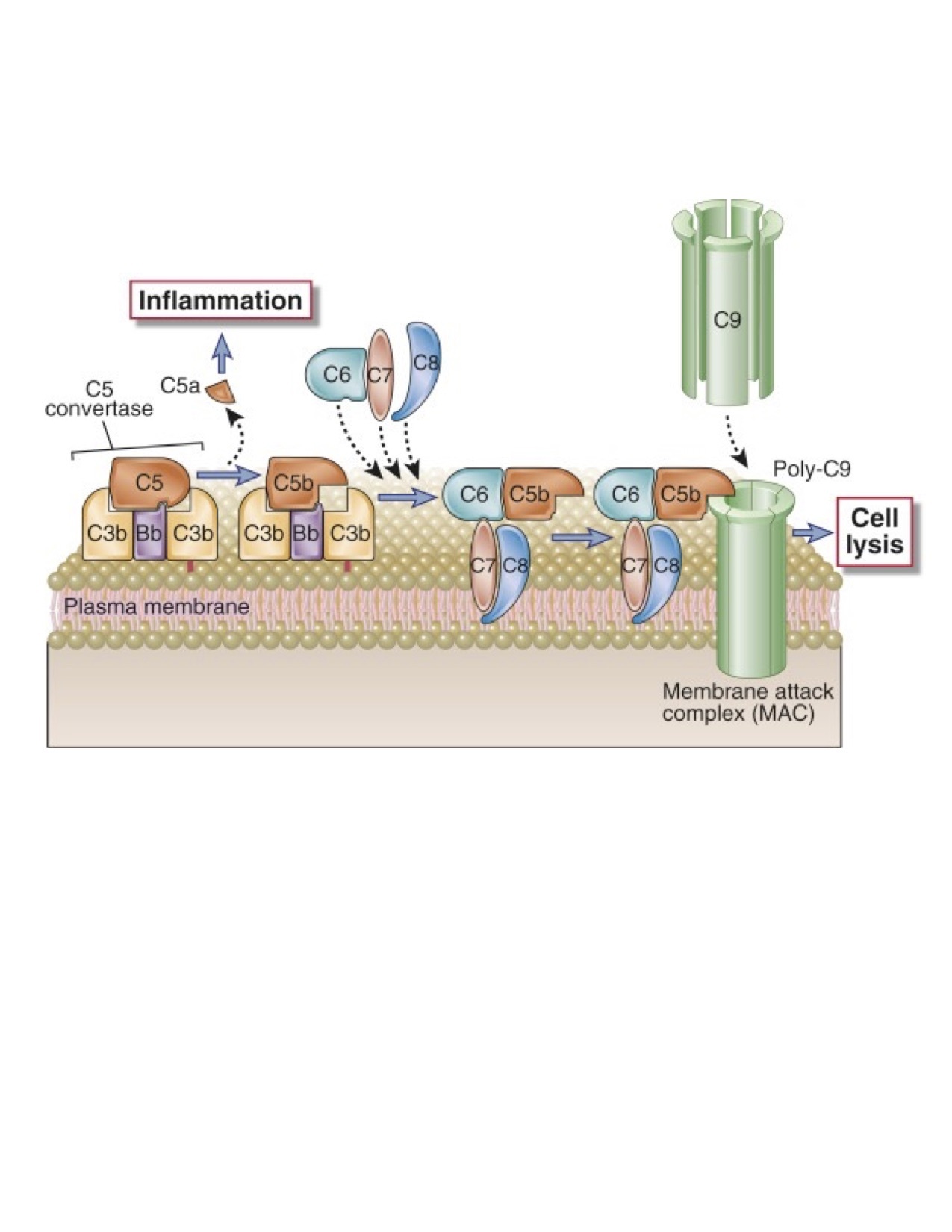
polymerization of C9 step? results?
- the final hit that leads to lysis is caused by the polymerization of C9, a perforin like molecule, around the C5b, C6, C7 channel
- polymerization results in the formation of transmembrane channels
- disrupts cell integrity and results in cell death
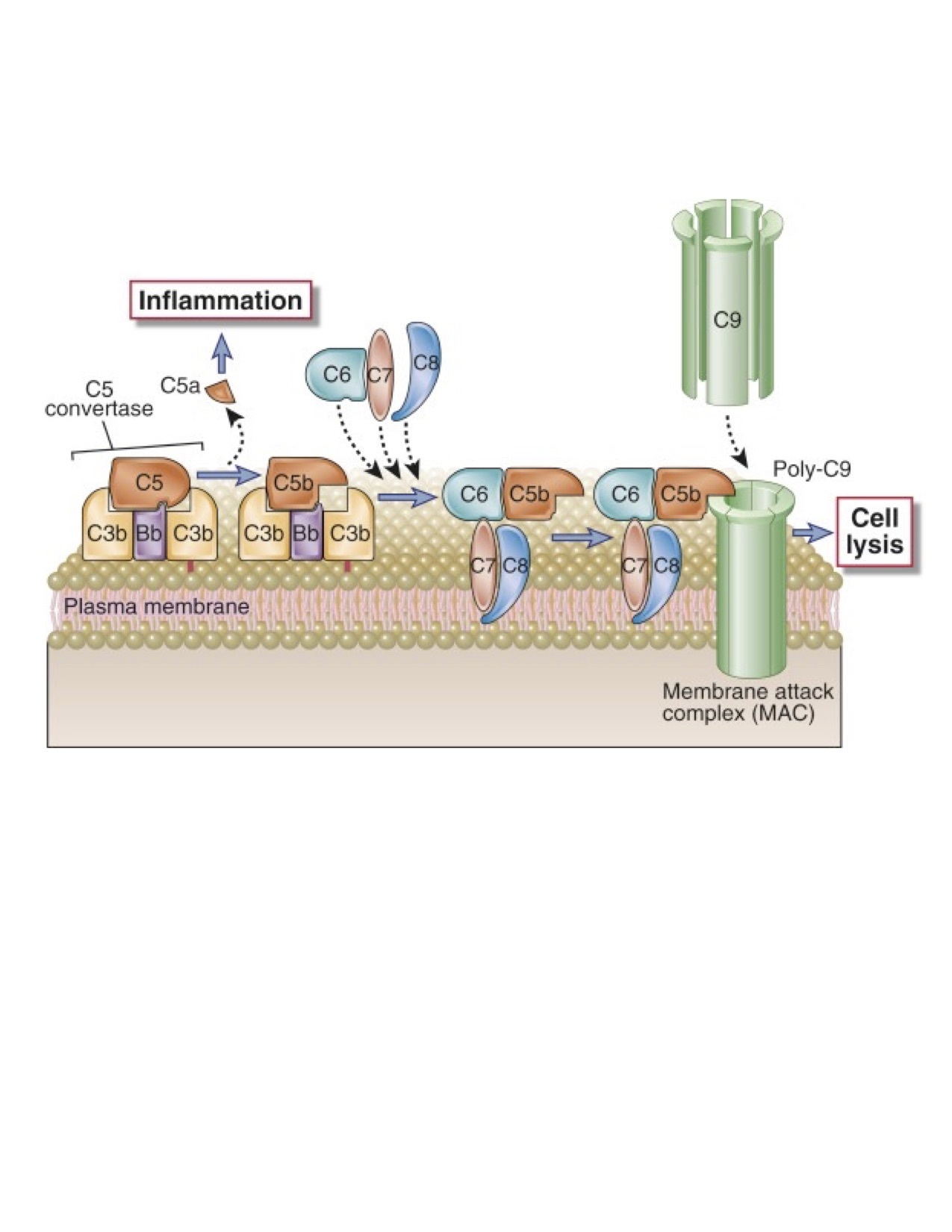
What is the final step in the classic path?
target cell lysis
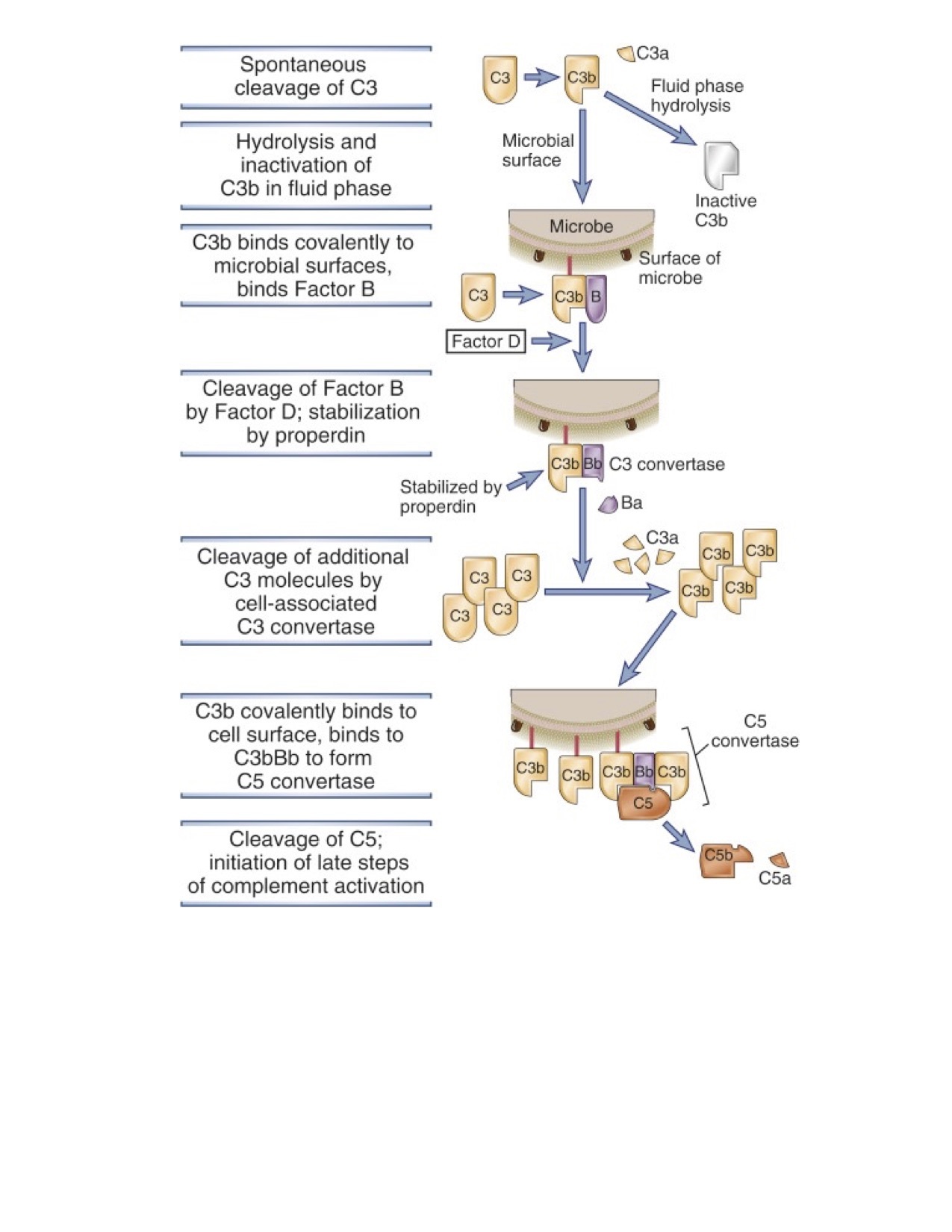
How is the alternate path initiated? C3b?
- C3 is spontaneously hydrolyzed in plasma at a low level, products are unstable and rapidly degraded
- when C3b produced by any method binds to microbial surfaces, degradation is prevented
- more primitive process


-
Introduction40
-
Innate Immunity38
-
Acquired Immunity24
-
Antigens and Antibodies49
-
Complement32
-
Antigen Processing and MHC43
-
Activation of B and T cells by Antigen56
-
Cell-Mediated Immunity37
-
Cytokines26
-
Intro to Bacteria39
-
Acute Inflammation59
-
Chronic Inflammation29
-
Bacterial Genetics35
-
Bacterial Pathogenesis36
-
Staphylococcus Aureus25
-
Mycobacterium Tuberculosis32
-
Introduction to Virology37
-
Influenza26
-
HIV26
-
Into to Parasitology76
-
Malaria30
-
Intro to Mycology56
-
Opportunistic pathogens78
-
Zika40
-
Microbial Evasion of Immune Response26
-
Immune Response to Microbes29
-
Vaccines31
-
Emerging Infectious Diseases51
-
Infectious Causes of Cancer68



