
(Pronounced “Bereseet”) “In the beginning”

(Pronounced “Bara”) created
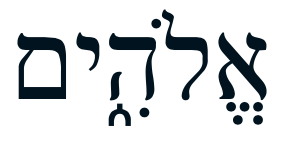
(Pronounced “Elohim”)- God

(Pronounced “et”)- the marker for a direct object

(Pronounced “hashimayim”) - the heavens

(Pronounced “veh-eht”)- another marker of the direct object

(Pronounced “ha-ah-res”)- the earth

(Pronounced “veh-he-ar-es”)- and the earth
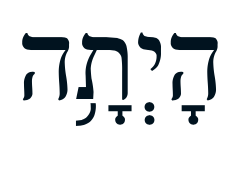
(Pronounced “hi-ya-ta”)- was

(Pronounced “to-hu”, rhymes with “tofu”)- formless

(Pronounced “va-bo-hu”)- and void/helter skelter/chaos

(Pronounced “vu-HO-sek”)- (and) darkness

(Pronounced “al”)- [was] on

(Pronounced “peh-neh” like penne)- the face/the surface
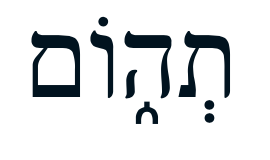
(Pronounced “teh-ho-um”)- of the deep

(Pronounced “veh-ROO-ah”)- and the spirit
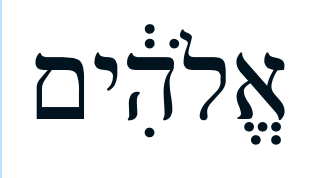
(Pronounced “eh-lo-heem”)- [of] God

(Pronounced “meh-rah-heh-pet”)- moved, hovered

(Pronounced “al”)- on

(Pronounced “peh-neh” like penne)- the face, the surface
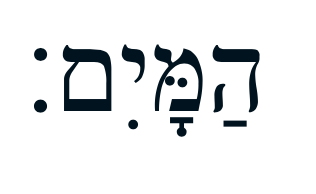
(Pronounced “hah-may-im”) - of the waters
In the creation narratives, what are three main characteristics that help distinguish the P source from the J source?
- The P source (Gen 1:1-2:4a) refers to God as Elohim (a general name for God) and his creation as “bara” (an act of creation that only God can do). The J source (Gen 2:4b-3:24) refers to God as YHWH Elohim (putting both the tetragrammaton and the general name for God) and his creation as “yatzar” (a general term for making stuff, like you can “yatzar” your breakfast).
- The order of creation differs between the two accounts. In P, the order goes from (light and darkness to the dome to separate the waters to) plants to animals to humankind. In J, the order goes from Adam to plants and animals to creating the woman.
- J characterizes God’s creative process as coming down and getting God’s hands dirty in an improvisational way. P characterizes God’s creative process as orderly, decisive, and clear.
Identify and state the significance of the concept of etiology.
- Etiology is a story that explains how something came to be.
- Etiology is a major part of the J account in Genesis explaining why men labor to hard in the fields, why women have such pain in childbirth, why snakes slither, and so much more. Etiology is not limited to Genesis nor is it limited to Hebrew scripture among the cultures of the Ancient Near East, and etiological narratives should be read as an origin narrative (as opposed to reading the front page of the New York Times).




