Dermatology Flashcards

(84 cards)

1
Q

What cell types are present in the epidermis?

A

◦Keratinocytes
◦Melanocytes
◦Langerhans cells

2
Q

What is the function of keratinocytes?

A
  1. Barrier Function—Stratum Corneum
  2. Produce cytokines and inflammatory molecules
  3. Produce antimicrobial proteins & lipids
  4. Drug metabolism
3
Q

What is the function of Melanocytes?

A
  1. Pigment-producing cells of skin
  2. Protect against Ultraviolet radiation
4
Q

What is the function of Langerhans cells?

A
  1. Macrophage-like cells in epidermis
  2. Important for antigen recognition
5
Q

What is the function of fibroblasts? Where are they located?

A
  1. Found in dermis
  2. Responsible for collagen, ground substance production
6
Q

What is the first step in accessing a rash?

A

stand back, look at the entire process, pattern, and distribution

7
Q

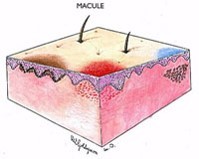
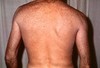
What is a macule?

A
  • A circumscribed, flat (NON-PALPABLE) discoloration
  • Can be any color
  • Few centimeters in diameter
8
Q

What is a patch?

A
  • A circumscribed, flat (NON-PALPABLE) discoloration
  • Can be any color
  • More than a few centimeters in diameter
9
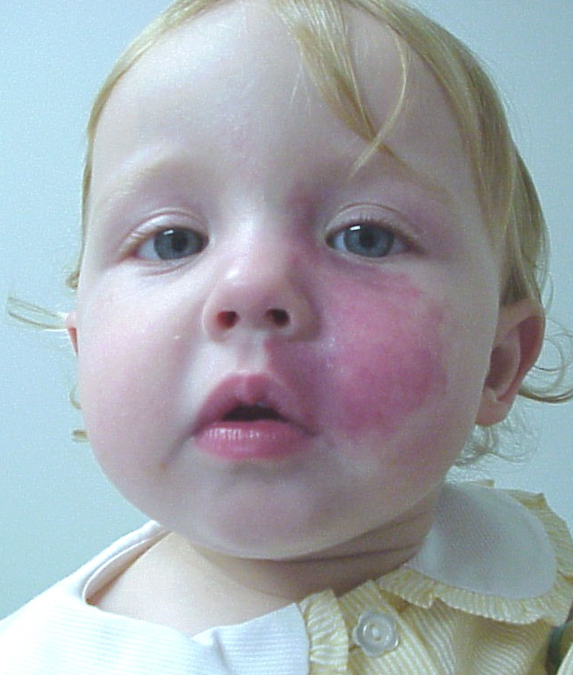
Q

What is a papule?

A
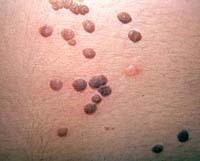
  • elevated solid lesion
  • up to 1 cm in diameter
  • color varies
10
Q

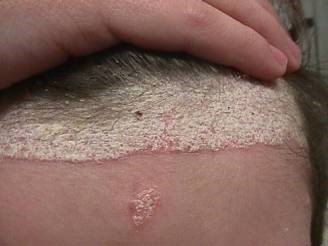
What is a Plaque?

A
  • circumscribed, elevated solid lesion
  • greater than 1 cm in diameter
  • Often formed by the confluence of papules
11
Q

What is a nodule?

A
  • circumscribed, elevated, solid lesion
  • more than 1 cm in diameter
12
Q

What is the difference between a papule, a nodule, and a tumor?
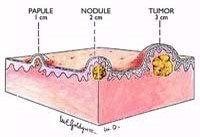
A
13
Q

What is a tumor?

A
  • A circumscribed, elevated, solid lesion
  • Larger than a nodule
14
Q

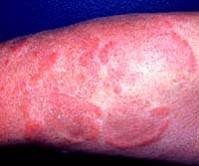
What is a wheal?

A
  • Firm, edematous plaque
  • results from infiltration of the dermis with fluid
15
Q

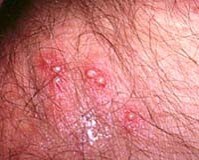
What is a Pustule?

A
  • circumscribed collection of leukocytes and free fluid that varies in size
16
Q

What is a vesicle?

A
  • A circumscribed collection of free fluid
  • up to 0.5 cm in diameter
17
Q

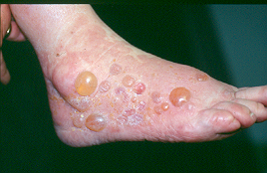
What is a bulla?

A
  • circumscribed collection of fluid greater than 0.5 cm
18
Q

What is the difference between a primary and a secondary lesion?

A
  • PRIMARY LESION:
    • Basic lesion that defines the disease process
  • SECONDARY LESIONS:
    • Lesions that evolve during the skin disease process, or created by scratching or infection
19
Q

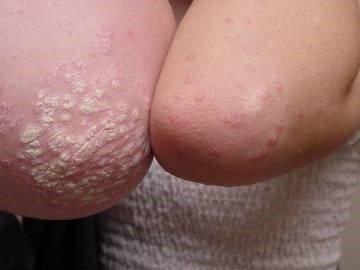
What are scales?

A

Excess dead epidermal cells that are produced by abnormal keratinization and shedding
20
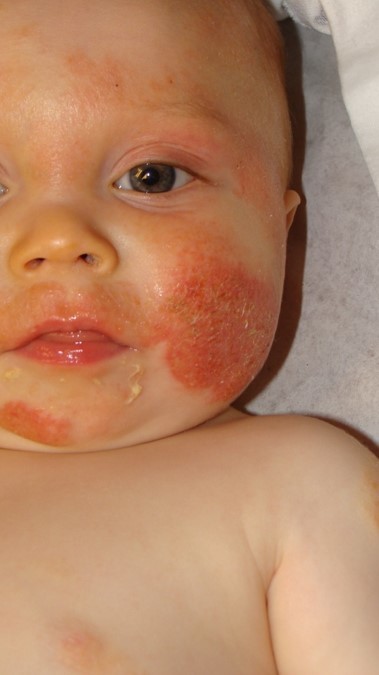
Q

What are crusts?

A

A collection of dried serum and cellular debris; a scab
21
Q

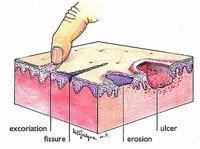
What is an erosion?

A
  • Focal loss of epidermis
  • do not penetrate below Dermal-Epidermal junction
    • do not scar
22
Q

What is an excoriation?

A
  • An erosion caused by scratching
  • Excoriations are often linear
23
Q

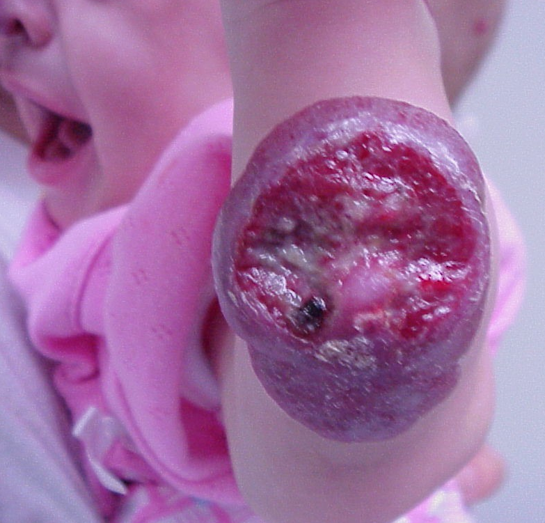
What is an ulceration?

A
  • A focal loss of epidermis and dermis
  • heal with scarring
24
Q

What is the difference between an erosion and an ulcer?

A
  • Erosion: doesn’t cross DEJ
  • Ulcer: loss of epidermis and dermis
25
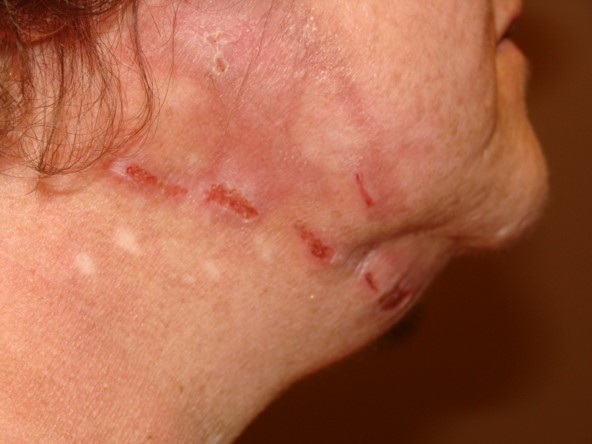
What is a fissure?
* A linear loss of epidermis and dermis with sharply defined, nearly vertical walls
26
What is atrophy?
* A depression in the skin resulting from thinning of the epidermis or dermis
27
What is a scar? What type of damage does it imply? How does appearance change over time?
* An abnormal formation of connective tissue * imply dermal damage * Change: * initially thick and pink * become white and atrophic
28
What is a comedone?
* plug of sebaceous and keratinaceous debris lodged in the opening of a hair follicle (acne) * The follicular orifice may be widened (blackhead) or narrowed (whitehead)
29
What is Lichenification?
* An area of thickened epidermis induced by scratching * The skin lines are accentuated so that the surface looks like a washboard
30
What is a burrow?
* A narrow, elevated, tortuous channel in the skin created by a parasite * Ex: chiggers
31
What are milia?
* small cysts under the skin * walls contain epidermis * scarring is present
32
What is a Cyst?

* circumscribed lesion with a wall and lumen * lumen may contain fluid or solid matter
33
What is telangiectasia?
* Dilated superficial blood vessels
34
What are petechiae?
* circumscribed deposit of blood * less than 0.5 cm in diameter
35
What are purpura?
circumscribed deposit of blood greater than 0.5 cm in diameter
36
What are the hallmarks of Sturge-Weber Syndrome?
* V1 Port-wine stain (superficial vascular malformation) * CNS manifestations
37
Characteristics of dangerus mole
A = Asymmetry B = Border C = Change D = Diameter (larger than a pencil eraser)
38
What are the characteristics of Varicella-zoster virus?
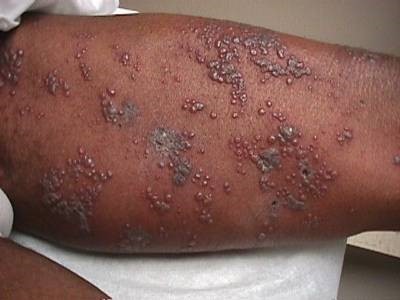
* Itchy lesions at different stages * “dew drop on a rose petal”
39
Patient presents with itchy lesions at different stages. They appear like dew drop on a rose petal. What is the disease?
Varicella Zoster virus
40
Patient presents with cough, coryza, conjunctivitis, photophobia and fever in addition to a rash. What is the disease?
Rubeola (measles) The three C's: **C**ough, **C**oryza, **C**onjunctivitis (and **K**oplik spots)
41
Patient presents with small, irregular bright-red spots with central bluish-white speck on buccal mucosa. He has no other symptoms. What are these spots called, and what is it a precursor for?
* Koplik spots (rash on mucous membrane) * Measles (before rash spreads to the skin) * The three C's: Cough, Coryza, Conjunctivitis (and K​oplik spots)
42
What are the phases of Erythema Infectiosum?
* Cause: Parvovirus B19 * Three distinct phases * Slapped cheeks * Fishnet erythema * Recurrence
43
Child presents with a four day high fever (102) but no other symptoms. What is the disease?
Roseola Infantum or "Fifth Disease" (Pale-pink macular rash begins as fever fades)
44
Patient presents with sore lesions in mouth as well as some rash on hands and feet. What is the disease? What is the cause?
Hand-foot-mouth disease Coxsackie virus
45
Patient presents with fever, pharyngitis, strawberry tongue, and rash that began on the neck and has spread. What is the disease?
Scarlet fever | (Strep Toxin)
46
Patient presents with fever, headache, myalgia, photophobia and the rash pictured below. What is the disease? What causes it?
* Rocky Mountain Fever * Cause: Rickettsia rickettsii * Tick-borne
47
What are the clinical features of urticaria?
the 3 E's * Erythema * Edema * Evanescent (dynamic time course)
48
What are the causes of urticaria?
1. viral 2. food 3. drug 4. physical factors – sun, pressure, aquagenic, cold, exercise (acronym – SPACE)
49
Patient presents with target lesions on palms, with oral mucosal involvement. What is the disease? What is the cause?
* Erythema Multiforme Minor * Cause: HSV
50
Patient presents with target lesions on palms, with oral mucosal involvement in addition to Stevens Johnson Syndrome. What is the disease?
* Disease: Erythema Multiforme Major
51
Patient presents with fever, fatigue, pharyngitis, adenopathy, liver or spleen involvement in addition to a rash. What disease is this?
Mononucleosis 3 "F"'s: **F**ever, **F**atigue, (**F**)pharyngitis
52
Patient presents with malar rash in areas exposed to the sun. There is also involvement in the conchal bowl of the ear. What disease is this?
* Disease: Systemic Lupus Erythematosus * Other symptoms: DUMP * Discoid lupus * Ulcers (oropharyngeal, usually no pain) * Malar rash * Photosensitivity * Lab findings: * Antinuclear antibodies Other serologic tests (dsDNA, anti-Sm)
53
Patient presents with puffy skin with yellowish tint, loss of lateral eyebrows, and dry, coarse brittle hair. What is the disease? With what underlying disease is it associated?
Myxedema Hypothyroidism
54
Patient presents with well demarcated areas of epidermal atrophy, leaving skin a red-yellow color. What is the disease? With what underlying disease is it associated?
Necrobiosis lipoidica Diabetes mellitus
55
Patient presents with firm flesh-colored to yellowish papules and plaques. What is the disease? With what underlying disease is it associated?
Xanthoma Hyperlipidemia
56
With what underlying disease is Xanthelasma associated?
hyperlipidemia
57
Patient presents with blisters and scarring on the dorsal surfaces of hands. What is the disease? With which underlying disease is it associated?
Porphyria cutanea tarda Associated with Hepatitis C Directly related to alcohol intake
58
What is the cause of non-bullous impetigo?
Beta Hemolytic Strep
59
What is the cause of bullous impetigo?
Staph. aureus
60
Patient presents with smooth domed papules with a central umbilication. What is the disease?
Molluscum
61
What is the cause of Irritant Dermatitis? What is the response to a strong vs weak irritant?
* Cause: * toxic injury to skin by chemical * Difference in response: * Strong irritant: Vesicles or bullae * Weaker irritant repetitively applied: dry, scaly eruption
62
What is the pathogenesis of allergic contact dermatitis? What is the histological presentation?
* Path: * immunologic, T-cell mediated reaction (type IV) * Histology: * Intercellular edema (spongiosis) * Intraepidermal vesicles * Lymphocytic and eosinophilic dermal infiltrate
63
Patient presents with superficial, flaccid blisters and severe oral ulcerations. What is the disease? What is the pathology?
* Disease: Pemphigous Vulgaris * Pathology: * autoimmune * acantholysis (loss of cohesion between keratinocytes) * **Intraepidermal**
64
Patient presents with tense blisters and pruritus. What is the disease? What is the pathogenesis?
* Disease: Bullous pemphigoid * Pathology * Circulating autoantibodies directed against the epidermal basement membrane zone * **Subepidermal**
65
What is a common cause of dermatitis herpetiformis? What is the pathology?
Hypersensitvity to dietary gluten with or without clinically apparent gluten-sensitive enteropathy Pathology: * Antigen-antibody complexes are deposited in the skin * **subepidermal** vesicles and pruritus
66
What is the difference between eumelanin and phaeomelanin?
* Eumelanin * brown-black * Phaeomelanin * yellow-red
67
Patient presents with hypopigmented macules that are sharply demarcated and bilaterally symmetric. What is the disease?
Vitiligo | (Michael Jackson had this)
68
What are the three stages of a hair's life cycle? How many do you lose per day?
* Anagen phase * Actively growing hairs * Grow for 2-6 years * Catagen phase * Involuting hairs (end of active growth) * Telogen phase * resting (club) hairs * Phase lasts weeks to months * Lose ~100 hairs/day
69
What disease has excess hair production due to excessive androgen production?
Hirsuitism
70
Patient presents with well-defined, erythematous papules and plaques with silvery scales. What is the disease? With what disease is it commonly associated?
Psoriasis 30% have arthritis
71
What is the Koebner phenomenon?
Lesions occur at areas of trauma (talked about in psoriasis and Lichen planus)
72
What are the clinical manifestations of Lichen Planus? With what is it associated?
Clinically—P’s Purple, planar polygonal, pruritic papules and plaques “Flat-topped violaceous papules and plaques” “Lacy reticular patches” on mucous membranes Associated with Hep C
73
Patient presents with flat-topped violaceous papules and plaques and lacy patches on mucous membranes. What is the disease? With what underlying disease is it associated?
Lichen planus
74
Patient presents with a rash that was preceded by ithchiness. Lab tests show elevated IgEs. What is the disease?
Atopic dermatitis "itch that rashes"
75
Patient presents with white scales and no erythema. What is the disease?
Ichtheosis scales brown or white
76
Patient presents with wart-like macules and papules with a velvety surfece. It is only present on cutaneous surfaces (none on mucous membranes). What is the disease?
Seborrheic Keratosis (Long axis is oriented along skin tension lines)
77
What are Actinic keratosis and actinic cheilitis? What is it a risk marker for?
* Pre-malignant lesion of keratinocytes * Actinic keratosis on the skin * Actinic cheilitis on the lips * Appears in sun-exposed areas * Risk marker for: * squamous cell carcinoma * melanoma
78
Patient presents with a pink dome-shaped papule on the face with pearly, rolled borders and telangiectasia. What is the disease? What is the prognosis?
Basal cell carcinoma Prognosis is good; rarely metastasizes
79
Patient presents with dry, red, scaly, hyperkeratotic papules and macules on the face and scalp. What is the disease? What is the prognosis?
Actinic Keratosis Prognosis depends on speed of detection. precancerous lesion and will eventually evolve into squamous cell carcinoma
80
Patient presents with small, red, hard, scaly papules and plaques. What is the disease? What is the prognosis?
Squamous Cell Carcinoma Prognosis depends on depth upon detection. Rarely metastasizes, but does so more frequently than basal cell carcinoma.
81
Patient presents with a pigmented, asymmetrical lesion that has increased in size in the last 6 months. The patient complains of itching. What is the disease? What is the prognosis?
Melanoma Prognosis is poor: high rate of metastasis
82
What is the difference between SLE, DLE, and SCLE?
* SLE (systemic lupus erythematosus) 4 of 11 ARA criteria (systemic disease) * DLE (discoid lupus erythematosus) primarily cutaneous * SCLE (subacute cutaneous lupus erythematosus)
83
Patient presents with blanchable erythema and malar rash with a photo-distribution. What is the disease?
Acute Lupus Erythematosus
84
Patient presents with erythema with telangiectasias, scales with follicular plugging, and scarring alopecia. What is the disease?
Chronic (Discoid) Lupus Erythematosus