Dermatology Reverse Flashcards

(127 cards)

1
Q
A
2
Q

Skin

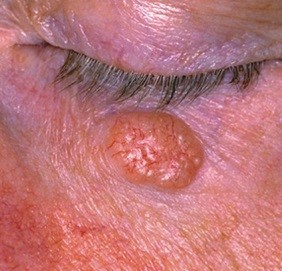
Pearly nodule

May have central ulceration

Blood vessels across surface
A

Nodular BCC

3
Q

Skin

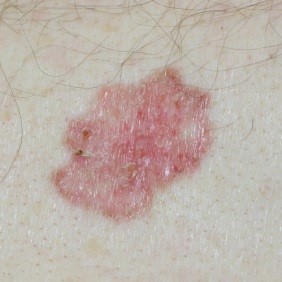
Younger, upper trunk, shoulders
Slightly scaly, irregular plaque
Multiple microerosions
A

Superficial BCC

4
Q

Skin

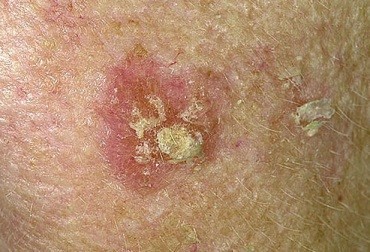
Flat or thickened papule or plaque
white/yellow, scaly, warty or horny surface
skin colour, red or pigmented
tender or asymptomatic
A

Actinic keratosis (Also: solar keratosis)

5
Q

Skin

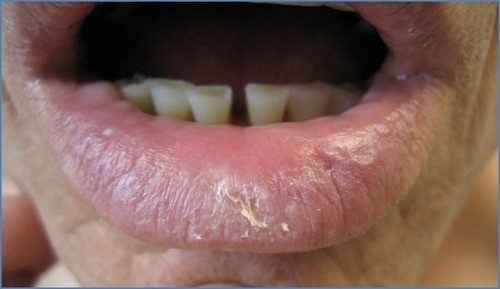
Diffuse or patchy dryness and variable
thickening of lower lip
A

Actinic cheilitis

6
Q

Skin

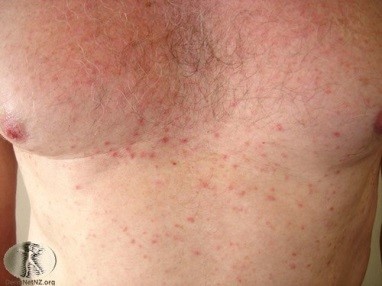
Most common in men >50
Sometimes follows sweating, heat stress

Frequently itchy, may be asymptomatic
Red crusted papules on central back/mid-chest
A

Grover disease (Transient acantholytic dermatosis/sweat rash)

7
Q

Skin

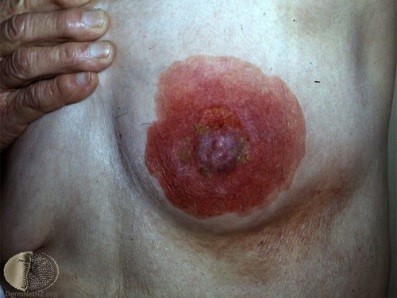
Uncommon skin cancer characterised by a chronic
eczema-like rash of the nipple and
adjacent areolar skin.
Associated with underlying breast cancer
A

Intramammary Paget disease (also called Paget disease of the nipple)

8
Q

Skin

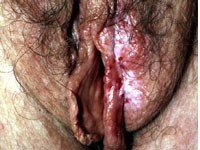
Uncommon skin cancer characterised by
chronic eczema-like rash of anogenital regions of
men and women most commonly occurs in the vulva
of women aged between 50-60 years
mild to intense itching
A

Extramammary Paget disease

9
Q

Skin

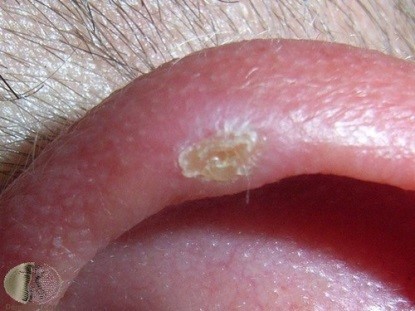
Tender lump in cartilaginous portion of ear
A

Chondrodermatitis nodularis helicis (Winkler disease)

10
Q

Skin

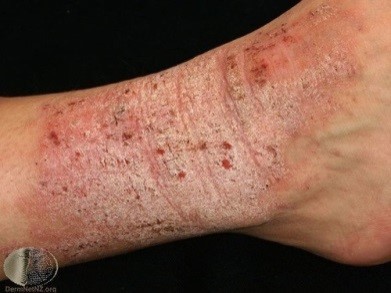
Itch due to another condition results in repetitive scratching and rubbing
A

Lichen simplex chronicus

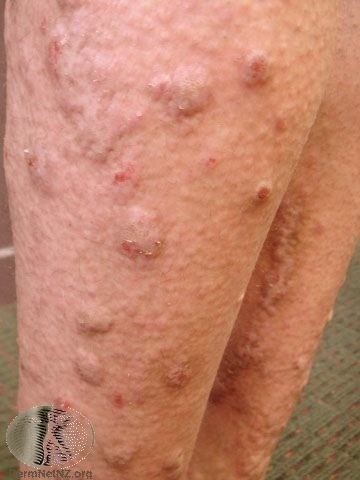
11
Q

Skin

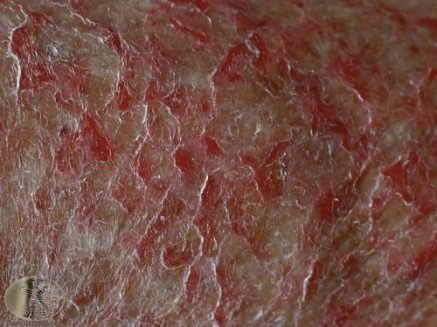
Crazy-paving appearance

Diamond-shaped plates of skin are separated from each other by red bands forming a network.
A

Asteatotic eczema (‘lack of oil’)

12
Q

Skin

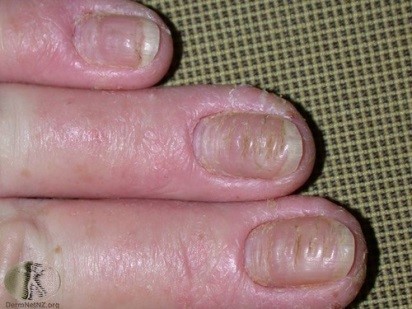
A form of hand/foot eczema characterised by vesicles or bullae (blisters). 
In many cases it appears to be related to sweating, as flares often occur during hot weather, humid conditions, or following emotional upset. 
Can cause intense itch/burning/nail pitting and ridges. 
Address hyperhydrosis (absorbent socks, antiperspirants), c/s
A

Pompholyx

13
Q

Skin

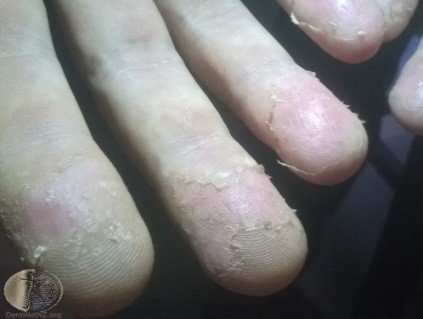
Focal peeling of the palms and less often the soles.
A

Exfoliative keratolysis/keratolysis exfoliativa

14
Q

Skin

Very itchy firm lumps

A

Nodular prurigo/Prurigo nodularis

15
Q

Skin

Outer aspect of both upper arms.

Also occur on the thighs, buttocks, cheeks, and less often on the forearms and upper back

Not itchy
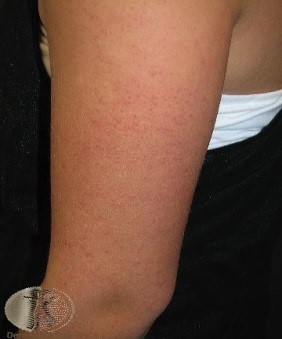
A

Keratosis pilaris

16
Q

Skin

It often presents following sun exposure,
Lesions 0.5 – 5cm can be scaly
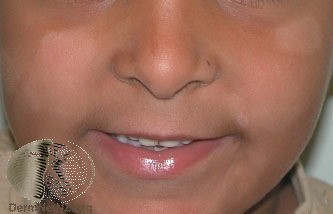
A

Pityriasis alba

17
Q

Skin

Red dry skin all over the body.
Occurs in setting of worsening or unstable psoriasis.
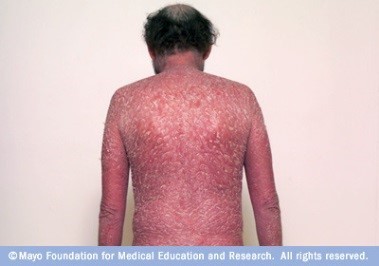
A

Erythrodermic psoriasis. (1/3 of erythroderma)

18
Q

Skin

Characterised by an initial single larger patch followed by similar, smaller oval red patches that are located
Mainly on the chest and back
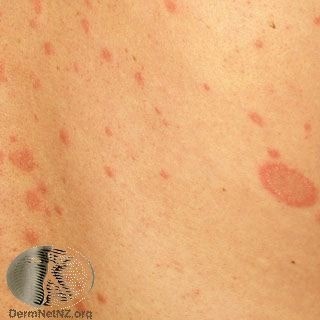
A

Pityriasis rosea

19
Q

Skin

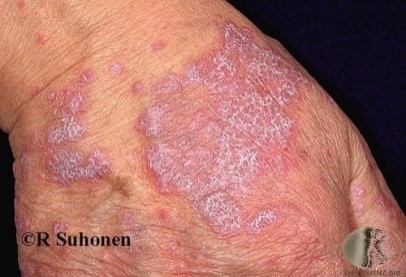
Symptoms can range from none (uncommon) to intense itch

Papules and polygonal plaques are shiny, flat-topped and firm on palpation

Most often front of the wrists, lower back, and ankles.

New papules and plaques often have a purple or violet hue

Plaques are crossed by fine white lines
called ………… striae.
A

Lichen planus

20
Q

Skin

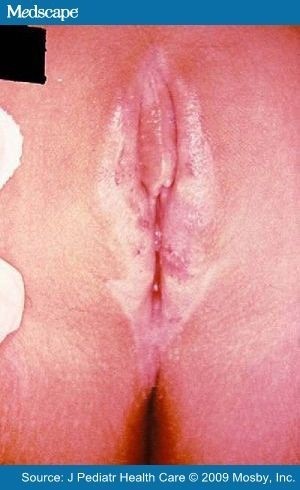
Genital & perianal areas.
White crinkled or thickened patches of skin that have a tendency to scar

Can be extremely itchy and/or sore

The clitoris may be buried (phimosis).

The labia minora resorb/shrink.

The entrance to the vagina tightens
A

Lichen sclerosis

21
Q

Skin

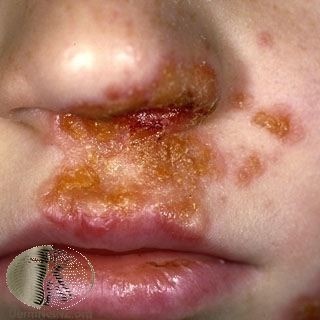
Characterised by pustules and honey-
coloured crusted erosions
A

Impetigo

22
Q

Skin

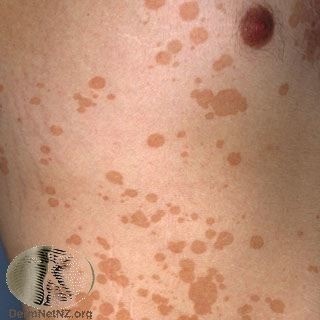
Trunk, neck, and/or arms. The patches may be coppery brown, paler than surrounding skin, or pink.
A

Pityriasis versicolor (also tinea versicolor)

23
Q

Skin

Most often on scalp (tinea capitis)
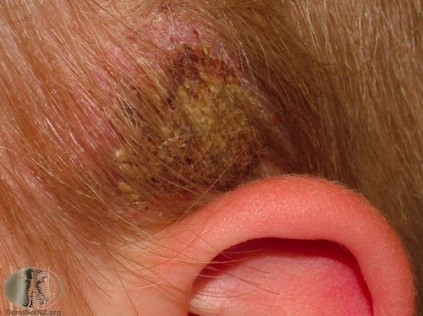
A

Kerion

24
Q

Skin

Affects apocrine gland-bearing skin in the axillae, in the groin, and under the breasts.
It is characterised by recurrent boil-like nodules and abscesses that culminate in pus-like discharge, difficult-to-heal open wounds (sinuses) and scarring
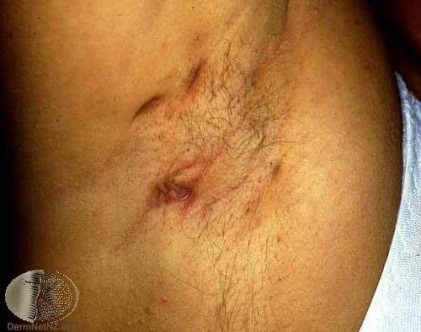
A

Hidradenitis suppurativa

25
# Skin Red lumps on shins, around knees or ankles, ranging in size from cherry to grapefruit. Hot & painful. May be associated with a number of causes incl: throat infections, sarcoidosis, TB, pregnancy, OCP, NSAIDs & inflammatory bowel disease
Erythema nodosum
26
# Skin Often preceded by URTI. Tetrad of signs: rash, arthritis, abdo pain, kidney impairment. Red spots or bumps become palpable purpura - buttocks, lower legs, elbows, knees
Henoch-Schonlein purpura
27
# Skin Humans can be infected with the larvae by walking barefoot on sandy beaches or contacting moist soft soil that have been contaminated with animal faeces Larvae migrate under the skin's surface and cause itchy red lines or tracks
Cutaneous larva migrans
28
# Skin People \>50yrs, rarer in younger people Severe itch & large bullae
Bullous pemphigoid
29
# Skin Symmetrically distributed lesions most commonly on scalp, shoulders, buttocks, elbows and knees. Extremely itchy papules and vesicles on normal or reddened skin May be associated gastrointestinal symptoms
Dermatitis herpetiformis
30
# Skin Occurs in Northern Europeans holidaying in the Mediterranean The arms, the back of the hands, the V of the neck, the chest and lower legs/feet may be affected, but the face is usually spared Crops of 2–5 mm pink or red papules Persists for several days, and often longer if the affected skin is exposed to more sunlight Burning sensation or itch
Polymorphous light eruption
31
# Skin temporary hair loss due to shedding of resting hair after some shock to the system (illness, surgery, weight loss..)
Telogen effluvium
32
# Skin Arises from degeneration in the connective tissue on the top of the last segment of the finger
Digital myxoid pseudocyst
33
# Skin Often begins on the face and spreads to affect the trunk and limbs. Otherwise well infant
Toxic erythema of the newborn (erythema toxicum neonatorum)
34
# Skin Hamartomas in many organs, but particularly the skin, brain, eye, kidney and heart. Skin lesions, epileptic seizures and developmental delay/behavioural problems are the main features of this condition
Tuberous sclerosis
35
# Skin A rapidly enlarging, very painful ulcer Associations with rheumatoid arthritis, IBD, leukaemia and monoclonal gammopathy
Pyoderma gangrenosum
36
# Skin Itchy and/or tender red or purple bumps that occur as a reaction to cold.
Chillblains
37
# Skin Occurs in sheep farmers, shearers, butchers Small, firm, red or reddish-blue lump enlarges to form a flat-topped, blood-tinged pustule or blister. 2cm -5cm diameter Often tender Generally solitary or few in number. Most commonly on the fingers, hands or forearms but can appear on the face
Orf
38
# Skin Dairy farmers or vets who examine the mouths of animals Small, red, raised, flat-topped spots develop. Within a week they appear as red-blue, firm, slightly tender blisters or nodules (lumps), usually between 2 and 5 in number Usually on the hands, particularly the fingers, but occasionally the face The top of the nodules often develops a greyish skin and a small crust
Milker's nodule
39
# Skin A shower of red, scaly tear drops on the trunk and upper arms and thighs. The rash comes on very quickly, usually within a couple of days, and may follow a streptococcal infection of the throat
Guttate psoriasis
40
# Skin Erupts in sun damaged skin, solid core filled with keratin.
Keratoacanthoma
41
# Skin There are several ways it can spread. Direct skin-to-skin contact Indirect contact via shared towels or other items Auto-inoculation into another site by scratching or shaving Sexual transmission in adults The papules may persist for up to 2 years or longer. In children, about half of cases have cleared by 12 months, and two-thirds by 18 months, with or without treatment.
Molluscum contagiosum
42
# Skin Benign fibrous nodule that most often arises on the skin of the lower legs.
Dermatofibroma (cutaneous fibrous histiocytoma)
43
# Skin Groups of itchy or tender small red papules around eyes, nostrils, mouth. Mainly adult women, often using inhaled or topical c/s, can also be induced by cosmetic creams, sunscreen, OCP.
Periorificial dermatitis
44
# Skin Itchy reaction to material, arises hours after contact eg Nickel, preservatives, rubber, dye, adhesives. Affected skin may be red and itchy, swollen and blistered, or dry and bumpy Confined to the site of contact
Allergic contact dermatitis
45
# Skin Due to irritants - water, saliva (children), soaps, detergents, solvents, acids, alkalis, and friction Most often affecting cleaners, hairdressers and food handlers. Well demarcated red patch with a glazed surface, but there may be swelling, blistering and scaling of the damaged area
Irritant contact dermatitis
46
# Skin Itchy red papules progressing to vesicles on the stomach, back and face, and then spreading to other parts of the body. Blisters can also arise inside the mouth Pruritic Additional symptoms such as high fever, headache, cold-like symptoms, vomiting and diarrhoea
Chickenpox
47
# Skin Affects scalp, face (creases around the nose, behind ears, within eyebrows) and upper trunk. Salmon-pink, thin, scaly, and ill defined plaques in skin fold on both sides of the face. Petal or ring shaped flaky patches on hair line and on anterior chest. Associated blepharitis
Seborrhoeic dermatitis
48
# Skin Chronic facial rash usually affecting 30-60yo. Red papules and sometimes pustules on the nose, forehead, cheeks and chin Symptoms include frequent flushing, red face due to redness and telangiectasia aggravated by sun, alcohol, hot or spicy food, Worse with corticosteroids Associated blepharitis
Rosacea
49
# Skin Mild fever and headache at first then rash a few days later with firm red cheeks (feel burning hot) - lasts 2 to 4 days, followed by a pink lace-like rash on the limbs and sometimes the trunk Rash can persist for up to six weeks at least intermittently
Erythema infectiosum
50
# Skin Children 6 months - 3 years High fever lasting for 3-5 days, sore throat runny nose, cough, irritability and tiredness As the fever subsides a rash (exanthem) may appear on the face and body Small rose-pink or red raised spots (2–5 mm in diameter) that blanch Mainly affects trunk and rarely spreads to involve neck, face, arms and legs May fade within a few hours or persist for as long as 2 days
Roseola infantum (exanthem subitum)
51
# Skin Slight fever, sore throat, runny nose and malaise (may occur prior to appearance of rash) Characterised by rash, retroauricular, occipital and posterior cervical lymph nodes and fever Rash Begins on the face and spreads to the neck, trunk and extremities Pink or light red spots about 2–3 mm in size. Lasts up to 5 days (average is 3 days). May or may not be itchy
Rubella
52
# Skin Cough, coryza, conjunctivitis. Koplik spots on oral mucosa. A red blotchy non itchy rash appears on the face and behind on the ears by the third day of the illness, spreads to the trunk, and becomes more generalised over the next few days.
Measles
53
# Skin Mild fever, sore throat and loss of appetite. Malaise, swollen lymph glands, and mild diarrhoea may be present. Lesions on the dorsal and palmar surfaces of the hands and feet. Small vesicles and ulcers in and around the mouth, palate, and pharynx - painful Red macules and papules
Hand foot and mouth disease
54
# Skin triggered by viral infections (usu HSV - cold sores), also M.pneumoniae. Typical target lesions. The lesions are first seen on the backs of hands and/or tops of feet, and then spread along the limbs towards the trunk. Dark red centre, pale pink ring (oedema), outermost bright red ring. Typical lesions may be few in number. Kobner phenomenon.
Erythema multiforme
55
# Skin Flu-like prodrome followed by abrupt onset of a tender/painful red skin rash. Blisters then merge to form sheets of skin detachment, exposing red, oozing dermis. Nikolsky sign. Mucosal involvement is prominent and severe.
Stevens-Johnson syndrome/Toxic Epidermal Necrolysis
56
# Skin Young children (neonates), usu \<5yo. starts with fever, irritability and widespread redness of the skin. Within 24-48 hours fluid-filled blisters form. These rupture easily, leaving an area that looks like a burn or scald Nikolsky sign (gentle strokes result in exfoliation)
Staphylococcal Scalded Skin Syndrome
57
# Skin blotchy, brownish facial pigmentation. RF: Sun exposure, pregnancy, hormone treatments, medications, hypothyroidism
Melasma/Chloasma
58
# Skin May be associated with autoimmune thyroiditis, diabetes, hyperlipidaemia, HIV, lymphoma Usually affects the fingers or the backs of both hands, but is also common on top of the foot or ankle, and over one or both elbows. Centre of each ring is often a little depressed Plaques tend to slowly change shape, size and position
Granuloma Annulare
59
# Skin Can affect insulin dependent diabetics, although it may occur in non-diabetic subjects as well. One or more tender yellowish brown patches develop slowly on the lower legs over several months Centre of the patch becomes shiny, pale, thinned, with telangiectasia
Necrobiosis lipoidica
60
Blue naevus
61
Halo naevus
62
# Skin It affects people who have recently had a sore throat (strep throat) or school sores (impetigo). Sudden fever associated with sore throat, cervical lymphadenopathy, headache, nausea, vomiting, loss of appetite, swollen and red tongue, abdominal pain, body aches, and malaise. Characteristic rash appears 12–48 hours after the start of the fever. The rash usually starts below the ears, neck, chest, armpits and groin before spreading to the rest of the body over 24 hours Rash looks like sunburn with goose pimples with rough sandpaper-like feel. Pastia lines (ruptured capillaries in body folds) Peeling occurs as rash fades
Scarlet fever
63
# Skin A complication of scarlet fever. ARF generally develops several weeks after an episode of streptococcal pharyngitis; sometimes after impetigo. Fever Arthralgia Raised ESR \> 30 or CRP \> 30 ECG prolonged PR interval migratory polyarthritis (knees ankles, elbows and wrists) carditis, Sydenham chorea Annular erythema subcutaneous nodules (uncommon)
Rheumatic fever
64
# Skin Shiny red mass with a raspberry-like or raw minced meat appearance Rapidly increase in sizeover a period of a few days to weeks to anywhere between 2mm and 2cm in diameter
Pyogenic granuloma
65
# Skin Pearly nodule May have central ulceration Blood vessels across surface
Nodular BCC
66
# Skin Younger, upper trunk, shoulders Slightly scaly, irregular plaque Multiple microerosions
Superficial BCC
67
# Skin Flat or thickened papule or plaque white/yellow, scaly, warty or horny surface skin colour, red or pigmented tender or asymptomatic
Actinic keratosis (Also: solar keratosis)
68
# Skin Diffuse or patchy dryness and variable thickening of lower lip
Actinic cheilitis
69
# Skin Most common in men \>50 Sometimes follows sweating, heat stress Frequently itchy, may be asymptomatic Red crusted papules on central back/mid-chest
Grover disease (Transient acantholytic dermatosis/sweat rash)
70
# Skin Uncommon skin cancer characterised by a chronic eczema-like rash of the nipple and adjacent areolar skin. Associated with underlying breast cancer
Intramammary Paget disease (also called Paget disease of the nipple)
71
# Skin Uncommon skin cancer characterised by chronic eczema-like rash of anogenital regions of men and women most commonly occurs in the vulva of women aged between 50-60 years mild to intense itching
Extramammary Paget disease
72
# Skin Tender lump in cartilaginous portion of ear
Chondrodermatitis nodularis helicis (Winkler disease)
73
# Skin Itch due to another condition results in repetitive scratching and rubbing
Lichen simplex chronicus
74
# Skin Crazy-paving appearance Diamond-shaped plates of skin are separated from each other by red bands forming a network.
Asteatotic eczema ('lack of oil')
75
# Skin ``` A form of hand/foot eczema characterised by vesicles or bullae (blisters). In many cases it appears to be related to sweating, as flares often occur during hot weather, humid conditions, or following emotional upset. Can cause intense itch/burning/nail pitting and ridges. Address hyperhydrosis (absorbent socks, antiperspirants), c/s ```
Pompholyx
76
# Skin Focal peeling of the palms and less often the soles.
Exfoliative keratolysis/keratolysis exfoliativa
77
# Skin Very itchy firm lumps
Nodular prurigo/Prurigo nodularis
78
# Skin Outer aspect of both upper arms. Also occur on the thighs, buttocks, cheeks, and less often on the forearms and upper back Not itchy
Keratosis pilaris
79
# Skin It often presents following sun exposure, Lesions 0.5 – 5cm can be scaly
Pityriasis alba
80
# Skin Red dry skin all over the body. Occurs in setting of worsening or unstable psoriasis.
Erythrodermic psoriasis. (1/3 of erythroderma)
81
# Skin Characterised by an initial single larger patch followed by similar, smaller oval red patches that are located Mainly on the chest and back
Pityriasis rosea
82
# Skin Symptoms can range from none (uncommon) to intense itch Papules and polygonal plaques are shiny, flat-topped and firm on palpation Most often front of the wrists, lower back, and ankles. New papules and plaques often have a purple or violet hue Plaques are crossed by fine white lines called ………… striae.
Lichen planus
83
# Skin Genital & perianal areas. White crinkled or thickened patches of skin that have a tendency to scar Can be extremely itchy and/or sore The clitoris may be buried (phimosis). The labia minora resorb/shrink. The entrance to the vagina tightens
Lichen sclerosis
84
# Skin Characterised by pustules and honey- coloured crusted erosions
Impetigo
85
# Skin Trunk, neck, and/or arms. The patches may be coppery brown, paler than surrounding skin, or pink.
Pityriasis versicolor (also tinea versicolor)
86
# Skin Most often on scalp (tinea capitis)
Kerion
87
# Skin Affects apocrine gland-bearing skin in the axillae, in the groin, and under the breasts. It is characterised by recurrent boil-like nodules and abscesses that culminate in pus-like discharge, difficult-to-heal open wounds (sinuses) and scarring
Hidradenitis suppurativa
88
# Skin Red lumps on shins, around knees or ankles, ranging in size from cherry to grapefruit. Hot & painful. May be associated with a number of causes incl: throat infections, sarcoidosis, TB, pregnancy, OCP, NSAIDs & inflammatory bowel disease
Erythema nodosum
89
# Skin Often preceded by URTI. Tetrad of signs: rash, arthritis, abdo pain, kidney impairment. Red spots or bumps become palpable purpura - buttocks, lower legs, elbows, knees
Henoch-Schonlein purpura
90
# Skin Humans can be infected with the larvae by walking barefoot on sandy beaches or contacting moist soft soil that have been contaminated with animal faeces Larvae migrate under the skin's surface and cause itchy red lines or tracks
Cutaneous larva migrans
91
# Skin People \>50yrs, rarer in younger people Severe itch & large bullae
Bullous pemphigoid
92
# Skin Symmetrically distributed lesions most commonly on scalp, shoulders, buttocks, elbows and knees. Extremely itchy papules and vesicles on normal or reddened skin May be associated gastrointestinal symptoms
Dermatitis herpetiformis
93
# Skin Occurs in Northern Europeans holidaying in the Mediterranean The arms, the back of the hands, the V of the neck, the chest and lower legs/feet may be affected, but the face is usually spared Crops of 2–5 mm pink or red papules Persists for several days, and often longer if the affected skin is exposed to more sunlight Burning sensation or itch
Polymorphous light eruption
94
# Skin temporary hair loss due to shedding of resting hair after some shock to the system (illness, surgery, weight loss..)
Telogen effluvium
95
# Skin Arises from degeneration in the connective tissue on the top of the last segment of the finger
Digital myxoid pseudocyst
96
# Skin Often begins on the face and spreads to affect the trunk and limbs. Otherwise well infant
Toxic erythema of the newborn (erythema toxicum neonatorum)
97
# Skin Hamartomas in many organs, but particularly the skin, brain, eye, kidney and heart. Skin lesions, epileptic seizures and developmental delay/behavioural problems are the main features of this condition
Tuberous sclerosis
98
# Skin A rapidly enlarging, very painful ulcer Associations with rheumatoid arthritis, IBD, leukaemia and monoclonal gammopathy
Pyoderma gangrenosum
99
# Skin Itchy and/or tender red or purple bumps that occur as a reaction to cold.
Chillblains
100
# Skin Occurs in sheep farmers, shearers, butchers Small, firm, red or reddish-blue lump enlarges to form a flat-topped, blood-tinged pustule or blister. 2cm -5cm diameter Often tender Generally solitary or few in number. Most commonly on the fingers, hands or forearms but can appear on the face
Orf
101
# Skin Dairy farmers or vets who examine the mouths of animals Small, red, raised, flat-topped spots develop. Within a week they appear as red-blue, firm, slightly tender blisters or nodules (lumps), usually between 2 and 5 in number Usually on the hands, particularly the fingers, but occasionally the face The top of the nodules often develops a greyish skin and a small crust
Milker's nodule
102
# Skin A shower of red, scaly tear drops on the trunk and upper arms and thighs. The rash comes on very quickly, usually within a couple of days, and may follow a streptococcal infection of the throat
Guttate psoriasis
103
# Skin Erupts in sun damaged skin, solid core filled with keratin.
Keratoacanthoma
104
# Skin There are several ways it can spread. Direct skin-to-skin contact Indirect contact via shared towels or other items Auto-inoculation into another site by scratching or shaving Sexual transmission in adults The papules may persist for up to 2 years or longer. In children, about half of cases have cleared by 12 months, and two-thirds by 18 months, with or without treatment.
Molluscum contagiosum
105
# Skin Benign fibrous nodule that most often arises on the skin of the lower legs.
Dermatofibroma (cutaneous fibrous histiocytoma)
106
# Skin Groups of itchy or tender small red papules around eyes, nostrils, mouth. Mainly adult women, often using inhaled or topical c/s, can also be induced by cosmetic creams, sunscreen, OCP.
Periorificial dermatitis
107
# Skin Itchy reaction to material, arises hours after contact eg Nickel, preservatives, rubber, dye, adhesives. Affected skin may be red and itchy, swollen and blistered, or dry and bumpy Confined to the site of contact
Allergic contact dermatitis
108
# Skin Due to irritants - water, saliva (children), soaps, detergents, solvents, acids, alkalis, and friction Most often affecting cleaners, hairdressers and food handlers. Well demarcated red patch with a glazed surface, but there may be swelling, blistering and scaling of the damaged area
Irritant contact dermatitis
109
# Skin Itchy red papules progressing to vesicles on the stomach, back and face, and then spreading to other parts of the body. Blisters can also arise inside the mouth Pruritic Additional symptoms such as high fever, headache, cold-like symptoms, vomiting and diarrhoea
Chickenpox
110
# Skin Affects scalp, face (creases around the nose, behind ears, within eyebrows) and upper trunk. Salmon-pink, thin, scaly, and ill defined plaques in skin fold on both sides of the face. Petal or ring shaped flaky patches on hair line and on anterior chest. Associated blepharitis
Seborrhoeic dermatitis
111
# Skin Chronic facial rash usually affecting 30-60yo. Red papules and sometimes pustules on the nose, forehead, cheeks and chin Symptoms include frequent flushing, red face due to redness and telangiectasia aggravated by sun, alcohol, hot or spicy food, Worse with corticosteroids Associated blepharitis
Rosacea
112
# Skin Mild fever and headache at first then rash a few days later with firm red cheeks (feel burning hot) - lasts 2 to 4 days, followed by a pink lace-like rash on the limbs and sometimes the trunk Rash can persist for up to six weeks at least intermittently
Erythema infectiosum
113
# Skin Children 6 months - 3 years High fever lasting for 3-5 days, sore throat runny nose, cough, irritability and tiredness As the fever subsides a rash (exanthem) may appear on the face and body Small rose-pink or red raised spots (2–5 mm in diameter) that blanch Mainly affects trunk and rarely spreads to involve neck, face, arms and legs May fade within a few hours or persist for as long as 2 days
Roseola infantum (exanthem subitum)
114
# Skin Slight fever, sore throat, runny nose and malaise (may occur prior to appearance of rash) Characterised by rash, retroauricular, occipital and posterior cervical lymph nodes and fever Rash Begins on the face and spreads to the neck, trunk and extremities Pink or light red spots about 2–3 mm in size. Lasts up to 5 days (average is 3 days). May or may not be itchy
Rubella
115
# Skin Cough, coryza, conjunctivitis. Koplik spots on oral mucosa. A red blotchy non itchy rash appears on the face and behind on the ears by the third day of the illness, spreads to the trunk, and becomes more generalised over the next few days.
Measles
116
# Skin Mild fever, sore throat and loss of appetite. Malaise, swollen lymph glands, and mild diarrhoea may be present. Lesions on the dorsal and palmar surfaces of the hands and feet. Small vesicles and ulcers in and around the mouth, palate, and pharynx - painful Red macules and papules
Hand foot and mouth disease
117
# Skin triggered by viral infections (usu HSV - cold sores), also M.pneumoniae. Typical target lesions. The lesions are first seen on the backs of hands and/or tops of feet, and then spread along the limbs towards the trunk. Dark red centre, pale pink ring (oedema), outermost bright red ring. Typical lesions may be few in number. Kobner phenomenon.
Erythema multiforme
118
# Skin Flu-like prodrome followed by abrupt onset of a tender/painful red skin rash. Blisters then merge to form sheets of skin detachment, exposing red, oozing dermis. Nikolsky sign. Mucosal involvement is prominent and severe.
Stevens-Johnson syndrome/Toxic Epidermal Necrolysis
119
# Skin Young children (neonates), usu \<5yo. starts with fever, irritability and widespread redness of the skin. Within 24-48 hours fluid-filled blisters form. These rupture easily, leaving an area that looks like a burn or scald Nikolsky sign (gentle strokes result in exfoliation)
Staphylococcal Scalded Skin Syndrome
120
# Skin blotchy, brownish facial pigmentation. RF: Sun exposure, pregnancy, hormone treatments, medications, hypothyroidism
Melasma/Chloasma
121
# Skin May be associated with autoimmune thyroiditis, diabetes, hyperlipidaemia, HIV, lymphoma Usually affects the fingers or the backs of both hands, but is also common on top of the foot or ankle, and over one or both elbows. Centre of each ring is often a little depressed Plaques tend to slowly change shape, size and position
Granuloma Annulare
122
# Skin Can affect insulin dependent diabetics, although it may occur in non-diabetic subjects as well. One or more tender yellowish brown patches develop slowly on the lower legs over several months Centre of the patch becomes shiny, pale, thinned, with telangiectasia
Necrobiosis lipoidica
123
Blue naevus
124
Halo naevus
125
# Skin It affects people who have recently had a sore throat (strep throat) or school sores (impetigo). Sudden fever associated with sore throat, cervical lymphadenopathy, headache, nausea, vomiting, loss of appetite, swollen and red tongue, abdominal pain, body aches, and malaise. Characteristic rash appears 12–48 hours after the start of the fever. The rash usually starts below the ears, neck, chest, armpits and groin before spreading to the rest of the body over 24 hours Rash looks like sunburn with goose pimples with rough sandpaper-like feel. Pastia lines (ruptured capillaries in body folds) Peeling occurs as rash fades
Scarlet fever
126
# Skin A complication of scarlet fever. ARF generally develops several weeks after an episode of streptococcal pharyngitis; sometimes after impetigo. Fever Arthralgia Raised ESR \> 30 or CRP \> 30 ECG prolonged PR interval migratory polyarthritis (knees ankles, elbows and wrists) carditis, Sydenham chorea Annular erythema subcutaneous nodules (uncommon)
Rheumatic fever
127
# Skin Shiny red mass with a raspberry-like or raw minced meat appearance Rapidly increase in sizeover a period of a few days to weeks to anywhere between 2mm and 2cm in diameter
Pyogenic granuloma