Development
Gradual modification of structures and physiologic characteristics during the period from conception to maturity
Differentiation
Creation of different cell types as one cell becomes trillions
Developmental stages
Prenatal - Post-natal
Prenatal Development
- Fertilization (conception) zygote - starts at conception (union of egg and sperm) until the blasyocyst (developing zygote) implants itself in the uterine wall, approximately 6-7 days
- Embryological (embryo) 1-8 weeks - germ layers differentiate into different tissues and structures
- Fetal Development (fetus) 9+ weeks - structures differentiated during the fetal stage continue to develop and grow
Postnatal Development
Birth ⇒ Maturity
Fertilization
Conception; formation of zygote
Takes place in upper third of the uterine tube
Process of Fertiliazation
For fertilization to occur a viable sperm (which has met the conditions of capacitation) must reach the upper third of the uterine tube and penetrate a secondary oocyte within 12 to 24 hours after ovulation.
The enzymes within the acrosomal cap are released which help break down the bonds of the corona radiata, a protective shell that surrounds the secondary oocyte.
If a sperm is successful in penetrating the oocyte, a fusion of membranes takes place which
- Triggers oocyte activation
- Sperm will be engulfed into cytoplasm of secondary oocyte
- each nucleas reorganizes to become a pronucleas, then they fuse to complete fertilization
Pregnancy/Gestation
Trimesters
Gestation
- First trimester
- Clevage
- Morula
- Blastocyst
- Implantation
- Gastrulation
- Placentation
- Second Trimester - Growth
- Third Trimester - Functional Organs
- surfactant develops in last 4 weeks
Germ Layers
- Near inner cell mass of growing mass of cells
- provides outline for how the body develops over time
Extraembryionic membrane
structures that will develop into placenta and umbilical cord
- yoke sac
- amnion
- Allanttois
- Chorion
Embryonic blood flow
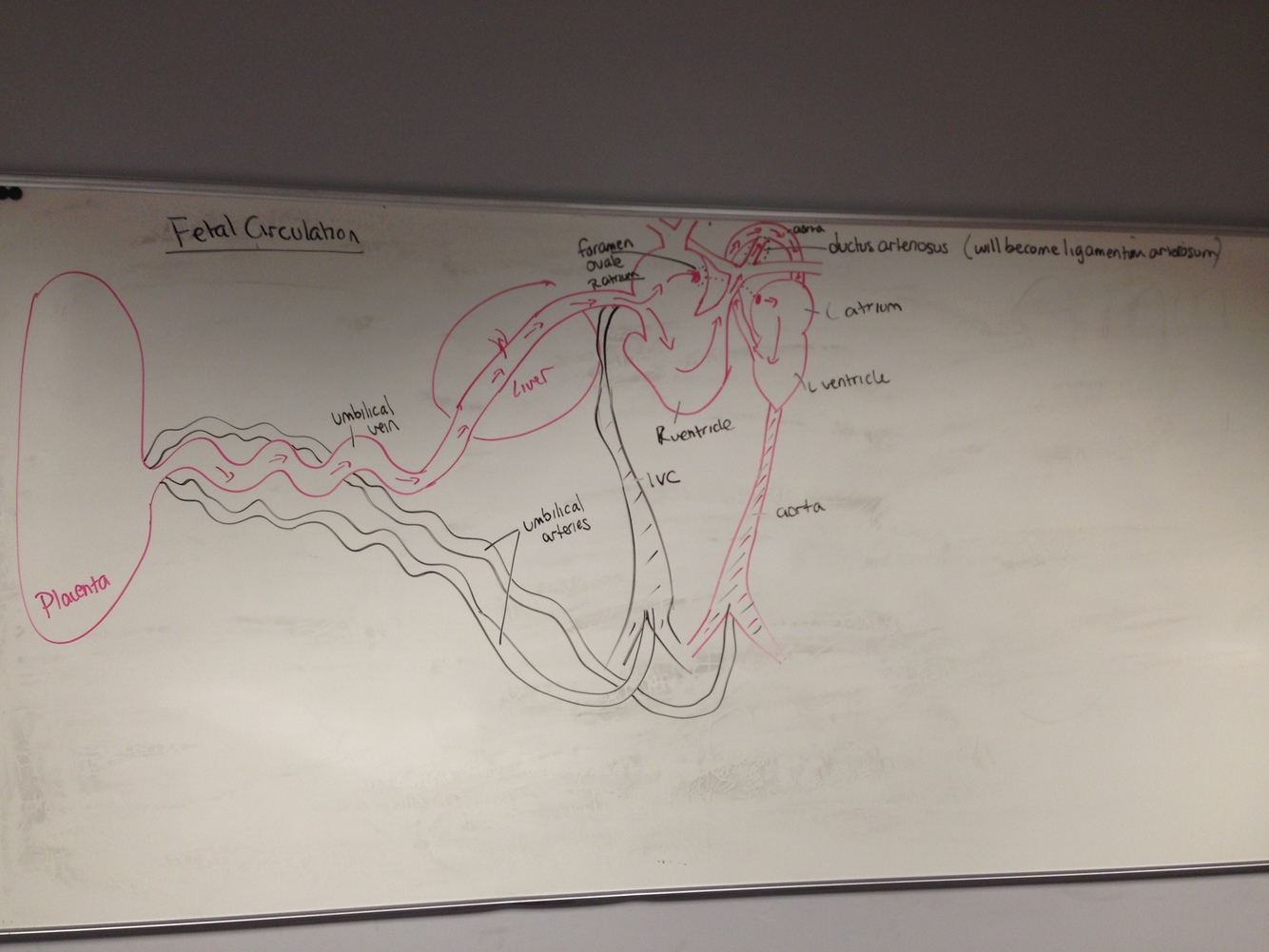
2 umbilical arteries - returns deoxygenated blood from embryo
1 umbilical vein - oxygenated blood to embryo
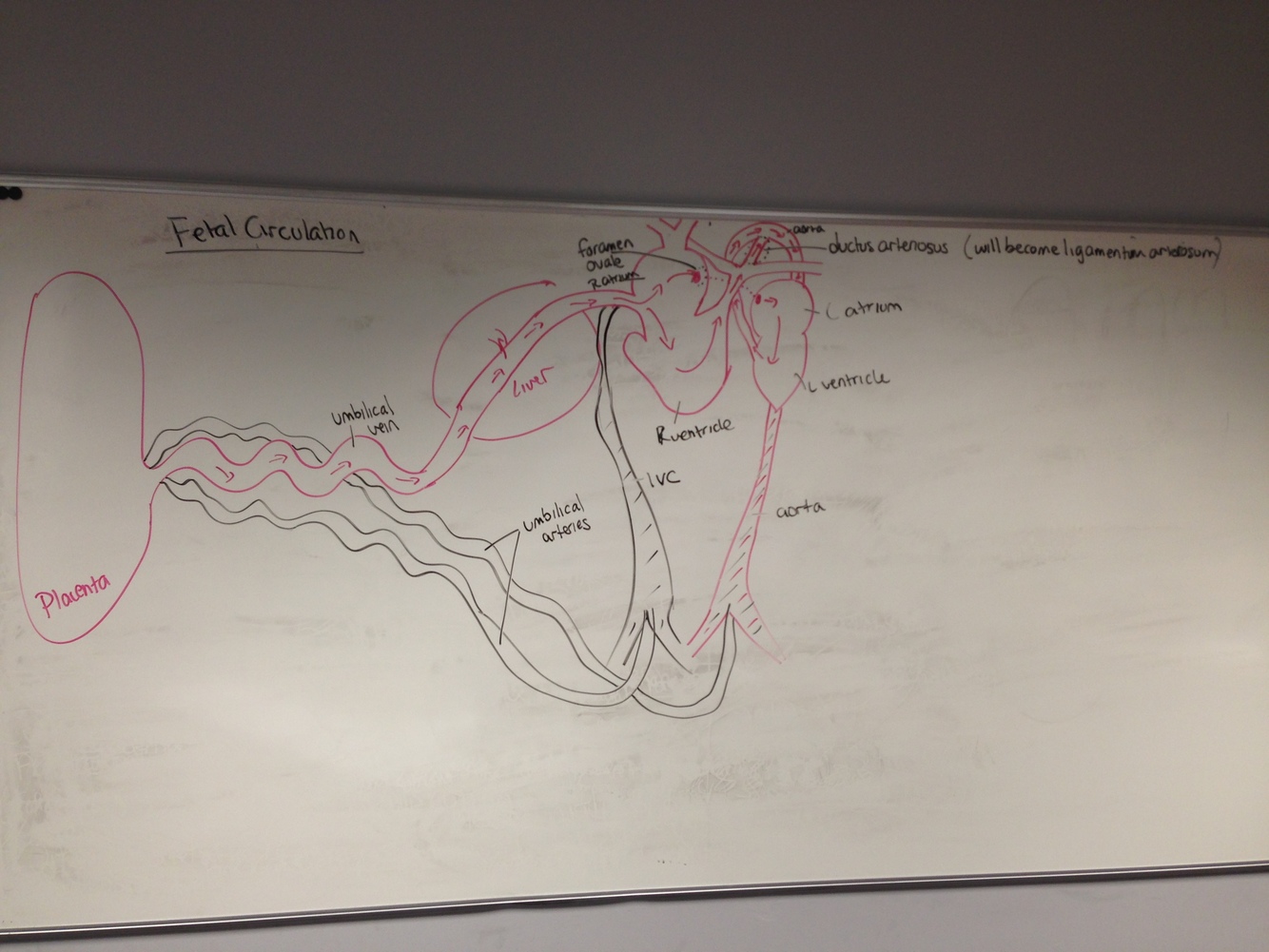
- The oxygenated blood is delivered from the mother via the placenta and umbilical vein which passes through the fetus’ liver (located just a few cm’s inside of umbilicus) and joins the inferior vena cava and flows into the right atrium.
- Once the blood reaches the right atrium it either falls into the right ventricle or continues on via the formen ovale into the left atrium.
- The blood that falls into the right ventricle which due to minor flow of blood to non-functioning (still developing) lungs, is pumped through the ductus arteriosum which joins the pulmonary artery to the aortic arch where it joins systemic circulation bypassing pulmonary circulation.
- If the blood from the umbilical vein passes through formen ovale it will be pumped into left ventricle and out the aorta for systemic circulation.
- The umbilical arteries collect the deoxygenated blood and return it to the mother via the placenta.
Placental Hormones -
Role: Necessary for maintaining pregnancy and preparing mother for delivery
hCG (Human Chorionic Gonadotropin) - maintains corpus Luteum ≈ secretion of progesterone
Estrogen -
Progesterone -
Placental Prolactin -
hPL (Human Placental Lactogen) - Prepares mammary glands for milk production
Relaxin -
- increased flexibility of the pubic symphasis for pelvic expansion during delivery
- dilation of cervix
- delays onset of contraction by supressing release of OT
Maternal Changes During Pregnacy
- increased Tidal Volume & Respiratory Rate
- Increased Bloodvolume - 50% increase by end of gestation
- Increased requirement of nutrients and vitamins by 10-30%
- Increased GFR by 50%
- Slowed GI Motility
- Increased size of uterus & mammary glands
Labor & Delivery
Partrition & Labor Contractions
Patrition - Forcible expulsion of fetus from uterus (delivery)
Labor contractions -
- initiated by a series of hormone exchanges and actions
- Initiation of hormones that spurs on labor: Fetal OT release ⇒ maternal OT release ⇒ prostaglandin synthesis ⇒ labor contractions
- sustained by positive feedback once initiated
Labor & Delivery Stages
Dilation stage (approximatley 8+hours - until onset of labor)
- cervix dilates; fetus slides down cervical canal
- contractions - one every 10-30/minutes with or without amniotic sac rupture
Expulsion Stage (<2 hours)
- Fetus forces through the cervix and emerges from the vagina
- delivery = arrival of fetus to the outside world (birth)
Placental Stage (delivery within 1 hour of fetal delivery)
- muscle tension builds in the uterus
- uterus decreases in size
- contractions cause placenta to tear away from the endometrium
Premature & Immature deliveries
Premature Labor - when labor contractions occur before fetal development is complete
- Usually if birth weight is <500g it is probably going to be an spontaneous abortion = miscarriage; typically not “saveable”
Immature Delivery
- When birthweight is >500g, baby is considered “saveable”
Weeks Gestation
- 25-27 weeks - odds are baby will die even with acute care
- 28-36 weeks -premature delivery; premie
- 36-40 weeks - full term
Fraternal vs Identical Twins
Fraternal Twins - two eggs that were fertilized at the same time
Identical twins - One egg/sperm = zygote which splits into two zygotes in first several days of fertilization
Post-Natal development
Neonatal Development
Birth to 1 month
Birth to 1 Month
- Passing through the Birth Canal squeezes fluid out of lungs
- A powerful inhalation is required to fill lungs with air (lungs are kind of flat before birth)
- Inhalation causes seperation of pulmonary and sytemic circulation
- Foramen Ovale and Ductus Arteriosus close
- digestive system releases stored waste products (meconium = mucous, bile, epithelial cells)
- Unable to retain heat efficently or concentrate urine = loses heat to environment easily
Post Natal Development
Infancy & Growth
- Growth largely in response to circulating hormones
- Change in body proportions; larger tounge, smaller airway
- baby teeth
- heavy head/ Larger head relative to body; like a lawn dart
- Fontanelles
- Spleen & Liver are more exposed
Post Natal Development
Adolesence & Maturity
- From puberty until death
- increase in GnRH @ hypothalamus - increased production of - FSH, LH, Anterior Pituitary - Gamate formation & secondary sex characteristics
Mammary Glands
- Mammary Glands are fully Developed @ around 6 months
- Colostrum - secreted first 2-3 days; contains antibodies to protect the newborn against disease, contains mild laxative to promote passage of first stool.
- Milk Production
- Infant sucking on nipples triggers receptor stimulus of OT and milk let down
- contiued stimulation of nipples (positive feedback) = milk production
- negative feedback = milk production stops when not stimulated
Congenital Heart Defects
- Patent Foramen Ovale - Causes L-R Shunt (due to significantly higher pressure in Left Ventrical compared to Right; this is a change physiologically from prebirth/breath that seperates pulmonary circulation from systemic circulation); presents with pulmonary HTN, Pulmonary Edema & Cardiac enlargement
- Patent Ductus Arteriosus (PDA) - Blood in pulmonary circut - may get R-L Shunt if compounded with other defect; bypassing circulation from going to lungs ie circulating deoxygenated blood
- Ventral Septal Deficit (VSD) - L-R Shunt; Hole in septal wall between ventricles; pressure is higher in Left ventricle causing same defects as patent Foramen Ovale
- Tetrology of Fallot - 4 heart problems (requires 3 surgeries)
- PDA
- Pulmonary Stenosis
- Enlarged Right Ventrical
- VSD
- Transposition of Great Vessels
- PDA
- Aorta from R Ventricle
- Pulmonary Trunk From L Ventricle
Blood Types
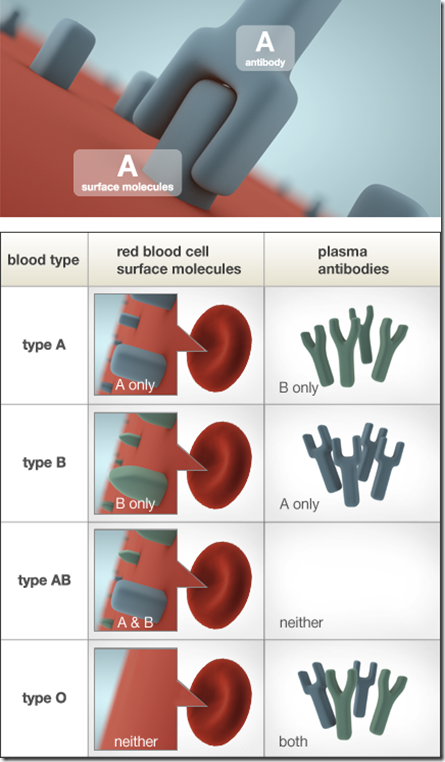
Type A
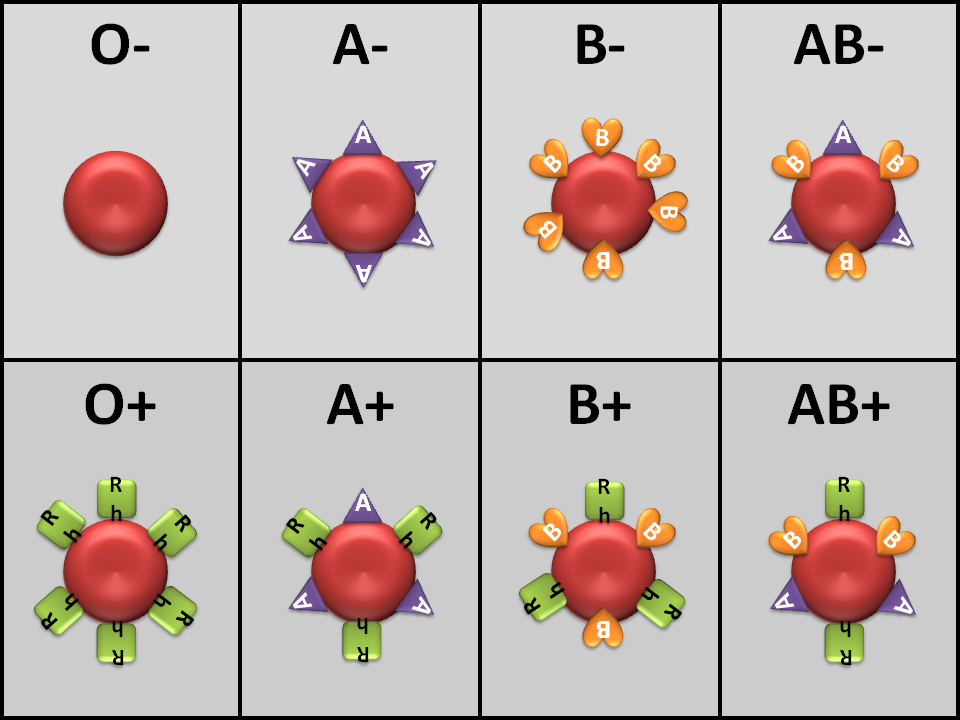
- A Antigen present on RBC
- B Antibodies Present in Plasma
- +/- Rh Antigen Present
Type B
- B Antigen Present on RBC
- A Antibodies Present in Plasma
- +/- Rh Antigen Present
Type AB
- A & B Antigens Present on RBC
- No Antibodies Present in Plasma
- +/- Rh Antigen Present
- AB+ Blood is UNIVERSAL RECIPIENT because it has no antibodies and therfore can recieve all blood types
Type O
- No Antigens Present on RBC
- A & B Antibodies Present in Plasma
- +/- Rh Antigen Present
- O- is conidered the UNIVERSAL DONOR because it has no Antigens and can mix where there are other antibodies and not cause agglutination and precipitation.
**There are no naturally occuring Anti-Rh antibodies; can be created via 1st and 2nd exposure**
Hemolytic Disease of the Newborn
Occurs in 2 pregnancies with Rh- Mother and Rh+ child
(Results from having an RH+ Father)
Rh- Antigen Mother is exposed to Rh+ child during child birth or through the placental barrier.
This first exposure causes Anti-Rh antibodies (IgG) to be produced which lie dormant in case of second exposure.(ie. B cells sensitized, Memory and plasma cells which create Anitbodies (IgG)
If mother becomes pregnant again with a Rh+ child. The maternal Anti-Rh antibodies will cross the blacental barrier and attack the RBC’s of the fetus.
**Treatment is administration of Rhogan IM @ 6mo which prevents the cirriculation of antibodies
Sinuses
Air filled chambers that make the weight of the head less
Provides space for clearing mucous and things from the respiratory tract
Hyoid Bone
Bone in head not connected to anything
Vertebrae
Cervical C1-7
Thoracic T1-12
Lumbar L1-5
Sacryl 5 Fused
Coccyx 3-5 Fused

-
Quiz 2 Material - Cell Structure and Function212
-
Quiz 3 Neurology and Pulmonology121
-
Cardiology80
-
Endocrine/Digestion/Nutrition94
-
Digestion/Nutrition/Kidneys85
-
Lymphatic System and Immunity/Integumentary System/Reproductive System126
-
Development & Inheritance/Labor & Delivery/Blood Types33
-
A&P Module 2 - All Review Questions123



