The term ‘dizziness’ is generally used collectively to describe
all types of equilibrium disorders and, for convenience
Classification of dizziness
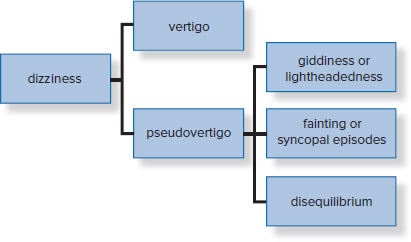
Specific causes of dizziness
- Benign paroxysmal positional vertigo, 25% of cases
- Ménière syndrome
- Vestibular migraine (migrainous vertigo)
- Recurrent vestibulopathy
- Drugs
- Cervical spine dysfunction
- Acute vestibulopathy (vestibular failure/ neuritis)
Others;
Vertebrobasilar insufficiency, rare
Drugs that can cause dizziness
Usually affect the vestibular nerve rather than the labyrinth
Alcohol
Antibiotics:
- streptomycin
- gentamicin
- kanamycin
- tetracyclines
Antidepressants
Anti-epileptics: phenytoin
Antihistamines
Antihypertensives
Aspirin and salicylates
Cocaine
Diuretics in large doses:
- intravenous frusemide
- ethacrynic acid
Glyceryl trinitrate
Quinine-quinidine
Tranquillisers:
- phenothiazines
- phenobarbitone
- benzodiazepine
Cervical spine dysfunction
• It is not uncommon to observe vertigo in patients
• with cervical spondylosis or post-cervical spinal
injury.
• May be caused by the generation of abnormal
impulses from proprioceptors in the upper cervical
spine, or by osteophytes compressing the
vertebral arteries in the vertebral canal.
• Some instances of benign positional vertigo are
associated with disorders of the cervical spine
Probability diagnosis
Anxiety hyperventilation (G)
Postural hypotension (G/S)
Simple faint—vasovagal (S)
Acute vestibulopathy (V)
Benign positional vertigo (V)
Motion sickness (V)
Post head injury (V/G)
Cervical dysfunction/spondylosis (V)
Depression: pts harbour fear that they may be suffering from a serious disorder, eg
- brain tumour or
- multiple sclerosis, or
- face an impending stroke or
- insanity.
Appropriate reassurance to the contrary is often positively therapeutic
G = giddiness; S = syncope; V = vertigo
Serious disorders not to be missed in Dizziness/vertigo
- Neoplasia
- acoustic neuroma
- posterior fossa tumour
- other brain tumours—1° or 2°
- Intracerebral infection (e.g. abscess)
- Cardiovascular
- cardiac arrhythmias, such as Stokes–Adams attacks caused by complete heart block
- MI
- Aortic stenosis
- Cerebrovascular
- Vertigo is the commonest symptom of TIA in the vertebrobasilar distribution
- Severe vertigo, hiccoughs and dysphagia, with cerebellar signs, including ataxia and vomiting is a feature of the variety of brain stem infarctions known as the lateral medullary syndrome due to posterior inferior cerebellar artery (PICA) thrombosis.
- There are ipsilateral cranial nerve (brain stem) signs with contralateral spinothalamic sensory loss of the face and body.
- Diagnosis is by CT or MRI scanning.
- Multiple sclerosis.
- 5% cases of MS present with vertigo
- The lesions may occur in the brain stem or cerebellum.
- Young patients who present with a sudden onset of vertigo with ‘jiggly’ vision but without auditory symptoms should be considered as having MS.
- Carbon monoxide poisoning
- Complex partial seizures
Pitfalls (often missed) in Dizziness/vertigo
Ear wax—otosclerosis
Arrhythmias
Hyperventilation
Alcohol and other drugs
Cough or micturition syncope
Vertiginous migraine
Parkinson disease
Ménière syndrome (overdiagnosed)
Otosclerosis
Rarities:
- Addison disease
- neurosyphilis
- autonomic neuropathy
- hypertension
- subclavian steal
- perilymphatic fistula
- Shy–Drager syndrome
RED FLAGS in Dizziness/vertigo
- neurological signs
- ataxia (severe)
- nystagmus (unexplained)
- central nystagmus
- abnormal central eye movement
Vertigo with unilateral sensorineural hearing loss & acute otitis media – consider acute bacterial labyrinthitis
Seven masquerades checklist
Depression
Diabetes (possible: hypo/hyper)
Drugs
Anaemia
Thyroid disorder (possible)
Spinal dysfunction
UTI (possible)
Is the patient trying to tell me something?
Very likely.
Consider anxiety and/or depression
Key history
A careful history to determine if the problem is:
- vertigo or
- pseudovertigo (giddiness, faintness, or disequilibrium)
Check for neurological, aural, and visual symptoms.
Recent history of respiratory infection or head injury.
Drug history including:
- illicit drugs
- alcohol (?acute intoxication)
Key history questions
Is it vertigo or pseudovertigo?
Symptom pattern:
- — paroxysmal or continuous?
- — effect of position and change of posture?
Any aural symptoms? Tinnitus? Deafness?
Any visual symptoms?
Any neurological symptoms?
Any nausea or vomiting?
Any symptoms of psychoneurosis?
Any recent colds?
Any recent head injury (even trivial)?
Any drugs being taken?
- — alcohol?
- — marijuana?
- — hypotensives?
- — psychotropics?
- — other drugs?
Key examination / Office tests for dizziness
- Ask the patient to perform any manoeuvre that may provoke the symptom
- General examination including gait
- Take BP measurements in three positions.
- CVS auditory, and neurological examinations
Hallpike manoeuvre ( https://www.youtube.com/watch?v=8RYB2QlO1N4 )
Epley test (https://www.youtube.com/watch?v=jBzID5nVQjk )
Forced hyperventilation test ( https://www.youtube.com/watch?v=u4B_HWnSxnM )
Examination guidelines
1) ear disease:
- auroscopic examination: ? wax ? drum
- hearing tests
- Weber and Rinne tests
2) the eyes:
- visual acuity
- test movements for nystagmus
3) cardiovascular system:
- evidence of atherosclerosis
- blood pressure: supine, standing, sitting
- cardiac arrhythmias
4) cranial nerves:
- 2nd, 3rd, 4th, 6th and 7th
- corneal response for 5th
- 8th—auditory nerve
5) the cerebellum or its connections:
- gait
- coordination
- reflexes
- Romberg test
- finger nose test: ? past pointing
6) the neck, including cervical spine
7) general search for evidence of:
- anaemia
- polycythaemia
- alcohol dependence
Key investigations
- FBE
- b glucose
- audiometry
- ECG, ?Holter monitor
- Brain-stem evoked audiometry
- Caloric test
- Visual evoked potentials (MS)
- Electrocochleography
- Electro-oculography (electronystagmography)
- Rotational tests
- Radiology:
- Cervical spine X-ray
- CT scan
- MRI (the choice to locate acoustic neuroma or other tumour—may detect MS and vascular infarction)
Diagnostic tips
Dizziness is often multifactorial in elderlies.
Postural and exercise hypotension are relatively common in the atherosclerotic patients.
Dizziness is common in menopausal women and is often associated with other features of vasomotor instability.
A sudden attack of vertigo in a young person after a recent URTI suggests vestibular neuronitis.
Acute otitis media does not cause vertigo but chronic one can, particularly if the pt develops a cholesteatoma, which then erodes into the internal ear causing a perilymphatic fistula.
Phenytoin therapy can cause cerebellar dysfunction.
Commonly prescribed drugs, especially antihypertensives, antidepressants, aspirin and salicylates, glyceryl trinitrate, benzodiazepines, major tranquilisers, antiepileptics and antibiotics, can cause dizziness.
Dizzy turns in elderly
a relatively common complaint of the elderly.
Dizzy turns in elderly
Common causes;
1) postural hypotension related mainly to drug
2) Cerebrovascular disease, esp in the areas of the brain stem
3) accumulation of wax in the external auditory meatus
4) Middle-ear disorder
5) disorder of the:
- auditory nerve
- inner ear
- cerebellum
- brain stem and
- cervical spine
6) Malignancy, primary and secondary
7) Cardiac arrhythmias
Dizzy turns in elderly advice pt if no cause such as hypertension is found?
advise them to get up slowly from sitting or lying and
- to wear firm elastic stockings.
Dizzy turns in girls in late teens
Common due to blood pressure fluctuations
Give advice related to stress, lack of sleep or excessive activity
Reassure that it settles with age (rare after 25 yrs)

-
Dizziness22
-
Vertigo16
-
Giddiness2
-
Syncopal episodes2
-
Disequilibrium1
-
Acute vestibulopathy (vestibular failure)11
-
Acoustic neuroma2
-
The clinical approach9
-
Benign paroxysmal positional vertigo10
-
Ménière syndrome7
-
Vestibular migraine (migrainous vertigo)3
-
Dizziness in children3
-
Acoustic Neuroma2



