What is an ECG?
- It is a graphic representation of electrical potential difference changes against time of the myocardium throughout the cardiac cycle.
- The myocardium has electrical currents that sequentially depolarise each individual cell and result in a change in cellular morphology that allows muscle contraction.
- The electro/chemical changes that cause myocardial contraction are shown by the cardiac action potential.
What needs to happen to the myocyte for it to contract, and how does it happen?
- For the myocyte (cardiac cell) to contract, the potential difference across the cellular (semi-permeable) membrane must change from negative to positive in relation to the inside of the cell.
- Changes in potential difference occur through the flow of ions through specialised ion channels in the cellular membrane and also relatively freely through gap junctions.
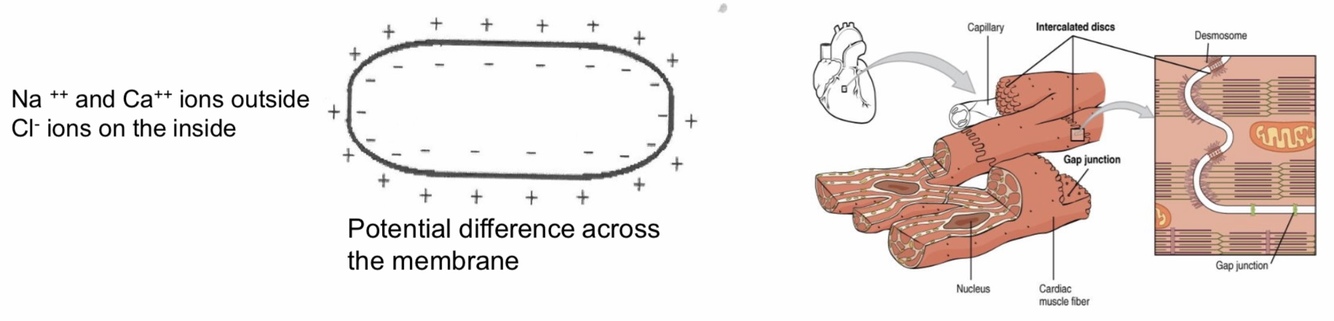
Describe the cardiac electrical field (ie. when it is and isn’t present).
- When a cardiac cell is depolarising or repolarising, different currents flow across the cell membrane at various points and a potential difference will occur between one part of the cell and another (a dipole).
- With the flow of current along the cell surface, an external electrical field is set up around the dipole.
- When the cell is depolarised or repolarised and at a resting potential, there is no difference in membrane potential at different points along the cell surface, therefore, there is no electrical field, despite the potential difference between the inside and outside of the cell.
When in the cycle does the coronary arteries supply the heart with blood?
- It supples the heart during diastole (during relaxation).
- You get the filling of the heart (atria) and supply of blood to the heart itself.
Why do we have 12 leads in an ECG?
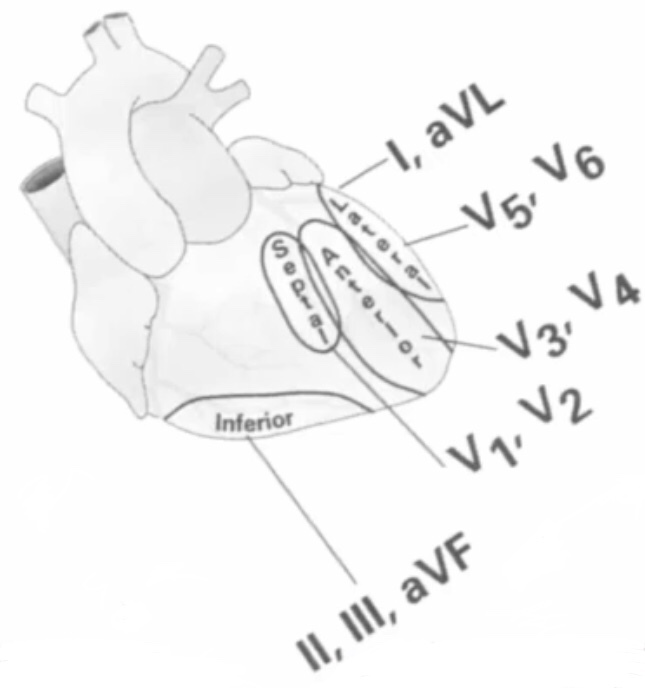
- We use this so we can get a view all around the heart.
- Each part of the ECG looks at a different part of the heart.
- Leads II, III aVF look at the inferrior wall.
- Leads V1 and V2 look at septal wall.
- Leads V3 and V4 look at the anterior wall.
- Leads V5, V6, I and aVL look at the lateral wall.
The image below shows how the heart actually sits in the body.
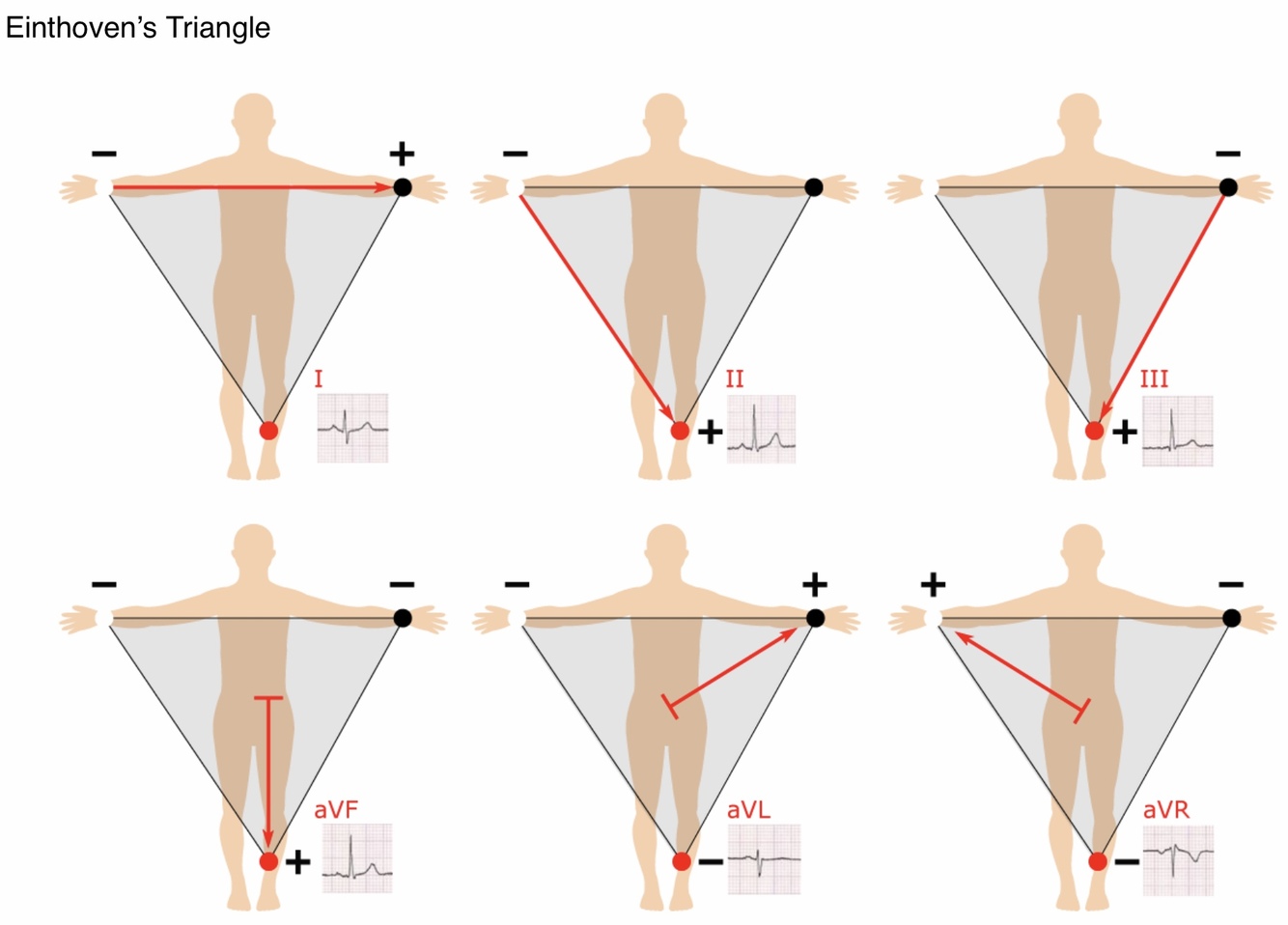
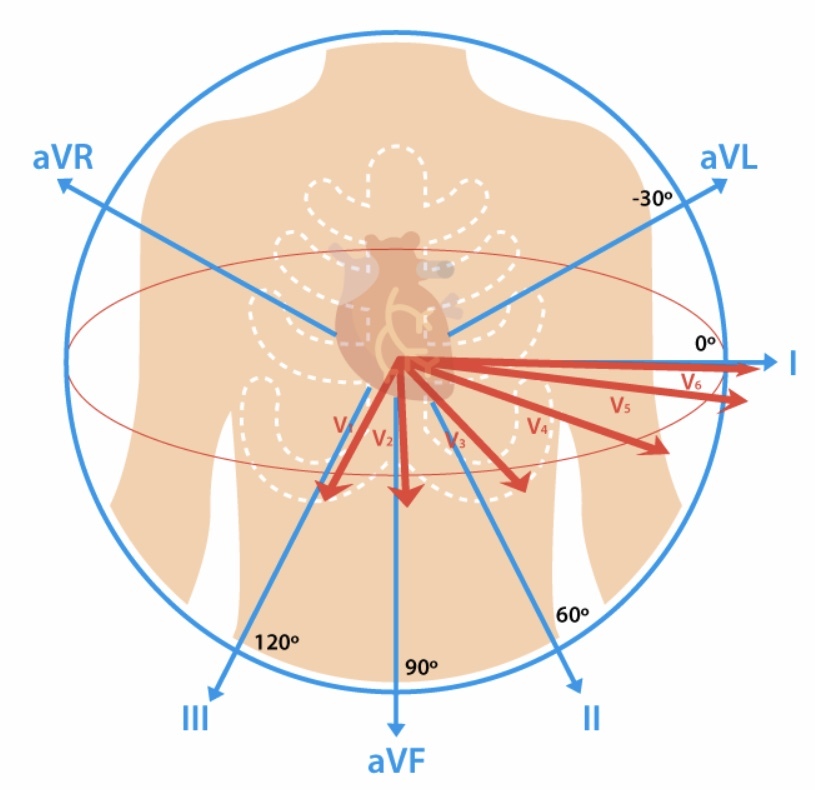
A 12-lead ECG consists of three bipolar limb leads (I, II, and III), the unipolar limb leads (AVR, AVL, and AVF), and six unipolar chest leads, also called precordial or V leads, (V1, V2, V3, V4, V5, and V6).
Limb leads: I, II, III, IV, V, and VI
Lead IV also called AVR
Lead V also called AVL
Lead VI also called AVF
Chest leads: V1, V2, V3, V4, V5, and V6.
What is a 12 lead ECG?
- First 3 bipolar leads (I, II and III) are derived from Einthoven bipolar lead. (The bipolar leads are so designated because each records the difference in electrical potential between two limbs).
- The leads are placed on the arms and the legs and across the chest and we pickup the horizontal leads.
- We pickup leads I, II and III to form aVR, aVL and aVF from the limbs.
- L – leftwrist
- R – right wrist
- F – left ankle
- N – Typically right ankle
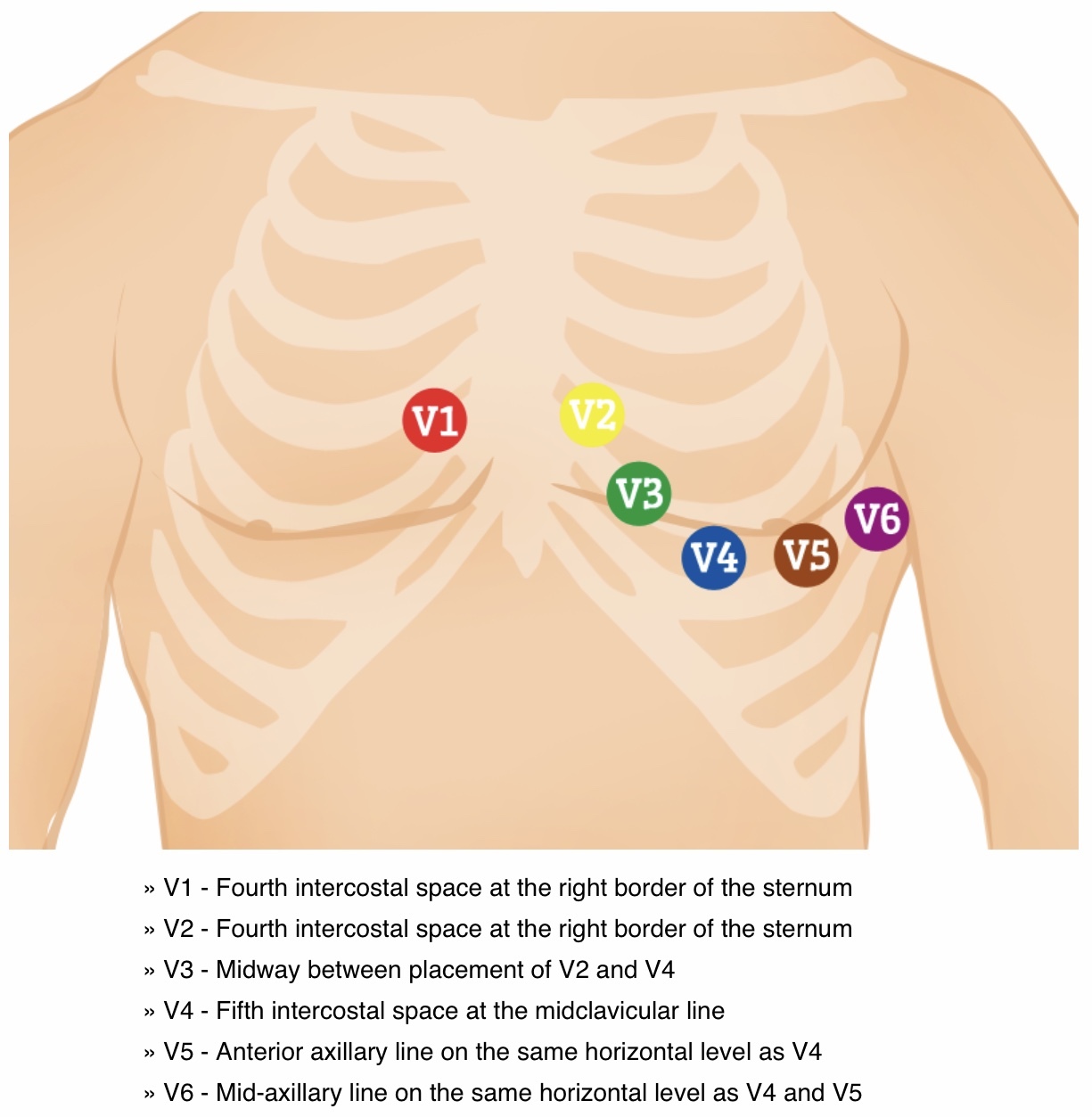
- Chest leads are in specific places.
- V1 – 4th IC, right sternal edge
- V2 – 4th IC, left sternal edge
- V3 – equidistant V2-V4
- V4 – 5th IC, midclavicular line
- V5 – left anterior axillary line In horizontal line with V4,
- V6 – mid axillary line, horizontal with V4 and V5.
- Leads I, II, and III require a negative and positive electrode (bipolarity) for monitoring.
- On the other hand, the augmented leads—aVR, aVL, and aVF—are unipolar and requires only a positive electrode for monitoring.
- Keep in mind that N is neutral (also known as point zero where the electrical current is measured). N doesn’t come up in ECG readings, and is considered as a grounding lead that helps minimize ECG artifact.
IC = intercostal space.
Where is each precordial lead placed on the chest?
What are the directions of electrical activity in the 12 lead ECG?
What is the pathway of the electrical comduction of the heart?
- The normal cardiac rhythm originates in the sinoatrial node (SAN), which is located in the right atrium near the superior vena cava.
- From there, the electrical activation spreads throughout the right atrium.
- The Bachmann’s bundle carries the electrical impulse from the right atrium to the left atrium causing it to contract simultaneously.
- The electrical signal travels from the sinoatrial node (SAN), to the atrioventricular node (AVN) which slows down conduction of the action potential, from the atria to the ventricles. This delay allows the ventricles to fully fill with blood before contraction. The delay is up to 200 milliseconds.
- The signal then passes down through a bundle of fibres called the bundle of His, which run along the interventricular septum (in the wall between the ventricles). There is a left and right bundle of His.
- The left bundle branch further divides into the left anterior and the left posterior fascicles. These bundles and fascicles give rise to thin filaments known as Purkinje fibers.
- The Purkinje fibres carry the contraction impulse from both the left and right bundle branch to the myocardium of the ventricles.
- This causes the muscle tissue of the ventricles to contract (depolarise) and generate force to eject blood out of the heart, either to the pulmonary circulation from the right ventricle or to the systemic circulation from the left ventricle.
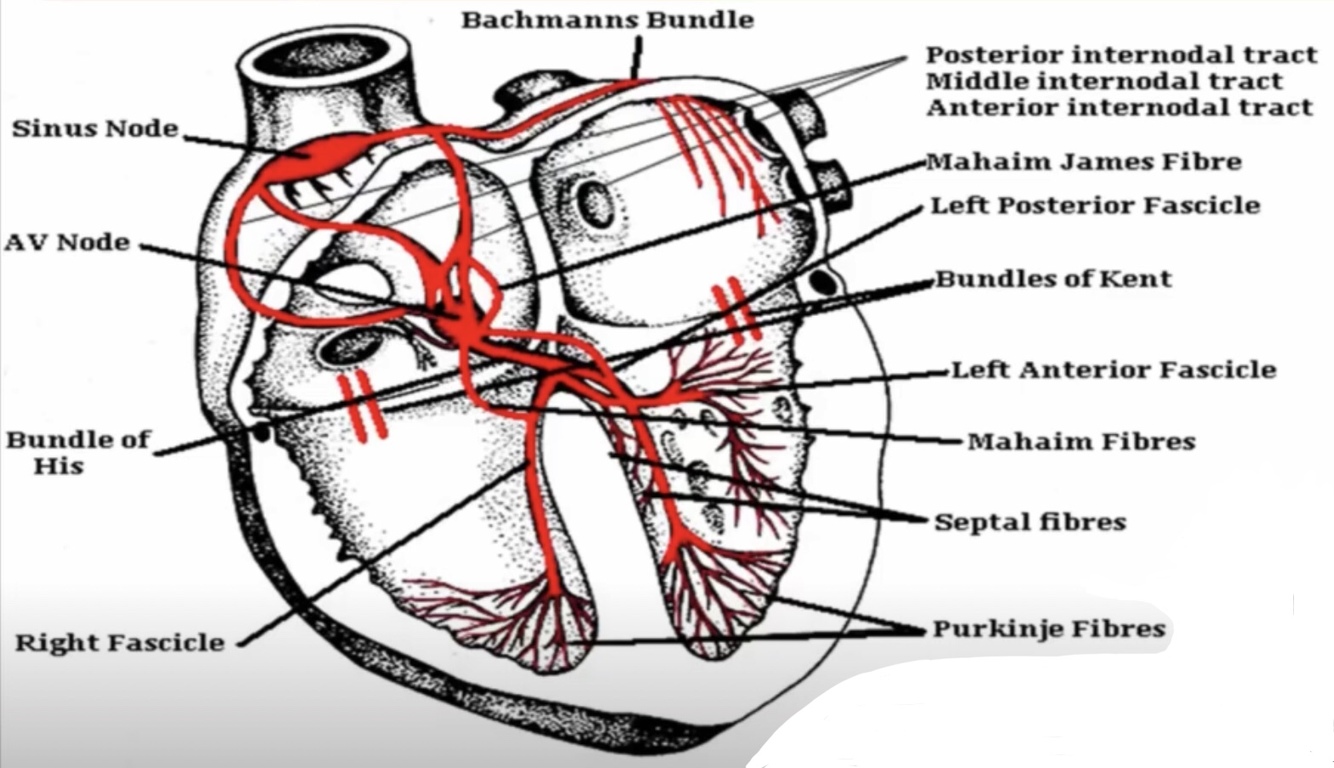
What are bundles of kent?
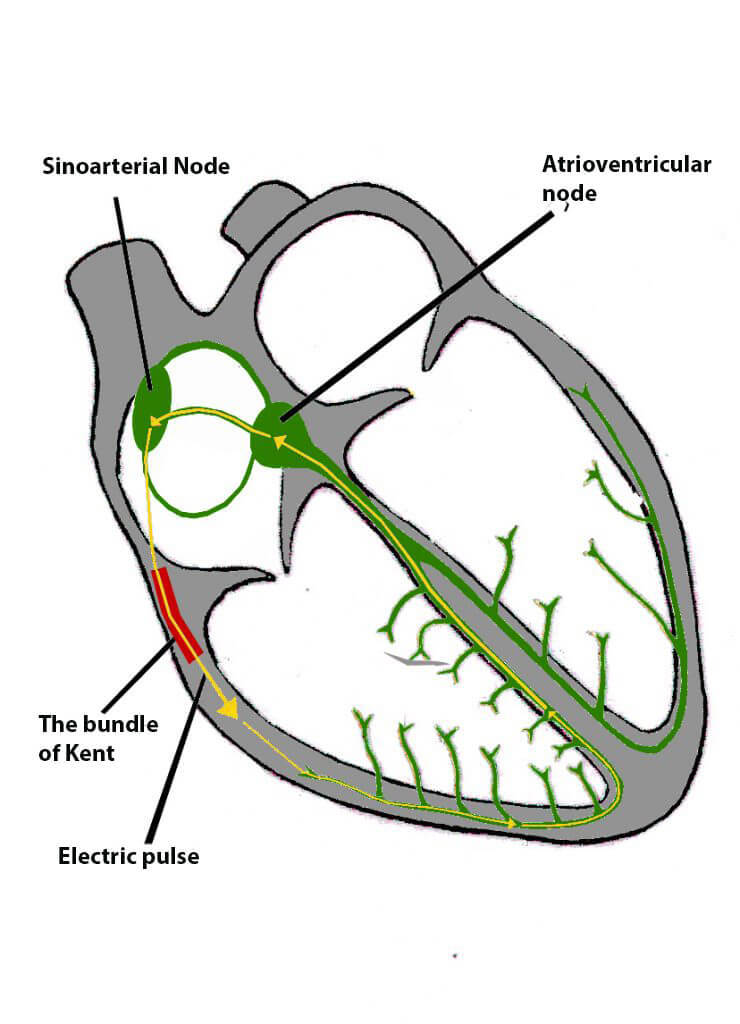
- The bundle of Kent is an abnormal extra or accessory conduction pathway between the atria and ventricles that is present in a small percentage (between 0.1 and 0.3%) of the general population.
- They can be present in both sides of the heart.
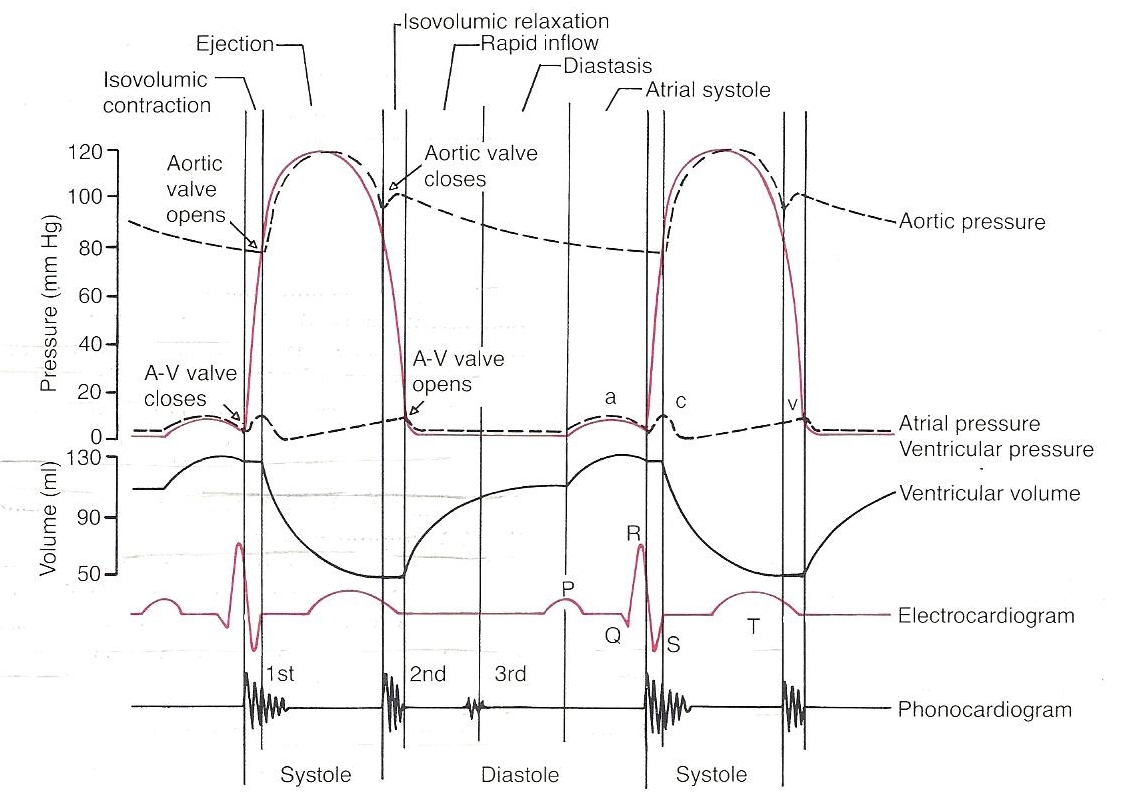
Describe the different parts of a typical ECG wave.
- P WAVE:
- Left and right atrial depolarisation (contraction).
- PR INTERVAL:
- This interval measures the time from the initial depolarization of the atria to the initial depolarization of the ventricles and reflects a physiological delay in AV conduction imposed by the AV node.
- Its time length should be = < 200milliseconds.
- QRS COMPLEX:
- Typically this complex has a series of 3 deflections that reflect the current associated with right and left ventricular depolarization.
- By convention the first deflection in the complex, if it is negative, is called a Q wave.
- The first positive deflection in the complex is called an R wave.
- A negative deflection after an R wave is called an S wave.
- A second positive deflection after the S wave, if there is one, is called the R’ wave.
- Its time duration should be < 100 milliseconds.
- QT interval :
- The QT interval is measured from the beginning of the QRS to the end of the T wave.
- It represents the time in which the ventricles depolarize and repolarize and is a measure of ventricular action potential (AP) duration.
- Stage 2 and 3 of action potential graph.
- 350 - 420 milliseconds.
- ST SEGMENT:
- Time during which ventricles are contracting and emptying.
- ST segment reflects the current flow associated with phase 2 of ventricular repolarization.
- Since there is no current flow during this plateau phase of repolarization, the ST segment is normally isoelectric with the baseline.
- Ischaemia manifests in the ST segment.
- If there is a elevation = Ischaemia.
- If there is a depression = myocardial infarction.
- T WAVE:
- It represents the current of rapid phase 3 ventricular repolarization.
- TP INTERVAL:
- Time during which ventricles are relaxing and filling.
List what an ECG can tell us.
- size of the heart muscle (eg. by taller R wave) - heart rate
Define tachycardia and bradycardia.
- TACHYCARDIA: a heart rate that exceeds the normal resting rate (> 100bps).
- BRADYCARDIA: abnormally slow heart action (< 50bps).
What are some ways to identify a normal sinus rhythm?
- is there a positive P wave before every QRS complex? - is the PR interval normal (ie. no greater than 200 ms)? - is the QRS duration normal (ie. less than 0.11 seconds)? - is the QT interval normal (ie. it changes, but normally 0.33 ms in women and 0.44 ms in men)? - is there (not a perfect, but) a good start?
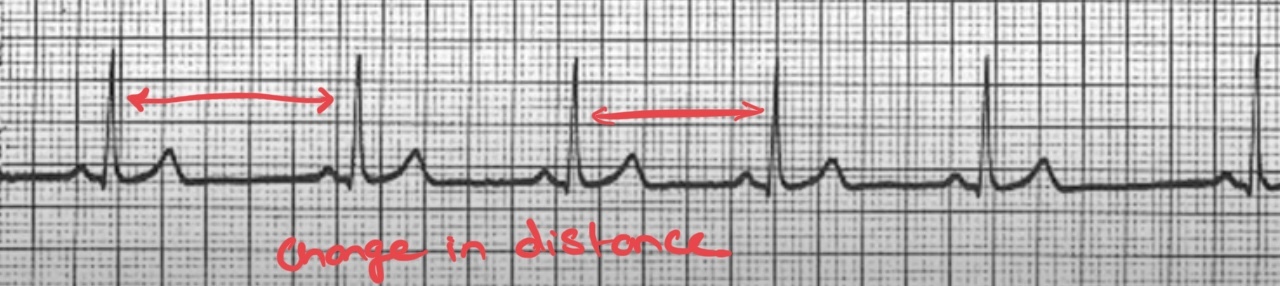
What is an irregular heartbeat called?
- An irregular heartbeat is called an arrhythmia.
- A sinus arrhythmia is an irregular heartbeat that’s either too fast or too slow.
- One type of sinus arrhythmia, called respiratory sinus arrhythmia, is when the heartbeat changes pace when you inhale and exhale.
- In other words, your heartbeat cycles with your breath.
- When you breathe in, your heart rate increases.
- When you exhale, it falls.
What are some pathological conditions that can produce characteristic ECG changes?
- atrial and ventricular premature contractions - atrial tachycardia - atriation fibrillation/ flutter - sinus arrest and sinus block - ventricular escape beats - supra-ventricular arrhythmias - AV nodal re-entrant tachycardia - ventricular pre-excitation - ventricular tachycardia - ventricular flutter
What are the 2 categories of arrhythemia?
- Conduction abnormailities -
- If the SA node fails to initiate impulse.
- It results in no P wave / QRS complex.
- It can happen in the SA node or the AV node.
- In an sinoatrial block, the electrical impulse is delayed or blocked on the way to the atria, thus delaying the atrial beat.
- E.g. 3rd degree AV blocks / complete AV block - (to treat use a pacemaker).
- Abnormal impulse initiation
- Every other beat is ventricular ectopic, alternating with an intrinsic (normal) beat.
- Ectopics, Ventricular tachycardia (VT).
- In VT the ventricles start to contact really fast.
- In ventricular fibrillation the hear beat is all over te place - (to treat use a defibrillator).
How many bps deos the SA, AVN, His bundle and purkyne fibres give?
SA node - 60 - 80bpm.
AV node - 50bpm.
His bundle - 40bpm.
Purkyne fibres - 20bpm.
What are the three major mechanisms of tachycardia?
- Three basic arrhythmiagenic mechanisms responsible for initiating tachyarrhythmia (caused by alterations in ionic currents).
- Altered automaticity; (either normal or abnormal).
- Triggered activity; where normal action potential suddenly swings positive again allowing another depolarisation to occur abnormally.
- This happens due to early after depolarisation or delayed after depolarisations. E.g. ectopics.
- Re-entry.
What is supraventricular tachycardia?
- Supraventricular tachycardia (SVT) is an abnormally fast heart rhythm arising from improper electrical activity in the upper part of the heart.
- Can occur in young and healthy patients.
- More common in women (~ 75% women).
What is myocardial ischemia?
- Myocardial ischemia occurs when blood flow to your heart is reduced, preventing it from receiving enough oxygen.
- The reduced blood flow is usually the result of a partial or complete blockage of your heart’s arteries (coronary arteries).

-
Introduction to the CVS19
-
The Cardiac Cycle15
-
Control of Cardiac Output13
-
Cardiac Contraction12
-
ECG21
-
Development of the Heart and Blood Vessels17
-
Principles of Haemodynamics15
-
Control of Blood Flow12
-
Nervous and Hormonal Control of Vascular Tone16
-
Capillaries I - Solute Exchange13
-
Capillaries II - Fluid Exchange13
-
Properties of Special Circulation17
-
Reflex Control of the CVS14
-
Coordinated Responses of the CVS11
-
Thrombosis16
-
Mechanisms of Atheroma and Infarction14
-
Pharmacology of the CVS14
-
Intro to the Respiratory System20
-
Mechanics of Breathing I12
-
Mechanics of Breathing II17
-
Gas Exchange in the Lungs19
-
Blood Gas Transport16
-
The Role of Ventilation in Acid Base Balance14
-
Neural Control of Breathing13
-
Integrated Control of Breathing13
-
Patho-physiology of COPD12
-
Patho-physiology of Asthma10
-
Airway Pharmacology18
-
Control of Food Intake42
-
Introduction to the Functions and Control of the Alimentary Tract25
-
Transport along and across the GI Tract33
-
The Liver: An Introduction to its Function27
-
Metabolic Functions of the Liver22
-
The Oesophagus and its Disorders34
-
Regulation and Disorders of Gastric Secretion29
-
Bile, Gall Bladder and Gall Stones25
-
Development of the GI Tract27
-
Intro to the Kidneys and Body Fluid23
-
Renal Blood Flow and Glomerular Filtration19
-
Functional Histology of the Kidney20
-
Structure and Function of the Renal Tubule - study from book17
-
Renal Plasma Clearance25
-
Potassium Balance28
-
Blood Pressure and the Kidneys14
-
Control and the Abnormalities of Body Water13
-
Acid-Base Balance22
-
Drugs and The Kidney14
-
Treatment of Hypertension18
-
Overview of Renal Diseases16
-
Micturition27



